Collections · Seurat
Seurat, restored for the way you live
This collection presents selected Georges Seurat paintings and studies prepared from archival source files. Any rights conclusion is limited to the named work, intended sales territory and documented provider file, not the artist's output as a whole. GeMarkt’s archive contains 130+ work records; check the linked Etsy listing for current availability and options. Twelve are below.
Explore the edit on GeMarkt, then compare the sizes and print formats currently offered by our LumenArtee Etsy shop.
A considered place to start
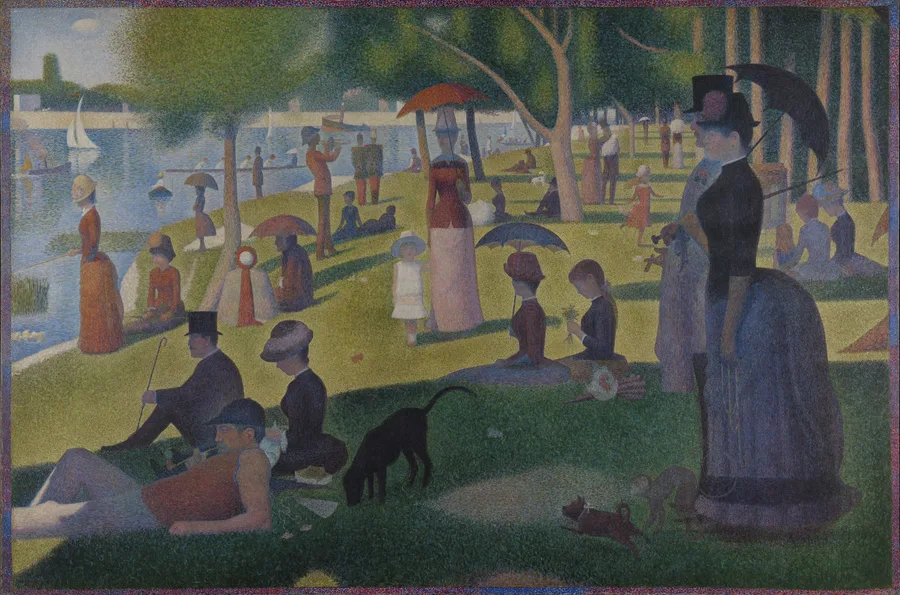
A Sunday on La Grande Jatte, 1884–1886
Two summers of studies went into one Sunday afternoon, and Seurat finished it with a border of painted dots. Cheap copies fuse the lawn into a single olive — restored, the yellows and greens sit side by side, arguing, the way the method demands.
La Grande Jatte · current options on Etsy
See sizes and prices on Etsy ↗
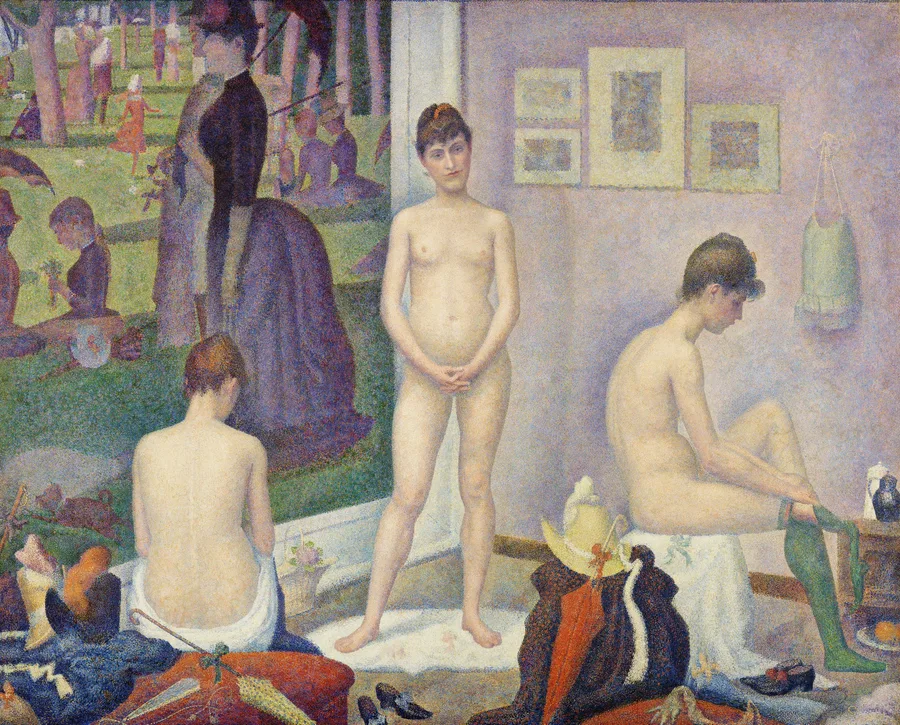
Models (Poseuses), 1886–1888
His answer to critics who said the dot could not draw a human being: three models undressing beside his own Grande Jatte, propped against the studio wall. The picture runs on the quietest flesh tones we handle, and they are the first thing a tired file loses.
Paris studio · current options on Etsy
See sizes and prices on Etsy ↗
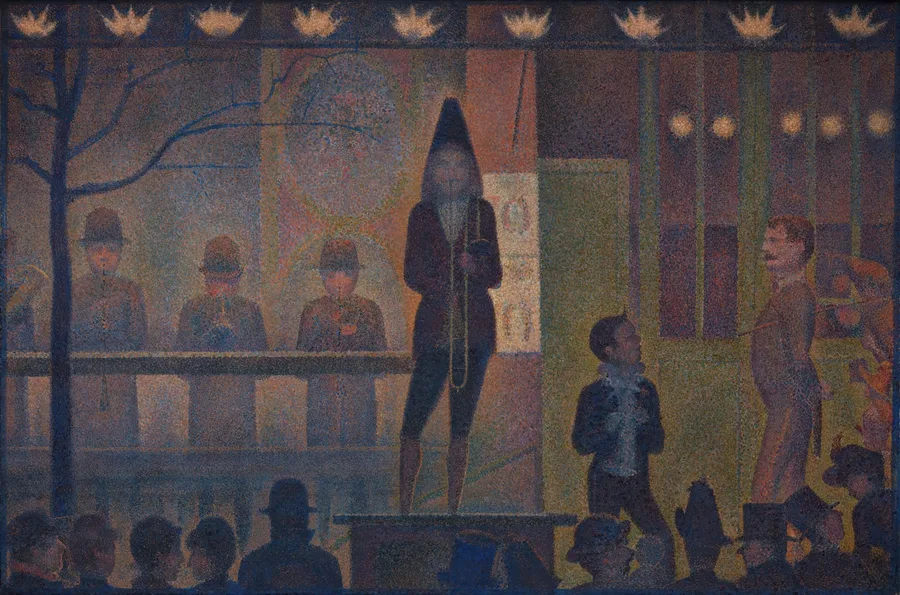
Circus Sideshow (Parade de cirque), 1887–1888
Seurat's first night scene — a sideshow band playing under a row of gas jets to draw the evening crowd in. Everything lives in the murk between the lights, exactly where careless copies go to mud; here the murk keeps its violet.
Paris · current options on Etsy
See sizes and prices on Etsy ↗
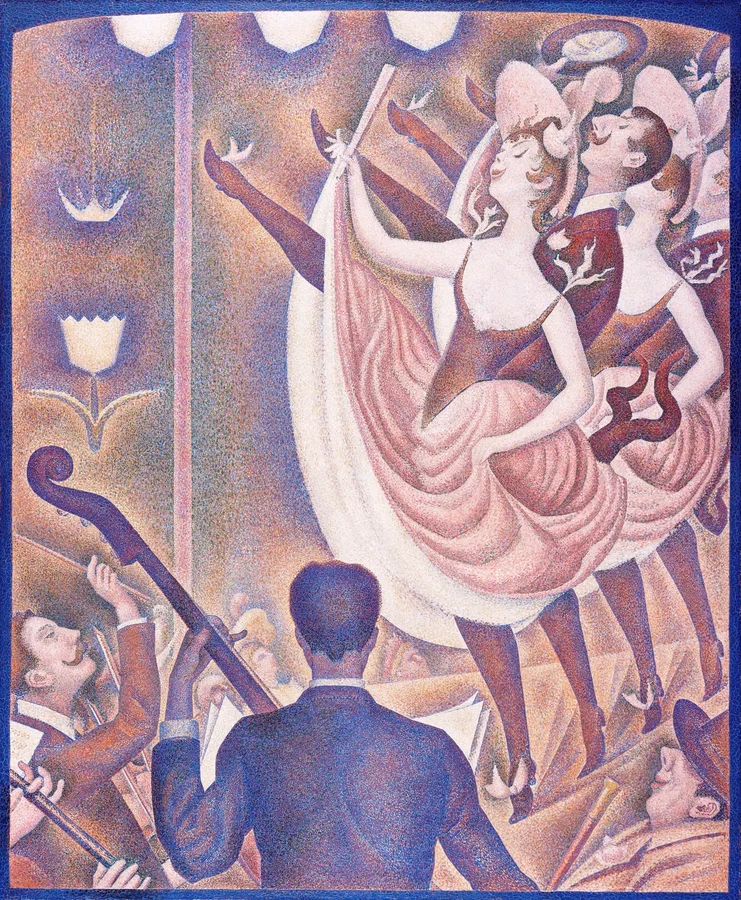
Le Chahut, 1889–1890
Seurat believed rising lines carry gaiety, so the whole cabaret rises — kicked legs, moustaches, the conductor's baton. The blue painted border is his own, and the print keeps it.
Paris · current options on Etsy
See sizes and prices on Etsy ↗
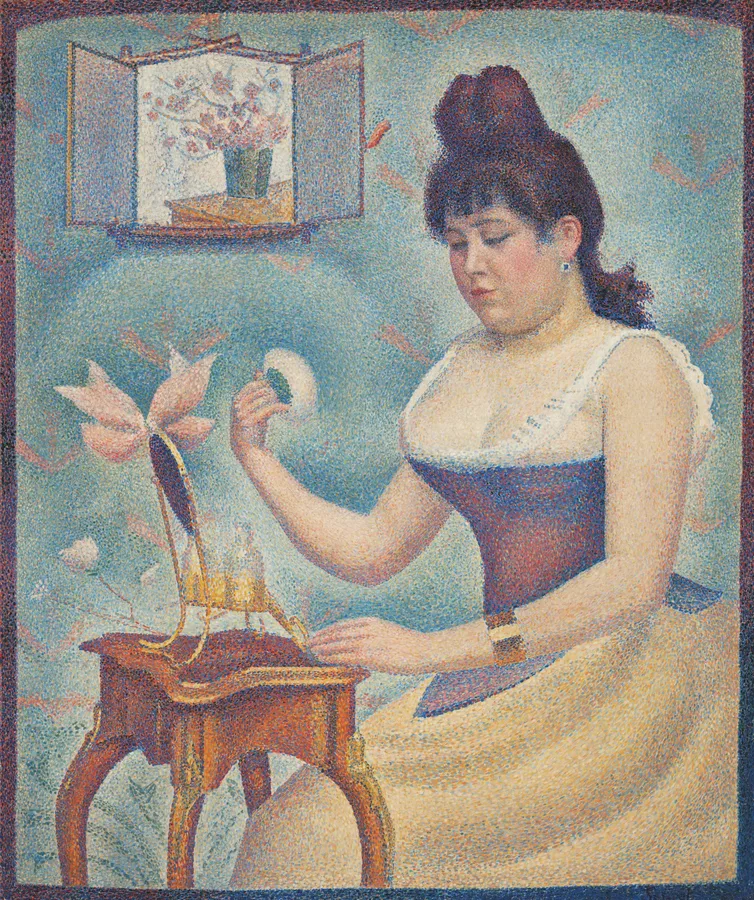
Young Woman Powdering Herself, 1889–1890
The model is Madeleine Knobloch, the companion Seurat kept secret almost until his death. In the little wall mirror he first painted his own reflection, then thought better of it — the vase of flowers covers the only self-portrait he ever attempted.
Paris · current options on Etsy
See sizes and prices on Etsy ↗
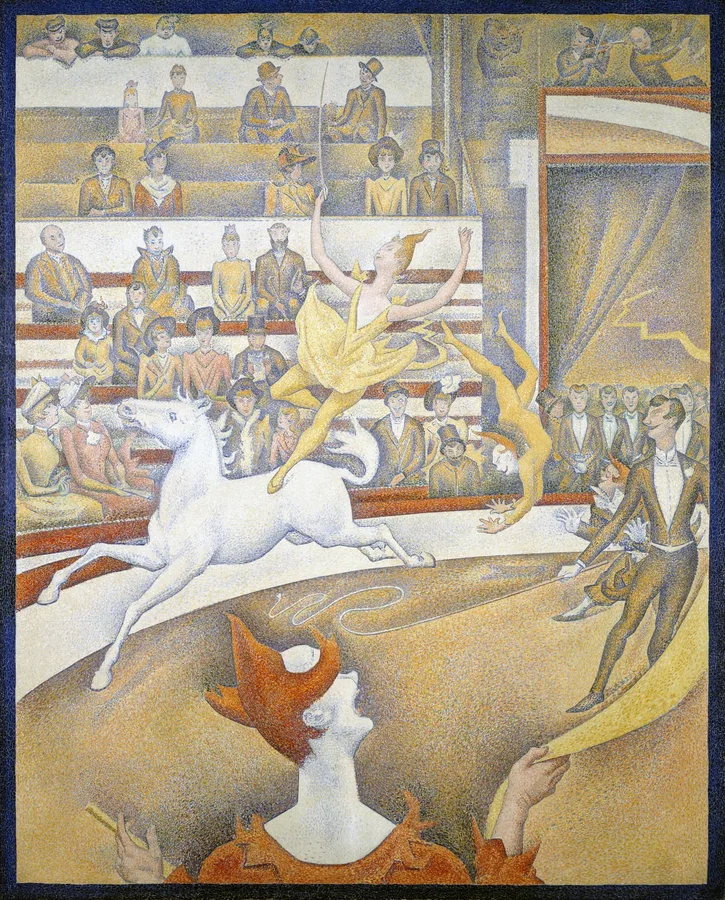
The Circus, 1890–1891
Still unfinished when Seurat hung it at the Indépendants in March 1891; he died before the exhibition closed, at thirty-one. He built it from three colours — red, yellow, blue on a white ground — so the balance is everything, and the balance is what came back.
Paris · current options on Etsy
See sizes and prices on Etsy ↗
Keep exploring
Six more, in the order he made them — the studies to the circus.
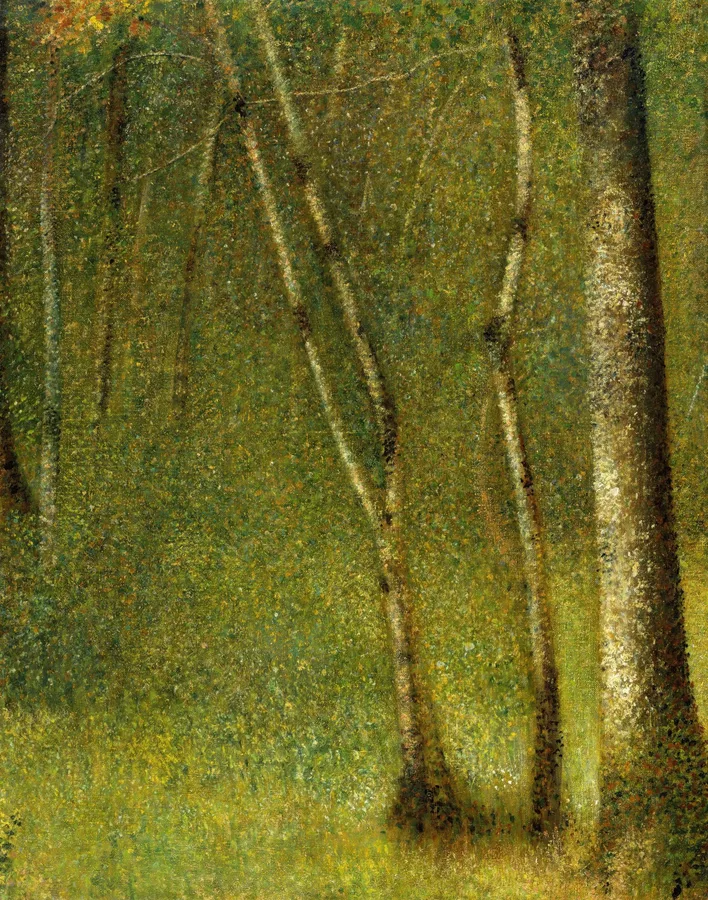
The Forest at Pontaubert, 1881
Painted in his early twenties in the woods near Avallon, before the first dot — light coming through patch by patch into a dense weave of greens. Shadow passages this deep are where grey scans give up; ours reads to the bottom.
Early work · current options on Etsy
See sizes and prices on Etsy ↗
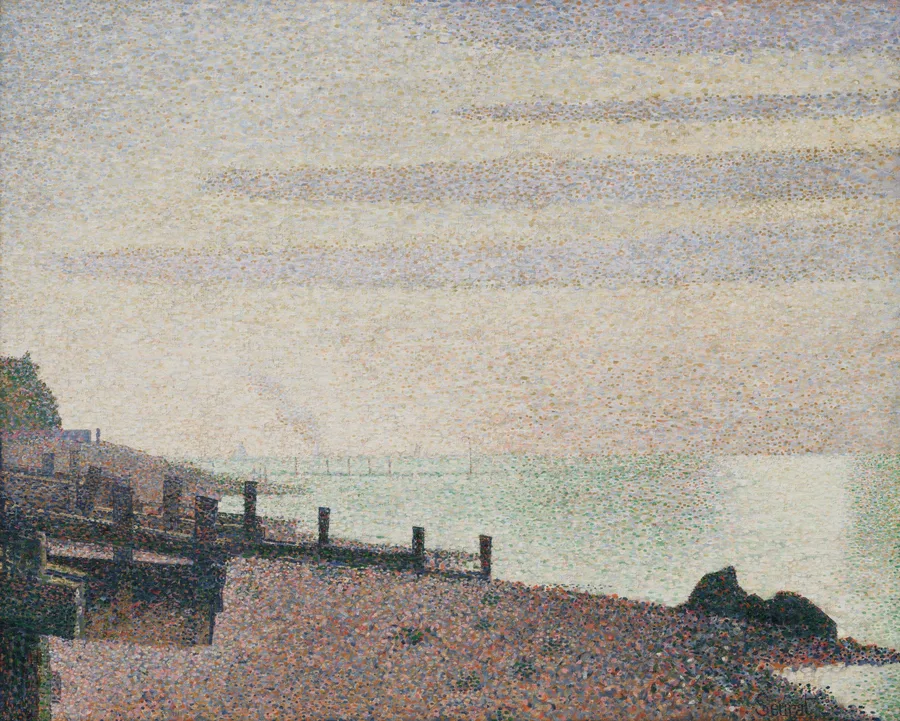
Evening, Honfleur, 1886
From his first marine summer, on the Channel at Honfleur — a becalmed evening with the light powdered evenly across sky, sea and shingle. His signature sits low in the pebbles at the right and survives at print size.
Honfleur · current options on Etsy
See sizes and prices on Etsy ↗
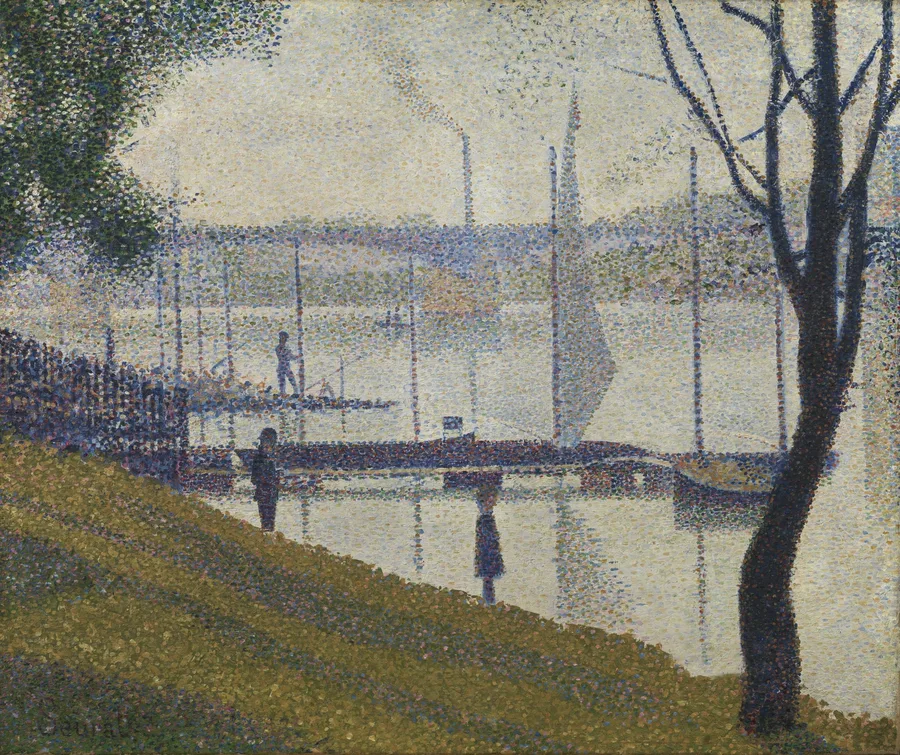
The Bridge at Courbevoie, 1886–1887
A winter-still stretch of the Seine, all verticals — masts, poplars, waiting figures. Deliberately hushed pictures die fastest in reproduction; one degree too grey and it is fog, so the work here was keeping every blue apart.
Courbevoie · current options on Etsy
See sizes and prices on Etsy ↗
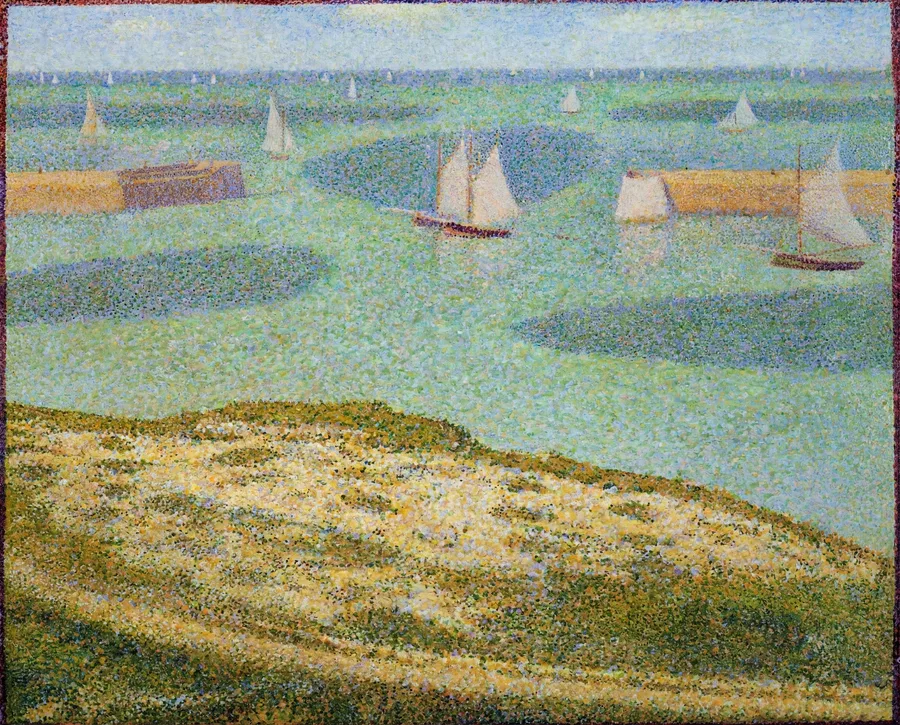
Port-en-Bessin, Entrance to the Outer Harbor, 1888
The dark drifts on the green water are cloud shadows, the only moving things in an otherwise motionless harbour. Seurat spent the summer of 1888 in this small Normandy port; the flowering cliff-top in the foreground carries the print.
Port-en-Bessin · current options on Etsy
See sizes and prices on Etsy ↗
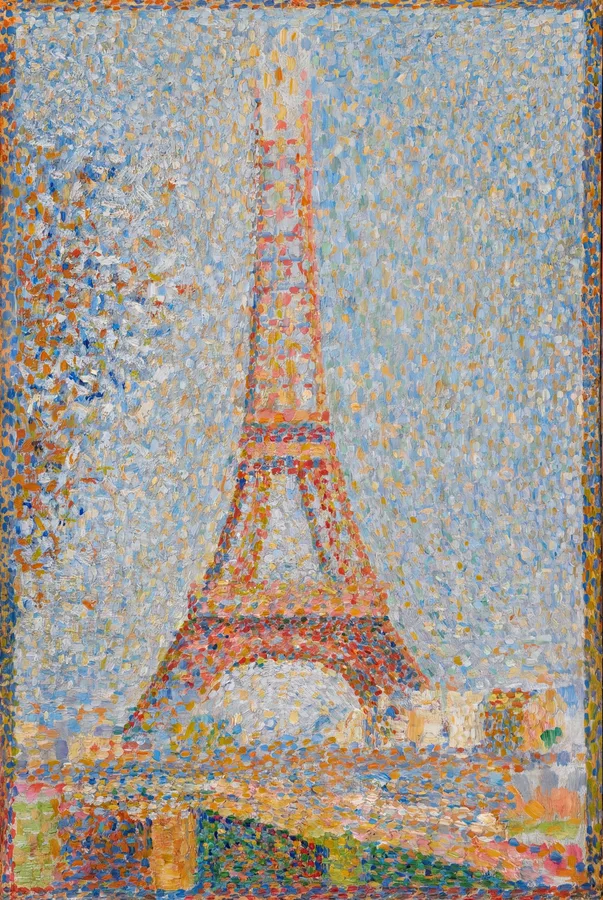
The Eiffel Tower, 1889
Painted while the tower was brand new and much of artistic Paris had signed a protest against it; Seurat sided with the iron, dissolving the engineering into dots of rose and gold. A small panel that enlarges with surprising grace.
Paris · current options on Etsy
See sizes and prices on Etsy ↗
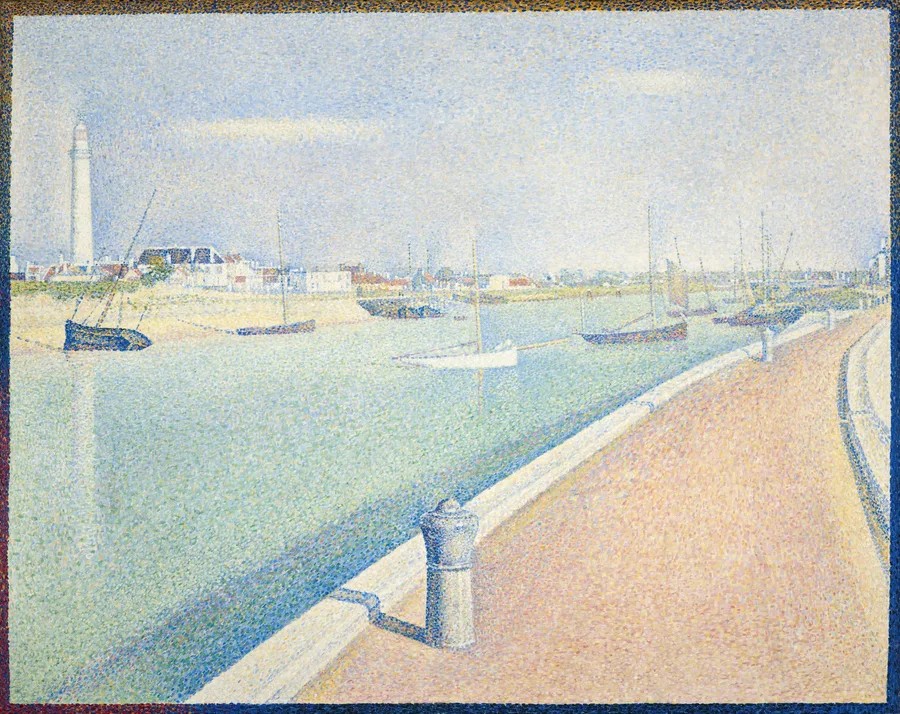
The Channel of Gravelines, Petit Fort Philippe, 1890
From the last summer, 1890, on the channel at Gravelines — light bleached nearly to white, the quay swinging out to a single bollard. The palest painting we handle; everything rides on tints a dull file flattens into blank paper, and they are all here.
Gravelines · current options on Etsy
See sizes and prices on Etsy ↗
Follow what catches your eye
These works are only the beginning. The GeMarkt archive contains 130+ Seurat records; current Etsy availability may change. Continue by subject:
Choosing a format
Rolled poster
The cheapest way in — pick it if you already own a frame or want one chosen for the room, not the shipment.
Framed paper
Arrives ready to hang, glass over paper — the classic museum-print look, and the safest default for most rooms.
Stretched canvas
No glass, no glare — texture close to a painting's, and a natural fit for painterly surfaces.
Framed canvas
The canvas texture with a finished edge — the most furniture-like of the four, and the largest sizes live here.
Prices and available formats vary by listing; Etsy shows the current options and currency for that work. Undecided? Our print format guide compares the four honestly.
From the journal
Why is this work free to print in the first place? Seurat and the public domain — the full guide →