Collections · Degas
Degas, restored for the way you live
This collection presents selected Edgar Degas paintings and pastels prepared from archival source files. Any rights conclusion is limited to the named work, intended sales territory and documented provider file, not the artist's output as a whole. GeMarkt’s archive contains 300+ work records; check the linked Etsy listing for current availability and options. Twelve are below.
Explore the edit on GeMarkt, then compare the sizes and print formats currently offered by our LumenArtee Etsy shop.
A considered place to start
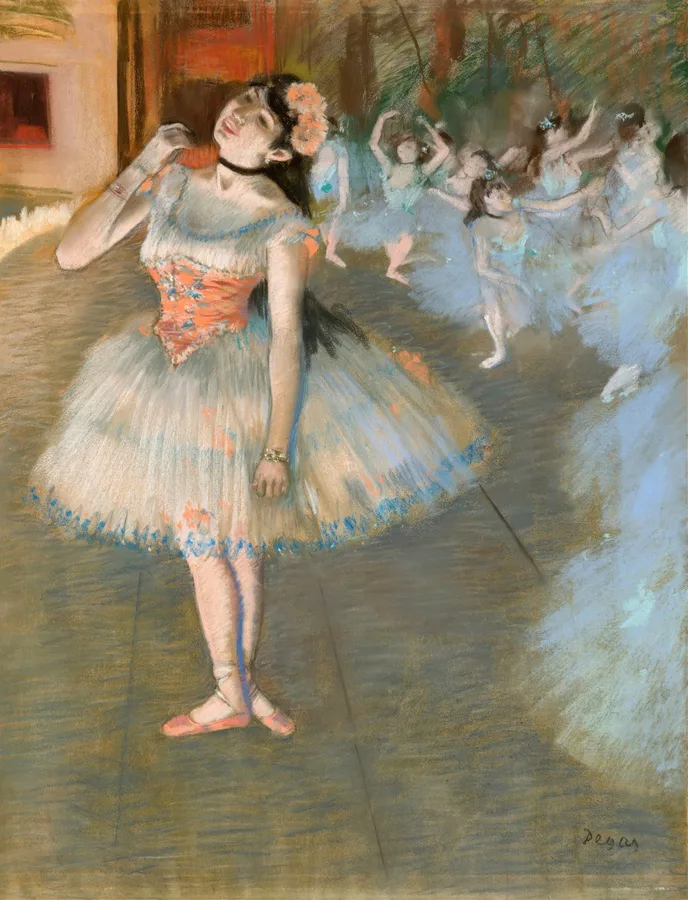
The Star, c. 1879–81
One dancer takes the stage light; the corps hangs back among the green flats. Her coral bodice against all that green is the hinge of the picture — and the first thing tired copies dull.
Paris Opéra · current options on Etsy
See sizes and prices on Etsy ↗
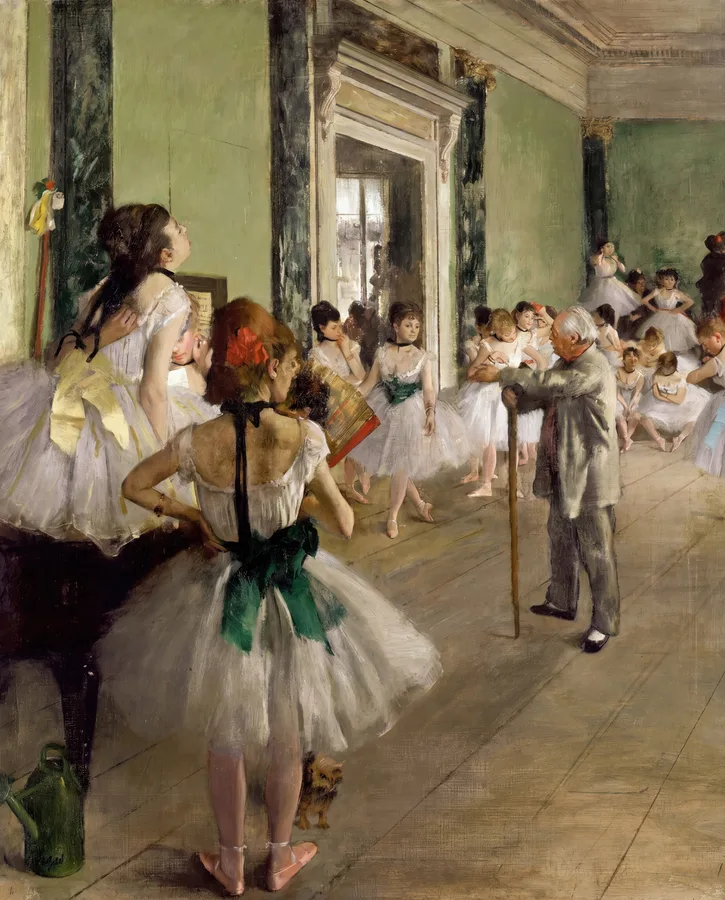
The Dance Class, 1873–76
Jules Perrot leans on his rehearsal stick, painted from life; a watering can waits by the piano to lay the floor dust. The greens of the walls run warm to cool across the room, and they must stay apart.
Paris Opéra · current options on Etsy
See sizes and prices on Etsy ↗
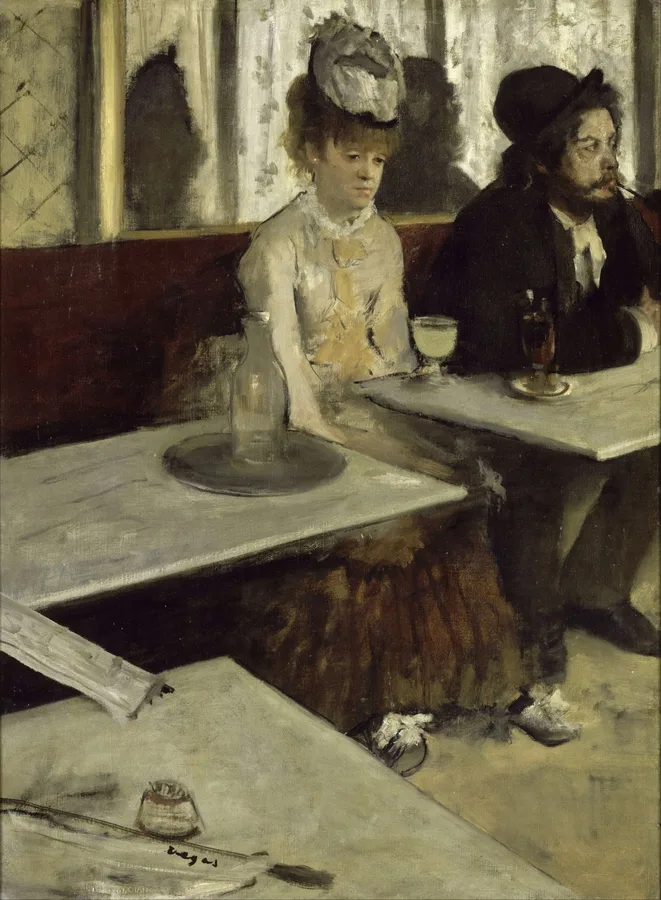
In a Café (L'Absinthe), 1875–76
Two friends posed for it — an actress and an etcher — and the pale green glass between them scandalised London. It is a painting of greys; if they clot, the whole café goes to mud.
La Nouvelle Athènes · current options on Etsy
See sizes and prices on Etsy ↗
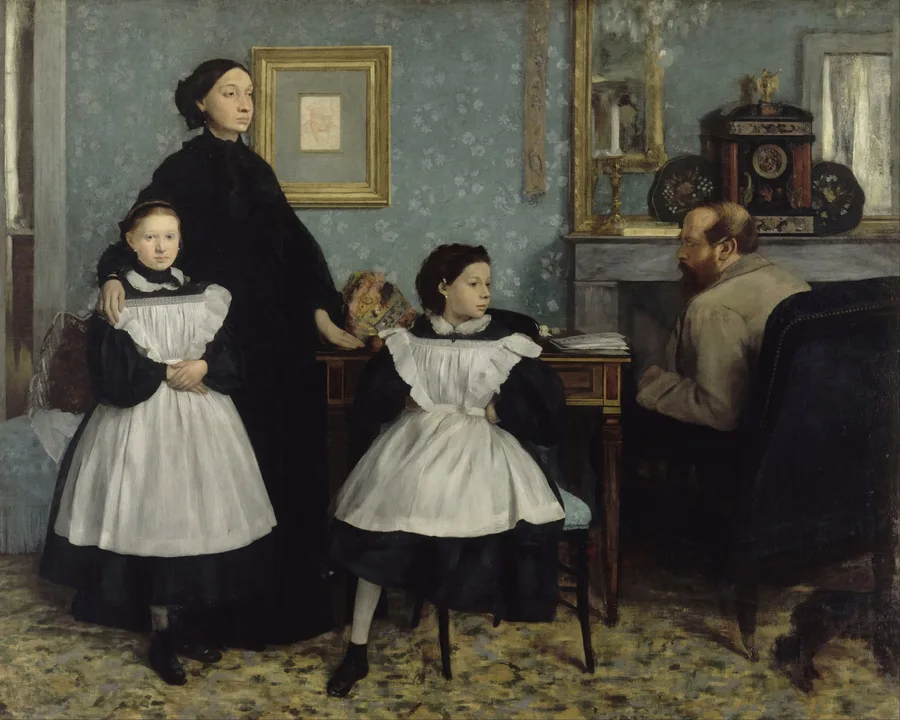
The Bellelli Family, 1858–67
Begun in Florence when Degas was twenty-four, staying with his aunt's family in their mourning year. The original is nearly life-size — the blacks have to stay deep and separate to carry that weight.
Florence · current options on Etsy
See sizes and prices on Etsy ↗
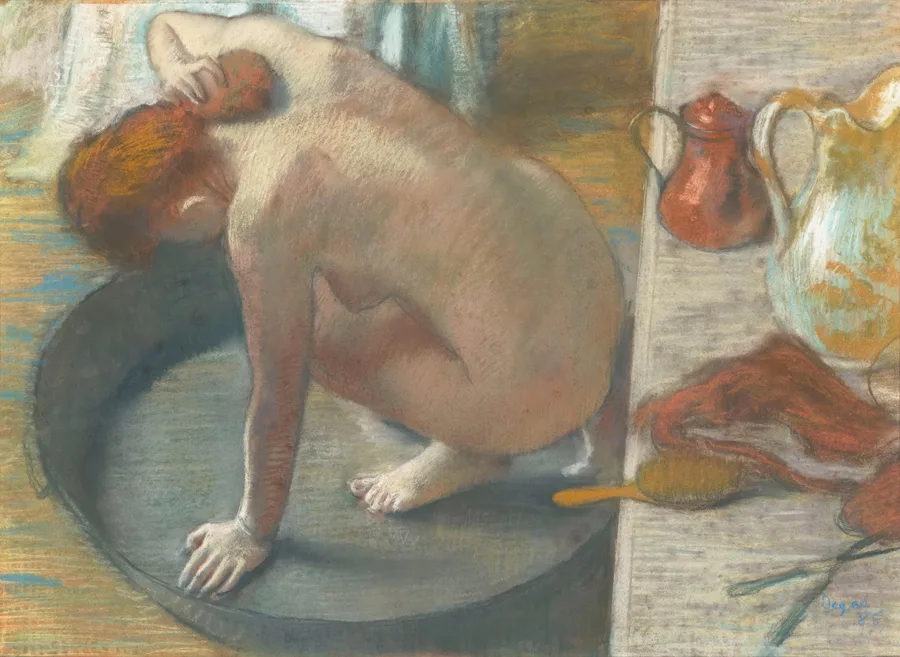
The Tub, 1886
From the suite of bathers Degas hung at the final Impressionist exhibition in 1886, seen straight down as if through a keyhole. The copper jug against the zinc grey of the basin is the colour test — both survive here.
Bathers · current options on Etsy
See sizes and prices on Etsy ↗
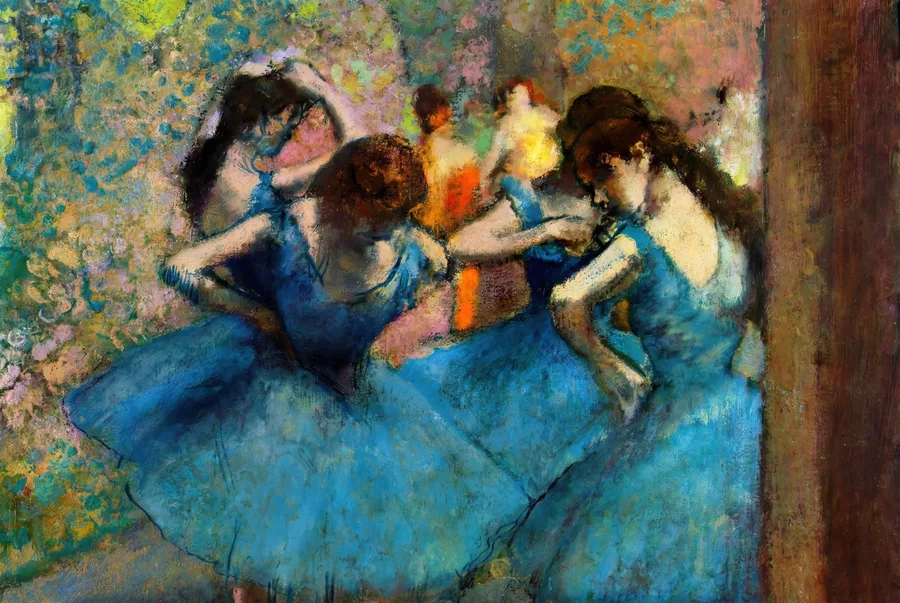
Dancers in Blue, c. 1893–96
Blue laid against blue — dancers fixing their shoulder straps in the wings while orange-lit figures cross behind. Keeping those blues from fusing into one flat mass is the whole job.
Late ballet · current options on Etsy
See sizes and prices on Etsy ↗
Keep exploring
Six more, in the order he made them — the racetrack to the dancers' wings.
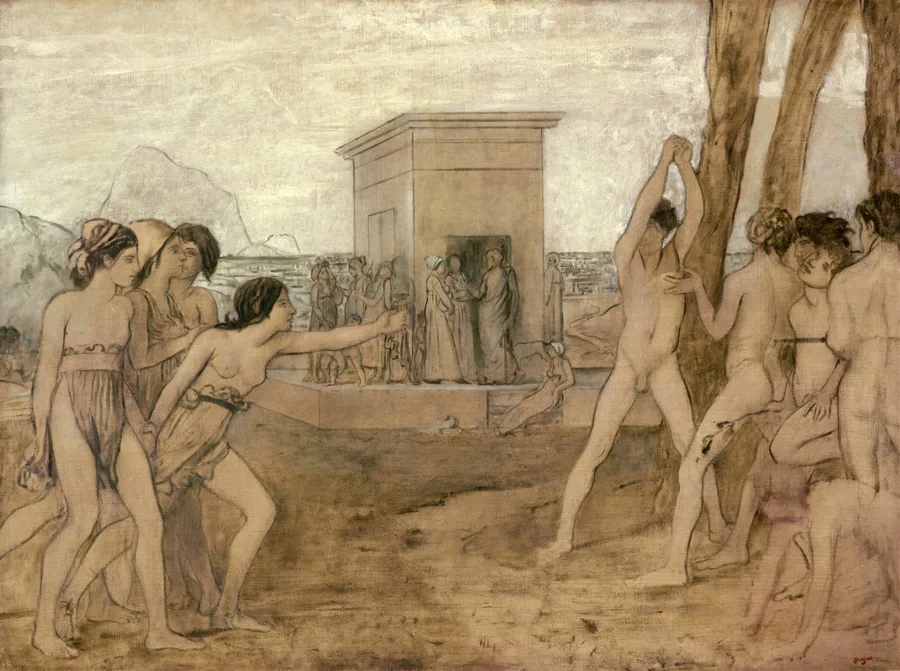
Young Spartan Girls Challenging Boys, c. 1860
Degas at about twenty-five, still aiming at the Salon: Spartan girls goading the boys to wrestle, laid in with thin earth colours like a wall painting. He circled back to this subject for the rest of his life.
History paintings · current options on Etsy
See sizes and prices on Etsy ↗
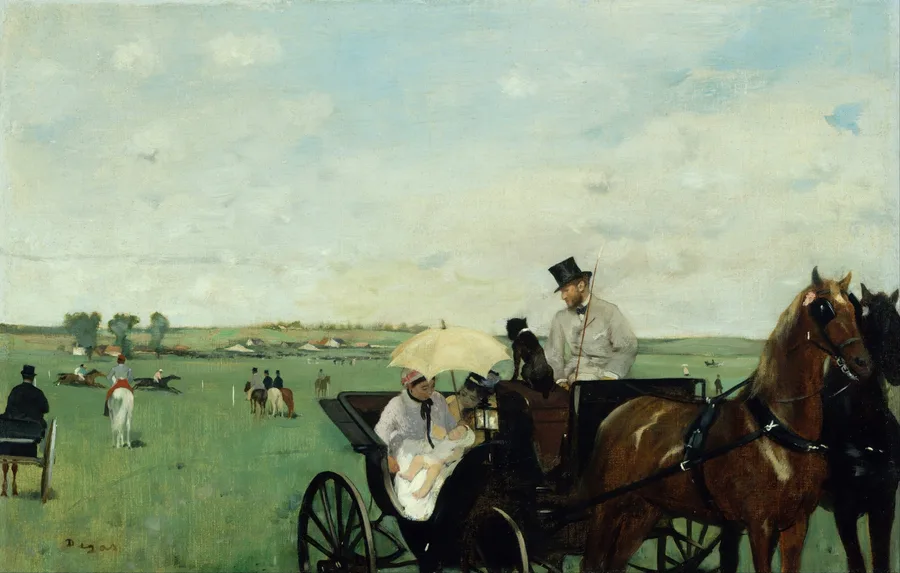
At the Races in the Countryside, 1869
The Valpinçon family's carriage parked at the edge of a Normandy racecourse — the race itself is a rumour on the horizon, and the parasol belongs to the baby. It hung in the first Impressionist exhibition of 1874.
Normandy · current options on Etsy
See sizes and prices on Etsy ↗
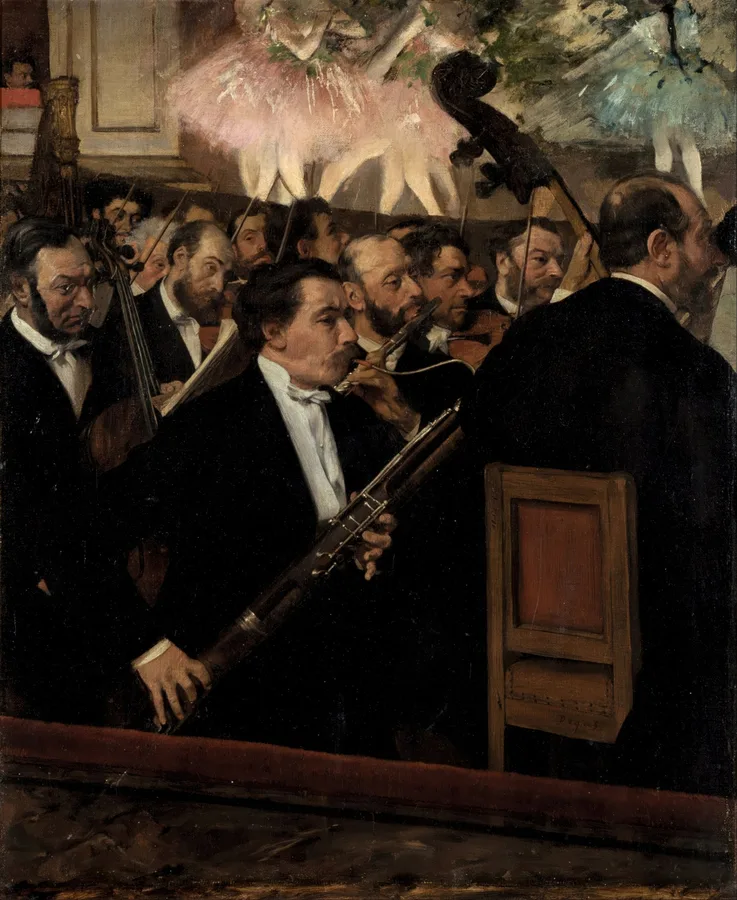
The Orchestra at the Opera, c. 1870
A group portrait smuggled into the pit — his friend Désiré Dihau front and centre at the bassoon, the dancers cropped at the neck above. Black coats on black instruments on black shadow; the restoration lives or dies there.
Paris Opéra · current options on Etsy
See sizes and prices on Etsy ↗
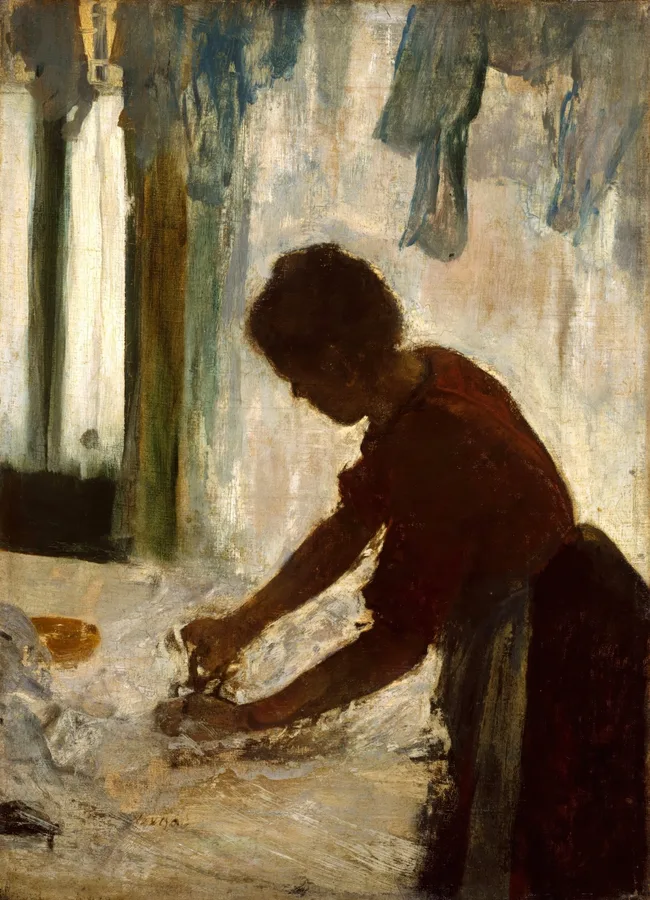
A Woman Ironing, 1873
She is almost a silhouette; the window and the hanging linen do the lighting. In dark copies she vanishes altogether — recovered, the blue shirts pinned above her surface first.
Laundresses · current options on Etsy
See sizes and prices on Etsy ↗
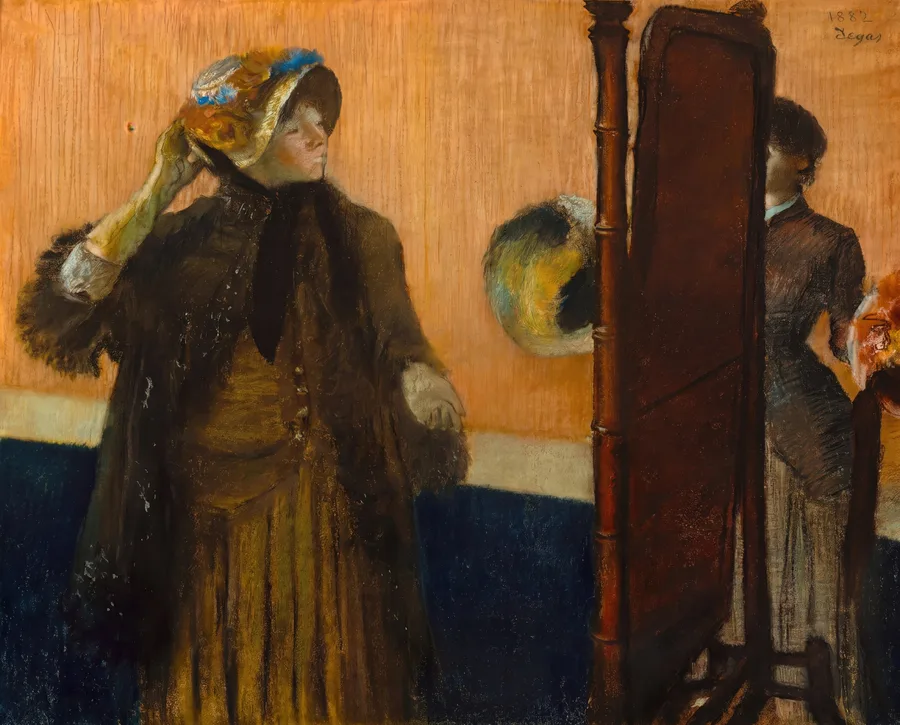
At the Milliner's, 1882
Mary Cassatt posed for the customer, pinning a bonnet in place while the shop girl waits behind the mirror. Degas dated it plainly in the corner — 1882 — and the apricot wall is his colour, not a warm cast.
Milliners · current options on Etsy
See sizes and prices on Etsy ↗
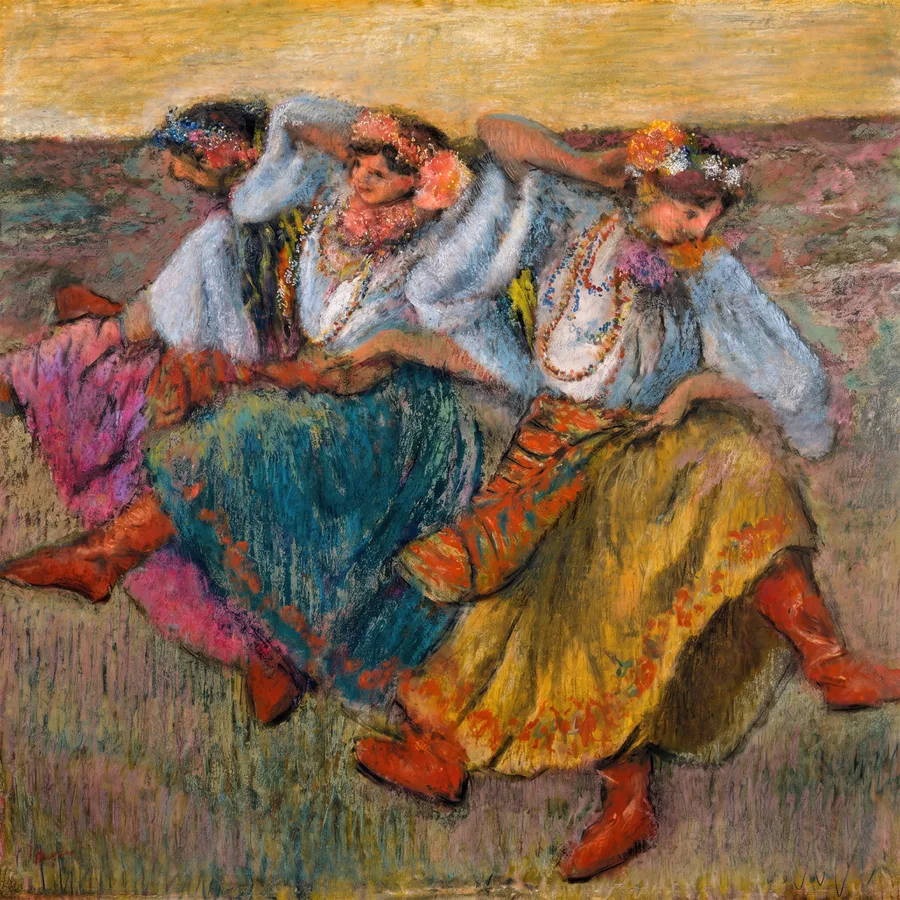
Russian Dancers, c. 1899
Garlands, ribbons and red boots at full tilt — from the folk-dance pastels of his last working decade. Long catalogued under Russia, though the dancers' dress is Ukrainian; the saturation is Degas's own.
Late pastels · current options on Etsy
See sizes and prices on Etsy ↗
Follow what catches your eye
These works are only the beginning. The GeMarkt archive contains 300+ Degas records; current Etsy availability may change. Continue by subject:
Choosing a format
Rolled poster
The cheapest way in — pick it if you already own a frame or want one chosen for the room, not the shipment.
Framed paper
Arrives ready to hang, glass over paper — the classic museum-print look, and the safest default for most rooms.
Stretched canvas
No glass, no glare — texture close to a painting's, and a natural fit for painterly surfaces.
Framed canvas
The canvas texture with a finished edge — the most furniture-like of the four, and the largest sizes live here.
Prices and available formats vary by listing; Etsy shows the current options and currency for that work. Undecided? Our print format guide compares the four honestly.
From the journal
Why is this work free to print in the first place? Degas and the public domain — the full guide →