Collections · da Vinci
da Vinci, restored for the way you live
This collection presents selected Leonardo da Vinci paintings, drawings and studies prepared from archival source files. Any rights conclusion is limited to the named work, intended sales territory and documented provider file. GeMarkt’s archive contains 250+ work records; check the linked Etsy listing for current availability and options. Twelve are below.
Explore the edit on GeMarkt, then compare the sizes and print formats currently offered by our LumenArtee Etsy shop.
A considered place to start
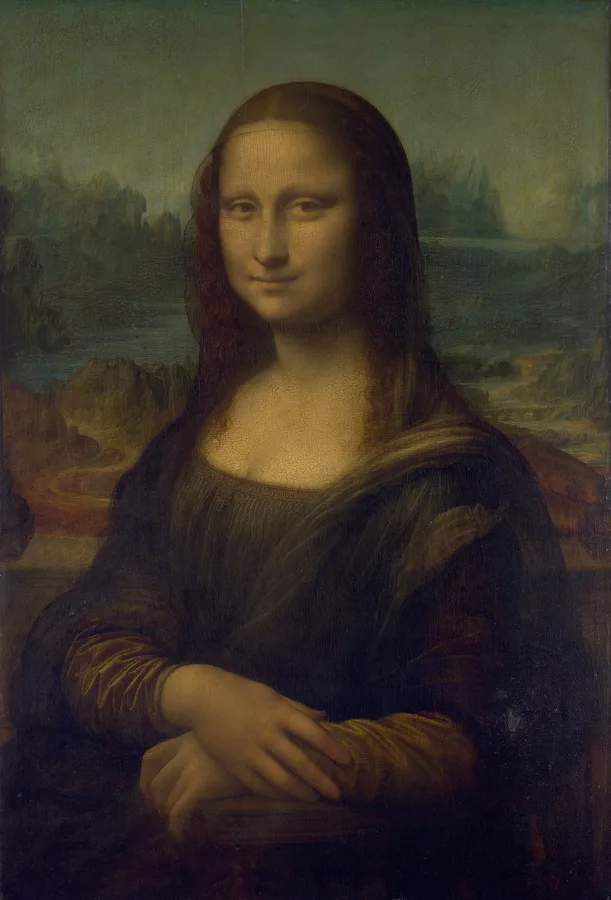
Mona Lisa, c. 1503–1506
Under the glass in Paris she reads almost monochrome — three centuries of varnish gone amber. We keep the famous calm intact but let the blue-green of the valley and the warmth of the sleeves come back through.
Florence · current options on Etsy
See sizes and prices on Etsy ↗
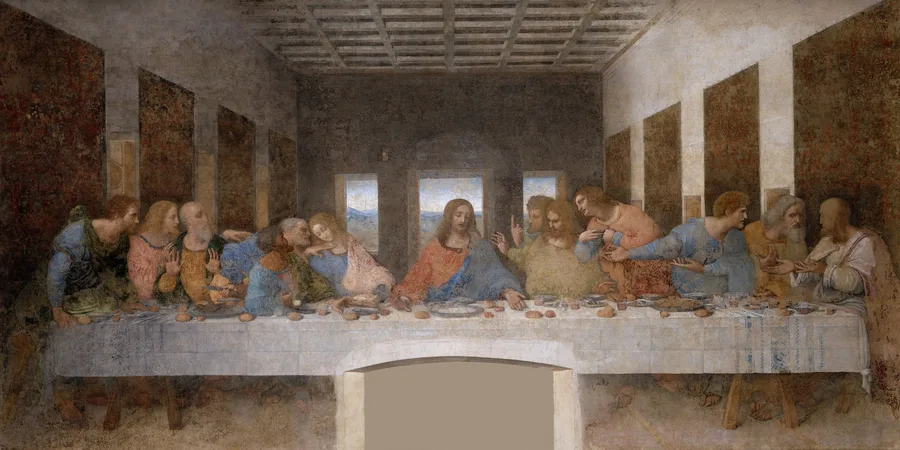
The Last Supper, 1495–1498
Leonardo painted it on a dry wall instead of wet plaster, and it began failing within his own lifetime. What survives is sober and thin, and we resist sweetening it — the apostles' blues and corals hold exactly as the wall holds them.
Milan · current options on Etsy
See sizes and prices on Etsy ↗
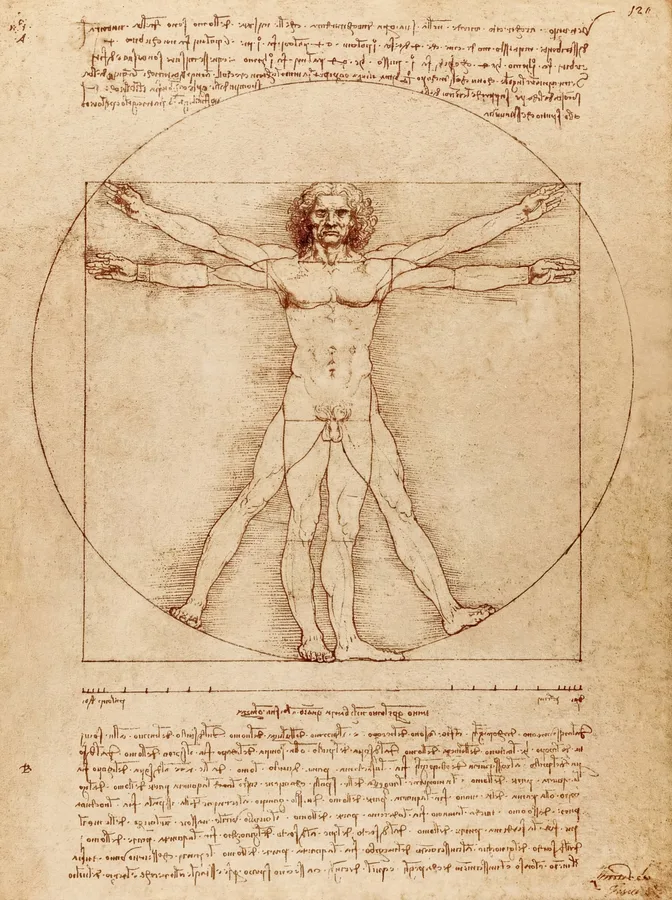
Vitruvian Man, c. 1490
Kept in the dark in Venice and exhibited only rarely, so most prints descend from tired old plates. Here the mirror writing above and below the figure stays legible — the sheet is half text, and it deserves to read as one.
Milan · current options on Etsy
See sizes and prices on Etsy ↗
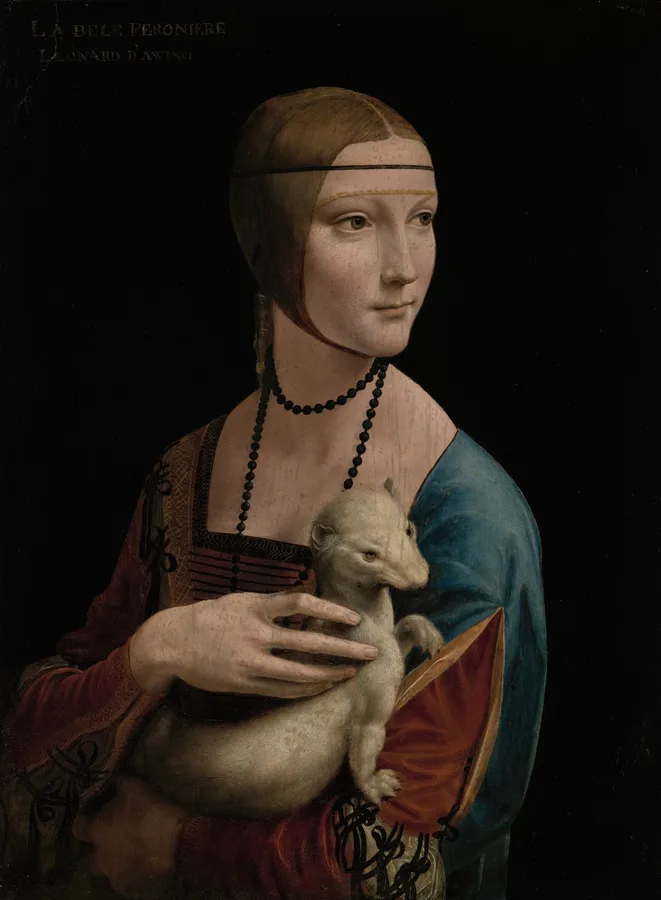
Lady with an Ermine, c. 1489–1491
Cecilia Gallerani, about sixteen, painted for the Sforza court. The flat black behind her is a later repaint that muddy copies let swallow her hair; restored, her outline and the ermine's white fur sit clean against it.
Milan · current options on Etsy
See sizes and prices on Etsy ↗
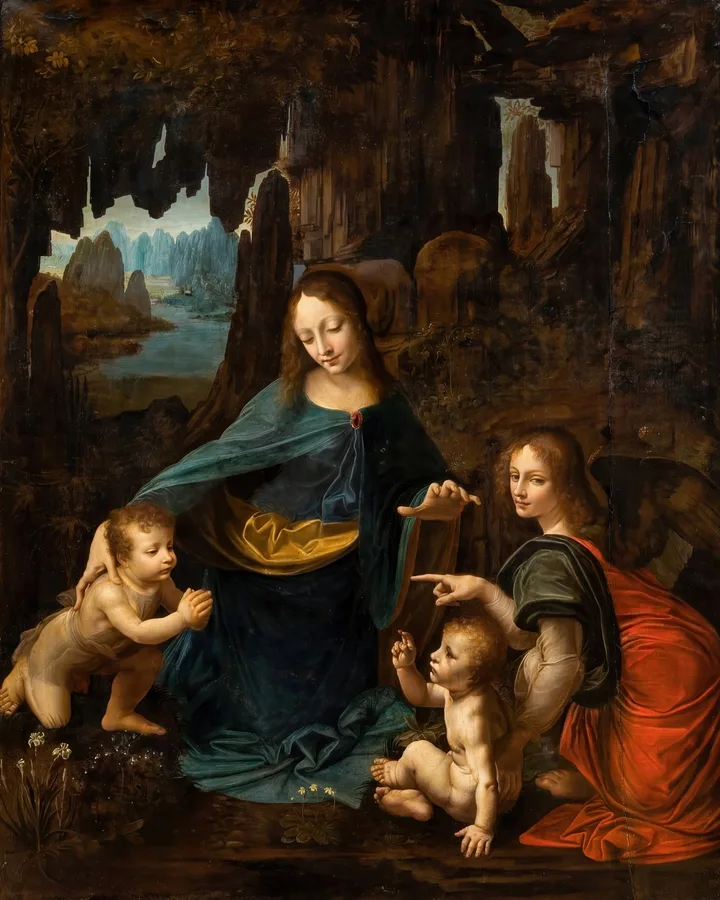
The Virgin of the Rocks, 1483–1486
The earlier of Leonardo's two treatments of the subject — the version where the angel looks out at you and points. Grotto pictures die first in the shadows, so the work here was keeping the blue rock vista and the red mantle alive inside all that dark.
Milan, first version · current options on Etsy
See sizes and prices on Etsy ↗
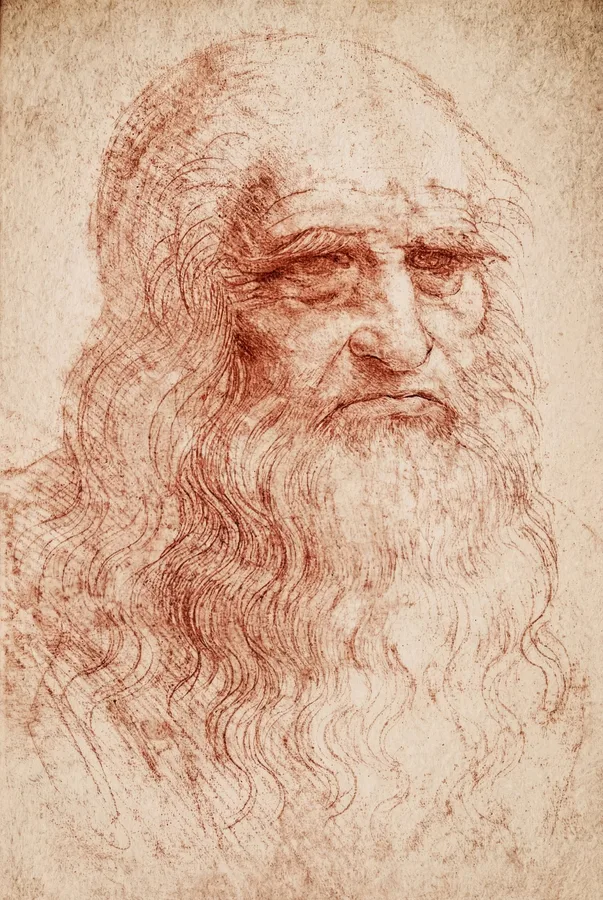
Self-Portrait in Red Chalk, c. 1512
So light-fragile it is almost never shown, and in person the paper is a field of brown spots. We brought the old man's face back out of the foxing without flattening the chalk's grain — this drawing is all texture.
Turin · current options on Etsy
See sizes and prices on Etsy ↗
Keep exploring
Six more, in the order he made them — Florence to Amboise.
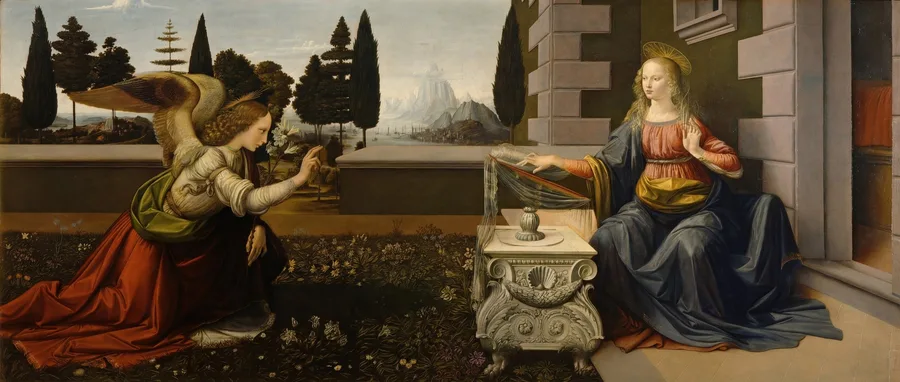
Annunciation, c. 1472–1476
Painted while he was still in Verrocchio's workshop, with the angel's wings studied from real birds. The picture is a test of edges — marble lectern, lawn flowers, harbour haze — and each keeps its own sharpness here.
First Florentine period · current options on Etsy
See sizes and prices on Etsy ↗
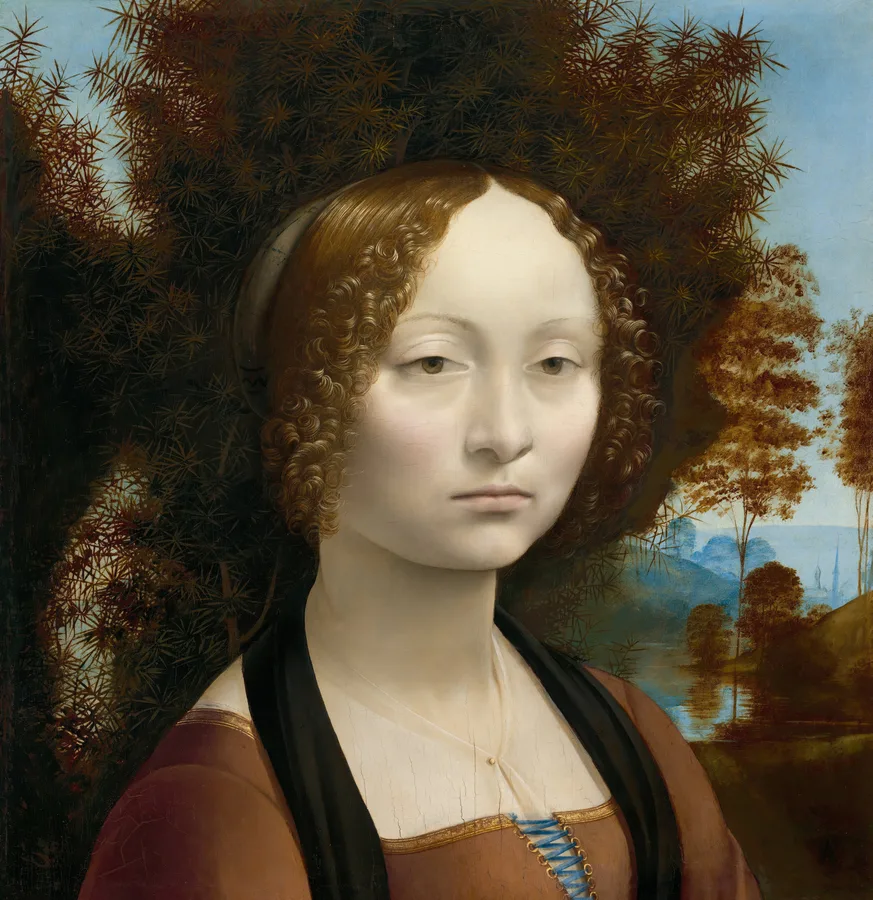
Ginevra de' Benci, c. 1474–1478
The juniper behind her is a pun on her name — ginepro, Ginevra. The panel was cut down below centuries ago, which is why she meets a square format so calmly; the porcelain pallor is hers, not a tired scan's.
First Florentine period · current options on Etsy
See sizes and prices on Etsy ↗
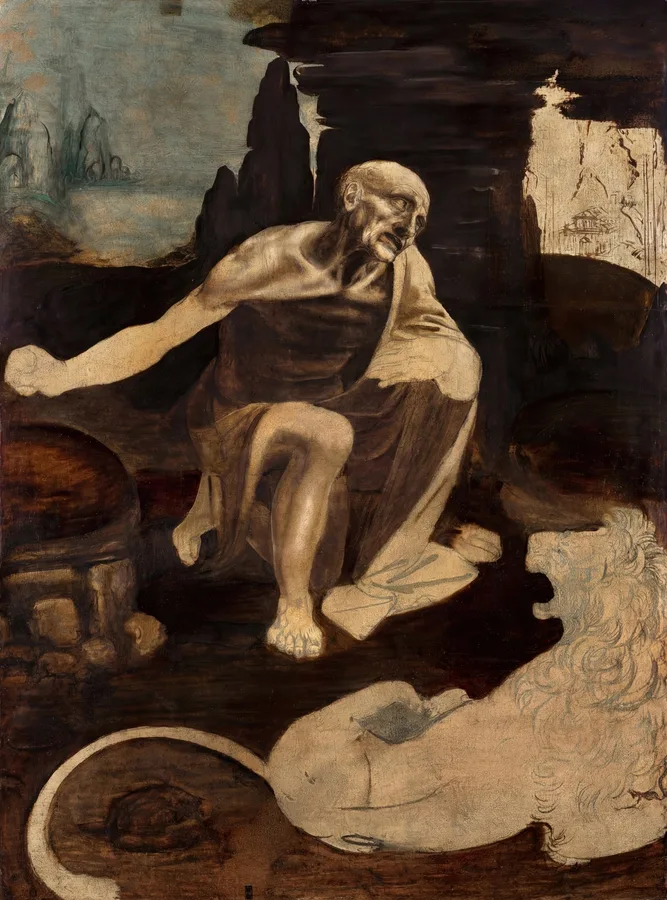
Saint Jerome in the Wilderness, c. 1480–1482
Abandoned unfinished — the lion is bare ground and the saint's neck and shoulder are a naked anatomy study. We restored nothing that was never there; the point of this panel is watching him think.
First Florentine period · current options on Etsy
See sizes and prices on Etsy ↗
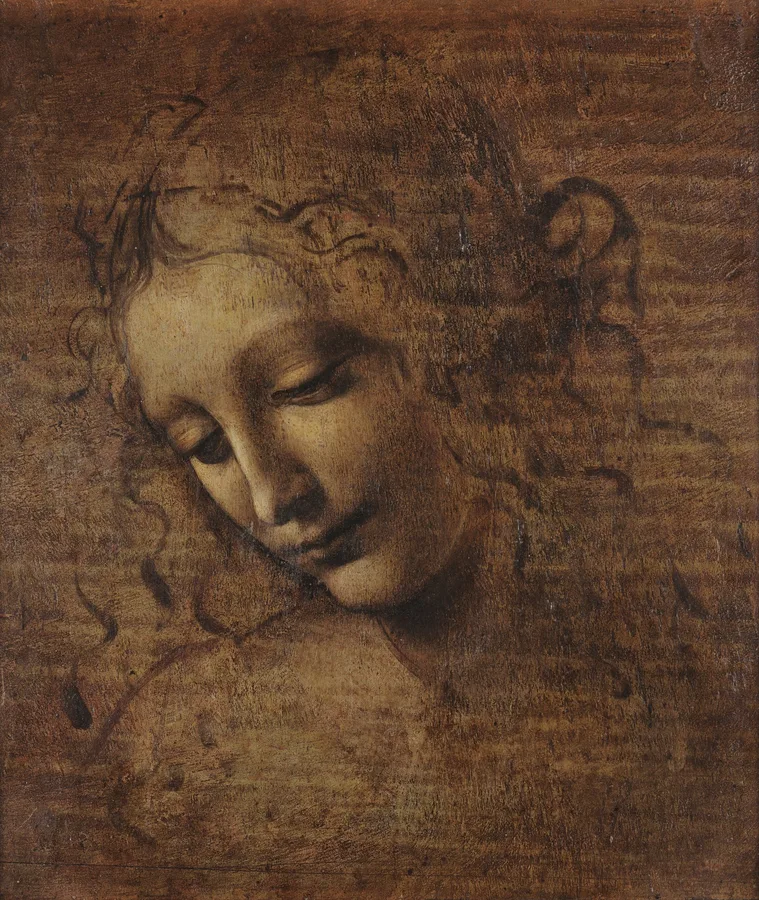
Head of a Woman (La Scapigliata), c. 1506–1508
The dishevelled one — umber and lead white on a small poplar panel, a face finished to glass inside a storm of unfinished hair. Careless prints grey out the wood's warmth; this one keeps the panel glowing.
Second Milanese period · current options on Etsy
See sizes and prices on Etsy ↗
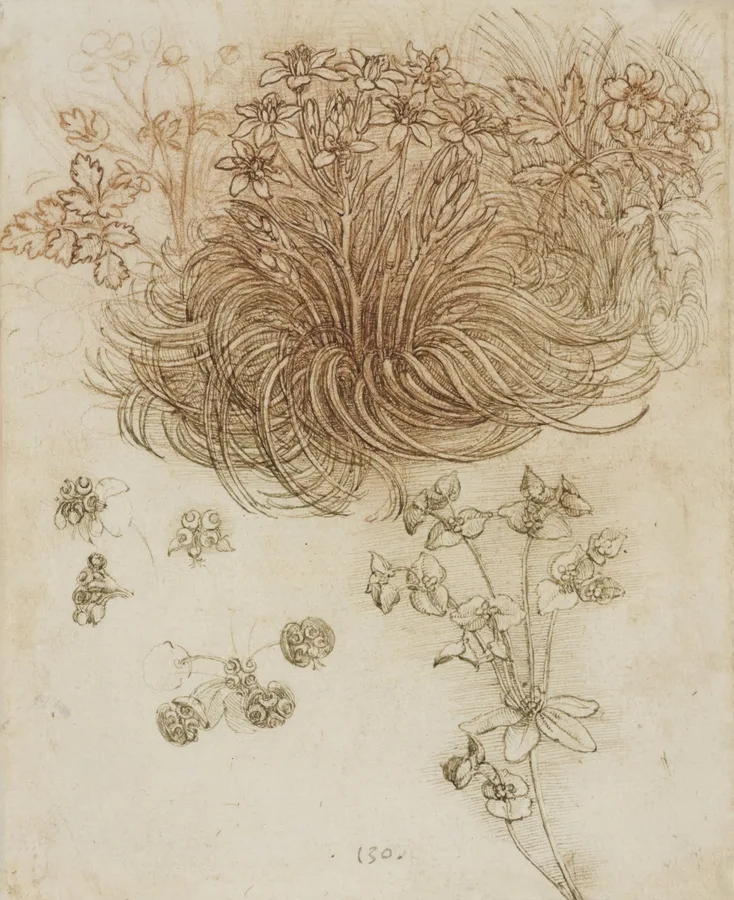
A Star of Bethlehem and Other Plants, c. 1506–1512
Drawn while he was preparing the lost Leda, and the leaves spiral exactly the way he drew moving water. Pen and ink over red chalk — two close browns that cheap printing merges, kept apart here.
Leda studies · current options on Etsy
See sizes and prices on Etsy ↗
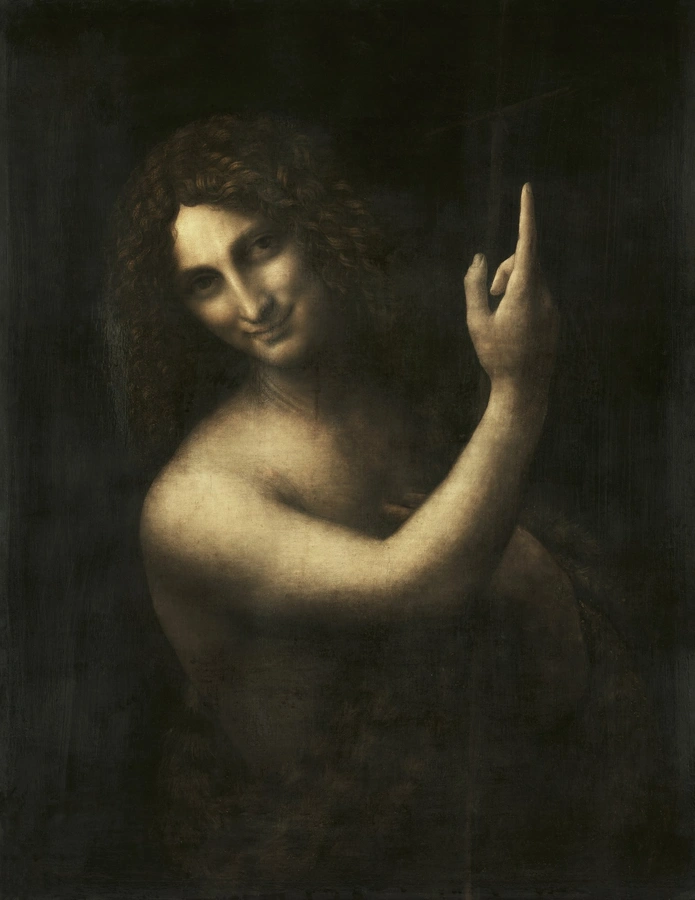
Saint John the Baptist, c. 1513–1516
One of the paintings he kept beside him until his death in France — a raised finger, a smile, and almost nothing else out of the dark. The picture is a single slow gradation, and protecting that fade at print size was the entire job.
Late period · current options on Etsy
See sizes and prices on Etsy ↗
Follow what catches your eye
These works are only the beginning. The GeMarkt archive contains 250+ da Vinci records; current Etsy availability may change. Continue by subject:
Choosing a format
Rolled poster
The cheapest way in — pick it if you already own a frame or want one chosen for the room, not the shipment.
Framed paper
Arrives ready to hang, glass over paper — the classic museum-print look, and the safest default for most rooms.
Stretched canvas
No glass, no glare — texture close to a painting's, and a natural fit for painterly surfaces.
Framed canvas
The canvas texture with a finished edge — the most furniture-like of the four, and the largest sizes live here.
Prices and available formats vary by listing; Etsy shows the current options and currency for that work. Undecided? Our print format guide compares the four honestly.
From the journal
Why is this work free to print in the first place? da Vinci and the public domain — the full guide →