Collections · Koson
Koson, restored for the way you live
This collection presents selected Ohara Koson bird-and-flower prints from the 1900s through the 1920s, prepared from archival source files. Any rights conclusion is limited to the named print, intended sales territory and documented provider file. GeMarkt’s archive contains 90+ work records; check the linked Etsy listing for current availability and options.
Explore the edit on GeMarkt, then compare the sizes and print formats currently offered by our LumenArtee Etsy shop.
A considered place to start
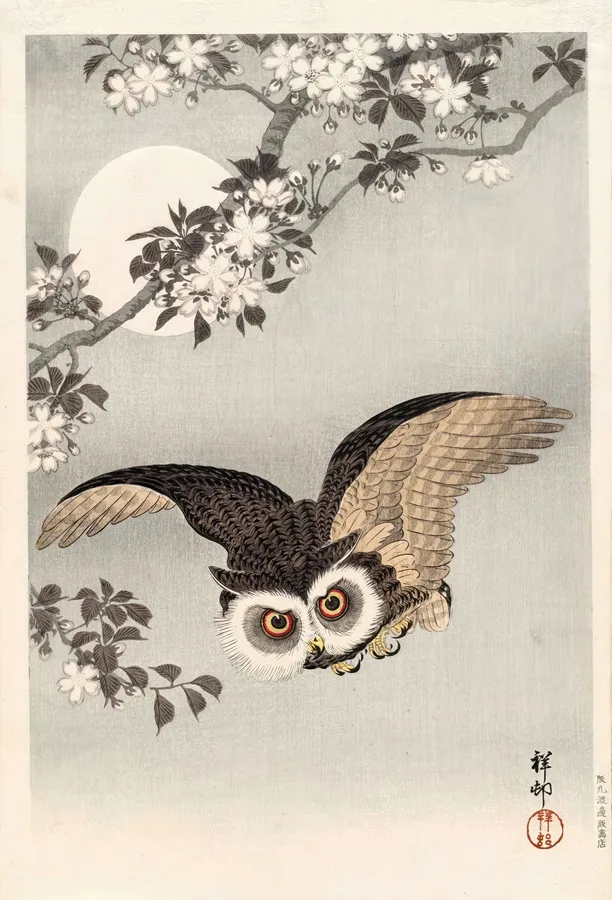
Scops Owl, Cherry Blossoms and Moon, c. 1926
The owl that marked his return to printmaking in 1926, caught mid-swoop under cherry branches with the moon behind. The sky is one long quiet gradation — the first thing to break up in a tired copy, and the thing we watched most closely.
Watanabe shin-hanga · current options on Etsy
See sizes and prices on Etsy ↗
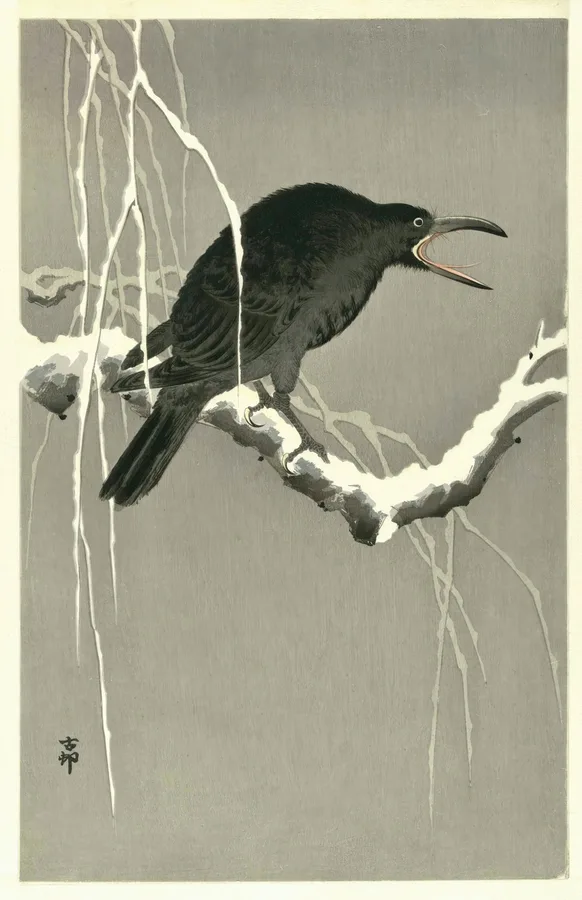
Cawing Crow, c. 1910
A crow mid-caw on a snow-heavy branch. Koson's black is really two blacks — a matte body over wing feathers with sheen — and weary copies merge them into silhouette; restored, the bird gets its depth back.
Daikokuya era · current options on Etsy
See sizes and prices on Etsy ↗
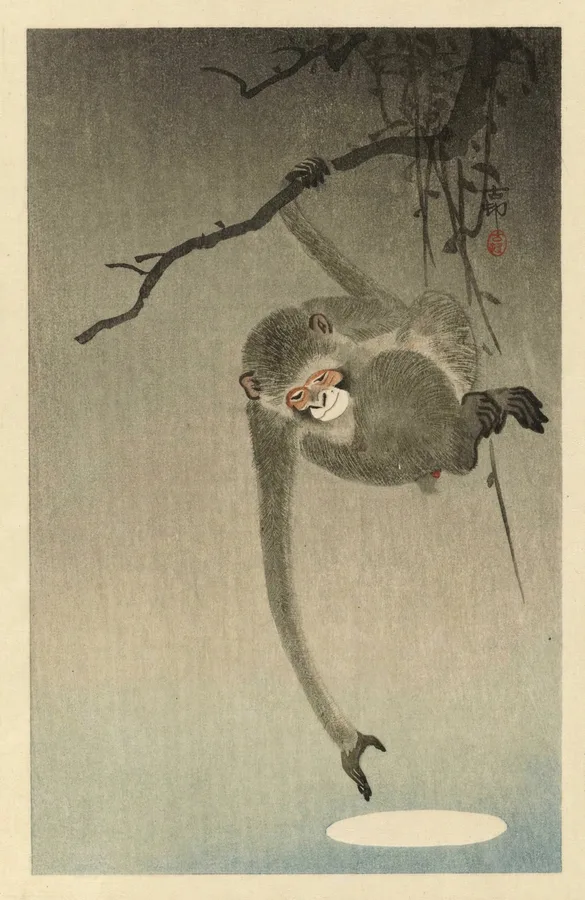
Monkey Reaching for the Moon's Reflection, c. 1910
An old Zen motif: the monkey grasping at the moon's reflection, certain it is the moon. The dusk falling from smoke-grey to pale water carries the whole parable — it has to fall without a stripe.
Daikokuya era · current options on Etsy
See sizes and prices on Etsy ↗
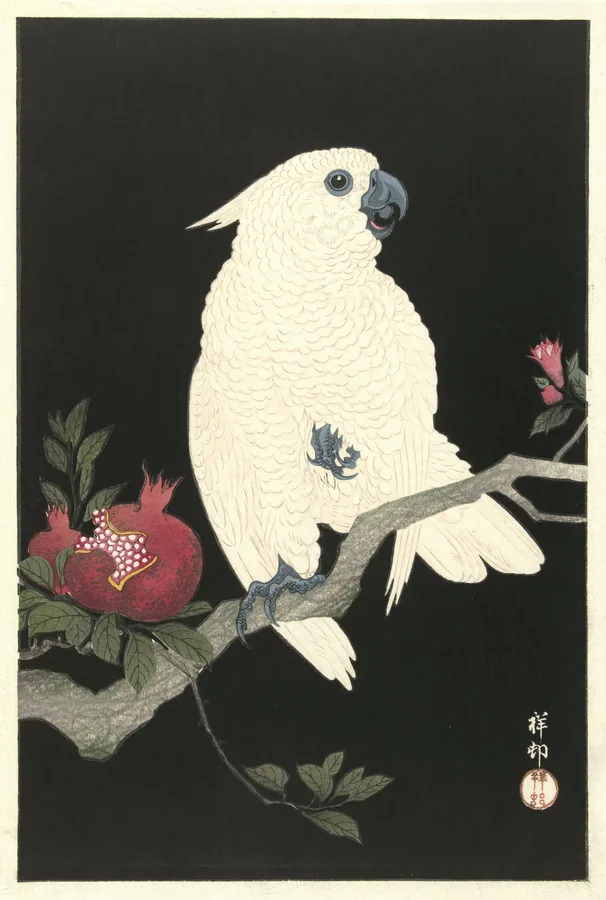
Cockatoo and Pomegranate, c. 1927
White bird on near-black ground — the hardest pairing in his catalogue to reproduce. The breast scales sit one tone below white; when they come back, the cockatoo reads round instead of flat.
Watanabe shin-hanga · current options on Etsy
See sizes and prices on Etsy ↗
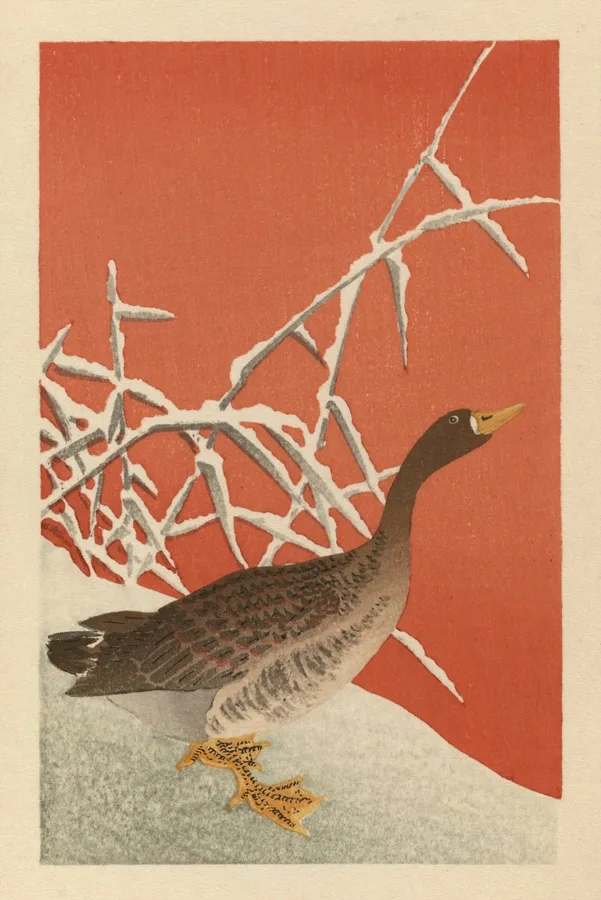
Goose and Reeds in Snow, c. 1910s
A winter goose against a flat field of vermilion, with snow-lined reeds doing all the drawing. That red is the first pigment to dull toward brick; here it keeps its original heat.
Daikokuya era · current options on Etsy
See sizes and prices on Etsy ↗
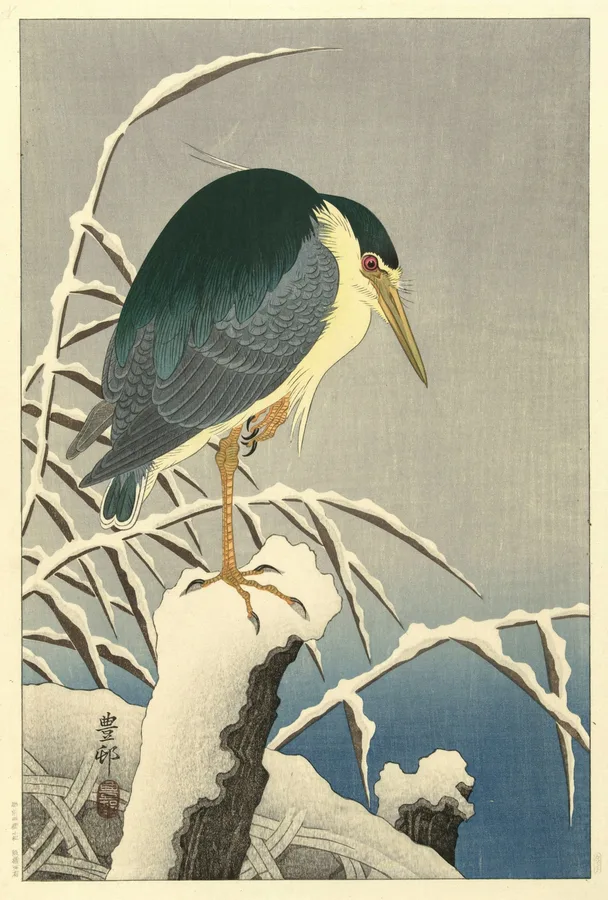
Heron in Snow, c. 1910s
A night heron hunched on a snow-capped stump, the reeds bowing under their load. The sky is one flat block of grey — woodblock printing at its barest, and the first place a muddy copy gives itself away.
Daikokuya era · current options on Etsy
See sizes and prices on Etsy ↗
Keep exploring
Six more kachō-e sheets — season by season.
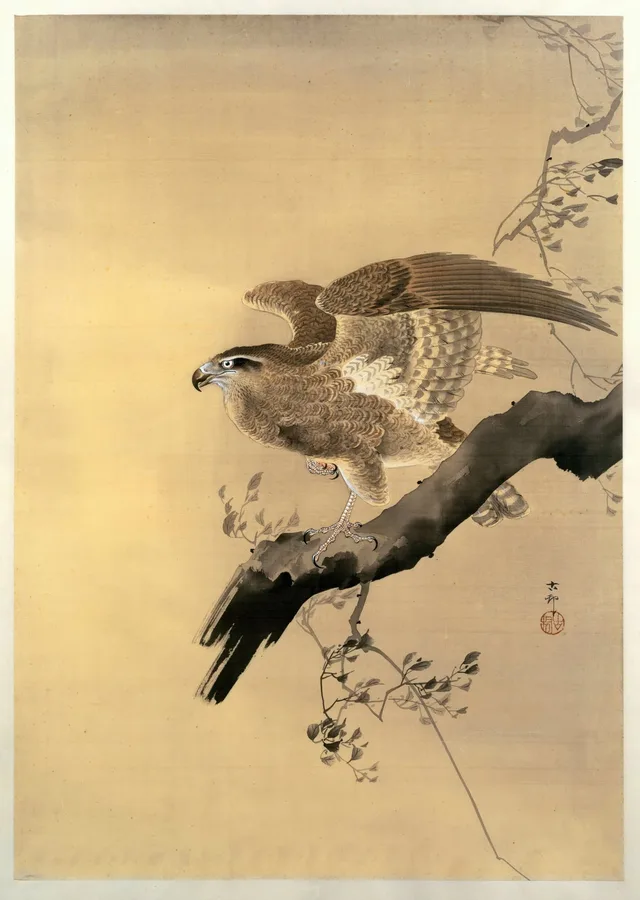
Hawk, c. 1900s
From his earliest years, when he still worked like the Nihonga painter he trained to be — the branch is a wet ink stroke, the hawk built feather by feather over it. A window onto Koson before the bird-and-flower sets.
Early Meiji years · current options on Etsy
See sizes and prices on Etsy ↗
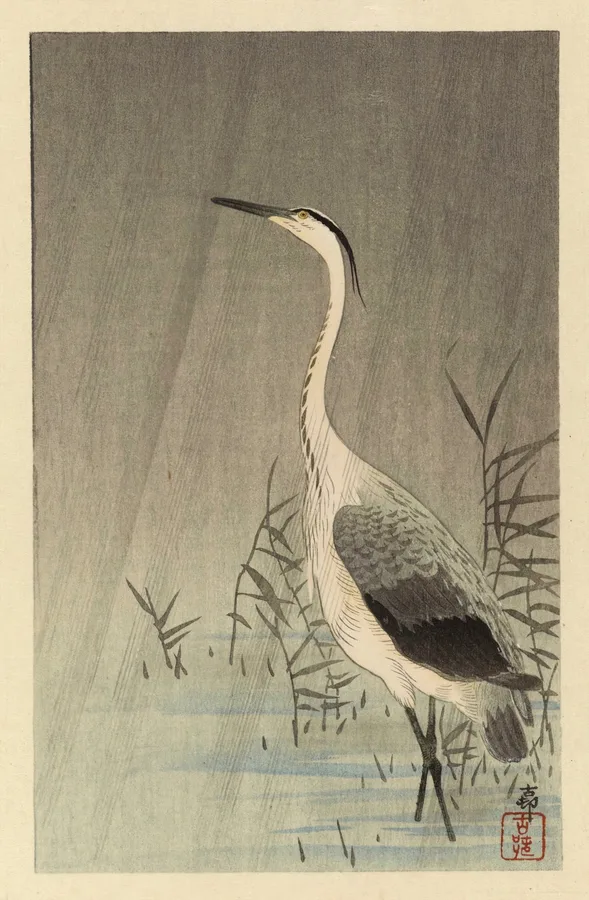
Heron in Shallow Water in Rain, c. 1910s
The rain is printed as long diagonal wipes of grey pulled across the block — the streaks are the picture. They are the first detail to drown in a dark copy, and the first thing we brought back.
Daikokuya era · current options on Etsy
See sizes and prices on Etsy ↗
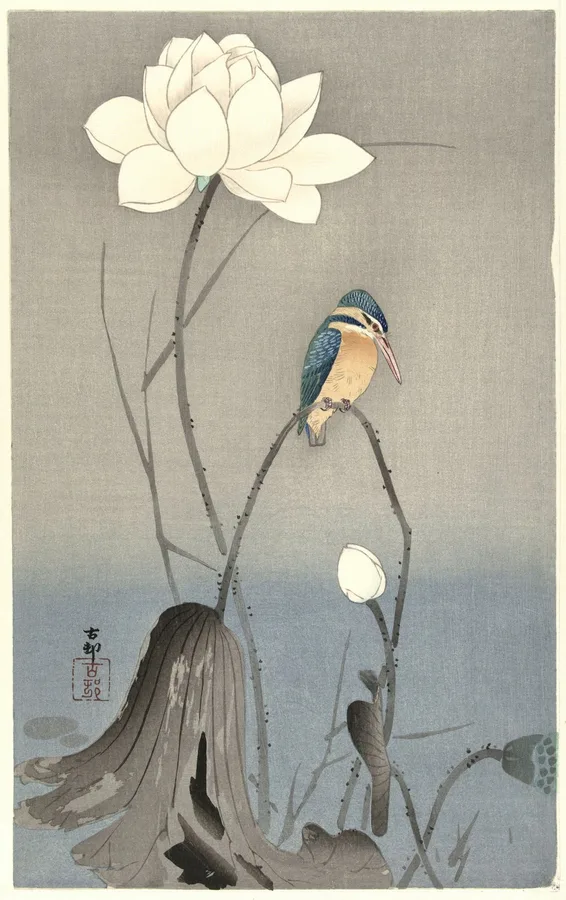
Kingfisher with Lotus Flower, c. 1910s
One point of turquoise and rust on a withered lotus stem, everything else kept to greys and a late-summer white. Koson liked a single flare of colour to carry a print; it only works when the greys around it stay quiet.
Daikokuya era · current options on Etsy
See sizes and prices on Etsy ↗
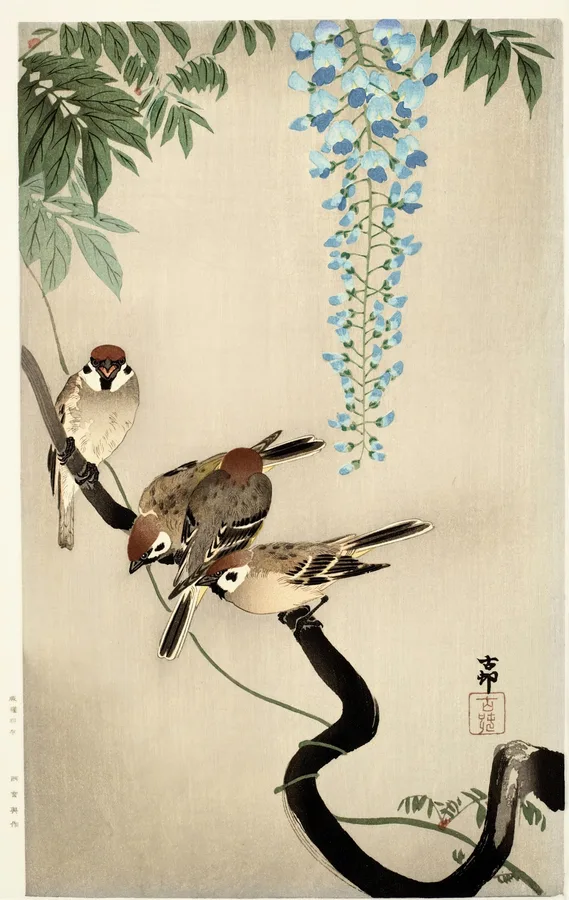
Sparrows and Wisteria, c. 1910s
Four tree sparrows jostling on a branch drawn as one calligraphic whip of black under blue wisteria. That stroke shows every flaw in a rough surface — keeping it liquid was most of the work.
Daikokuya era · current options on Etsy
See sizes and prices on Etsy ↗
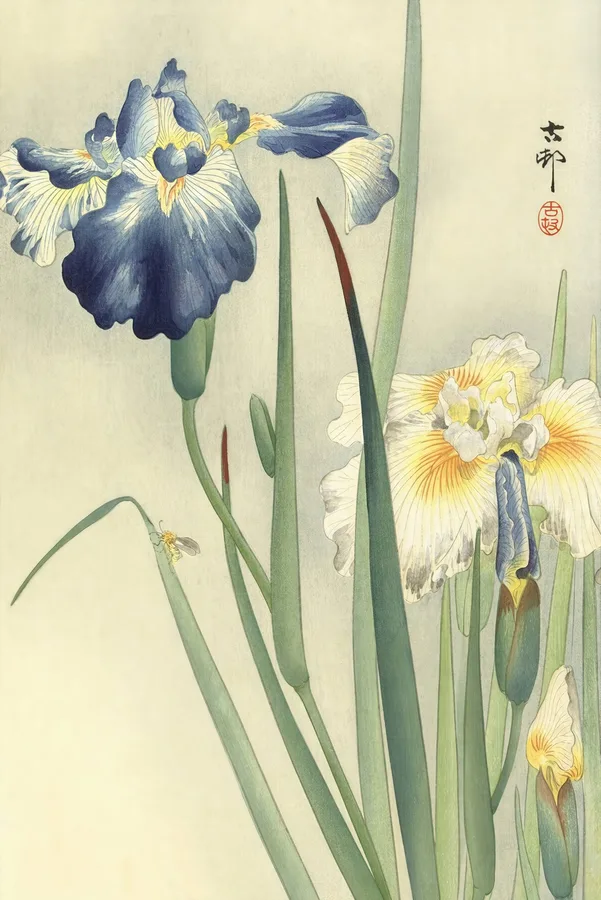
Irises, c. 1910s
Closer to a watercolour than a print — blue and cream irises in soft gradations, with a small bee dropping in at the left that most reproductions lose entirely. The pale yellow at the petal hearts is the fragile part, and it's back.
Daikokuya era · current options on Etsy
See sizes and prices on Etsy ↗
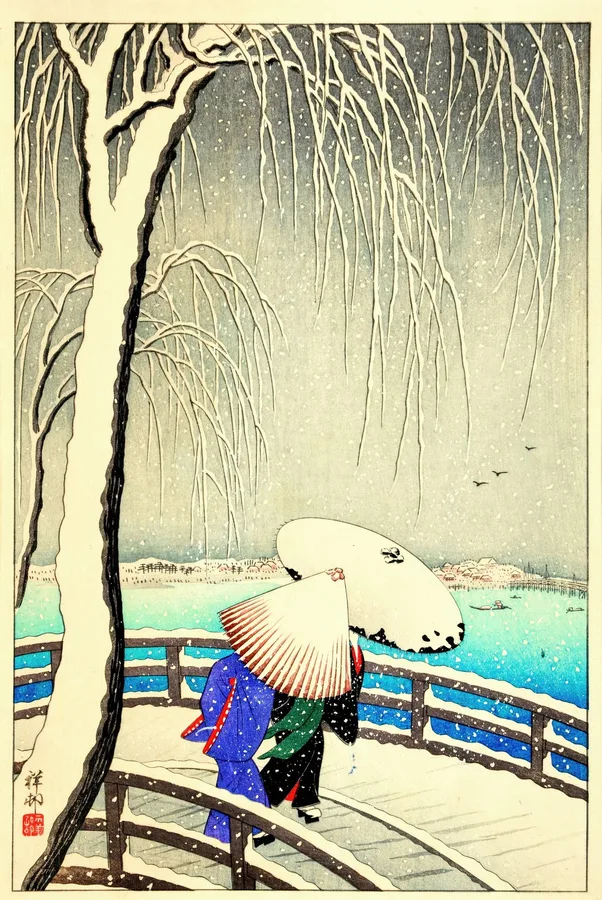
Two Women in Snow on Yanagi Bridge, 1927
Two figures under umbrellas crossing Yanagibashi in a night snowfall — a rare city scene from a man who mostly drew birds. Each flake is reserved paper, not paint, and every one has to stay crisp against the willow.
Watanabe shin-hanga · current options on Etsy
See sizes and prices on Etsy ↗
Follow what catches your eye
These works are only the beginning. The GeMarkt archive contains 90+ Koson records; current Etsy availability may change. Continue by subject:
Choosing a format
Rolled poster
The cheapest way in — pick it if you already own a frame or want one chosen for the room, not the shipment.
Framed paper
Arrives ready to hang, glass over paper — the classic museum-print look, and the safest default for most rooms.
Stretched canvas
No glass, no glare — texture close to a painting's, and a natural fit for painterly surfaces.
Framed canvas
The canvas texture with a finished edge — the most furniture-like of the four, and the largest sizes live here.
Prices and available formats vary by listing; Etsy shows the current options and currency for that work. Undecided? Our print format guide compares the four honestly.
From the journal
Why is this work free to print in the first place? Koson and the public domain — the full guide →