Collections · Klimt
Klimt, restored for the way you live
For works documented in the linked guide, we keep the named artwork, intended sales territory and exact provider file as separate parts of the record. GeMarkt’s archive contains 290+ Klimt work records; check the linked Etsy listing for current availability and options. Twelve pieces, chosen and annotated by the studio, are below.
Explore the edit on GeMarkt, then compare the sizes and print formats currently offered by our LumenArtee Etsy shop. free Klimt wallpapers →
A considered place to start
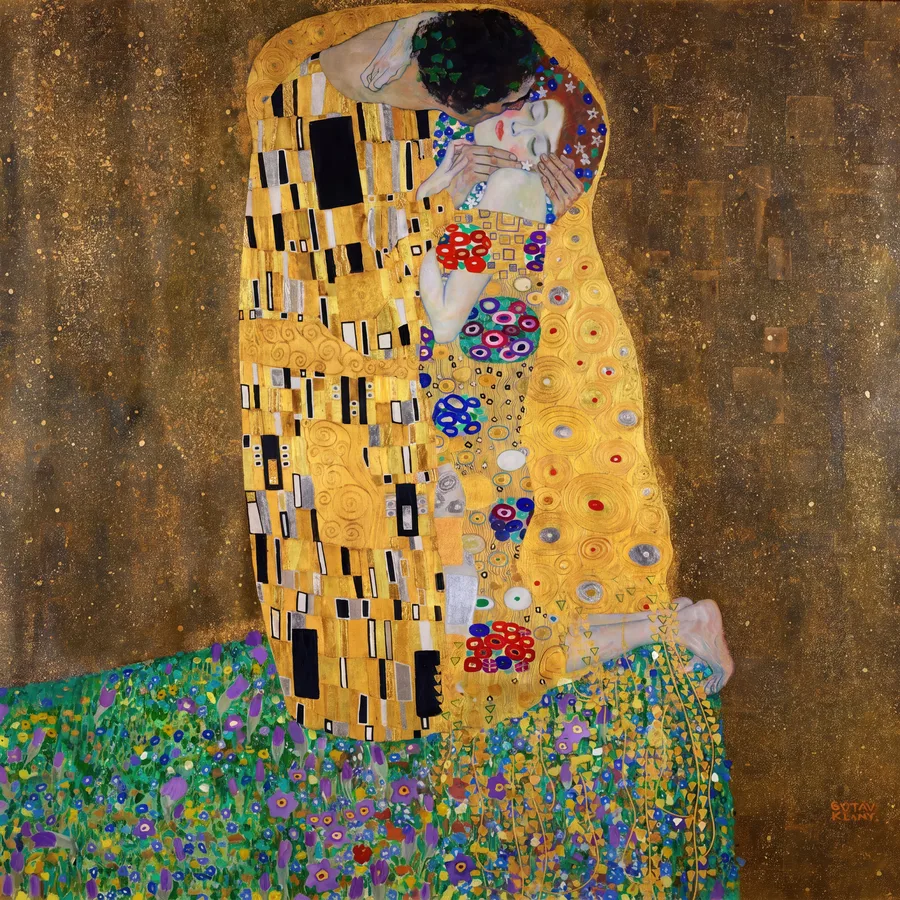
The Kiss, 1907–1908
Two different golds do the work here — the flat leaf behind the lovers and the warmer, patterned robes in front. Most circulating files melt them into one mustard; restored, the couple stands off the ground again.
Golden Period · current options on Etsy
See sizes and prices on Etsy ↗
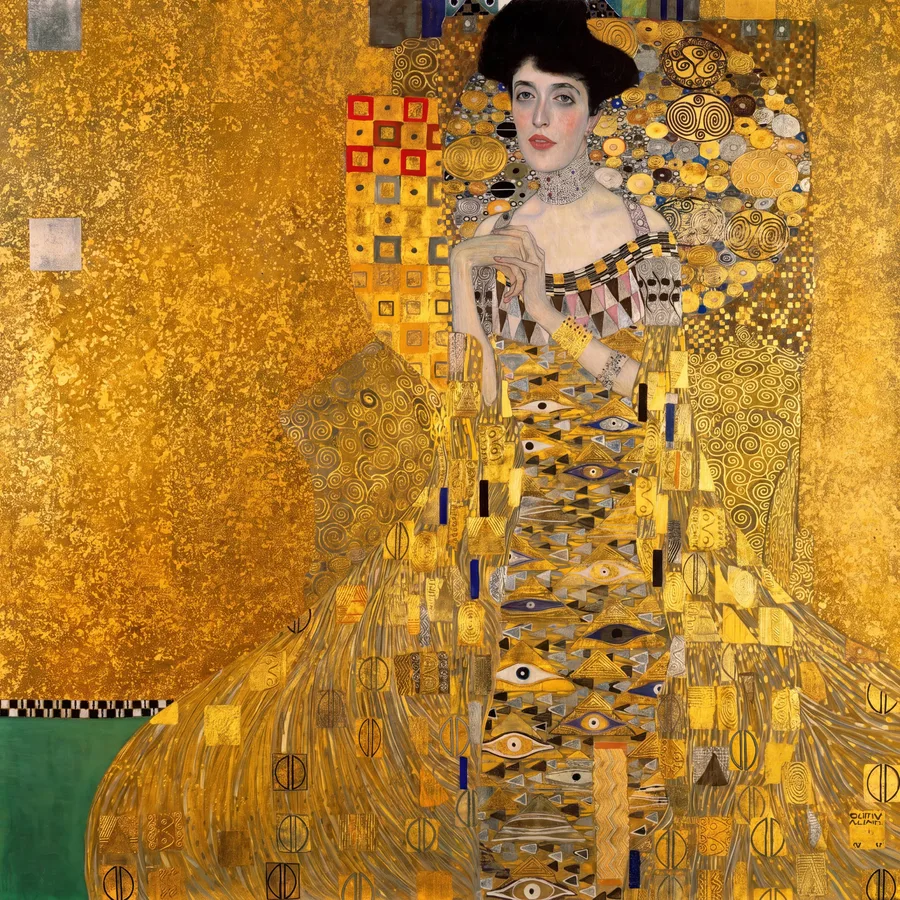
Portrait of Adele Bloch-Bauer I, 1907
A portrait built almost entirely from gold and silver leaf — Adele posed with her hands clasped to hide an injured finger. The small eyes woven through her dress are the detail worth printing large.
Golden Period · current options on Etsy
See sizes and prices on Etsy ↗
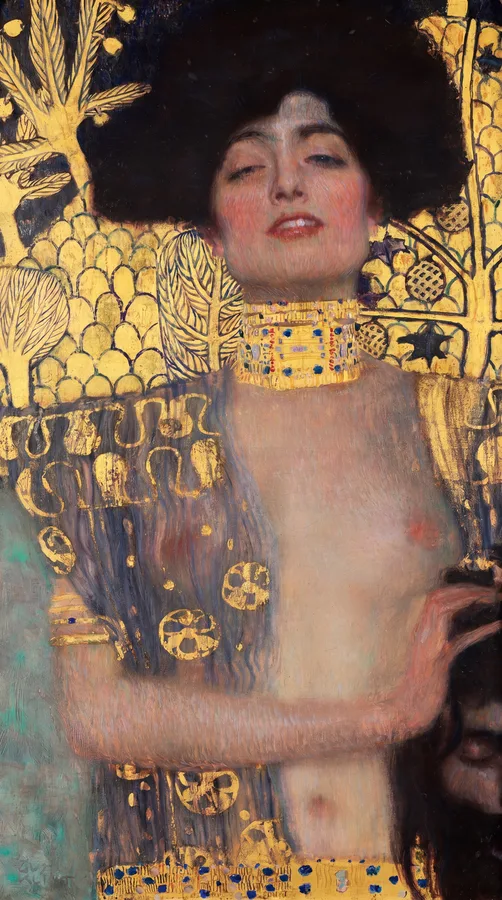
Judith I, 1901
Vienna kept mistaking her for Salome, so the metal frame — made by Klimt's own brother — spells the title out. The gold trees behind her sit on near-black, and keeping that black clean is most of the restoration.
Golden Period · current options on Etsy
See sizes and prices on Etsy ↗
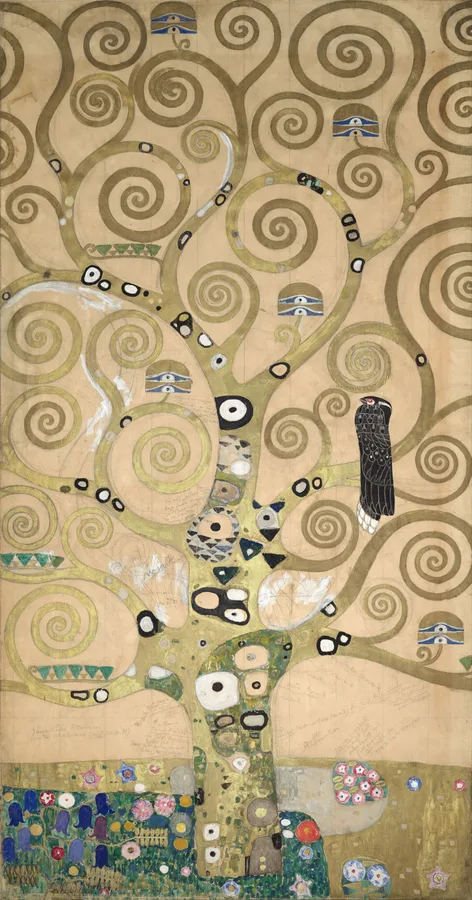
The Tree of Life (Stoclet Frieze), 1905–1909
The full-size working drawing for a mosaic in a Brussels dining room, drawn for the craftsmen to follow. The spirals hold their line beautifully at width — and the single blackbird keeps the pattern from becoming wallpaper.
Stoclet Frieze · current options on Etsy
See sizes and prices on Etsy ↗
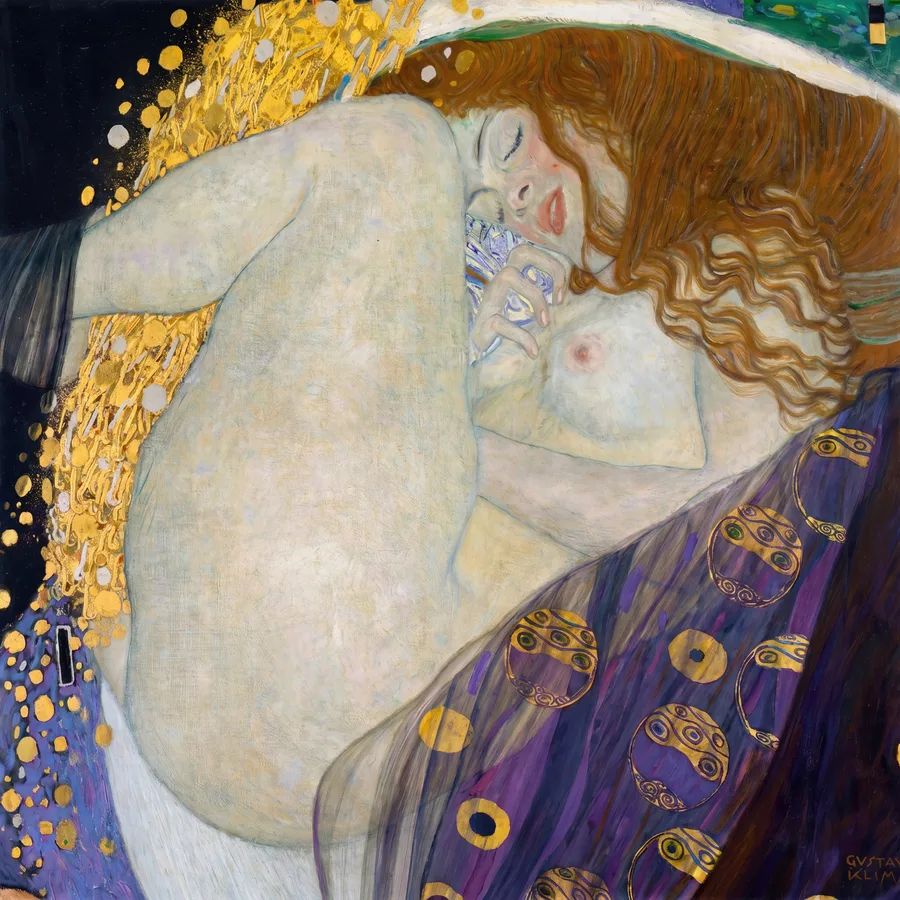
Danaë, 1907
Zeus arrives as a fall of gold between sleep and dream. In tired copies the coin-rain drifts toward brown; here it stays metal against her skin, and the violet veil keeps its gold embroidery.
Golden Period · current options on Etsy
See sizes and prices on Etsy ↗
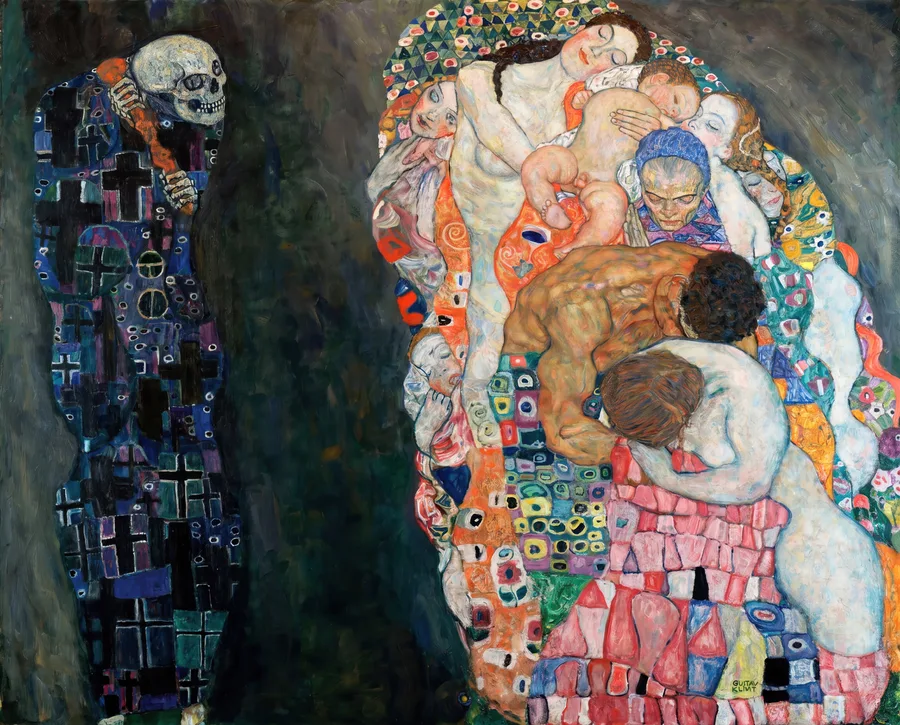
Death and Life, 1910–1915
Klimt kept this canvas in the studio and reworked it years after it won a prize in Rome — the gold background went, this deep grey-green came in. The skeleton's robe of crosses needs true darks to read.
Late period · current options on Etsy
See sizes and prices on Etsy ↗
Keep exploring
Six more, in the order he painted them — the Ringstrasse years to the late gardens.
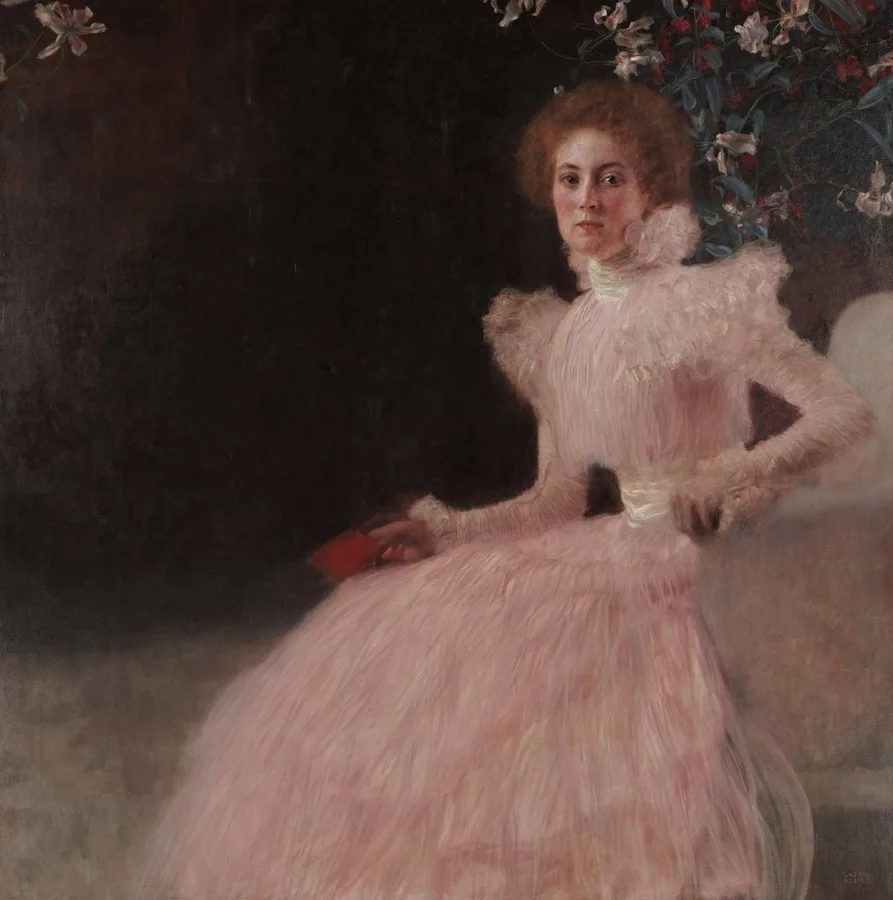
Portrait of Sonja Knips, 1898
Painted the year the Secession was founded, with Klimt still half in his salon manner — the pink dress already dissolving into strokes. The little red book in her hand is nearly the only hard colour, and it has to stay red, not rust.
Secession · current options on Etsy
See sizes and prices on Etsy ↗
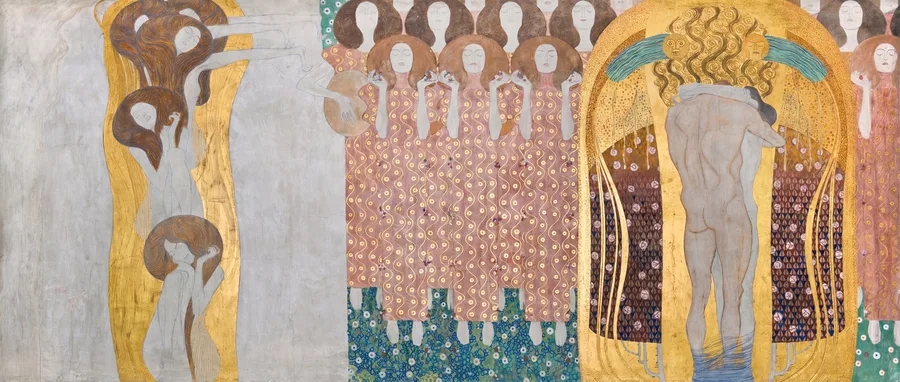
Beethoven Frieze: The Choir of Angels, 1902
Painted straight onto the plaster of the Secession building for a single 1902 exhibition, never meant to outlive it. This is the final wall — the choir, and the embrace that answers the Ode to Joy. It wants a wide frame.
Secession · current options on Etsy
See sizes and prices on Etsy ↗
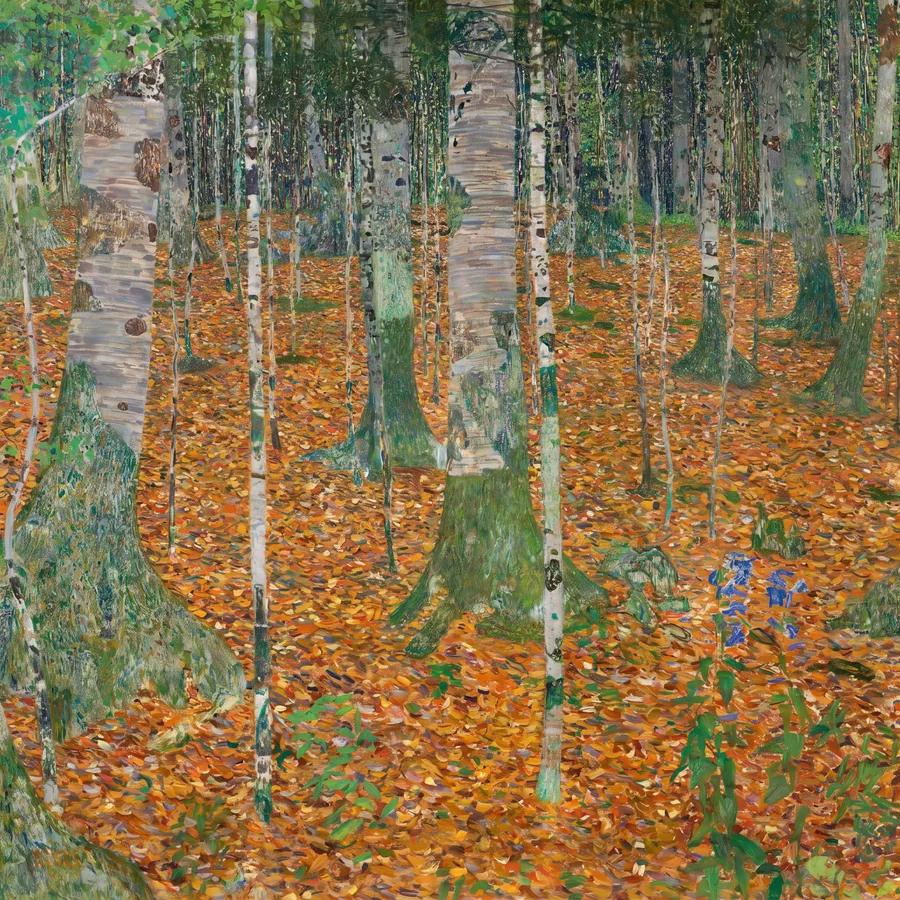
Birch Forest, 1903
A forest with no sky and no path out — Klimt cropped it square and let the leaf-litter carry the picture. The orange floor is built from dozens of small reds and ochres that a soft scan smears into one; separated again, it glows.
Attersee · current options on Etsy
See sizes and prices on Etsy ↗
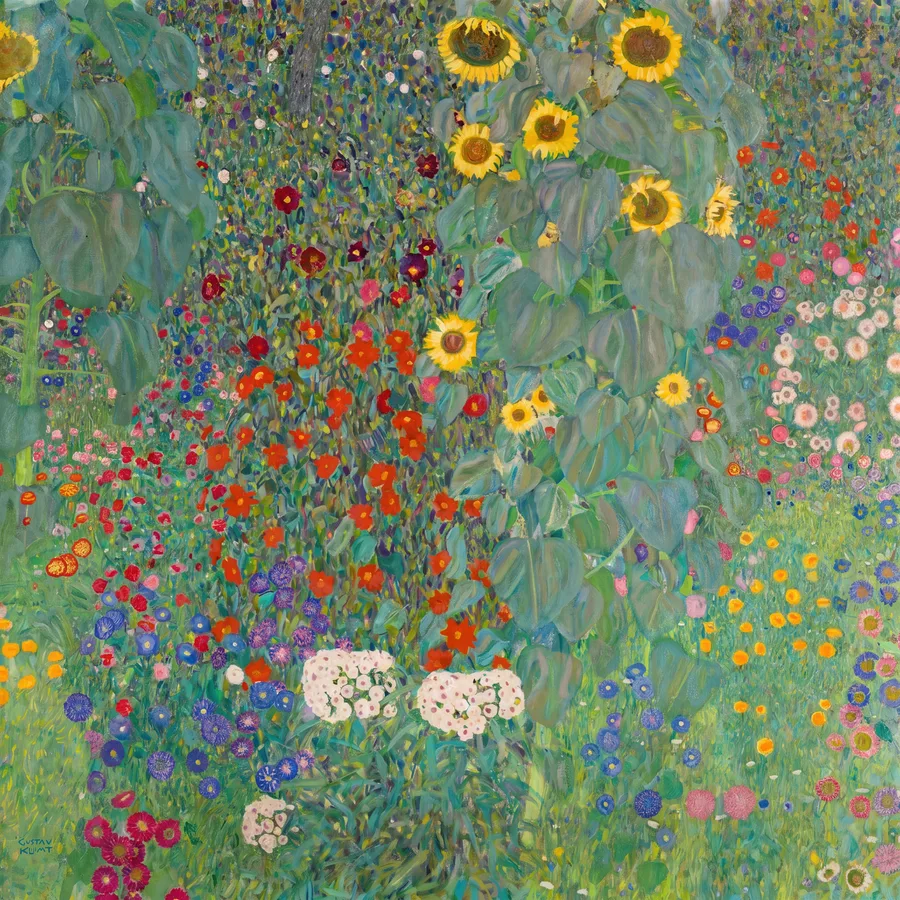
Farm Garden with Sunflowers, 1907
Painted in a cottage garden on the Attersee in the same years he was gilding Adele in Vienna. No gold here — the sunflowers do that work, and they want their yellows dense, not washed.
Attersee · current options on Etsy
See sizes and prices on Etsy ↗
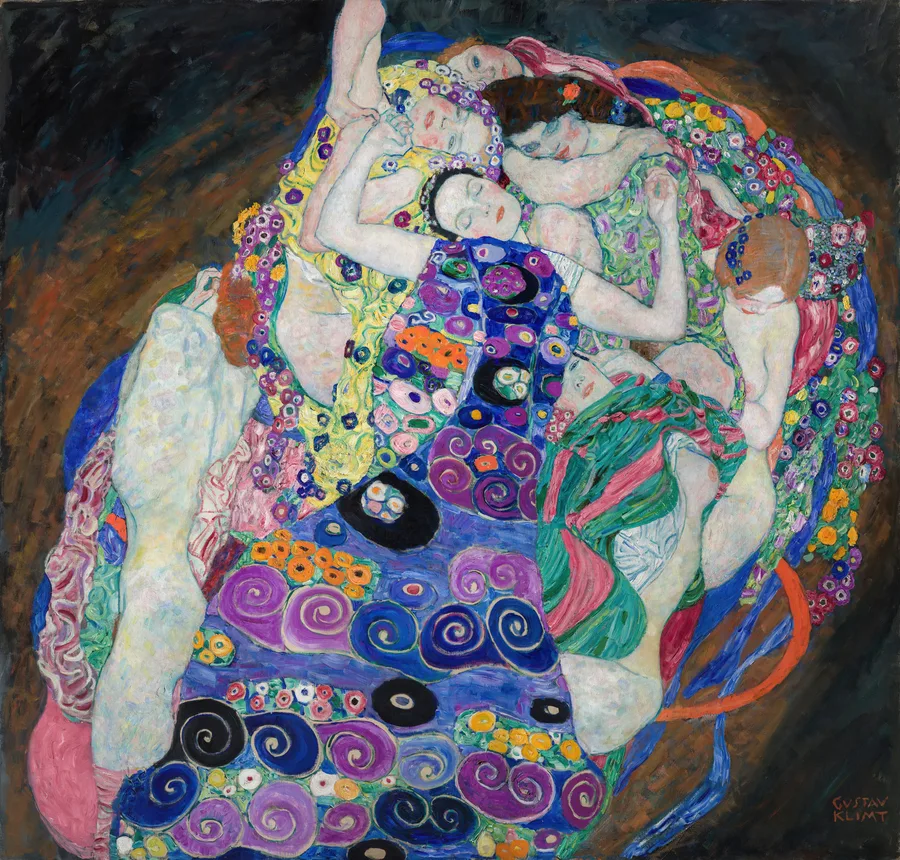
The Virgin, 1913
Seven women turning in one shared dream, wrapped in a single quilt of spirals. The purples and blues sit close together and clot in dark copies; restored, each swirl keeps its own colour.
Late period · current options on Etsy
See sizes and prices on Etsy ↗
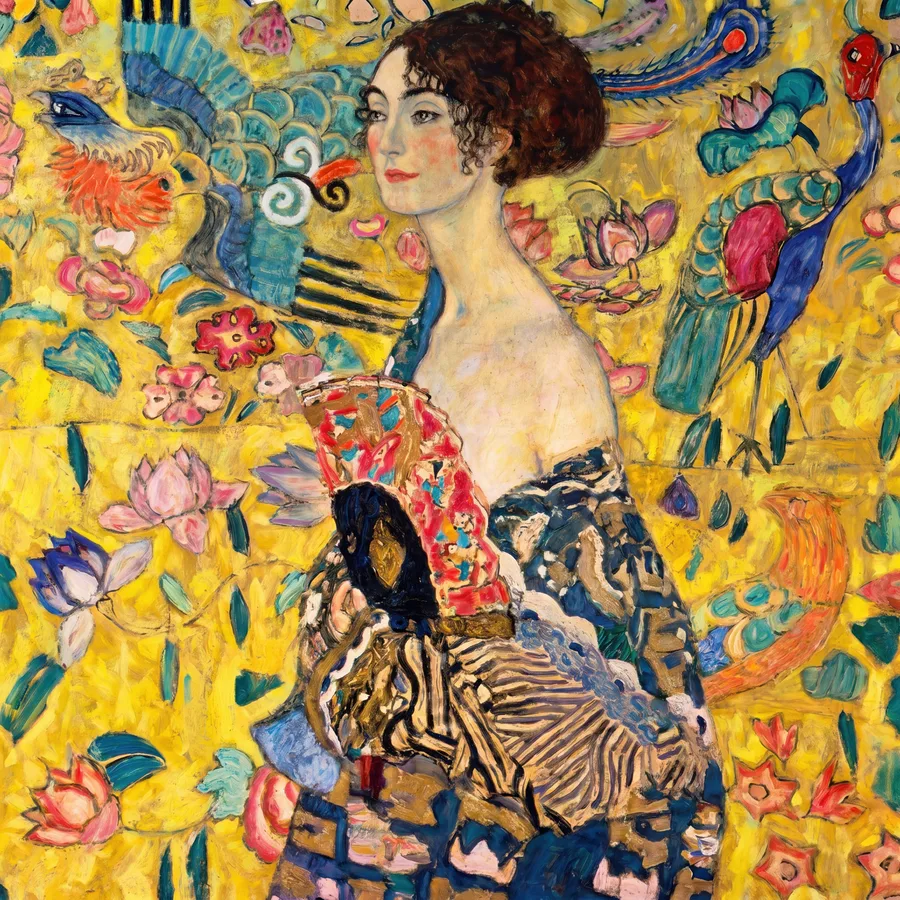
Lady with a Fan, 1917–1918
The portrait still on his easel when he died in 1918 — the background pure joy in an East Asian key, phoenix and lotus on deep yellow. That yellow is the note the whole picture tunes to, and it is back.
Late period · current options on Etsy
See sizes and prices on Etsy ↗
Follow what catches your eye
These works are only the beginning. The GeMarkt archive contains 290+ Klimt records; current Etsy availability may change. Continue by subject:
Choosing a format
Rolled poster
The cheapest way in — pick it if you already own a frame or want one chosen for the room, not the shipment.
Framed paper
Arrives ready to hang, glass over paper — the classic museum-print look, and the safest default for most rooms.
Stretched canvas
No glass, no glare — texture close to a painting's, and a natural fit for painterly surfaces.
Framed canvas
The canvas texture with a finished edge — the most furniture-like of the four, and the largest sizes live here.
Prices and available formats vary by listing; Etsy shows the current options and currency for that work. Undecided? Our print format guide compares the four honestly.
From the journal
Why is this work free to print in the first place? Klimt and the public domain — the full guide →