Hagia Sophia Grand Mosque
Read the building as a layered monument: imperial church, Ottoman mosque, twentieth-century museum, and active mosque under conservation today.
Check current visitor informationChecked 21 August 2026
GeMarkt city guide · First edition
A deliberately limited, source-led guide to the city’s museums, historic layers and living cultural institutions.
Curatorial scope
This first edition stays deliberately small: 12 places for reading Istanbul through art, architecture, and urban memory, not a generic sightseeing inventory. Categories are editorial entry points, not promised itineraries.
Hours, prices, worship arrangements, and temporary access can change. We do not copy them here; each card links to the current official visitor page and records our last check.
12 sourced places
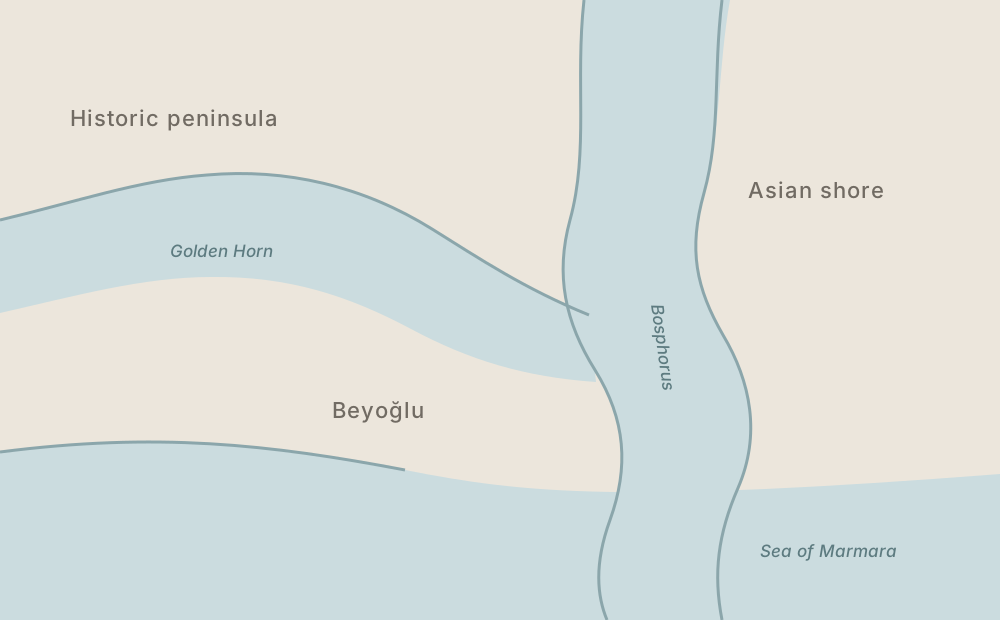
The map is a schematic orientation aid. The complete content remains in the list, including when JavaScript is unavailable.
Read the building as a layered monument: imperial church, Ottoman mosque, twentieth-century museum, and active mosque under conservation today.
A sixth-century water structure where reused columns, engineered darkness, and modern restoration make infrastructure part of the city’s visual history.
Late Byzantine mosaics and frescoes survive inside a building reshaped across Christian and Ottoman histories and used again as an active mosque.
Courtyards, gates, pavilions, treasuries, and sacred collections turn the Ottoman court into a sequence of controlled thresholds rather than one monumental façade.
A nineteenth-century waterfront palace where ceremonial halls, European-facing interiors, and a new urban setting recast Ottoman imperial representation.
Best approached for archaeology, ancient objects, and the history of imperial collecting—not as a general art museum with every gallery guaranteed open.
A focused choice for Ottoman-era painting, Osman Hamdi Bey, Kütahya ceramics, and the collecting histories carried by a compact private museum.
The broadest first stop for modern and contemporary art in Türkiye, with photography, design, cinema, temporary exhibitions, and a waterfront museum setting.
A key bridge from late Ottoman art education to twentieth-century painting and sculpture in Türkiye, housed in a converted waterfront warehouse.
A strong choice for experimental contemporary art, including installation, sound, performance, and changing exhibitions; treat Dolapdere as a separate trip from the waterfront walk.
Related deep guide
A Mevlevi complex that connects Ottoman spiritual practice, music, architecture, and the social memory of Galata; current room access should be checked before visiting.
Related deep guide
The former Imperial Ottoman Bank building now joins archives, exhibitions, research, and public space—an unusually clear case of architecture carrying institutional memory forward.
Related deep guide
Schematic view
First editorial wave
Each guide connects places through art, architecture, and institutional history rather than repeating thin venue profiles.
Two evidence-led clusters connecting Hagia Sophia, the Basilica Cistern and Chora without pretending they form one short walk.
Read the guide →A downhill route through museum collections, Mevlevi memory, adaptive reuse and the changing waterfront.
Read the guide →A comparative route from courtyard ceremony to the nineteenth-century waterfront palace and the institutions between them.
Read the guide →Choose by the question you want to pursue—from Ottoman painting to experimental contemporary art and ancient objects.
Read the guide →