GeMarkt Blog · Essay
Famous Love Paintings and Kisses in Art
Look closely at eight images of affection, from Klimt and Rodin’s kisses to love letters, Rembrandt’s joined hands and the everyday care in a Cassatt painting.

A kiss seems easy to recognise. Understanding what an artwork does with it is harder. Bodies can meet while faces remain hidden; hands can express closeness without an embrace; a letter can make an absent person the centre of a picture.
The eight works here move between romantic desire, the public image of a couple and the quieter intimacy of care. They are not eight illustrations of the same emotion. Nor does every tender gesture tell us who the models were, whether they loved one another or what the artist believed about relationships.
Start by following the contact: a cheek, a hand, a piece of paper, a child’s foot. Then look at everything that surrounds it. Gold, expensive clothing, a doorway or a washbasin can change the meaning of the encounter. One sculpture and one print join the paintings because their materials make the differences especially clear.
Klimt and Rodin: two kisses with different boundaries
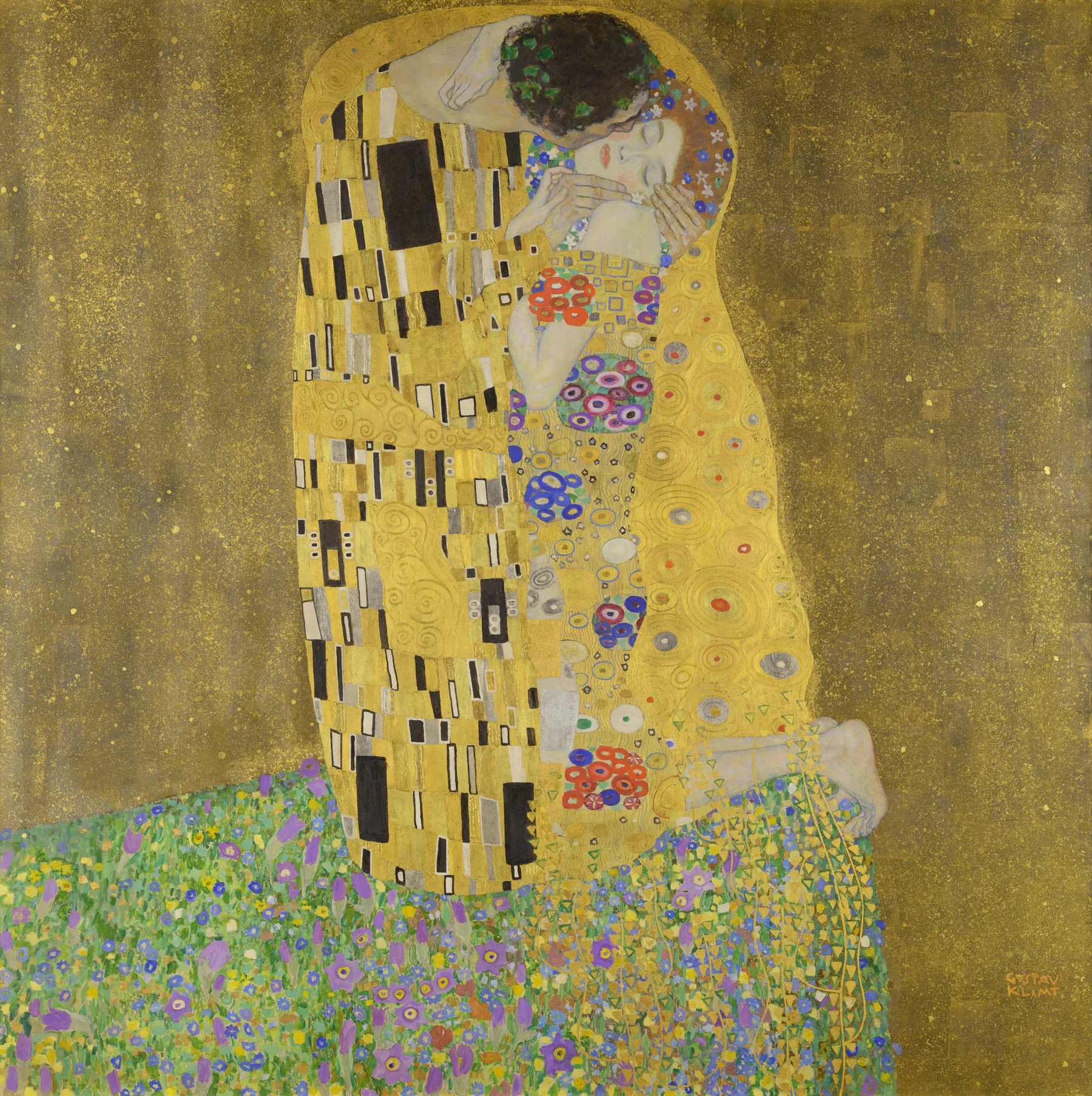

Klimt encloses his lovers in a broad golden shape. The man’s rectangular markings and the woman’s rounded patterns remain different even where their garments seem to merge. Against that decorative surface, a cheek and a pair of hands look unusually exposed. The flowered ledge gives the embrace a place to happen, but the gold beyond it supplies little ordinary depth.
The Belvedere record dates the painting to about 1907–1909 and records a square canvas, 180 centimetres across. Its metal leaf belongs to the physical painting; a reproduction can show its colour but not its changing response to light. The bodies are partly concealed by the very surface that makes the image so recognisable.
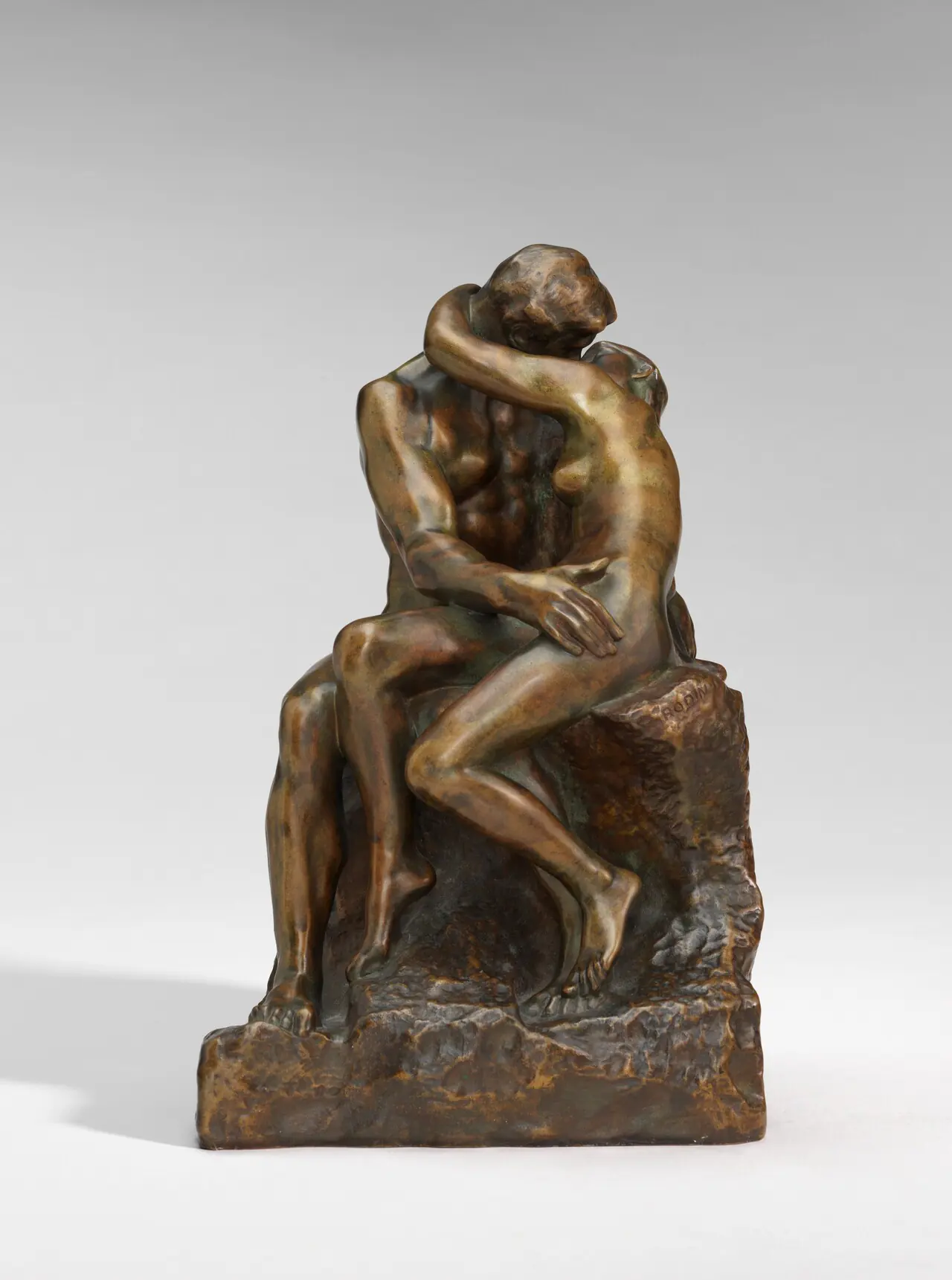
Rodin reverses that emphasis. Knees, shoulders and arms make the structure of the embrace legible, while gaps between the figures give light and shadow room to work. This photograph shows the National Gallery of Art’s small bronze, only 24.7 centimetres high, not one of the monumental marble versions.
The sculpture’s subject developed from Paolo and Francesca in Dante’s Inferno. That tragic literary beginning complicates its later life as a general image of romance. The pose alone does not carry the whole story. Our comparison of the two Kisses follows their materials and versions more closely.
Rembrandt: affection in the space between hands
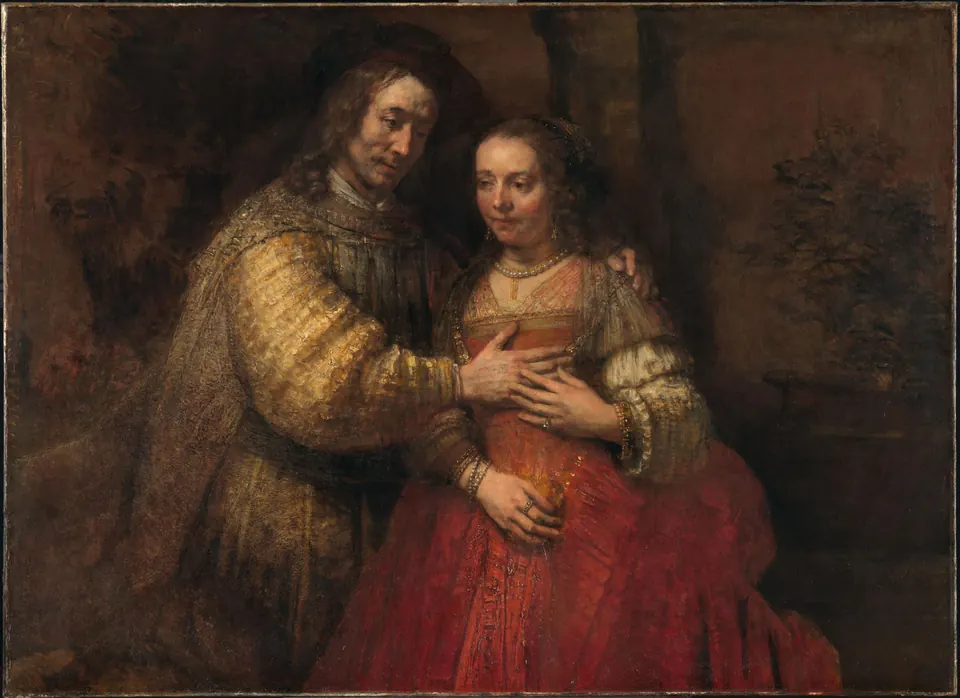
Here there is no kiss. The man’s hand lies across the woman’s chest, and her hand rests over it. His other arm reaches around her shoulder. The arrangement makes touch the centre of the painting without turning either figure into a dramatic silhouette.
The Rijksmuseum identifies the subject as Isaac and Rebecca, while retaining the familiar title The Jewish Bride. Its catalogue also records the possibility of a couple portrayed as Old Testament figures. That is a reason to avoid presenting the painting as a securely identified wedding photograph in oils.
Look at the heavy golden sleeve beside the softer-looking hands. The paint gives clothing a strong physical presence, yet the emotional focus remains on a much smaller area. We can describe that contrast without pretending to know the sitters’ private thoughts. It is a particularly useful example of Rembrandt’s ability to make a limited gesture hold a large composition together.
Van Eyck: a couple without a certain wedding
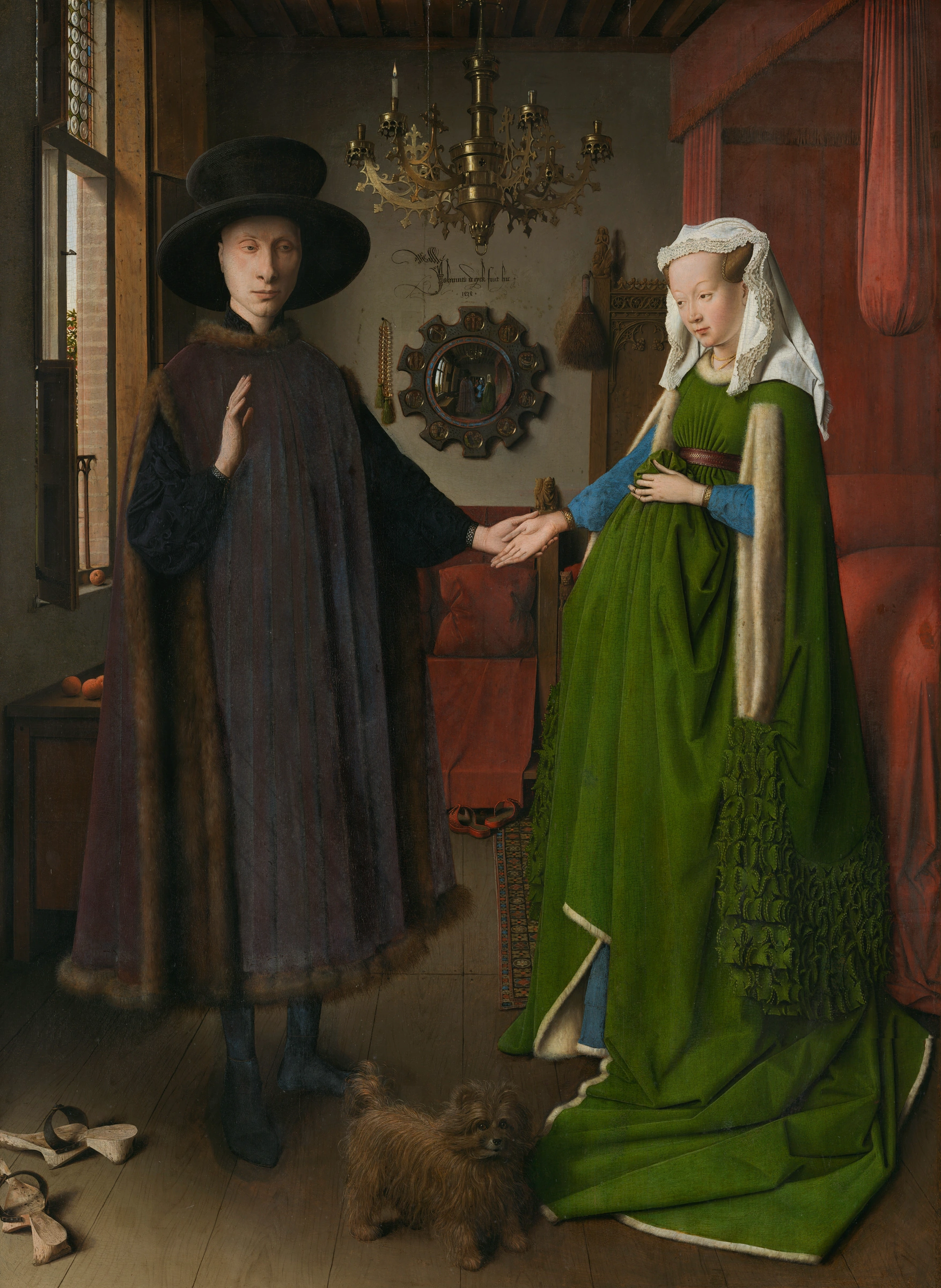

Van Eyck’s couple stands apart, connected by their hands. The room is almost another participant: the mirror, bed, fruit, polished chandelier and elaborate clothing make their surroundings insistently visible. Intimacy shares the space with social presentation.
The National Gallery’s current account no longer describes the scene as a marriage ceremony. The identities remain qualified, and the woman’s gathered gown is not proof of pregnancy. Neither uncertainty makes the joined hands unimportant; it changes the confidence with which we should explain them.
Unlike Rembrandt’s overlapping hands, these sit between two separate, upright bodies. Follow their line across the otherwise open centre of the room. The contrast offers a way to look at images of partnership without demanding the same emotional temperature from every period. Our Arnolfini story examines the room and its disputed readings in more detail.
Vermeer and Fragonard: love arrives by letter
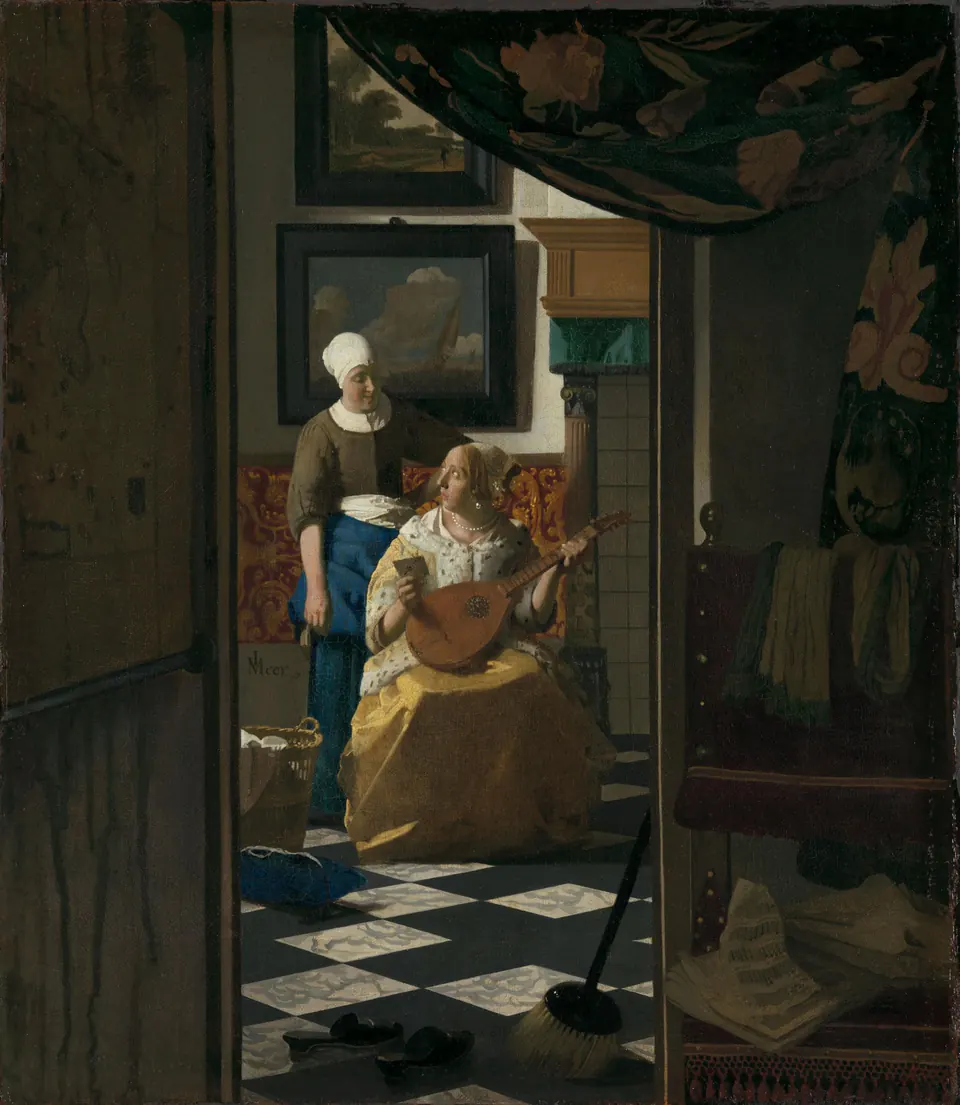
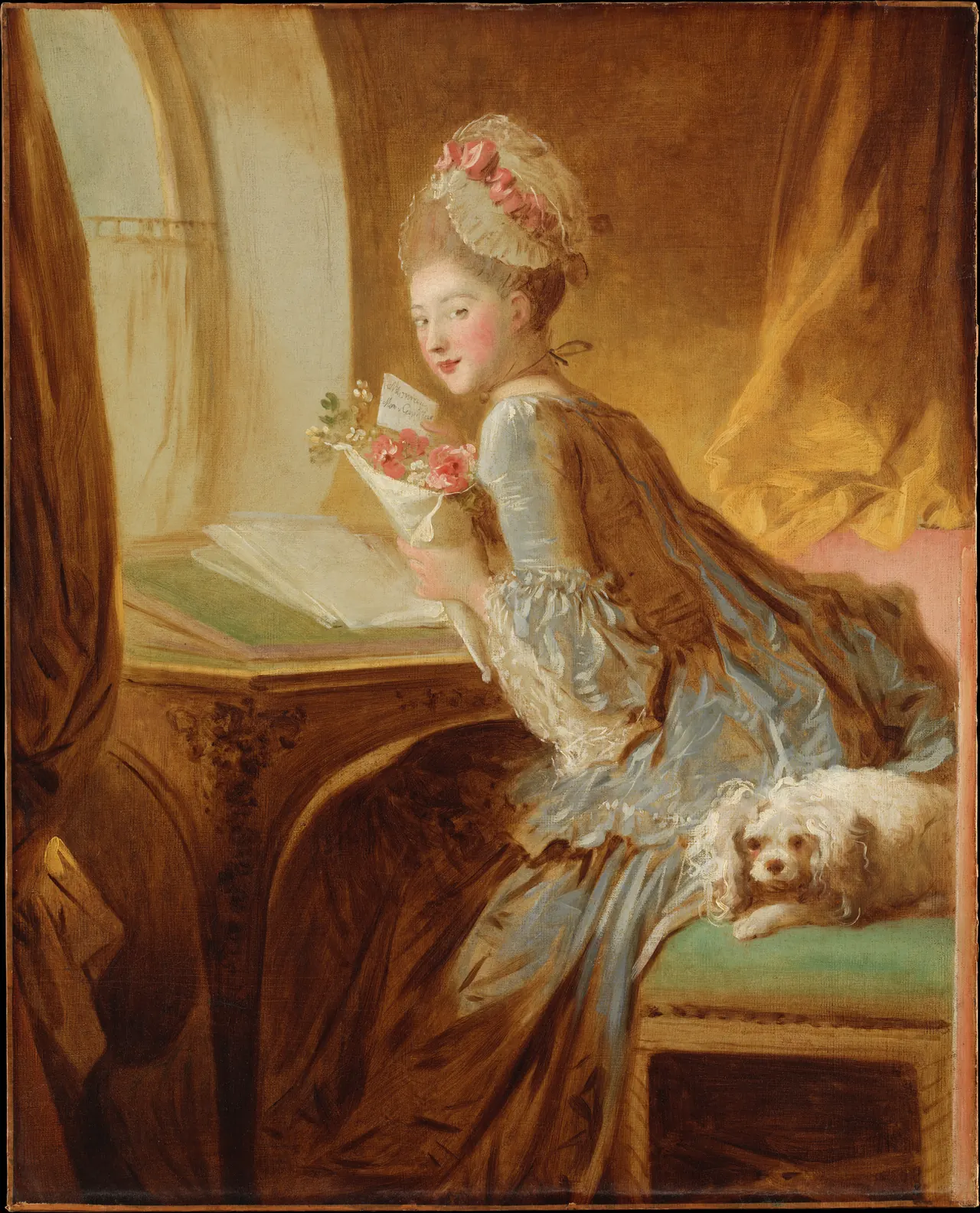
In Vermeer’s scene, we look through a doorway into a brighter room. A maid has brought a letter to a woman holding a cittern, a plucked string instrument. Their exchanged glance carries the small drama. The sender stays outside the painting, and the contents remain unavailable to us.
The dark foreground keeps the encounter at a distance. Shoes and a broom occupy the threshold, while the women are framed by architecture and a hanging curtain. Correspondence connects people, but the picture also makes us aware that we are looking into someone else’s space. Vermeer’s other interiors reward this attention to boundaries.
Fragonard brings the figure much closer. The light catches her cap, face, flowers and dress; her turned body seems to interrupt the work of the desk. The Met describes the painting as a genre scene, not a portrait. A narrative is suggested, but no identified lover or readable message resolves it.
Place the two beside one another and notice the difference between a doorway and a glance directed outwards. Both paintings make love present through absence. Fragonard’s brighter, looser surface does not supply more factual information about the relationship; it makes the encounter feel more immediate.
Munch: when two faces become one shape
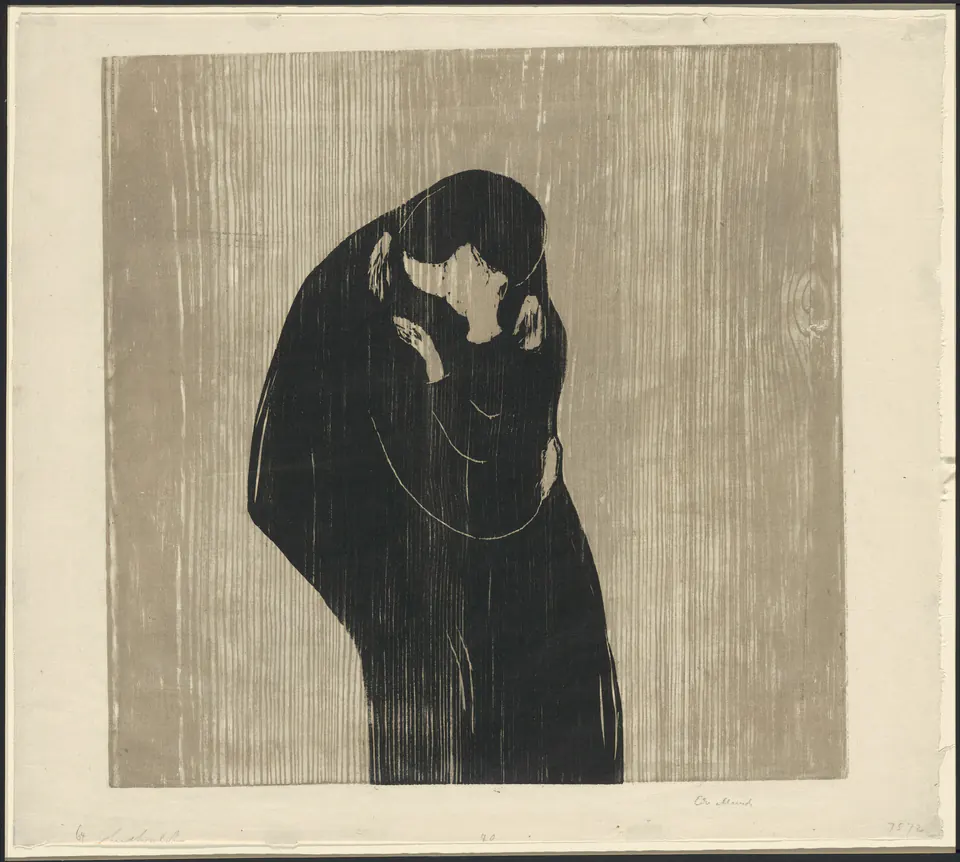
Munch removes most of the setting. The dark bodies lean together, while their pale faces form a nearly continuous central patch. Vertical woodgrain runs through the image, giving the surrounding space a texture that a smooth painted background would not have.
This is the Art Institute’s 1902 woodcut, printed from two blocks, one sawn into two sections. It is not a black-and-white photograph of a painting called The Kiss. Identifying the medium matters because the carved shapes and grain are part of how the closeness is made.
The merging faces may feel tender, unsettling or both. Those are responses the image allows, not a diagnosis of the artist or proof of a particular relationship. Compared with Klimt’s distinct decorative garments, Munch’s simplification gives the boundary between two people a different kind of pressure. The Munch guide distinguishes more of his paintings and printed versions.
Cassatt: care without a dramatic declaration
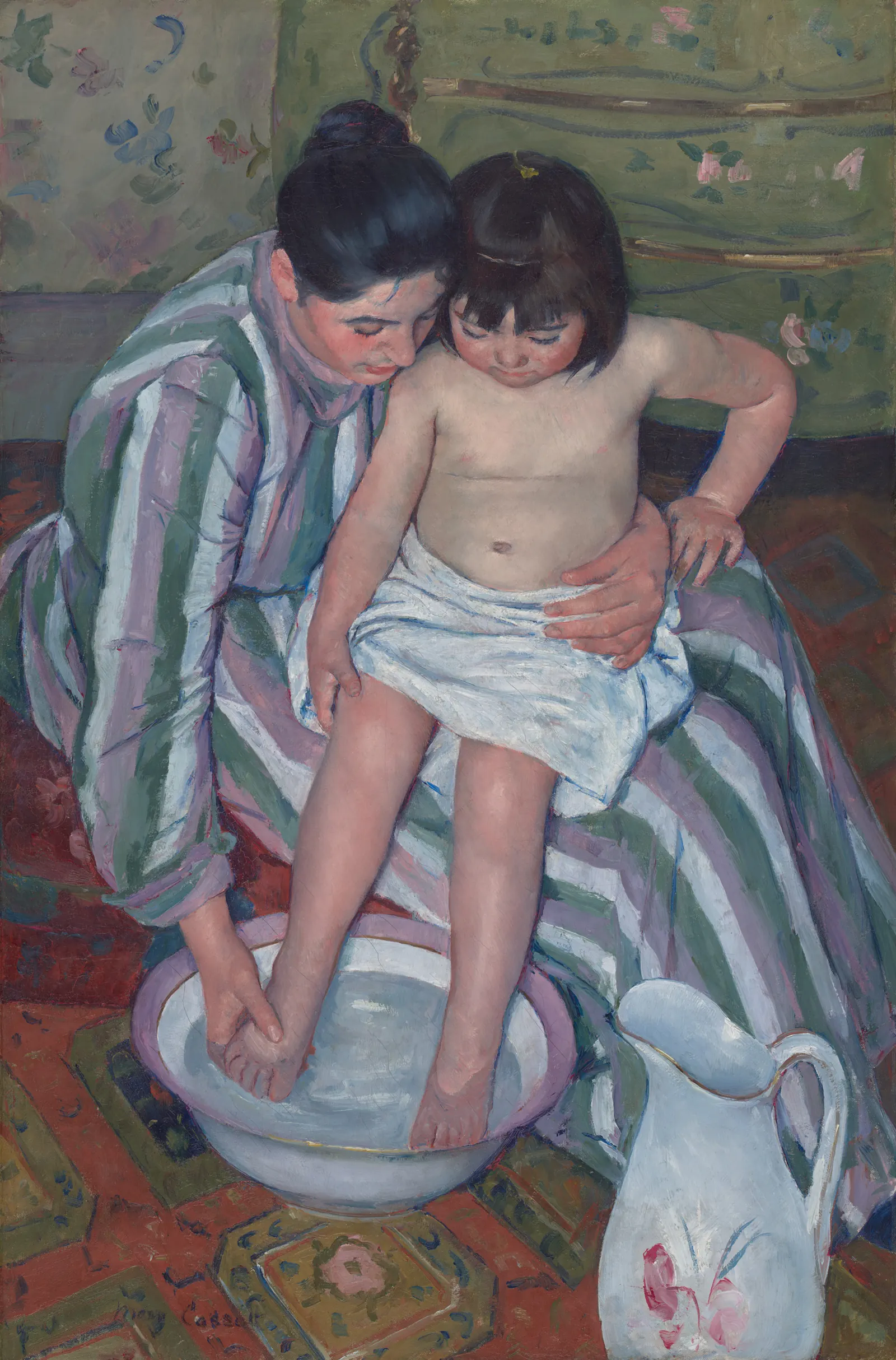
Cassatt’s painting belongs here as a deliberate change of register. The woman and child are close because of a practical task: one hand supports the child while another washes a foot. Their lowered heads guide our attention towards the same small area.
The high viewpoint lets us see the basin and patterned floor. Stripes, flowers and curves surround the figures without separating their shared action. Nothing requires us to interpret the scene as romantic, or to invent a documented family relationship for its models.
It broadens the question instead: how can a picture make sustained attention visible? Beside the kisses, letters and formal couple portraits, this ordinary act suggests that affection need not announce itself through spectacle. More work by Mary Cassatt shows how much pictorial invention a domestic subject can contain.
What to look for beyond the title
A useful second viewing starts with three questions. Who touches whom? Who is absent? What does the material make possible? Those questions separate a letter from an embrace and a woodcut’s joined shapes from the weight of a bronze.
Keep the different kinds of love distinct as well. Desire, marriage, affection and care can overlap, but they are not interchangeable labels. If you continue through our art collections, use the individual work’s story to guide your looking rather than expecting a romantic title to explain everything you see.
Editorial record
About this article
- Author
- Publisher
- GeMarkt
- Published
- Reviewed
- Internal source & rights check. Conducted by GeMarkt Research Review. This is an internal editorial check—not independent peer review.
- Source standard
- Art history source standardPrioritises object records and research sources, distinguishes evidence from interpretation, and states material uncertainty.
Found a claim that needs checking? Report a factual error.