GeMarkt Blog · Essay
Orientalism and Ottoman Painting: Osman Hamdi Bey in Context
Look closely at eight works by Osman Hamdi Bey, Gérôme, Delacroix, Lewis and Halil Paşa, separating observation, staging and different Ottoman viewpoints.

Start with who is looking
Two women make music among rugs, tiles and carved stone. In another painting, an armed man sings to companions in a dim interior. Both pictures invite us to enjoy skilfully painted cloth. But who arranged these rooms, who imagined the performance, and what kind of person does each painting let us see?
Those questions are more useful than trying to recognise Orientalism by a turban or an arch. The label concerns a way of representing people and places, not a checklist of decorative objects. Bringing Osman Hamdi Bey into the discussion also changes its direction: the Ottoman world was not merely something European artists looked at. It had painters looking, selecting and exhibiting for themselves.
The eight works here make that exchange visible. They are not eight transparent windows onto everyday life, nor eight examples of a single school. Some are portraits, some are constructed scenes, one is a travel study and another is a political allegory.
What Orientalism describes and what it does not
In nineteenth-century European art, Orientalism commonly describes representations of places and peoples imagined as an “East,” particularly North Africa and the Middle East. That unstable grouping could collapse different languages, religions and societies into an apparently coherent world. Travel, collecting, commerce and European imperial power helped shape what artists showed and audiences expected. The Met’s overview of Orientalism places the paintings within those encounters rather than treating their polished surfaces as neutral evidence.
Recognisable features may include elaborate textiles, historic architecture, markets, soldiers and domestic interiors. None proves the classification alone. Ask whether a named person becomes an anonymous type, whether a contemporary society looks timeless, and whether the viewer seems granted easy access to someone else’s private world.
“Ottoman painting” is a different category. It situates artists and practices within an empire, not within one pictorial attitude. Osman Hamdi trained in Paris and later directed the Imperial Museum; the Musée d’Orsay’s account also complicates the idea that an Ottoman artist was automatically free of exoticising other people. An insider to one institution could remain an outsider to another community.
Two ways to stage a musician
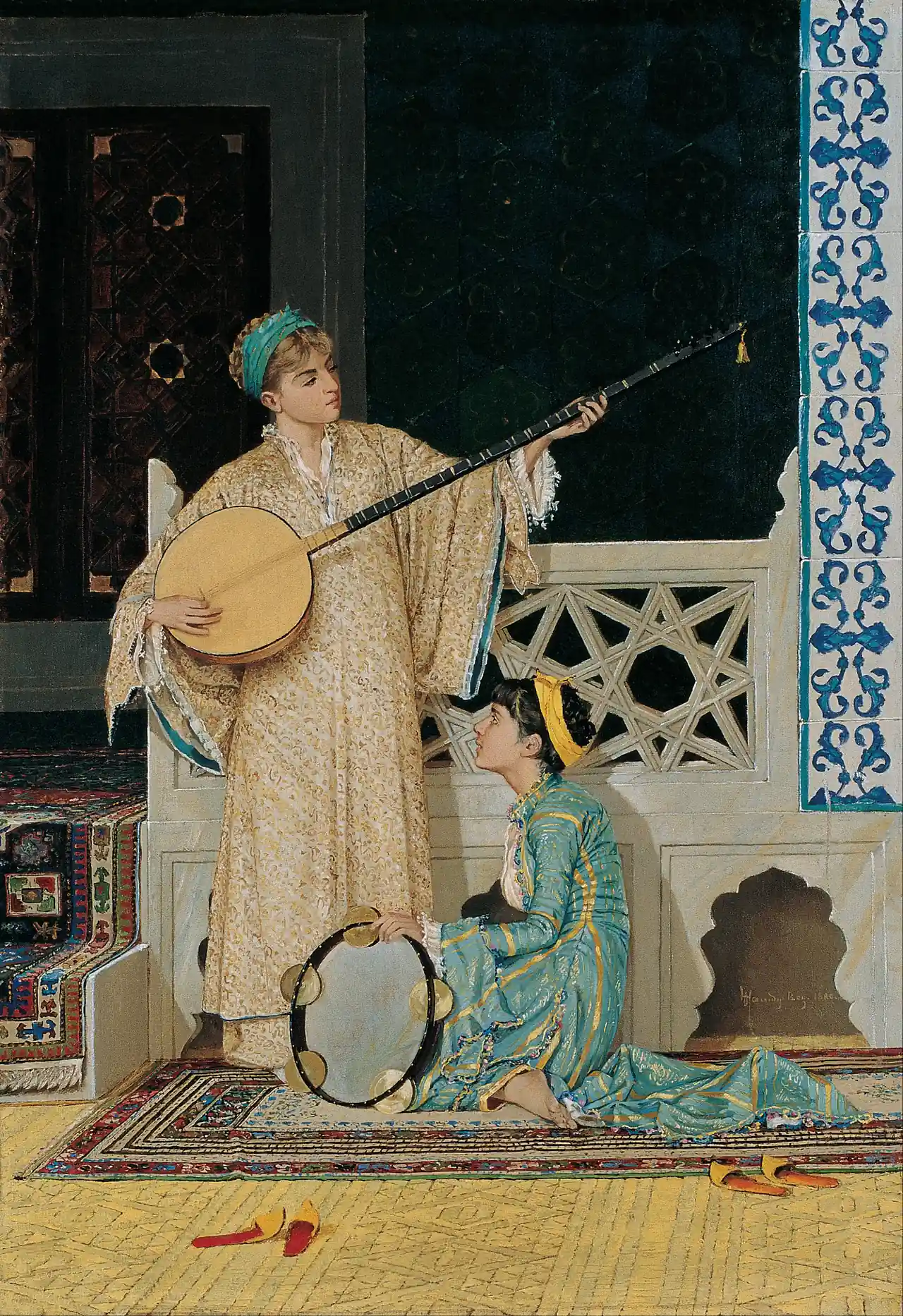
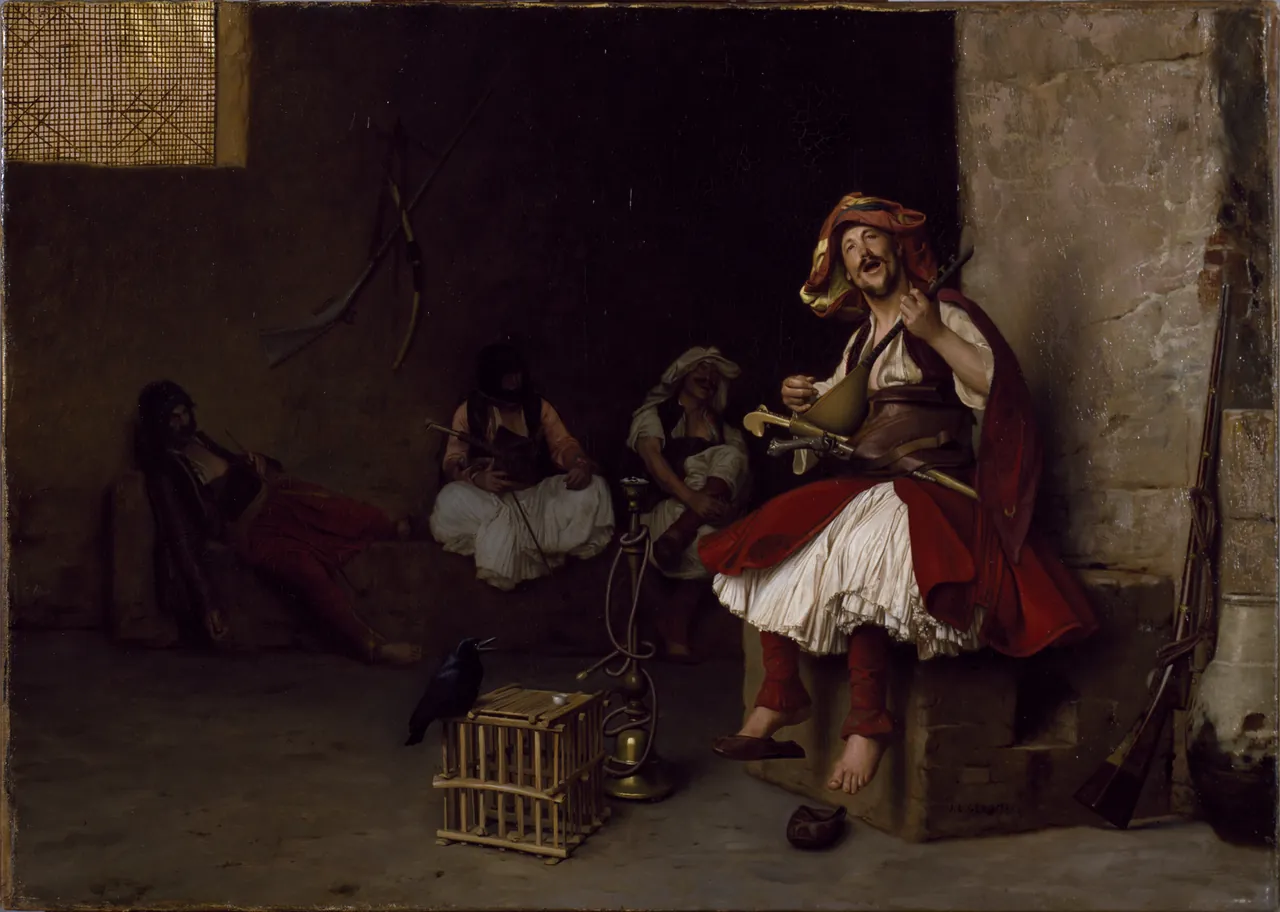
In Osman Hamdi’s Two Musician Girls, the long neck of the instrument joins the standing woman’s hand to the upper right of the canvas. The seated player looks upwards. Their gestures connect the figures; the music is something they are doing, not simply an excuse to display costumes.
Pera identifies architectural elements associated with Bursa’s Green Mosque. That is a reason to recognise the setting’s construction, not to imagine we are watching a documented concert there. The tiled strip, screen and rug also organise the picture into differently patterned surfaces. The figures do not disappear inside the decoration.
Gérôme’s Bashi-Bazouk Singing makes a different performance. An open mouth, raised instrument and bare foot enliven the foreground man; weapons remain conspicuous beside and across him. His companions recede into darkness. The Walters identifies the figure as an Albanian irregular soldier and the instrument as an oud. The painting’s dramatic grouping is more immediately legible than the individuals’ identities.
The contrast is not “false European painting versus truthful Ottoman painting.” Both artists compose scenes. Comparing how much attention each gives to action, costume and setting produces a more precise argument than assigning honesty by nationality.
A costume is not a biography
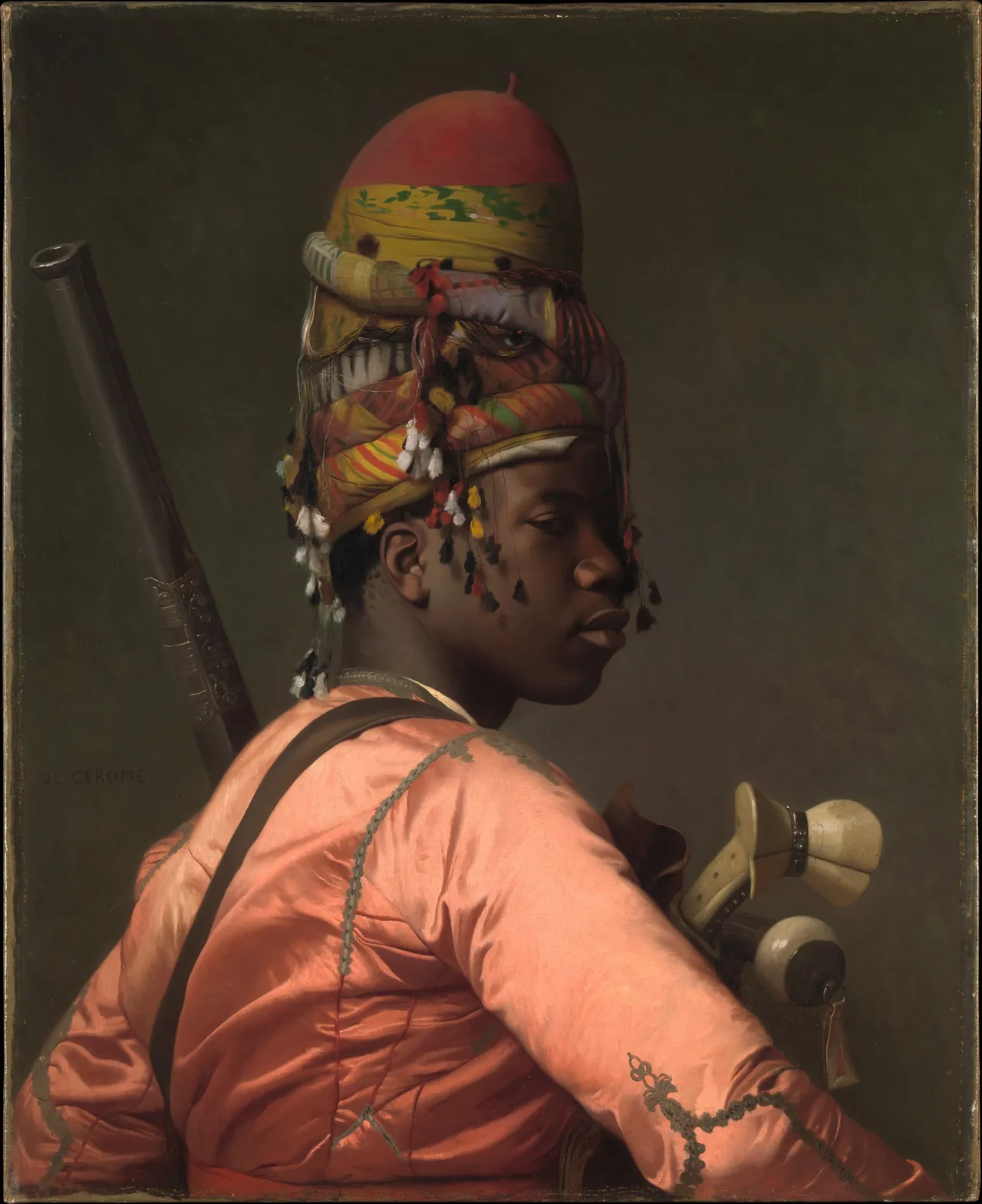
Gérôme’s second soldier appears much nearer. The warm pink sleeve spreads across the foreground, while stacked cloth, tassels and folds make the headdress almost a separate still life. A smooth cheek and heavy fabric receive different kinds of light. These are remarkable acts of painting, even while the title leaves the sitter unnamed.
The Met’s object record identifies this as a Paris studio work made after Gérôme’s 1868 journey, using garments he had collected. The title refers to irregular troops in Ottoman service; it does not establish the model’s life story. We can appreciate the rendering and still notice how a person has been presented through a category and an assemblage of things.
The study behind a finished picture
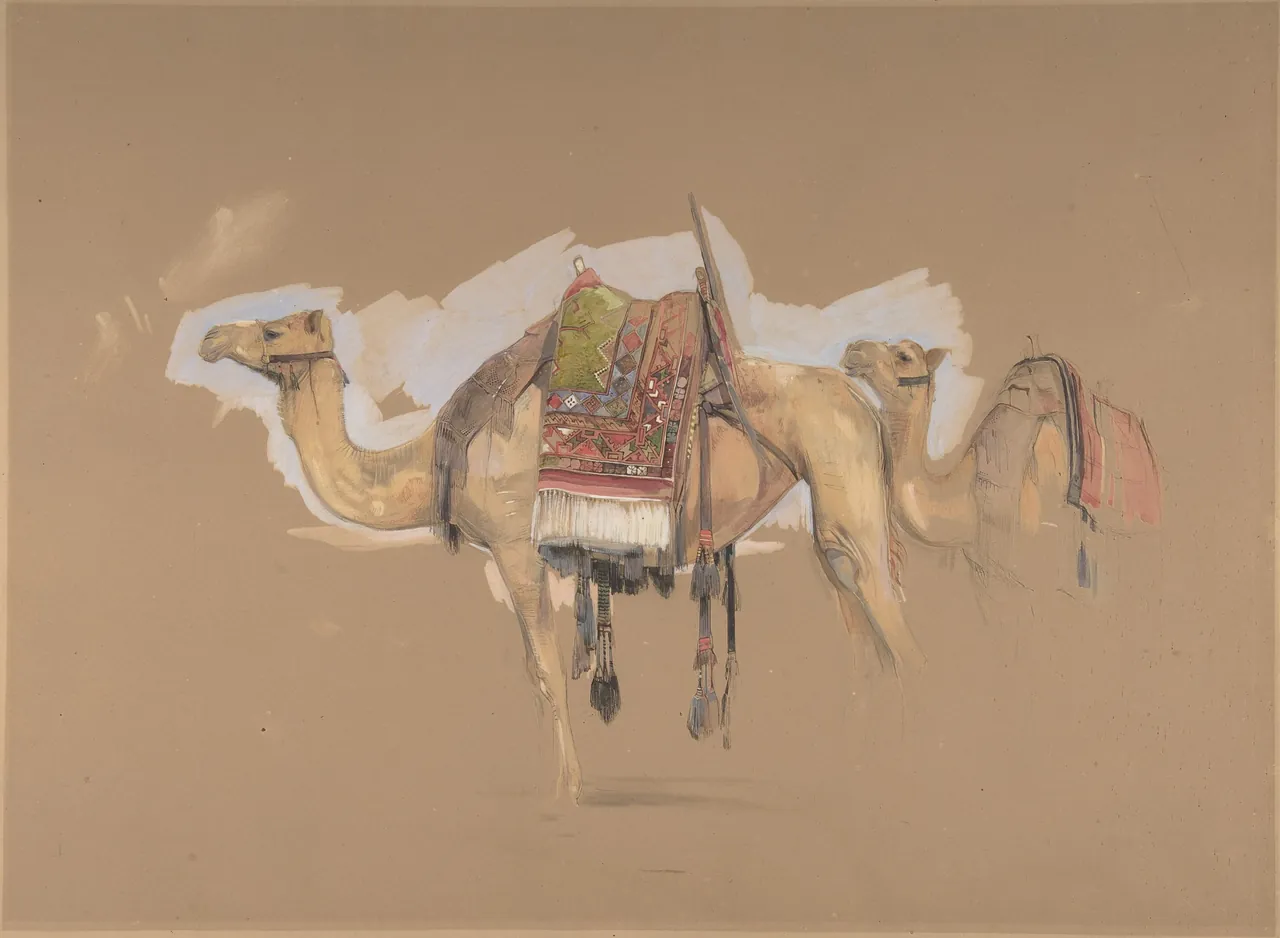
John Frederick Lewis’s Two Camels offers a useful change of pace. Patterned trappings are carefully described, but large areas remain bare paper. The second animal is less fully developed than the first. A partly unfinished study lets us see selection taking place rather than hiding the process behind a complete illusion.
The Met places the drawing on a visit to Sinai during Lewis’s years in Egypt, 1841–51, and traces its reuse in later compositions. Direct observation and subsequent construction therefore belong to the same artistic practice. “He travelled there” does not prove that every finished picture records one encounter; “he composed it later” does not mean he never looked closely.
When a figure stands for a country
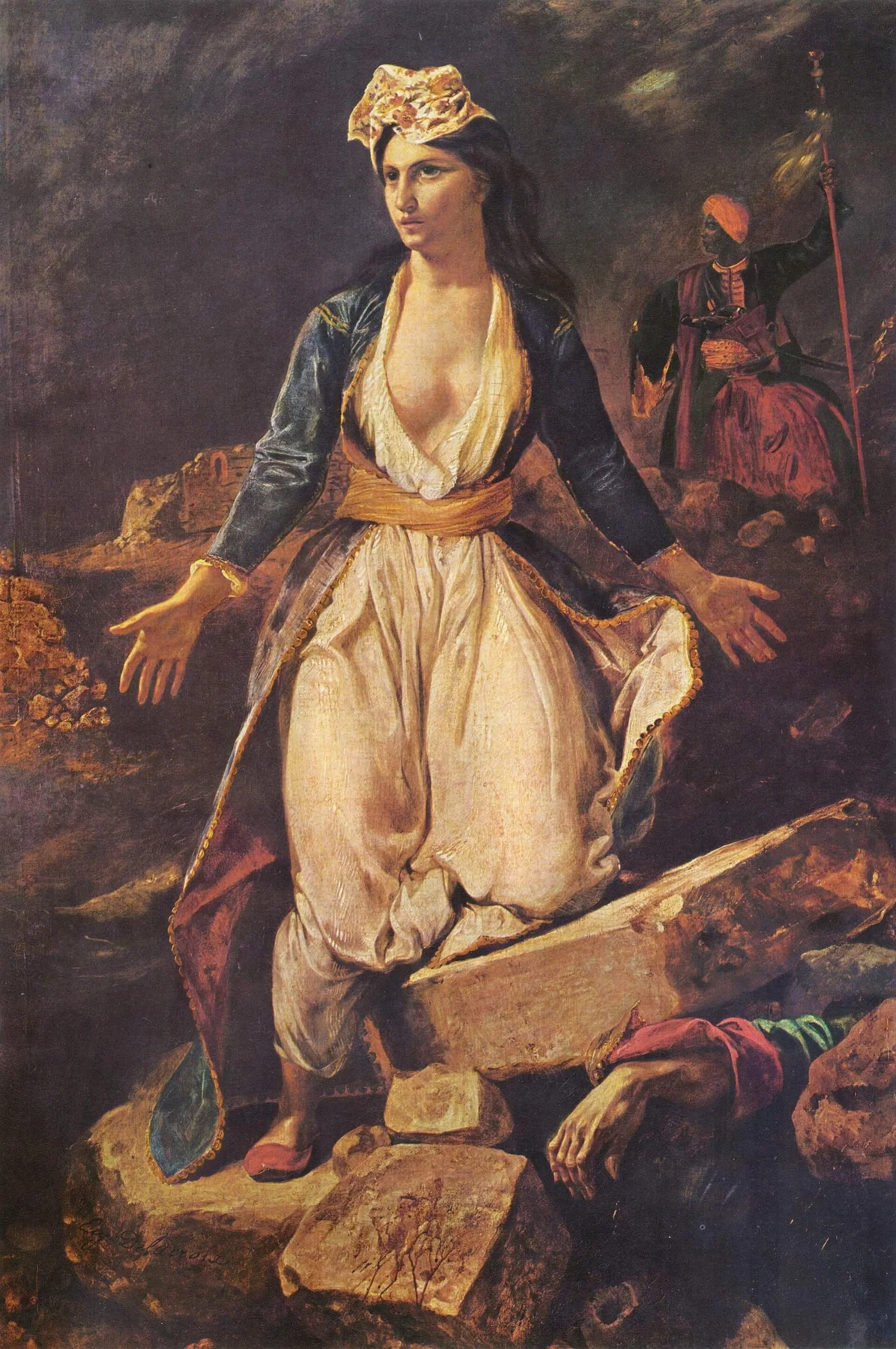
Delacroix’s Greece on the Ruins of Missolonghi is a political image, not an ethnographic portrait. The Bordeaux museum explains the central woman as a personification of Greece during the struggle for independence. Her open hands and pale clothing command the light; ruined masonry and a dead arm make the setting bodily and violent.
The work exposes a limit in the comfortable phrase “pictures of the East.” European sympathy, national causes and opposition to Ottoman power could determine how a scene was framed. The painting tells us about a contemporary position taken towards an event. Its expressive force does not turn its allegorical woman into a named eyewitness.
Two portraits beyond the costume scene
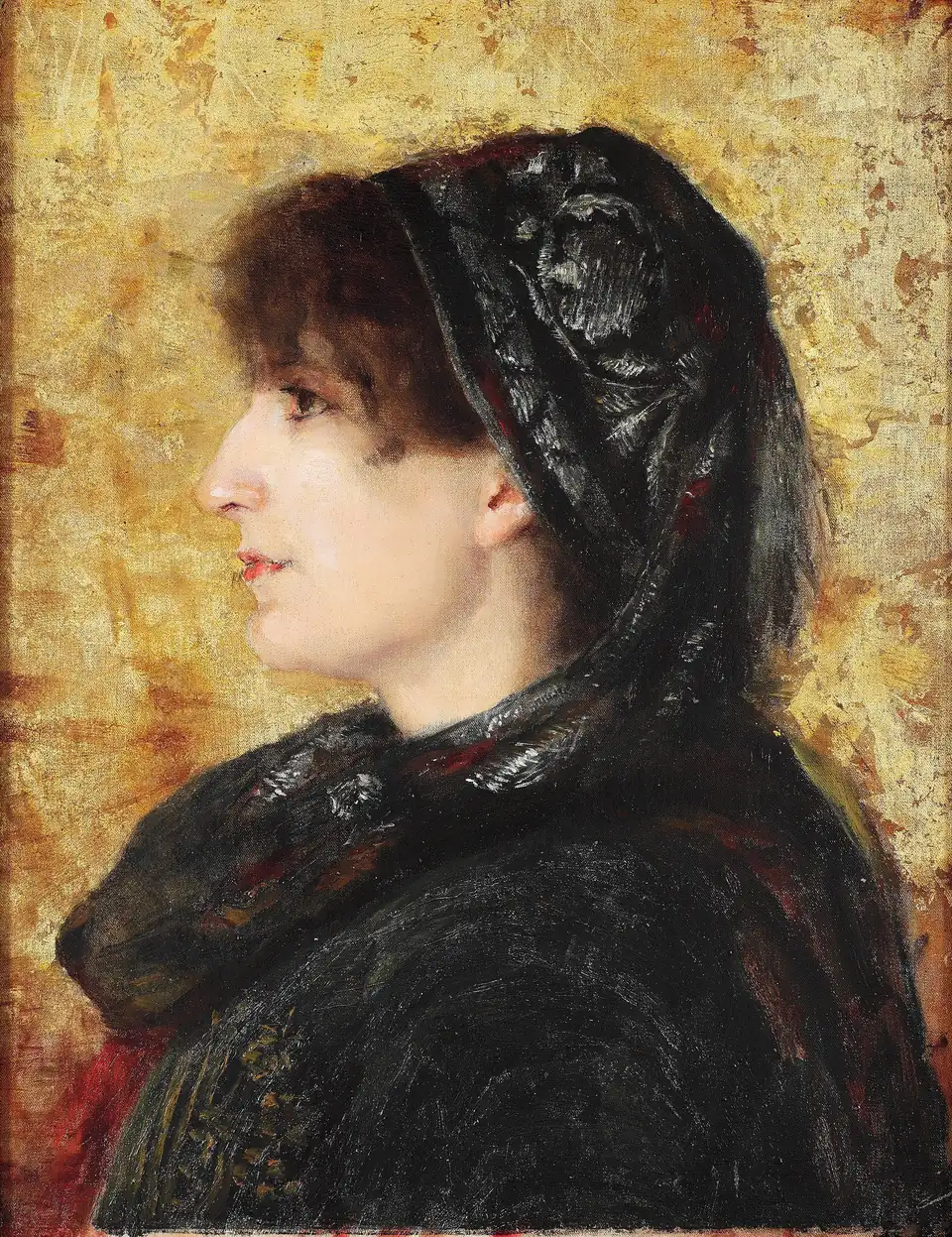
Osman Hamdi’s portrait of his wife Naile Hanım changes the scale of encounter. A profile, a dark veil and a gold-toned ground replace the carefully furnished room. Her face has no narrative task beyond being the focus of this portrait. The museum leaves the work undated; attaching a guessed year would add certainty the record does not offer.
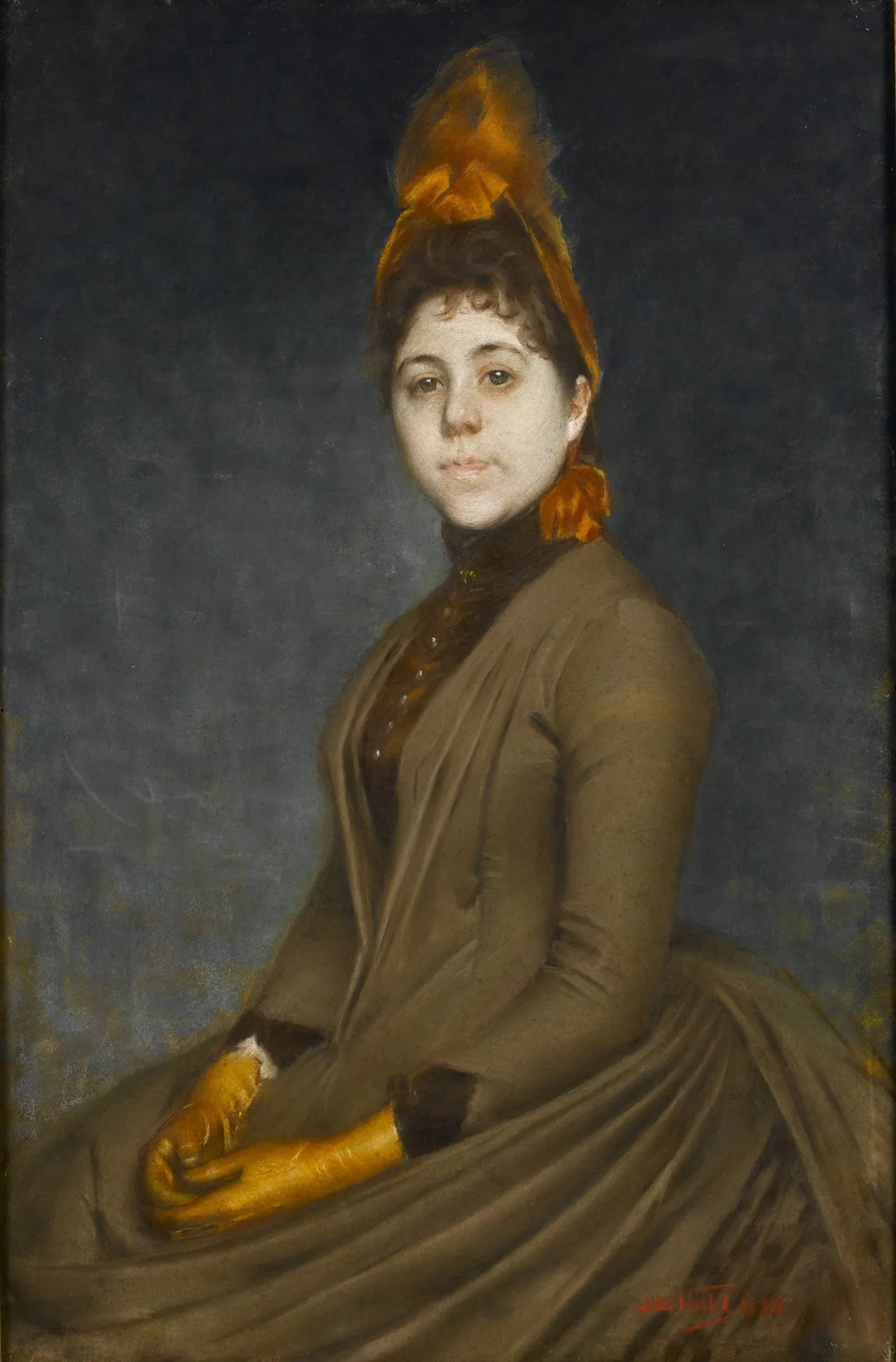
Halil Paşa’s Madame X gives another Ottoman painter a different problem: how to join a reserved seated pose to the vivid accents of an orange hair bow and yellow gloves. Warm colour returns from head to hands, leading us down the canvas. An unnamed sitter need not become a supposedly typical woman of a nation.
The Sabancı account records Halil’s Paris training and the painting’s bronze medal at the 1889 Exposition Universelle. This is not evidence that he belonged to an identical school or outlook as Osman Hamdi. It shows why European training and Ottoman artistic careers cannot be separated into sealed compartments.
The Tortoise Trainer is a question, not a captioned answer
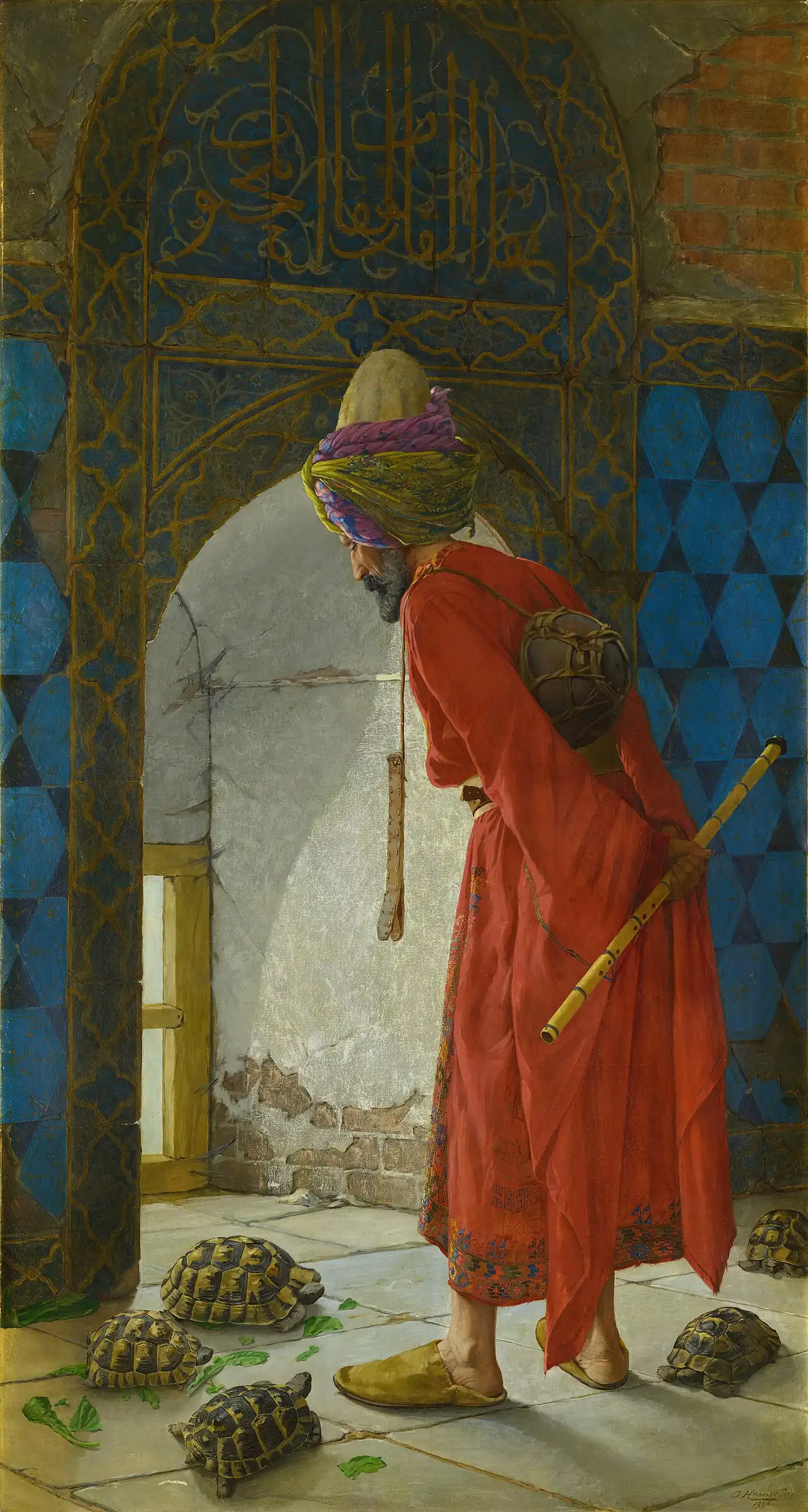
The 1906 painting at Pera gathers many of these issues into one strange room. A red-robed figure towers above small tortoises. The low window creates a bright opening, while damaged plaster interrupts the surrounding ornament. The man’s instrument is behind his back: the picture offers neither a straightforward musical performance nor an ordinary animal-training demonstration.
The institutional record identifies the painter as his model and connects the room with Bursa’s Green Mosque. Those are useful anchors. They do not settle every proposed symbolic meaning. Reading the scene as a meditation on patience or ineffective instruction is a possible interpretation, not a message printed unambiguously into the tiles.
A better way to look
Start with the exact object, then ask what kind of claim it makes. A study, a portrait, an allegory and a constructed interior deserve different questions. Look for a person’s name, the route from observation to studio, and the audience for whom the work became visible. These habits keep the beauty of a surface from doing the work of historical proof.
The Osman Hamdi Bey guide follows individual paintings and their image sources in more detail. The collections directory is a separate place to browse art: these eight historical examples do not imply eight available products. Keeping that distinction is part of giving the paintings their own histories rather than turning them into an interchangeable decorative “East.”
Editorial record
About this article
- Author
- Publisher
- GeMarkt
- Published
- Reviewed
- Internal source & rights check. Conducted by GeMarkt Research Review. This is an internal editorial check—not independent peer review.
- Source standard
- Art history source standardPrioritises object records and research sources, distinguishes evidence from interpretation, and states material uncertainty.
Found a claim that needs checking? Report a factual error.