GeMarkt Journal · Practical guide
Is Vermeer's Art Public Domain? A Work-and-File Guide
Vermeer's established paintings are public domain in major life-plus-70 markets, but the museum image or download you choose still needs its own rights check.
Rights check · reviewed
The short answer
Yes—for the established, long-published Vermeer paintings documented here in the European Union, United Kingdom, Türkiye and United States. That conclusion applies to the underlying works, not automatically to every museum photograph, download, restoration or newly discovered object.
| What is being checked | Result | Why |
|---|---|---|
| European Union & United Kingdom | Public domain | Vermeer died in 1675, centuries beyond the ordinary life-plus-70 term for artistic works. |
| Türkiye | Public domain | Türkiye also applies a life-plus-70 economic-rights term. Vermeer’s established works are far beyond it. |
| United States | Clear for the 12 long-published works below | The named museum works have long object, sale and reproduction histories. A newly discovered or formerly unpublished object still needs its own U.S. publication history checked. |
| Museum image or download | Check the exact file | The painting and a modern photograph, scan, restoration or website download are separate layers. Use the object record, file source and provider terms together. |
This guide clears a named set of 12 institutionally catalogued, long-published works. It does not make a worldwide blanket claim, clear a formerly unpublished discovery, or override the terms attached to a particular digital file.
This is a documented research summary, not legal advice. Copyright and moral-rights rules can vary by country and by the history of a particular work.

What we’ll look at
When can an established Vermeer painting be reused, and why does the exact museum image or downloaded file require a second decision?
The useful answer is not “Vermeer is old, so every image is free.” It is narrower and more practical: the established Vermeer paintings documented in this guide are outside ordinary economic copyright terms in the European Union, United Kingdom, Türkiye, and—after a separate publication-history check—the United States. The digital file you put into a book, product, video, or website remains a second question.
That distinction matters because a search for “Vermeer public domain” usually returns a mixture of museum object pages, museum downloads, commercial image libraries, Wikimedia files, colour-corrected reproductions, and copies with no recoverable source. They may depict the same painting without carrying the same evidence or conditions.
This guide therefore makes two decisions, not one:
- Is the underlying painting outside copyright in the market being considered?
- Is the exact digital file supported by a usable provider statement and a traceable source record?
The answer below is a research summary, not legal advice. It deliberately avoids a blanket worldwide claim.
The short answer is work-specific
Johannes Vermeer died in 1675. For his familiar, institutionally catalogued paintings, the ordinary author-based term expired centuries ago in countries applying life plus 70 years. The 12-work ledger attached to this guide also uses long-established museum objects with documented collection and reproduction histories, rather than a newly surfaced attribution.
That does not mean every object labelled “Vermeer” receives the same automatic conclusion. Three facts can reopen the analysis:
- the work is newly discovered or was genuinely unpublished for an unusually long period;
- the attribution has changed from “Vermeer” to “workshop of,” “follower of,” or the reverse;
- the selected file is a modern photograph, scan, reconstruction, restoration, or edited derivative with its own authorship or contractual conditions.
Public-domain status also does not prove authorship. A museum can identify an old painting as uncertain, contested, or attributed to another maker even when no economic copyright remains in the physical object. Preserve the institution’s current wording instead of upgrading it for a caption or product title.
The working rule is simple: clear the named work, then clear the named file. GeMarkt’s copyright and image-use page explains the site’s own source and reuse boundaries; the production ledger goes further by keeping the object, institutional record, file, provider, and rights statement recoverable rather than collapsing them into “source: internet.”
Life-plus-70 markets are clear
The European Union’s term directive gives an artistic work a term of the author’s life plus 70 years. UK government guidance states the same ordinary duration for artistic works, and Article 27 of Türkiye’s Law No. 5846 also uses life plus 70 years for economic rights.
Vermeer’s 1675 death date is therefore far beyond the ordinary term in all three systems. For the established paintings covered here, the underlying artwork is public domain in:
| Market checked | Ordinary rule used here | Result for the named set |
|---|---|---|
| European Union | life plus 70 years | public domain |
| United Kingdom | life plus 70 years | public domain |
| Türkiye | life plus 70 years | public domain |
This table is intentionally not labelled “worldwide.” National rules can differ over publication, restoration, moral rights, special categories, and the treatment of source photographs. A responsible reuse decision names the markets that were actually checked.
Long-expired economic copyright also does not erase every non-copyright concern. Attribution and integrity interests can survive differently from country to country, and a museum’s name or logo can create separate trademark or endorsement questions. Those issues should not be smuggled into the word “copyright,” but neither should they be ignored.
The United States asks when the work was published
The U.S. answer cannot be derived from Vermeer’s death date alone. The Copyright Office’s duration table separates works published before 1978 from works that were still unpublished when the 1976 Copyright Act took effect.
For works published before 1978, the longest publication-based term relevant here is 95 years. In 2026, works published by the end of 1930 are therefore outside that maximum term. The named paintings in this guide are long-established museum works with documented object, sale, exhibition, and reproduction histories. The National Gallery of Art’s record for Woman Holding a Balance, for example, cites illustrated publications from 1911 onward. That evidence supports the clear result for the specific set below.
The fail-closed case is different. If a work existed but was unpublished on 1 January 1978, section 303 applies a separate transition regime. The ordinary author-based term could not expire before the end of 2002; if the work was first published between 1978 and the end of 2002, protection could continue through the end of 2047. “Publication” is a copyright term of art: the Copyright Office distinguishes distribution of an original or copies from mere public display.
That is why this guide does not say “every Vermeer work is free in the United States.” A newly discovered painting, hidden study, or disputed object with no documented distribution history needs an item-level review. The same caution applies if a familiar title is being used for a different physical object or an unrecorded state.
For the 12 named works, the conclusion is clear. For a surprise thirteenth work found in an attic, the conclusion is verify first.
Girl with a Pearl Earring shows why the file matters
Girl with a Pearl Earring is exactly the sort of work that exposes the difference between a painting and a download. The underlying Vermeer painting is centuries beyond ordinary life-plus-70 terms. But a person who clicks “download” still has to identify which file was supplied and under what current conditions.
On the Mauritshuis object page, the high-resolution download panel describes non-commercial use and directs commercial users to contact the museum. The museum’s separate visual-materials page uses broader language for collection images and distinguishes them from press photography. Because those public instructions are not precise enough to treat every route and file as interchangeable, this guide does not use a Mauritshuis download as its feature image or place one in the cleared 12-file set.
That is a conservative file decision, not a claim that the old painting has returned to copyright. For a commercial project, the sensible options are to obtain written confirmation for the exact Mauritshuis file, use a separately documented open file, or select another Vermeer image whose provider statement is unambiguous.
The U.S. Copyright Office adds another useful distinction. Its visual-arts compendium says a purely faithful scan or “slavish copy” does not contain new registrable authorship, while a restoration or altered reproduction may qualify if it contains sufficient original authorship. Outside the United States, originality standards and related rights can differ. Website terms, access conditions, and contract obligations can also matter even when copyright in a faithful reproduction is weak or absent.
The safest production record therefore keeps:
- the museum’s object URL;
- the exact image or IIIF URL used;
- the provider’s current rights or open-access statement;
- the download and review date;
- local file dimensions and checksum;
- every crop, colour adjustment, restoration, upscale, or format conversion.
A cleared starting set exists before a collection does
A product catalogue is not a prerequisite for a reliable editorial guide. What is required is a real, processed and rights-checked visual set.
For this publication, GeMarkt prepared 12 local WebP files from three institutional programmes:
- five Public Domain / Open Access records from The Metropolitan Museum of Art;
- three public-domain Open Access records from the National Gallery of Art;
- four public-domain records and downloadable files from the Rijksmuseum.
The set includes interiors, figure studies, a street view, and some of Vermeer’s best documented domestic scenes. Every local derivative retains the holding institution, accession number, object record, exact source-file URL, provider status, intrinsic dimensions, and the transformation “resized and converted to WebP; no crop.” The ledger below is evidence for this article, not a promise that a print or download product currently exists.
The feature image, Young Woman with a Water Pitcher, comes from The Met. Its object record marks the work Public Domain, and The Met’s Open Access policy makes images it believes to be public domain available under CC0 for unrestricted commercial and non-commercial use. That direct record is why it was preferred over a more famous but conditionally described download.
If a file in the ledger is later replaced, its replacement must go through the same object-and-file review. Visual similarity is not provenance.
What commercial reuse still requires
“Commercial use” is not a magic third copyright term. Once the underlying work and exact file are cleared for the intended market, the remaining work is ordinary publication discipline.
Before release, confirm:
- Identity. The title, maker wording, date, institution, and accession number match the object record.
- File provenance. The production file came from the recorded institutional source, not from a search preview or repost.
- Provider conditions. The licence or public-domain statement permits the intended use, and any requested credit is preserved.
- Transformations. Cropping, colour work, reconstruction, or AI-assisted edits are disclosed internally and do not create a misleading facsimile claim.
- Territory. The actual sales and distribution markets are covered by the legal review; “EU, UK, Türkiye, and U.S.” is not shorthand for every country.
- Presentation. The museum’s name, logo, and collection relationship are not used to imply sponsorship or approval.
- Update date. A provider page can change. Recheck it before a new edition, product launch, or large licensing commitment.
If those fields cannot be recovered, stop and source the image again. The article Public domain is not a free-for-all explains why provenance, attribution, privacy, trademarks, and platform rules continue to matter after copyright expires.
Where Vermeer fits inside GeMarkt
Vermeer belongs naturally beside GeMarkt’s account of Baroque worlds in Rome, Madrid, Antwerp, Amsterdam, and colonial circulation, but this guide answers a different intent: not how the paintings functioned historically, but what a present-day reuser must prove.
There is no Vermeer collection or dedicated wallpaper room on GeMarkt at publication time. The current wallpaper library and shop should not imply otherwise. If a processed collection is later released, its stable routes are reserved as /collections/vermeer/ and /free/wallpapers/vermeer/; those paths should remain inactive until the files, product claims, and rights ledger are ready.
That sequencing keeps the editorial answer independent from inventory. Search intent can be served now because the research and visual evidence exist. A future product can link back to the same guide, but it will still need its own source-file, restoration, quality, and territory checks.
Rights-checked image ledger
A documented starting set
These files were selected from the holding institutions rather than from search-result copies. Each card keeps the artwork record, exact source file, provider statement and GeMarkt transformation visible as separate facts.
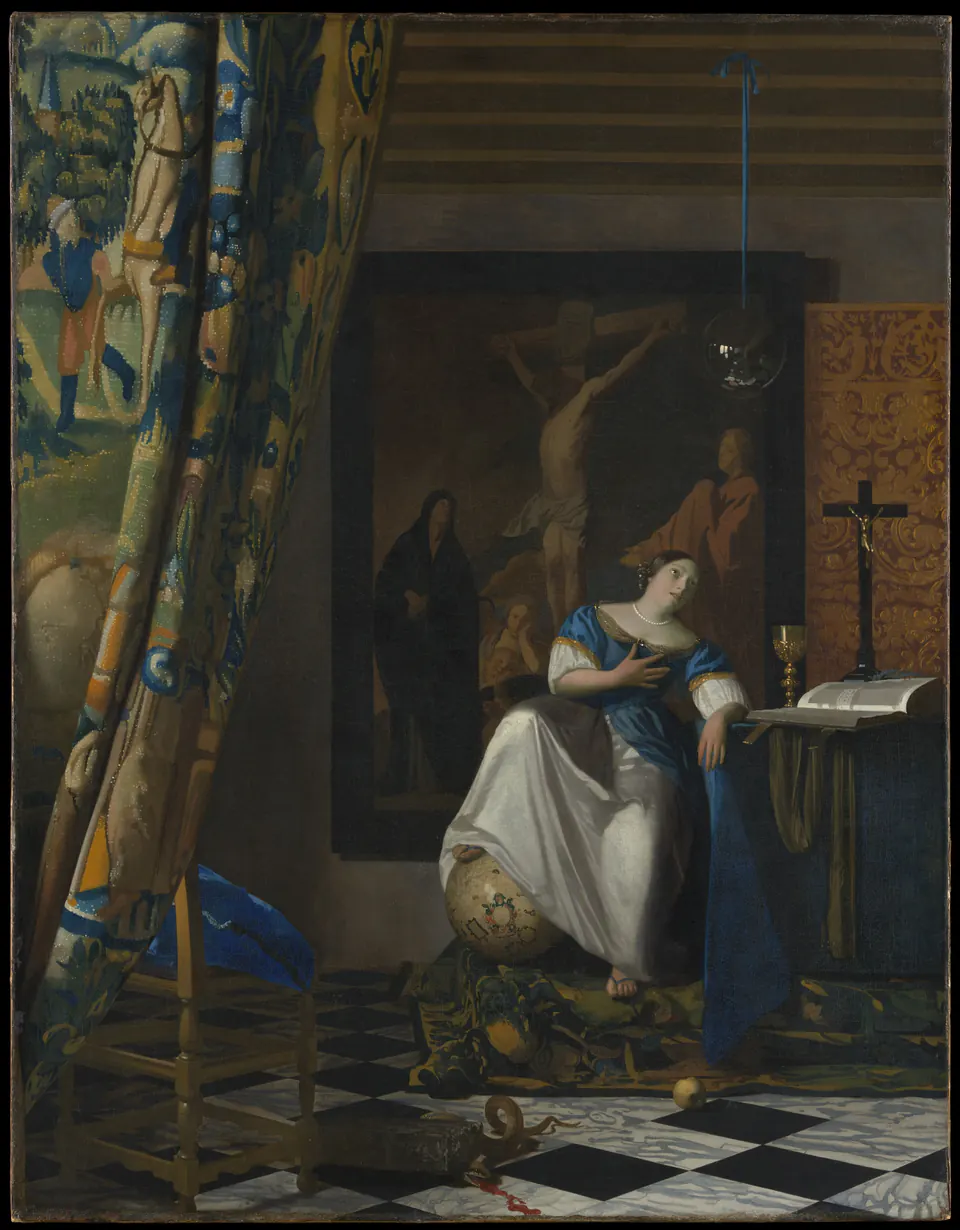
Allegory of the Catholic Faith
ca. 1670–72 · The Metropolitan Museum of Art · 32.100.18
Public Domain / Open Access (CC0)
Resized to 960 pixels wide and converted to WebP; no crop.
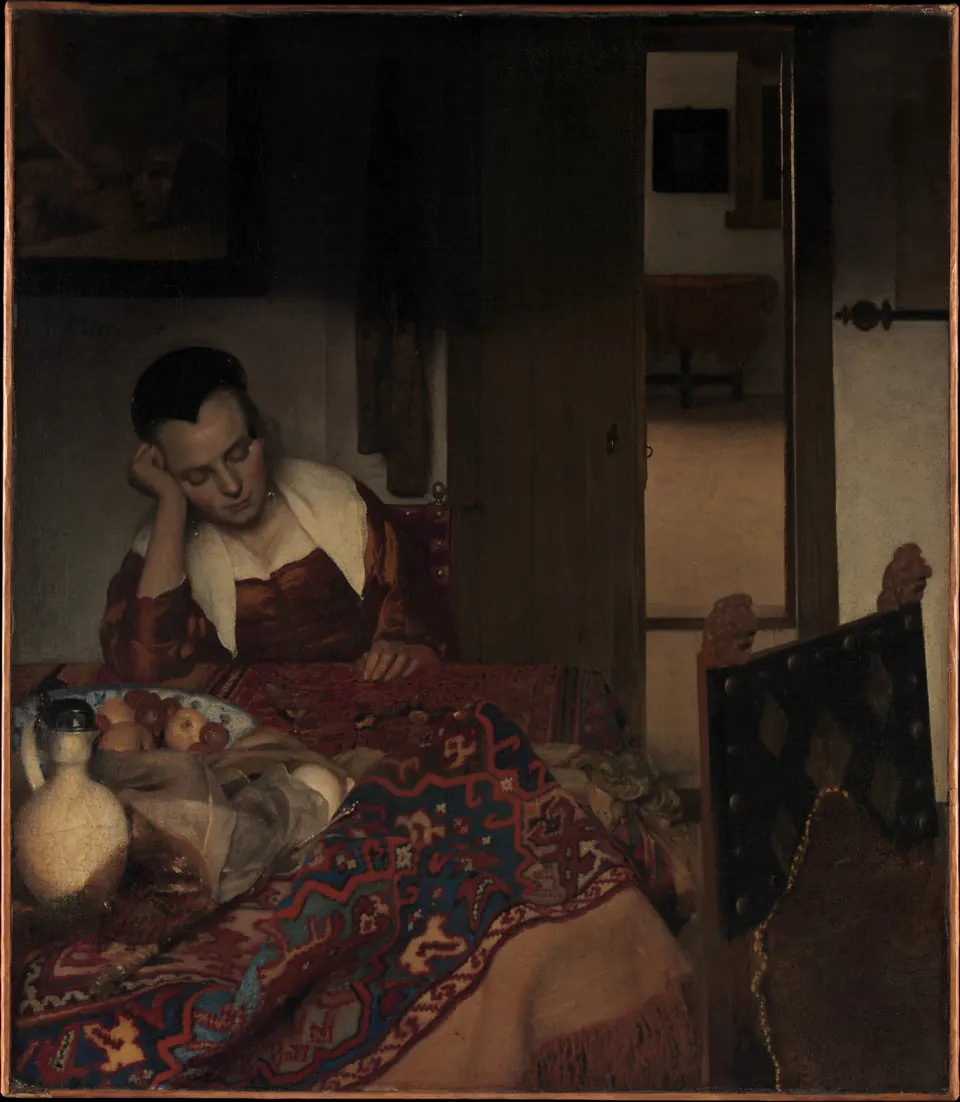
A Maid Asleep
ca. 1656–57 · The Metropolitan Museum of Art · 14.40.611
Public Domain / Open Access (CC0)
Resized to 960 pixels wide and converted to WebP; no crop.
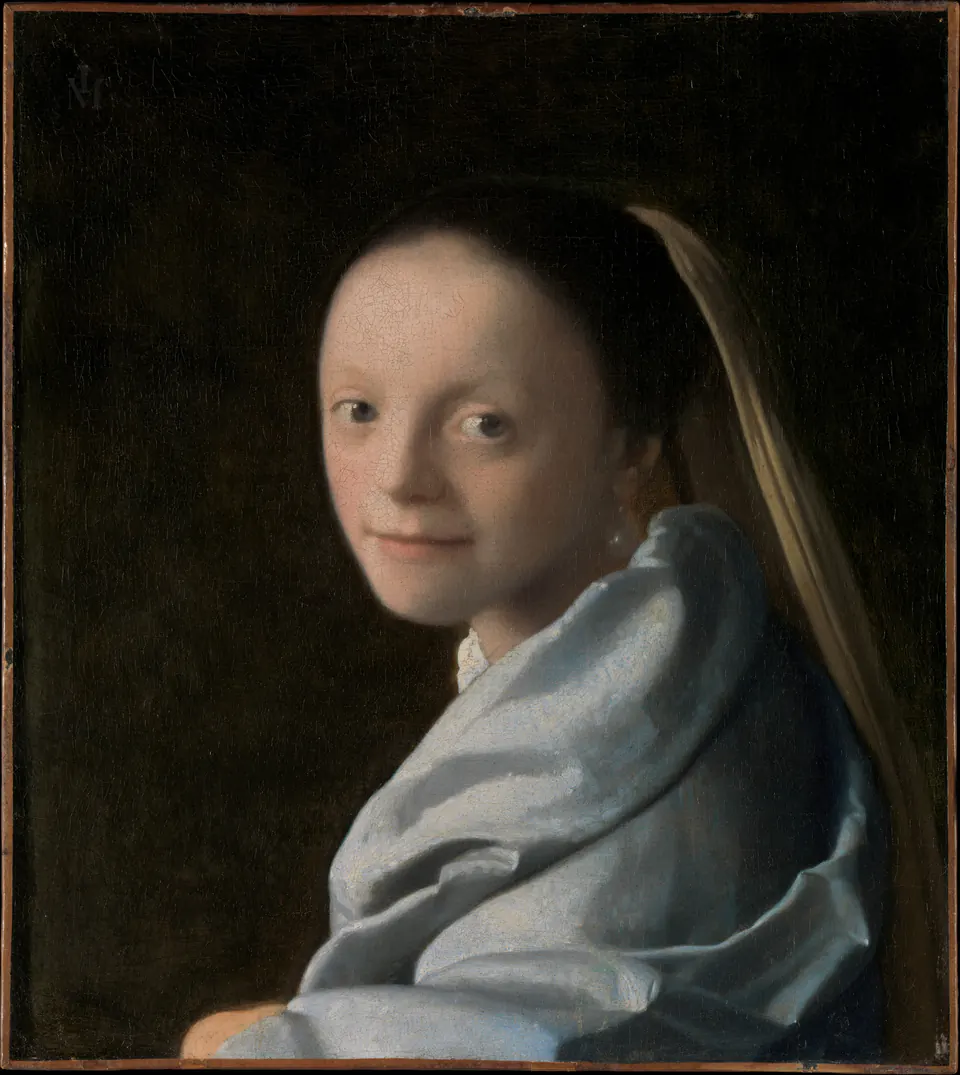
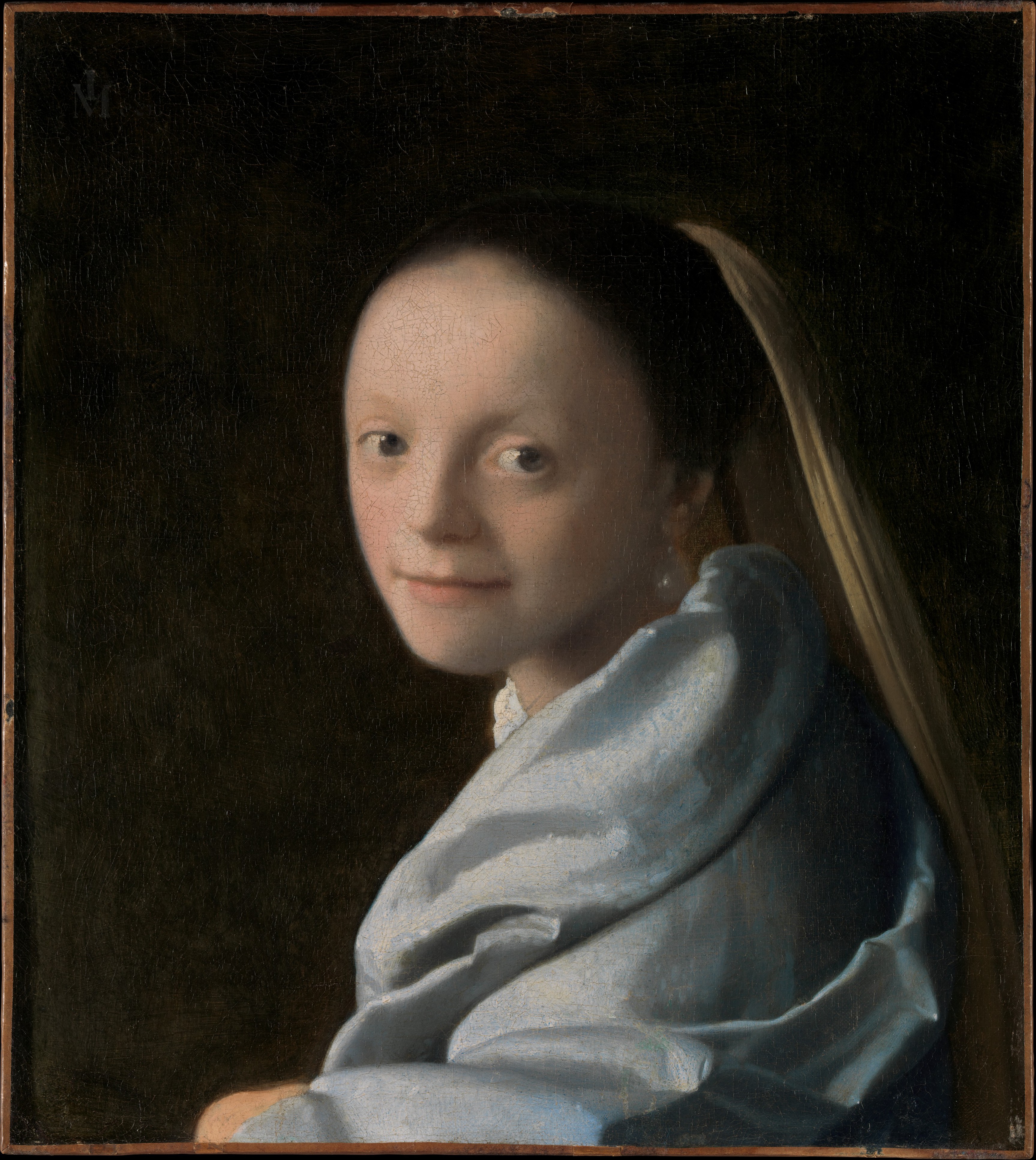
Study of a Young Woman
ca. 1665–67 · The Metropolitan Museum of Art · 1979.396.1
Public Domain / Open Access (CC0)
Resized to 960 pixels wide and converted to WebP; no crop.
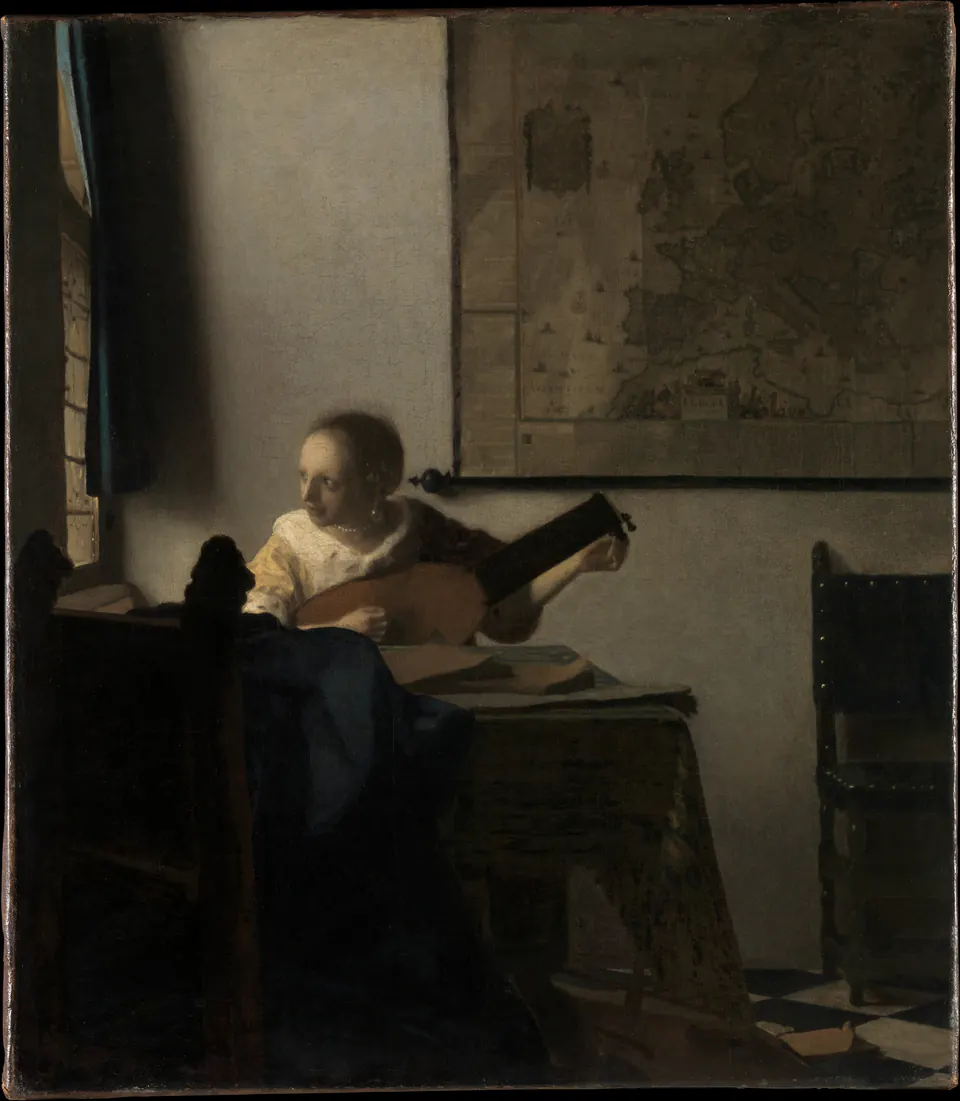
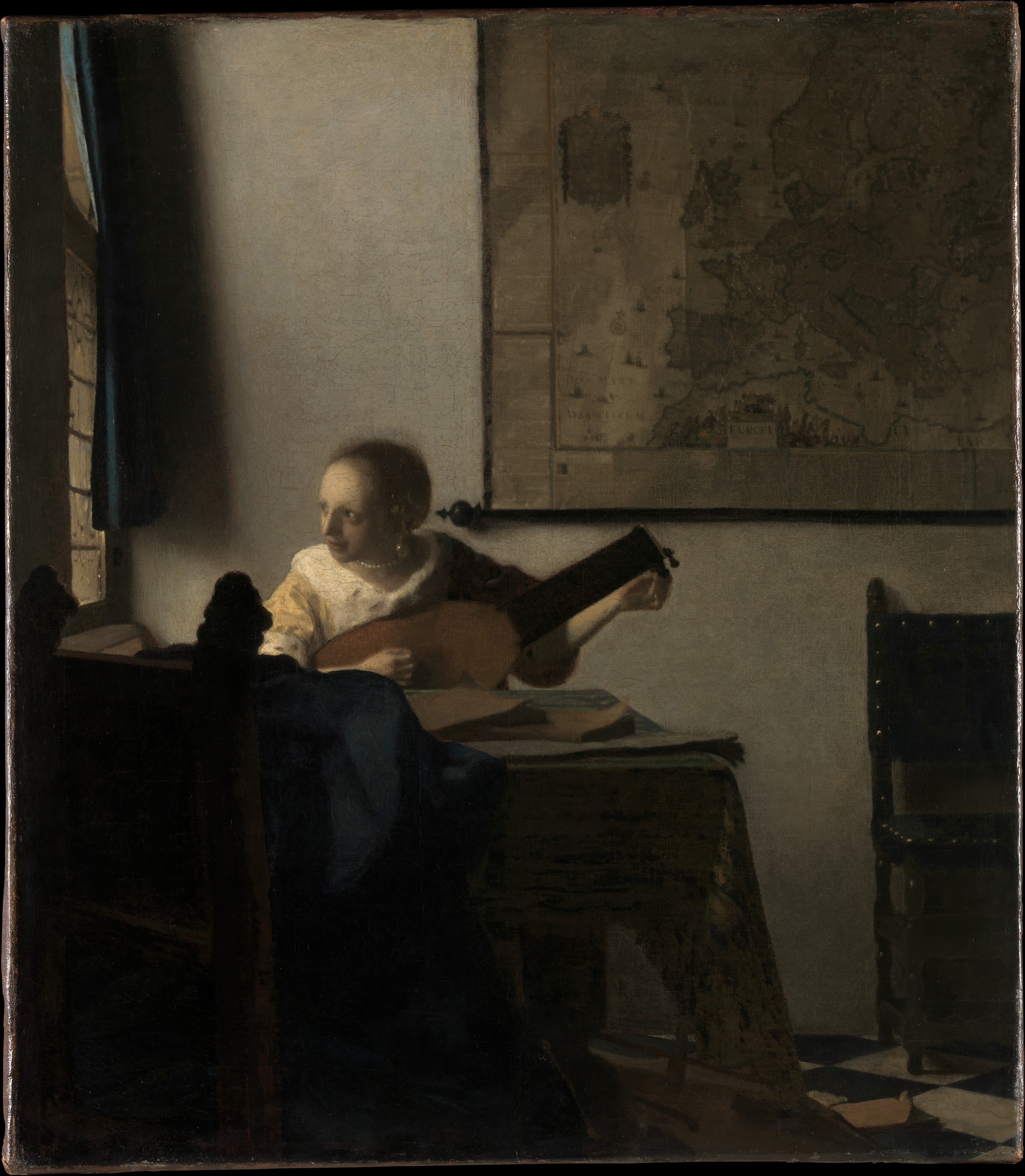
Young Woman with a Lute
ca. 1662–63 · The Metropolitan Museum of Art · 25.110.24
Public Domain / Open Access (CC0)
Resized to 960 pixels wide and converted to WebP; no crop.
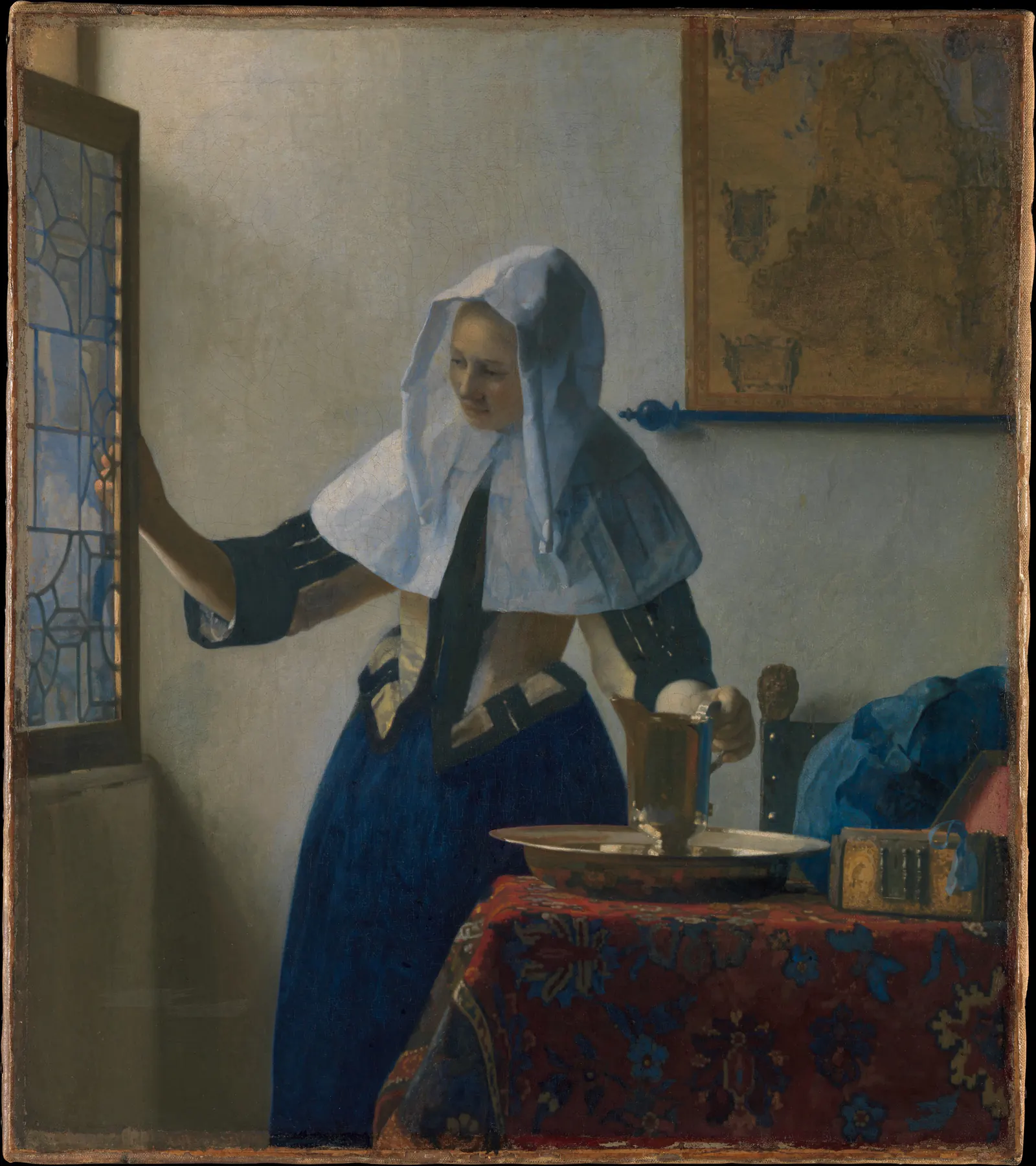
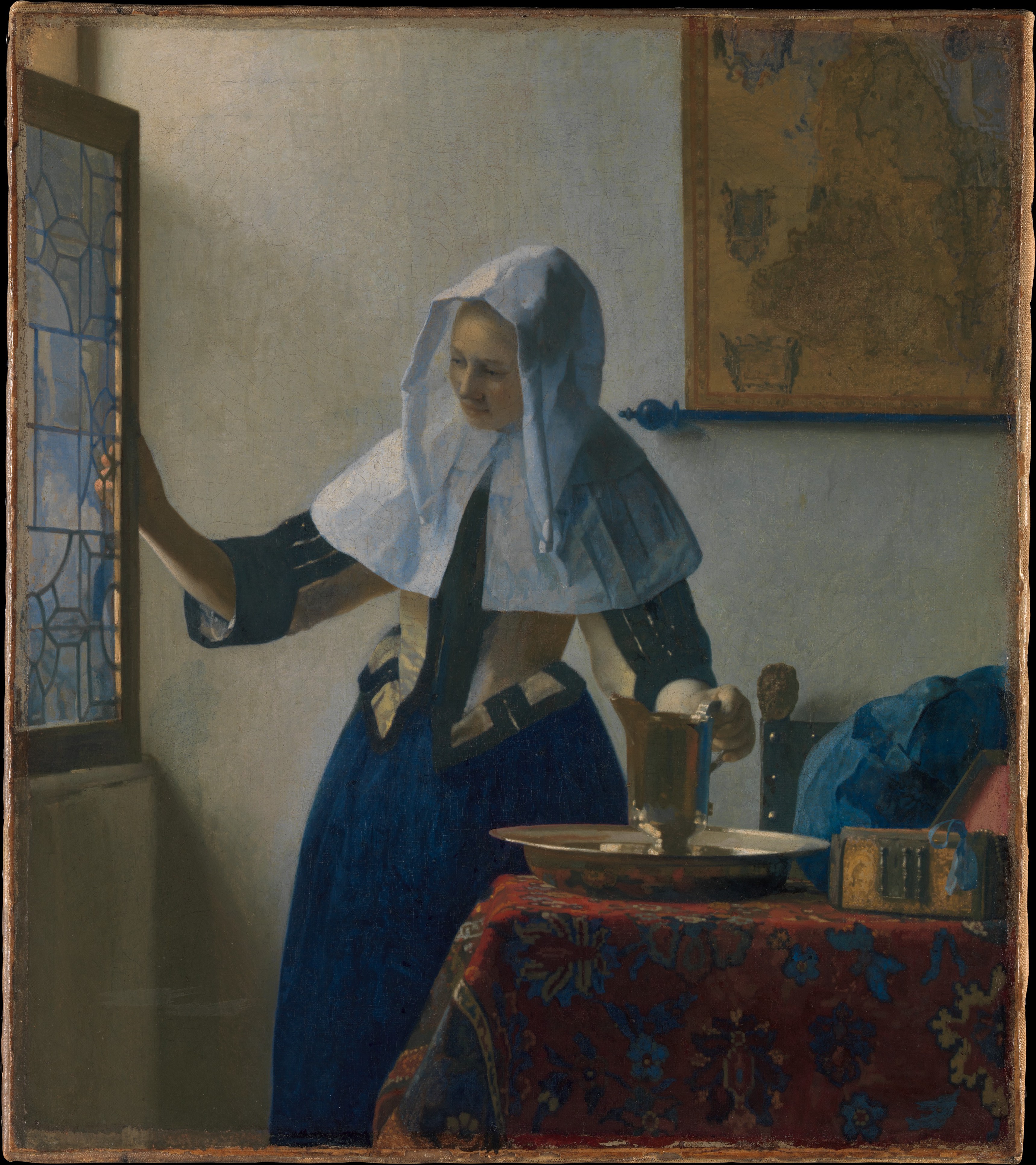
Young Woman with a Water Pitcher
ca. 1662 · The Metropolitan Museum of Art · 89.15.21
Public Domain / Open Access (CC0)
Resized to 1600 pixels wide and converted to WebP; no crop.
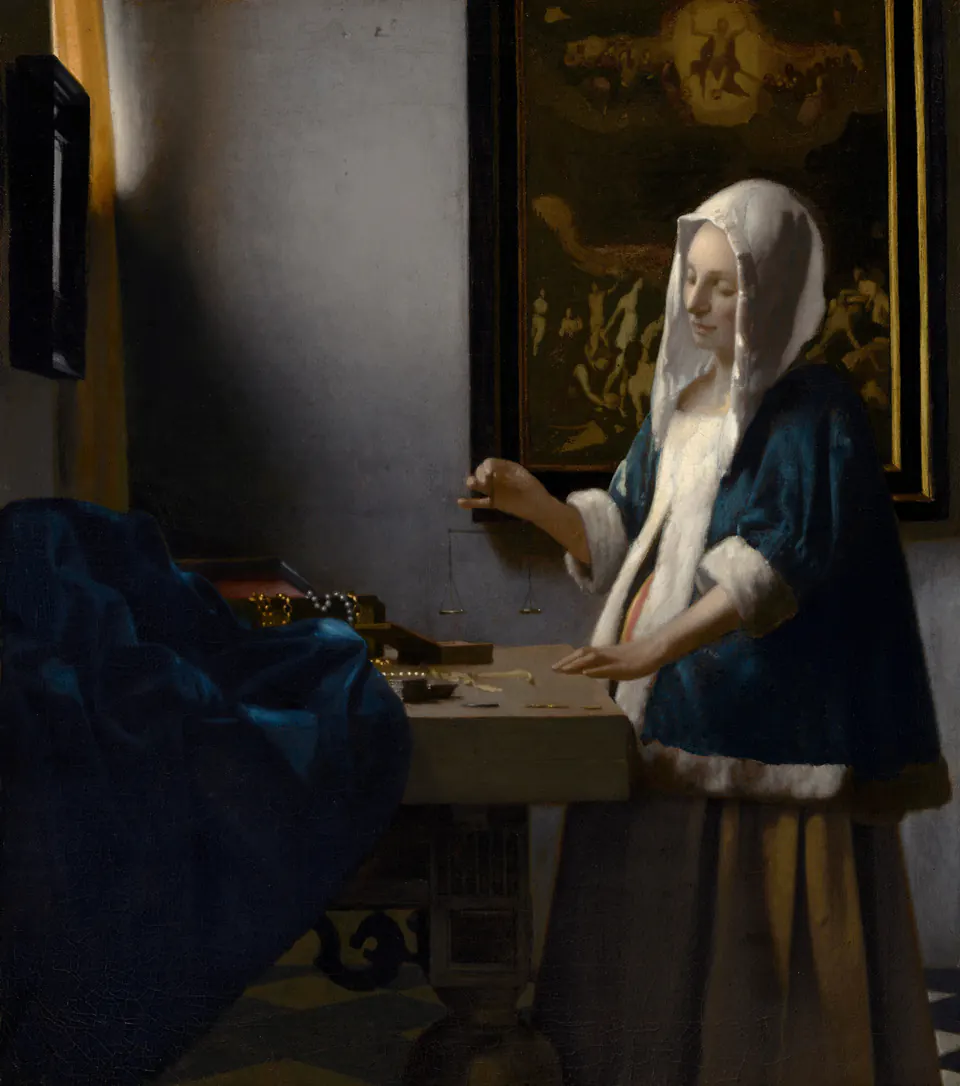
Woman Holding a Balance
ca. 1664 · National Gallery of Art · 1942.9.97
Public Domain / Open Access
Resized to 960 pixels wide and converted to WebP; no crop.

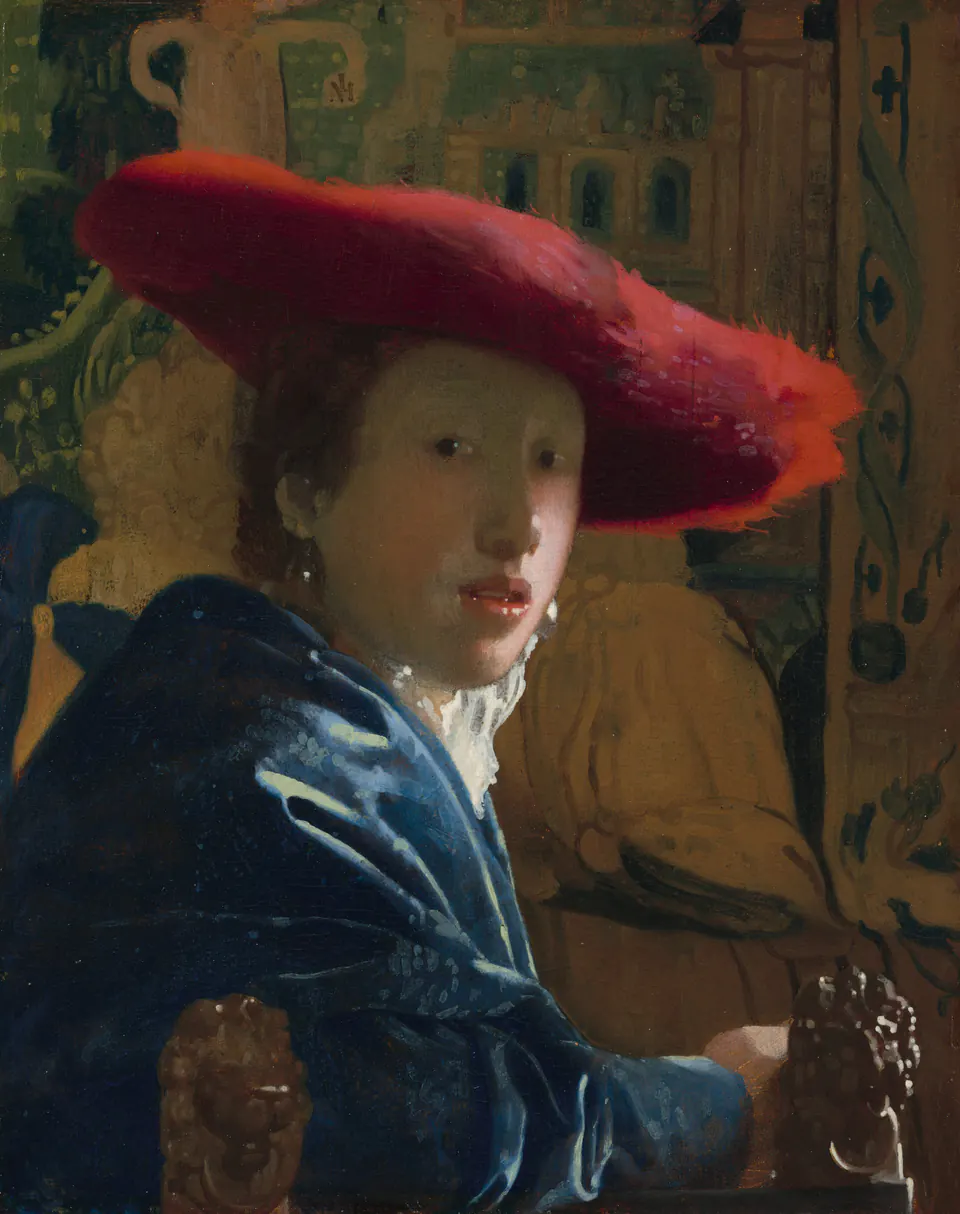
Girl with the Red Hat
ca. 1669 · National Gallery of Art · 1937.1.53
Public Domain / Open Access
Resized to 960 pixels wide and converted to WebP; no crop.

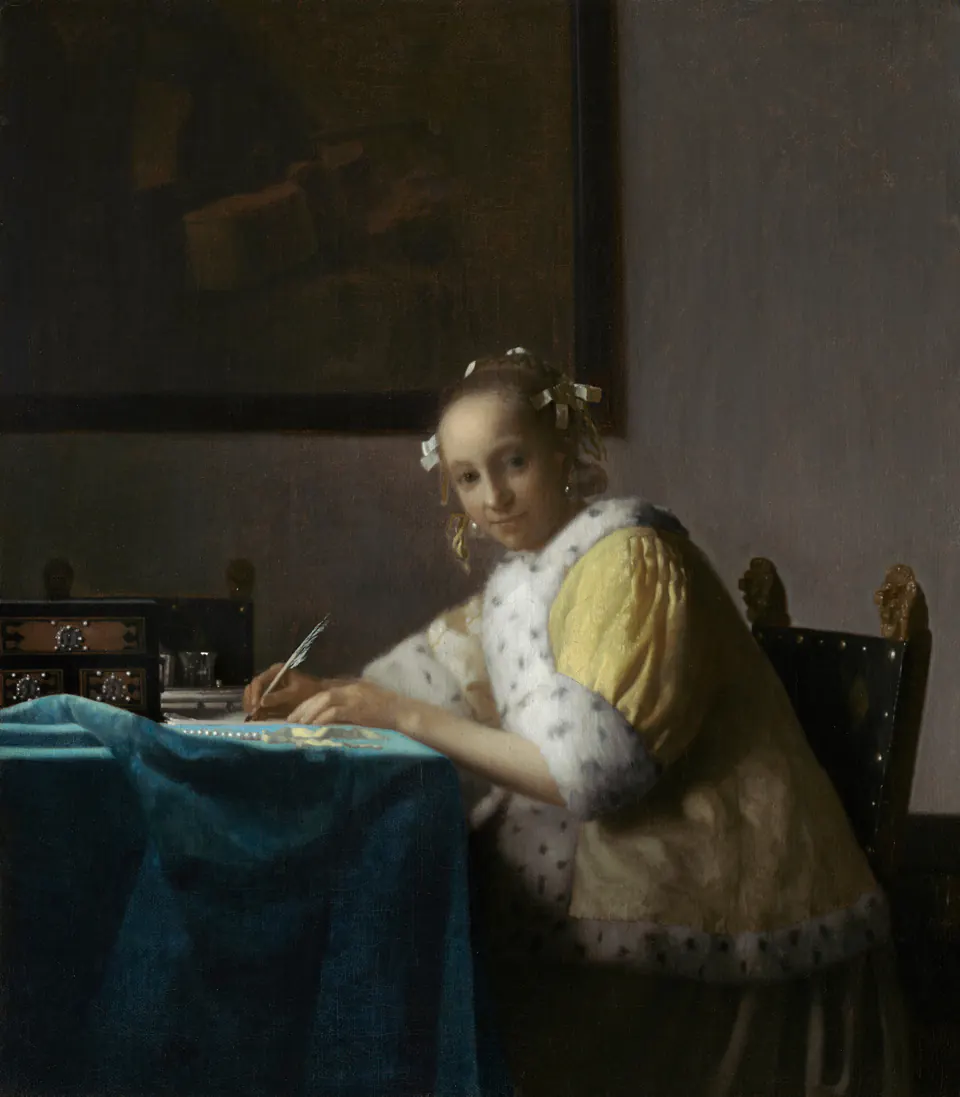
A Lady Writing
ca. 1665 · National Gallery of Art · 1962.10.1
Public Domain / Open Access
Resized to 960 pixels wide and converted to WebP; no crop.

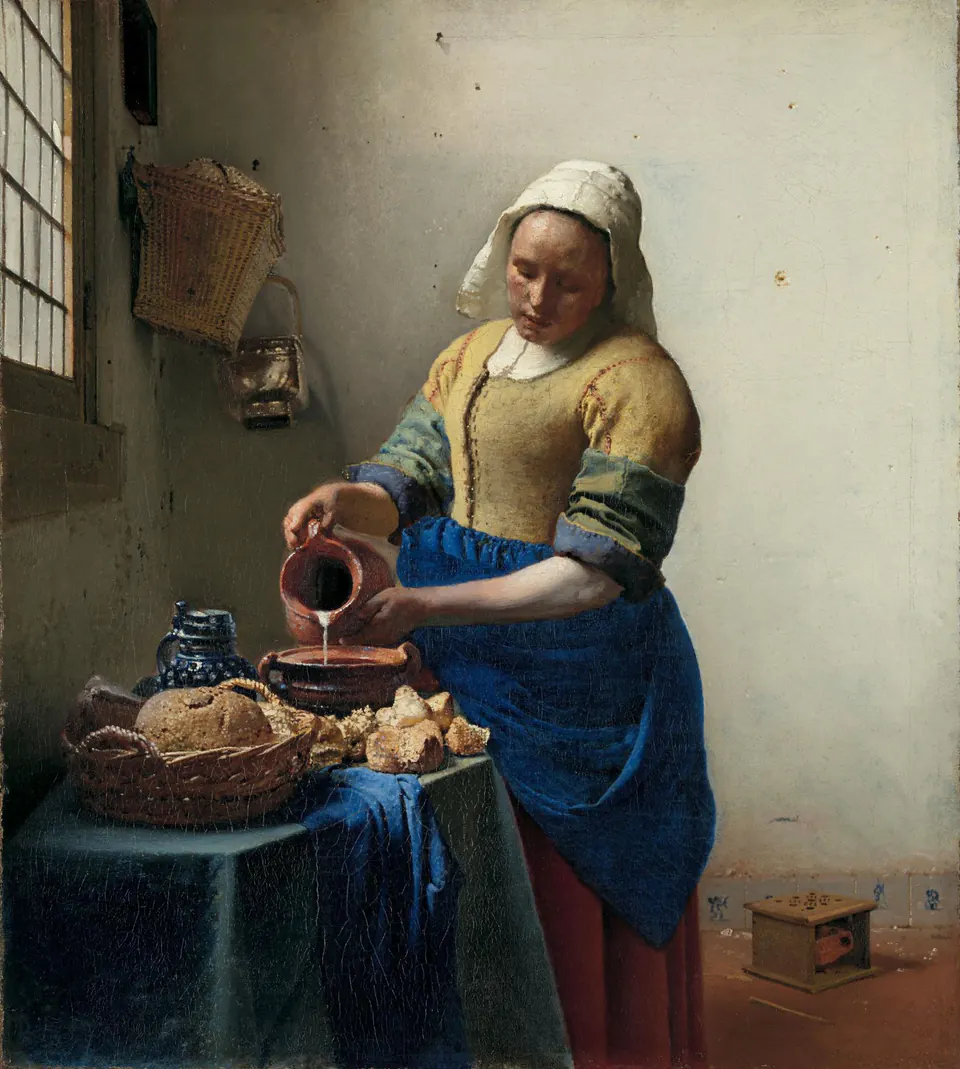
The Milkmaid
ca. 1660 · Rijksmuseum · SK-A-2344
Public Domain / Rijksmuseum Open Data
Resized to 960 pixels wide and converted to WebP; no crop.

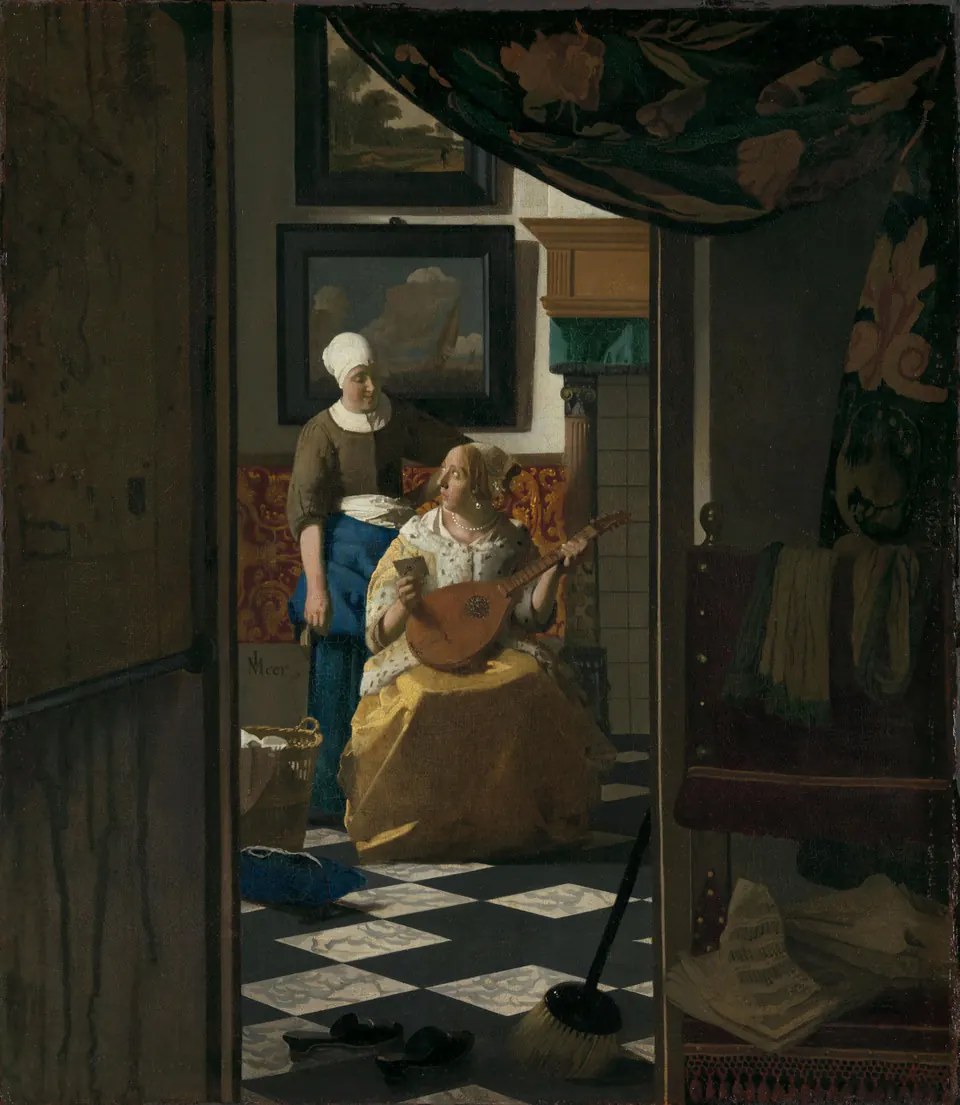
The Love Letter
ca. 1669–70 · Rijksmuseum · SK-A-1595
Public Domain / Rijksmuseum Open Data
Resized to 960 pixels wide and converted to WebP; no crop.

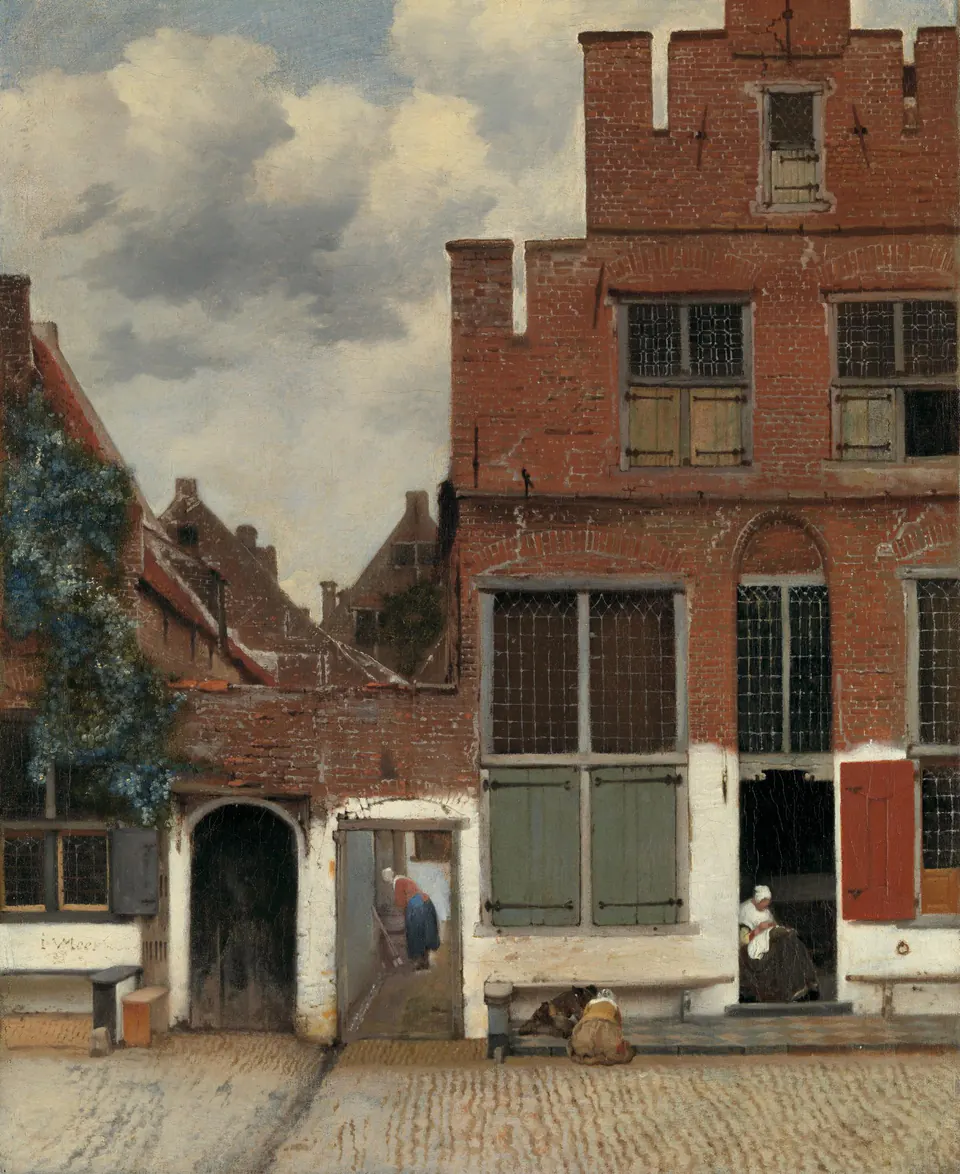
View of Houses in Delft, Known as The Little Street
ca. 1658 · Rijksmuseum · SK-A-2860
Public Domain / Rijksmuseum Open Data
Resized to 960 pixels wide and converted to WebP; no crop.

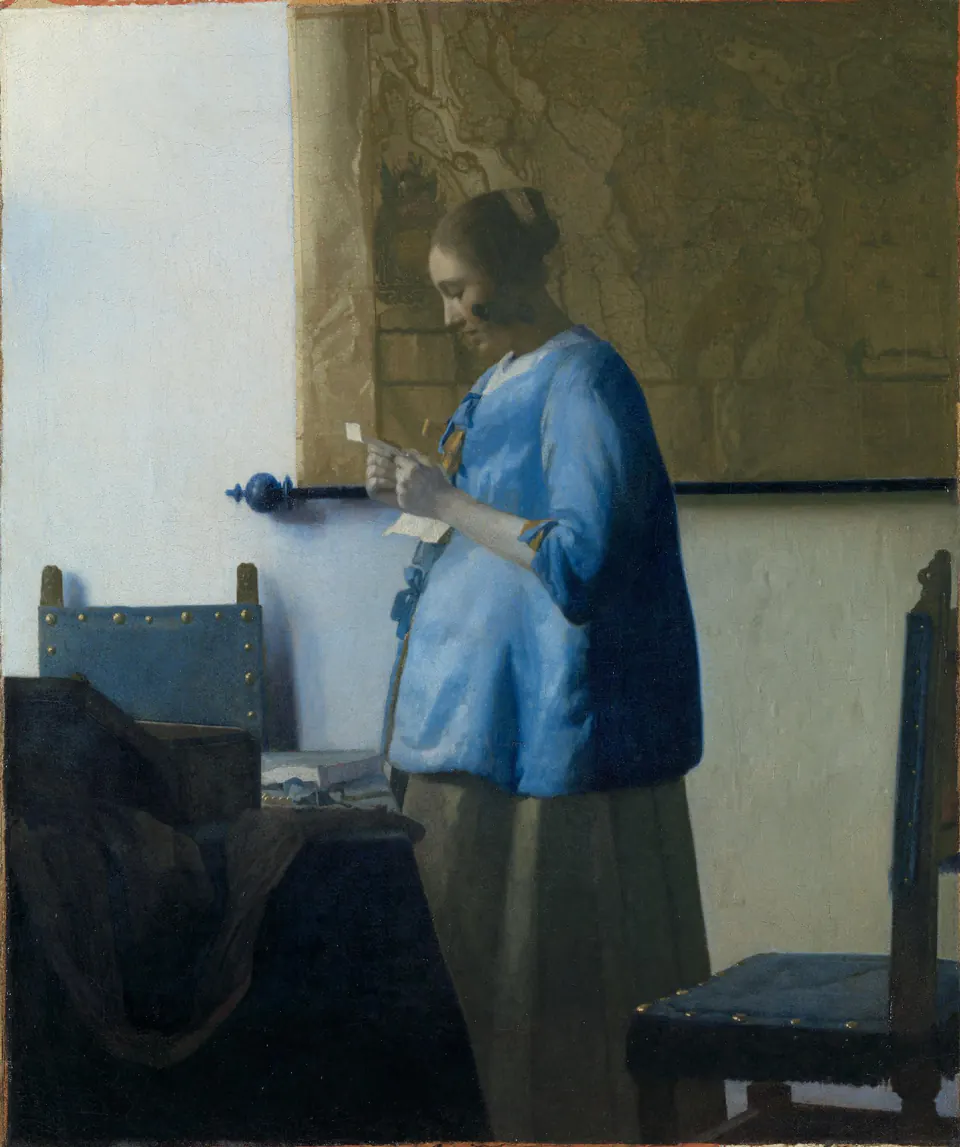
Woman Reading a Letter
ca. 1663 · Rijksmuseum · SK-C-251
Public Domain / Rijksmuseum Open Data
Resized to 960 pixels wide and converted to WebP; no crop.

Sources and review method
We checked the artist chronology against museum records, treated each named jurisdiction separately, and recorded the provider policy for the image set. These sources support the legal framework and artist dates used above; the source file for any individual image still needs its own record.
- Young Woman with a Water Pitcher — The Metropolitan Museum of Art. Feature object identity, attribution, date, accession number and Public Domain image status.
- Image and Data Resources — The Metropolitan Museum of Art. The Met makes images marked Public Domain available for unrestricted use under its Open Access programme.
- Free Images and Open Access — National Gallery of Art. The NGA releases images of public-domain works that it believes are public domain and free of known restrictions.
- Rijksmuseum collection data — Rijksmuseum. The Rijksmuseum provides collection data and downloadable images, with individual public-domain status shown on object records.
- Girl with a Pearl Earring — Mauritshuis. Object identity and the page-specific image-download conditions that must be checked separately from the old painting.
- Requesting visual material — Mauritshuis. General museum guidance that illustrates why current provider terms must be reconciled with the exact file and intended use.
- Directive 2006/116/EC, Article 1 — EUR-Lex. The EU term for an artistic work is the author’s life plus 70 years.
- How long copyright lasts — UK Government. UK guidance gives 70 years after the author’s death for artistic works.
- Law No. 5846 on Intellectual and Artistic Works, Article 27 — WIPO Lex. The Turkish economic-rights term is the author’s life plus 70 years.
- Circular 15A: Duration of Copyright — U.S. Copyright Office. The 2026 term table places works published before 1931 outside the maximum 95-year publication term.
- Certain Unpublished, Unregistered Works Enter Public Domain — U.S. Copyright Office. Older unpublished works have a separate U.S. term analysis; discovery and first-publication history can matter.
- 17 U.S.C. Chapter 3, including §303 — U.S. Copyright Office. Section 303 states the transition rules and minimum 2002 or 2047 expiry floors for works that were unpublished on 1 January 1978.
- Compendium of U.S. Copyright Office Practices, Chapter 900, §909.3(A) — U.S. Copyright Office. A purely faithful scan or “slavish copy” does not add registrable authorship, while substantial restoration or alteration can require a separate analysis.
- Copyright notice: digital images, photographs and the internet — UK Intellectual Property Office. A digital image can require a separate rights and website-terms check even when its subject is old.
Editorial record
About this article
- Author
- Publisher
- GeMarkt
- Published
- Reviewed
- Internal source & rights check. Conducted by GeMarkt Research Review. This is an internal editorial check—not independent peer review.
- Source standard
- Rights guide source standardSeparates the underlying work from the source file, records the review date, and links the evidence used for the conclusion.
Found a claim that needs checking? Report a factual error.