GeMarkt Blog · Practical guide
Is Edvard Munch Public Domain? Including The Scream
Munch's established works are beyond ordinary life-plus-70 terms. The Scream lithograph is documented; one selected colour state's U.S. publication remains open.
Rights check · reviewed
The short answer
Munch’s original work is beyond ordinary life-plus-70 copyright in the EU, UK, and Türkiye. The Scream lithograph has pre-1931 publication evidence. The selected colour state of The Girls on the Bridge still needs a separate U.S. publication check.
| What is being checked | Result | Why |
|---|---|---|
| European Union, United Kingdom & Türkiye | Public domain | Munch died in 1944; established work cleared the ordinary life-plus-70 term from 1 January 2015. |
| United States — designs and colour states | One state needs further evidence | Schiefler’s 1907 catalogue documents eleven designs. The selected Girls on the Bridge is Woll 628 III; its additional colours are not established by the earlier two-colour Schiefler description alone. |
| The Scream version or digital file | Identify the version | The checked black 1895 lithograph is not the 1893 painting, either pastel, another impression, or a modern poster file. |
Twelve museum files have affirmative CC0 labels. Early catalogue entries support eleven underlying designs; a 1918 design date does not establish when the added-colour state of The Girls on the Bridge was first published.
This is a documented research summary, not legal advice. Copyright and moral-rights rules can vary by country and by the history of a particular work.

What we’ll look at
When can an Edvard Munch image be reused, and which version of The Scream does a rights statement actually describe?
Munch’s established works are beyond ordinary life-plus-70 copyright in the EU, UK, and Türkiye. In the United States, the documented Scream lithograph is public domain, but the selected colour state of The Girls on the Bridge still needs publication evidence.
Edvard Munch died in 1944, so the ordinary life-plus-70 period ended in 2014. The museums release all twelve selected image files under CC0. That file permission and the publication history of the artwork are separate checks.
The short answer
Eleven examples come from the Art Institute of Chicago and one from the Cleveland Museum of Art. They include lithographs, woodcuts, an aquatint, and other prints made in editions. Each is identified by its museum accession number and linked to an image with a public-domain or CC0 Open Access label.
The selection is not a twelve-work U.S. clearance. Its open colour-state question is identified below, so you can distinguish the documented answer from the remaining limit.
Munch frequently revisited themes across paintings, drawings, pastels, prints, colour variants, and later impressions. A familiar title is a useful starting point, but it does not tell you which object you have found or which image you can reuse.
Copyright in the EU, UK, and Türkiye
The EU term directive, UK government guidance, and Article 27 of Türkiye’s Law No. 5846 provide ordinary life-plus-70 terms for artistic works. With Munch’s death in 1944, his established work is beyond those economic-rights terms.
| Market checked | Ordinary rule applied | Result for Munch’s established work |
|---|---|---|
| European Union | author’s life plus 70 years | public domain from 1 January 2015 |
| United Kingdom | 70 years after the creator’s death | public domain |
| Türkiye | life plus 70 years for economic rights | public domain |
The conclusion does not remove attribution, cultural-property, trademark, privacy, access, contract, or creative-restoration questions.
Why the U.S. answer is specific to these prints
Copyright Office Circular 15A ties many older U.S. terms to publication. Applying its maximum 95-year term in 2026 gives a boundary of publication before 1931. Gustav Schiefler’s 1907 catalogue documents eleven underlying designs in this selection, including The Scream, The Sick Child, and Evening, Melancholy. It does not establish the printing date of every later sheet. Merely printing an old published design again does not restart its copyright; a materially different creative addition needs its own analysis.
The remaining example needs more care. AIC’s record for The Girls on the Bridge, accession 1962.85, identifies Woll 628 III/III: a blue woodcut with lithographic yellow, green, orange, and blue. Its catalogue note says the impression described as Schiefler 488b has only yellow and red stones. The museum’s 1918 date does not resolve that difference. Until the selected colour state’s publication history is established, this guide leaves its U.S. reuse question open. The file’s CC0 label is not a substitute for that evidence.
Munch also made unique works. 17 U.S.C. §303 treats old unpublished works separately, including a possible term through 2047 for qualifying works first published between 1978 and 2002. An unissued drawing cannot borrow the publication date of a related print merely because both share a motif.
Is The Scream public domain?
Yes for the documented black lithographic design represented by AIC accession 1963.282, and the selected AIC image carries a CC0 Public Domain Designation. This 1895 lithographic version is public domain in the checked markets. It was created after the best-known 1893 painted composition; the museum record identifies the particular impression shown here.
That result does not automatically answer for the 1893 National Museum painting, the Munch Museum painting, either pastel, a different lithographic impression, a colour version, an auction photograph, or a modern poster. Those are separate objects and files.
Before downloading an image, compare the medium and accession number as carefully as the title. The black lithograph’s lines and printed lettering distinguish this object from the painted and pastel versions; its museum record identifies the particular impression.
A title is not a version
Munch used recurring titles such as The Kiss, Vampire, and The Sick Child. A catalogue record must identify medium, date, state or edition, impression, institution, and accession. Even two prints from the same matrix can have different inks, papers, hand-colouring, inscriptions, or file providers.
The distinction is visible in the examples below. AIC dates The Kiss IV to 1902, The Vampire II to 1895/1902, and The Girls on the Bridge to 1918. These catalogue dates identify the works; they do not establish when every physical sheet or colour variant was issued. None can be substituted for a painting with a related title.
Check the museum image’s terms
The artwork term and the digital file are different questions. AIC permits reuse of files carrying its CC0 designation; Cleveland releases eligible Open Access images under CC0. The UK IPO similarly warns users to check rights in the digital image, not only in the depicted work.
The images shown here were resized and converted to WebP without cropping. Their source links let you return to the museums’ originals. A screenshot, editorial photograph, or third-party restoration may have a different source and different terms, even when it shows the same work.
Twelve prints to explore
The twelve illustrated records below connect each print to its museum page and image terms. Look at how a recurring figure or setting changes with medium and colour. For reuse, those differences matter: you should be able to point to the particular version shown in your reproduction.
This selection is a starting point for working with documented images, rather than a complete survey of Munch’s art. All twelve file records are retained, including The Girls on the Bridge with its unresolved U.S. colour-state question.
A practical Munch reuse checklist
- Name the exact version, medium, date, institution, and accession.
- For a print, record state, colourway, issue, and physical impression where available.
- Do not transfer a publication date from a print to a related painting or drawing.
- Save the exact source-file URL and provider rights label.
- Document crop, colour, restoration, compositing, and format changes.
- Check the copyright term in every country where you plan to use it.
- Check attribution, moral rights, trademark, cultural-property, access, and endorsement separately.
Keep exploring
The museum links lead to the selected works and their available images. GeMarkt does not currently offer a Munch collection or download room.
For the wider artistic context, read Post-Impressionisms. Public domain is not a free-for-all explains why a reusable image still needs a careful source and caption.
Rights-checked image ledger
A documented starting set
These files were selected from the holding institutions rather than from search-result copies. Each card keeps the artwork record, exact source file, provider statement and GeMarkt transformation visible as separate facts.
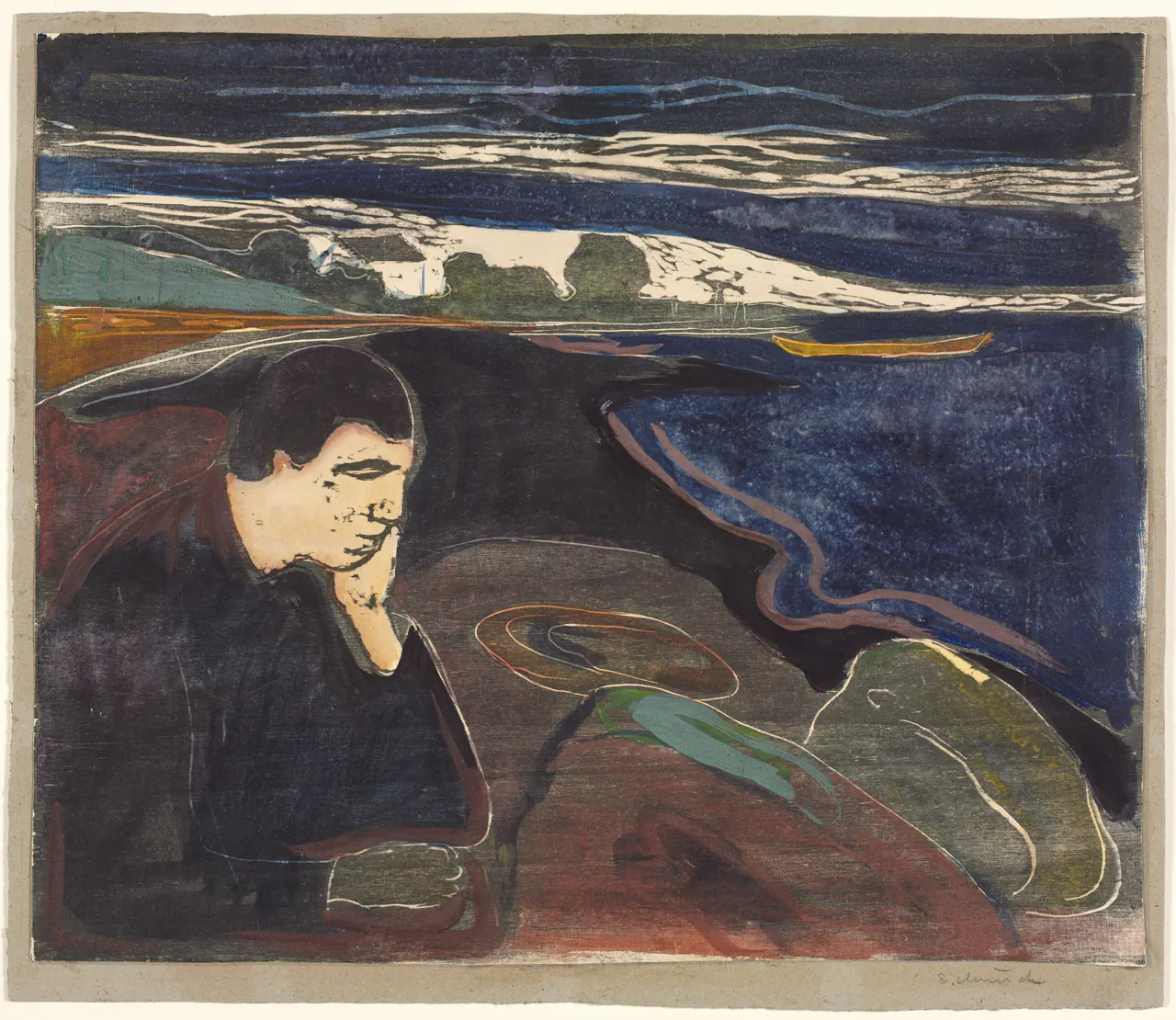
Evening, Melancholy I
1896 · Cleveland Museum of Art · 1959.82
CC0 Public Domain / Open Access
Resized to 1280 pixels wide and converted to WebP; no crop.
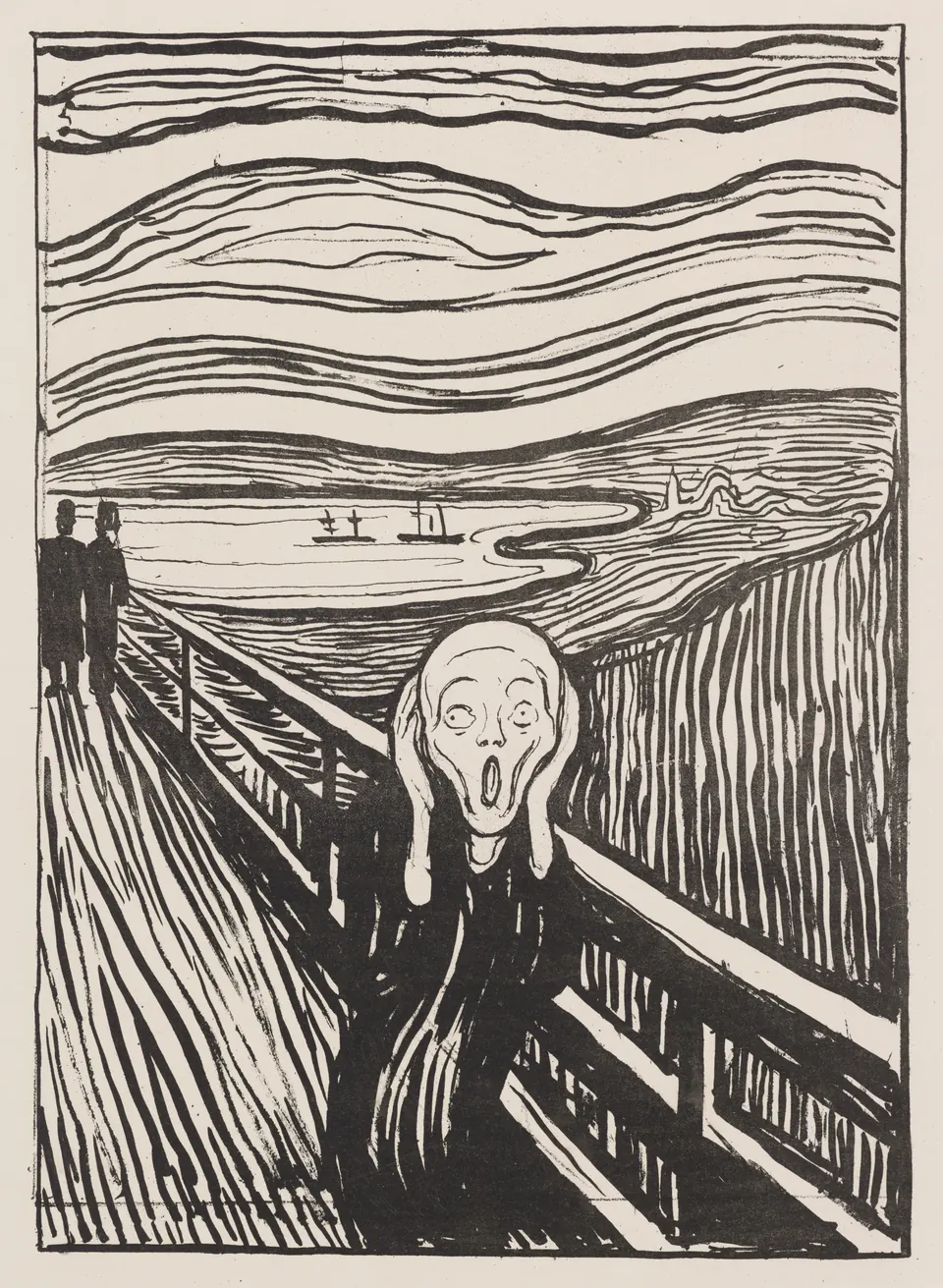
The Scream
Edvard Munch
1895 lithograph · Art Institute of Chicago · 1963.282
CC0 Public Domain Designation
Resized to 960 pixels wide and converted to WebP; no crop.

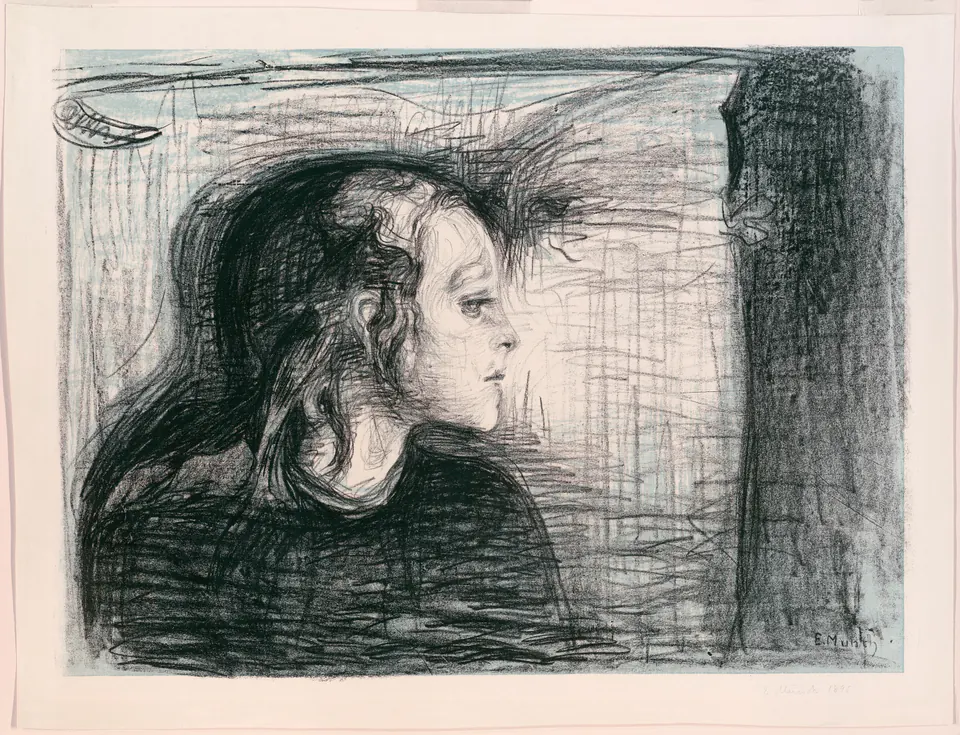
The Sick Child I
Edvard Munch; printed by Auguste Clot
1896 · Art Institute of Chicago · 2003.1
CC0 Public Domain Designation
Resized to 960 pixels wide and converted to WebP; no crop.

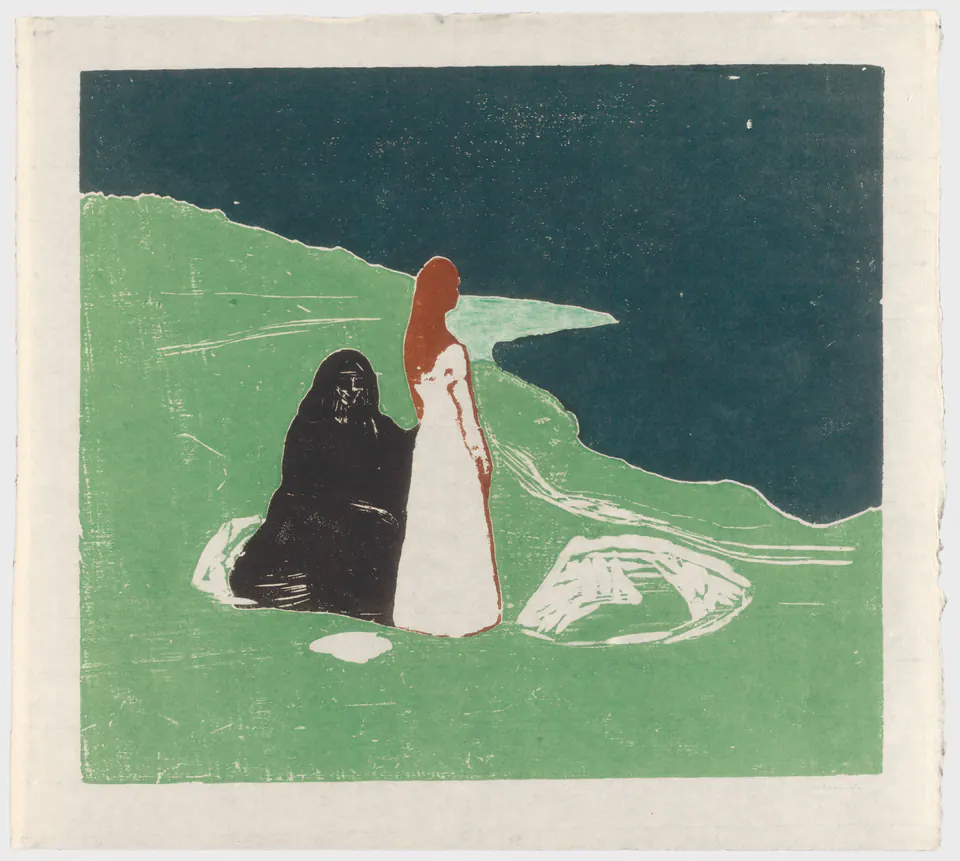
Two Women on the Shore
Edvard Munch
1898 · Art Institute of Chicago · 1963.293
CC0 Public Domain Designation
Resized to 960 pixels wide and converted to WebP; no crop.

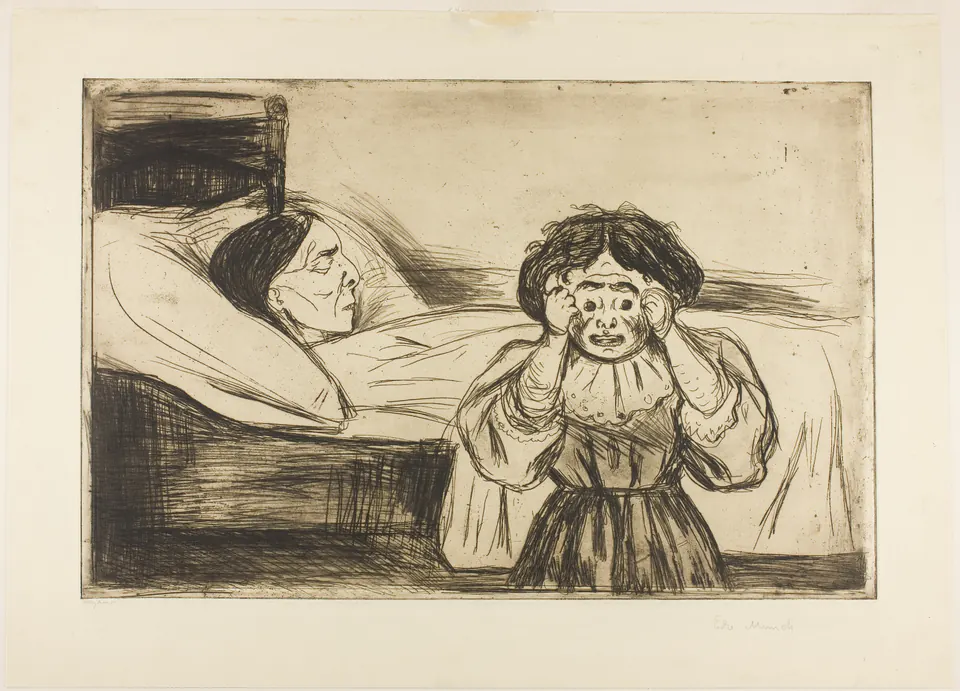
The Dead Mother and Her Child
Edvard Munch; printed by Otto Felsing
1901 · Art Institute of Chicago · 1944.591
CC0 Public Domain Designation
Resized to 960 pixels wide and converted to WebP; no crop.

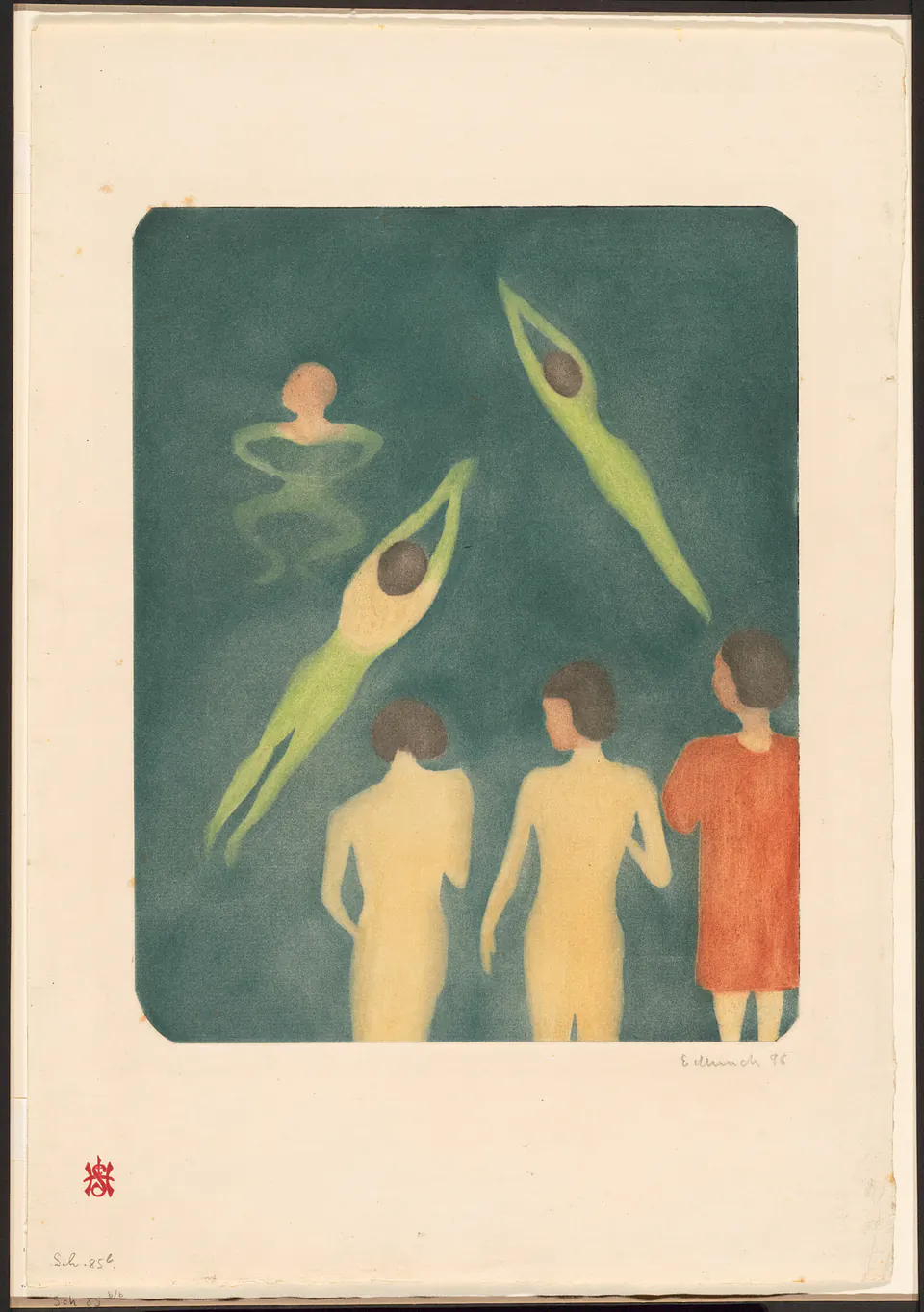
Boys Bathing
Edvard Munch; probably printed by Porcaboeuf
1896 · Art Institute of Chicago · 1947.22
CC0 Public Domain Designation
Resized to 960 pixels wide and converted to WebP; no crop.

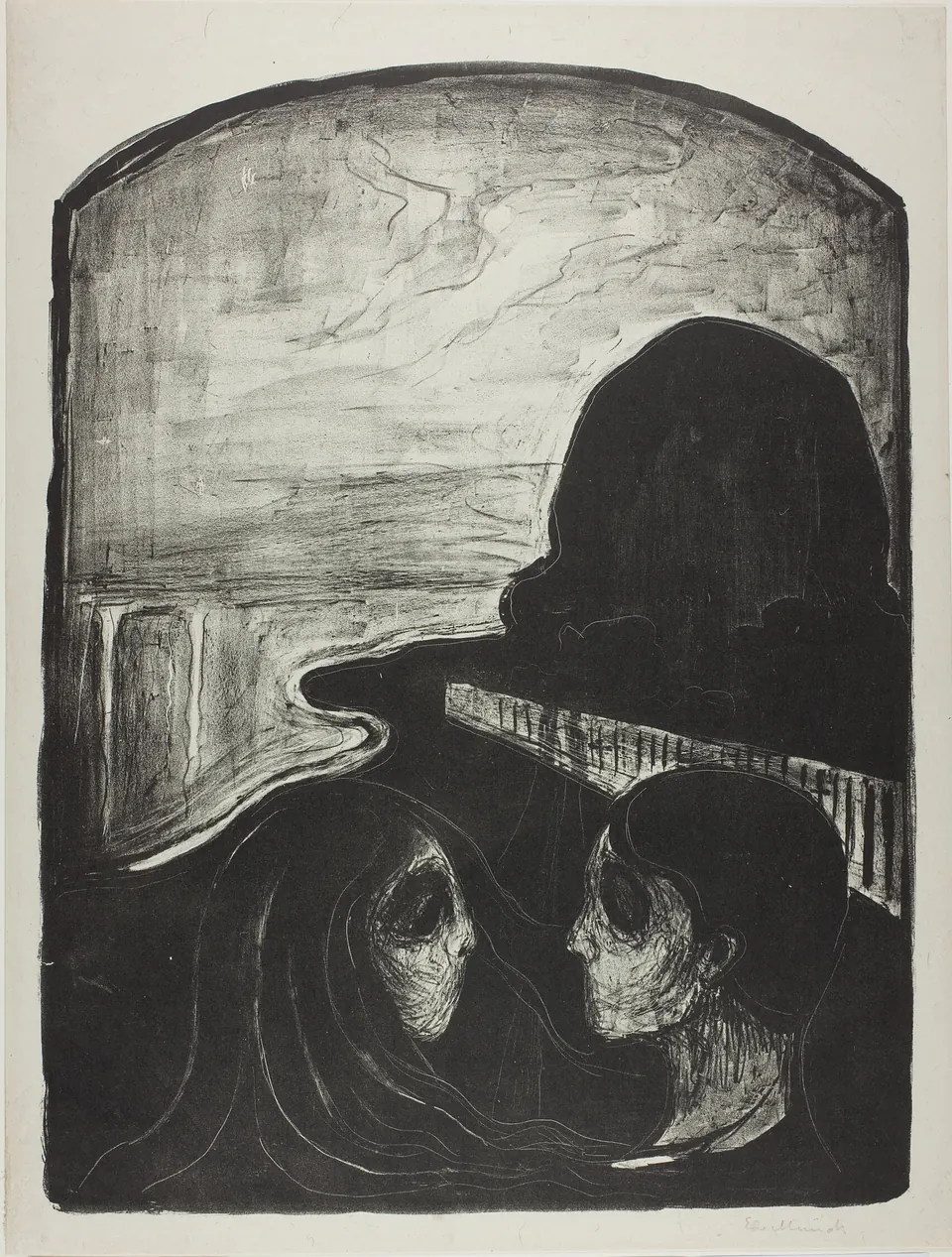
Attraction I
Edvard Munch; printed by Auguste Clot
1896 · Art Institute of Chicago · 1943.526
CC0 Public Domain Designation
Resized to 960 pixels wide and converted to WebP; no crop.

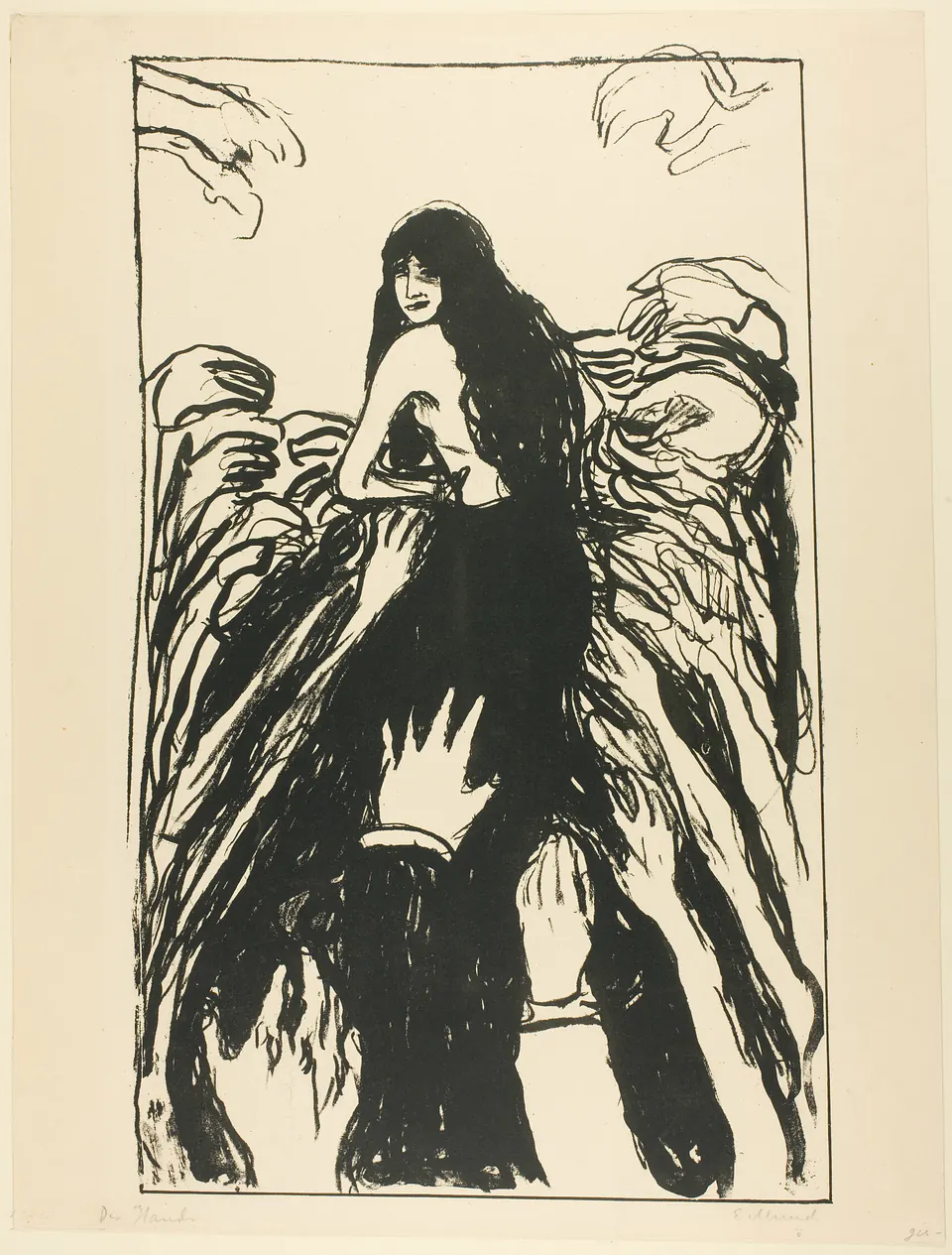
The Hands
Edvard Munch; printed by Liebmann
1895 · Art Institute of Chicago · 1963.284
CC0 Public Domain Designation
Resized to 960 pixels wide and converted to WebP; no crop.

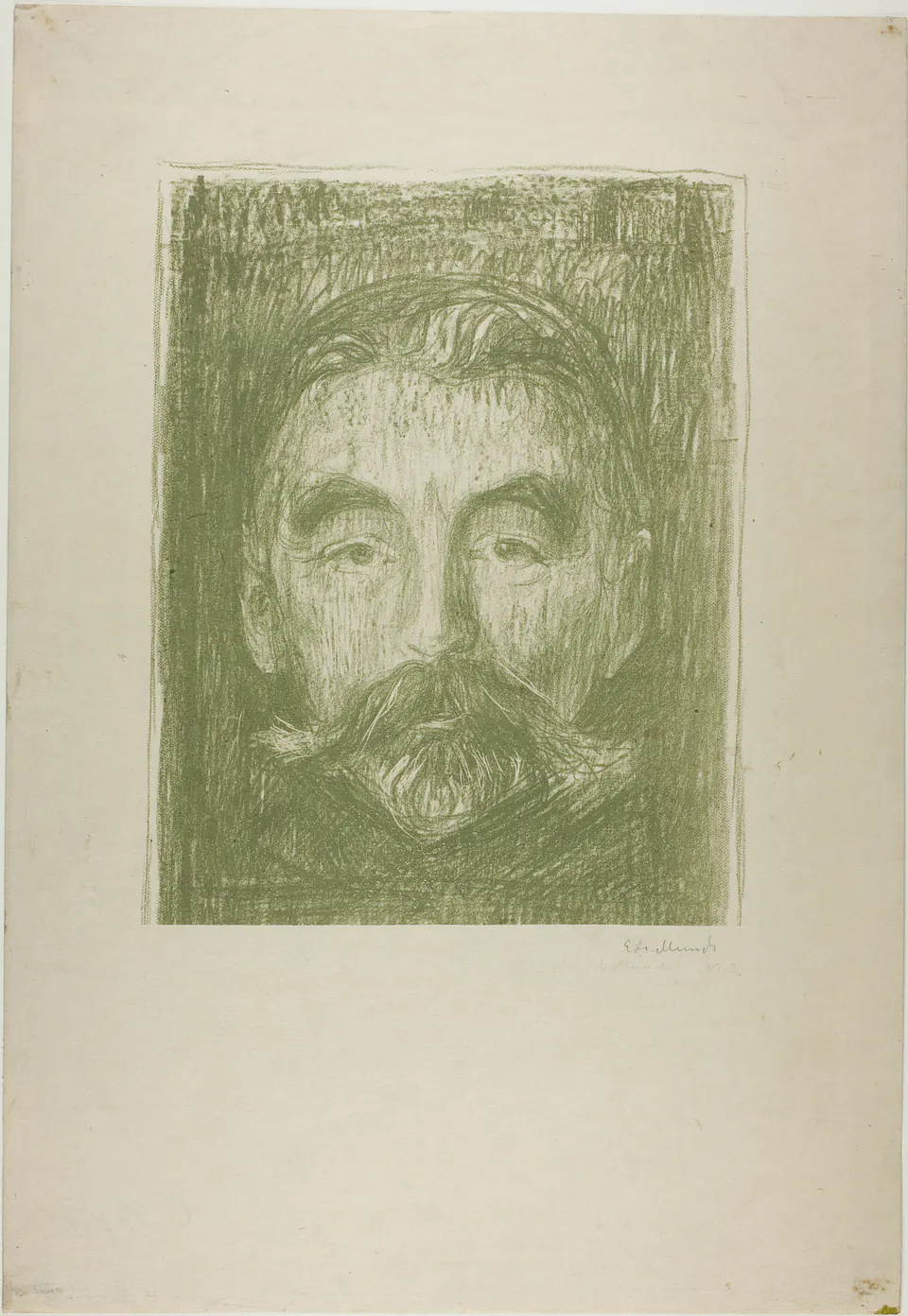
Stéphane Mallarmé
Edvard Munch; printed by Auguste Clot
1897 · Art Institute of Chicago · 1961.343
CC0 Public Domain Designation
Resized to 960 pixels wide and converted to WebP; no crop.

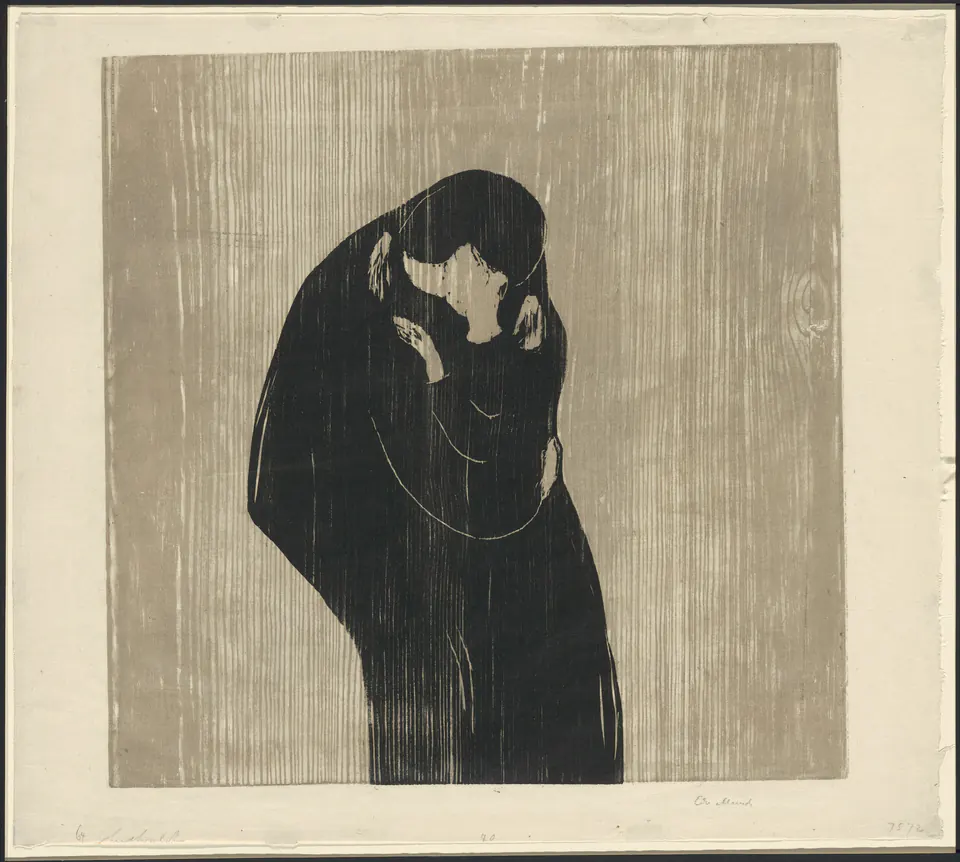
The Kiss IV
Edvard Munch
1902 · Art Institute of Chicago · 1963.292
CC0 Public Domain Designation
Resized to 960 pixels wide and converted to WebP; no crop.

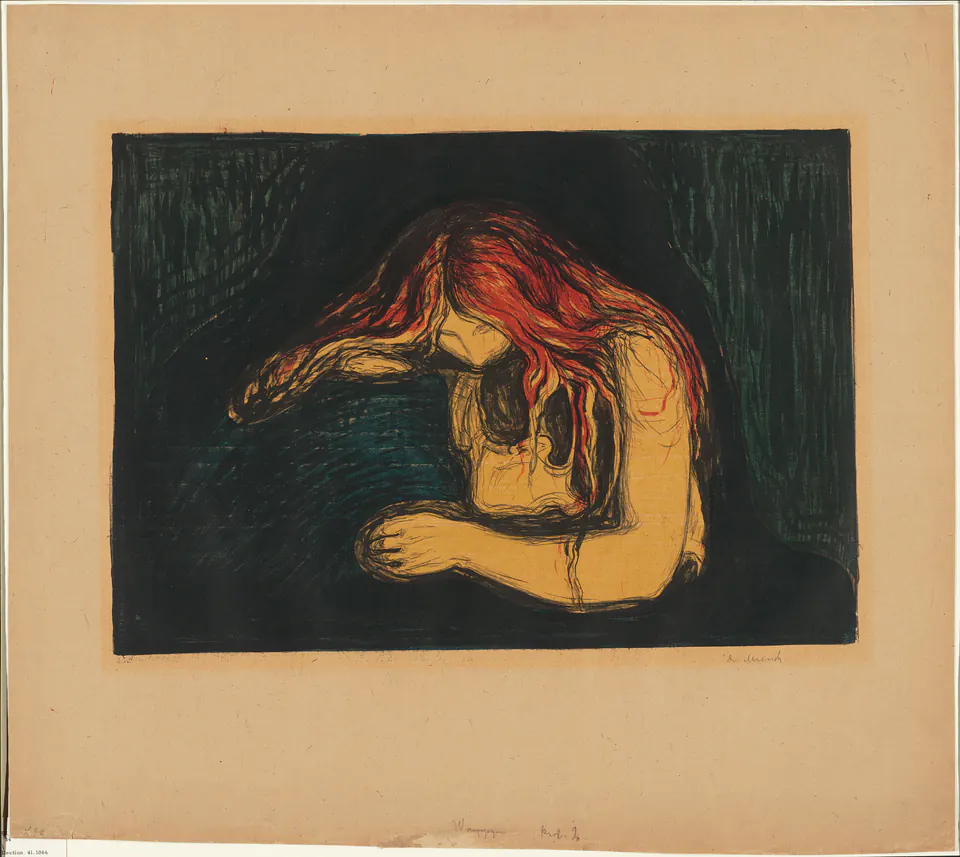
The Vampire II
Edvard Munch
1895/1902 · Art Institute of Chicago · 1941.1066
CC0 Public Domain Designation
Resized to 960 pixels wide and converted to WebP; no crop.

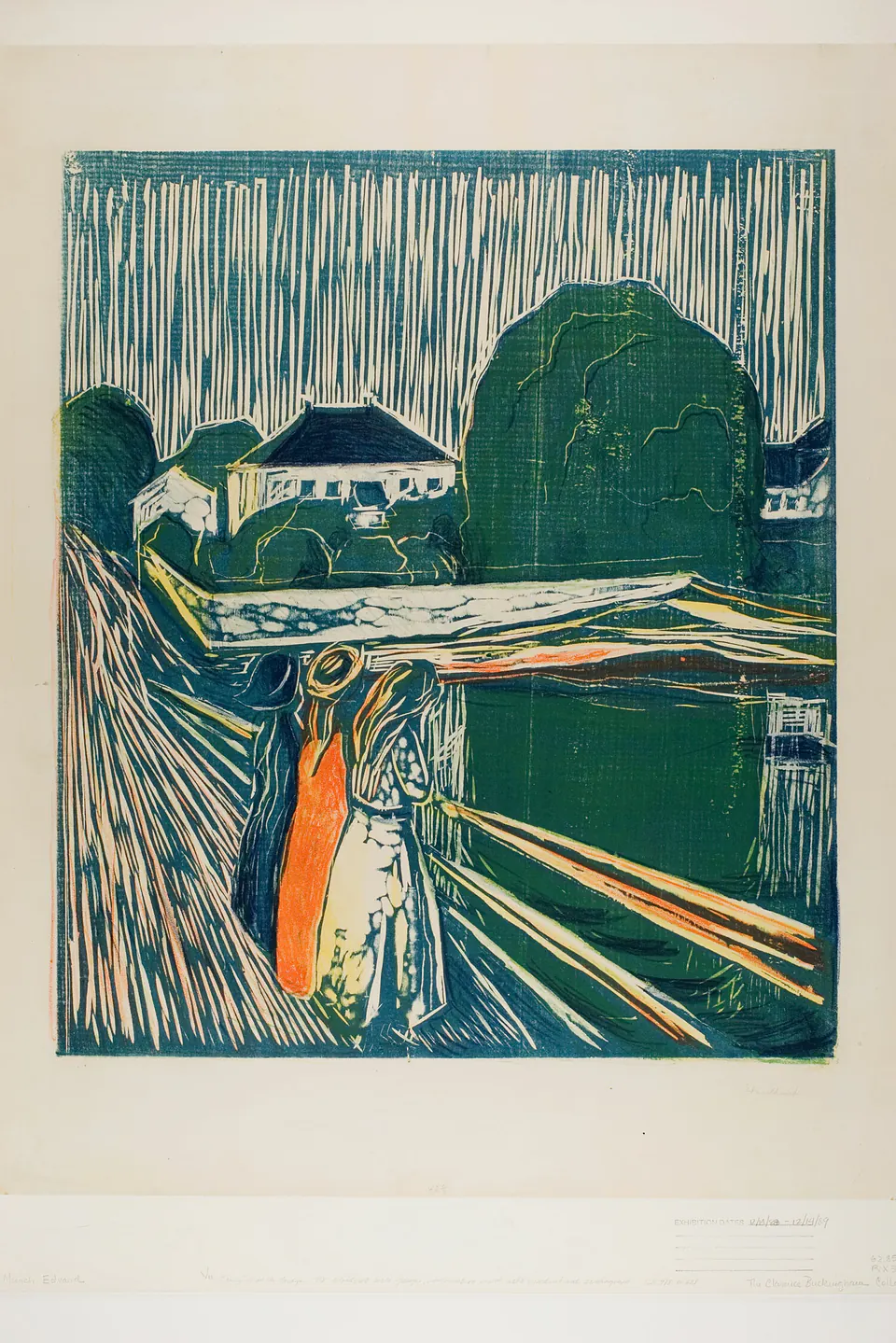
The Girls on the Bridge
Edvard Munch
1918 · Art Institute of Chicago · 1962.85
CC0 Public Domain Designation
Reuse check: AIC identifies Woll 628 III/III: blue woodcut with yellow, green, orange and blue lithographic stones. Its Schiefler 488b note describes only yellow/red stones; early publication of this selected colour state remains unverified.
Resized to 960 pixels wide and converted to WebP; no crop.

Sources and review method
We checked the artist chronology against museum records, treated each named jurisdiction separately, and recorded the provider policy for the image set. These sources support the legal framework and artist dates used above; the source file for any individual image still needs its own record.
- Evening, Melancholy I — Cleveland Museum of Art. Feature identity, exact 1896 impression, file, and CC0 status.
- The Scream — Art Institute of Chicago. Exact 1895 lithograph identity, accession, Public Domain Designation, and IIIF file.
- The Girls on the Bridge: selected impression — Art Institute of Chicago. Accession 1962.85 is Woll 628 III/III, with yellow, green, orange and blue lithographic stones; its Schiefler 488b note describes only yellow/red stones.
- The Girls on the Bridge: comparison impression — MUNCH. Woll 628 I2 is a different state, not evidence dating the selected AIC colour state’s publication.
- Das graphische Werk Edvard Munchs (1907) — Gustav Schiefler; Getty Research Institute digitized copy. Early catalogue entries for eleven underlying print designs; not a date for every later physical impression or colour state.
- Open Access Images — Art Institute of Chicago. AIC permits reuse of files carrying its CC0 Public Domain Designation.
- Open Access — Cleveland Museum of Art. Cleveland releases eligible collection images and metadata under CC0.
- Directive 2006/116/EC, Article 1 — EUR-Lex. The EU term for an artistic work is the author’s life plus 70 years.
- How long copyright lasts — UK Government. UK guidance gives 70 years after the author’s death for artistic works.
- Law No. 5846 on Intellectual and Artistic Works, Article 27 — WIPO Lex. The Turkish economic-rights term is the author’s life plus 70 years.
- Circular 15A: Duration of Copyright — U.S. Copyright Office. Applying the maximum 95-year publication term to 2026 places works published before 1931 outside that term.
- 17 U.S.C. Chapter 3, including §303 — U.S. Copyright Office. Section 303 keeps the unpublished-work transition and the 1978–2002 first-publication floor separate.
- Visual Artists: Publication — U.S. Copyright Office. Distribution can publish visual art; public display alone does not establish publication.
- Copyright notice: digital images, photographs and the internet — UK Intellectual Property Office. The old work and the exact modern digital file remain separate checks.
Editorial record
About this article
- Author
- Publisher
- GeMarkt
- Published
- Reviewed
- Internal source & rights check. Conducted by GeMarkt Research Review. This is an internal editorial check—not independent peer review.
- Source standard
- Rights guide source standardSeparates the underlying work from the source file, records the review date, and links the evidence used for the conclusion.
Found a claim that needs checking? Report a factual error.