GeMarkt Journal · Practical guide
Is Mary Cassatt Public Domain? Paintings, Prints, and Image Files
Mary Cassatt's documented works are public domain in the markets checked here, but U.S. publication history, print editions, collaborators, and exact files still matter.
Rights check · reviewed
The short answer
Yes—for the 12 institutionally documented paintings and prints below in the European Union, United Kingdom, Türkiye and United States. A work first published between 1978 and 2002 after remaining unpublished in 1978 can require a different U.S. answer through 2047.
| What is being checked | Result | Why |
|---|---|---|
| European Union, United Kingdom & Türkiye | Public domain | Mary Cassatt died in 1926, beyond the ordinary life-plus-70 economic-rights terms. |
| United States — named set | Clear for the documented works below | The selected prints and paintings have pre-1931 edition, sale, exhibition, reproduction, or collection histories; works published before 1931 are beyond the maximum publication term in 2026. |
| United States — late first publication | Check §303 chronology | A work unpublished on 1 January 1978 but first published by the end of 2002 can remain protected until the end of 2047. Display alone does not establish publication. |
| Impression, collaborator, or digital file | Clear the exact production layer | Edition, printer, collaborator, restoration, technical imaging, museum file, and local transformation each need an accurate record. |
This guide clears a named AIC and NGA set. It does not clear every later impression, technical image, restored scan, exhibition photograph, depiction of Cassatt, or newly surfaced private work.
This is a documented research summary, not legal advice. Copyright and moral-rights rules can vary by country and by the history of a particular work.

What we’ll look at
When can a Mary Cassatt work be reused, and which publication, edition, collaborator, and file facts must remain attached?
The useful answer is yes for the established Mary Cassatt paintings and prints and the 12 institutional files documented here—but not automatically for every newly surfaced work, later impression, restoration, or online image. Cassatt died in 1926. Her underlying works are public domain in the European Union, United Kingdom, and Türkiye, and the named set has publication and collection histories supporting the same practical result in the United States.
The U.S. answer needs unusual care because “old” and “published” are not synonyms. A painting may have been displayed without being legally published. A private drawing may have remained unpublished for decades. Under the transition rule in 17 U.S.C. §303, a work first published between 1978 and the end of 2002 after remaining unpublished at the start of 1978 can retain protection through 2047.
This guide therefore makes four linked decisions:
- Is the underlying Cassatt work outside copyright in the market being checked?
- What evidence establishes its publication or unpublished-work chronology in the United States?
- Which painting, print state, impression, collaborator, and physical accession are being described?
- Is the exact digital file affirmatively covered by an institutional Open Access statement?
The answer is a research summary, not legal advice. It covers the named territories and files rather than claiming universal freedom.
The short answer is yes for the named set
The 12 works below come from the Art Institute of Chicago and National Gallery of Art. Six AIC files carry the CC0 Public Domain Designation; six NGA object pages say their media is free and in the public domain. Every local derivative was made from the exact institutional endpoint recorded in the rights ledger.
The set deliberately spans paintings and prints: The Child’s Bath, On a Balcony, After the Bullfight, The Boating Party, and Little Girl in a Blue Armchair sit beside colour aquatints, drypoints, and an opera-box impression. That range matters because a canvas and an editioned print do not generate the same provenance questions.
The conclusion does not automatically include:
- a work merely attributed to Cassatt without institutional support;
- a private drawing whose U.S. publication chronology is unknown;
- a later impression whose state, printer, paper, or publisher has changed;
- an infrared image, X-radiograph, conservation composite, or creatively restored scan;
- a book plate, exhibition installation photograph, commercial download, or retailer mock-up;
- a work by Edgar Degas that depicts Cassatt rather than a work authored by her.
Artist identity, work identity, object identity, and file identity are separate fields.
Life plus 70 markets are clear
The EU term directive, UK government guidance, and Article 27 of Türkiye’s Law No. 5846 each use an ordinary life-plus-70 framework for artistic works. Cassatt’s death in 1926 places her established sole-authored works beyond those economic-rights terms.
| Market checked | Rule relevant here | Result for Cassatt’s established works |
|---|---|---|
| European Union | author’s life plus 70 years | public domain |
| United Kingdom | 70 years after the creator’s death | public domain |
| Türkiye | life plus 70 years for economic rights | public domain |
That statement is narrower than “anything connected to Mary Cassatt is free.” A joint work can follow the last surviving author. A later restoration, translation, layout, or photograph can add new authorship. Attribution, integrity interests, trademarks, privacy in modern photographs, and provider terms may also be governed differently.
The safest publication language names Cassatt’s established works and then identifies the object and file actually used.
The US answer has a 2047 exception
Copyright Office Circular 15A organises older U.S. terms by publication date. In 2026, a work published before 1 January 1931 is beyond the maximum 95-year publication term. The prints in this guide were produced in editions, while the named paintings have museum histories documenting early exhibitions, sales, reproductions, or collection circulation.
That evidence supports this selected set. It does not create a shortcut from “painted before 1931” to “published before 1931.” Copyright Office guidance for visual artists explains that distribution can publish a work while public display alone does not.
Section 303 creates the fail-closed fork for works created before 1978 that were still unpublished on 1 January 1978:
- if a work by an author who died before 1933 remained unpublished through 2002, the minimum term ended and it entered the public domain on 1 January 2003;
- if that formerly unpublished work was first published by 31 December 2002, the statute can extend protection through 31 December 2047;
- if the author’s death or joint authorship is uncertain, the life-based calculation must be checked again.
Therefore a newly found Cassatt sketch is not cleared merely by her 1926 death. Ask whether it was published before 1978, remained unpublished through 2002, or first appeared during the 1978–2002 window. If the chronology cannot be established, do not publish a categorical U.S. answer.
Paintings and prints create different records
A painting is a singular physical object, although it can have studies, variants, copies, restorations, and many reproductions. A print is designed for multiplication. Plates can be reworked, impressions can belong to different states, printers can vary ink and pressure, and paper can carry different watermarks, trimming, or condition.
For a painting, record:
- title, date, attribution, medium, accession, and holding institution;
- provenance and early publication or reproduction evidence relevant to U.S. law;
- conservation changes and the exact photographed state;
- the provider’s file statement and every local transformation.
For a print, add:
- technique, plate or matrix, state, edition, printer, publisher, ink, and support;
- whether the file depicts the recto, verso, or a particular proof;
- whether the sheet is an artist’s lifetime impression or a later printing.
Woman Bathing and The Letter belong to Cassatt’s celebrated 1890–91 colour-print project. The AIC records identify them as colour aquatint and drypoint and credit printing with Leroy. Another impression can preserve the same composition while differing materially in colour, wiping, registration, paper, margin, and condition.
Is The Child’s Bath public domain?
Yes—the 1893 Mary Cassatt painting is public domain in the EU, UK, Türkiye, and United States under the analysis and institutional history used here. Reuse the documented AIC object and file rather than an arbitrary copy.
This guide’s feature is Art Institute of Chicago 1910.2. The object page identifies Cassatt, title, date, oil-on-canvas medium, accession, and a CC0 Public Domain Designation. The AIC Open Access policy permits commercial and non-commercial reuse of files carrying that label.
The exact 3000-pixel IIIF source measured 1977 by 3000 pixels. The local master was resized to 1600 pixels wide, converted to WebP, and not cropped. Its checksum is locked in the Journal delivery record, so replacing it with another colour balance, crop, or photograph makes validation fail.
That specificity matters. A textbook reproduction may include its page, typography, colour profile, and publisher rights. A museum-store product photograph includes new lighting and styling. A conservation image may reveal a different layer of the painting through a separately produced capture. The old painting does not automatically clear those files.
Printers, collaborators, and attribution still matter
Primary artist naming can hide production history. The AIC credits Cassatt’s colour prints as printed with Leroy. That credit should not disappear just because both the composition and selected museum file are reusable. If a collaborator’s contribution is independently creative, the collaborator’s term and the joint-work rules need review.
The NGA’s record for Little Girl in a Blue Armchair adds a different complication: Cassatt wrote that Edgar Degas helped with the work, and the Gallery says he probably worked on the corner of the room. Degas died in 1917 and Cassatt in 1926, so either life-plus-70 calculation is exhausted in the checked markets. The evidence still belongs in the attribution record.
Conversely, Degas’s images of Cassatt at the Louvre are works by Degas in which Cassatt is the sitter. They should not be presented as Cassatt-authored works. Search results and product titles often place the sitter’s famous name beside the maker’s, which is useful for discovery but dangerous as a rights shortcut.
When attribution changes, reopen the term analysis. A newly proposed co-author or a modern restorer can change more than the caption.
Digital files and restorations need their own clearance
The U.S. Copyright Office says a purely faithful photographic copy lacks new registrable authorship, while sufficiently creative restoration or alteration can be protectable. Other jurisdictions and provider contracts can differ. A public-domain painting is therefore not permission to take the easiest image found online.
Keep the following layers distinct:
- Underlying work. Cassatt’s painting or print design.
- Physical object or impression. The accession actually photographed or scanned.
- Institutional file. The exact AIC or NGA endpoint and its current Open Access statement.
- Technical or restored image. Infrared, X-radiography, stitched macro photography, reconstructed colour, or damage repair.
- Local derivative. Resize, crop, colour adjustment, generative edit, typography, or compositing used in production.
The AIC and NGA files selected here are affirmative, object-level Open Access choices. That is stronger evidence than a search-engine thumbnail or a copy detached from its source. If a provider changes the file or its status, the ledger should be reviewed before the next production use.
Twelve open files form the published set
The registry is both an editorial source map and a production boundary. It holds six AIC and six NGA candidates, each with title, date, accession, object page, exact source URL, provider label, local dimensions, alt text, and no-crop transformation.
The set covers Cassatt’s changing practice without reducing it to maternity imagery: a Spanish subject from 1873, balcony and theatre scenes, domestic reading and tea, ambitious colour prints, beach and boating compositions, and closely observed relationships between women and children.
The feature additionally has a locked SHA-256 checksum and deterministic responsive renditions. Automated tests verify that all 12 local files exist, are WebP, match the recorded dimensions, use distinct accessions and source endpoints, and come from the expected institutional programmes.
This does not imply that GeMarkt sells a Cassatt product. It proves that the published guide rests on processed, rights-checked files rather than a list of hoped-for illustrations.
A commercial reuse checklist
Before a Cassatt image enters a product, publication, campaign, or downloadable file, verify:
- Attribution. The institution identifies Cassatt as artist and records collaborators or printers.
- U.S. chronology. Publication evidence is real; creation or display alone is not treated as publication.
- Section 303. A formerly unpublished work was not first published in the 1978–2002 window without a 2047 review.
- Object or impression. The accession, state, side, medium, and date match the image shown.
- Source file. The production master came from the exact institutional endpoint.
- Provider status. The object page still carries the Public Domain or CC0 label relied on here.
- New authorship. Restoration, technical imaging, photography, translation, typography, and layout are cleared where required.
- Territory and presentation. Distribution matches the checked markets, and museum names or logos do not imply endorsement.
If provenance cannot be recovered, source the file again. Public domain is not a free-for-all explains the wider attribution, privacy, trademark, and platform boundaries.
Where Mary Cassatt fits inside GeMarkt
The Journal’s Impressionism chapter places Cassatt within changing exhibition networks and the politics of modern life. This rights guide has a different task: it follows term, publication, object, impression, collaborator, and file evidence to a usable production decision.
There is no Mary Cassatt collection or dedicated wallpaper room on GeMarkt at publication time. The wallpaper library and shop should not imply otherwise. Future routes are reserved as /collections/mary-cassatt/ and /free/wallpapers/mary-cassatt/; they must remain inactive until product-specific file, restoration, quality, territory, and attribution checks pass.
The guide can publish now because its research, exact-file ledger, processed 12-image set, responsive delivery, and fail-closed tests exist. Inventory may follow later without turning a rights answer into a premature sales claim.
Rights-checked image ledger
A documented starting set
These files were selected from the holding institutions rather than from search-result copies. Each card keeps the artwork record, exact source file, provider statement and GeMarkt transformation visible as separate facts.
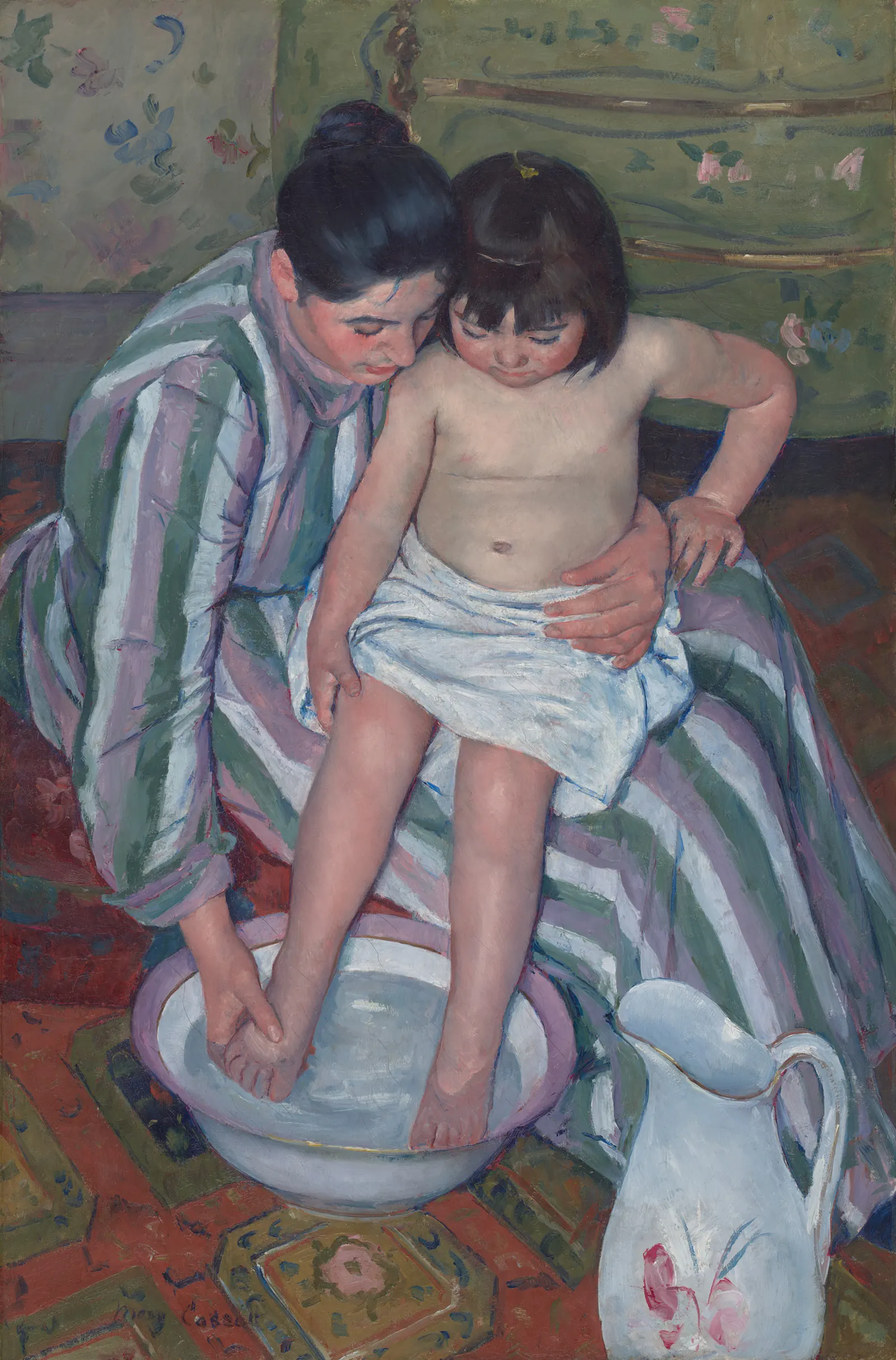
The Child's Bath
1893 · Art Institute of Chicago · 1910.2
CC0 Public Domain Designation
Resized to 1600 pixels wide and converted to WebP; no crop.

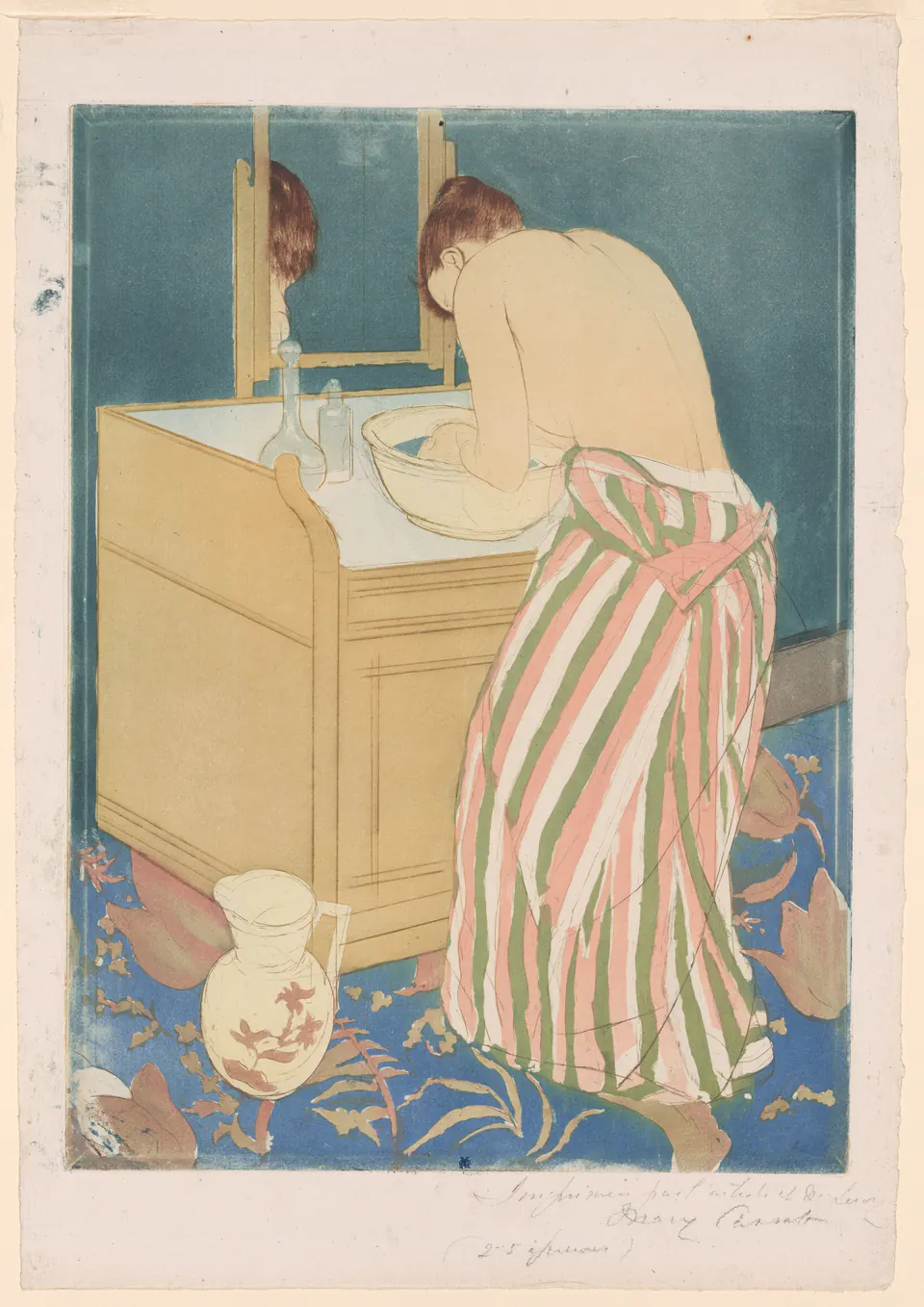
Woman Bathing
1890–91 · Art Institute of Chicago · 1932.1281
CC0 Public Domain Designation
Resized to 960 pixels wide and converted to WebP; no crop.

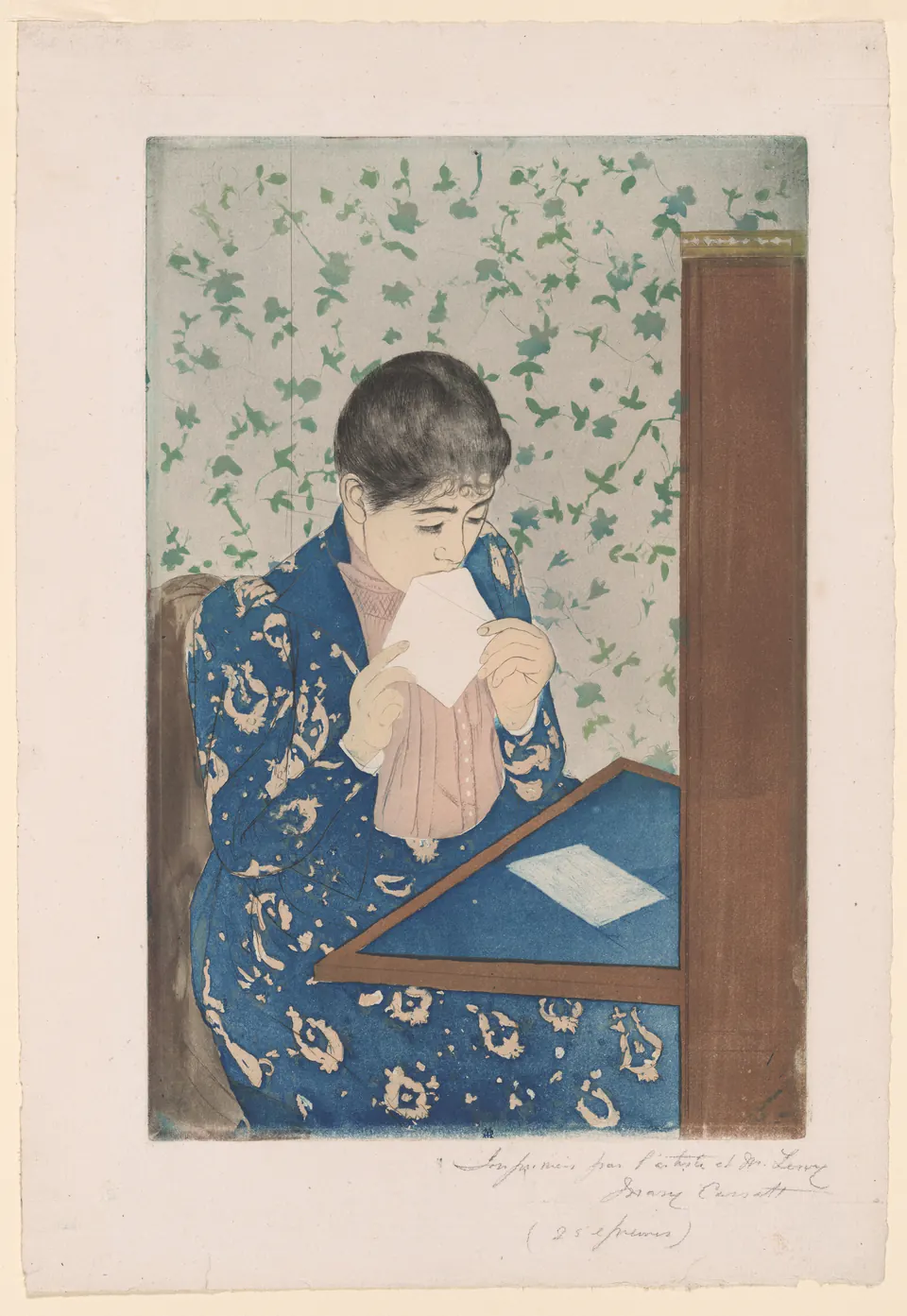
The Letter
1890–91 · Art Institute of Chicago · 1932.1282
CC0 Public Domain Designation
Resized to 960 pixels wide and converted to WebP; no crop.

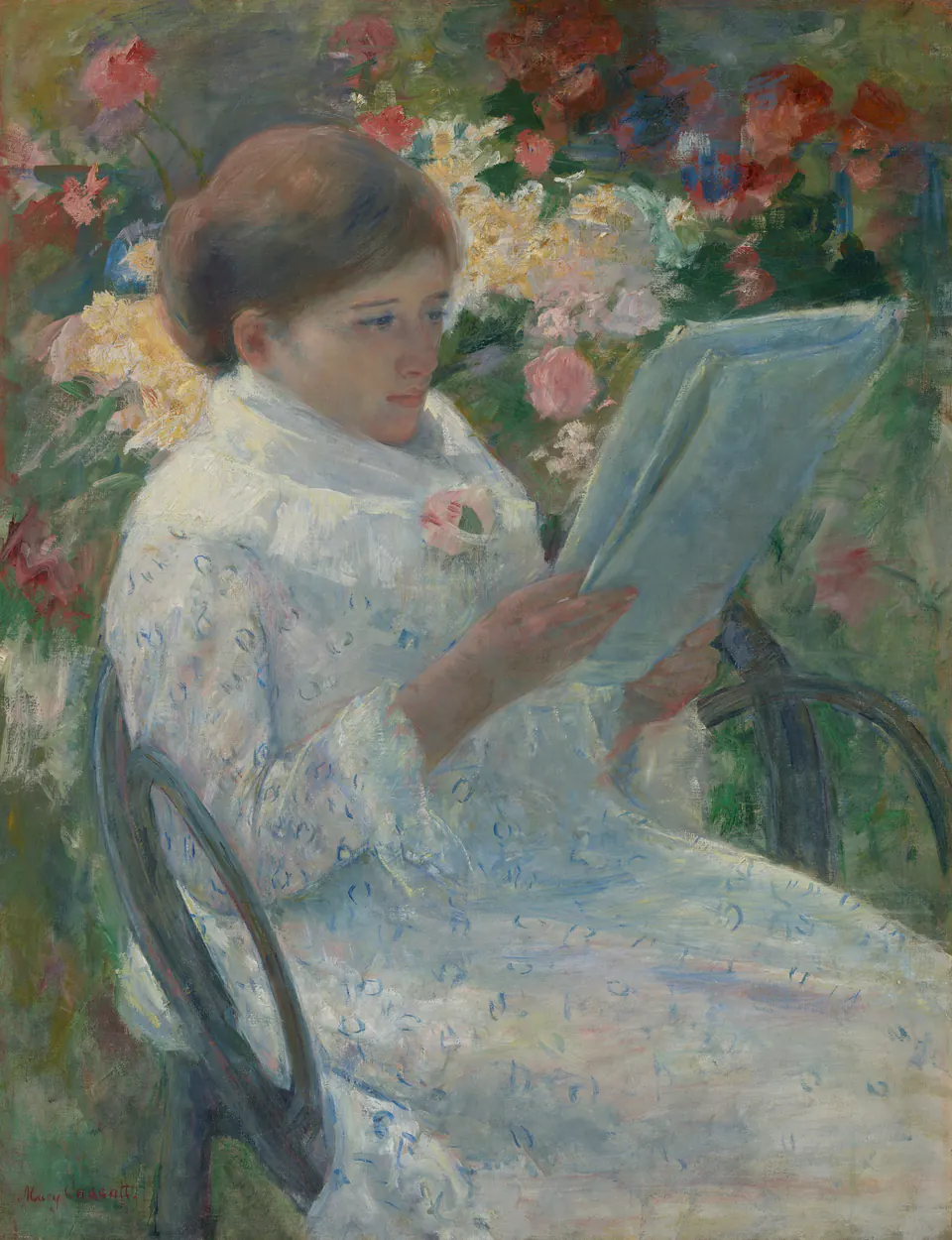
On a Balcony
1878–79 · Art Institute of Chicago · 1938.18
CC0 Public Domain Designation
Resized to 960 pixels wide and converted to WebP; no crop.

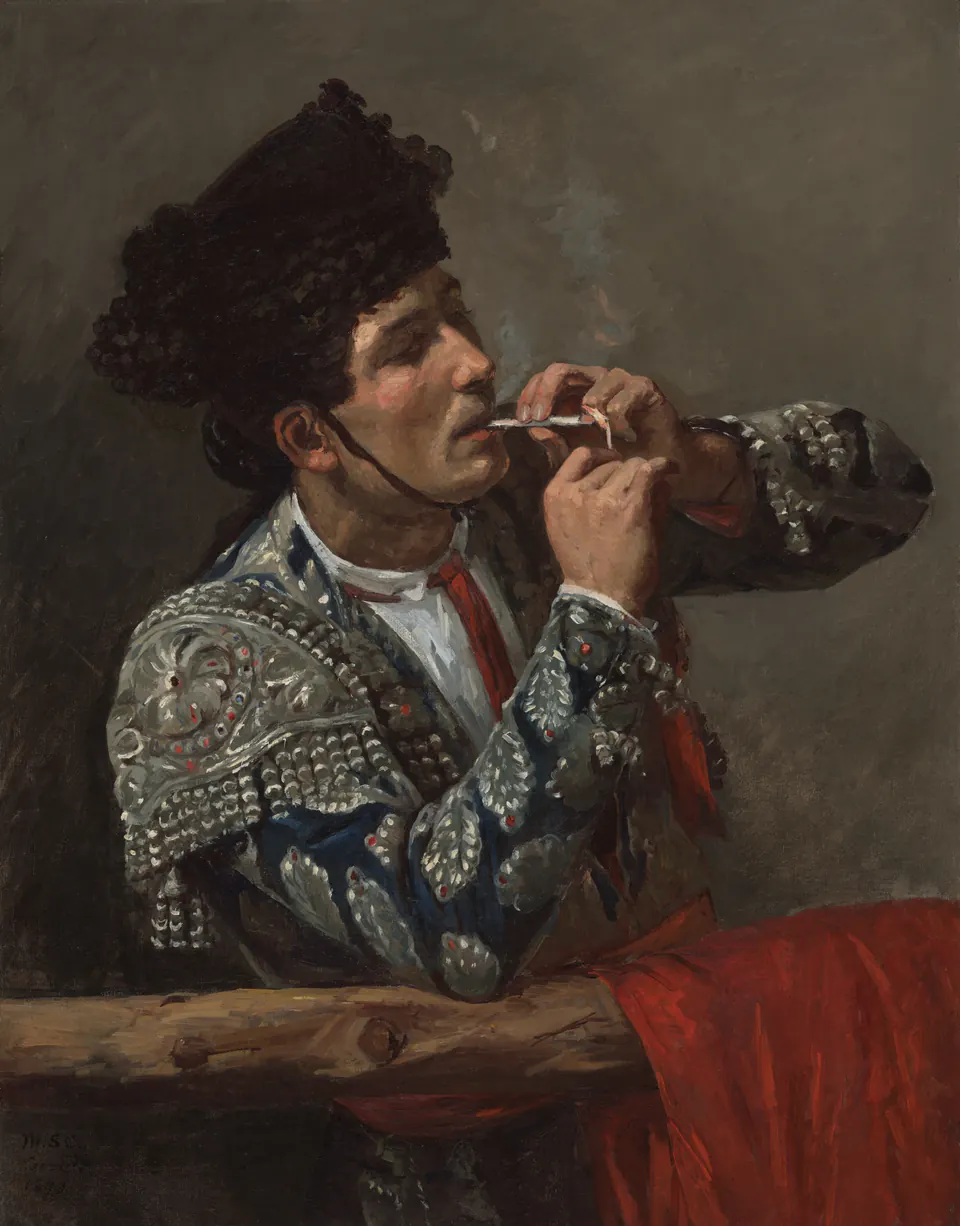
After the Bullfight
1873 · Art Institute of Chicago · 1969.332
CC0 Public Domain Designation
Resized to 960 pixels wide and converted to WebP; no crop.

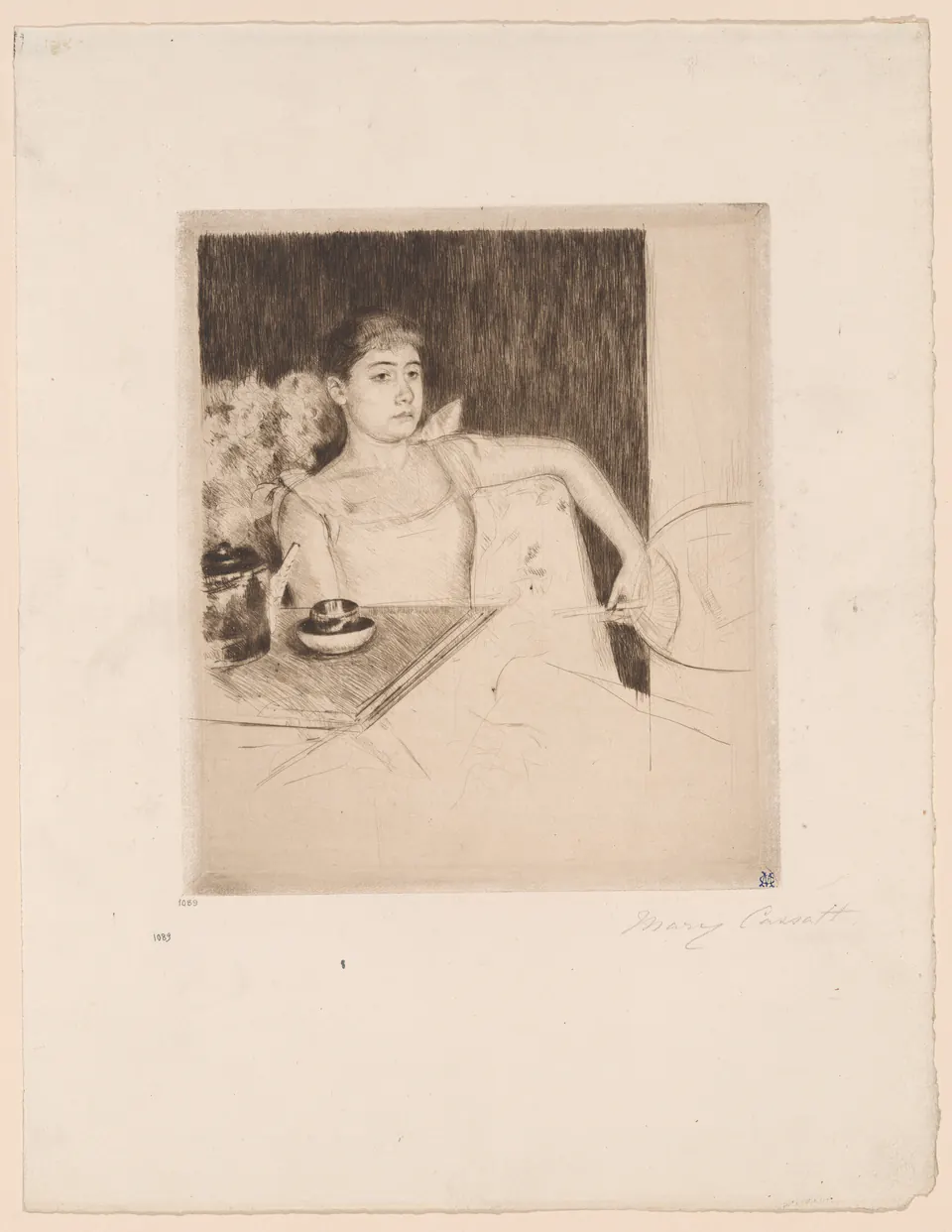
Tea
c. 1890 · Art Institute of Chicago · 1911.608
CC0 Public Domain Designation
Resized to 960 pixels wide and converted to WebP; no crop.

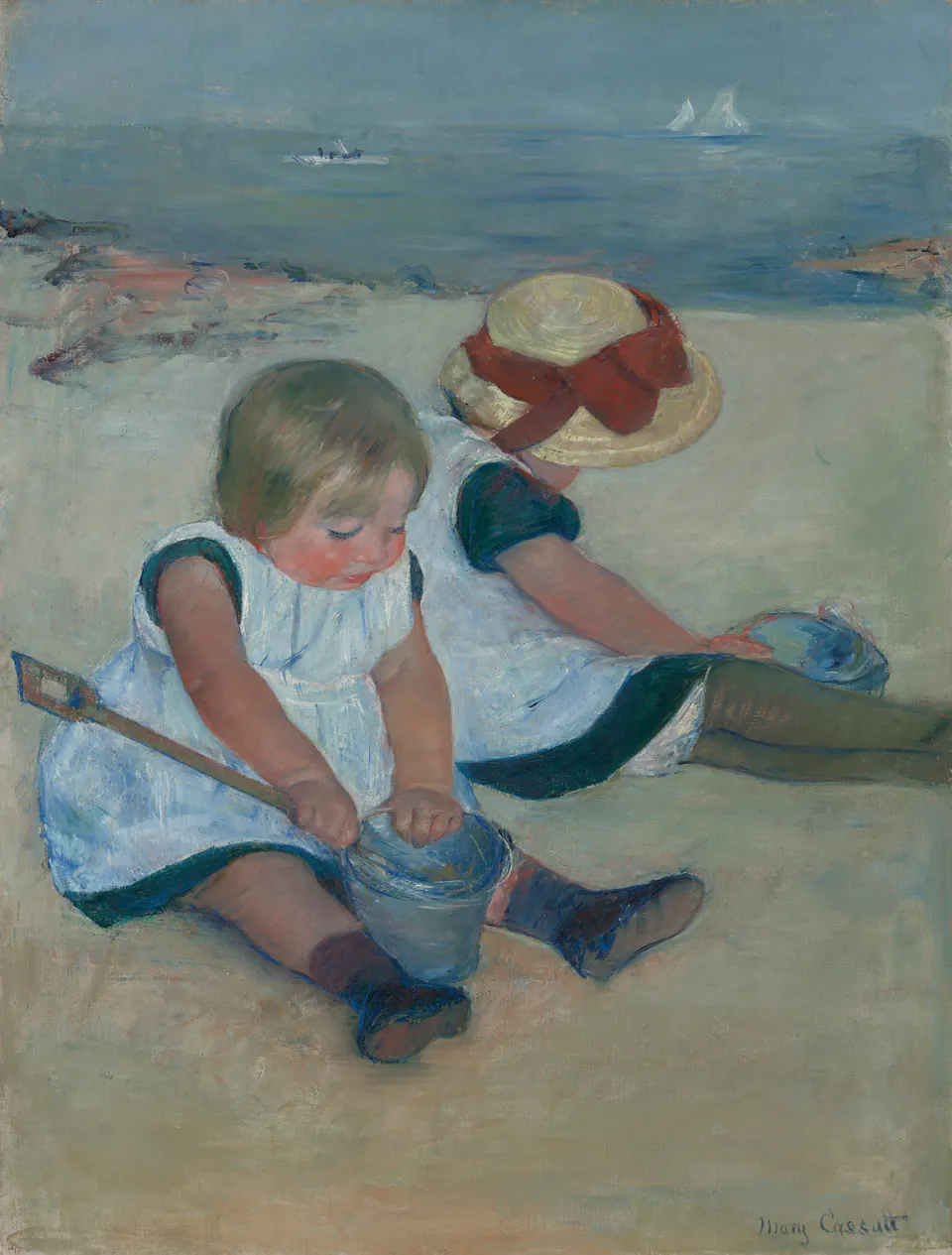
Children Playing on the Beach
1884 · National Gallery of Art · 1970.17.19
Public Domain / Open Access
Resized to 960 pixels wide and converted to WebP; no crop.

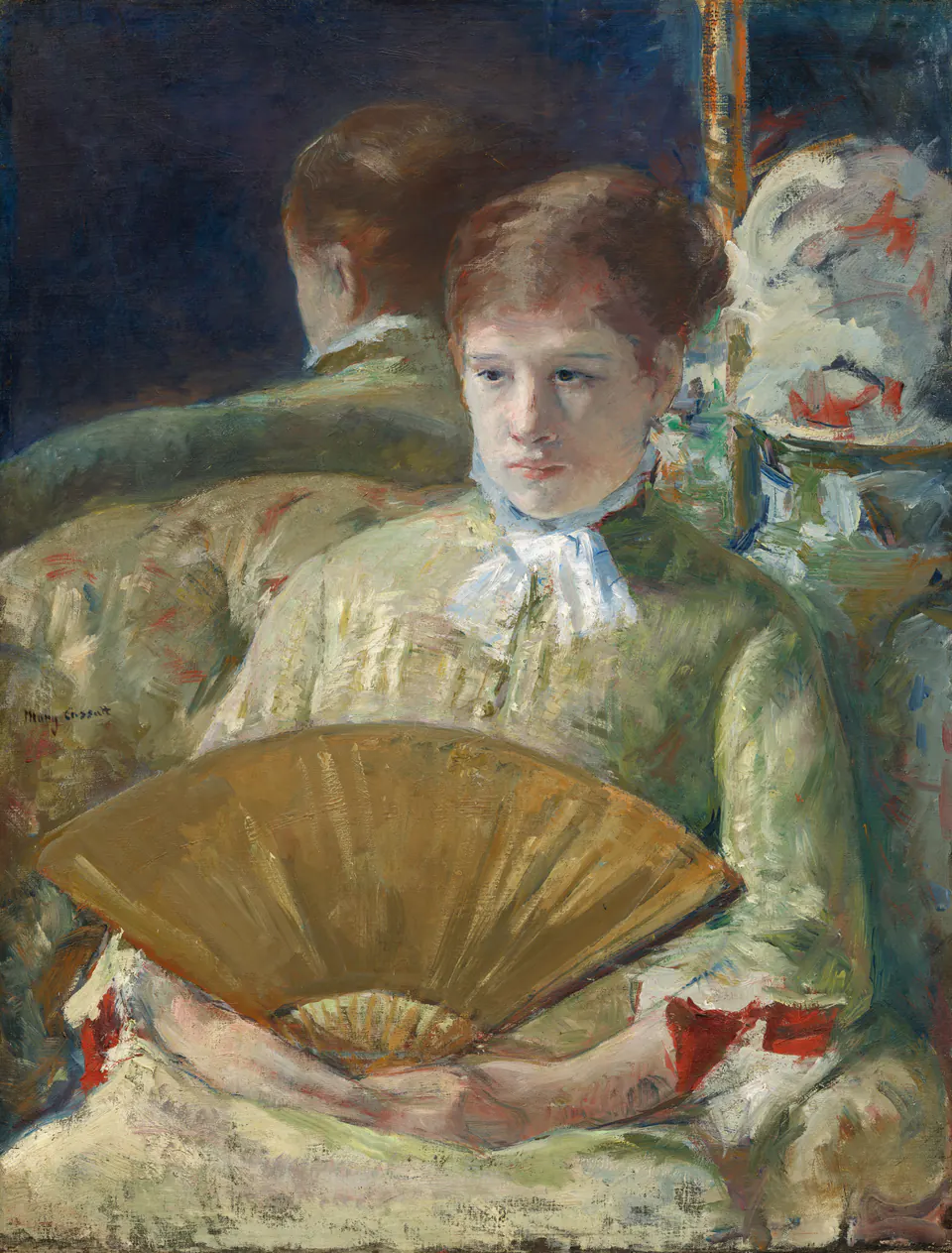
Woman with a Fan
1878/1879 · National Gallery of Art · 1963.10.95
Public Domain / Open Access
Resized to 960 pixels wide and converted to WebP; no crop.

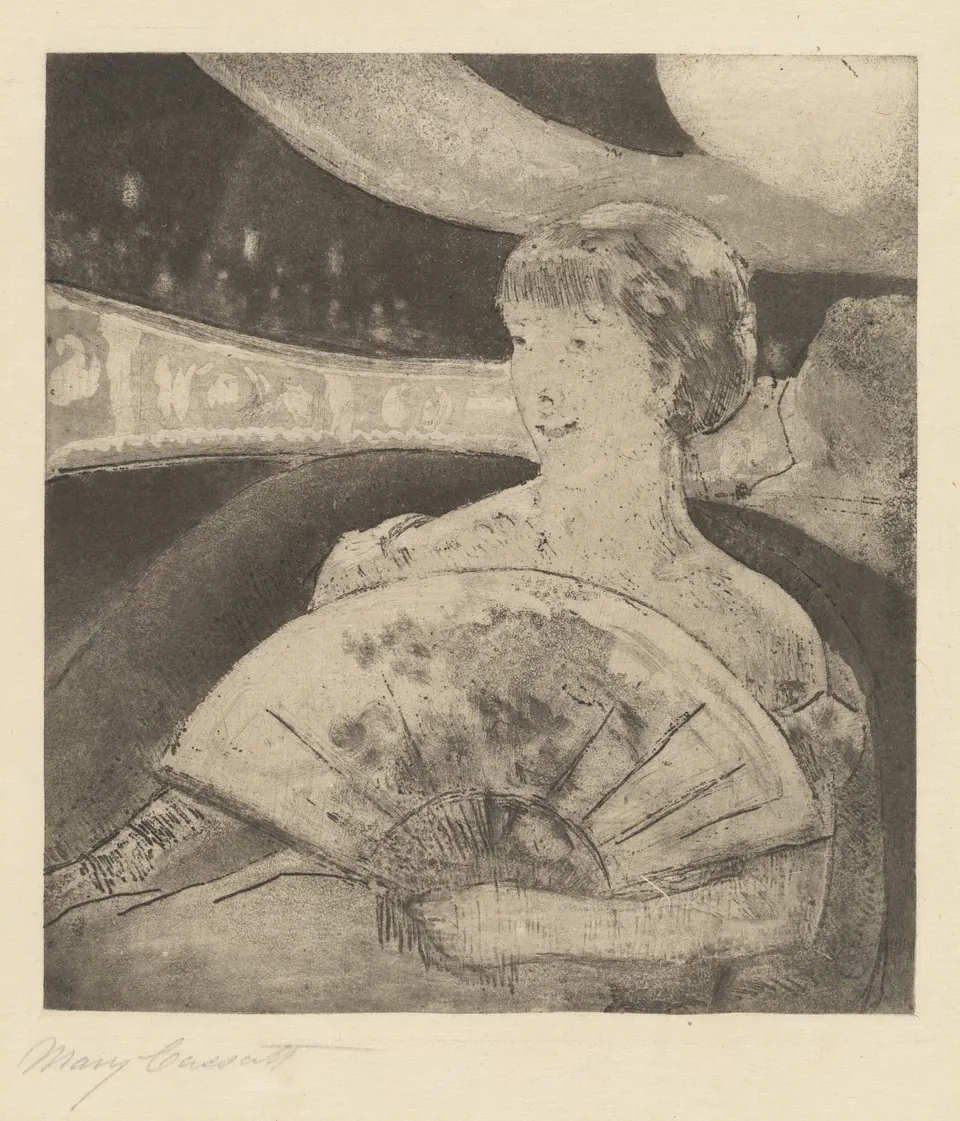
In the Opera Box (No. 3)
c. 1880 · National Gallery of Art · 1946.21.80
Public Domain / Open Access
Resized to 960 pixels wide and converted to WebP; no crop.

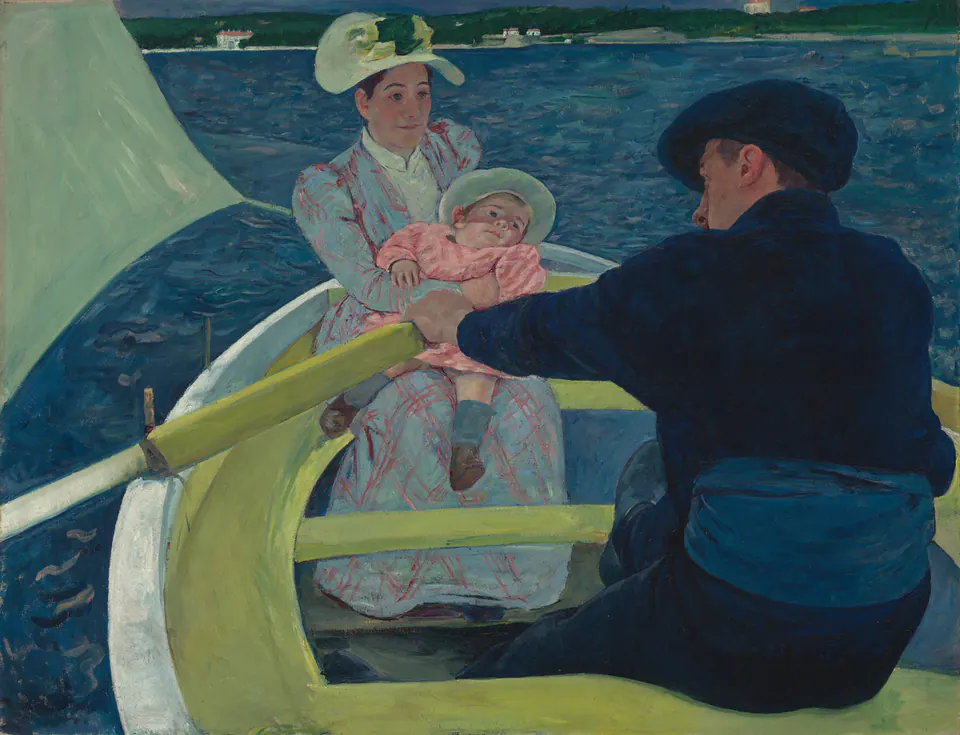
The Boating Party
1893/1894 · National Gallery of Art · 1963.10.94
Public Domain / Open Access
Resized to 960 pixels wide and converted to WebP; no crop.

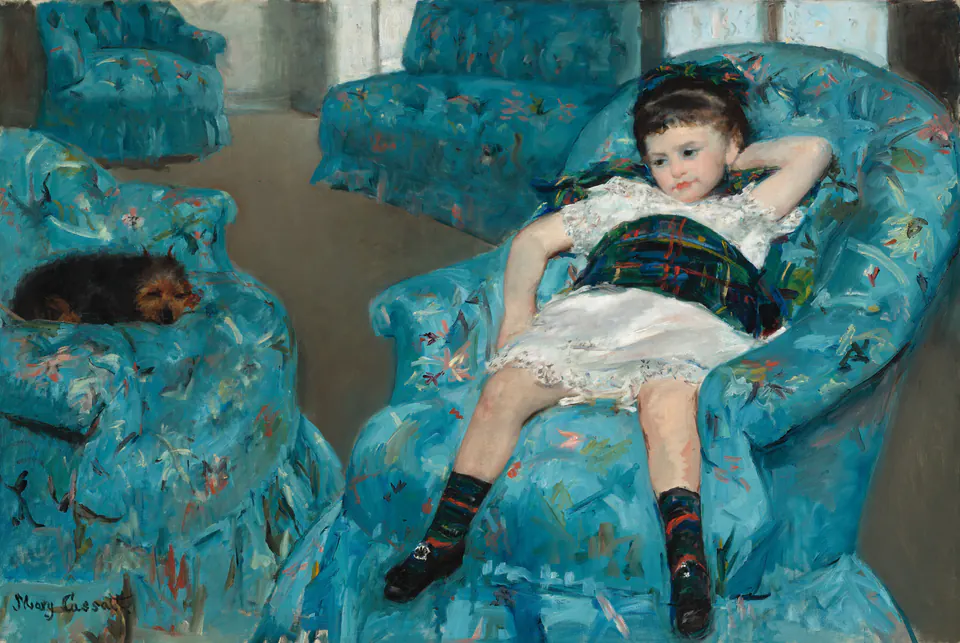
Little Girl in a Blue Armchair
1878 · National Gallery of Art · 1983.1.18
Public Domain / Open Access
Resized to 960 pixels wide and converted to WebP; no crop.

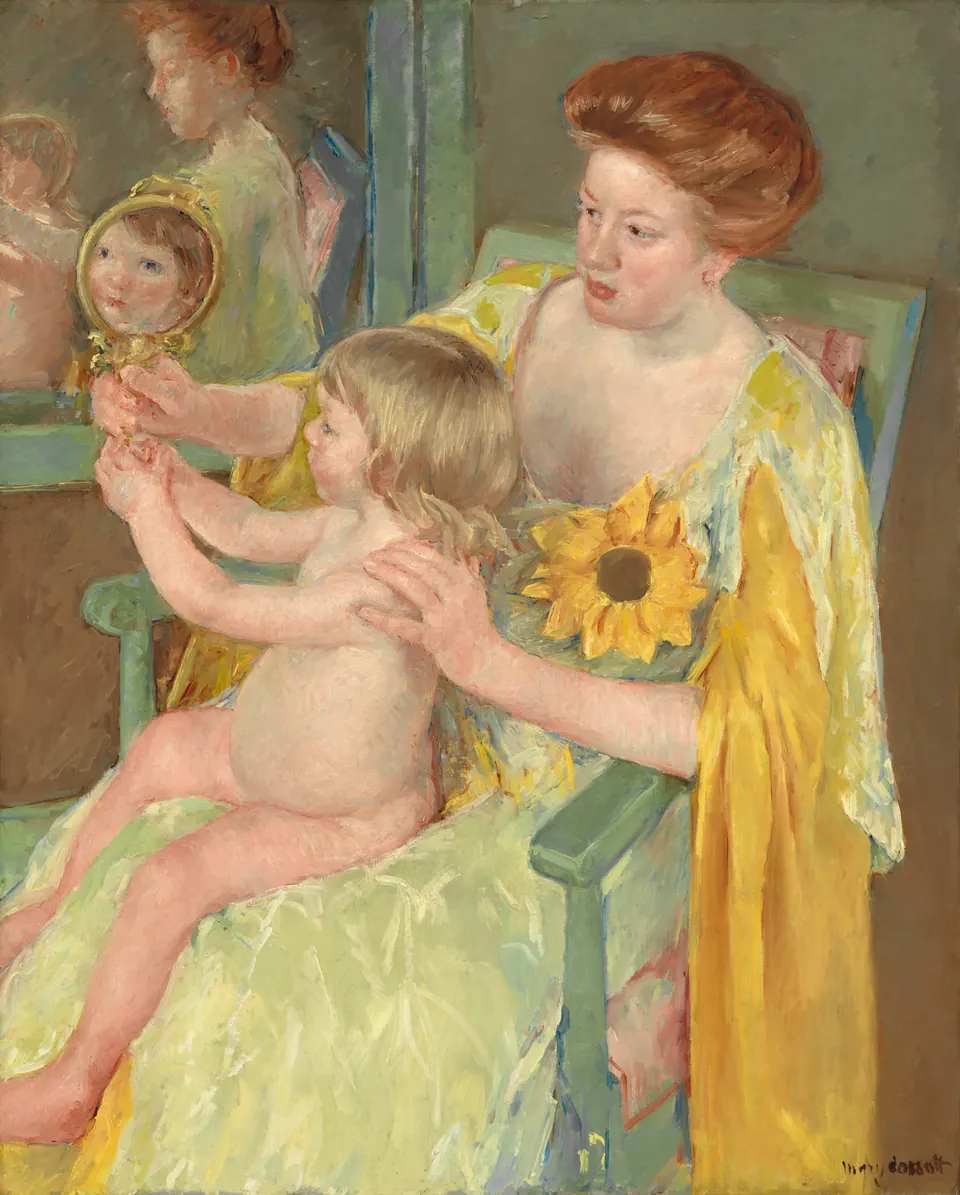
Woman with a Sunflower
c. 1905 · National Gallery of Art · 1963.10.98
Public Domain / Open Access
Resized to 960 pixels wide and converted to WebP; no crop.

Sources and review method
We checked the artist chronology against museum records, treated each named jurisdiction separately, and recorded the provider policy for the image set. These sources support the legal framework and artist dates used above; the source file for any individual image still needs its own record.
- The Child's Bath — Art Institute of Chicago. Feature identity, attribution, date, accession, and CC0 Public Domain Designation.
- Open Access Images — Art Institute of Chicago. Files labelled CC0 Public Domain Designation may be reused for commercial and non-commercial purposes.
- Little Girl in a Blue Armchair — National Gallery of Art. Object identity, Cassatt attribution, probable Degas contribution, exhibition history, accession, and Public Domain media status.
- Free Images and Open Access — National Gallery of Art. The NGA releases images of public-domain works that it believes are public domain and free of known restrictions.
- Directive 2006/116/EC, Article 1 — EUR-Lex. The EU term for an artistic work is the author’s life plus 70 years.
- How long copyright lasts — UK Government. UK guidance gives 70 years after the author’s death for artistic works.
- Law No. 5846 on Intellectual and Artistic Works, Article 27 — WIPO Lex. The Turkish economic-rights term is the author’s life plus 70 years.
- Circular 15A: Duration of Copyright — U.S. Copyright Office. The 2026 term table places works published before 1931 outside the maximum 95-year publication term.
- Certain Unpublished, Unregistered Works Enter Public Domain — U.S. Copyright Office. Older unpublished works have a separate U.S. term analysis; discovery and first-publication history can matter.
- 17 U.S.C. Chapter 3, including §303 — U.S. Copyright Office. Section 303 states the transition rules and minimum 2002 or 2047 expiry floors for works that were unpublished on 1 January 1978.
- Visual Artists: Publication — U.S. Copyright Office. Distribution can publish a visual artwork, while public display by itself does not establish publication.
- Compendium of U.S. Copyright Office Practices, Chapter 900, §909.3(A) — U.S. Copyright Office. A purely faithful scan or “slavish copy” does not add registrable authorship, while substantial restoration or alteration can require a separate analysis.
- Copyright notice: digital images, photographs and the internet — UK Intellectual Property Office. A digital image can require a separate rights and website-terms check even when its subject is old.
Editorial record
About this article
- Author
- Publisher
- GeMarkt
- Published
- Reviewed
- Internal source & rights check. Conducted by GeMarkt Research Review. This is an internal editorial check—not independent peer review.
- Source standard
- Rights guide source standardSeparates the underlying work from the source file, records the review date, and links the evidence used for the conclusion.
Found a claim that needs checking? Report a factual error.