GeMarkt Journal · Practical guide
Is Rembrandt Public Domain? Paintings, Etchings, and Image Files
Rembrandt's established works are public domain in the markets checked here, but print states, physical impressions, technical images, and museum files need separate records.
Rights check · reviewed
The short answer
Yes—for the 12 established paintings and print impressions documented here in the European Union, United Kingdom, Türkiye and United States. The answer belongs to the named work or design; the exact museum file, print state and physical impression remain separate records.
| What is being checked | Result | Why |
|---|---|---|
| European Union & United Kingdom | Public domain | Rembrandt died in 1669, centuries beyond the ordinary life-plus-70 term for artistic works. |
| Türkiye | Public domain | Türkiye also applies a life-plus-70 economic-rights term. The named Rembrandt works are far beyond it. |
| United States | Clear for the 12 long-published records below | The paintings have long ownership and reproduction histories, and the prints were distributed as impressions. A newly surfaced, formerly unpublished object still needs a §303 review. |
| Print state, impression, or museum file | Keep every layer identified | A print design, plate state, physical impression, modern technical image and downloadable file are not interchangeable rights or provenance records. |
This guide clears a named institutional set. It does not make a worldwide blanket claim, convert workshop or follower attributions into autograph Rembrandts, or clear technical images and research documents merely because they depict an old work.
This is a documented research summary, not legal advice. Copyright and moral-rights rules can vary by country and by the history of a particular work.

What we’ll look at
When can a Rembrandt painting or print be reused, and what changes when the source is one impression, one state, or a modern research image?
The practical answer is yes for the established Rembrandt works documented here, but not for every file that happens to show them. Rembrandt van Rijn died in 1669, so ordinary author-based copyright terms expired centuries ago in the European Union, United Kingdom, and Türkiye. The 12 paintings and print impressions in this guide also have histories that support a clear United States result.
That is only the first layer. A Rembrandt etching is not one undifferentiated image: the artist could rework a copper plate, a printer could pull different impressions, later owners could trim or alter a sheet, and a museum could publish several kinds of photography. A conservation X-radiograph made in the twenty-first century is not cleared merely because the painting beneath it was made in the seventeenth.
This guide therefore identifies a named institutional set and asks four questions:
- Is the underlying work outside copyright in the market being checked?
- For a print, which plate state and physical impression does the record describe?
- Which exact digital file did the reuser obtain, and what does its provider say?
- Does the proposed presentation create a separate attribution, endorsement, or restoration problem?
The answer is a research summary, not legal advice, and it is deliberately narrower than “all Rembrandts are free worldwide.”
The short answer covers a named set
For familiar, institutionally catalogued Rembrandt paintings such as The Night Watch, The Syndics, The Jewish Bride, and the 1660 Self-Portrait at The Met, the underlying art is outside the ordinary economic copyright terms examined here. The same is true of the two named print designs and impressions in the ledger: The Hundred Guilder Print and Student at a Table by Candlelight.
The word named is doing real work. “Rembrandt” can appear in museum records as the artist, as the head of a workshop, as the maker of a design copied by another hand, or as a former attribution. Those descriptions should not be collapsed. Public-domain status does not prove that a painting is autograph, and an old follower’s painting does not become a Rembrandt because the composition resembles his work.
The cleared answer also does not travel automatically to:
- a drawing newly found in a private archive with no publication history;
- a different state or restrike of an etching;
- a modern reconstruction of a damaged or altered composition;
- infrared, X-ray, macro, cross-section, or other technical photography;
- a file copied from an image search, marketplace listing, or unsourced repost.
When the object or file changes, the evidence record changes with it.
Life plus 70 is not the U.S. test
The European Union term directive gives an artistic work an ordinary term of the author’s life plus 70 years. UK government guidance uses the same ordinary duration, and Article 27 of Türkiye’s Law No. 5846 also applies life plus 70 to economic rights. Rembrandt’s death in 1669 places the established works in this guide far beyond those periods.
| Market checked | Rule used for the named set | Result |
|---|---|---|
| European Union | author’s life plus 70 years | public domain |
| United Kingdom | 70 years after the creator’s death | public domain |
| Türkiye | life plus 70 years for economic rights | public domain |
The United States requires a different path. Copyright Office Circular 15A separates works by publication date. In 2026, the maximum 95-year term has expired for works published before 1 January 1931. Rembrandt’s prints were made to circulate as impressions, while the named paintings have long commission, ownership, sale, collection, exhibition, and reproduction histories. That record supports the clear conclusion for this set.
Publication is not the same as visibility. The Copyright Office explains that selling, lending, or otherwise distributing an original or copies can publish visual art, while public display alone does not establish publication. If a centuries-old object remained unpublished on 1 January 1978, section 303 can impose a different transition rule: an end-of-2002 floor, or an end-of-2047 floor if first publication occurred between 1978 and 2002.
Foreign-work restoration does not reverse this result for the underlying Rembrandt works. URAA restoration requires, among other conditions, that a work was not already in the public domain through expiry of its source-country term. These works had exhausted the Dutch term long before the relevant restoration date. A newly discovered object still deserves an item-level chronology rather than an assumption.
Etchings have more than one identity
Rembrandt repeatedly worked his printing plates. Lines could be added or burnished away, shadows deepened, and compositions materially changed between states. The plate then produced multiple physical impressions whose paper, ink, wiping, pressure, trimming, condition, and later history differ.
For reuse, keep at least five layers distinct:
- Composition or design. The intellectual work associated with Rembrandt.
- Plate and state. The worked copper surface at a documented point in its revision.
- Physical impression. The particular sheet held by a museum, with its own accession and condition.
- Digital capture. The photograph or scan supplied for that sheet.
- Local derivative. The resized, cropped, colour-adjusted, restored, or reformatted file used in production.
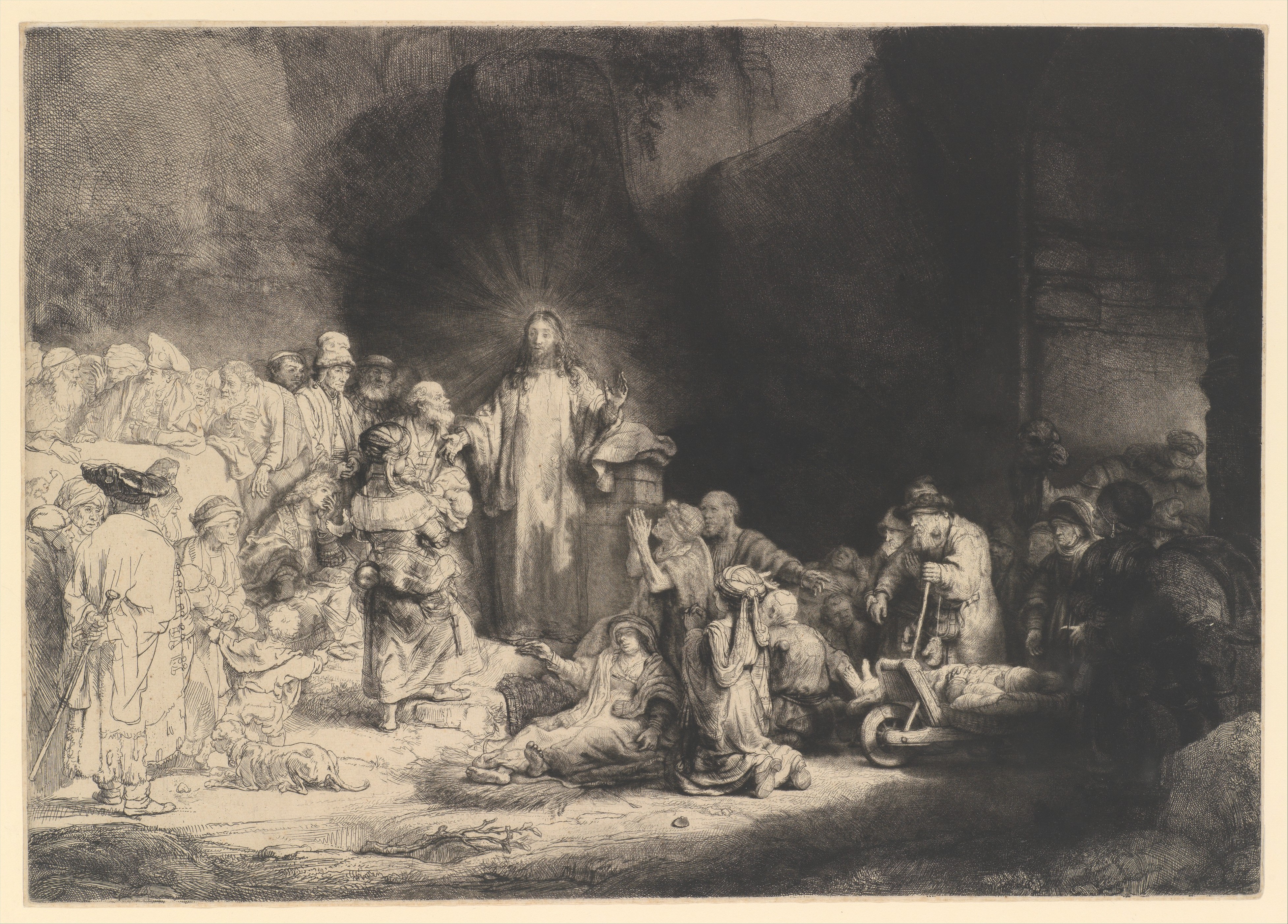
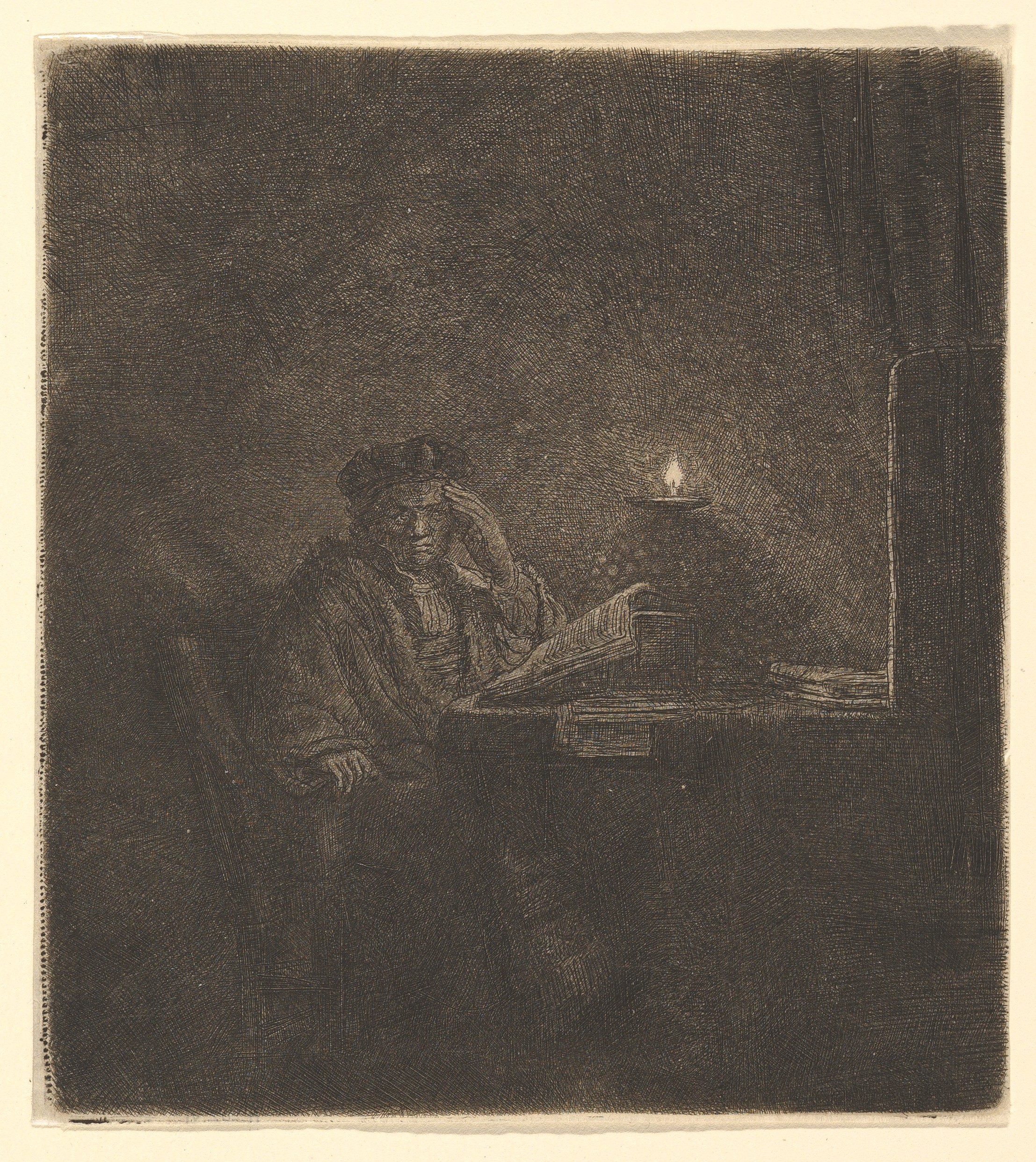
The Met describes the ledger’s Hundred Guilder Print as the second state of two and Student at a Table by Candlelight as the first of two states. Those state labels belong in the caption and provenance record; they are not decorative scholarship. A file from another museum may show the same nominal design while documenting another state or impression.
Later printing creates another boundary. A genuinely old Rembrandt plate may have produced posthumous impressions, and modern makers can recut or reproduce a famous composition. The underlying design may be public domain, but the new carving, restoration, tonal interpretation, typography, or photographic presentation can contain modern authorship. Describe a modern re-creation as such rather than presenting it as a seventeenth-century sheet.
The Night Watch is public domain, but the file still matters
The Night Watch has strong exact-work search intent, but it does not need a competing rights-guide canonical at first publication. This artist guide can give the precise answer: the underlying 1642 painting is public domain in the markets checked, and the selected Rijksmuseum object record marks the object Public Domain. The exact IIIF file in the ledger is traceable to that record and the Rijksmuseum’s information policy.
That conclusion does not make every online image of The Night Watch equivalent. A search result can be a cropped press photograph, a detail, a colour-corrected commercial scan, an installation view, or a reconstruction made during conservation. The stable production choice is the recorded object file, not the most convenient copy.
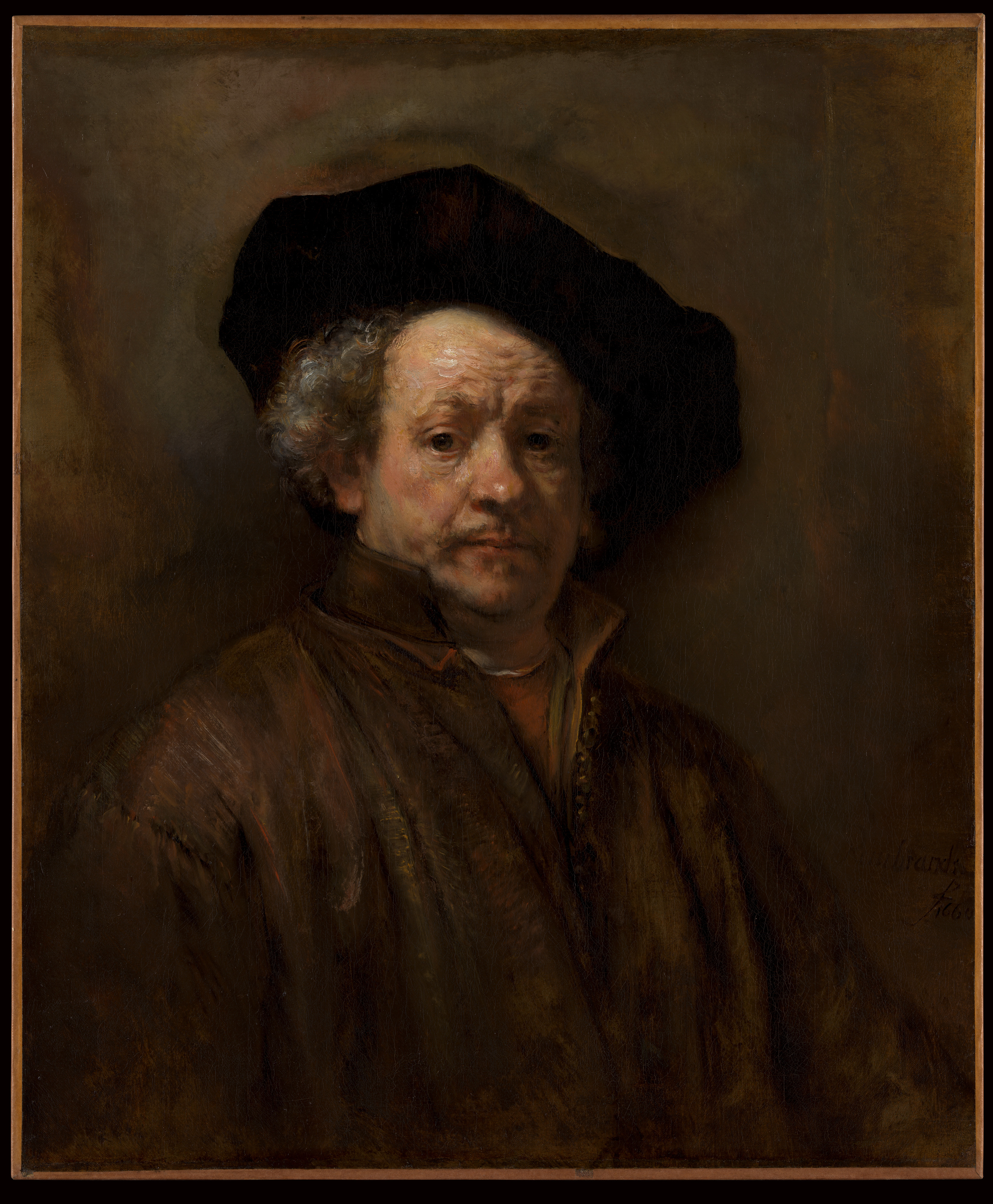
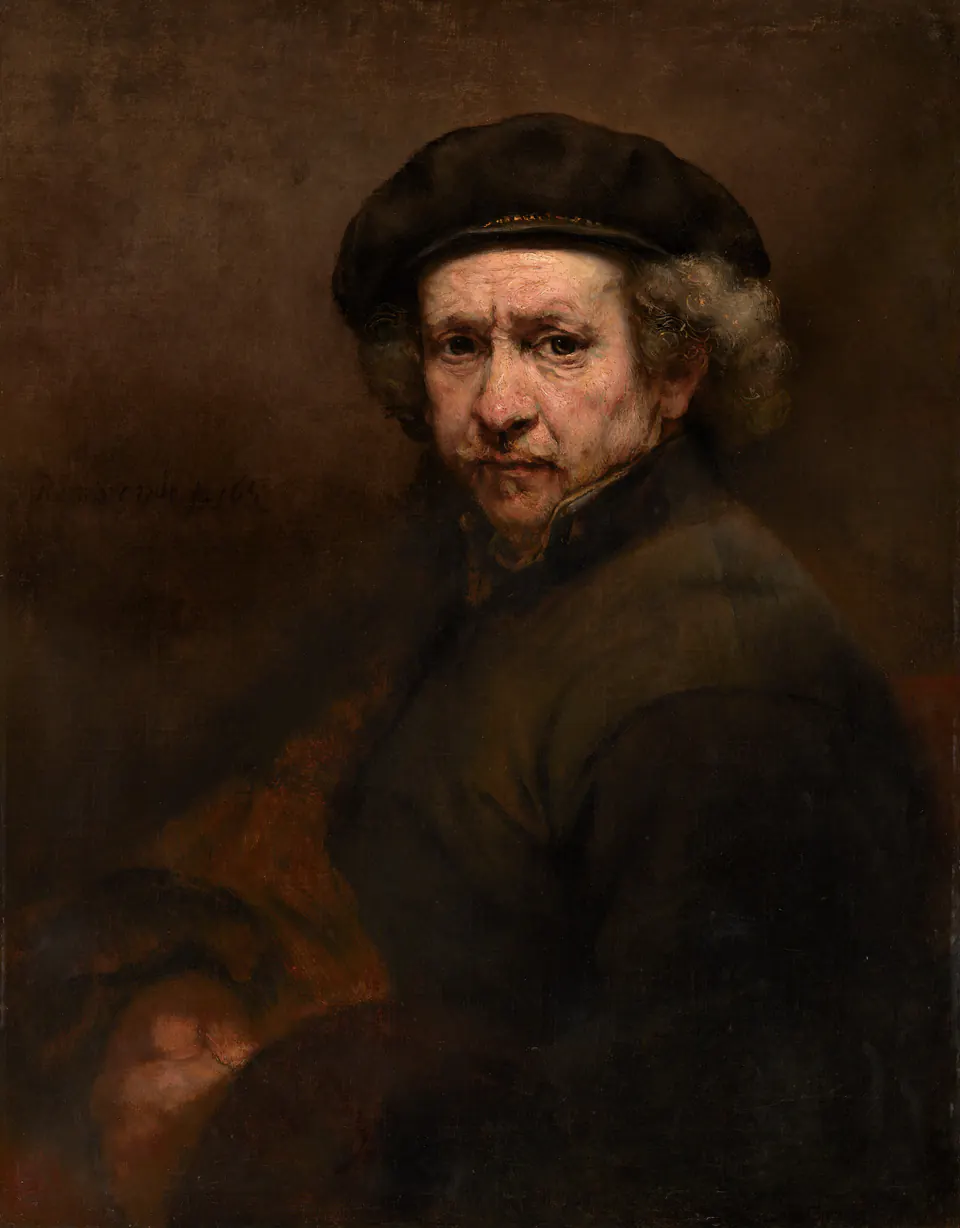
The same discipline applies to the guide’s feature, The Met’s 1660 Self-Portrait. The object page marks it Public Domain and The Met’s Open Access policy releases qualifying images under CC0 for unrestricted use. GeMarkt’s local master was made from the recorded original JPEG, resized to 1600 pixels wide, converted to WebP, and not cropped. The object URL, exact source URL, dimensions, checksum, and transformation remain in the rights and delivery registries.
The U.S. Copyright Office’s visual-art guidance provides a useful baseline: a purely faithful scan or photographic copy does not add registrable authorship, while creative restoration or alteration may. Other countries can apply different originality standards, and a provider’s contract or access conditions can remain relevant. “The painting is public domain” is therefore not a substitute for a file record.
Technical images are not cleared by association
Rembrandt research often depends on images that did not exist in his lifetime: X-radiographs, infrared reflectograms, dendrochronology diagrams, paint cross-sections, macro photography, stitched conservation maps, and digital reconstructions. They can reveal changes beneath the surface or distinguish workshop practice, but they are modern research outputs.
The Rembrandt Database’s terms explicitly warn that its holdings mix public-domain material with twentieth- and twenty-first-century copyrighted content. Individual downloadable documents can also carry licences limited to non-commercial use. This guide therefore cites the database as a research boundary but copies none of its technical imagery into the cleared visual set.
The exclusion is fail-closed: unless the exact research file has an affirmative provider statement compatible with the intended use, it remains outside production. A public-domain painting cannot “wash through” a modern photographer’s or researcher’s separate contribution.
Twelve files form a real starting set
The ledger below is not an aspirational image list. It contains 12 processed local WebP files from three institutional programmes:
- four Rijksmuseum records carrying object-level Public Domain status;
- four Public Domain / Open Access files from The Metropolitan Museum of Art;
- four Public Domain / Open Access files from the National Gallery of Art.
The set deliberately combines paintings and prints. It names the state for both print impressions, retains every accession number, and links the exact institutional file used for each derivative. Local transformations are limited to resize and WebP conversion without cropping.
This breadth matters. A guide illustrated only with The Night Watch would answer fame, not reuse. The selected set allows a reader to see portraiture, history painting, group portraiture, landscape, and two materially specific print records while keeping the rights evidence recoverable.
If any institution changes an attribution, public-domain label, file endpoint, or provider policy, the corresponding record must be reviewed before the file is regenerated or used in a new product. A replacement image cannot inherit clearance from the title alone.
A commercial-use checklist
Before using one of the named files in a product, book, campaign, or digital download, verify:
- Attribution wording. The current institution says “Rembrandt van Rijn,” not workshop, follower, after, or formerly attributed.
- Print identity. The state and physical impression match the accession cited in the ledger.
- Exact file. The production master came from the recorded institutional URL rather than a preview or repost.
- Provider status. The object/file still carries the Public Domain, CC0, or equivalent open-access statement relied on here.
- Transformations. Cropping, restoration, recolouring, generative fill, or compositing is documented and does not misrepresent the object.
- Territory. The actual distribution markets are covered; the EU, UK, Türkiye, and United States are not shorthand for the world.
- Presentation. Museum names and logos are not used to imply sponsorship, and modern captions or translations are cleared separately.
- Research material. Technical and conservation images remain excluded unless their exact licences are independently compatible.
When those fields cannot be recovered, source the file again. The broader guide Public domain is not a free-for-all explains why attribution, trademarks, privacy, provenance, and platform rules can remain relevant after economic copyright expires.
Where Rembrandt fits inside GeMarkt
GeMarkt’s Baroque worlds chapter already uses The Syndics to examine Amsterdam’s institutions and global circulation. That is a complementary art-history task, not a rights answer. This guide asks what a present-day reuser must document and why a painting, print impression, and digital file cannot be collapsed.
There is no Rembrandt collection or dedicated wallpaper room on GeMarkt at publication time. The wallpaper library and shop should not imply otherwise. Future paths are reserved as /collections/rembrandt/ and /free/wallpapers/rembrandt/; they must remain inactive until product-specific file, restoration, quality, and territory checks are complete.
Editorial publication can precede inventory because the article already has a processed, rights-checked visual set. A later collection may link back to this guide, but it will need its own claim and provenance review rather than borrowing the article’s clearance wholesale.
Rights-checked image ledger
A documented starting set
These files were selected from the holding institutions rather than from search-result copies. Each card keeps the artwork record, exact source file, provider statement and GeMarkt transformation visible as separate facts.
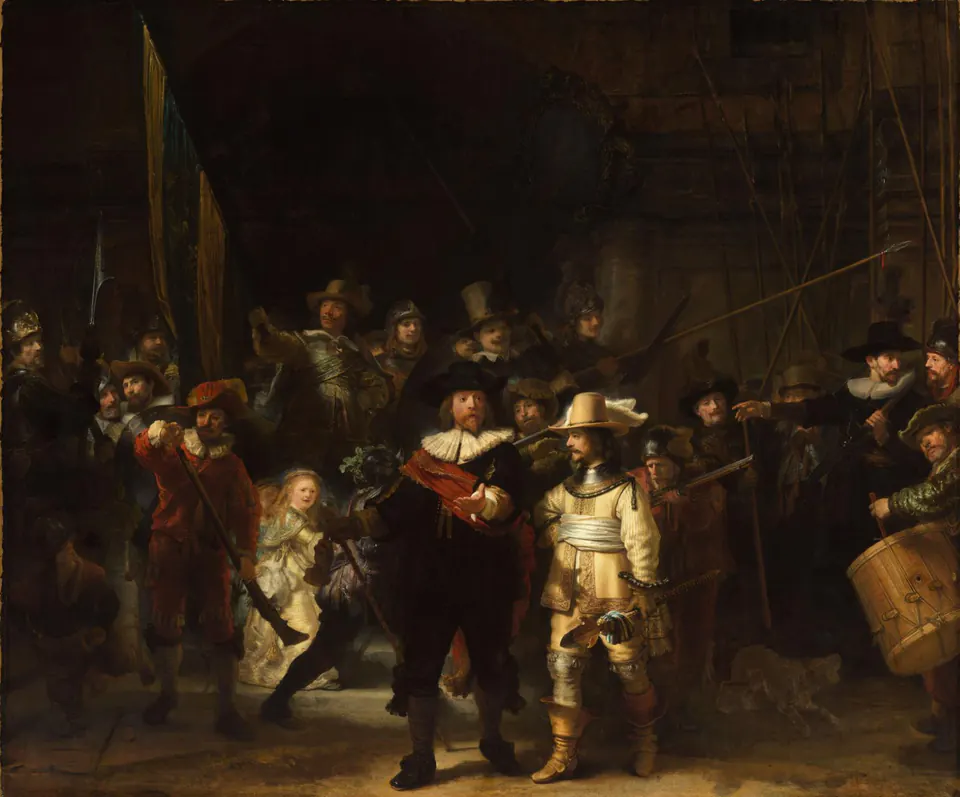
The Night Watch
1642 · Rijksmuseum · SK-C-5
Public Domain / Rijksmuseum Open Data
Resized to 960 pixels wide and converted to WebP; no crop.

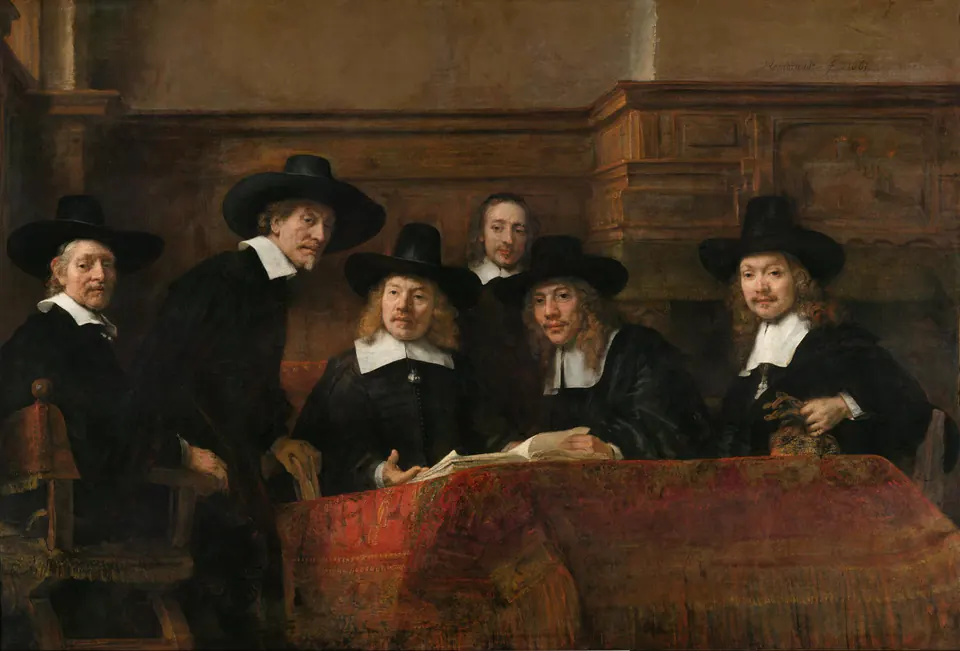
The Sampling Officials of the Amsterdam Drapers’ Guild, Known as The Syndics
1662 · Rijksmuseum · SK-C-6
Public Domain / Rijksmuseum Open Data
Resized to 960 pixels wide and converted to WebP; no crop.

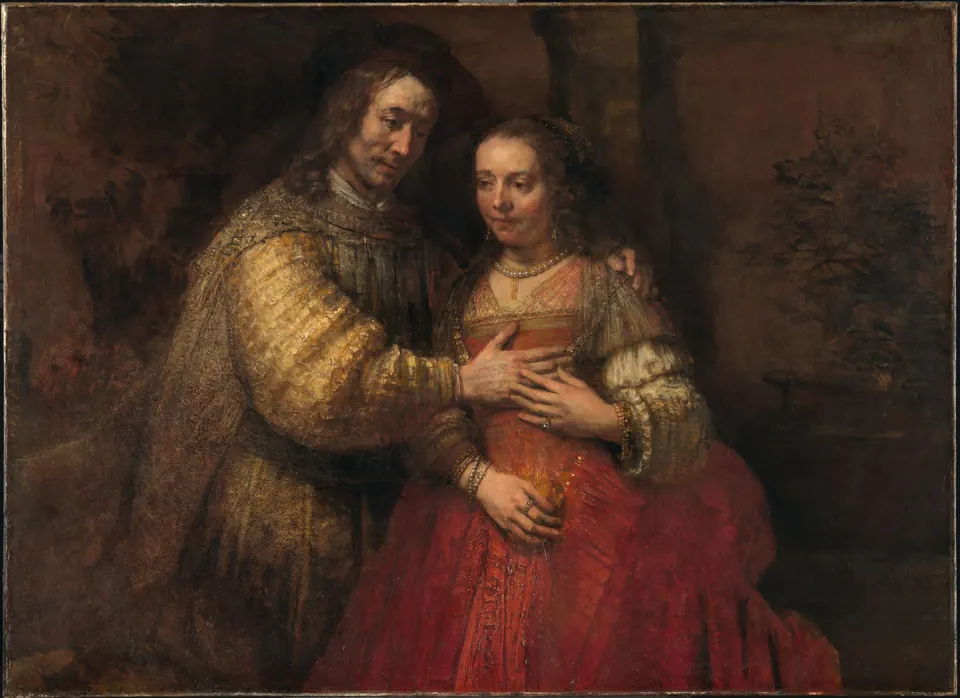
Isaac and Rebecca, Known as The Jewish Bride
ca. 1665–69 · Rijksmuseum · SK-C-216
Public Domain / Rijksmuseum Open Data
Resized to 960 pixels wide and converted to WebP; no crop.

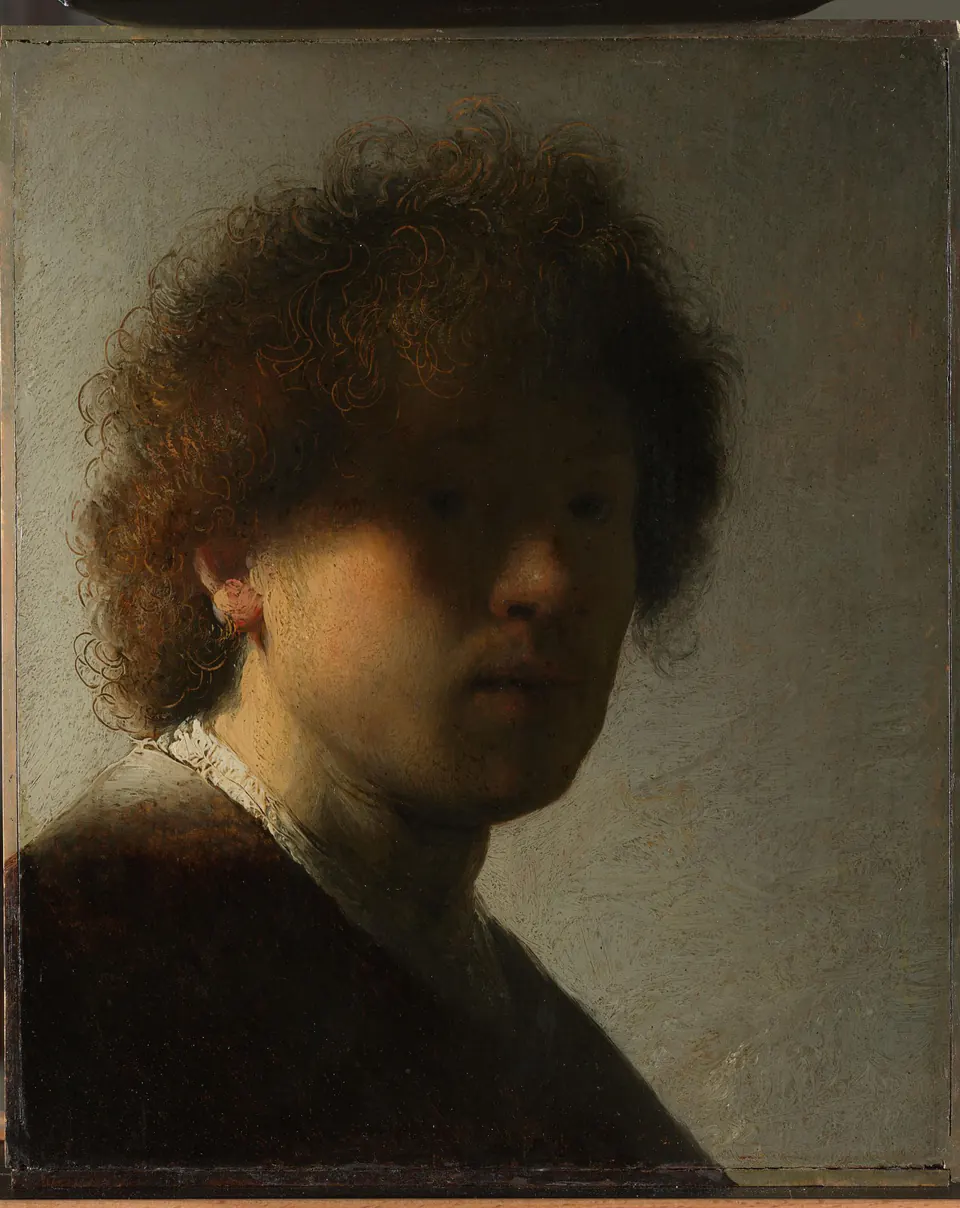
Self-portrait as the Apostle Paul
1661 · Rijksmuseum · SK-A-4050
Public Domain / Rijksmuseum Open Data
Resized to 960 pixels wide and converted to WebP; no crop.

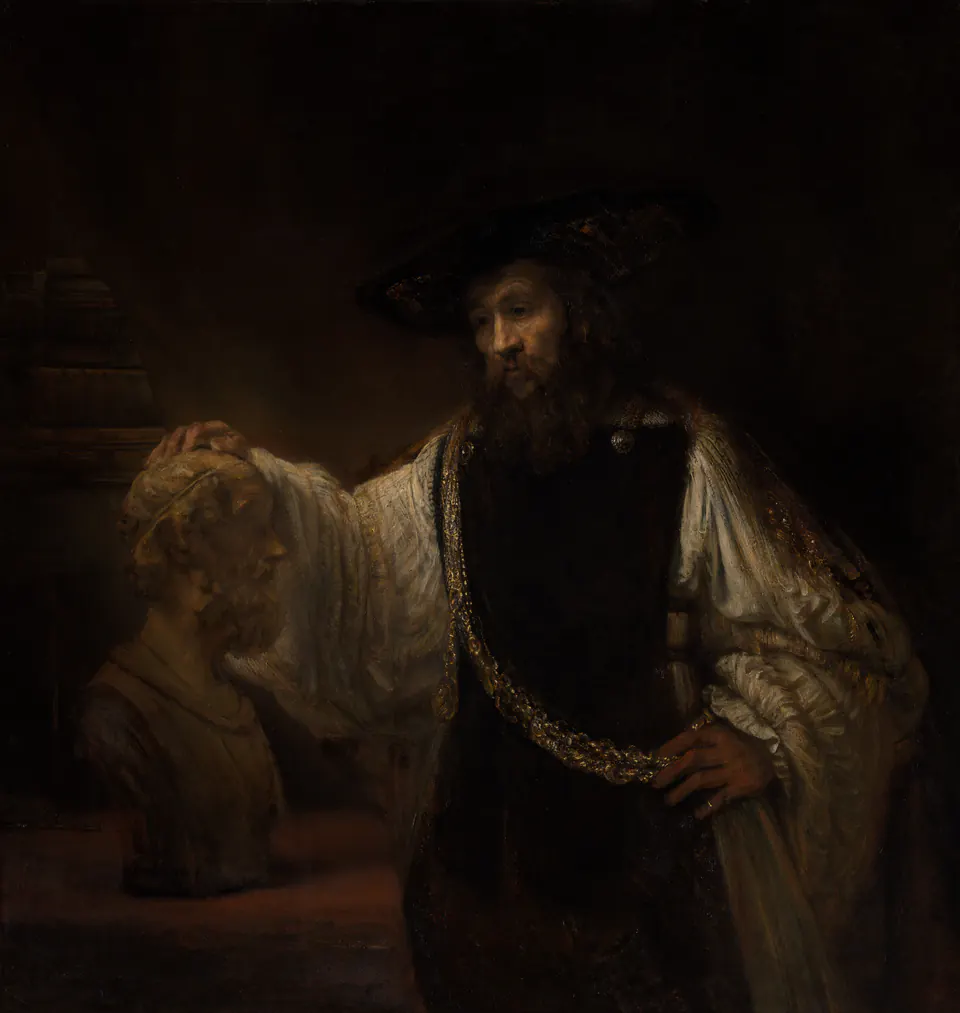
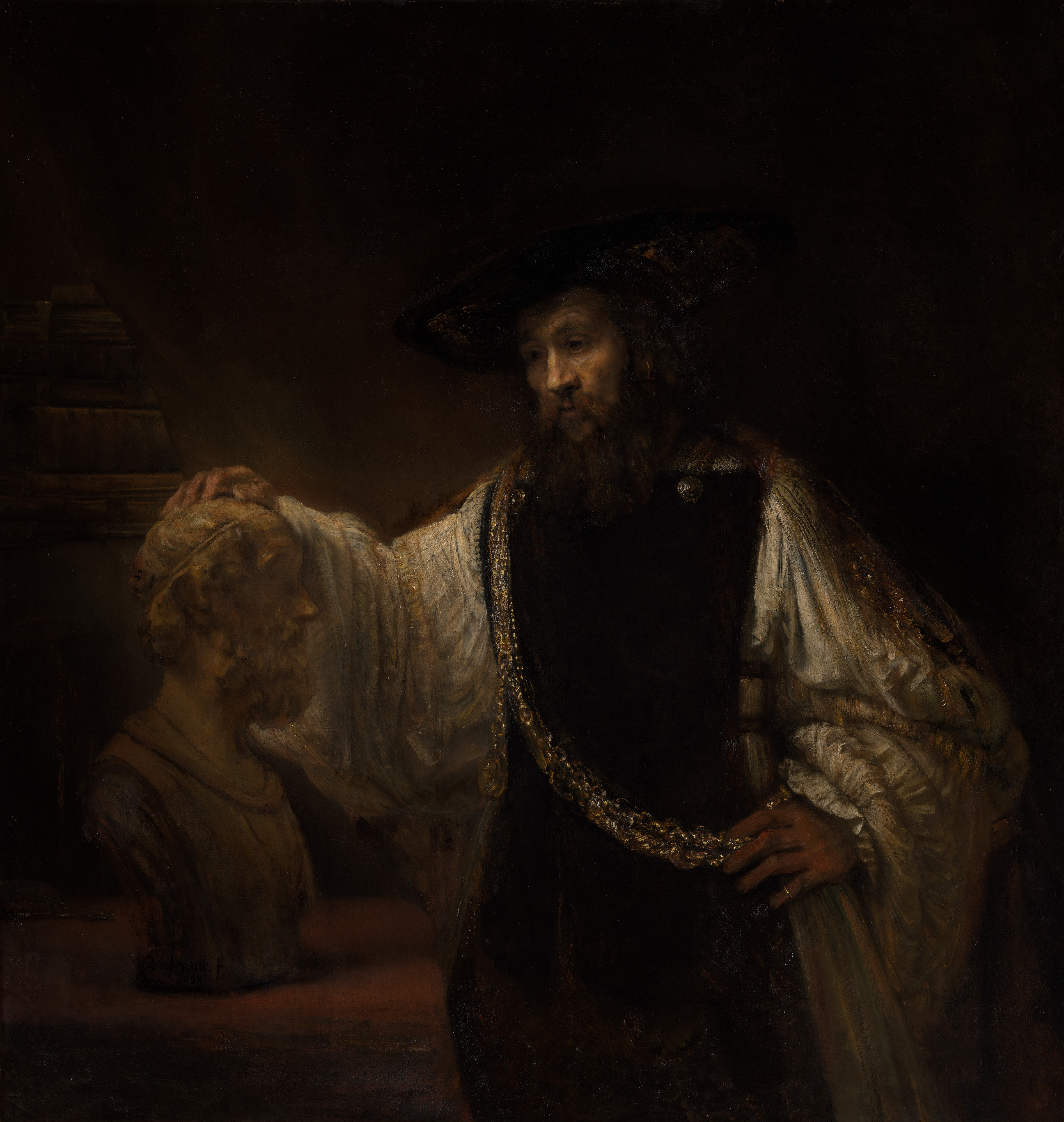
Aristotle with a Bust of Homer
1653 · The Metropolitan Museum of Art · 61.198
Public Domain / Open Access (CC0)
Resized to 960 pixels wide and converted to WebP; no crop.
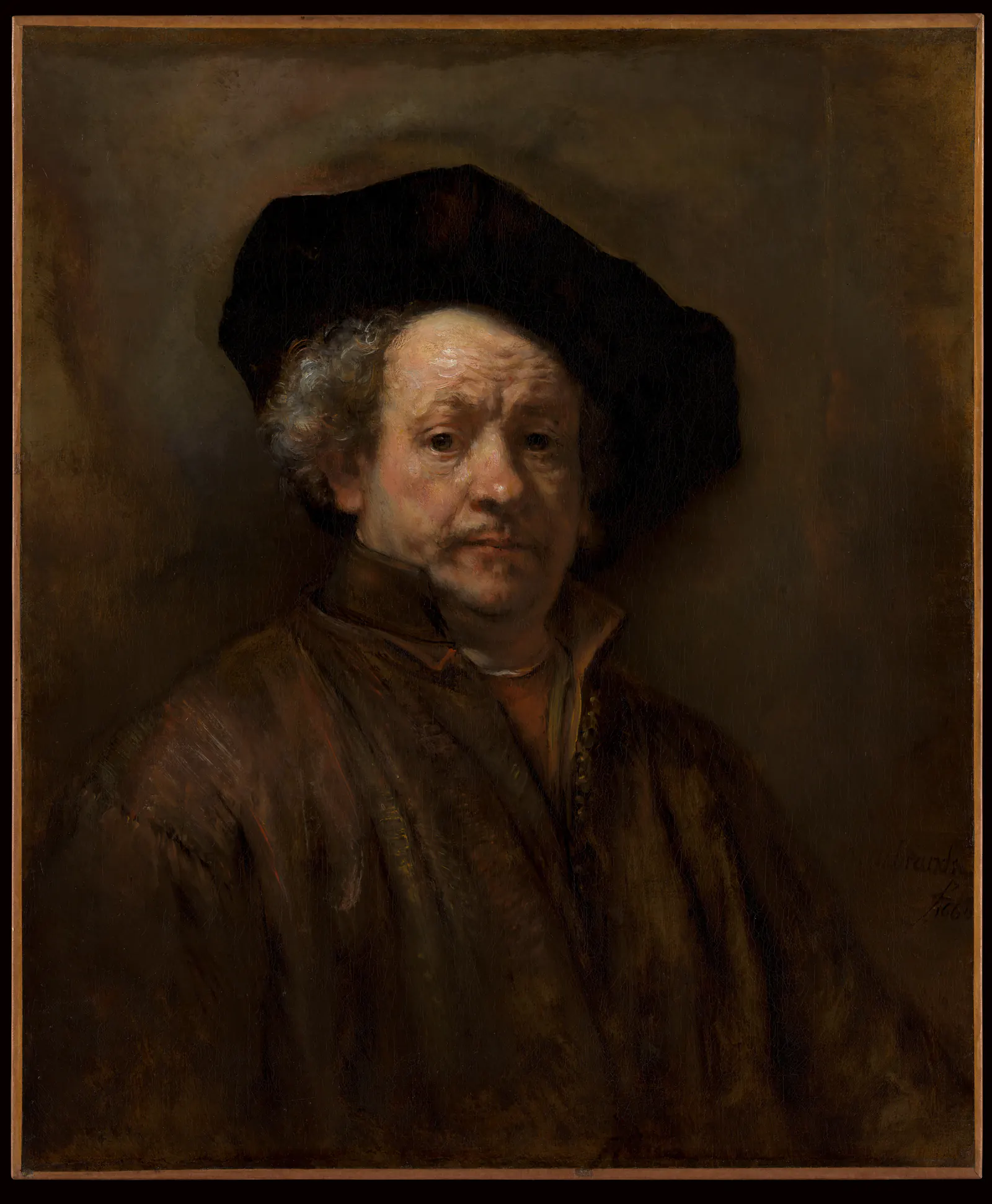
Self-Portrait
1660 · The Metropolitan Museum of Art · 14.40.618
Public Domain / Open Access (CC0)
Resized to 1600 pixels wide and converted to WebP; no crop.
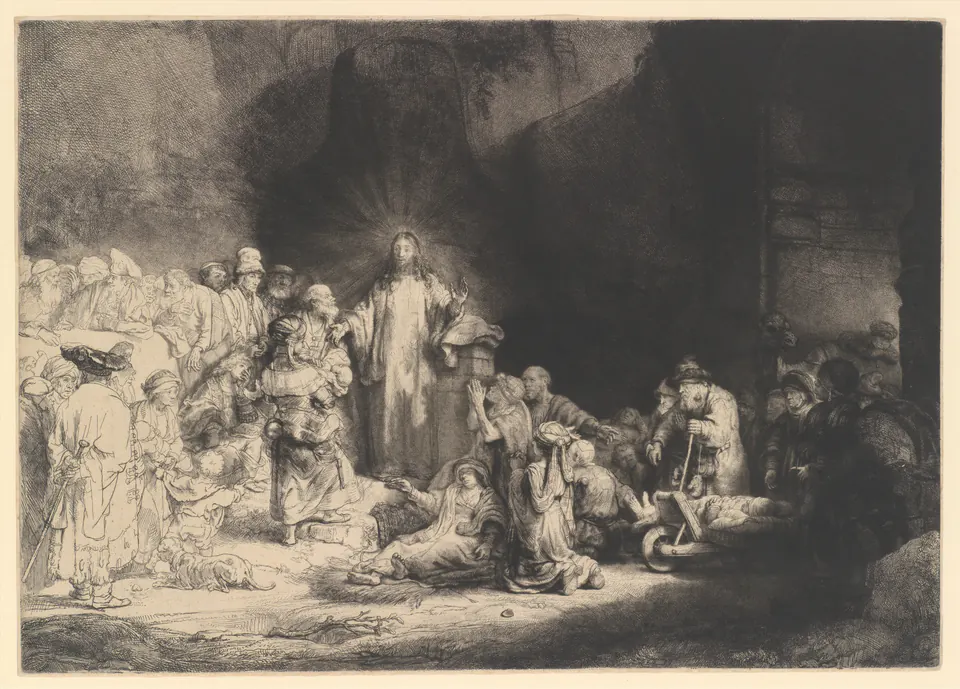
The Hundred Guilder Print
1648, second state of two · The Metropolitan Museum of Art · 29.107.35
Public Domain / Open Access (CC0)
Resized to 960 pixels wide and converted to WebP; no crop.
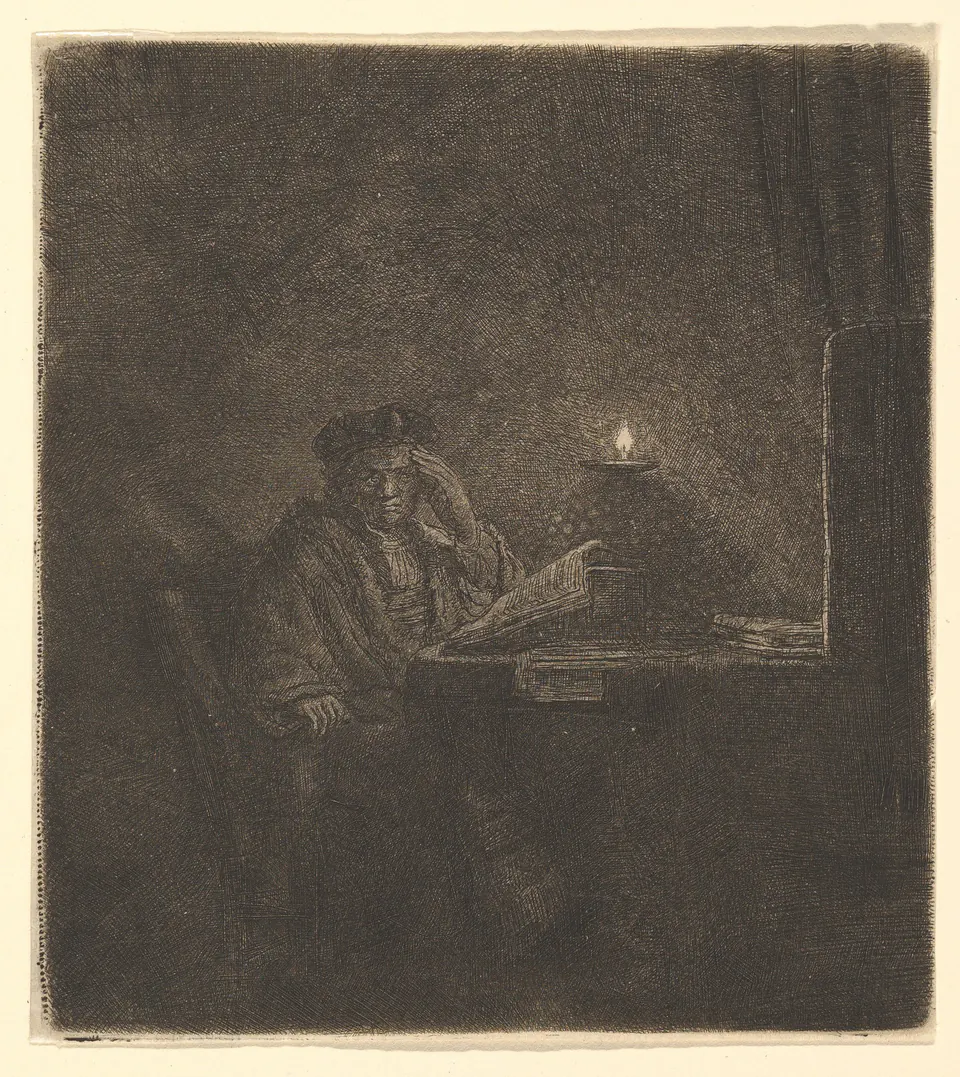
Student at a Table by Candlelight
ca. 1642, first of two states · The Metropolitan Museum of Art · 66.521.17
Public Domain / Open Access (CC0)
Resized to 960 pixels wide and converted to WebP; no crop.
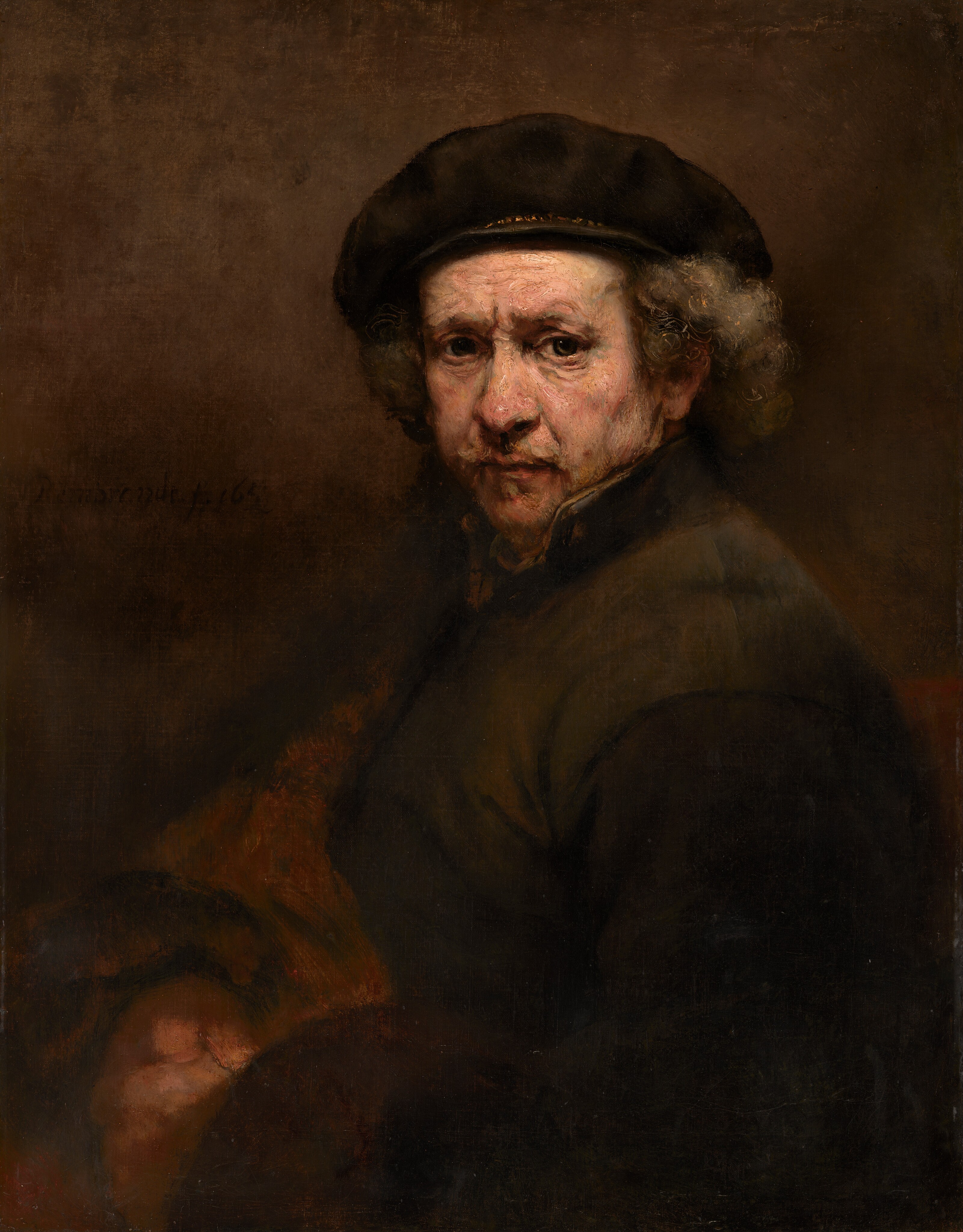
Self-Portrait
1659 · National Gallery of Art · 1937.1.72
Public Domain / Open Access (CC0)
Resized to 960 pixels wide and converted to WebP; no crop.
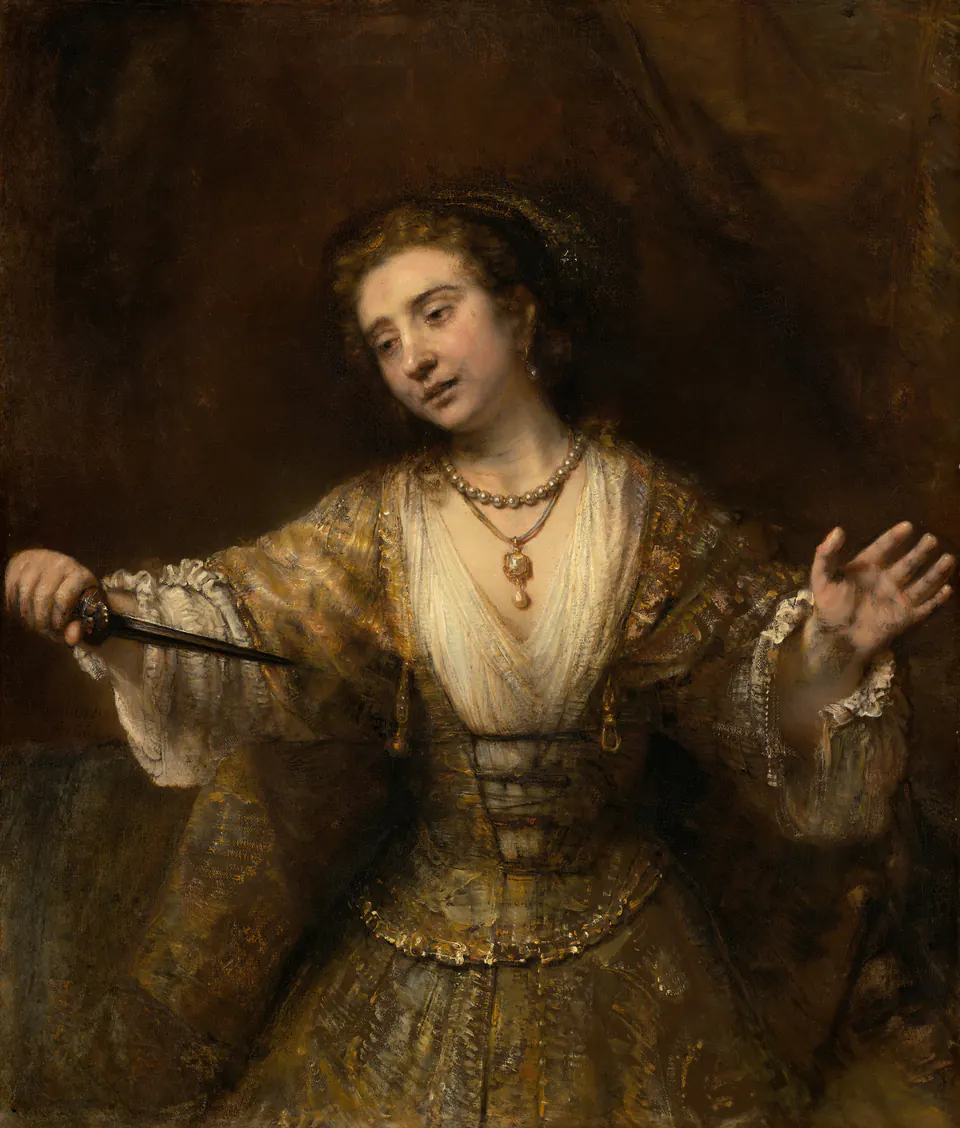
Lucretia
1664 · National Gallery of Art · 1937.1.76
Public Domain / Open Access (CC0)
Resized to 960 pixels wide and converted to WebP; no crop.

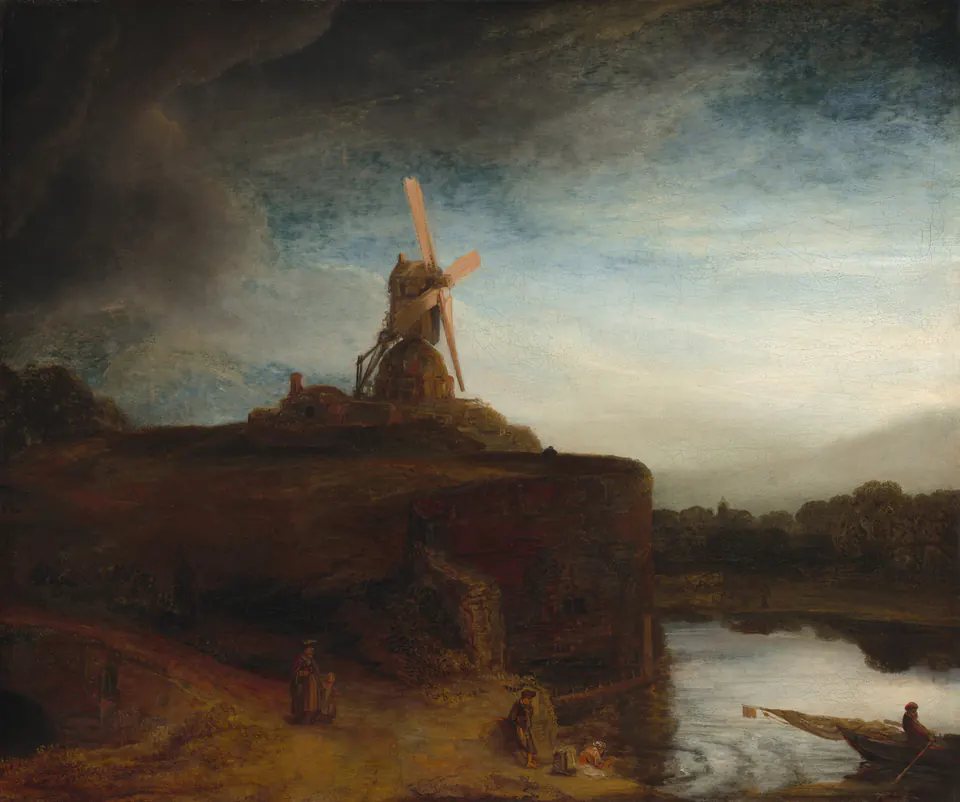
The Mill
1645/1648 · National Gallery of Art · 1942.9.62
Public Domain / Open Access (CC0)
Resized to 960 pixels wide and converted to WebP; no crop.

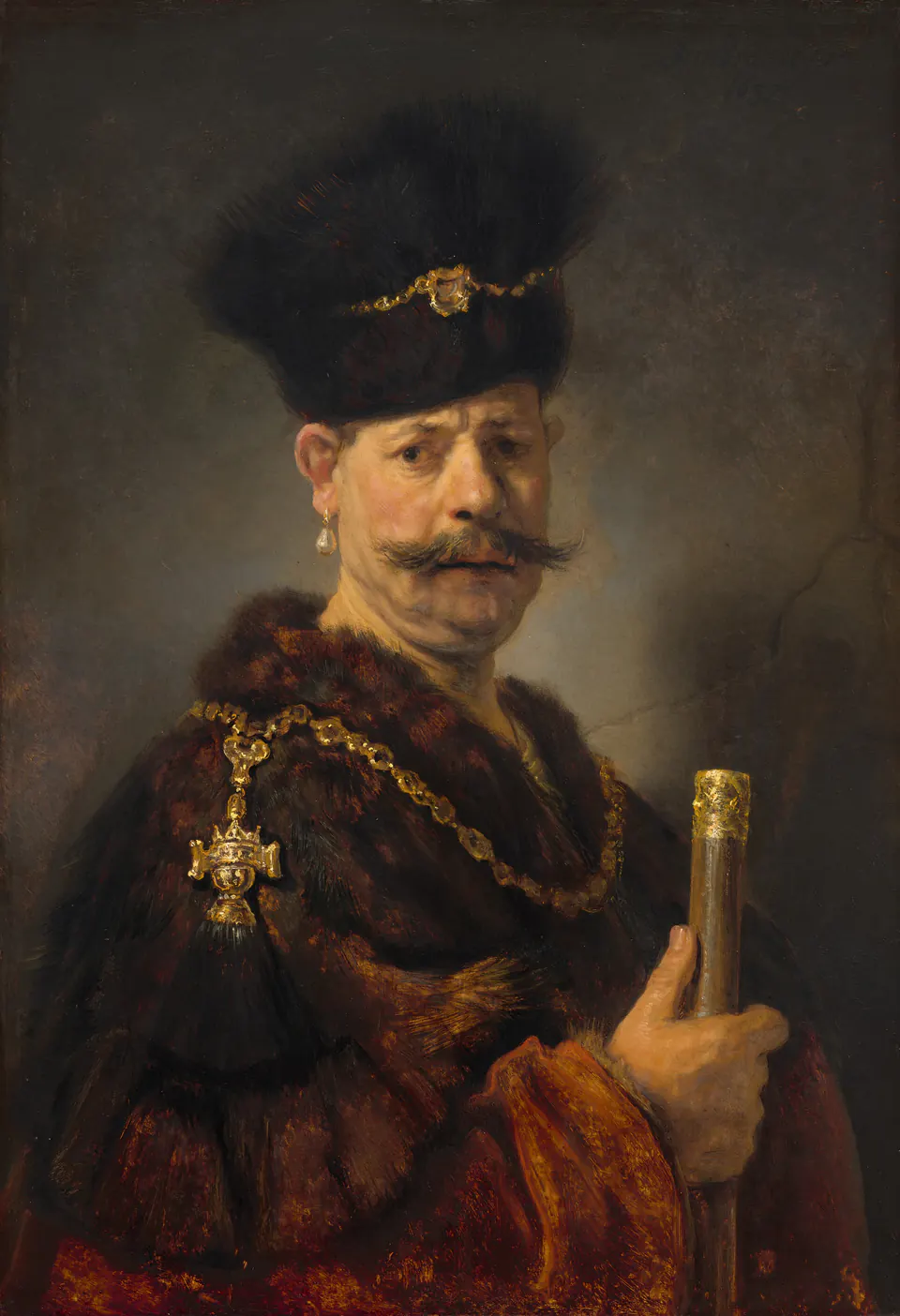
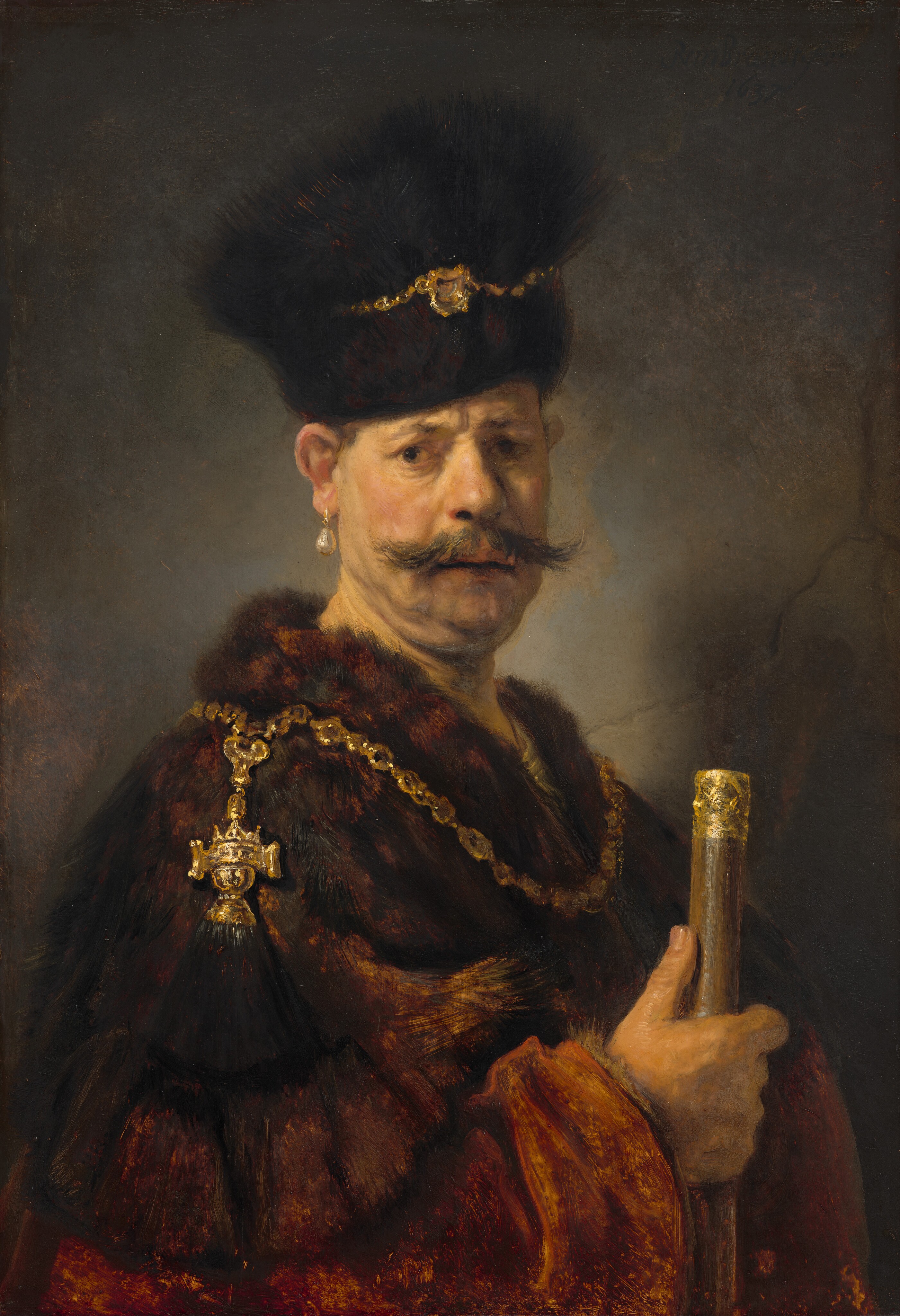
A Polish Nobleman
1637 · National Gallery of Art · 1937.1.78
Public Domain / Open Access (CC0)
Resized to 960 pixels wide and converted to WebP; no crop.
Sources and review method
We checked the artist chronology against museum records, treated each named jurisdiction separately, and recorded the provider policy for the image set. These sources support the legal framework and artist dates used above; the source file for any individual image still needs its own record.
- Self-Portrait, 1660 — The Metropolitan Museum of Art. Feature object identity, attribution, date, accession number and Public Domain image status.
- Image and Data Resources — The Metropolitan Museum of Art. The Met makes images marked Public Domain available for unrestricted use under its Open Access programme.
- Free Images and Open Access — National Gallery of Art. The NGA releases images of public-domain works that it believes are public domain and free of known restrictions.
- Information and Data Policy — Rijksmuseum. Files and records carrying a Public Domain Mark or CC0 notice may be reused; item-level status still controls.
- Terms of use — The Rembrandt Database. Research imagery and documents can carry modern copyright or non-commercial terms and are excluded from the cleared file set.
- Directive 2006/116/EC, Article 1 — EUR-Lex. The EU term for an artistic work is the author’s life plus 70 years.
- How long copyright lasts — UK Government. UK guidance gives 70 years after the author’s death for artistic works.
- Law No. 5846 on Intellectual and Artistic Works, Article 27 — WIPO Lex. The Turkish economic-rights term is the author’s life plus 70 years.
- Circular 15A: Duration of Copyright — U.S. Copyright Office. The 2026 term table places works published before 1931 outside the maximum 95-year publication term.
- Certain Unpublished, Unregistered Works Enter Public Domain — U.S. Copyright Office. Older unpublished works have a separate U.S. term analysis; discovery and first-publication history can matter.
- 17 U.S.C. Chapter 3, including §303 — U.S. Copyright Office. Section 303 states the transition rules and minimum 2002 or 2047 expiry floors for works that were unpublished on 1 January 1978.
- Visual Artists: Publication — U.S. Copyright Office. Distribution can publish a visual artwork, while public display by itself does not establish publication.
- 17 U.S.C. §104A and Circular 38B — U.S. Copyright Office. Foreign-work restoration requires that the work was not already public domain through term expiry in its source country.
- Compendium of U.S. Copyright Office Practices, Chapter 900, §909.3(A) — U.S. Copyright Office. A purely faithful scan or “slavish copy” does not add registrable authorship, while substantial restoration or alteration can require a separate analysis.
- Copyright notice: digital images, photographs and the internet — UK Intellectual Property Office. A digital image can require a separate rights and website-terms check even when its subject is old.
Editorial record
About this article
- Author
- Publisher
- GeMarkt
- Published
- Reviewed
- Internal source & rights check. Conducted by GeMarkt Research Review. This is an internal editorial check—not independent peer review.
- Source standard
- Rights guide source standardSeparates the underlying work from the source file, records the review date, and links the evidence used for the conclusion.
Found a claim that needs checking? Report a factual error.