GeMarkt Blog · Essay
The Italian Renaissance: Botticelli, Leonardo, Michelangelo, Raphael
Recognise Italian Renaissance art through eight works: Botticelli's lines, Leonardo's shadows, Michelangelo's studies and Raphael's carefully organised action.

A white horse rears above a dragon. A woman turns towards us but keeps her expression difficult to read. A young model twists his back while the artist tries the same foot several times. Italian Renaissance art is more various—and more lively—than the phrase “perfect balance” suggests.
These eight works offer a way into it without requiring a memorised family tree of painters. Look first at how a body occupies space, how an edge is drawn, and how your eye reaches the important action. Botticelli, Leonardo, Michelangelo and Raphael give different answers. Four other artists widen the picture beyond those famous names.
What Renaissance means here
Renaissance means rebirth. As the National Gallery explains, it refers to renewed interest in ancient art and learning as well as a historical period and a stylistic label. It does not mean that skilled art disappeared in the Middle Ages and suddenly returned.
Our examples run from the fifteenth century into the early sixteenth. The label High Renaissance is often applied to the early-sixteenth-century ascendancy of Leonardo, Michelangelo and Raphael, among others. That is a useful grouping, not a quality ranking that makes earlier pictures inferior.
This is a looking guide. For the patrons, workshops and competing Italian centres behind such objects, follow the broader Renaissance history guide.
Start with space, bodies and edges
Three questions help. Could the figures stand in the space shown? Overlapping bodies, receding architecture and distant hills can make a flat surface feel inhabitable. Where does weight fall? Feet, hips and shoulders tell you whether someone rests, kneels or turns. How does an edge behave? A sharp contour and a soft shadow produce very different kinds of presence.
None is a pass-or-fail test. Sacred stories can include haloes, ideal bodies and impossible meetings while remaining attentive to observed nature. Painted ruins may carry religious meaning as well as demonstrate architectural skill. It is often the combination of convincing detail and deliberate invention that makes the picture interesting.
Botticelli: a crowd held together by lines
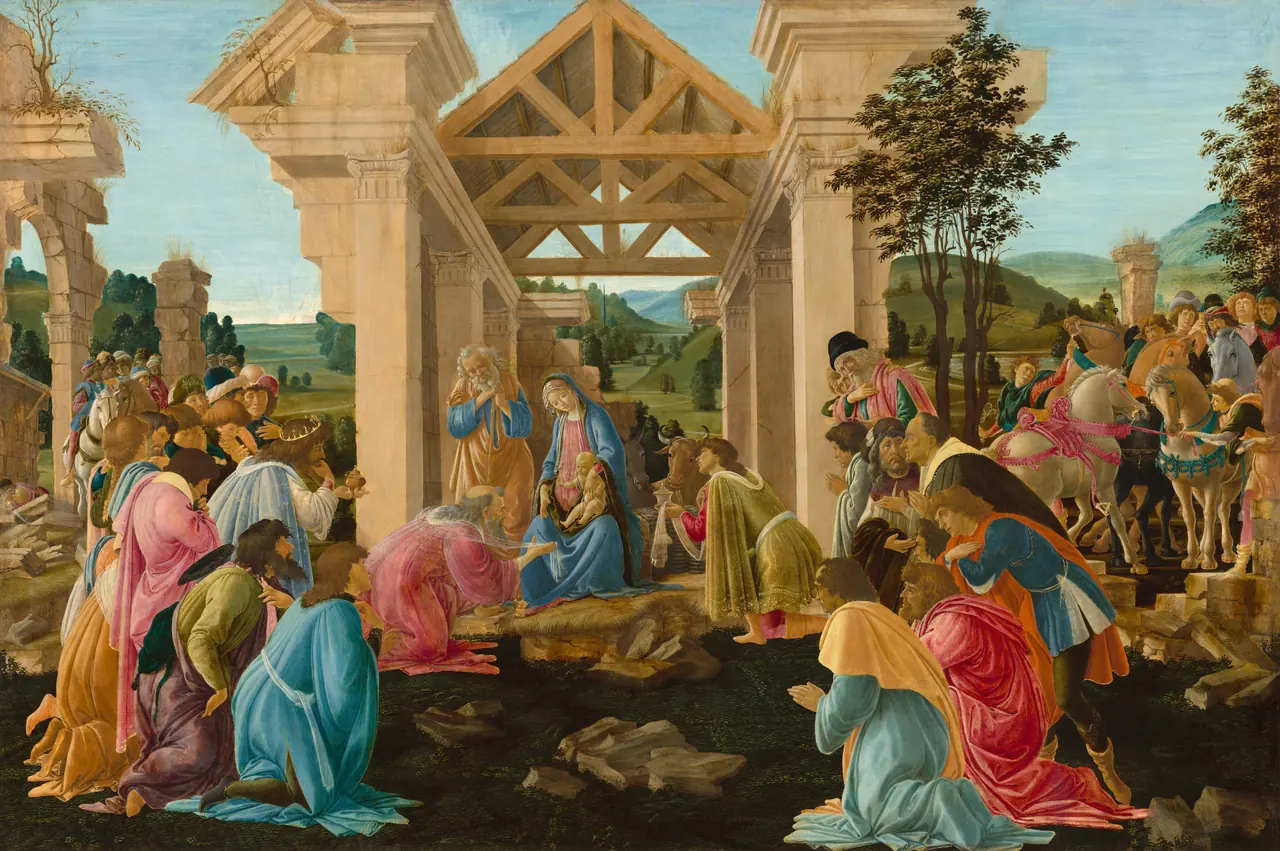
Find the gap between the kneeling groups. It leads straight to the small central child. Then follow the bowed heads, bent wrists and long folds of cloth: the crowd is varied, but almost everything helps return attention to that meeting.
This is the Washington Adoration, not another of Botticelli’s paintings with the same title. The NGA identifies its classical ruin as a meaningful setting for the Christian story. What you can see immediately is how strongly the upright pillars contrast with the supple lines of the people below.
The distant landscape opens up the scene without competing with the foreground. Botticelli’s interest in line need not flatten everything; line can organise believable depth while retaining the pleasure of a patterned surface. Our Botticelli guide helps distinguish his works and their sources.
Angelico and Lippi: follow the procession
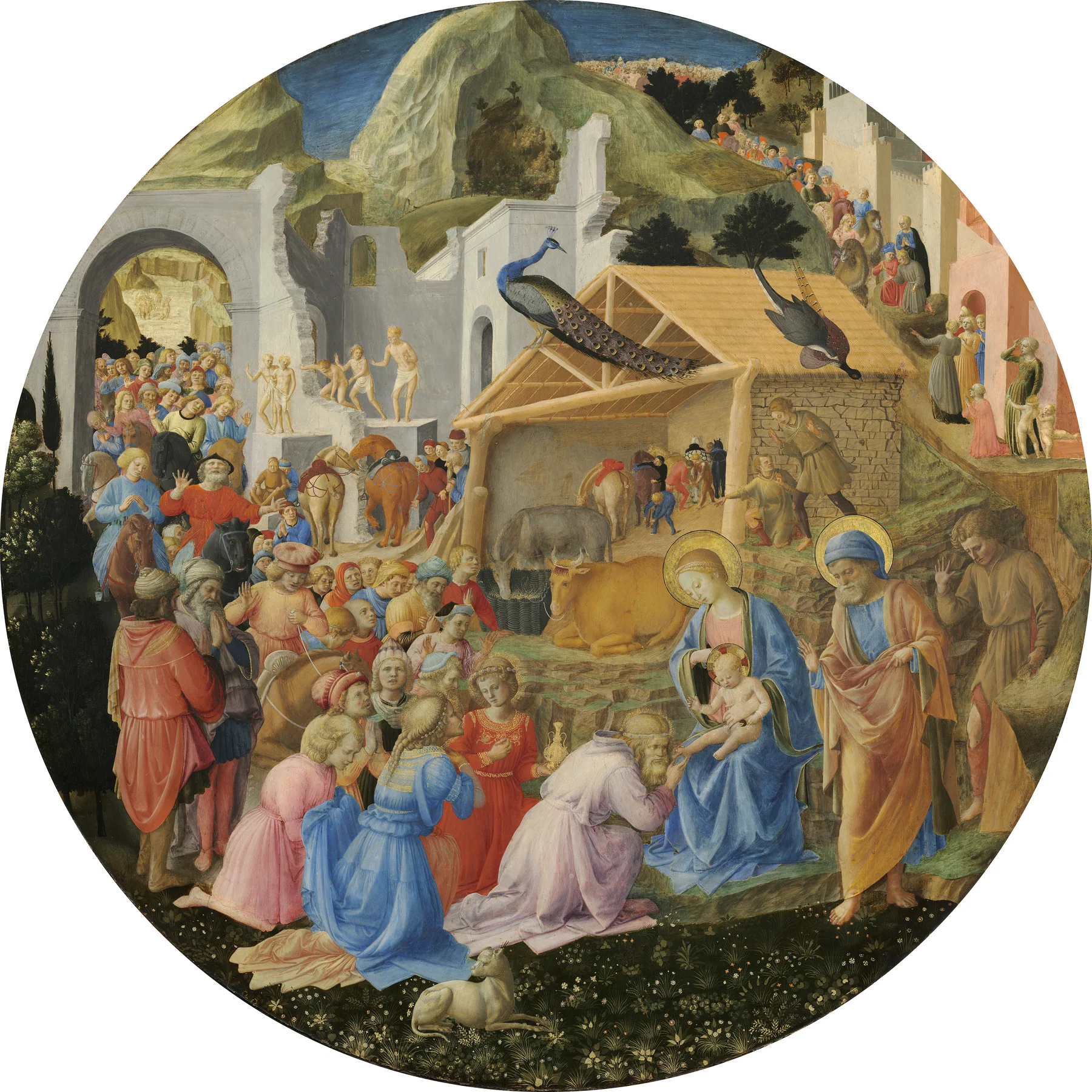
Here the same subject spreads into a journey. A procession winds down from the upper right, while another crowded approach passes through the broken arch. The round support—a tondo—encourages the eye to circulate rather than settle immediately on a rigid central axis.
The NGA suggests that Angelico probably began the picture and Lippi probably completed it. That shared attribution matters: Renaissance painting was not always a solitary genius finishing a single uninterrupted vision.
Look at the large birds on the roof and the little flowers underfoot. They can hold your attention independently of the main event. Compared with Botticelli’s more concentrated arrangement, this picture makes room for detours. Both organise devotion, but one invites you to linger along the route.
Piero: weight against a gold ground
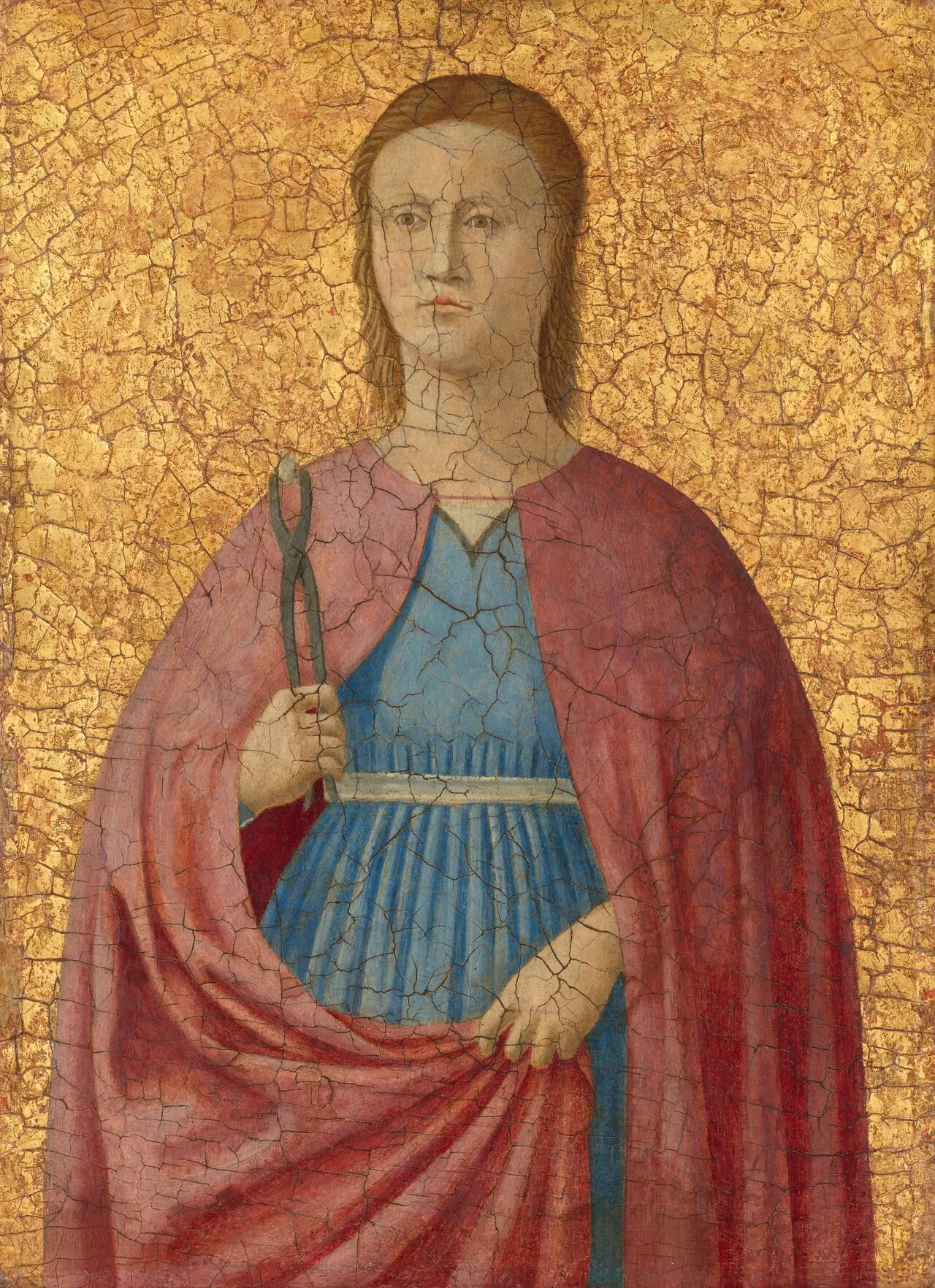
The saint’s upright body feels substantial even though there is no receding room or distant landscape behind her. The gold ground holds the figure close to the surface, while folds and shadows give the blue dress and rose-coloured cloak a sense of volume.
The NGA identifies the small object in the pincers as a tooth, Apollonia’s identifying attribute. It also records this panel as part of a dismantled altarpiece, rather than an independent portrait of a named contemporary sitter.
Look at the firm outline of the shoulder, then at the hand gathering the cloak. Piero makes stillness feel deliberate. The visibly cracked surface remains in this museum image; it has not been digitally smoothed into a new painting. This example also guards against a narrow definition: a Renaissance artist can explore bodily presence without abandoning an older gold-ground format.
Leonardo: the Mona Lisa turns towards you
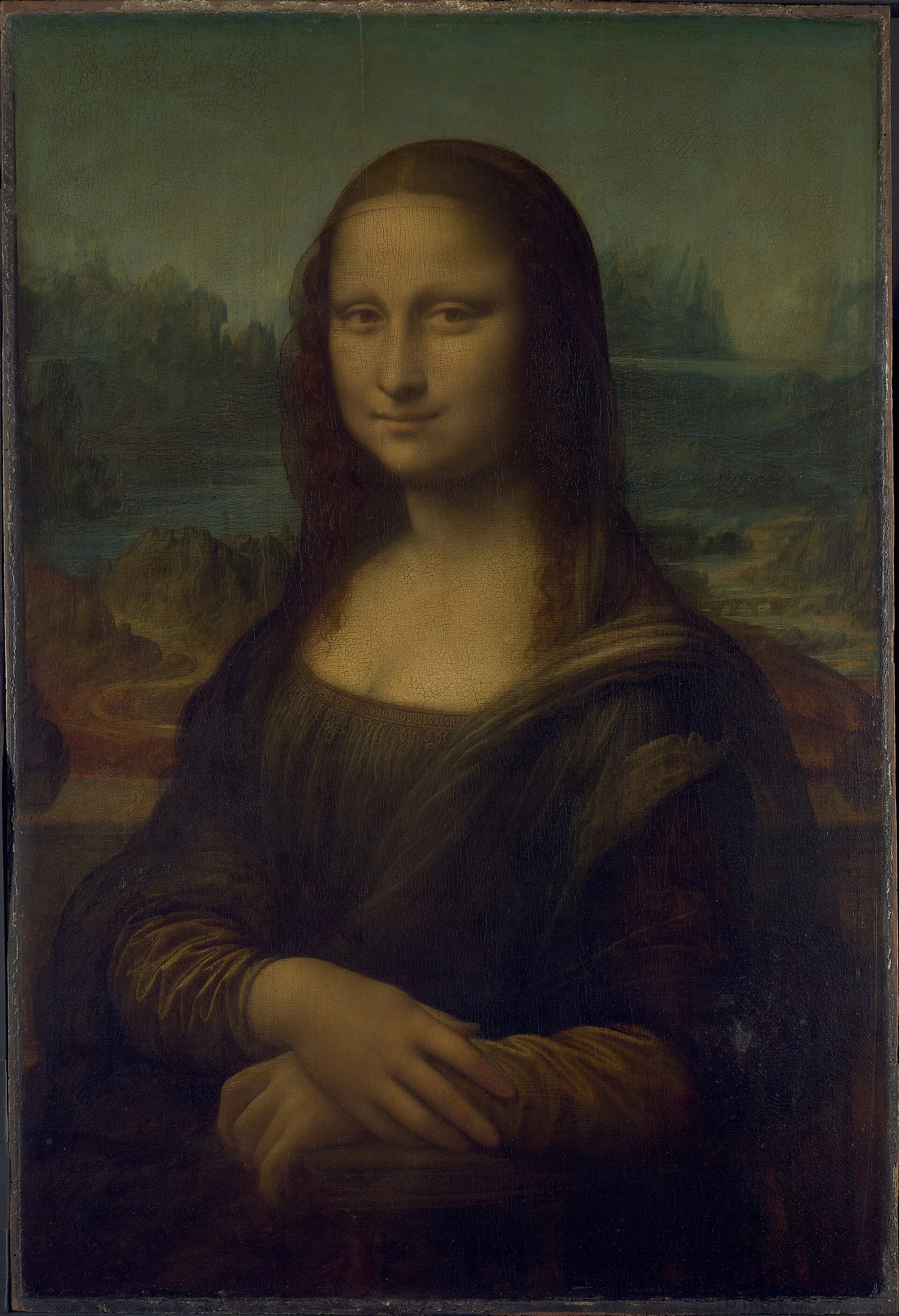

Here the torso and face turn at different angles. The stacked hands make a stable base, while the winding routes behind the sitter carry attention into the distance. The portrait is poised without being symmetrical.
The Louvre identifies the sitter as Lisa Gherardini. Her fame can distract from what the paint does. Try looking away from the smile towards the boundary between cheek and shadow. There is no hard drawn fence around every feature.
That softened transition makes an expression difficult to pin down. It is a visual effect worth noticing before inventing a secret story about the sitter. For the exact reproduction used here, see the Mona Lisa file guide.
Leonardo: a drawing without hard boundaries
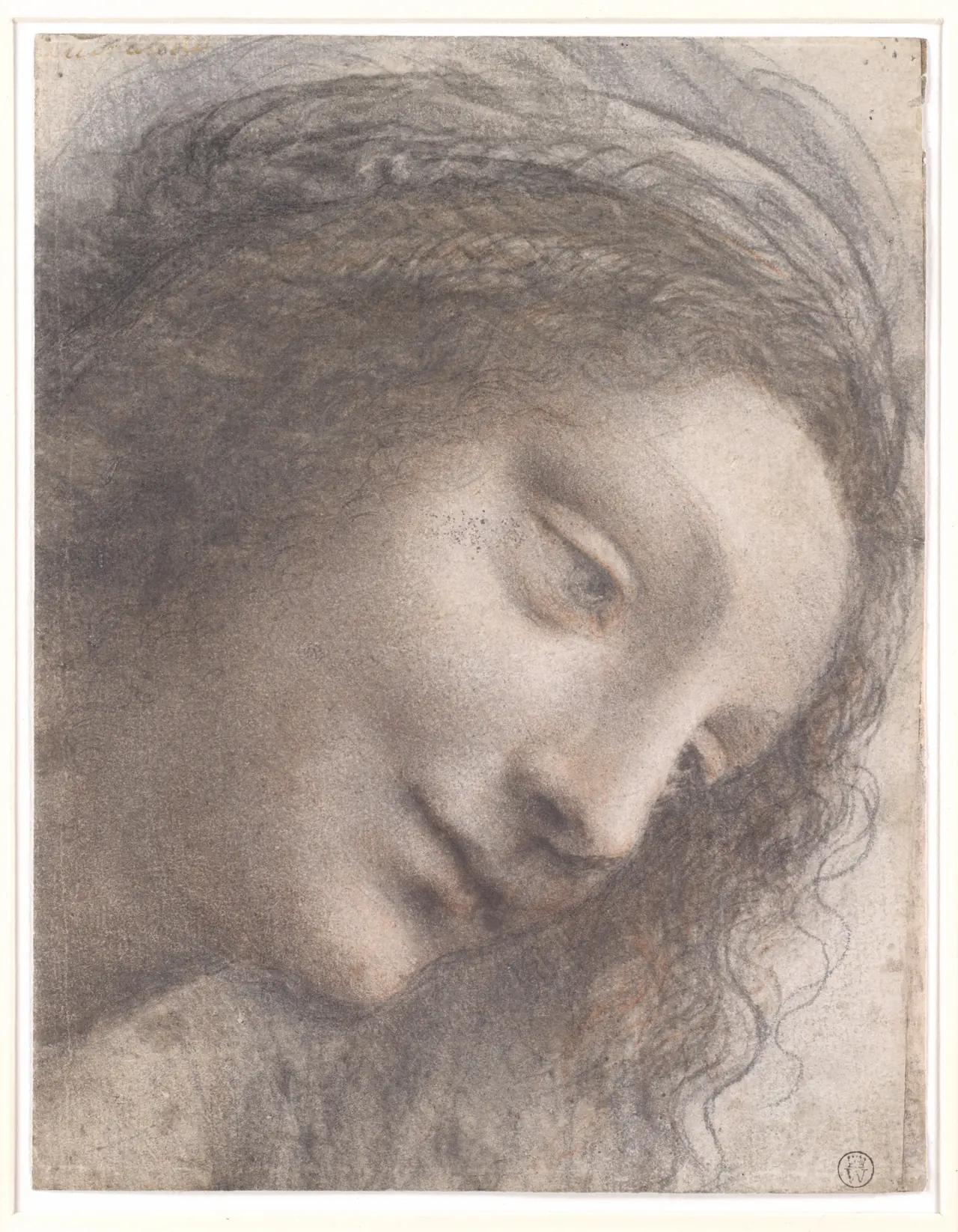
This sheet brings the same attention to transitions into drawing. The cheek turns towards light; the eye socket and mouth emerge from worked shadows. Loose curls remain noticeably less resolved than the face.
The Met’s examination identifies red and black chalks within the densely worked surface. Sfumato describes that smoky softness, not a digital blur applied afterwards. The drawing still has structure: look at the direction of the nose and the shadow beneath the chin.
A useful Renaissance distinction emerges here. Observation does not require recording every part with equal sharpness. Leonardo can make the face more convincing by letting some boundaries become difficult to isolate. The Leonardo artist guide offers further works to compare.
Michelangelo: think through the turn
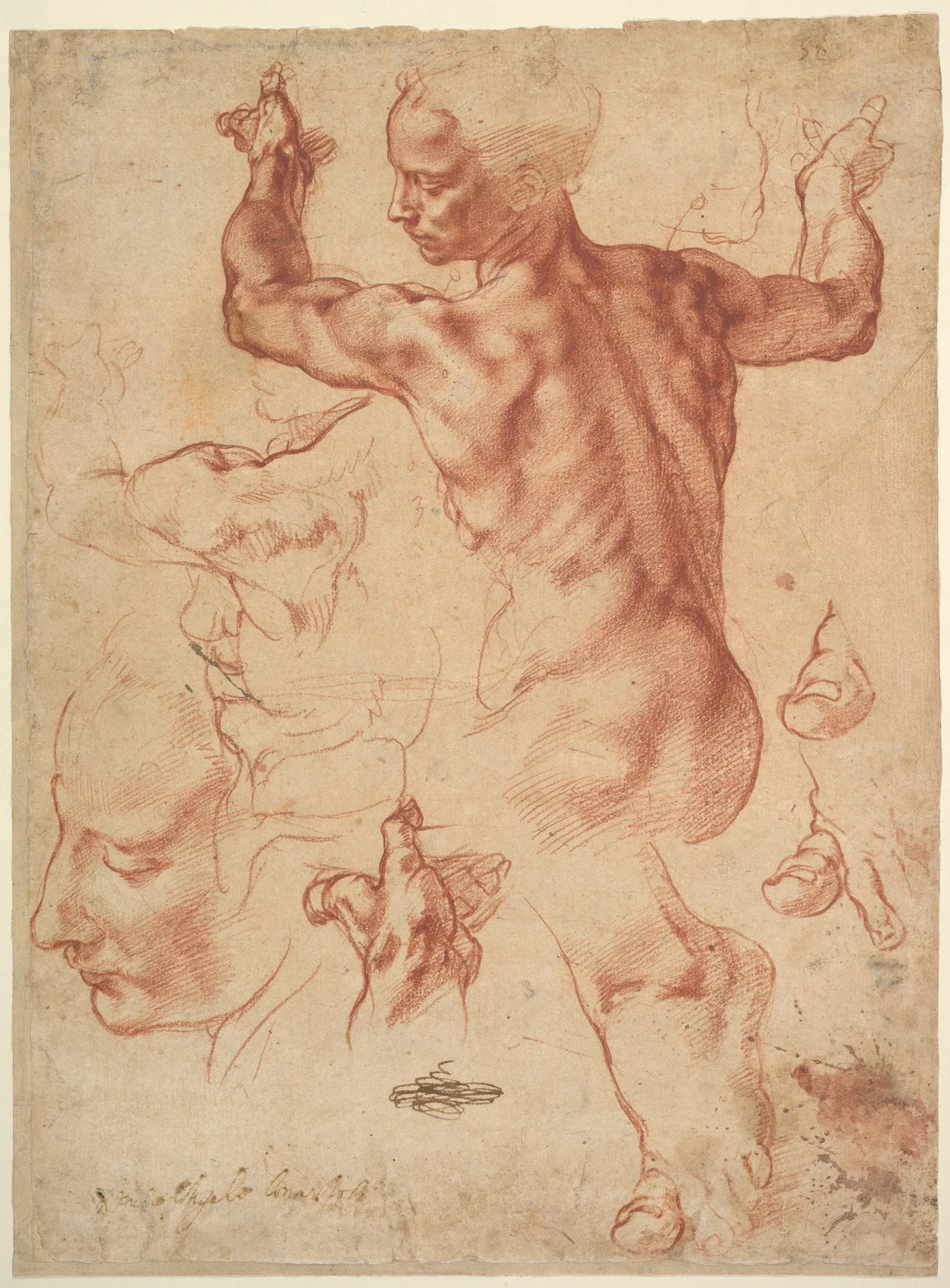
This is a preparatory sheet, not a photograph of the Sistine ceiling. The Met identifies a male model studied for the painted female sibyl. The artist is working out a pose, not claiming that model and final character are identical.
Follow the turn from the lower back to the shoulders, then inspect the repeated feet. Small changes in support can alter the whole body’s balance. The separate studies show decisions being tested rather than the effortless production of a perfect figure.
Michelangelo’s red chalk makes volume feel forceful, but the drawing is also selective: one area receives dense modelling while another stays an outline. Compare that choice with Leonardo’s soft face rather than reducing the artists to muscle versus intellect. There is more in our Michelangelo guide.
Raphael: action that remains readable
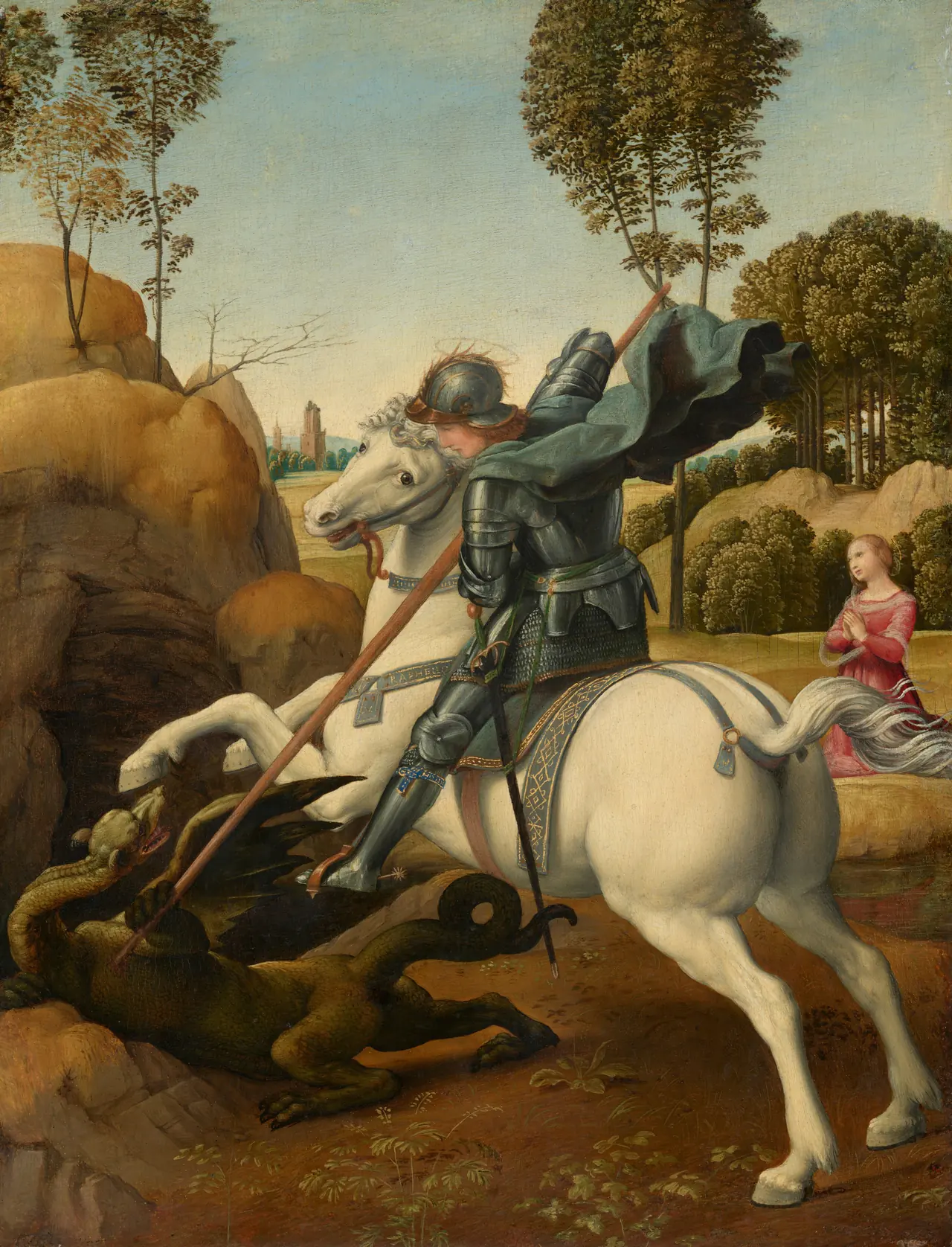
Balance does not have to mean stillness. Horse, rider and dragon twist in different directions, yet the lance connects them in one clear diagonal. The praying princess remains visible beyond the horse rather than getting lost among the combatants.
The landscape supplies breathing room around the struggle. Notice the horse’s pale body against the dark armour and foliage: differences of tone make the overlapping forms legible.
This is a small panel, only 28.5 centimetres high according to the NGA, not a vast battle mural. Its precision rewards close viewing. The lesson is not that Raphael avoids drama; he arranges it so we can follow it. Our Raphael guide keeps this autograph painting distinct from workshop works and later copies.
Bellini: light beyond the parapet
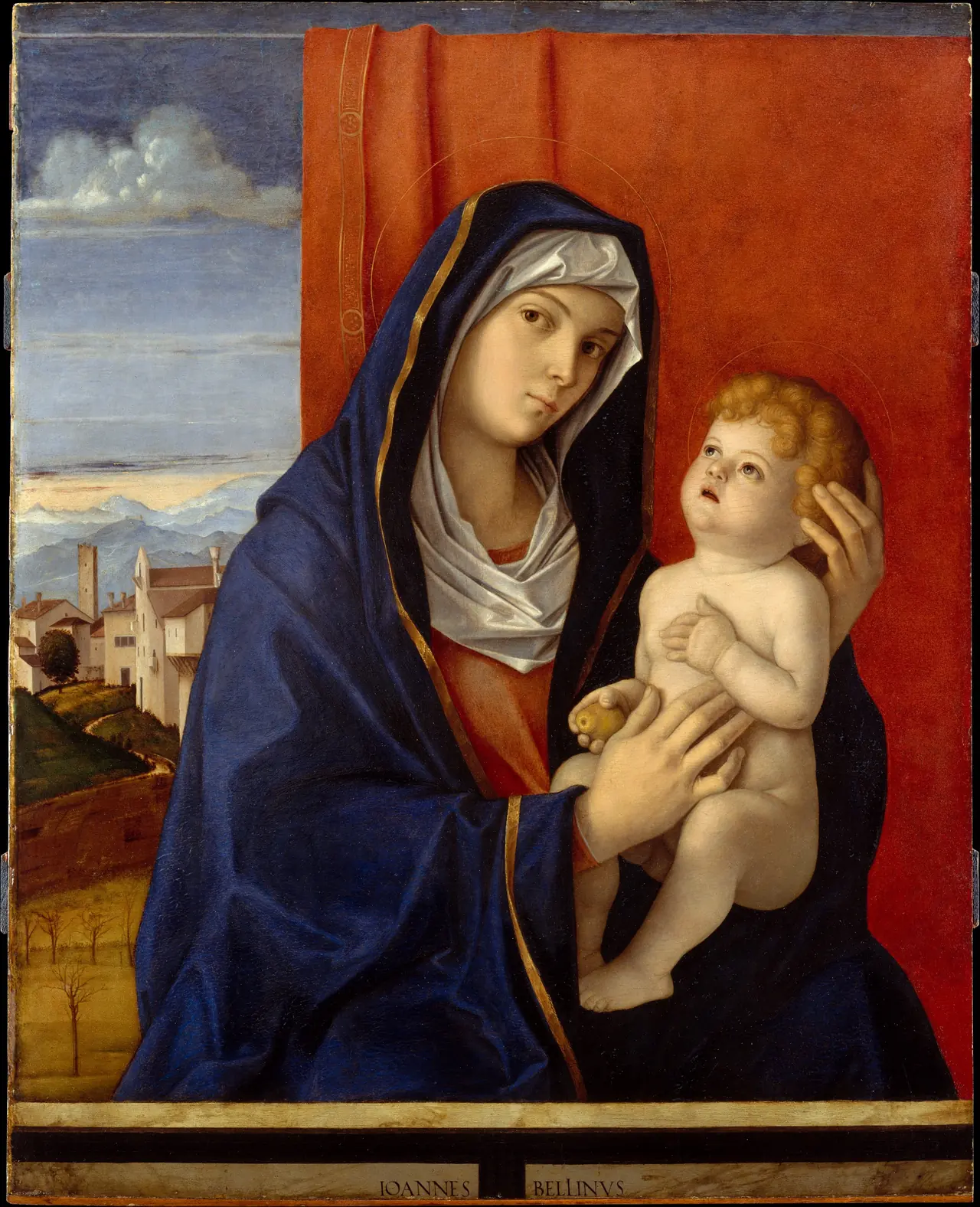
The stone parapet creates a boundary at the front, but Mary’s outward gaze reaches across it. A red cloth fills much of the background; on the left, its edge reveals buildings, distant mountains and a bright strip of dawn sky.
The Met interprets that landscape’s transition from dormant to green nature, together with the dawn, in relation to death and rebirth. The symbolism is not a reason to stop looking at the colour: warm red, deep blue and the pale horizon organise the painting before we identify their meanings.
Notice how much more space opens on one side than the other. Bellini creates a settled image without making its two halves match. His combination of close figures and distant light offers a Venetian answer to the problems explored by the Florentine and central Italian painters above.
Use the differences, not a single formula
Return to one detail: Botticelli’s sleeve, Piero’s cloak, Leonardo’s cheek or Raphael’s horse. Ask what would change if its edge were sharper, its pose turned, or the background removed. That small exercise makes “Renaissance style” more concrete than a list of famous names.
The collection directory is a separate browsing route, not a claim that these eight works are stocked together. Likewise, the images here have individual source terms; the age of an Italian artwork does not make every museum photograph unrestricted. Follow each credit if you plan to reuse a file.
Editorial record
About this article
- Author
- Publisher
- GeMarkt
- Published
- Reviewed
- Internal source & rights check. Conducted by GeMarkt Research Review. This is an internal editorial check—not independent peer review.
- Source standard
- Art history source standardPrioritises object records and research sources, distinguishes evidence from interpretation, and states material uncertainty.
Found a claim that needs checking? Report a factual error.