Is Michelangelo's Art Public Domain? What You Can Use
Michelangelo's established works are public domain, but a museum scan or photograph may be a separate rights question. Here is the practical test.
Rights check · reviewed
The short answer
Yes—for Michelangelo’s familiar, long-published paintings, sculptures and drawings. Their ordinary economic copyright terms expired centuries ago. The source image still needs a separate license and provenance check.
| What is being checked | Result | Why |
|---|---|---|
| European Union & United Kingdom | Public domain | Michelangelo died in 1564, centuries beyond the ordinary life-plus-70 term for artistic works. |
| United States | Clear for the long-published works covered here | The established examples covered here have documented, long publication histories. A newly discovered or formerly unpublished object still needs its own U.S. history checked. |
| Digital image or scan | Check the source file | The old artwork and a modern photograph, scan, restoration or website download are separate questions. Read the source record and its terms before reuse. |
This guide addresses established, institutionally catalogued works by Michelangelo. It does not automatically clear a newly attributed object or an unverified download.
This is a documented research summary, not legal advice. Copyright and moral-rights rules can vary by country and by the history of a particular work.
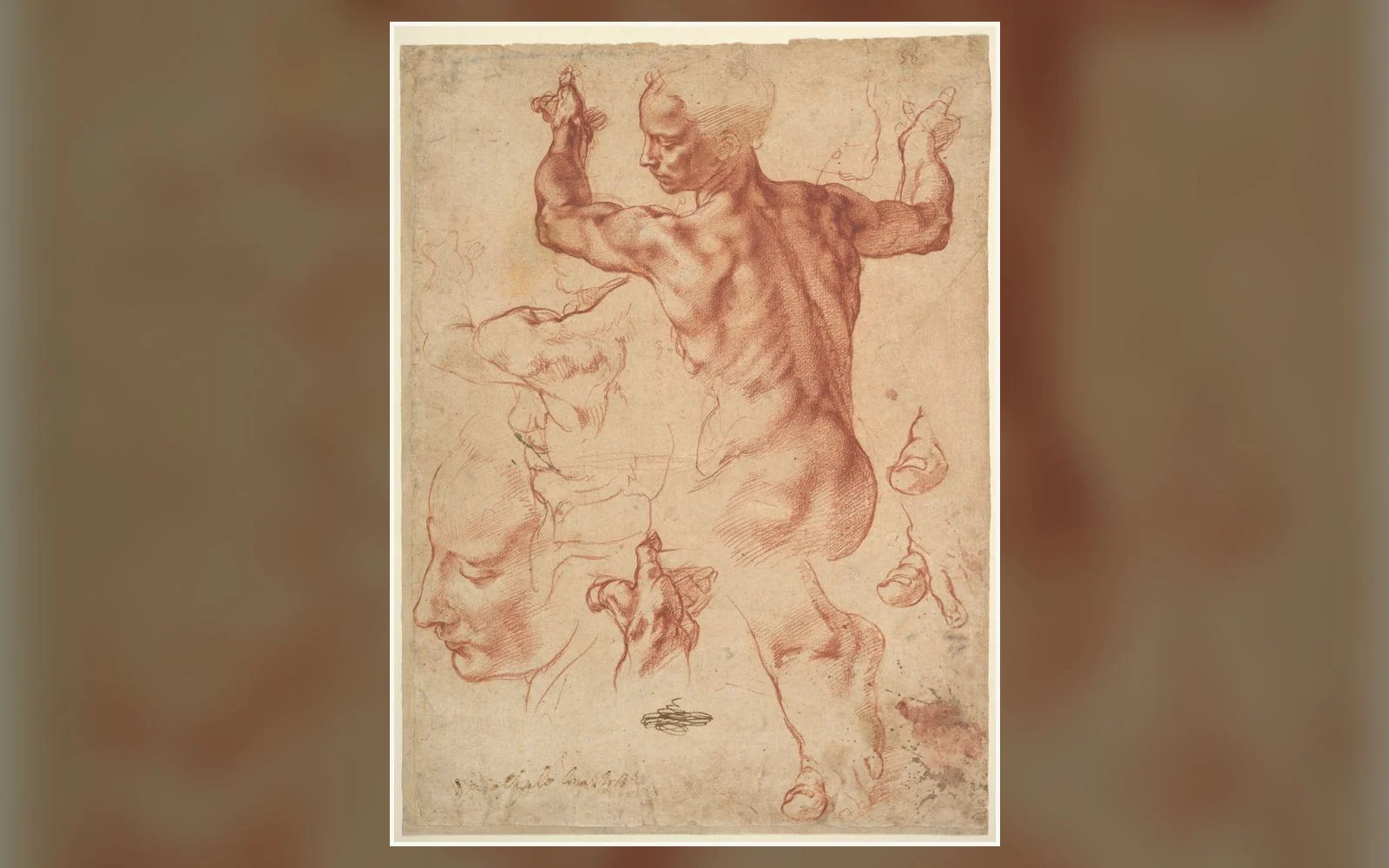
The artwork and the image are two different things
Michelangelo Buonarroti died in 1564. That makes the ordinary copyright question unusually clear: his established paintings, sculptures, drawings and architectural designs are centuries beyond the author-life-plus-70 term used in the European Union and United Kingdom.
The harder question begins after that answer. When someone downloads The Creation of Adam, they do not download a sixteenth-century fresco. They download a modern file made by a museum, photographer, archive or unknown uploader. That file can have its own record, terms, editing history and level of reliability.
So the useful question is not simply, “Is Michelangelo public domain?” It is:
- Is this genuinely a work by Michelangelo?
- Is the historical artwork out of copyright where it will be used?
- What is the source and rights statement for this exact digital file?
- Do the download site’s terms permit the intended use?
This is the same distinction explained in our broader guide, Public domain is not a free-for-all.
Why the United States still deserves a separate check
United States rules for old works are not expressed only as “life plus 70.” Publication history can also matter. The familiar Michelangelo works covered here were created and reproduced long before the current publication cut-off, but a newly discovered or formerly unpublished sheet should not inherit that conclusion merely because it was drawn in the Renaissance.
That is why GeMarkt records a named object and its history instead of applying one artist-level label to every file. The practical answer is clear for famous, long-published works; unusual discoveries need an object-level review.
The Sistine Chapel is the best example of the file problem
The Sistine Chapel ceiling and The Last Judgment are historical works by Michelangelo, and the artist’s economic copyright has long expired. But a current photograph, stitched panorama or high-resolution restoration is a new digital object. The Vatican Museums also publishes its own terms for material on its website.
This does not put Michelangelo’s frescoes back under copyright. It means that the safest reusable file should come from a source that clearly identifies both the artwork and the status of the supplied image. Copying the largest result from an image search cannot do that.
For this page we used Studies for the Libyan Sibyl from The Metropolitan Museum of Art. The object record identifies Michelangelo, dates the sheet to about 1510–11 and marks the downloadable image Public Domain. The Met’s Open Access programme permits unrestricted commercial and noncommercial use of eligible public-domain images. The caption above links directly to that record.
What our archive audit found
The GeMarkt production archive contains 105 processed Michelangelo masters. That number describes image preparation; it is not a claim that 105 source files have passed a publication audit.
This difference matters. A file can be beautifully restored, correctly sized and technically ready for print while still lacking a durable source trail. We therefore split production readiness from rights readiness:
- Processed means the master exists and has passed image work.
- Attributed means a current institutional record supports the artist and title.
- Source-cleared means the exact input file has a recorded rights statement or open licence.
- Publishable means all three checks agree and the final export has passed quality control.
Until that last state is reached, a processed master does not become a product or free wallpaper.
A safer shortlist for future releases
The Met’s Studies for the Libyan Sibyl is the first confirmed candidate because its object identity and Public Domain file are documented together. Other famous Michelangelo images can follow, but only after their exact masters are replaced or matched with equally clear institutional sources.
For each candidate we will retain:
- the institution and permanent object URL;
- the artist attribution exactly as the institution states it;
- the source-file URL and rights label;
- the download and commercial-use terms reviewed on that date;
- any restoration, crop or colour decisions made by GeMarkt;
- a duplicate and misfile check before publication.
Can you use Michelangelo commercially?
For an established Michelangelo work and a properly cleared source file, ordinary copyright generally does not prevent a poster, book illustration, educational resource or digital design. Other rules can still apply to a particular project: trademarks, privacy are usually irrelevant here, but local moral-rights, cultural-property, contract and consumer-law questions can differ by country.
The reliable path is short: identify the exact work, choose an openly documented file, preserve its source record, and describe the result honestly. That is slower than calling every search result “copyright free,” but it produces an archive that can support real products for years.
We will add Michelangelo wallpapers only after the individual masters complete that process. Until then, the free wallpaper library contains the artist sets already reviewed for release.
Sources and review method
We checked the artist chronology against museum records, treated each named jurisdiction separately, and recorded the provider policy for the image set. These sources support the legal framework and artist dates used above; the source file for any individual image still needs its own record.
- Studies for the Libyan Sibyl — The Metropolitan Museum of Art. Object identity, attribution, date, artist life dates and a Public Domain image record.
- Image and Data Resources — The Metropolitan Museum of Art. The Met makes images marked Public Domain available for unrestricted use under its Open Access programme.
- Directive 2006/116/EC, Article 1 — EUR-Lex. The EU term for an artistic work is the author’s life plus 70 years.
- How long copyright lasts — UK Government. UK guidance gives 70 years after the author’s death for artistic works.
- Circular 15A: Duration of Copyright — U.S. Copyright Office. The 2026 term table places works published before 1931 outside the maximum 95-year publication term.
- Certain Unpublished, Unregistered Works Enter Public Domain — U.S. Copyright Office. Older unpublished works have a separate U.S. term analysis; discovery and first-publication history can matter.
- Copyright notice: digital images, photographs and the internet — UK Intellectual Property Office. A digital image can require a separate rights and website-terms check even when its subject is old.
Editorial record
About this article
- Publisher
- GeMarkt
- Published
Found a claim that needs checking? Report a factual error.