GeMarkt Blog · Practical guide
Old Masters in a Modern Home
Use historical paintings in a contemporary room without turning it into a period set. Compare Vermeer and Rembrandt, frame choices, scale and light.

A historical painting does not need a historical room around it. A Vermeer reproduction can hang beside a simple chair; a dark Rembrandt can sit above a contemporary cabinet. Choose the subject, scale and surround deliberately, and the difference in age can be part of the appeal.
Here the focus is on reproductions of earlier European paintings, with two seventeenth-century examples. Owning an original or valuable historical print introduces separate conservation and security questions. A decorating suggestion for a replaceable reproduction is not an instruction to reframe, clean or modify an antique.
Choose a scene you want to live with
Look at the subject before the palette. A picture may contain colours that suit your sofa but tell a story you do not particularly want in that room. Religious scenes, portraits, still lifes and domestic interiors offer different things to think about; they are not interchangeable brown-and-gold rectangles.
Ask what keeps bringing you back. Is it a gesture, a bright sleeve, a room within the room or the relationship between two figures? Being able to name one appealing detail helps you choose a size and position that will let you see it.
You need not know the entire history before enjoying the image. Keep a useful object record or article to return to. But avoid giving the picture a convenient invented meaning—“this always symbolises prosperity”, for example—simply to make it sound suitable for a dining room.
Also consider who uses the space. A striking scene that you like in a study might not be the image you want directly above a child’s bed or behind every work video call. The subject remains present even when the frame coordinates perfectly.
Find a connection in Vermeer’s room
In Young Woman with a Water Pitcher, the woman stands between an open window and objects used for washing. Large pale areas sit beside dark blue clothing and the patterned table covering. The picture offers both a recognisable everyday action and plenty of quieter detail.
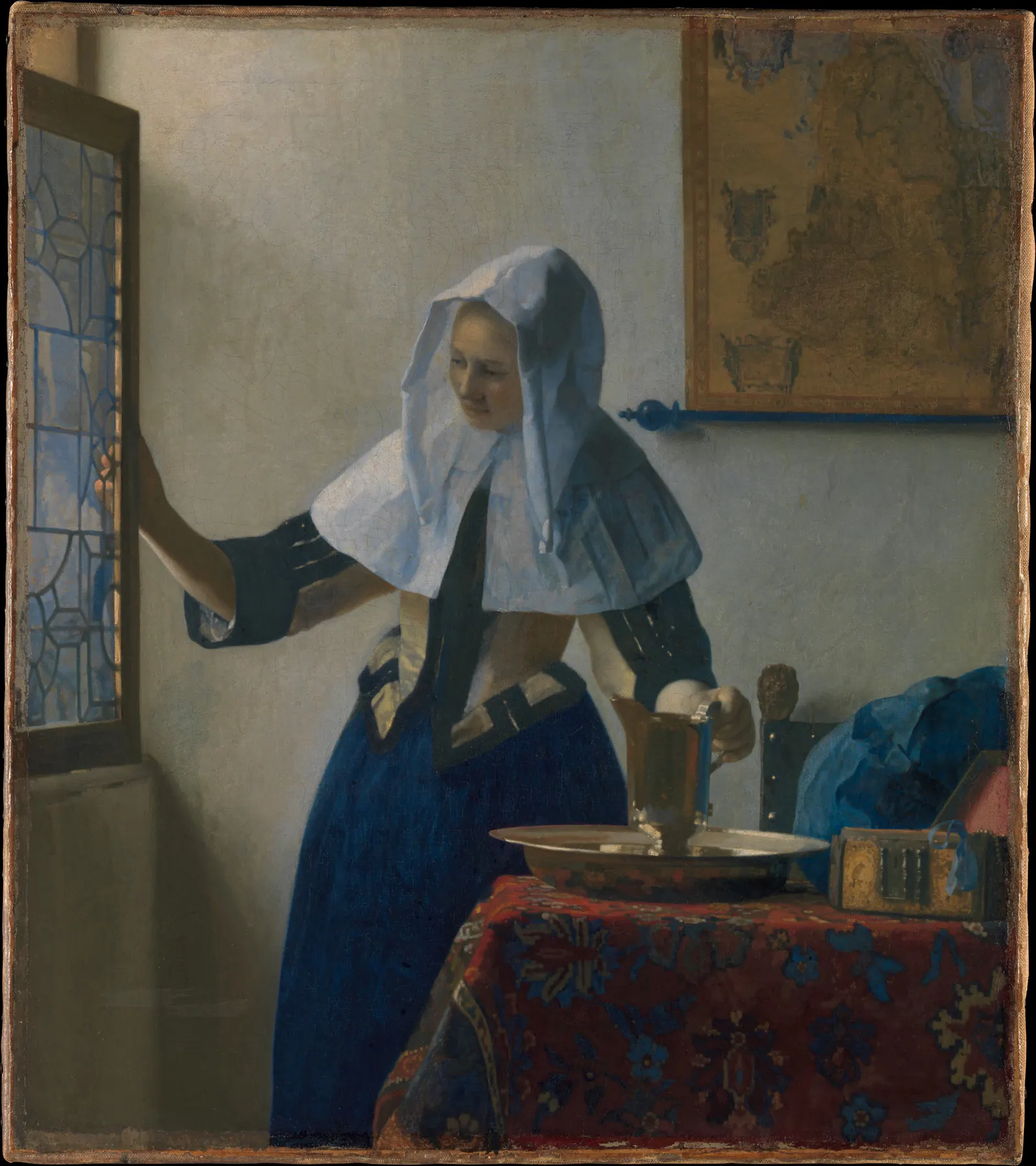
For a contemporary room, try connecting one visible feature rather than recreating the furnishings. A blue chair might echo the clothing, or a simple cabinet could sit beneath the picture’s straighter architectural lines. Neither needs to be an exact colour match.
You can also let the painting be the only richly patterned object in view. Its table covering already supplies intricate detail. Adding a matching patterned cushion, rug and curtain may make the room feel themed when all you wanted was one absorbing image.
This particular painting is relatively small: the Met records 45.7 × 40.6 cm. An enlarged reproduction offers a different encounter. That can be enjoyable, but the size of a screen preview should not make you assume the original was a huge wall-filling scene.
Give Rembrandt’s darkness a readable place
Rembrandt’s Aristotle with a Bust of Homer presents a much darker field. Bright passages concentrate on the figure, the sculpted head, sleeves and chain. The painting does not need a dark room to make those relationships interesting.

The Met relates the subject to reflection on fame and achievement. Even before reading that interpretation, you can follow the connection between the hand and the bust. That is a more useful starting point than treating the image as a generic “serious study” accessory.
Test a dark reproduction in the light where it will actually hang. If the figure disappears from your usual chair, a different position may help more than a larger frame. Reflections on glazing can also obscure dark passages; assess the real surface instead of judging a backlit phone screen.
Do not compensate by placing the print in direct sun or by inventing a brighter version of the painting. The Library of Congress describes light damage as cumulative and often irreversible. Choose suitable display conditions and read the reproduction’s care instructions.
Try the frame before changing the furniture
Compare three approaches: a restrained timber surround, a dark edge, and a more decorative gold-coloured frame. Any could work beside a simple cabinet. The question is how much of the visual attention you want the surround to claim.
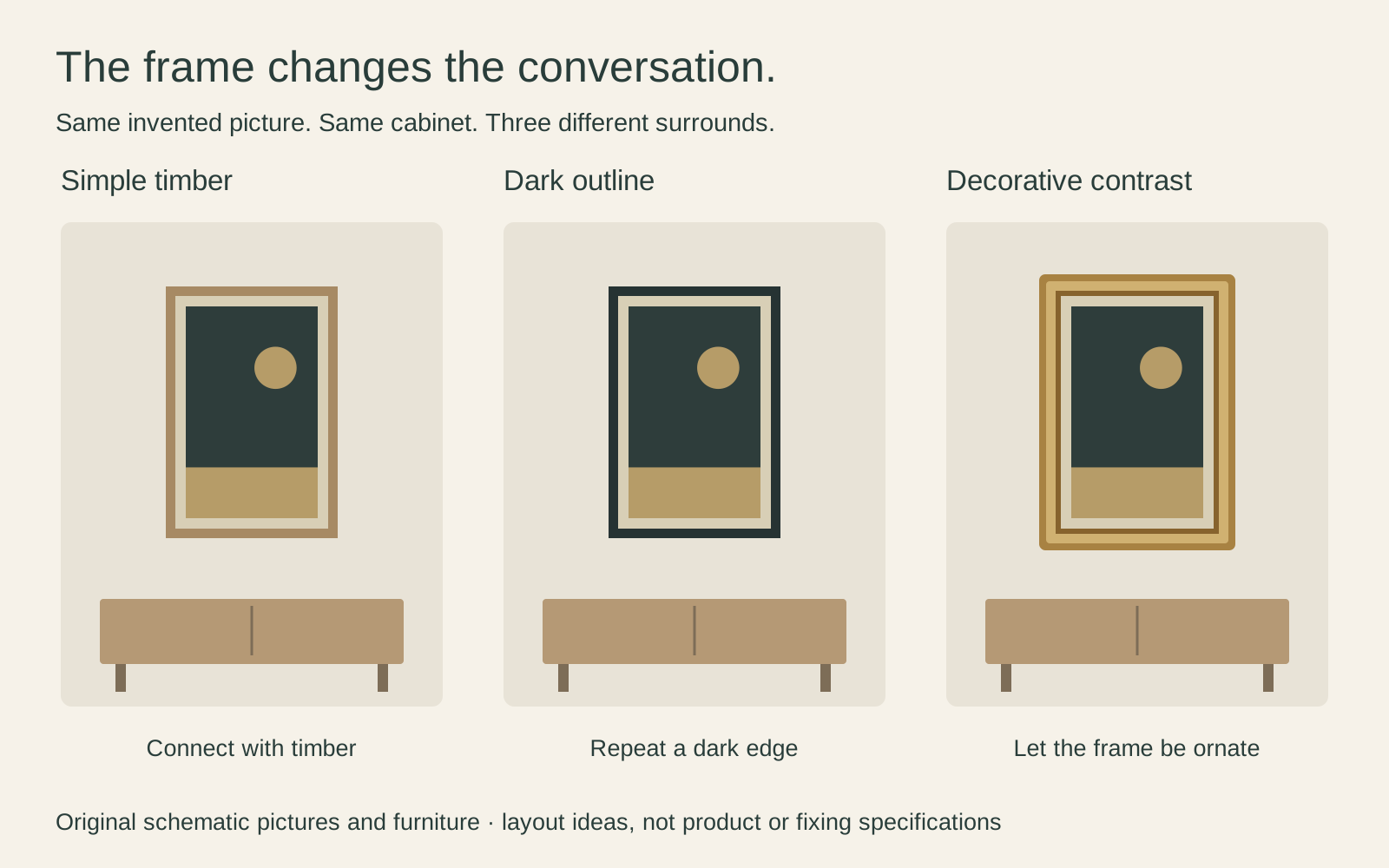
A decorative frame can be the one ornate object in an otherwise spare room. A plain frame can put more emphasis on the image. Neither choice requires claiming that the frame reproduces the artist’s original presentation.
Frame width matters as much as colour. A broad dark surround can make a quiet painting seem heavier, while a narrow gold-coloured edge may be relatively discreet. Try samples beside the actual print rather than choosing from isolated thumbnail photographs. The frame colour and material guide offers a more detailed comparison.
Decide how much the image should fill the wall
Avoid ordering the largest reproduction that fits just because the work is famous. A dense painting enlarged far beyond its source image’s useful resolution may reveal blur rather than rewarding detail. A smaller work can be more satisfying if you can approach it.
The two originals shown here are not similar in size: Rembrandt’s painting is 143.5 cm high, while Vermeer’s is 45.7 cm high. Equal-sized thumbnails conceal that difference. Your print size is a new decision, not an automatic restoration of the original experience.
Use the proposed outer frame dimensions for a paper wall template. If a mat surrounds the image, include it; the visible image may be noticeably smaller than the overall rectangle. Do not cut out a face or hand to force the work into a fashionable frame proportion. Our custom print size guide explains alternatives to unwanted cropping.
Check the particular reproduction
Different files of the same painting may vary in colour, contrast, visible margins and detail. Compare the seller’s preview with an identified museum record, but remember that your screen is not a calibrated promise of the print’s appearance.
Look especially at the parts you care about. Can you distinguish the fingers, fabric or face in the preview? Does the image include a photographed frame that would become printed content inside your physical frame? Has a crop removed part of the composition?
A reproduction also does not inherit the original painting’s surface. Printed texture is an image of paint, not necessarily raised paint you can feel. The canvas texture and depth guide separates the source painting, the printed image and the physical canvas support.
Keep the room contemporary and the art intact
Once the picture is in place, resist changing every nearby object to its period. You can keep your existing sofa, practical lamp and everyday books. A modest connection in colour or shape is enough if you like the relationship.
Leave the historical image itself alone. Artificial cracks, extra gold, removed figures or decorative text overlays are not necessary to make it belong in a present-day room. A different frame or position is usually a more honest way to test the arrangement.
If you want another picture later, choose it for a specific conversation: a related gesture, contrasting light or a different view of daily life. The Vermeer and Rembrandt comparison provides a place to start. A modern home can hold old images without turning either the home or the art into a costume.
Editorial record
About this article
- Author
- Publisher
- GeMarkt
- Published
- Reviewed
- Internal source & rights check. Conducted by GeMarkt Research Review. This is an internal editorial check—not independent peer review.
- Source standard
- Buying guide source standardSeparates measured or first-hand evidence from general guidance and keeps practical limits visible.
Found a claim that needs checking? Report a factual error.