GeMarkt Blog · Practical guide
Art Gifts Under $50
Compare three art gifts priced below US$50 before delivery and tax, with practical ways to choose a print, postcard book or useful art object.

A thoughtful art gift under $50 does not have to be a large framed picture. A small print, a postcard book or an everyday object featuring a favourite painting can be more useful than something that demands a new space on the wall. Choose the format around the person, then make the delivered total fit your budget.
The three retail examples below were checked on 13 October 2026 in US dollars. Their item prices are below $50 before delivery, tax or any extras. They are external museum-store examples, not GeMarkt offers or a promise that every address can receive them for less than $50. Check the selected item and final checkout total again before paying.
Make 50 the total not just the price tag
If $50 is your firm limit, a $49.95 item leaves almost nothing for postage or wrapping. Start with the destination and how you will give the gift. Handing it over yourself, sending it directly, and posting it again after wrapping can produce quite different totals.
A workable planning exercise is to reserve $10 for delivery, $5 for wrapping and $5 for tax or fees, leaving $30 for the item. These are hypothetical allowances, not quotes or a tax rate. Replace them with actual amounts. If shipping alone exceeds your allowance, change the item or buying route before ordering.
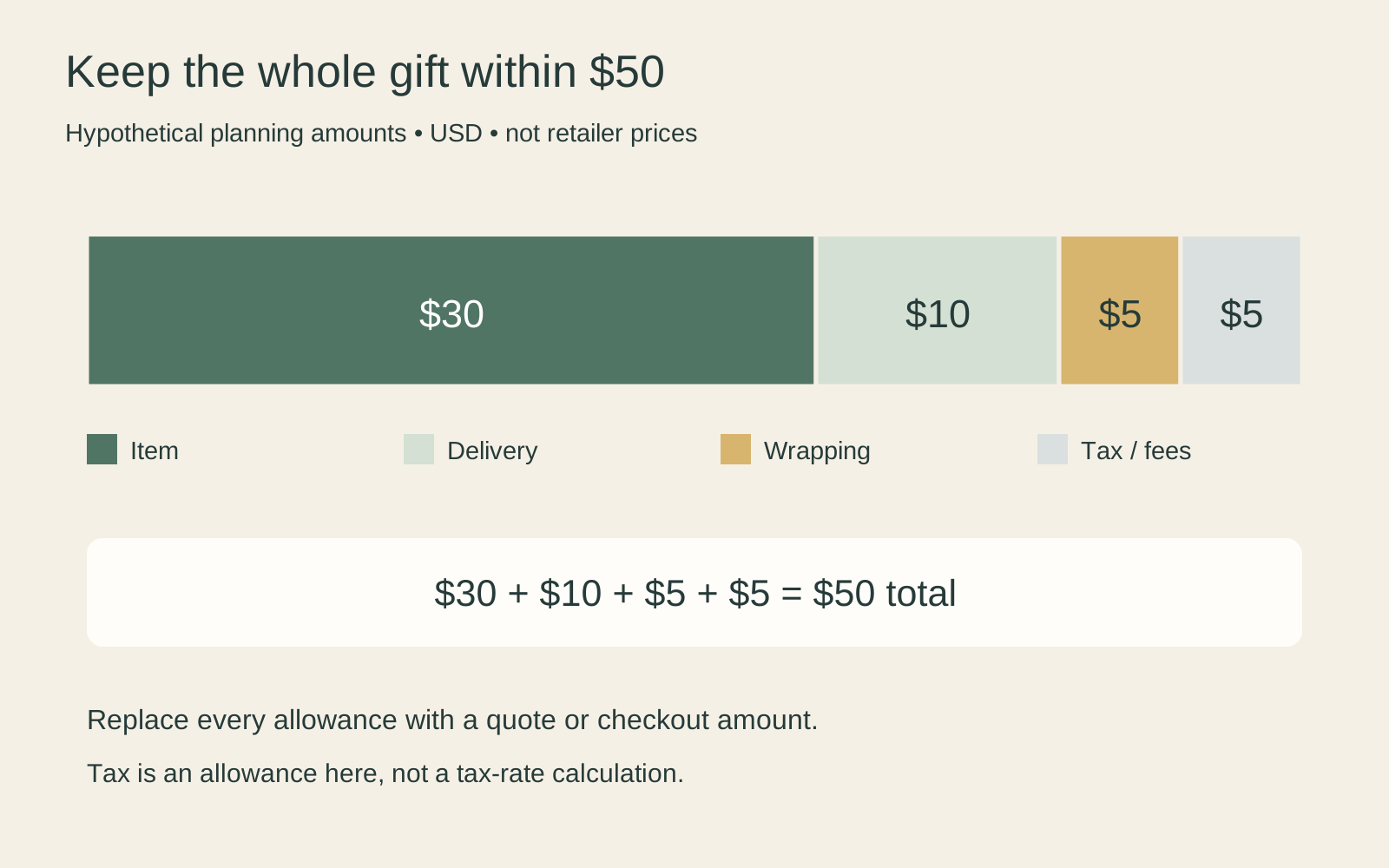
There is no obligation to spend every remaining dollar. A relevant card with a personal message can make a modest gift feel considered. Adding a second object just to reach a shipping threshold may increase what you spend rather than save you money.
Three dated options with different uses
These options serve different kinds of recipient. Prices are standard displayed item prices, without assuming a paid membership or a promotional code. The product pages offered purchase controls when checked; that is not a reservation of stock.
| Gift and seller | Item price in USD | What to decide before buying |
|---|---|---|
| Anna Bond New York Art Print, MoMA Design Store | $32.00, non-member | Unframed, 10 × 8 inches; shipping limited to the contiguous US |
| Highlights of the Art Institute of Chicago Postcard Book | $15.95 | A book of 31 postcards; choose it for browsing or sending rather than a large wall display |
| Claude Monet Water Lilies Mug, Art Institute of Chicago Museum Shop | $14.95 | An 11-ounce ceramic mug featuring a detail of the museum’s 1906 painting |
These are not like-for-like bargains. The print asks for a display decision; the postcard book offers many small images; the mug is an object for everyday use. Let that distinction narrow the choice before comparing the prices.
Choose a print when you know their taste
A print works well when you can connect the image to something the recipient actually likes: a city, a particular artist, or a picture you discussed together. The Anna Bond option above is based on a gouache painting of New York. It offers a specific place to respond to rather than asking you to choose a whole interior style.
The MoMA listing explicitly says unframed. Its 10-by-8-inch size does not mean a frame comes with it, and framing could take the finished gift beyond $50. If the recipient likes choosing frames, that may be welcome freedom. If they would see it as another errand, choose a different format or agree the presentation beforehand.
Do not secretly decide that they can pay the balance. Either present an unframed print as an intentional gift, or include the display costs in your plan. Our housewarming art guide helps when the new wall, rather than the artist, is the starting point.
Choose a postcard book when they enjoy discovery
The Art Institute’s book offers 31 postcards in a 6.5 × 4.75-inch format. It suits someone who enjoys moving between artists, recalling a museum visit or sending handwritten notes. That is a different pleasure from settling on one picture to display permanently.
You could write your message on a separate card and leave the book intact for them to explore. Do not remove your favourite image, mark pages or plan a gallery wall from the cards unless you know that is what they would enjoy. The recipient may value the collection as a small book.
A compact gift can also be easier to accommodate than a print chosen around an unknown wall. Size alone does not establish paper quality or make postcards substitutes for the printing specification of a larger reproduction. Buy this format for what it is, not because a count of images makes it seem equivalent to dozens of art prints.
Choose an art object when wall space is uncertain
The Monet mug translates part of a painting onto a useful object. It may suit someone who already enjoys that artist but has no wish to rearrange their walls. Ask whether they actually use and have room for another mug; a familiar artist does not make every format a good gift.
The seller identifies the pictured source as Water Lilies, 1906, and describes it as a detail. That matters: a wraparound product design need not reproduce the complete painting or another canvas from Monet’s long series. A small note can name the artist and work without calling the object an original artwork.
Check the current care instructions and packaging before choosing an object intended for daily use. A gift that only suits hand washing, for example, would be a poor match for someone who wants minimal upkeep. Follow the actual product’s instructions rather than a general assumption about ceramics.
Decide who will finish the gift
Imagine the first ten minutes after the wrapping comes off. Does the person have a finished object, or a decision about printing, framing, fitting or hanging? An unfinished step is not automatically a problem, but it should be welcome rather than concealed.
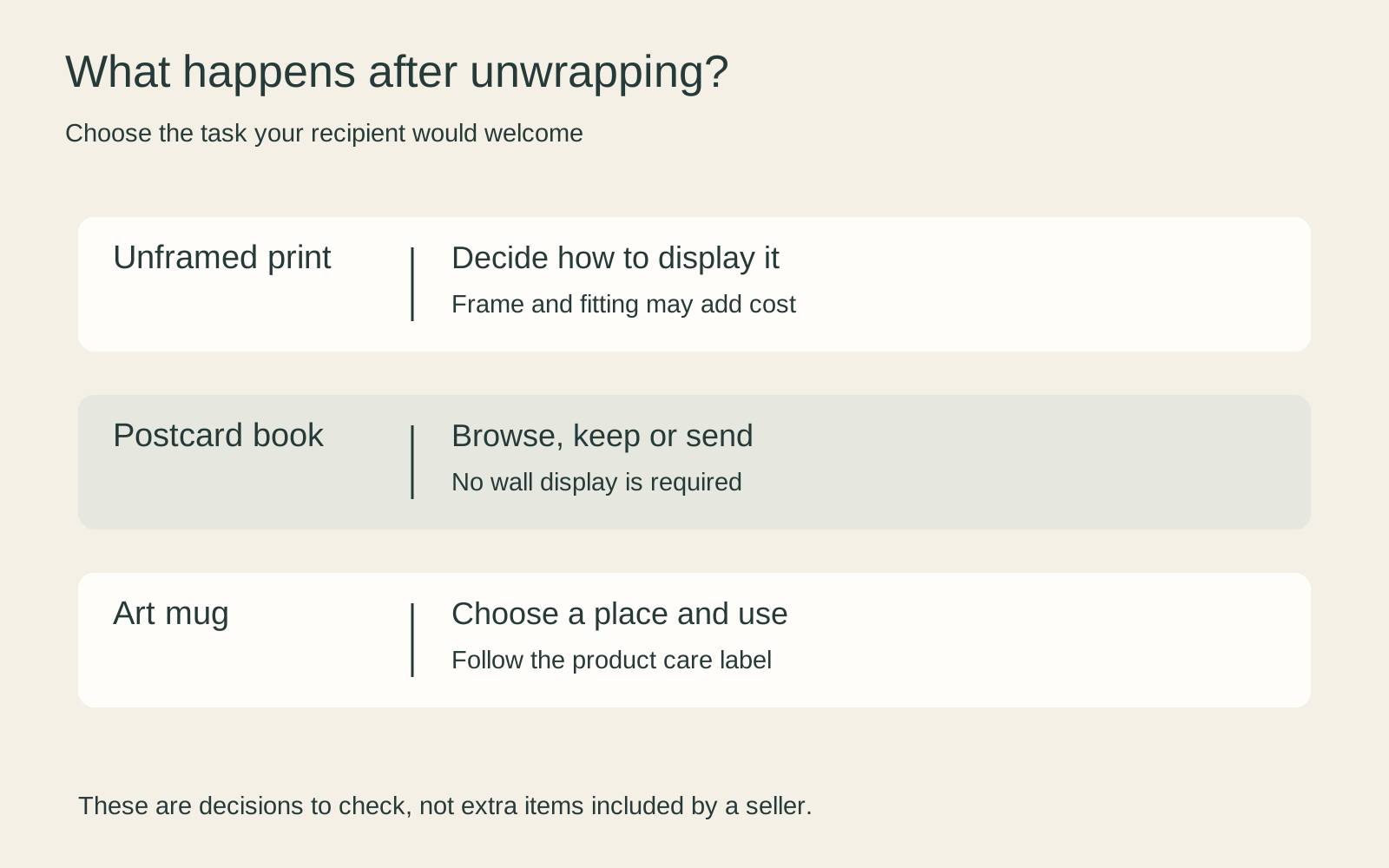
For a download, check that the licence permits the intended gift and decide who handles printing. A cheap file is not automatically a cheap finished picture. Our digital or physical print comparison explains the work each route leaves to arrange.
Add context without adding clutter
A short personal explanation often does more than elaborate packaging. “This reminded me of our museum visit” gives the image a connection to the recipient. A few accurate details about the artist can help them return to the picture later; a long compulsory lesson probably will not.
Choose one thing to include: a note, an existing article link or the artist and title written clearly. If you are uncertain about a story attached to the artwork, omit it rather than repeat an appealing myth. You can explore our artist-based gift ideas without assuming every featured image is sold in a particular format or price range.
Check the handover before checkout
Confirm the delivery address, expected timing, return conditions and whether the recipient can exchange the gift. The FTC recommends checking the complete cost and keeping the order and policy records. Those checks are especially useful when the buyer and recipient are different people. FTC online shopping guidance.
For an overseas recipient, verify that the seller ships that exact product there and check any additional charges. Do not assume a US-dollar product page means worldwide delivery. If the total or timing no longer works, a smaller locally available gift can be more considerate than an impressive item accompanied by a delay or an unexpected bill.
The budget is a useful limit, not a measure of affection. Pick a format the person will use, explain the connection, and leave them free to enjoy it in their own way.
Editorial record
About this article
- Author
- Publisher
- GeMarkt
- Published
- Reviewed
- Internal source & rights check. Conducted by GeMarkt Research Review. This is an internal editorial check—not independent peer review.
- Source standard
- Buying guide source standardSeparates measured or first-hand evidence from general guidance and keeps practical limits visible.
Found a claim that needs checking? Report a factual error.