GeMarkt Blog · Practical guide
How Much Should an Art Print Cost?
Judge an art print’s price by what is included, its dimensions and production evidence, then calculate the cost of the finished picture.

An art print should cost an amount you are comfortable paying for the specific object you will receive, not for the reputation of the painting on its own. A download, an unframed reproduction and an artist-made limited-edition print are different purchases. Their prices cannot usefully be judged against one universal “normal” amount.
For a reproduction you want to hang at home, start with the finished result. Decide the image size and presentation you need, calculate the remaining costs, and then compare sellers offering genuinely similar products. The useful question is not simply “Is this print expensive?” It is “What does this price include, and is the difference worth it to me?”
There is no single fair price for every print
First establish whether you are buying a printed object or a digital file. Then distinguish a reproduction of an existing artwork from an original print made through a printmaking process. A modestly priced reproduction can be exactly right for your room without becoming an original work by the historical artist.
Even within reproductions, a large paper sheet and a small framed picture solve different problems. One may give you more image; the other may arrive with more of the display work completed. Neither price can be compared fairly until you know the actual contents.
Our original, reproduction and print guide explains those terms. Sort out the category before using prices to judge quality. Otherwise, a discount on the wrong kind of object can look more attractive than an appropriate purchase.
Read real prices with their specifications
Two US retail listings illustrate why a price needs a description. Prices below were checked on 13 October 2026, in US dollars, before applicable shipping and tax; they are examples, not a market survey or GeMarkt prices.
MoMA Design Store listed Anna Bond’s New York Art Print at $32 for non-members. Its description specifies an unframed paper print, 10 inches high by 8 inches wide, based on a gouache painting. The store limits shipping of this item to the contiguous United States. MoMA product listing.
The National Gallery of Art Shop listed Monet’s The Japanese Footbridge, 11 × 14-inch print, at $20. Its text describes a white border and suitability for that frame size, but the materials line also names wood and glass. That inconsistency is a reason to ask exactly what comes in the package, not to announce that $20 buys a complete frame. National Gallery product listing.
These prices do not show that one print is overpriced or better made. They concern different images and specifications. They do show why a single number, detached from the selected product, is a poor buying guide. Recheck the actual listing and delivery destination before ordering.
Work backwards from the finished budget
Set your maximum for the picture as you intend to use it. If the limit is $100, reserve what you expect to spend on framing, delivery and applicable taxes before treating all $100 as available for the sheet.
Here is a hypothetical planning example: $35 for framing, $15 for delivery and $8 held aside for tax or fees leaves $42 for the print. Those are invented allowances, not supplier quotes. Actual tax may depend on both merchandise and delivery, so replace the allowance with the checkout total before buying.
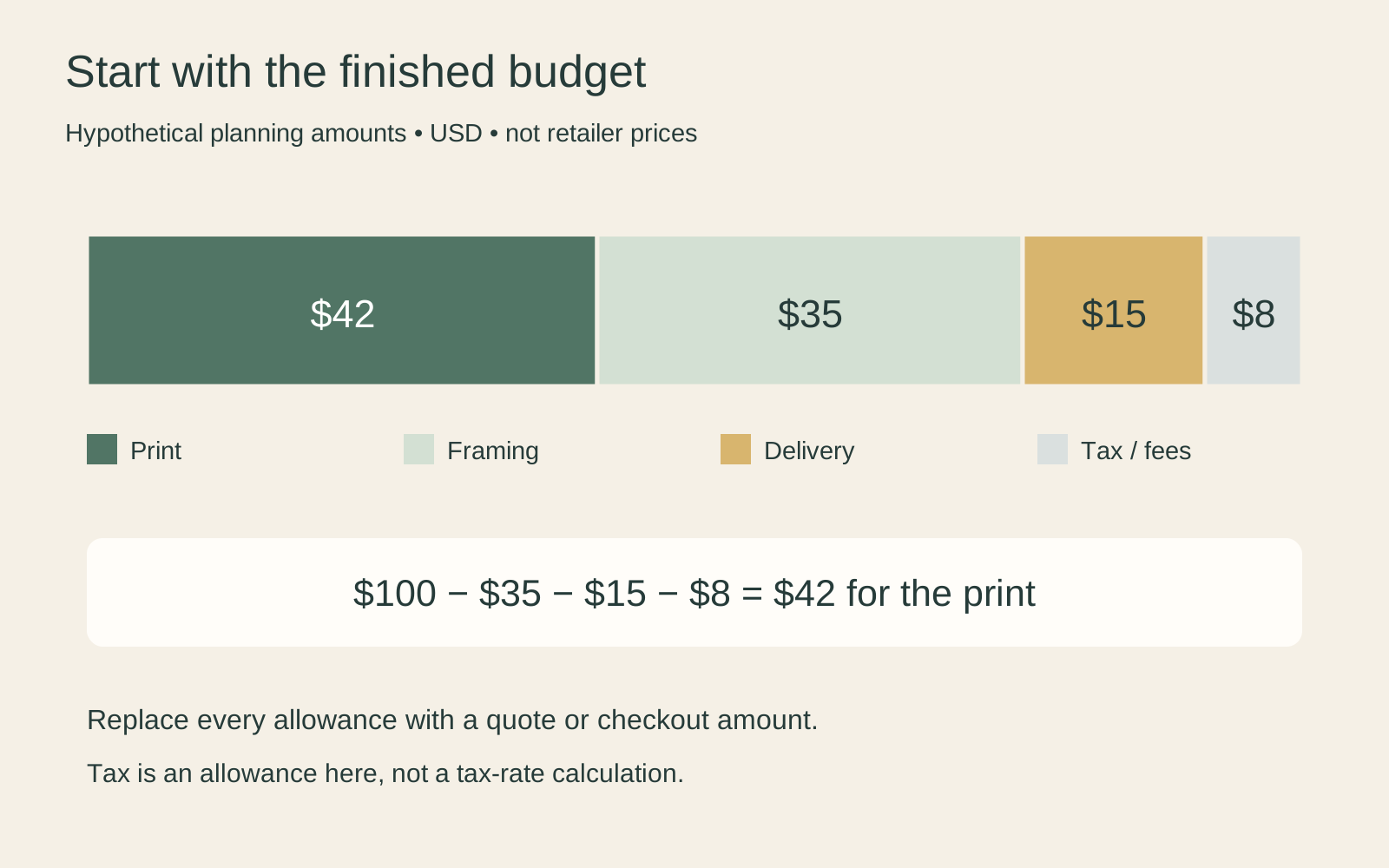
This approach lets you change the plan deliberately. You could choose a smaller print, use a suitable frame you already own, or save for the larger picture. What you should avoid is discovering after delivery that the missing frame costs more than you can spend.
Compare the image size not only the sheet
Write down three dimensions separately: the paper sheet, the printed image and the finished frame. A generous white border can be appealing, but it means a smaller image occupies a larger sheet. A mat adds another surround; it is not automatically part of the printed paper.
If one seller offers an 11 × 14-inch sheet and another advertises an 11 × 14-inch image, you may not be comparing equal picture sizes. Ask whether the image is cropped to fit or kept in its original proportions. A lower price does not compensate for losing a detail you particularly wanted.
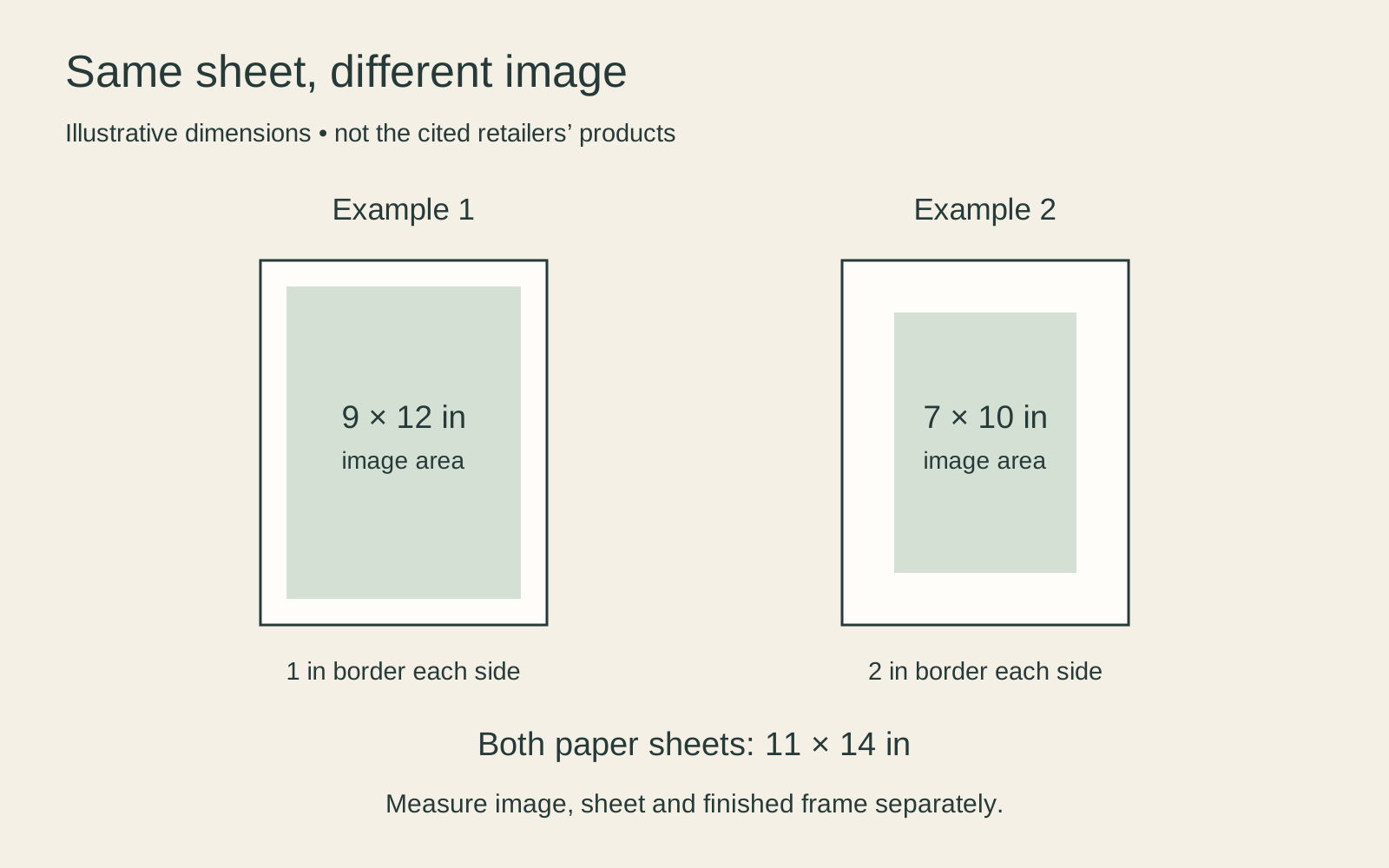
Use our print sizes in inches and centimetres to translate measurements. A quick paper outline on the wall can also help you decide whether you need more image area or simply a different position.
Ask what the extra money buys
A higher price becomes easier to assess when the seller names the difference: a particular paper, a different printing process, a larger image, a chosen frame or documented work on the source file. Ask for the specification that matters to you rather than collecting reassuring adjectives.
“Premium” and “museum quality” do not tell you the paper’s identity, the ink system or the framing construction. If longevity matters, look for named materials and evidence relevant to that combination. Do not convert an impressive label into a guaranteed lifespan. Our guide to archival and museum-quality claims explains what to ask.
Study a detail view as well as the room mockup. Check whether fine lines remain distinct and whether the crop matches the artwork you expected. A supplier’s digital preview cannot prove the colour of a delivered print; if the purchase is important or expensive, ask whether a sample is available and what it costs.
Separate edition value from decoration
An edition number can describe a limited run, but it does not by itself establish the print’s process, authorship, scarcity across other sizes, or likely resale value. Ask who made and signed it, what the edition includes, and whether other versions exist.
You may happily pay more to support a living artist, own a particular printmaking impression or buy from a gallery whose work you value. Those are different reasons from finding a clear reproduction for a wall. Do not assume that a more expensive edition must be the sensible decorating choice.
For an ordinary reproduction, focus on the image and object you want to keep. Treat claims about future investment value as a separate question, not a reason to exceed your household budget.
Leave room for framing and delivery
Framing is more than the visible moulding. Mat, backing, glazing and fitting can all change the quote. The Library of Congress describes preservation framing as a complete assembly of suitable materials and methods, including separation between the paper and glazing. That is a specification to discuss, not a claim that every inexpensive reproduction needs the most costly package. Library of Congress framing guidance.
Compare the total charge for your address and check the return conditions. The FTC’s consumer guidance recommends checking additional costs and keeping the seller’s promises and purchase records. A low item price is not a saving if a fee or unsuitable return term changes the decision. FTC online shopping guidance.
Decide what you would pay again
Before buying, finish this sentence: “The extra money buys me…” A clear answer might be a useful size, a paper you prefer, a frame that fits, or an original print by someone you follow. If the answer is only a vague quality label, ask another question or compare another listing.
Choose the least expensive option that meets your actual requirements, or pay more for a difference you genuinely value. You do not need to maximise the size, buy the highest specification, or spend the entire budget. A print you can afford, display and enjoy is a better outcome than a supposedly perfect sheet that never leaves its packaging.
Editorial record
About this article
- Author
- Publisher
- GeMarkt
- Published
- Reviewed
- Internal source & rights check. Conducted by GeMarkt Research Review. This is an internal editorial check—not independent peer review.
- Source standard
- Buying guide source standardSeparates measured or first-hand evidence from general guidance and keeps practical limits visible.
Found a claim that needs checking? Report a factual error.