GeMarkt Blog · Practical guide
Frame Colour and Material Guide
Choose a frame finish that suits the picture, then compare wood, aluminium and composite construction, usable depth and the complete framing package.

Choose the frame’s colour with the picture, then check the construction separately. A black frame might be painted wood, finished aluminium or a wrapped composite. Similar photographs do not establish that those products have the same depth, fittings or capacity.
For a straightforward starting point, compare a slim black finish, a light finish and a wood tone around the same image. Once one looks promising, ask what the actual product is made from and whether its internal space accommodates the complete framing package. This guide concerns frames for works on paper; stretched canvas needs its own fitting details.
Separate the finish from the construction
The finish is what you see: colour, sheen, texture and any decorative pattern. The construction is the material underneath, the shape of the moulding, its joints and the hardware that holds the contents. “Oak look” describes an appearance unless the seller also identifies the material. “Gold” may describe a colour rather than a metal leaf.
The diagram keeps the image and frame appearance deliberately similar. It is a reminder to ask for information that a front photograph cannot provide, not a comparison of which material is best.
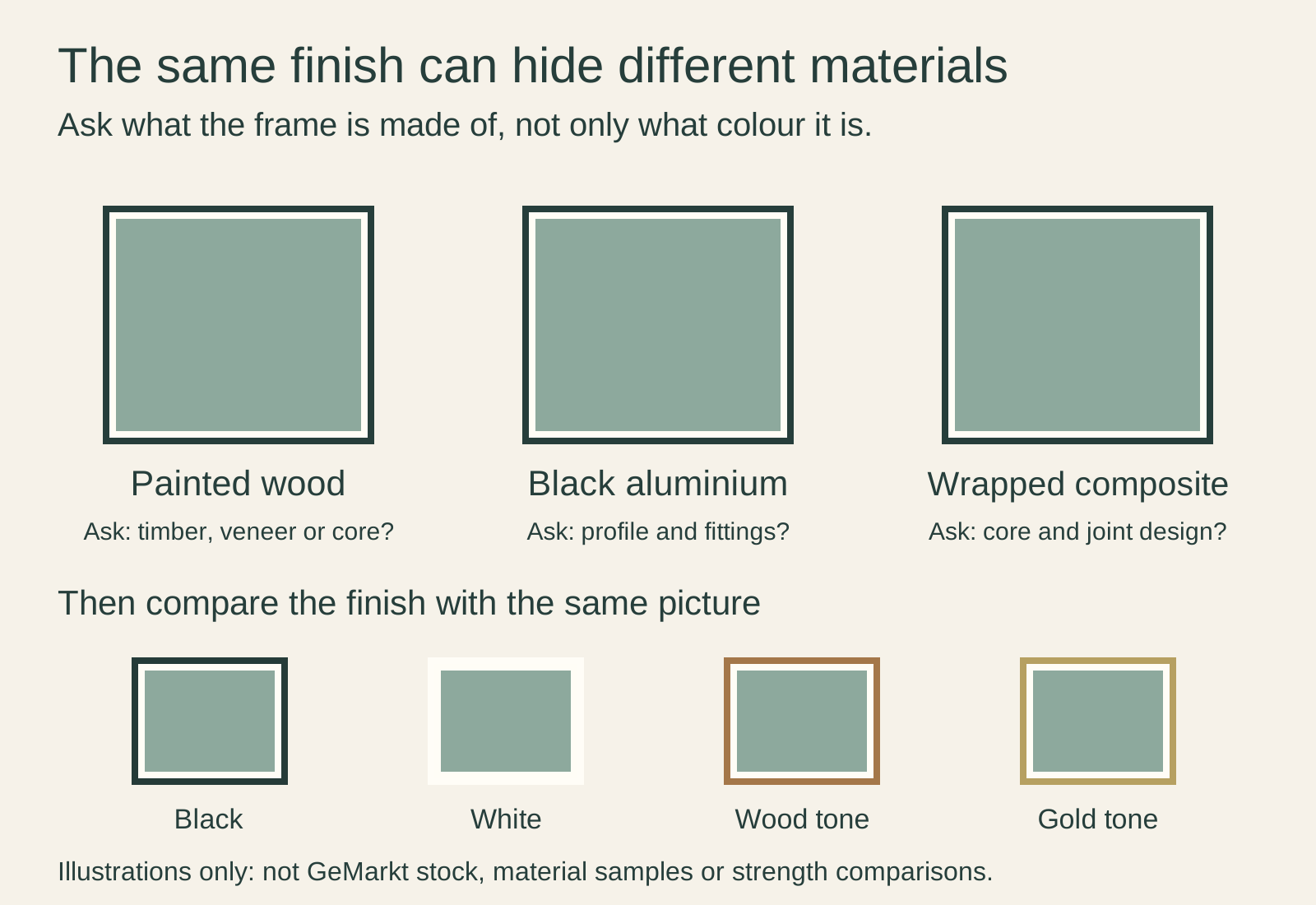
Ask for a corner sample or a clear photograph of the side and back if the construction is unclear. The important answer is the specification of the frame you would receive, not a general description of the seller’s range.
Compare colour with the picture first
A black outline is a useful trial beside a high-contrast print. It may also draw more attention to the perimeter than you want around a very pale image. A light frame can reduce that contrast against a light wall, while a wood tone introduces another colour and texture to compare with the picture. A gold-tone finish is worth trying with both old and modern imagery; the subject’s date does not prescribe the frame.
These are design suggestions, not fixed associations. Put the sample beside the image rather than choosing it only because it matches the dining table. If the image has a mat, include that in the comparison: it separates the frame from the print and can change how the combination reads.
Also compare a narrow and a wider moulding in the same finish. You may discover that the colour was right but the broad border was the distraction. In a group, try repeating one finish before replacing every frame. Different frames do not have to become identical to look intentional together.
Ask what wood or composite means
If the listing says wood, ask whether it is solid timber, a veneer over another core or a wood-based board. If it says composite, ask what the core is and how the surface is finished. Those are useful buying questions, not a ranking that automatically puts one construction above another.
Check the corners, the finish around the inside edge and the proposed method of retaining the contents. If you will change the print later, ask how the back opens and whether replacement fittings are available. Do not assume that a frame designed for one thin poster will accept a deeper matted package.
Wood is not a conservation specification by itself. Frame Destination notes wood’s lignin content and discusses isolating the frame’s inner recess from the artwork package. That concerns the complete framing method; it does not mean every wooden frame is unsuitable. Frame Destination: Picture Frames FAQ.
Judge metal frames by their profile
Aluminium frames can have very different shapes and internal capacities. Nielsen’s ML1101 has a listed face width of 5/16 inch, an overall height of 3/4 inch and a rabbet of 7/16 inch. Its ML10014 shadow-box profile lists a 3/8-inch face, 2½-inch height and 1⅝-inch rabbet. These are manufacturer examples showing variation within one material, not GeMarkt products or recommendations. Nielsen ML1101, Nielsen ML10014.
The distinction matters if you like a slim front edge but need room behind it. Do not reject or choose all metal frames on the assumption that they have one standard depth.
Look at the joining and retaining system as well. Follow the instructions for the exact model rather than transferring an assembly method from a different frame. A description such as “lightweight” is not enough to establish a safe finished installation.
Check three dimensions, not one
Face width is the visible width of the moulding when you look at the frame from the front. Overall depth describes how far the moulding extends from front to back. Rabbet depth is the usable internal recess into which the contents fit. A deep-looking frame can still have less usable space than you expect.
The Canadian Conservation Institute advises choosing a recess that accommodates glazing, mat and backing without forcing the layers tightly together. Ask the framer to check the complete stack, not just the thickness of the print. CCI: Framing Works of Art on Paper.
The advertised fitting size and the exterior size are separate too. For a gallery wall or a tight space between shelves, request the finished outside width and height. Our print-size guide explains why the paper and the framed object should not share an ambiguous measurement.
Look beyond the front of the frame
Once the appearance is settled, ask about the mat, backing, glazing and attachment method. An attractive border cannot compensate for unsuitable materials touching the paper. Nor does a premium finish tell you whether the print can later be removed without damage.
Get the finished weight and the hanging instructions for the assembled product. The Canadian Conservation Institute’s display guidance stresses choosing supporting hardware for the frame and its load. The appropriate wall attachment also depends on the wall construction; do not select a hook purely from a photograph of a similar frame.
For a valuable original or fragile work, discuss preservation needs with a qualified framer or conservator before shopping by finish alone. A replacement reproduction and an irreplaceable drawing do not warrant the same casual assumptions about mounting.
Make a short, specific order
A useful order identifies the finish, underlying material, exact profile, fitting size, finished exterior size, glazing, mat and backing. It also states whether the print is being supplied already mounted and how the completed frame will hang.
If the seller cannot explain one of those details, resolve it before buying. You do not need an elaborate frame for every picture. You do need a clear description of the one you have chosen, with enough room for the contents and a finish you have judged alongside the art.
Editorial record
About this article
- Author
- Publisher
- GeMarkt
- Published
- Reviewed
- Internal source & rights check. Conducted by GeMarkt Research Review. This is an internal editorial check—not independent peer review.
- Source standard
- Buying guide source standardSeparates measured or first-hand evidence from general guidance and keeps practical limits visible.
Found a claim that needs checking? Report a factual error.