GeMarkt Blog · Essay
Baroque Painting: Caravaggio and the Drama of Light
Recognise Baroque painting through eight works, from Caravaggio's charged encounters to Rubens's movement, Rembrandt's civic theatre and Vermeer's quiet light.


A pointing finger, a lifting shoulder, a thin stream of milk: Baroque painting can make a small action hold an entire picture together. Strong light helps, but darkness alone does not explain the effect. The interesting question is what the light asks you to notice—and where the painting seems to place you.
These eight works introduce seven painters across different settings. Some were made for churches, others for a royal court, a civic company or a domestic interior. Looking at them together reveals both the usefulness and the limits of “Baroque”: Rubens’s surging bodies and Vermeer’s still kitchen belong to the same broad period, not to one identical visual formula.
Baroque is not another word for dark
The V&A describes Baroque as a later name for a diverse style associated with seventeenth- and early-eighteenth-century Europe and its wider connections. Movement, theatrical effects and an appeal to the senses are useful clues. They are not requirements that every painting must satisfy.
Catholic religious commissions were important, but the label also covers work made in very different political and religious circumstances. A Dutch milkmaid is not a disguised version of an Italian altarpiece. Ask who might have looked at a picture and where, as well as what it looks like now on a screen.
This introduction concentrates on visible decisions. The broader Baroque worlds guide explores patrons, cities and circulation in greater depth.
Three questions before you read the label
First, find the brightest passage. Does it illuminate the main character, an important hand, or someone unexpectedly far from the centre? Second, follow the direction of movement. A diagonal can make a body appear to push into our space; a repeated curve can connect several people.
Third, ask what happens just before or after the painted instant. Are we seeing an accusation, an effort about to succeed, or an action continuing without interruption? The answer need not be a dramatic story. Stillness becomes compelling when small changes are easy to imagine.
Keep those questions separate from a judgement about realism. A convincing sleeve or face can belong to a carefully staged invention, not a record of people caught unawares.
Caravaggio: a concert built for looking
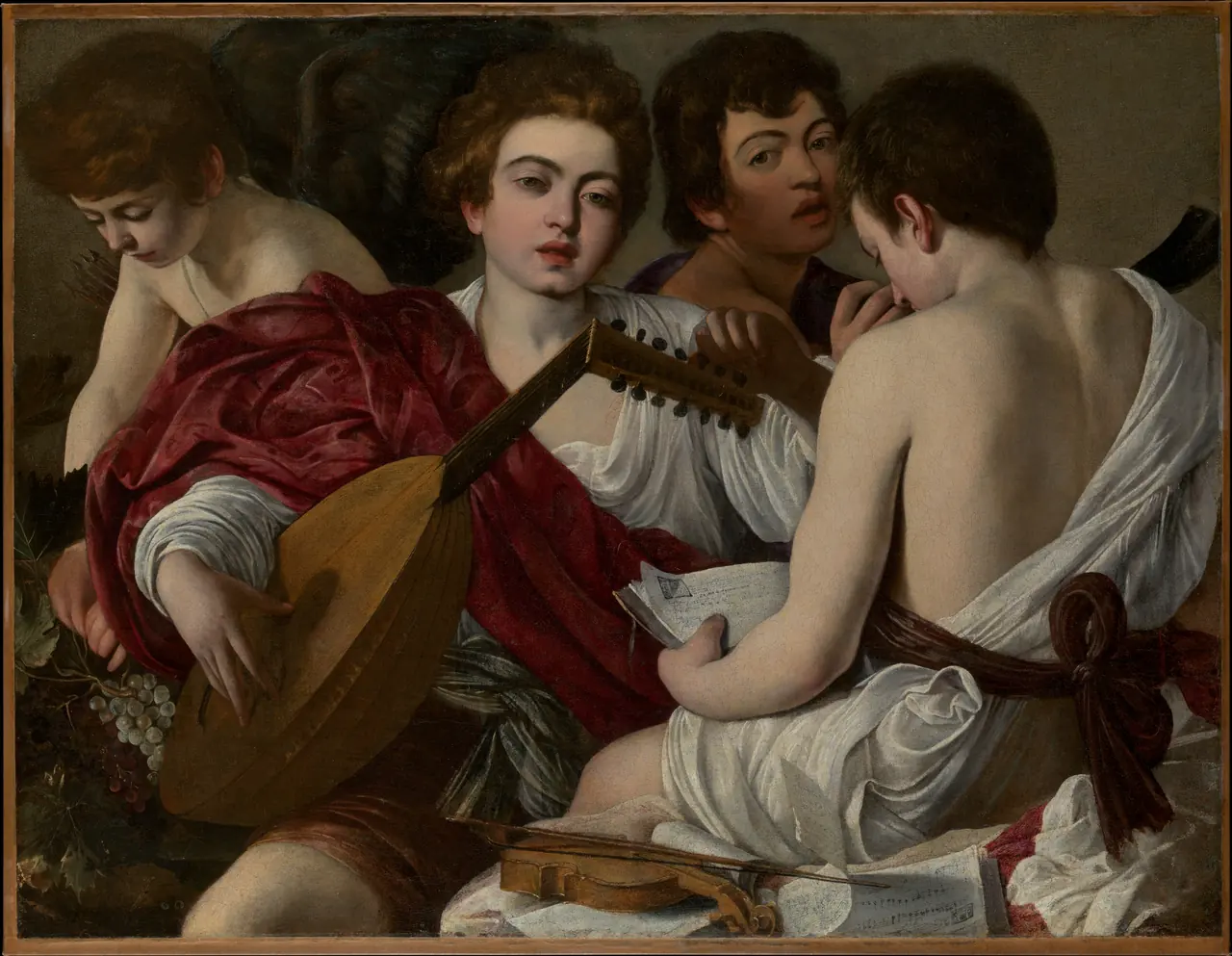
The figures seem almost within reach. Bare shoulders, a lute and loose clothing overlap so closely that the room beyond scarcely matters. Pale skin and cloth emerge from darker passages without turning the whole scene into a black background.
At the left, wings identify Cupid. That detail changes the reading: the Met presents this as an allegory of music, not a snapshot of an ordinary rehearsal. The musicians’ apparent closeness does not mean they all posed together in these positions.
Notice how the lute’s curve gathers attention among the competing bodies. Caravaggio creates intimacy through arrangement as well as observation. His artist guide provides a wider view of the paintings and their different image sources.
Caravaggio: accusation in a pool of light
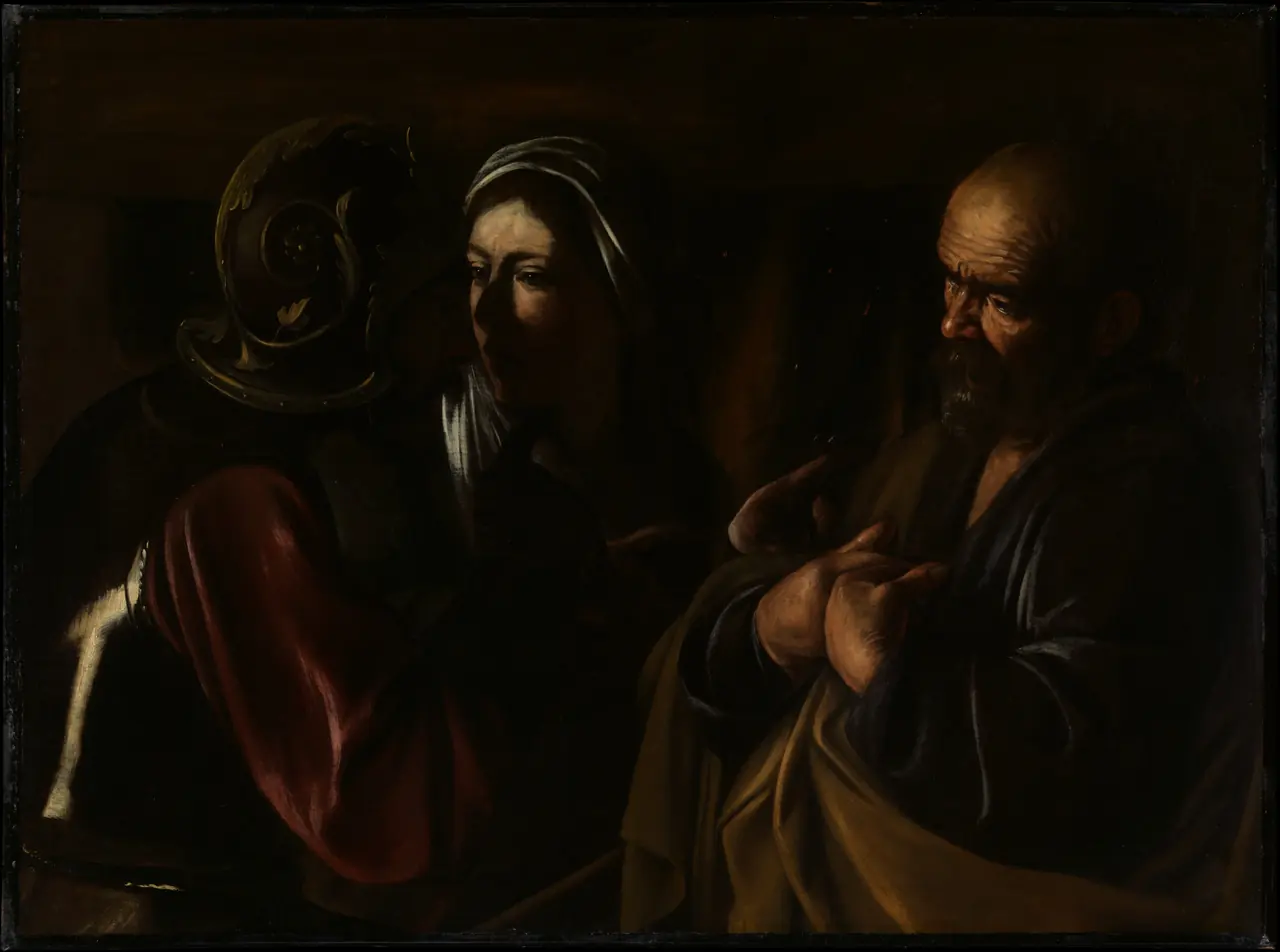
Now light makes the encounter feel compressed and uneasy. Peter’s forehead and hands are more legible than the surrounding room. The pointing gestures reach into the space between the three figures, making an accusation visible before we know its subject.
The Met connects the three accusing fingers—one from the soldier and two from the woman—with Peter’s three denials of Christ. That is a specific narrative reading, not a general code in which every painted finger means denial.
Compare the sparse setting with The Musicians. Both bring bodies forward, but the late painting offers fewer distractions. The darkness withholds information; it does not simply decorate the story with an ominous colour scheme.
Artemisia: the space between two people
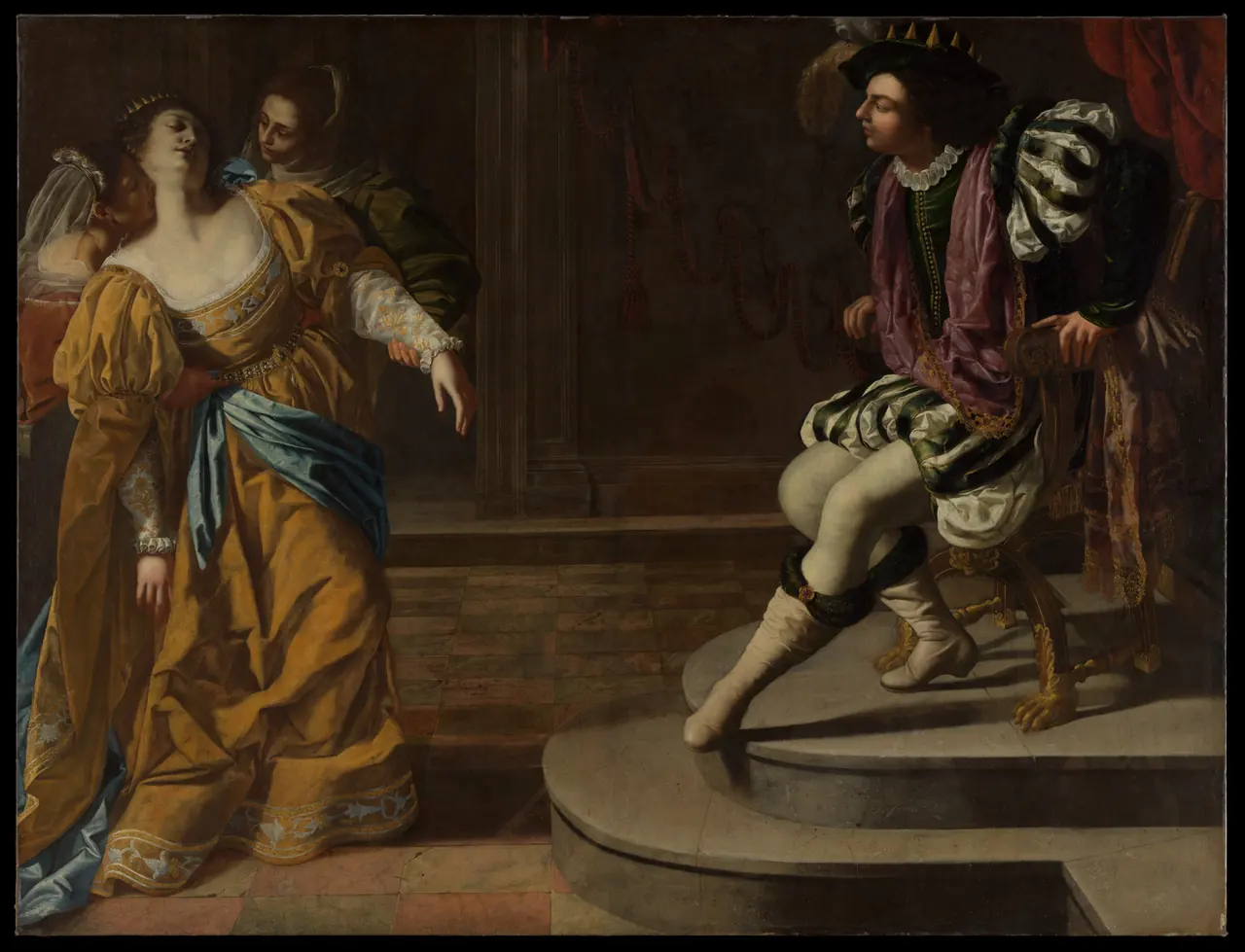
Esther’s body loses its upright support while the king begins to rise. The empty interval between them matters as much as either figure: it separates her collapse from his response, making us mentally connect the two actions.
In the biblical story, Esther approaches the king to prevent the killing of her people. The Met notes the theatrical character of Artemisia’s treatment. Rich costumes and a raised platform help stage the encounter; they should not be treated as documentary evidence of dress in ancient Persia.
Look at the gold fabric against the darker setting and the different angles of the attendants’ arms. Light remains important, but the drama here also depends on colour, spacing and the effort of supporting another person’s weight.
Rubens: follow the weight
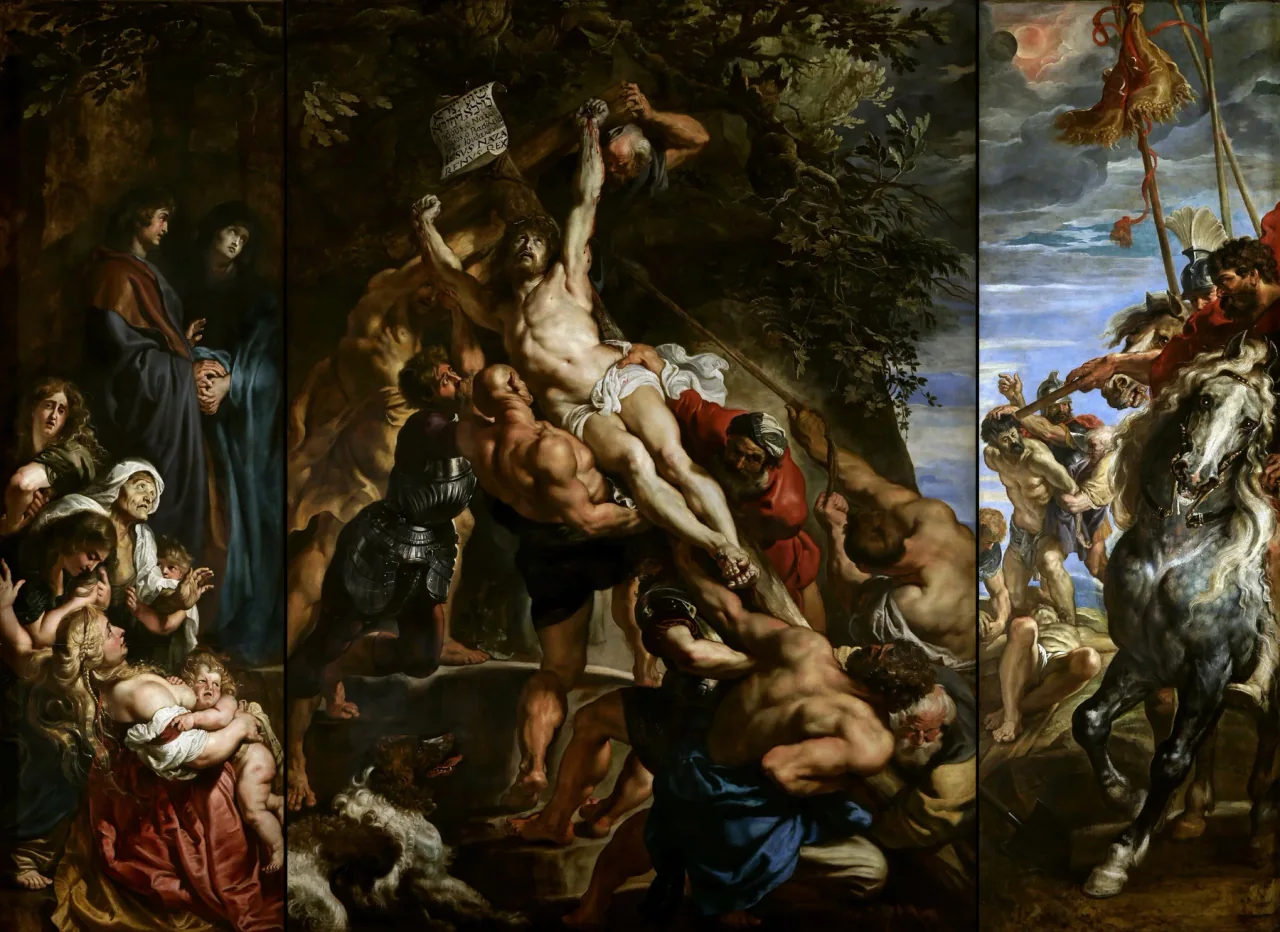
The diagonal cross makes the central panel feel unstable. Bent backs, gripping hands and planted legs show what it takes to raise it. Christ’s pale body forms a long, illuminated line through that collective exertion.
The Antwerp account of the painting places it originally in Saint Walburga’s Church. The complete triptych shown here preserves the lateral groups: mourners on one side and mounted figures on the other. The central struggle is part of a wider scene, not a self-contained fitness study.
Step back from individual muscles and follow the movement across all three panels. Rubens lets bodies carry force through the composition, while different reactions prevent the crowd from becoming a single repeated gesture.
Velázquez: who is looking at whom?
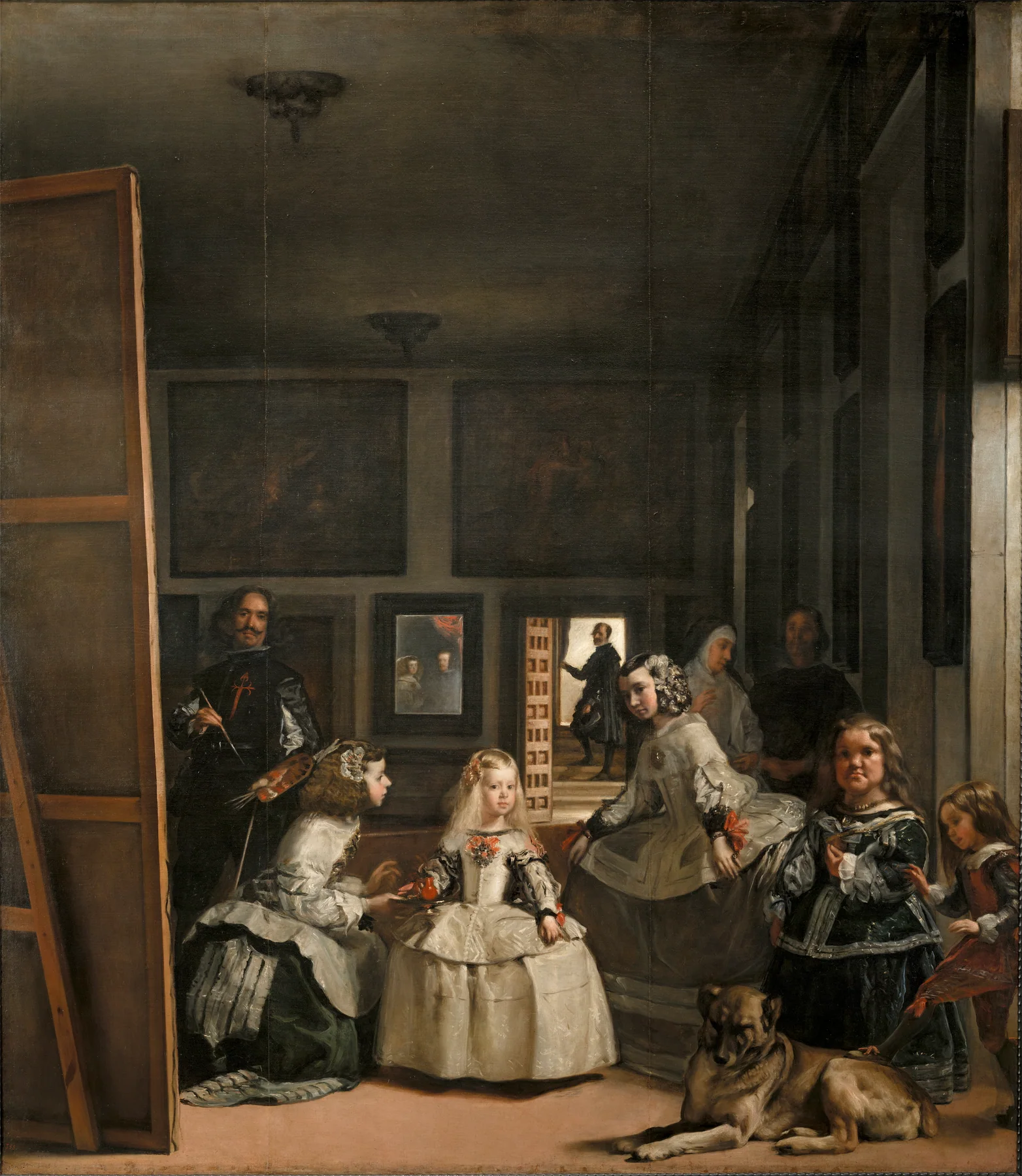

The pale dress of the Infanta first catches the eye, but the room keeps drawing us farther in. A distant doorway opens a bright rectangle; the mirror beside it contains the king and queen. Velázquez stands at the left, facing out from his large canvas.
The Prado identifies these royal figures and their attendants. Their arrangement raises a question about our position rather than providing one undisputed diagram of what everyone sees.
This is drama built through attention. People look in different directions, and the mirror offers another kind of image within the image. Instead of a single explosive gesture, the painting makes looking itself feel like an event.
Rembrandt: a company starts to move
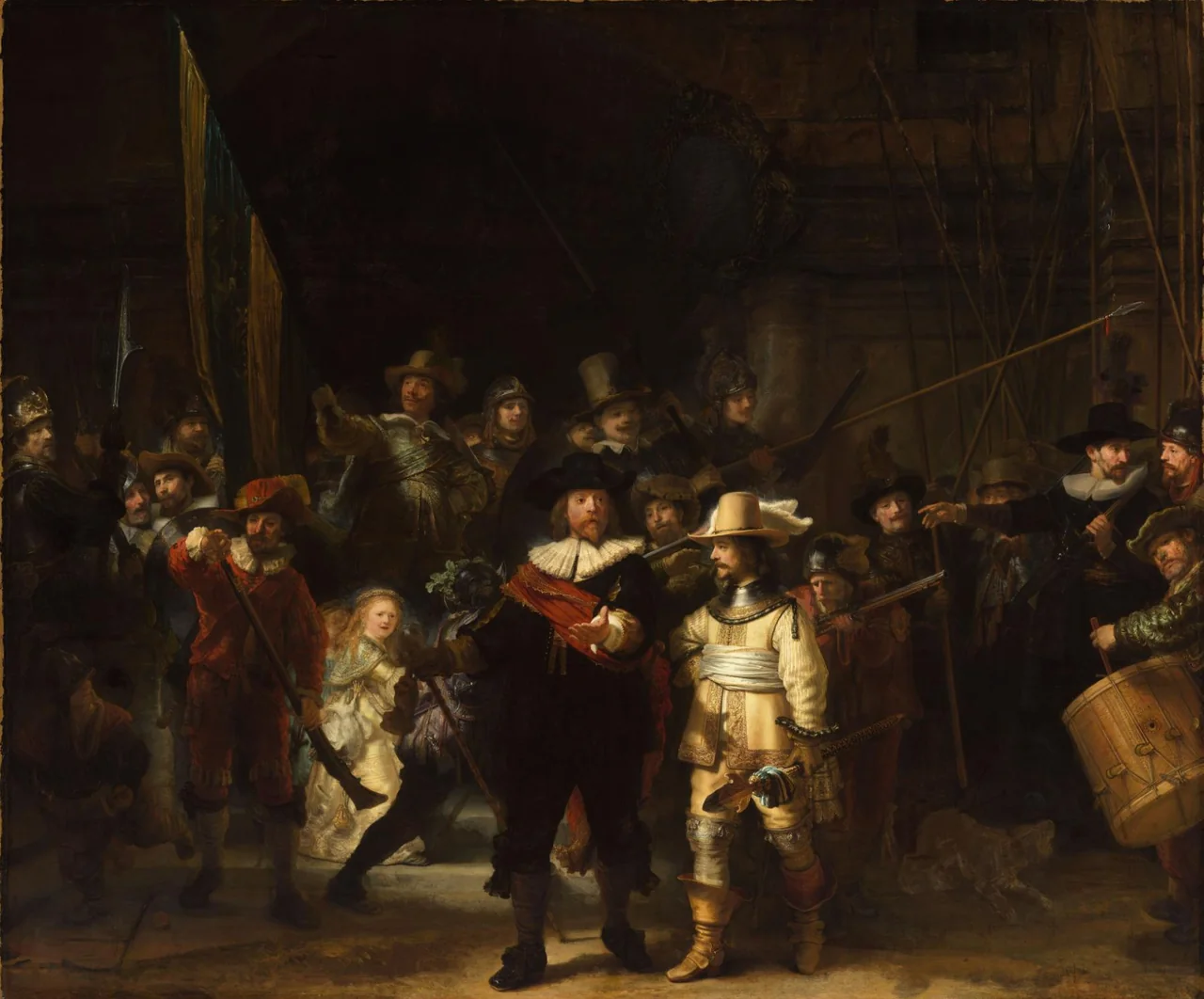
A group portrait need not line everyone up in equal light. Rembrandt gives this civic company a sense of getting underway. The captain’s extended hand, the lieutenant’s pale costume and the overlapping weapons divide attention across several actions.
The illuminated girl is particularly conspicuous among the darker figures. Not every bright patch corresponds to the most prominent adult in the foreground. Light arranges relationships rather than behaving like an evenly distributed camera flash.
The reproduction shows the museum’s surviving painting, not a digital reconstruction of its removed edges. For the specific work and file, use the Night Watch guide; the Rembrandt guide places it among his other subjects.
Hals: the party is a performance
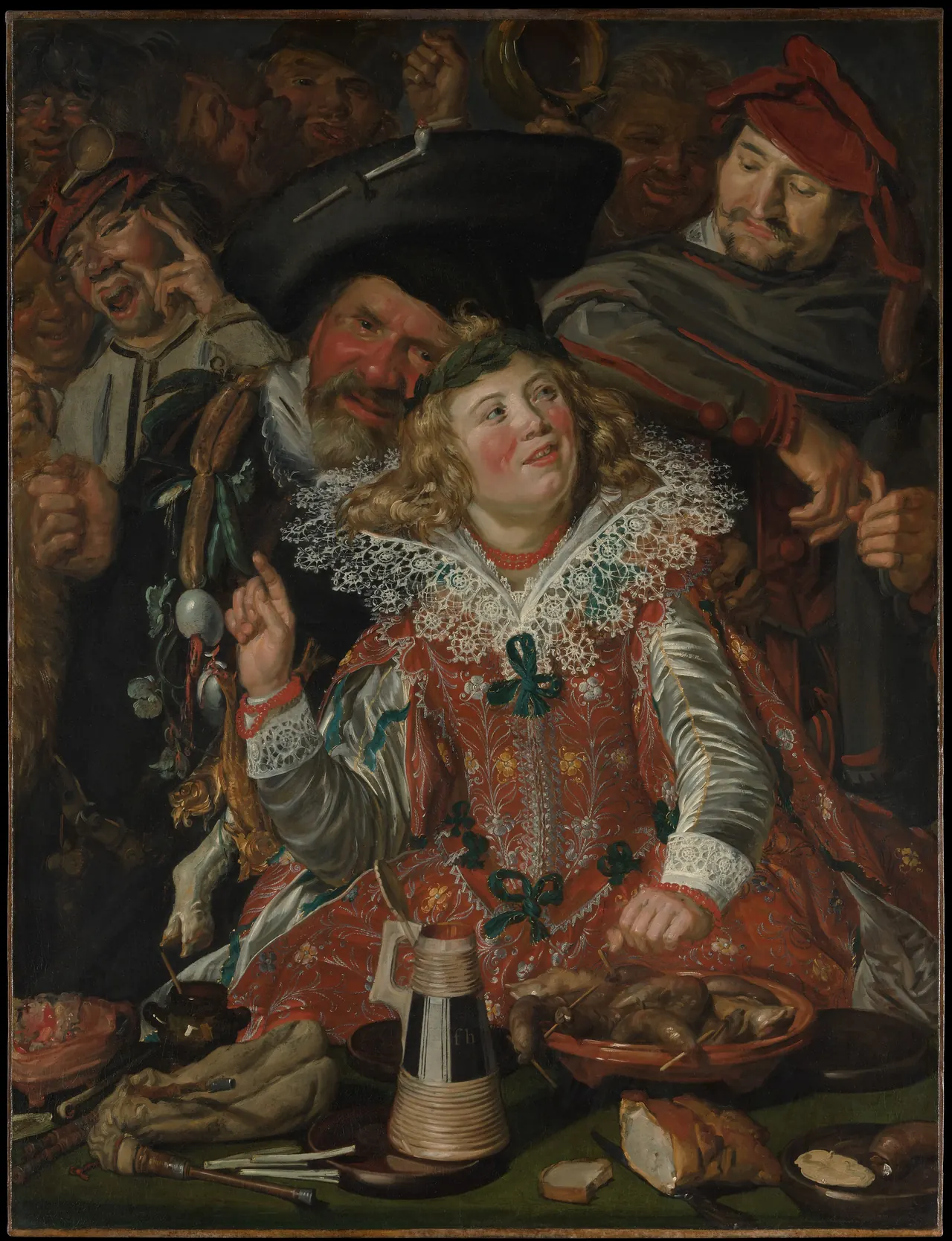
The figures crowd the surface as if the viewer had been pulled up to the table. Open mouths, tilted heads and contrasting fabrics make the encounter noisy in the imagination, though the painted surface is silent.
The Met identifies characters associated with theatrical and Shrovetide traditions. That context stops us from treating the painting as an unplanned record of an ordinary meal. Costume and performance are part of what the picture offers.
Look at how a few strong marks suggest fabric or an animated expression. An appearance of speed does not tell us exactly how long the painting took. It does show how visible handling can contribute to the impression of people moving and speaking.
Vermeer: the drama of a small action
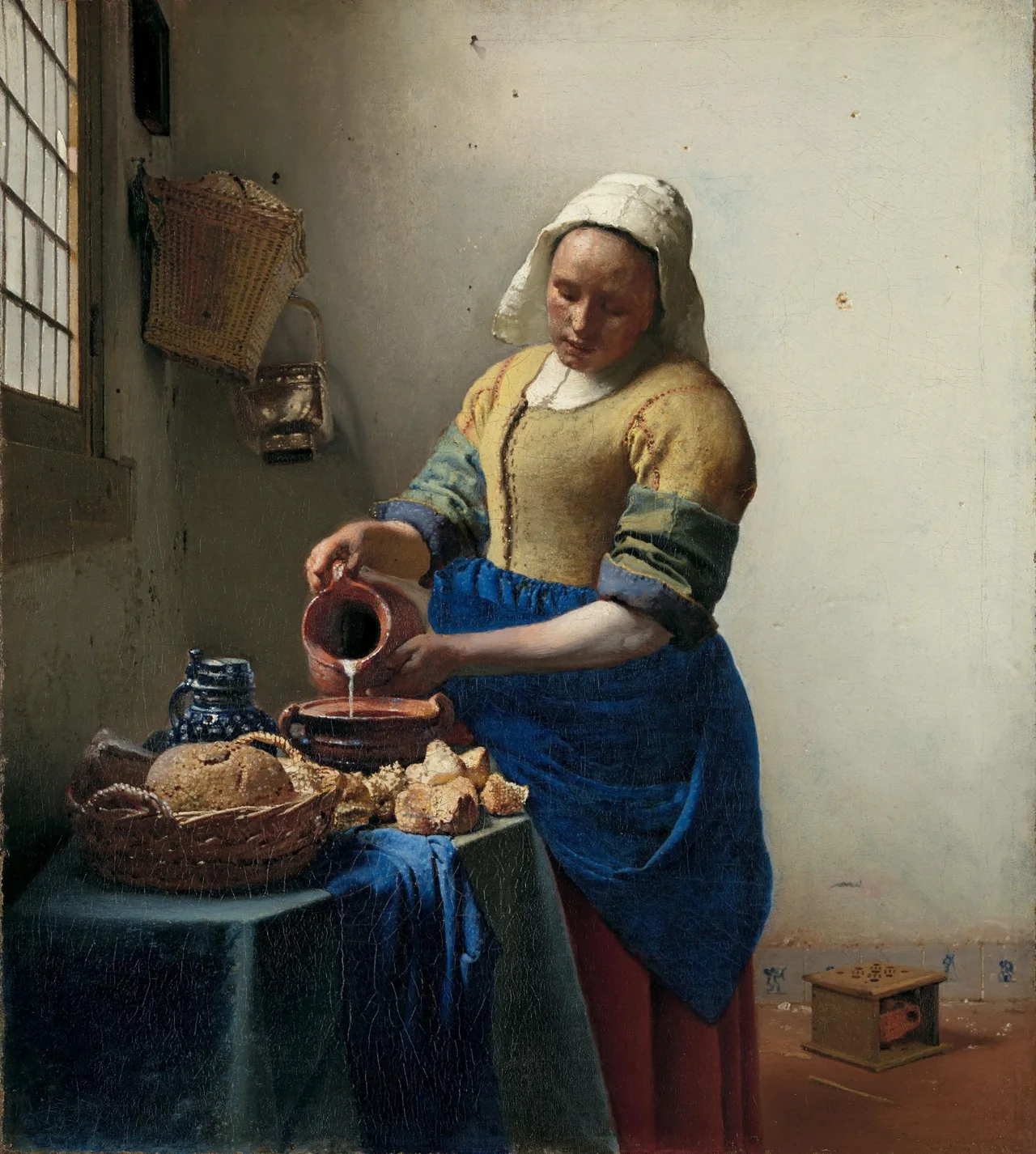
After those crowded scenes, the pouring milk is almost startlingly modest. The woman’s gaze and hands converge on the task. Light picks out bread, cloth and the wall without turning the room into a theatrical spotlight.
The Rijksmuseum describes a picture in which nearly everything is still except the milk. Watching that small continuous action makes time perceptible in another way. There is no need to invent an approaching interruption to make the scene worth looking at.
Vermeer is useful here precisely because he resists the stereotype of Baroque excess. The broader period accommodates quiet concentration as well as public spectacle. Our Vermeer guide offers further comparisons without assuming that every work shares one mood.
Look for an invitation, not a checklist
Choose three pictures and ask how each invites you in: through proximity, movement or patient observation. A dark background is only one possible answer. The important thing is the relationship between light, action and the person looking.
For another comparison, see Renaissance versus Baroque. The collection directory is a separate browsing route, not a claim that these eight works are sold together. Each image also has its own credit and reuse terms; a period label never replaces a file-specific rights check.
Editorial record
About this article
- Author
- Publisher
- GeMarkt
- Published
- Reviewed
- Internal source & rights check. Conducted by GeMarkt Research Review. This is an internal editorial check—not independent peer review.
- Source standard
- Art history source standardPrioritises object records and research sources, distinguishes evidence from interpretation, and states material uncertainty.
Found a claim that needs checking? Report a factual error.