Is Caravaggio's Art Public Domain? What You Can Reuse
Caravaggio's established paintings are public domain, but disputed attribution and modern museum photographs must be checked before commercial reuse.
Rights check · reviewed
The short answer
Yes—for Caravaggio’s established, long-published paintings. Their ordinary economic copyright terms expired centuries ago. Attribution and the rights or terms attached to a modern image file still need separate verification.
| What is being checked | Result | Why |
|---|---|---|
| European Union & United Kingdom | Public domain | Caravaggio died in 1610, centuries beyond the ordinary life-plus-70 term for artistic works. |
| United States | Clear for the long-published works covered here | The established examples covered here have documented, long publication histories. A newly discovered or formerly unpublished object still needs its own U.S. history checked. |
| Digital image or scan | Check the source file | The old artwork and a modern photograph, scan, restoration or website download are separate questions. Read the source record and its terms before reuse. |
Caravaggio’s influence produced many copies and paintings by followers. Public-domain status does not turn an uncertain attribution into a confirmed Caravaggio, so the museum record remains part of the check.
This is a documented research summary, not legal advice. Copyright and moral-rights rules can vary by country and by the history of a particular work.
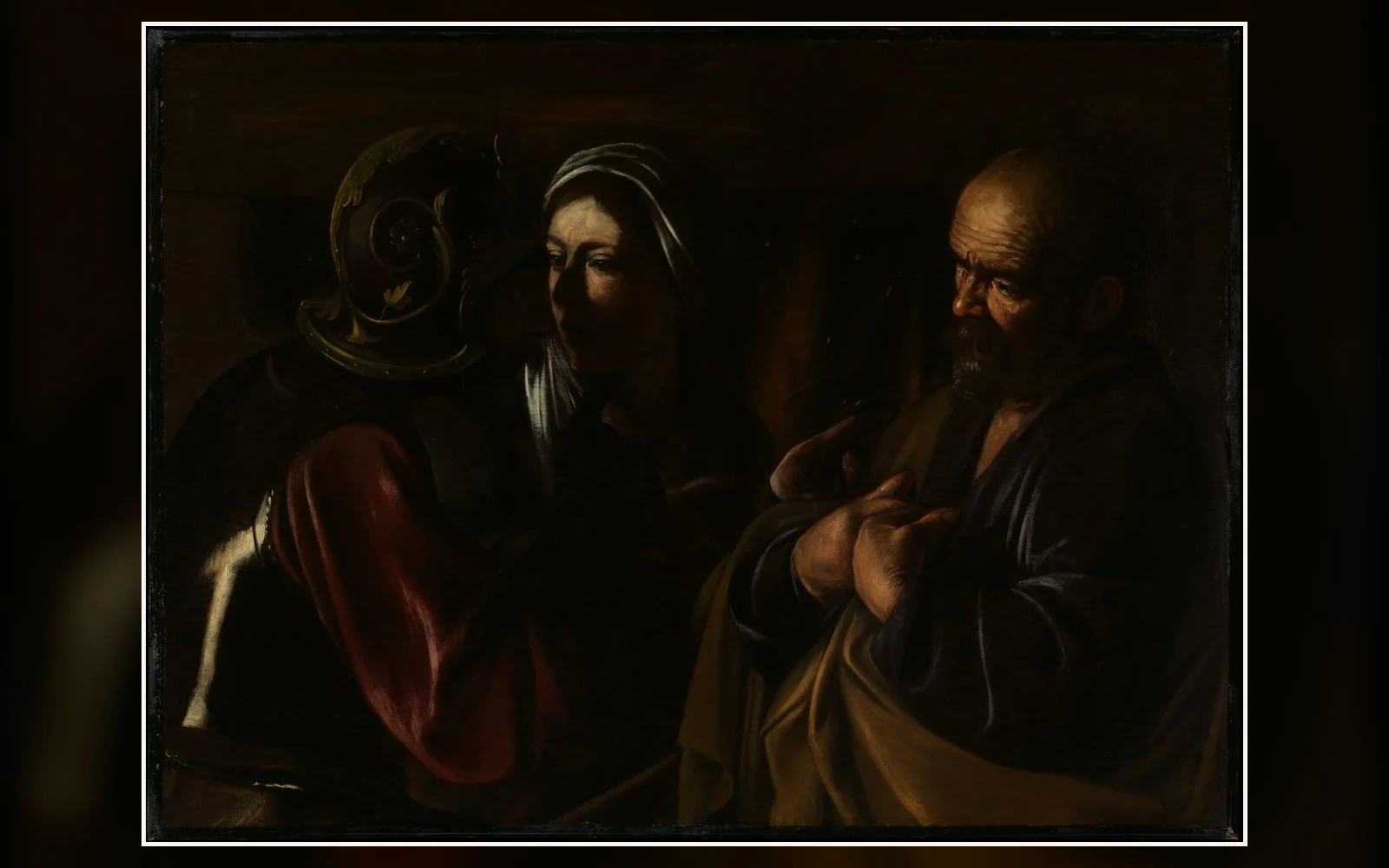
Yes—but darkness is not an attribution
Michelangelo Merisi da Caravaggio died in 1610. His established, long-published paintings are far beyond the ordinary copyright term in the European Union, United Kingdom and other life-plus-70 jurisdictions. They can also be clear under the United States rules that apply to very old works.
That does not make every dramatic seventeenth-century canvas a Caravaggio, and it does not make every photograph of one freely reusable. A dependable answer requires three layers:
- the copyright status of the historical painting;
- the current attribution of the exact object;
- the rights statement and terms for the chosen digital file.
Our general article, Public domain is not a free-for-all, explains why these layers should never be collapsed into one “copyright-free” label.
Why Caravaggio needs an attribution audit
Caravaggio’s naturalism and severe light influenced painters throughout Europe. Copies, followers and works once attributed to him remain common in older books and image archives. Scholarship also changes as paintings are cleaned, examined and compared.
The practical rule is simple: a dark background, close figures and a beam of light are not evidence of authorship. GeMarkt uses the current institutional object record, including qualifiers and uncertainty, rather than trusting a filename.
Our folder audit immediately found why this matters. A processed file named Sacred and Profane Love is a work by Giovanni Baglione, not Caravaggio. It has been quarantined from the Caravaggio release path. Public-domain status would not justify publishing it under the wrong artist.
Duplicates and differently cropped variants also need to be resolved before a collection goes live. Otherwise one artwork can appear as several products while a genuine gap in the catalogue remains hidden.
A painting in a church and its photograph are not the same asset
Several Caravaggio paintings remain in churches or other architectural settings. The painting may be public domain, while a visitor’s photograph, a commissioned museum image or a stitched restoration can involve a separate photographer, file record or access agreement.
This distinction is practical even where a perfectly faithful reproduction may not qualify for new copyright. Website terms, uncertain provenance and differences among countries still make an openly documented institutional file the safer production source.
That is why this page features The Denial of Saint Peter from The Metropolitan Museum of Art. The Met identifies the painting as Caravaggio, dates it to 1610 and marks the image Public Domain. Its Open Access policy allows unrestricted use of eligible public-domain images. The source remains one click away in the caption.
What our 70 processed masters mean
The GeMarkt archive contains 70 processed Caravaggio masters. Processing means an image has received production work; it does not mean its attribution and source licence are complete.
Each candidate now needs a compact evidence record:
- exact museum title, artist and attribution qualifier;
- permanent object page and source-file URL;
- artwork status by jurisdiction;
- file rights statement or open licence;
- review date and commercial-use position;
- restoration, crop and colour notes;
- duplicate, variant and misfile status.
If that record cannot be completed, the image stays unpublished regardless of how good the master looks.
Strong first candidates
The Met’s The Denial of Saint Peter is the clearest first feature because object, attribution and reusable file are documented together. The Musicians at The Met offers the same kind of public-domain Open Access record. The Supper at Emmaus at the National Gallery, Bacchus at the Uffizi and The Crucifixion of Saint Andrew at the Cleveland Museum of Art are useful authoritative object records, but the exact production files and their reuse terms still need to be matched before release.
This source-first order may produce fewer wallpapers in the first batch. It also prevents the expensive alternative: publishing a large set, later finding wrong attributions or weak provenance, and rebuilding product pages, search entries and customer downloads.
Can you sell a Caravaggio reproduction?
For a confirmed Caravaggio painting paired with a properly reusable source image, ordinary copyright generally permits commercial prints and adaptations. The final project can still be affected by local moral-rights, cultural-property, contract, trademark or consumer-protection rules, so “public domain” should not be advertised as a universal legal guarantee.
Our standard is narrower and more useful: say exactly which object was checked, which file was used, which institution supplied it and when its terms were reviewed.
Caravaggio wallpapers will be added only after those records and visual checks are complete. The free wallpaper library continues to offer the sets already ready for release.
Sources and review method
We checked the artist chronology against museum records, treated each named jurisdiction separately, and recorded the provider policy for the image set. These sources support the legal framework and artist dates used above; the source file for any individual image still needs its own record.
- Michelangelo Merisi da Caravaggio — The National Gallery, London. Museum biography, dates and documented works by Caravaggio.
- The Denial of Saint Peter — The Metropolitan Museum of Art. Object identity, attribution, date and a Public Domain image record.
- Image and Data Resources — The Metropolitan Museum of Art. The Met makes images marked Public Domain available for unrestricted use under its Open Access programme.
- Directive 2006/116/EC, Article 1 — EUR-Lex. The EU term for an artistic work is the author’s life plus 70 years.
- How long copyright lasts — UK Government. UK guidance gives 70 years after the author’s death for artistic works.
- Circular 15A: Duration of Copyright — U.S. Copyright Office. The 2026 term table places works published before 1931 outside the maximum 95-year publication term.
- Certain Unpublished, Unregistered Works Enter Public Domain — U.S. Copyright Office. Older unpublished works have a separate U.S. term analysis; discovery and first-publication history can matter.
- Copyright notice: digital images, photographs and the internet — UK Intellectual Property Office. A digital image can require a separate rights and website-terms check even when its subject is old.
Editorial record
About this article
- Publisher
- GeMarkt
- Published
Found a claim that needs checking? Report a factual error.