GeMarkt Journal · Practical guide
Is Gustave Doré's Art Public Domain? Yes—for 12 Checked Files
Doré's established work is public domain in the markets checked here, but the U.S. edition, credited engraver, exact object, and exact digital file still need separate proof.
Rights check · reviewed
The short answer
Yes—for established works by Gustave Doré in the checked life-plus-70 markets and for the 12 exact institutional records with an 1885 sale, a 1922 or 1927 museum transfer, or a documented pre-1931 printed edition. The credited engraver, publisher, edition, object, file, and modern transformation remain separate checks.
| What is being checked | Result | Why |
|---|---|---|
| European Union | Public domain | Doré died in 1883. His established sole-authored works are beyond the ordinary life-plus-70 term. |
| United Kingdom & Türkiye | Public domain | The checked ordinary economic-rights frameworks use life plus 70; established Doré works entered that period on 1 January 1954. |
| United States — named 12-record set | Clear for the documented records | The release set uses an 1885 sale, 1922 or 1927 institutional transfer, identifiable nineteenth-century print issues, and exact pages from a registered 1890 U.S. book edition. |
| Maker, edition, object, or digital file | Check the exact record | Doré’s design, a professional engraver’s translation, publisher, edition, physical impression, institutional scan, and local derivative do not share one rights statement. |
This guide clears four Cleveland, three AIC, and five Library of Congress work-and-file records. It does not treat every image described as a Doré engraving, every later edition, or every online scan as one rights category.
This is a documented research summary, not legal advice. Copyright and moral-rights rules can vary by country and by the history of a particular work.

What we’ll look at
When can a Gustave Doré image be reused, and why are Doré's design, a professional engraver's work, a particular edition or impression, and a modern scan different records?
The useful answer is yes for Gustave Doré’s established work in the life-plus-70 markets checked here, and yes in the United States for the 12 exact records whose publication or transfer histories are documented below—not automatically for every scan, later edition, modern restoration, or image labelled “Doré” online. Doré died in 1883. That makes the ordinary author-based term straightforward in much of Europe, the United Kingdom, and Türkiye. It does not tell you which person cut a wood block, when a particular book was issued, or whether the file in front of you carries usable terms.
Doré makes those distinctions unusually important. His designs travelled through illustrated Bibles, Don Quixote, Dante, Milton, periodicals, albums, sheet music, and independent prints. Professional engravers translated many drawings into printable blocks or plates. Publishers assembled those images into editions, and libraries and museums later photographed or scanned particular copies. The phrase “a Gustave Doré engraving” may therefore point to several layers at once.
This guide keeps six records separate:
- Doré’s underlying composition or drawing;
- the credited engraver, lithographer, publisher, or other maker of the printed form;
- the edition, volume, plate, proof, drawing, or other physical object;
- the U.S. publication or unpublished-work chronology for that exact record;
- the museum or library file and its present provider statement;
- GeMarkt’s resize, crop, and WebP conversion, or any more creative modern intervention.
It is a research summary, not legal advice. The conclusion is deliberately country-, object-, edition-, and file-specific.
The short answer is yes for the documented set
The release set contains four Cleveland Museum of Art records, three Art Institute of Chicago records, and five plate scans from a Library of Congress copy of The Doré Bible Gallery. Cleveland releases the four selected files under CC0. AIC marks the three selected files with its CC0 Public Domain Designation. The Library of Congress identifies its c. 1890 Philadelphia book as public domain and free to use and reuse; the five exact BookReader files are page derivatives of that institutional digitisation.
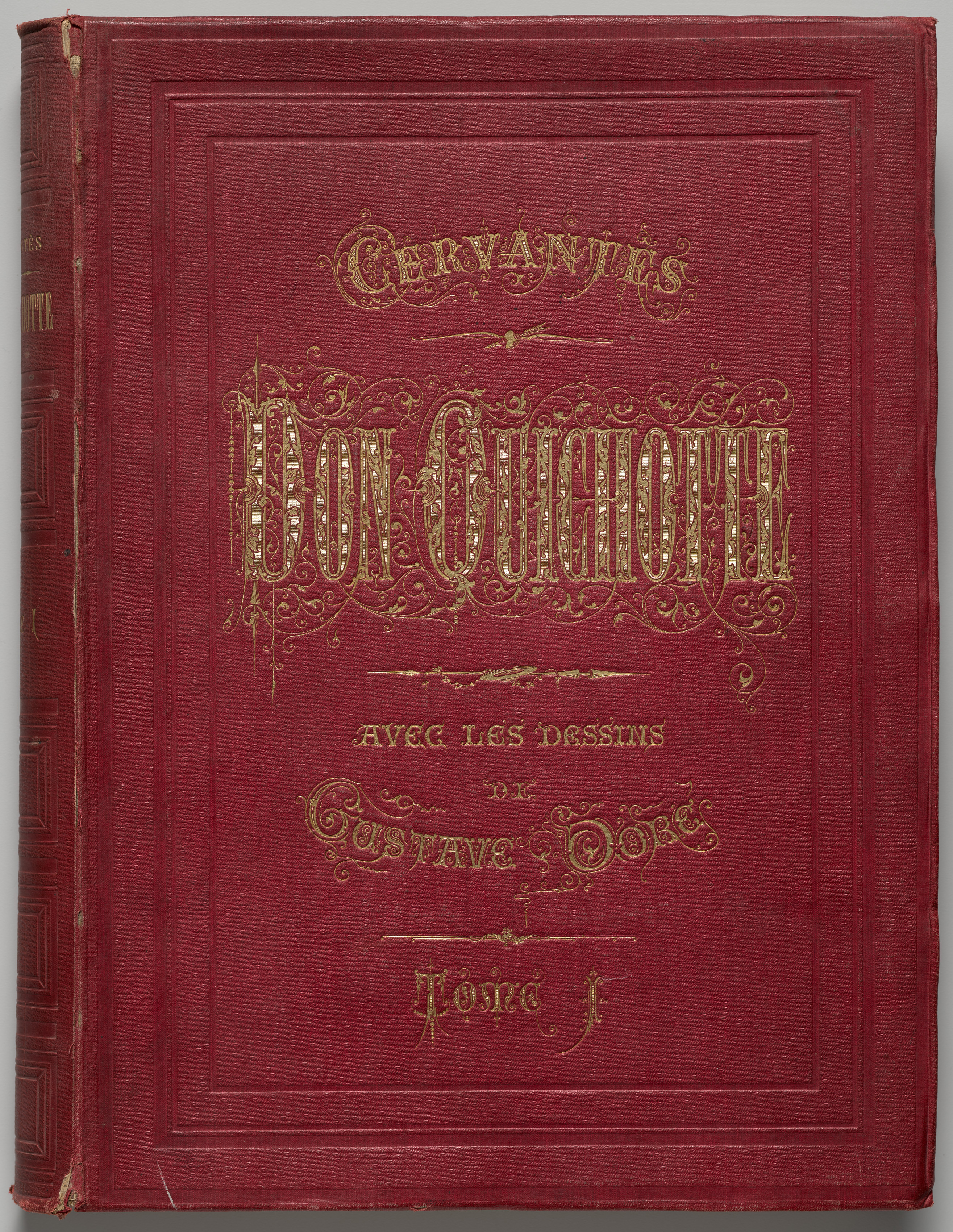
The set is intentionally mixed. The Breaking Ice is an issued lithograph rather than a Bible illustration. Liberty is a drawing whose 1885 studio-sale record supplies a pre-1931 distribution event. Cleveland’s volume I of Don Quixote names Héliodore Pisan and Hachette alongside Doré. AIC’s Grave! Grave! Très-Grave! credits Charles Émile Jacque as the maker after Doré. The Bible plates lock five exact pages within one identified 1890 U.S. edition instead of borrowing a random modern scan.
The answer does not automatically include:
- an image merely described as “after Doré” with no credited maker or edition;
- a modern reprint, translation, introduction, typography, restoration, colourisation, or composite;
- an unattributed proof or drawing with no resolved U.S. publication or unpublished-work history;
- a different copy of the same book photographed by a different provider;
- a marketplace preview, social-media crop, search-result thumbnail, or commercial scan;
- every plate in a volume just because five exact pages from that volume were checked here.
The artist’s age answers the first question. Production still requires the rest of the chain.
Death date clears life plus 70 markets
Article 1 of the European Union term directive uses the author’s life plus 70 years. UK government guidance gives 70 years after the creator’s death for artistic works. Article 27 of Türkiye’s Law No. 5846 applies the same ordinary economic-rights period. Doré died on 23 January 1883, so his established sole-authored works passed through that ordinary term at the end of 1953 and entered the corresponding public-domain period on 1 January 1954.
| Market checked | Rule used here | Result for established sole-authored Doré works |
|---|---|---|
| European Union | author’s life plus 70 years | public domain |
| United Kingdom | 70 years after the creator’s death | public domain |
| Türkiye | economic rights ordinarily last life plus 70 | public domain |
“Established” and “sole-authored” are limits, not decoration. A nineteenth-century edition can name another engraver. A later book can contain new text or design. Attribution, moral rights, trademarks, privacy, cultural-property rules, and contracts are separate from the ordinary economic copyright term. The checked death date cannot authenticate an unsigned drawing or license a present-day scan.
The US answer belongs to the edition or object
In 2026, the U.S. Copyright Office’s published-work table places works published before 1 January 1931 beyond the maximum 95-year publication term. The Office’s visual-art guidance also explains that distribution of an original or copies by sale, transfer, rental, lease, or lending can publish a work, while public display by itself does not.
That is why this guide does not say simply, “Doré died in 1883, so everything is free in America.” A work still unpublished on 1 January 1978 enters the separate transition rules in 17 U.S.C. §303. Those rules include an end-2002 floor and, for a qualifying first publication by the end of 2002, a possible end-2047 floor. A newly surfaced drawing can therefore demand a chronology even though its creator died long ago.
The selected objects close the U.S. branch through evidence attached to each record:
- the Cleveland Liberty provenance identifies the Hôtel Drouot Doré studio sale of 13 April 1885;
- AIC accessioned The Calling of Samuel in 1922 and the Lancelot drawing and Jacque print in 1927, documenting pre-1931 transfer into the museum collection;
- Cleveland’s two printed records belong to identifiable nineteenth-century issues: a late-nineteenth-century lithograph and Hachette’s 1863 Don Quixote volume;
- the Library of Congress book states that Henry Altemus entered the c. 1890 Philadelphia edition according to the Act of Congress in 1890.
Creation date alone is not doing the legal work. Neither is a modern museum acquisition date where an earlier issue, sale, or transfer has not been found.
Dore did not engrave every Dore engraving
Doré drew with printing in mind, but specialist craftsmen often translated his designs into reproducible lines. Cleveland catalogues Don Quixote (vol I) as wood engraving by Héliodore Pisan, published by Hachette, after Gustave Doré. AIC catalogues Grave! Grave! Très-Grave! under Charles Émile Jacque, again after Doré. Those credits are not optional caption trivia. They identify who made the exact printed form.
The distinction affects both scholarship and rights work. Doré’s drawing can be beyond its author-based term while a later translator’s contribution or a modern edition still requires its own date and analysis. Conversely, a nineteenth-century engraving can be safely reusable because the credited maker, publication, object, and file are all documented—not because the engraver has been erased from the record.
A production caption should therefore say what the institution says. “Designed by Gustave Doré; wood engraving by Héliodore Pisan; Hachette, 1863; Cleveland Museum of Art, 1998.197.1” is more accurate than “Doré engraving.” The same discipline matters when comparing Doré with William Blake or Albrecht Dürer: design, cutting, printing, state, edition, and impression are related but not interchangeable.
One Bible design can exist in many editions
The Library of Congress record describes The Doré Bible Gallery as a Philadelphia publication by Henry Altemus, c. 1890, containing 100 plates. Page 12 of the digitised copy carries the 1890 congressional entry; the catalogue states that the books in this collection are public domain and free to use and reuse.
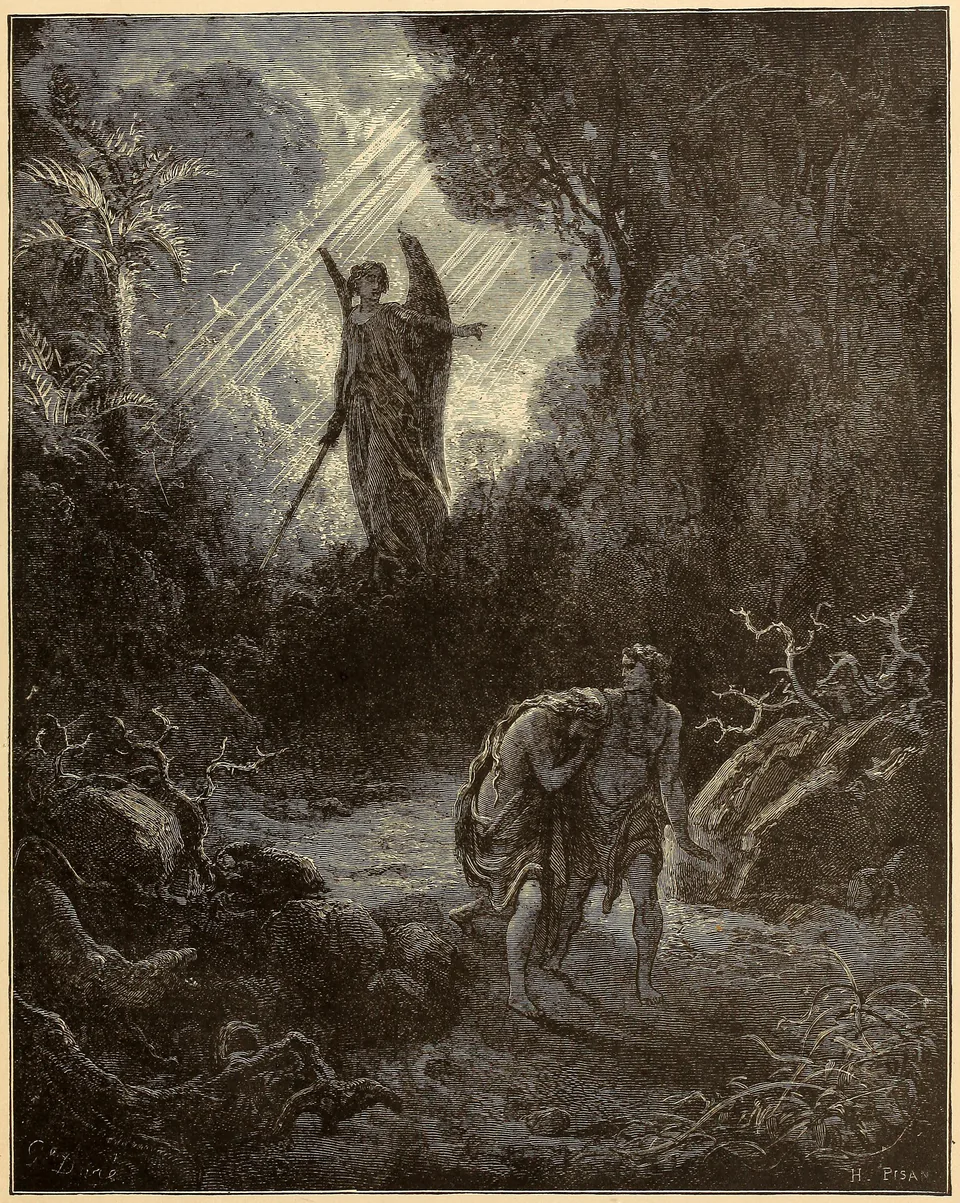
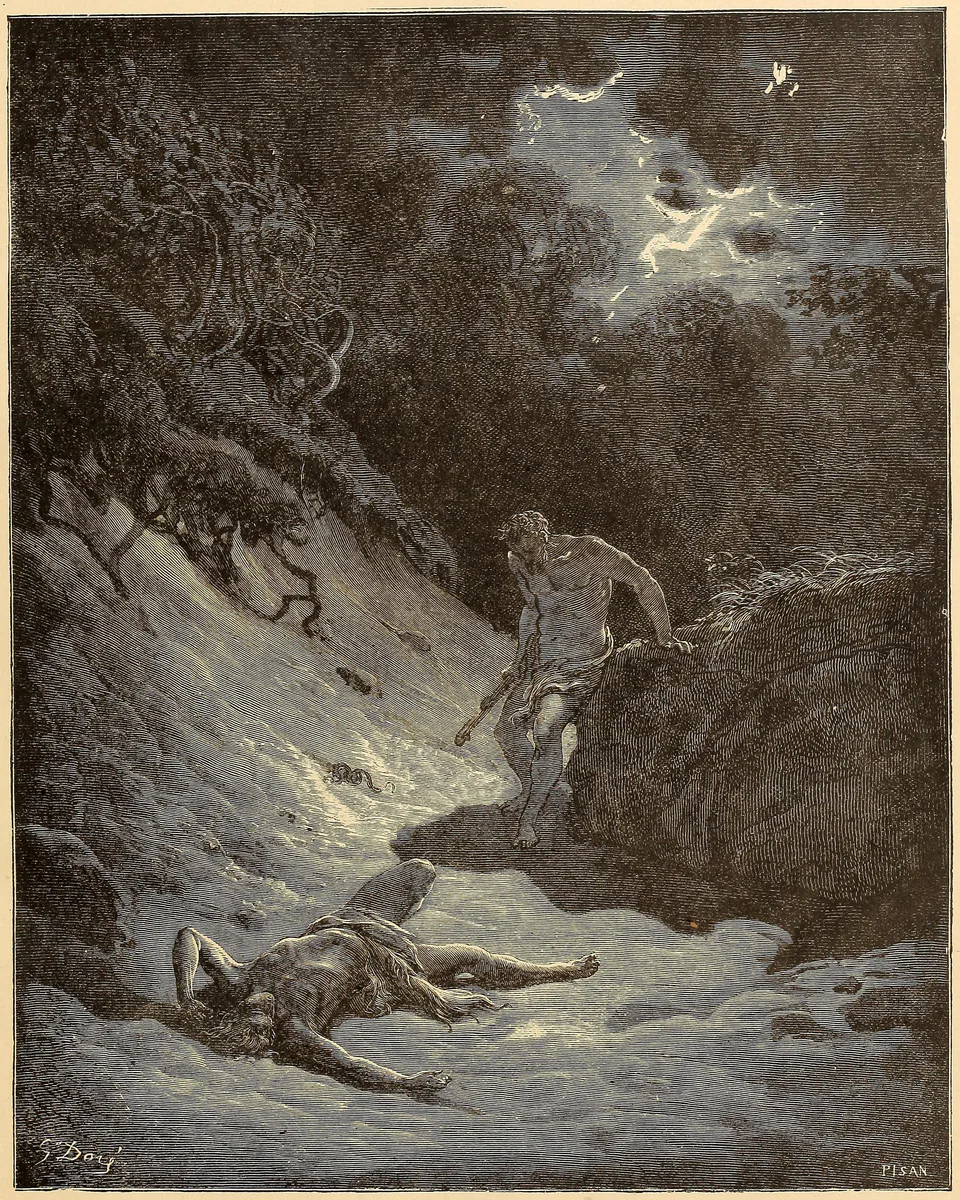
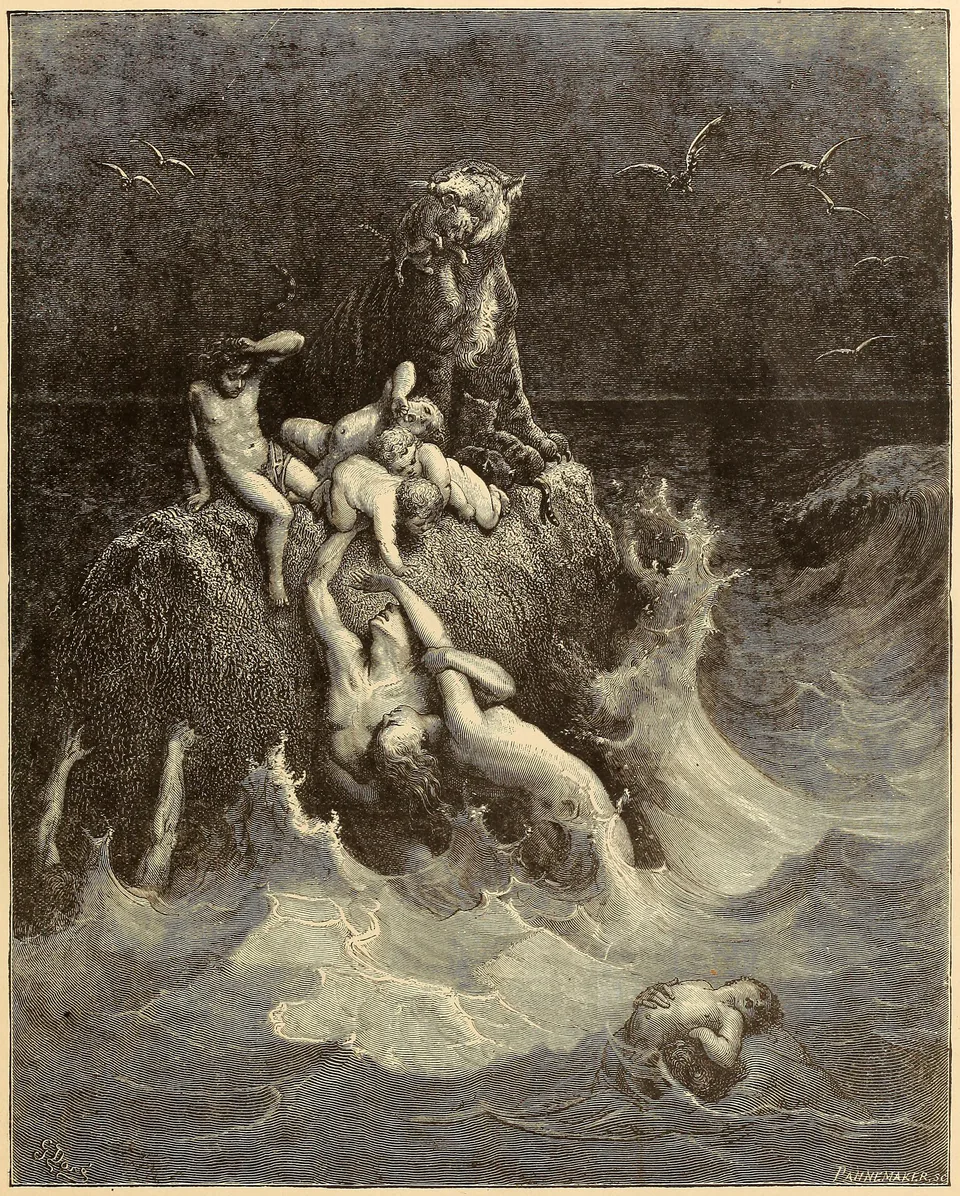
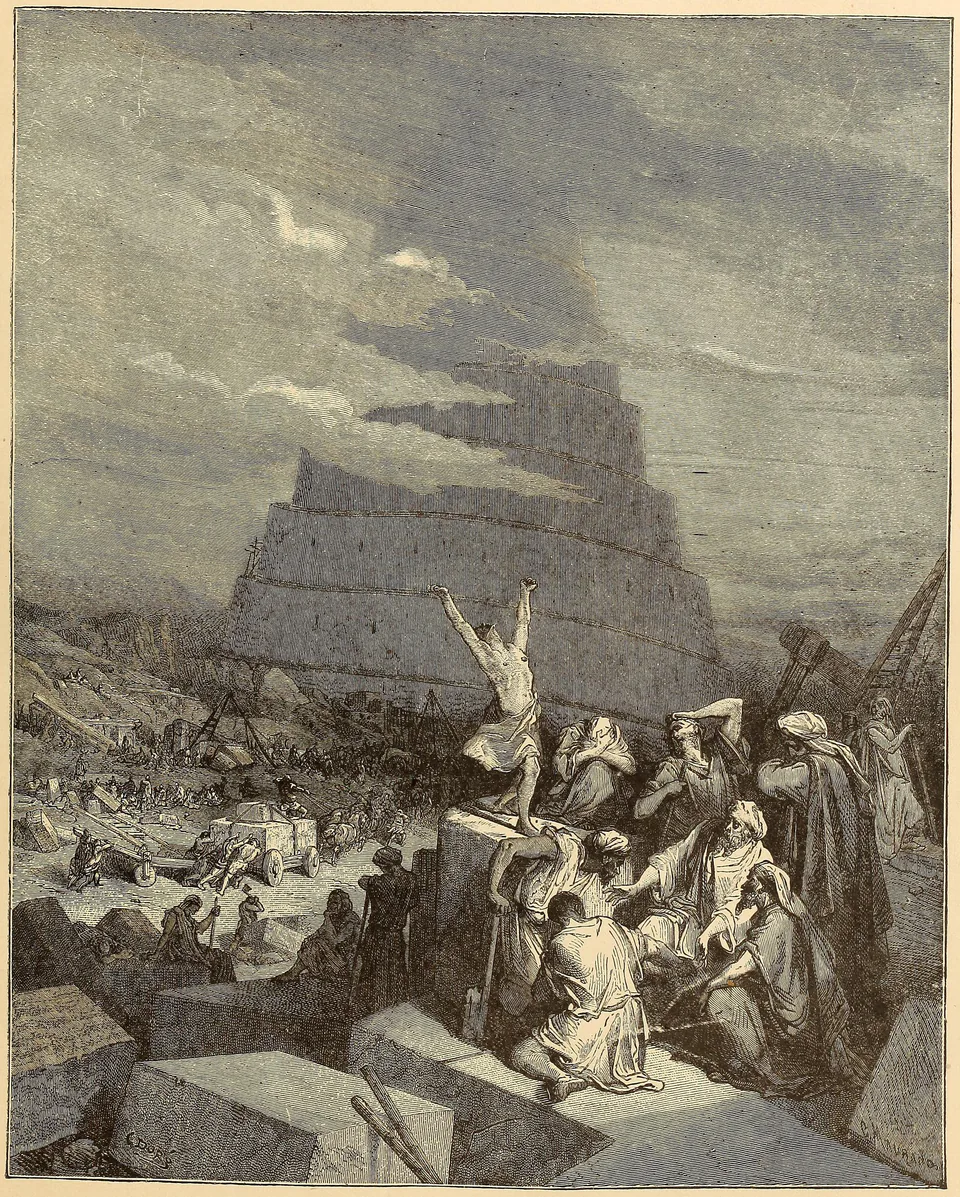
The five selected plate records are exact pages from that copy:
- Creation of Eve, image 23;
- The Expulsion from the Garden, image 27;
- The Murder of Abel, image 31;
- The Deluge, image 35;
- The Tower of Babel, image 43.
That specificity prevents a common mistake. Doré’s Bible designs appeared in multiple nineteenth-century and later editions. Paper, plate order, printing, captions, tonal range, scanning, and crop can differ. A public-domain 1890 Library of Congress page does not declare every e-book, facsimile, restoration, or scan of the same composition free of provider restrictions. The checked object URL and exact BookReader JPEG remain paired in the ledger.
The local derivatives crop the photographed page to the printed plate boundary using one recorded pixel rule, then resize to 960 pixels and convert to WebP. They do not redraw missing lines, replace paper tone, add colour, or pretend to be the original wood block.
Why The Breaking Ice is the feature
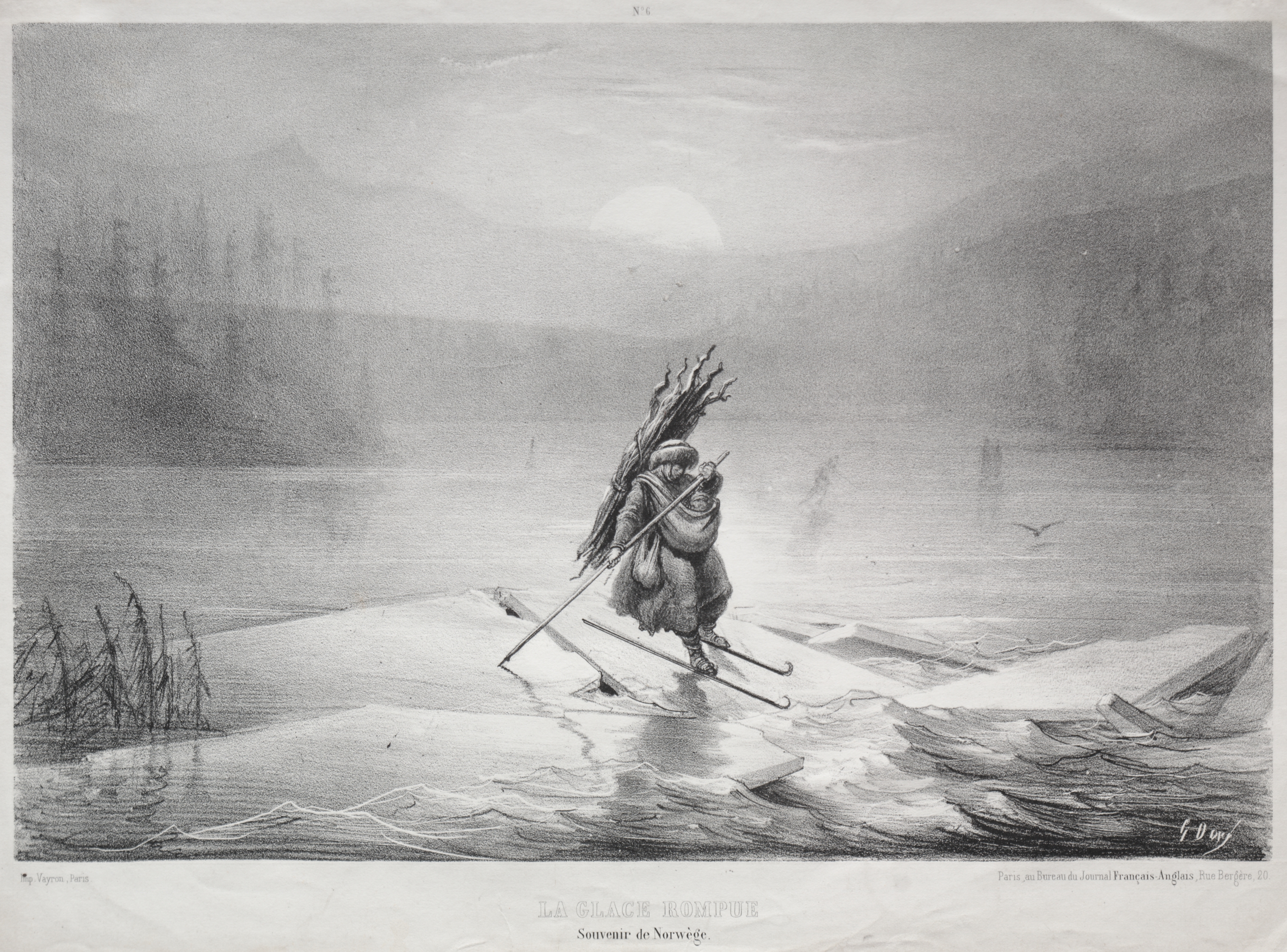
The Breaking Ice, Souvenir of Norway shows Doré working outside the literary scenes that dominate search results. Two travellers balance on a broken sheet of ice while pale water, distant land, and a low sun turn a dangerous crossing into a nearly weightless tonal study. Cleveland catalogues the exact object as a late-nineteenth-century lithograph and releases its print file under CC0.
It is also an honest delivery choice. The checked 3,400 × 2,516-pixel source file is 6,598,318 bytes. GeMarkt resized it to 1,280 × 947 pixels and converted it to a 194,068-byte WebP without cropping. The four deterministic Reader renditions total 119,958 bytes. That fits under the existing 16 MiB Journal delivery ceiling without changing the shared quality, width, mobile, or per-master limits.
The feature is not used to claim that a late-nineteenth-century date clears every Doré object. It is used because this exact lithograph, institutional record, CC0 file, local derivative, and delivery footprint can all be named.
The digital file is a separate rights record
Cleveland’s Open Access programme waives eligible image and data rights under CC0. AIC permits commercial and non-commercial reuse of files carrying its CC0 Public Domain Designation. The Library of Congress item page states that the c. 1890 book is in the public domain and free to use and reuse. Those statements attach to the checked providers and records.
They do not migrate to:
- a different library’s scan of another copy;
- an online seller’s photographed page;
- a modern publisher’s restored, recoloured, or typeset edition;
- a film still, game asset, or generated image merely inspired by Doré;
- a file that has lost its source URL and object identity.
The U.S. Copyright Office explains that a purely faithful or slavish copy does not add registrable authorship, while a sufficiently original restoration or alteration can present a different question. UK Intellectual Property Office guidance likewise treats the old subject and the modern digital image as questions that should not be collapsed. The safe workflow is to keep the provider statement beside the exact download and record every local transformation. Public domain is not a free-for-all explains the wider principle; our image-citation method shows how to preserve the chain.
Twelve exact files form the release boundary
The gallery below is the release boundary, not a sample from an automatically cleared artist folder. Every row binds the named work or volume to one accession or page, one institutional record, one exact source file, and one local derivative.
The set deliberately includes Doré alone, Doré as designer after a named printmaker, a unique drawing sold in 1885, two pre-1931 museum transfers, an identified 1863 volume, and five pages from a registered 1890 U.S. edition. That variation is the point: “Doré” is an attribution field, not a substitute for object history.
If a desired image is absent, pause. Find its institution, maker credit, edition or object, U.S. history, exact file, and current terms. Do not borrow the result from the nearest-looking plate.
A practical Dore reuse checklist
Before sending a Doré image to print, publication, packaging, or a digital product:
- Name the composition. Replace “a Doré illustration” with the actual title or subject.
- Read the full maker line. Record “after Doré,” the engraver, lithographer, publisher, and any other credited role.
- Identify the edition or object. Keep volume, plate, page, state, impression, accession, and copy information where available.
- Close the market. Apply life-plus-70 rules where relevant and verify the U.S. publication or unpublished-work path for this record.
- Open the institutional record. Confirm that title, date, maker, accession, and file still match the ledger.
- Read the exact file terms. A museum or library policy does not license a third-party scan.
- Record transformations. Note crops, colour work, repair, compositing, typography, and generated additions.
- Caption the makers honestly. Do not erase Pisan, Jacque, Hachette, the Altemus edition, or the holding institution.
- Recheck before commercial release. Rights labels, attributions, and catalogue data can change.
GeMarkt’s copyright page summarises the site’s operating boundary. For a new file, repeat the evidence chain rather than treating this article as an artist-wide licence.
Where Dore fits inside GeMarkt
Doré belongs beside the Journal’s guides to William Blake, Albrecht Dürer, and Francisco Goya, but his production network gives the comparison a different emphasis. Blake often controlled text and image in one illuminated-book project. Dürer’s prints require state and impression discipline. Goya’s albums and published series separate drawings from issued plates. Doré adds the industrial scale of the nineteenth-century illustrated book and the visibility of professional engravers.
A future collection path is reserved at /collections/gustave-dore/, but no collection, product, wallpaper room, or translated guide is created here. Product availability is not a publication gate. Evidence quality is. If commerce is added later, every selected design must start from one of these exact records or pass the same object-, edition-, maker-, file-, and transformation-level review.
Rights-checked image ledger
A documented starting set
These files were selected from the holding institutions rather than from search-result copies. Each card keeps the artwork record, exact source file, provider statement and GeMarkt transformation visible as separate facts.
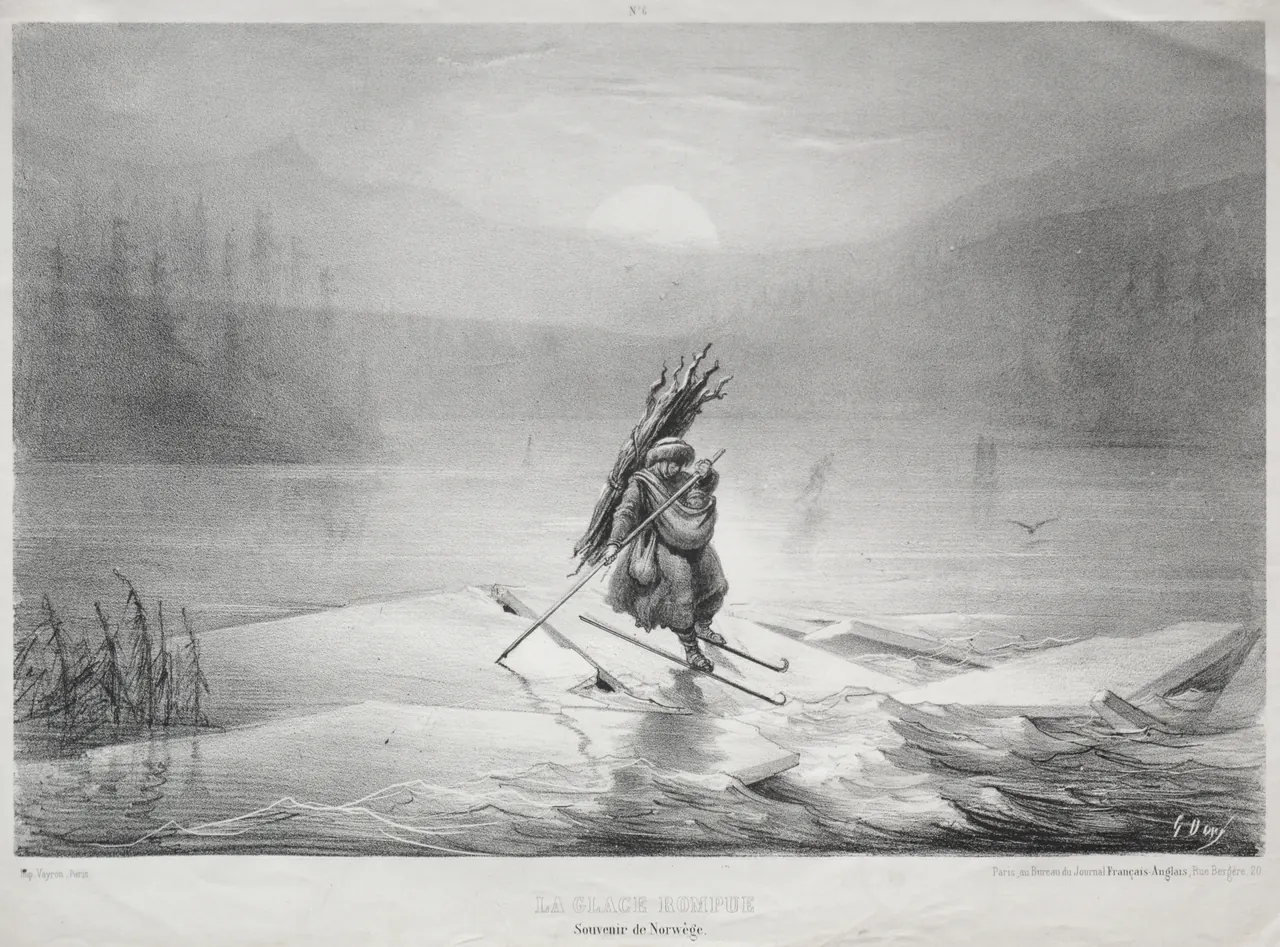
The Breaking Ice, Souvenir of Norway
late 1800s · Cleveland Museum of Art · 1940.1105
CC0 Public Domain / Open Access
Resized to 1280 pixels wide and converted to WebP; no crop.
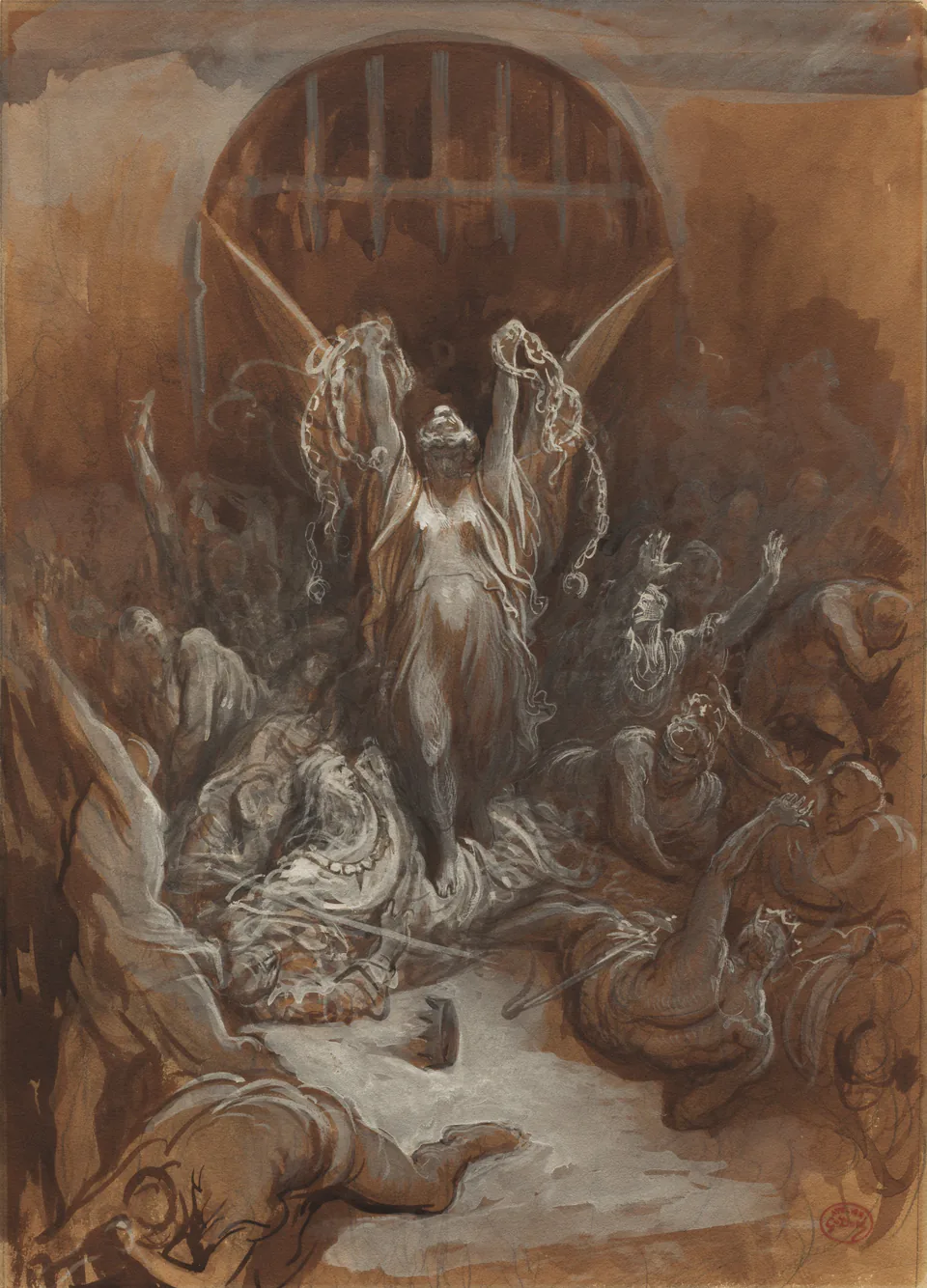
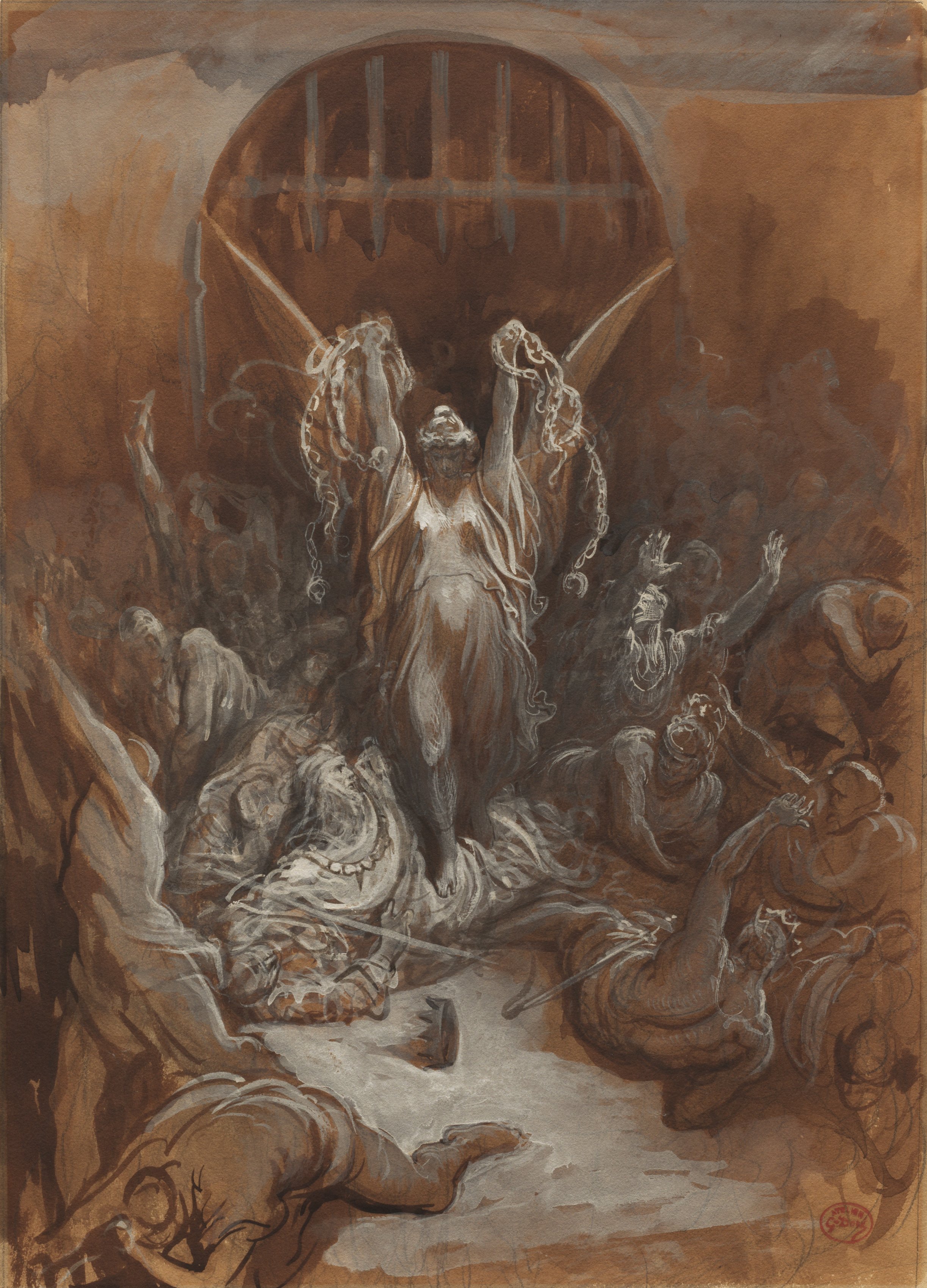
Liberty
c. 1865–75 · Cleveland Museum of Art · 2008.383
CC0 Public Domain / Open Access
Resized to 960 pixels wide and converted to WebP; no crop.
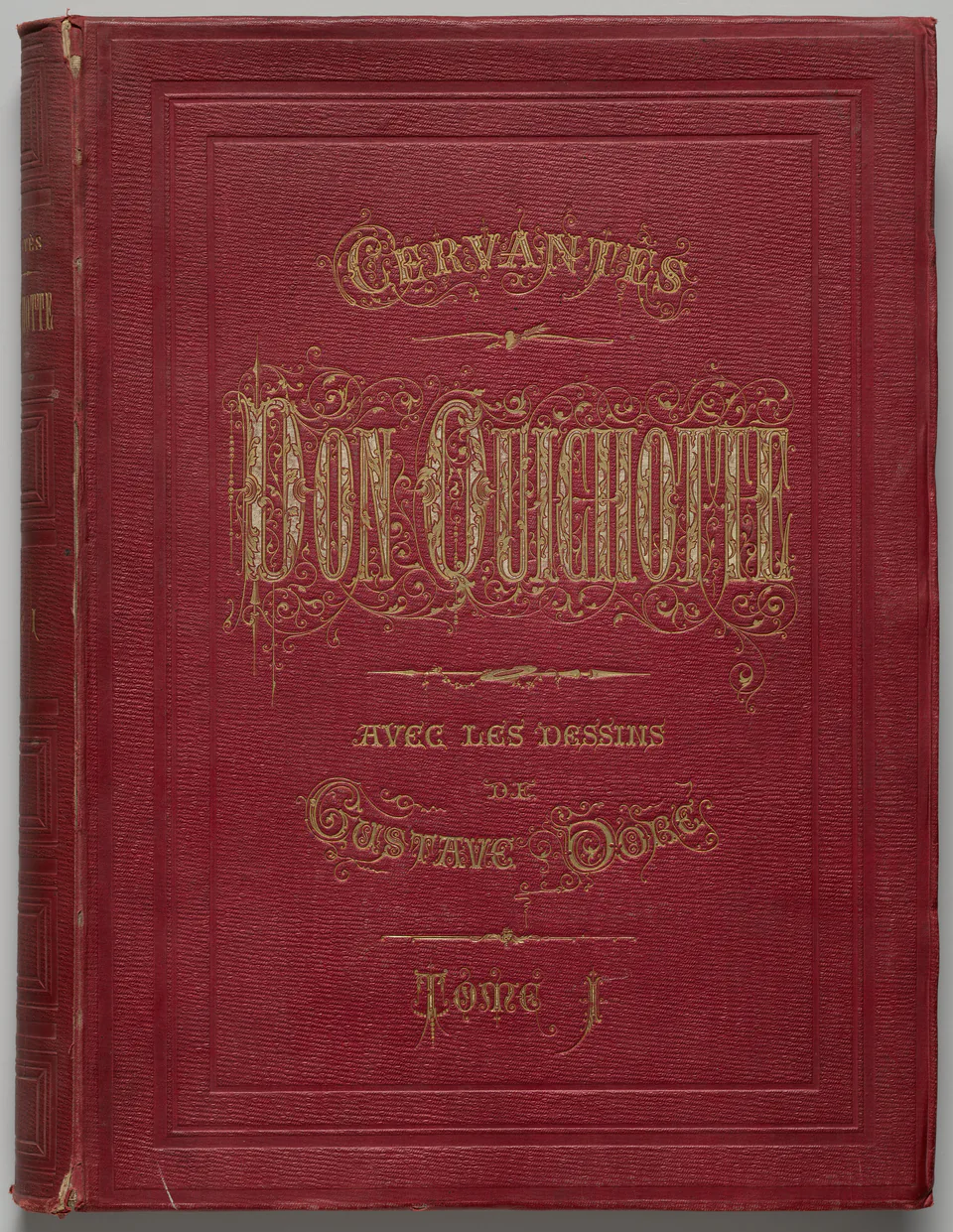
Don Quixote (vol I)
1863 · Cleveland Museum of Art · 1998.197.1
CC0 Public Domain / Open Access
Resized to 960 pixels wide and converted to WebP; no crop.
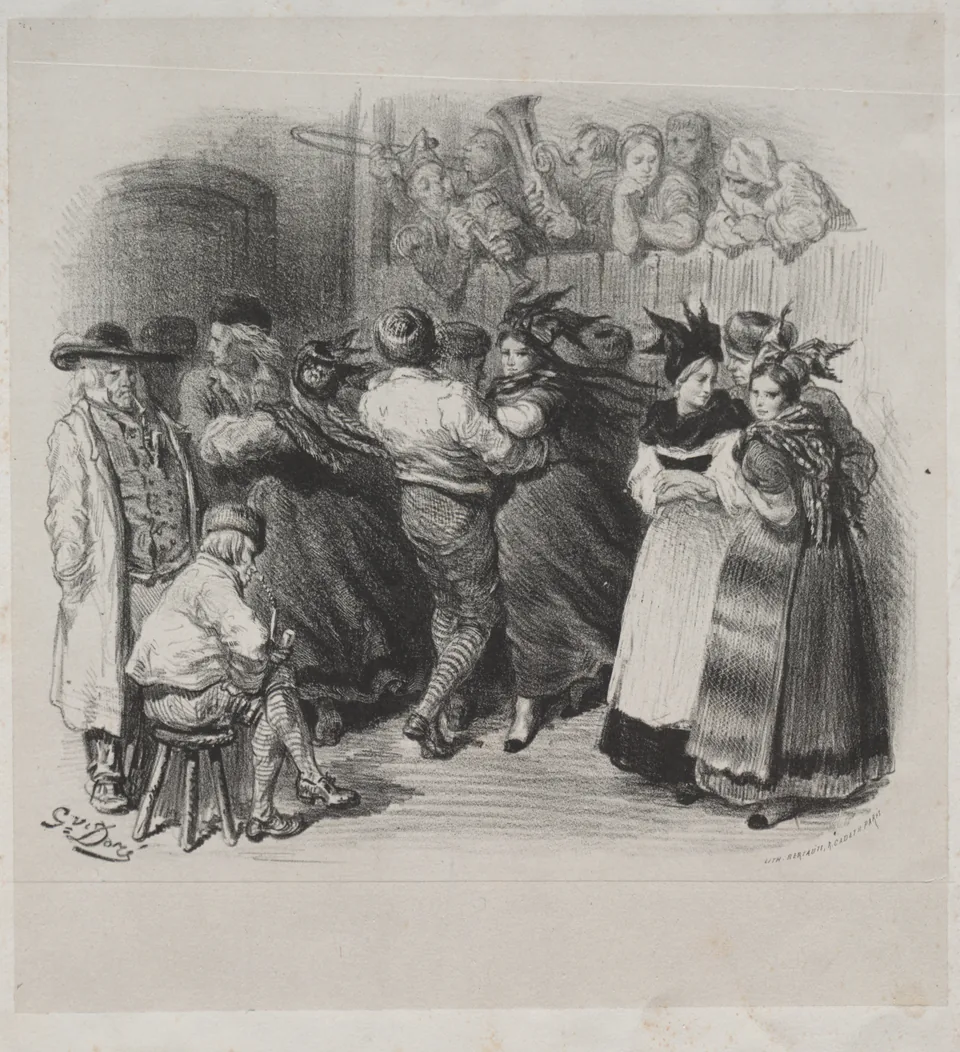
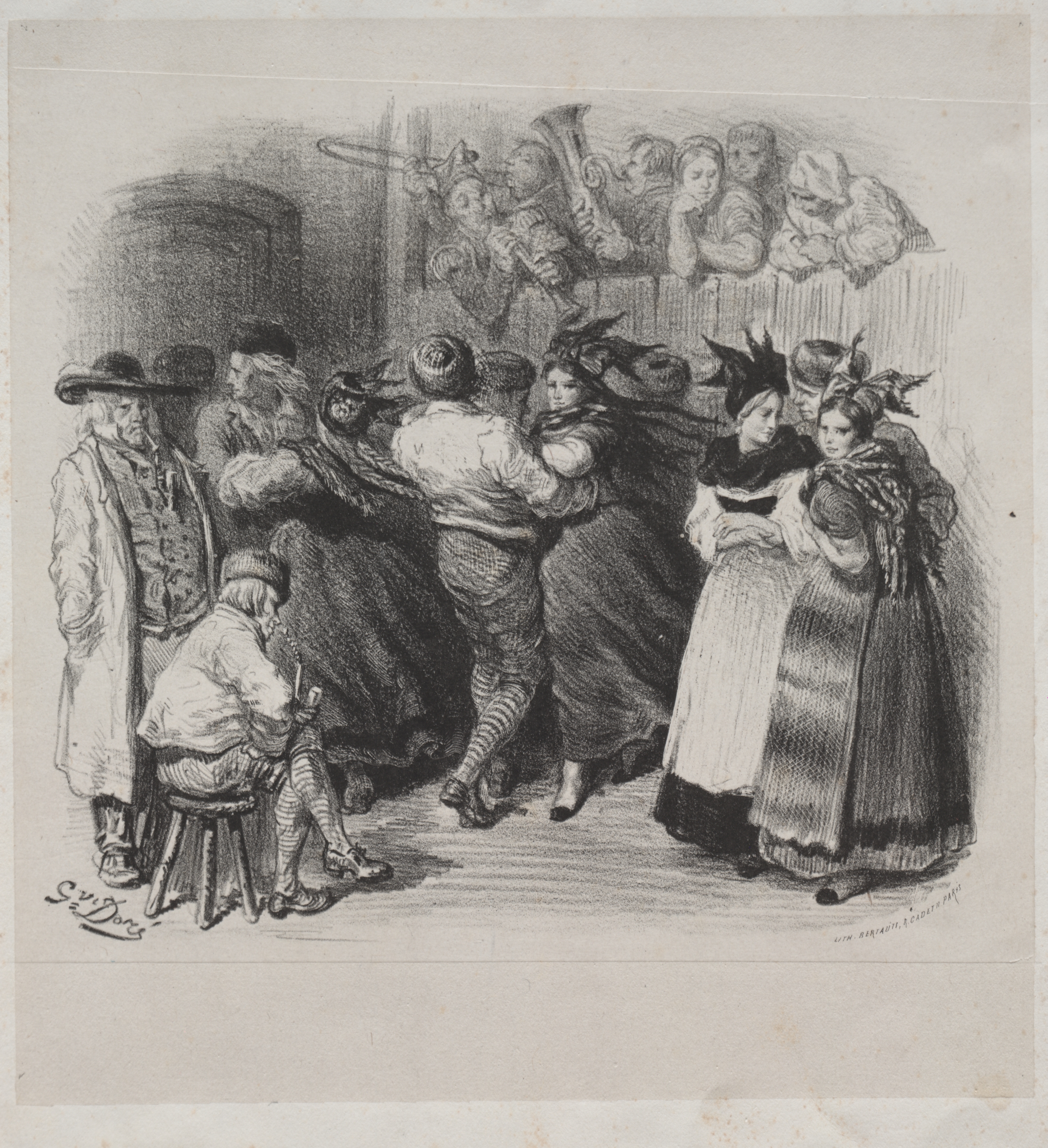
Musical Works of Ernest Doré: Souvenir of Alsace, Alsatian Dance — Title Page
late 1800s · Cleveland Museum of Art · 1941.232
CC0 Public Domain / Open Access
Resized to 960 pixels wide and converted to WebP; no crop.
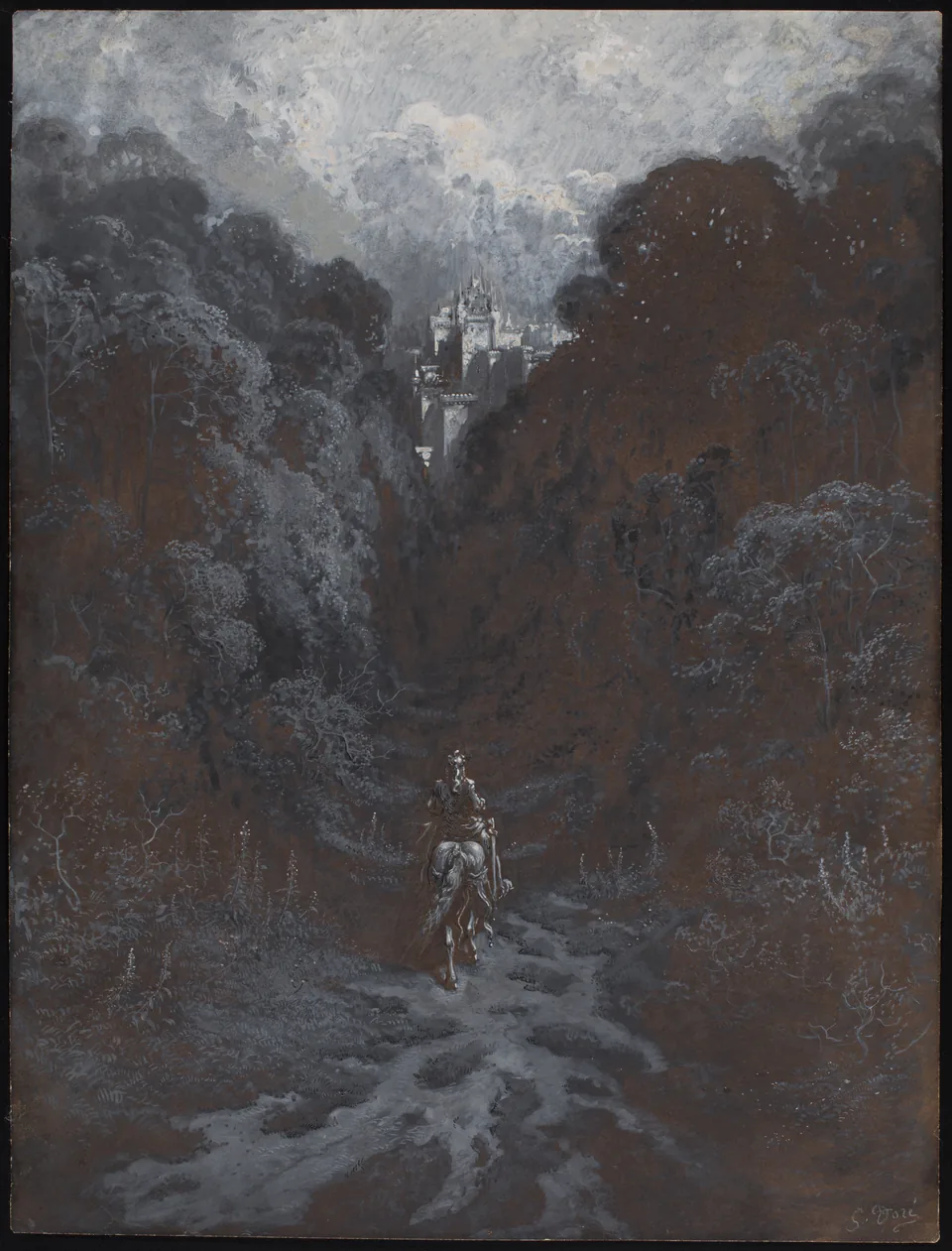
Sir Lancelot Approaching the Castle of Astolat
n.d. · Art Institute of Chicago · 1927.2751
CC0 Public Domain Designation
Resized to 960 pixels wide and converted to WebP; no crop.

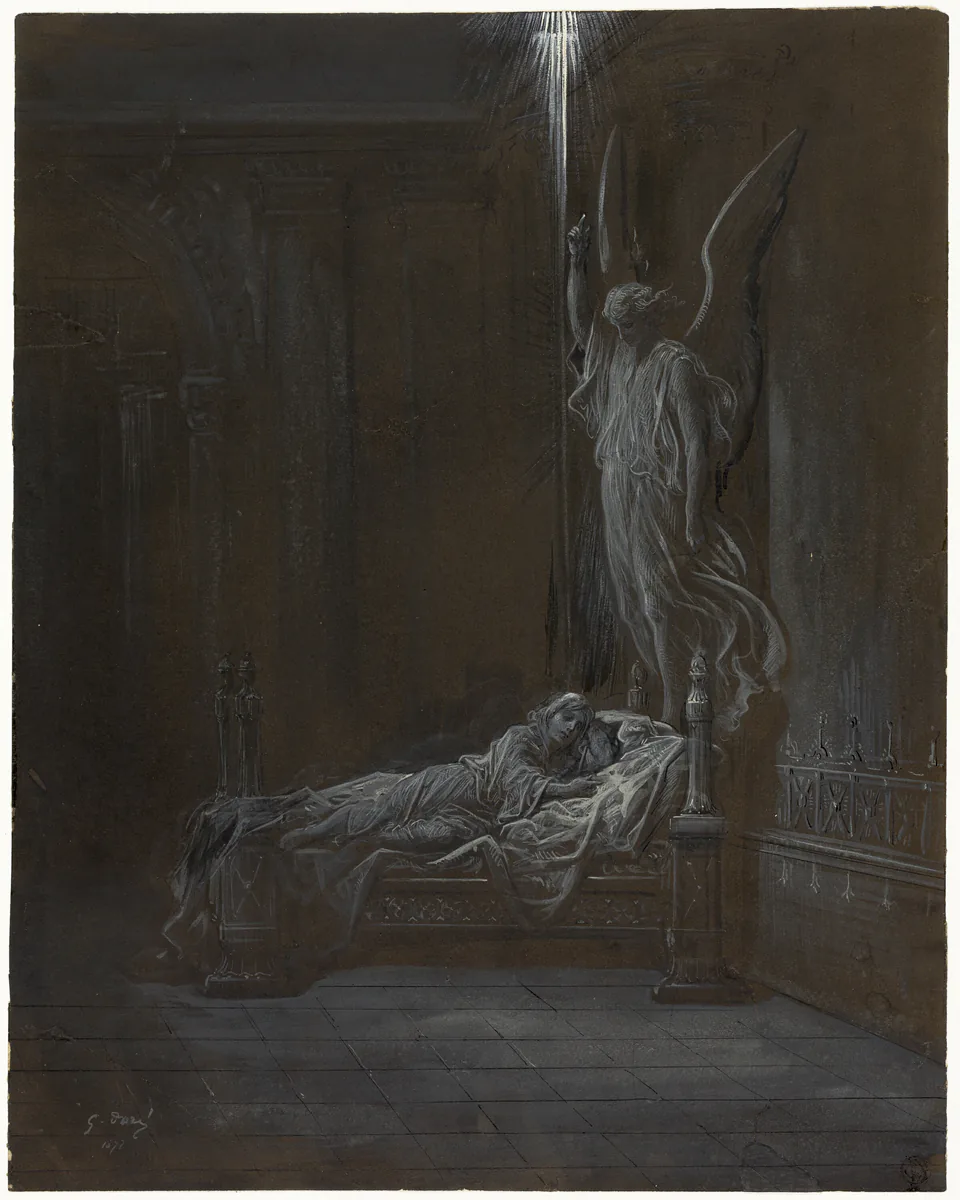
The Calling of Samuel
1877 · Art Institute of Chicago · 1922.243
CC0 Public Domain Designation
Resized to 960 pixels wide and converted to WebP; no crop.

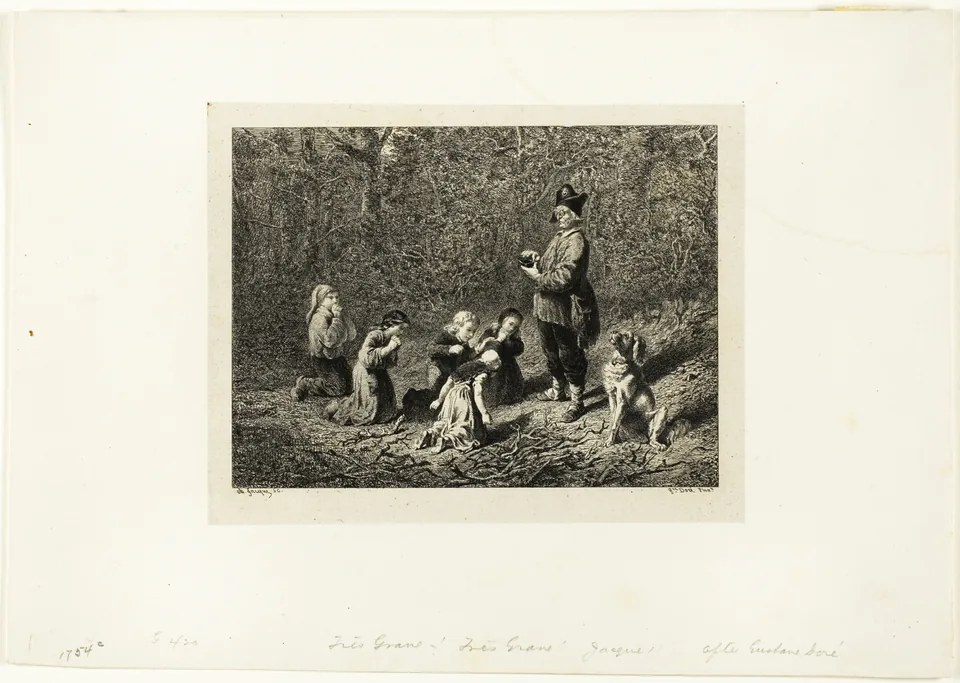
Grave! Grave! Très-Grave!
1862 · Art Institute of Chicago · 1927.3738
CC0 Public Domain Designation
Resized to 960 pixels wide and converted to WebP; no crop.

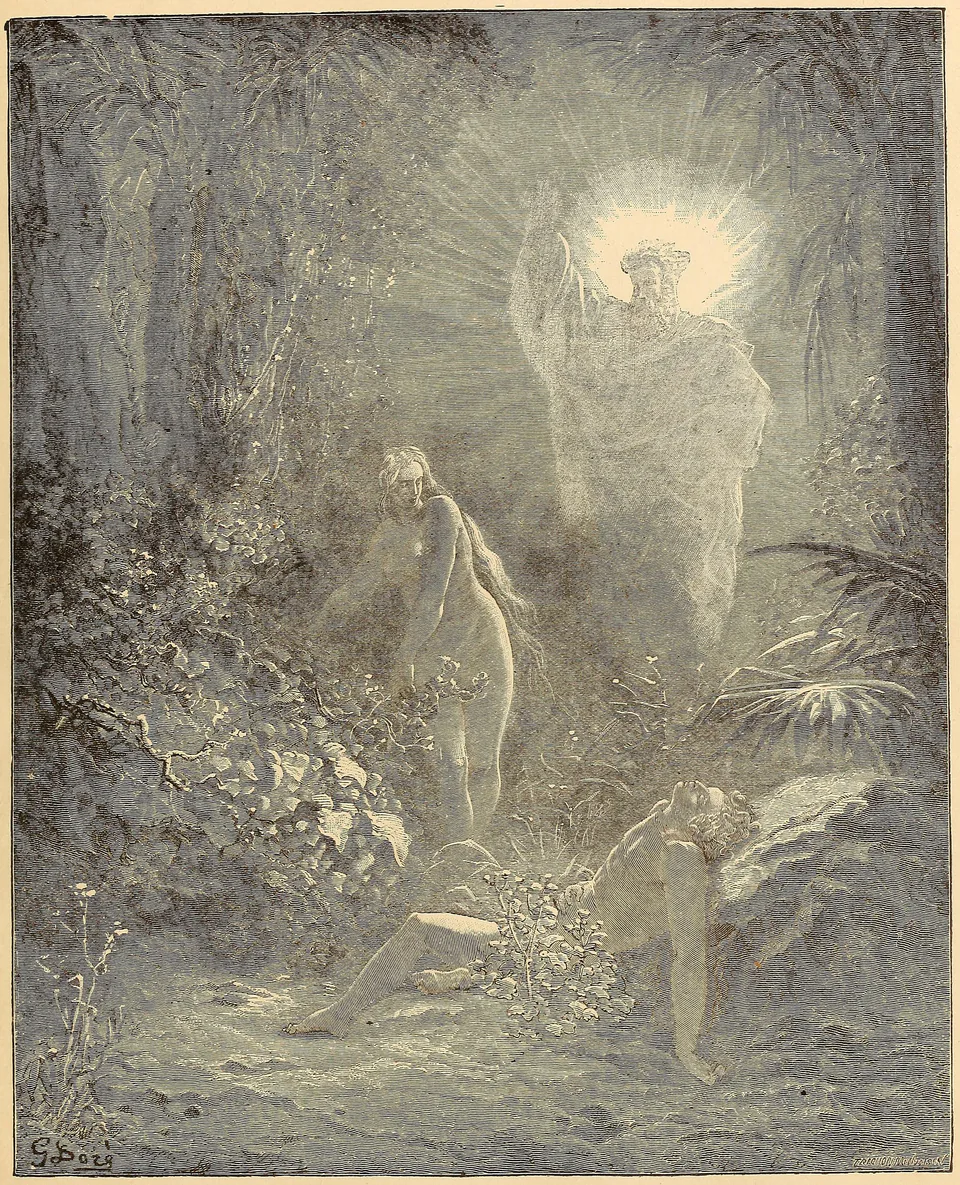
Creation of Eve
c. 1890 edition · Library of Congress · N8027 .D7 1890 / image 23
Public Domain / free to use and reuse (Library of Congress item)
Cropped to the printed plate boundary at source pixels 65,303–2532,3347; resized to 960 pixels wide and converted to WebP.

The Expulsion from the Garden
c. 1890 edition · Library of Congress · N8027 .D7 1890 / image 27
Public Domain / free to use and reuse (Library of Congress item)
Cropped to the printed plate boundary at source pixels 139,363–2642,3499; resized to 960 pixels wide and converted to WebP.

The Murder of Abel
c. 1890 edition · Library of Congress · N8027 .D7 1890 / image 31
Public Domain / free to use and reuse (Library of Congress item)
Cropped to the printed plate boundary at source pixels 211,379–2702,3493; resized to 960 pixels wide and converted to WebP.

The Deluge
c. 1890 edition · Library of Congress · N8027 .D7 1890 / image 35
Public Domain / free to use and reuse (Library of Congress item)
Cropped to the printed plate boundary at source pixels 149,312–2664,3444; resized to 960 pixels wide and converted to WebP.

The Tower of Babel
c. 1890 edition · Library of Congress · N8027 .D7 1890 / image 43
Public Domain / free to use and reuse (Library of Congress item)
Cropped to the printed plate boundary at source pixels 135,313–2618,3410; resized to 960 pixels wide and converted to WebP.

Sources and review method
We checked the artist chronology against museum records, treated each named jurisdiction separately, and recorded the provider policy for the image set. These sources support the legal framework and artist dates used above; the source file for any individual image still needs its own record.
- The Breaking Ice, Souvenir of Norway — Cleveland Museum of Art. Feature identity, late-nineteenth-century lithograph record, exact CC0 print file, dimensions, and accession.
- Liberty — Cleveland Museum of Art. Exact drawing and CC0 file plus the documented Hôtel Drouot Doré studio sale on 13 April 1885.
- Don Quixote (vol I) — Cleveland Museum of Art. Exact 1863 bound volume, Héliodore Pisan maker credit, Hachette publisher, Doré design credit, and CC0 file.
- Musical Works of Ernest Doré: Souvenir of Alsace — Cleveland Museum of Art. Exact issued title-page lithograph, accession, print file, and CC0 status.
- Sir Lancelot Approaching the Castle of Astolat — Art Institute of Chicago. Exact Charles Deering Collection drawing, 1927 accession, IIIF file, and Public Domain Designation.
- The Calling of Samuel — Art Institute of Chicago. Exact drawing, 1922 accession, IIIF file, and Public Domain Designation.
- Grave! Grave! Très-Grave! — Art Institute of Chicago. Charles Émile Jacque maker credit after Doré, 1862 print identity, 1927 accession, exact IIIF file, and CC0 status.
- The Doré Bible Gallery — Library of Congress. Institutional identity for the c. 1890 Philadelphia edition, 1890 publication evidence, five exact plate pages, and the public-domain/free-to-reuse statement.
- Open Access Images — Art Institute of Chicago. Files labelled CC0 Public Domain Designation may be reused for commercial and non-commercial purposes.
- Open Access — Cleveland Museum of Art. Cleveland releases eligible collection images and metadata under CC0 for commercial and non-commercial reuse.
- Directive 2006/116/EC, Article 1 — EUR-Lex. The EU term for an artistic work is the author’s life plus 70 years.
- How long copyright lasts — UK Government. UK guidance gives 70 years after the author’s death for artistic works.
- Law No. 5846 on Intellectual and Artistic Works, Article 27 — WIPO Lex. The Turkish economic-rights term is the author’s life plus 70 years.
- Circular 15A: Duration of Copyright — U.S. Copyright Office. The 2026 term table places works published before 1931 outside the maximum 95-year publication term.
- Certain Unpublished, Unregistered Works Enter Public Domain — U.S. Copyright Office. Older unpublished works have a separate U.S. term analysis; discovery and first-publication history can matter.
- 17 U.S.C. Chapter 3, including §303 — U.S. Copyright Office. Section 303 states the transition rules and minimum 2002 or 2047 expiry floors for works that were unpublished on 1 January 1978.
- Visual Artists: Publication — U.S. Copyright Office. Distribution can publish a visual artwork, while public display by itself does not establish publication.
- Compendium of U.S. Copyright Office Practices, Chapter 900, §909.3(A) — U.S. Copyright Office. A purely faithful scan or “slavish copy” does not add registrable authorship, while substantial restoration or alteration can require a separate analysis.
- Copyright notice: digital images, photographs and the internet — UK Intellectual Property Office. A digital image can require a separate rights and website-terms check even when its subject is old.
Editorial record
About this article
- Author
- Publisher
- GeMarkt
- Published
- Reviewed
- Internal source & rights check. Conducted by GeMarkt Research Review. This is an internal editorial check—not independent peer review.
- Source standard
- Rights guide source standardSeparates the underlying work from the source file, records the review date, and links the evidence used for the conclusion.
Found a claim that needs checking? Report a factual error.