GeMarkt Journal · Practical guide
Is Albrecht Dürer Public Domain? Prints, Copies, and Image Files
Dürer's established works are public domain in the markets checked here, but plate, block, edition, impression, historical copy, restoration, and image file need separate records.
Rights check · reviewed
The short answer
Yes—for Dürer’s established works and the 12 sixteenth-century institutional impressions documented here in the European Union, United Kingdom, Türkiye, and United States. Plates, blocks, states, editions, impressions, copies, restorations, and exact files remain separate layers.
| What is being checked | Result | Why |
|---|---|---|
| European Union, United Kingdom & Türkiye | Public domain | Albrecht Dürer died in 1528, centuries beyond the ordinary life-plus-70 economic-rights terms. |
| United States — named print set | Clear for the documented sixteenth-century publications | The selected engravings and woodcuts were issued before 1931; a newly surfaced unpublished drawing needs its own §303 chronology. |
| Authorship or historical copy | Read the attribution | An AD monogram or repeated composition does not prove that a sheet is by Dürer rather than after him, copied from him, or printed later. |
| State, impression, restoration, or file | Identify the exact object and file | A design, plate or block, one physical impression, a modern restoration, and a museum scan do not share one provenance record. |
This guide clears a named AIC and Met set and answers Melencolia I exact intent inside the artist-level canonical. It excludes “after Dürer” objects and does not clear every later edition, restored scan, or online copy worldwide.
This is a documented research summary, not legal advice. Copyright and moral-rights rules can vary by country and by the history of a particular work.

What we’ll look at
When can a Dürer print be reused, and why are the design, plate or block, physical impression, historical copy, and modern file separate evidence?
The useful answer is yes for Albrecht Dürer’s established works and for the 12 institutional print impressions documented here—but not automatically for every sheet, copy, restoration, or file carrying his name or AD monogram. Dürer died in 1528. His established works are public domain in the European Union, United Kingdom, and Türkiye, and the named engravings and woodcuts were published early enough to support the same conclusion in the United States.
That is only the first layer. Dürer’s images circulated through copper plates, woodblocks, printed books, separate sheets, copied compositions, replacement blocks, later editions, and collectors’ impressions. Two museums may hold the same design printed on different paper, in different condition, from a different state, and photographed under different open-access statements. A modern restoration can repair missing line, suppress stains, or rebuild tone in ways that a neutral capture does not.
This guide therefore asks:
- Is the underlying work outside copyright in the market being checked?
- Was the work published, and what does its U.S. chronology show?
- Is the object by Dürer, after Dürer, copied from Dürer, or merely marked with his monogram?
- Which plate or block, state, edition, and physical impression is being described?
- Is the exact digital file affirmatively available for reuse?
- Have restoration, colourisation, typography, compositing, or generative editing added modern authorship?
It is a research summary, not legal advice. Its release boundary is the named institutional set, not the artist’s reputation or age alone.
The short answer is yes for the named set
The 12 records below come from the Art Institute of Chicago and The Metropolitan Museum of Art. Each joins a museum object page to one exact source file and one local derivative. Eight AIC files carry a CC0 Public Domain Designation; four Met files are marked Public Domain through Open Access.
The selection includes engraving and woodcut, single sheets and series images, religious narrative, humanist portraiture, natural history, allegory, and fantasy. It also includes two separate impressions each of Melencolia I and Adam and Eve. Those repetitions are deliberate: they show why “same design” does not mean “same object” or “same file.”
The clearance does not automatically include:
- a print catalogued as “after Albrecht Dürer”;
- a historical copy by another artist;
- an impression whose state or edition has not been identified;
- a later printing from an old, reworked, or replacement block;
- a modern book layout or facsimile edition;
- a restored, colourised, expanded, or generatively repaired scan;
- a marketplace image or stock file without an institutional source chain;
- a museum logo, caption, or endorsement claim.
The old design and the selected digital file require separate evidence.
Life-plus-70 markets are clear
Dürer’s 1528 death is centuries beyond ordinary life-plus-70 copyright terms. The European Union term directive, UK government guidance, and Article 27 of Türkiye’s Law No. 5846 each support a public-domain conclusion for his established works.
| Market checked | Rule relevant here | Result for Dürer’s established works |
|---|---|---|
| European Union | author’s life plus 70 years | public domain |
| United Kingdom | 70 years after the creator’s death | public domain |
| Türkiye | economic rights ordinarily last life plus 70 | public domain |
This does not erase other legal or practical layers. Ownership of a physical impression is not copyright ownership. Open access does not authorise use of a museum’s trademark. Moral-rights rules, cultural-property law, contract terms, and a modern contributor’s work can vary by place and context.
The careful claim is therefore narrower and stronger: the established Dürer works identified here are outside ordinary economic copyright terms in the checked life-plus-70 markets.
The US answer follows publication history
United States duration analysis depends heavily on publication. Dürer’s famous engravings and woodcuts were made to circulate. The selected works date from about 1496 to 1526, and museum records document them as prints rather than private works first exposed in modern times. In 2026, a work published before 1 January 1931 is beyond the maximum 95-year publication term in the Copyright Office’s duration table.
That does not justify a blanket rule for every drawing or painted study. Section 303 governs works that were unpublished on 1 January 1978. It includes a minimum term through 2002 and, for qualifying works first published by the end of 2002, a possible end-2047 floor. The Copyright Office also distinguishes public display from distribution: an exhibition alone does not prove publication.
Use this split:
- Documented sixteenth-century print: publication route is clear.
- Preparatory drawing transferred into a published print: research the drawing and print separately.
- Private drawing or painting with no distribution evidence: build an item-level chronology.
- Modern facsimile or edited edition: identify its publisher, editorial work, image source, and date.
A museum’s current Public Domain label strengthens the file decision but does not replace historical analysis for a different object.
A print is not one original image
An engraving begins with a copper plate cut directly by the artist or under documented authorship. A woodcut is produced from a relief block, often carved by a specialist after the artist’s design. Once inked and pressed, either matrix can produce multiple impressions. Those impressions may belong to different states or editions and can differ materially.
Paper and watermark can help date a sheet. Plate wear, reworking, cracks, trimming, ink, pressure, and conservation change what survives. A print made in Dürer’s lifetime and a later impression from the same matrix can show the same composition while carrying different evidence. A photograph of one impression cannot silently stand for all of them.
The Met’s institutional history of northern printmaking places Dürer inside a market of publishers, workshops, collectors, and copies. Reproducibility increased the reach of his images, but it did not abolish object identity.
For each reuse record, preserve at least:
- Design and authorship. What did Dürer make or authorise?
- Matrix. Engraved plate, woodblock, reworked matrix, or replacement block?
- State and edition. What changed, and when was this group printed?
- Impression. Which museum sheet, accession, paper, and condition?
- Digital file. Which photograph or scan, supplied by whom?
- Derivative. What did the present user resize, crop, repair, or add?
“Original Dürer image” is too imprecise for any of those layers.
The AD monogram does not clear a copy
Dürer’s AD monogram is among the most recognisable authorship marks in European print culture. It signalled identity and commercial reputation as his designs travelled. It was also copied.
A visible monogram cannot by itself establish that Dürer cut the plate, supplied the design, authorised the impression, or even lived when a sheet was printed. Museum catalogues use terms such as “after,” “copy of,” “school of,” and “attributed to” because authorship is an evidence question.
Historical copies may themselves be old enough to be public domain. But they should be credited to the copyist or described according to the current catalogue, not promoted as an original Dürer. This matters for scholarship, consumer accuracy, search quality, and product labelling even when copyright duration produces the same practical result.
The release set excludes copyist and “after Dürer” records. That is an editorial boundary, not a claim that all historical copies remain copyrighted.
Is Melencolia I public domain
Yes for Dürer’s 1514 engraving and for the two institutional impressions and files documented in this guide in the checked markets. The feature image is AIC accession 1938.1452. Its object page names Albrecht Dürer, dates the engraving to 1514, and applies a CC0 Public Domain Designation to the supplied image.
The set also includes The Met’s impression 43.106.1. The two sheets share the famous winged figure, polyhedron, tools, comet or radiance, hourglass, bell, and magic square. They are still separate physical objects with distinct accessions, papers, condition histories, photographs, dimensions, and provider records.
That distinction matters when a digital edition claims to reproduce “the original.” It may actually use one museum’s impression, a composite of several, a cleaned scan, or a tonal reconstruction. The design is public domain; the provenance statement must still identify which file was used and what was changed.
The exact-intent answer belongs inside this guide at first release. A separate /blog/melencolia-i-public-domain-guide/ would duplicate the territorial and file analysis unless measured reader behaviour later shows a genuinely different task.
Restorations and digital files need their own evidence
Black-and-white prints invite aggressive digital editing. Paper tone may be neutralised; stains, foxing, tears, collector stamps, plate tone, and uneven inking may be removed; missing hatch marks may be reconstructed; the border may be expanded; line can be sharpened until it no longer represents the photographed sheet.
Some changes are mechanical. Others may contain enough creative choice to raise a new authorship question. The U.S. Copyright Office distinguishes faithful copying from sufficiently creative restoration or alteration. The line is fact-specific, and other jurisdictions or contracts may treat related interests differently.
The operational response is exact provenance:
- object URL and accession number;
- exact source-file URL;
- provider rights label and policy;
- source dimensions and file size;
- local dimensions and checksum;
- crop, resize, colour, cleanup, compositing, or generative-edit history;
- review date.
The feature source measured 1748 × 2250 pixels. GeMarkt resized it to 1584 × 2039 pixels, converted it to WebP, and did not crop it. Its responsive derivatives are delivery files, not new claims of authorship.
Twelve open files form the published set
Eight impressions come from AIC and four from The Met. The visible ledger below is the publication boundary. Every row connects a specific object, accession, exact source image, provider label, local file, dimensions, and transformation.
The set shows several rights-relevant patterns:
- Melencolia I and Adam and Eve each appear as two museum impressions, demonstrating object-level identity.
- The Four Horsemen and The Whore of Babylon belong to the Apocalypse but are separate sheets and files.
- The Rhinoceros shows how a design can circulate far beyond direct observation and be repeatedly copied.
- Erasmus of Rotterdam joins portrait, inscription, monogram, and printed reputation.
- Knight, Death, and the Devil and Saint Eustace show the density and tonal range achievable through engraved line.
None should be downloaded, renamed, and detached from its object record.
A commercial reuse checklist
Before using a Dürer image in a print, book, apparel design, advertisement, or digital collection:
- Confirm authorship. Is the object by Dürer, after him, copied from him, or merely attributed?
- Identify the medium. Engraving, woodcut, drawing, painting, or modern facsimile?
- Check the intended market. Use a territorial rule rather than a worldwide slogan.
- Establish publication. A sixteenth-century print and a newly surfaced private drawing need different U.S. reasoning.
- Name the impression. Keep the state, edition, accession, paper, and condition evidence available.
- Follow the exact file. Start with the provider object record, not a search engine or reseller.
- Read the provider policy. Public-domain subject matter does not make every hosted copy equivalent.
- Audit modern work. Record cleaning, reconstruction, colourisation, typography, crop, and generative edits.
- Preserve provenance. Keep URLs, rights label, dimensions, checksum, and review date together.
- Avoid false endorsement. Do not use museum branding or imply the institution approved the resulting product.
Recheck before each release. Attribution, object metadata, file availability, and institutional policy can change even though Dürer’s own copyright term cannot return.
Where Dürer fits inside GeMarkt
The published Northern Renaissance chapter explains how Dürer’s Adam and Eve joined classical proportion, engraved line, monogram, workshop, and circulation. This guide adds the reuse method: publication, attribution, impression, exact file, and modern derivative.
The guide to citing art and images provides a neighbouring workflow for captions, editions, and file rights. Public Domain Is Not a Free-for-All explains why an old work and a modern hosted file are not one question.
Future collection and wallpaper routes are reserved as /collections/durer/ and /free/wallpapers/durer/. They are not live product promises. They should open only after selected impressions have been restored, quality checked, and prepared for the actual format.
Until then, readers can consult GeMarkt’s copyright approach, browse existing free wallpapers, or visit the shop for work that genuinely exists today. Dürer’s prints became powerful because they travelled. Responsible reuse begins by preserving the evidence of how one particular sheet and file reached the present.
Rights-checked image ledger
A documented starting set
These files were selected from the holding institutions rather than from search-result copies. Each card keeps the artwork record, exact source file, provider statement and GeMarkt transformation visible as separate facts.
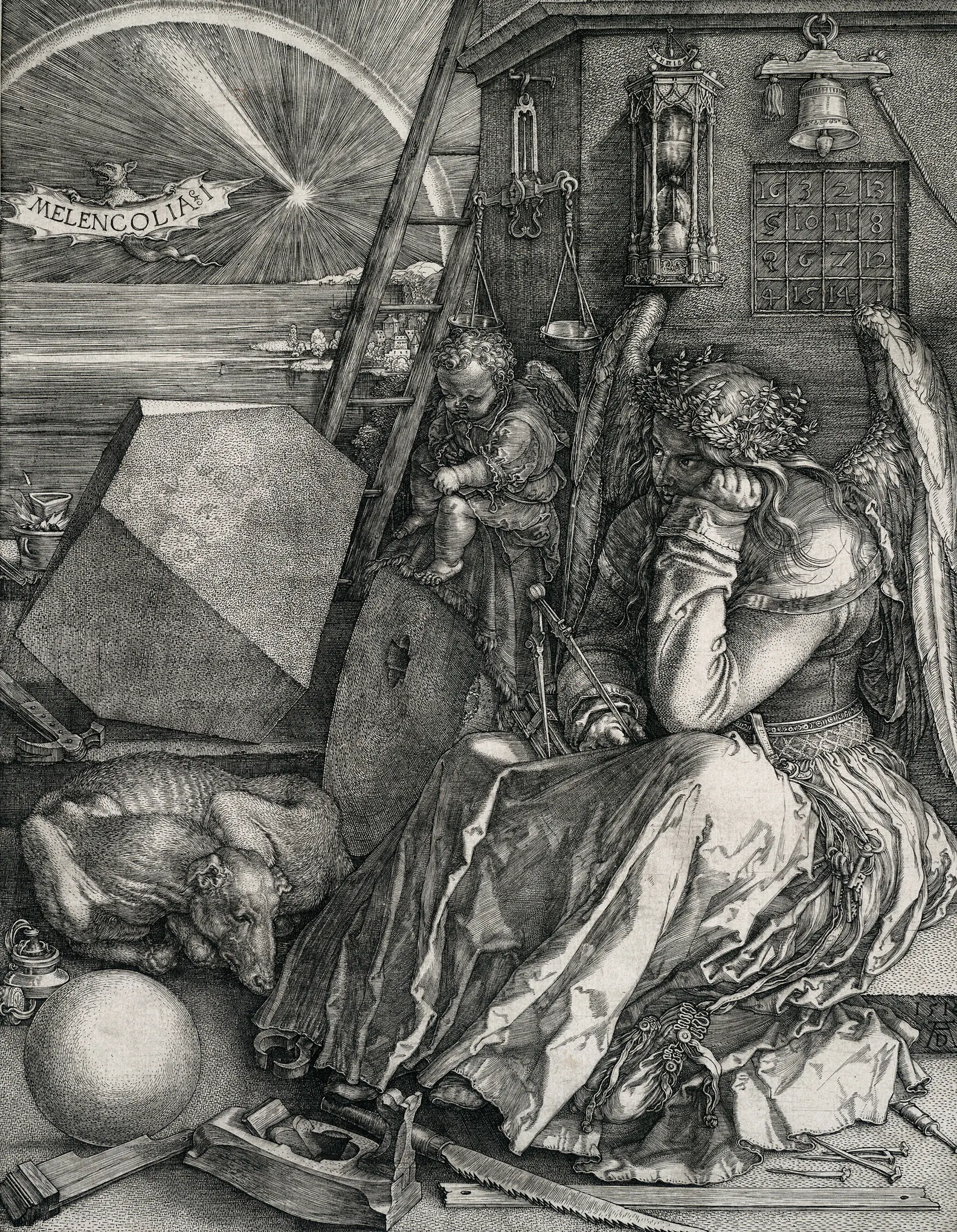
Melencolia I
1514 · Art Institute of Chicago · 1938.1452
CC0 Public Domain Designation
Resized to 1584 pixels wide and converted to WebP; no crop.

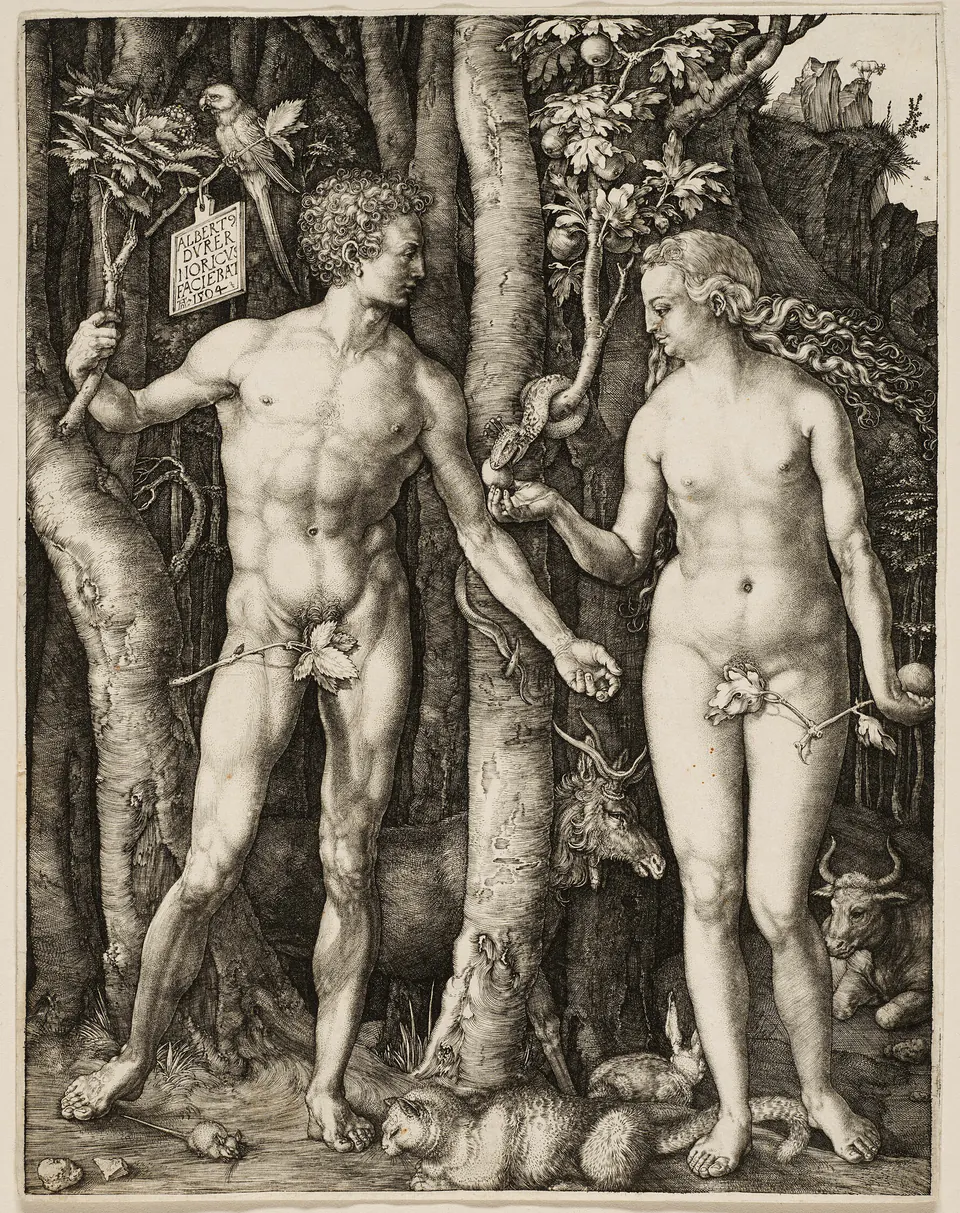
Adam and Eve
1504 · Art Institute of Chicago · 1944.614
CC0 Public Domain Designation
Resized to 960 pixels wide and converted to WebP; no crop.

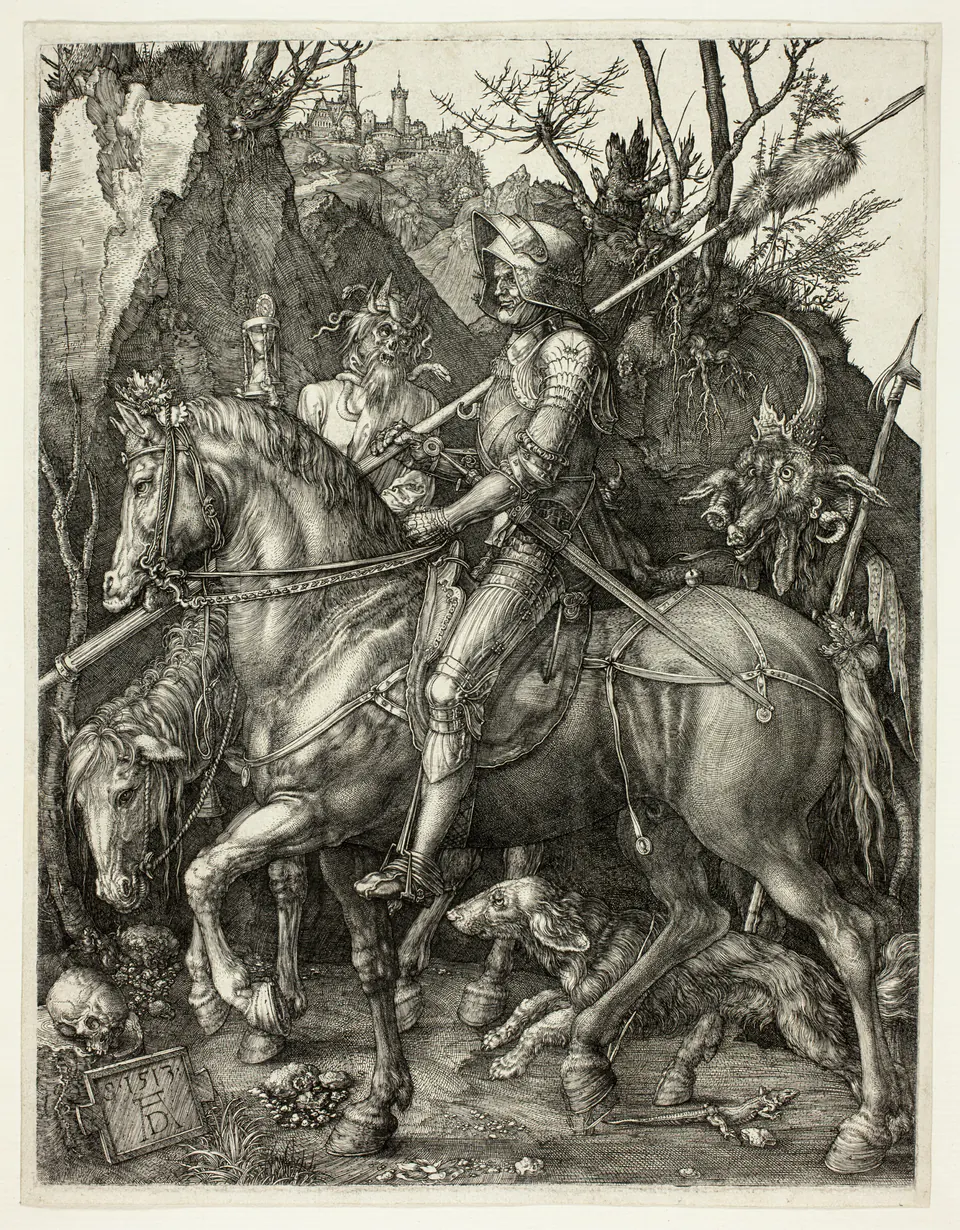
Knight, Death, and the Devil
1513 · Art Institute of Chicago · 1959.538
CC0 Public Domain Designation
Resized to 960 pixels wide and converted to WebP; no crop.

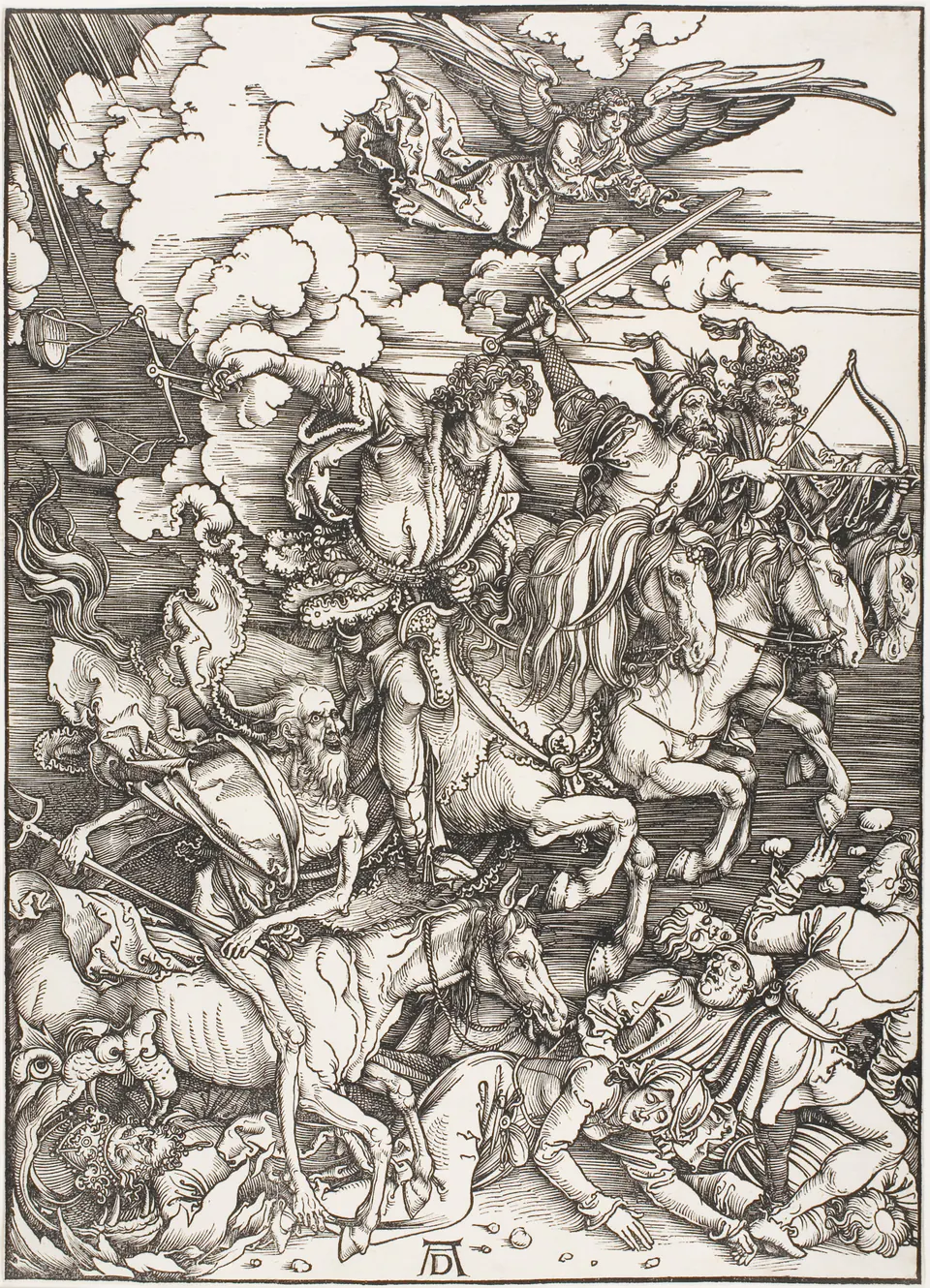
The Four Horsemen of the Apocalypse
c. 1496–98 · Art Institute of Chicago · 1946.288
CC0 Public Domain Designation
Resized to 960 pixels wide and converted to WebP; no crop.

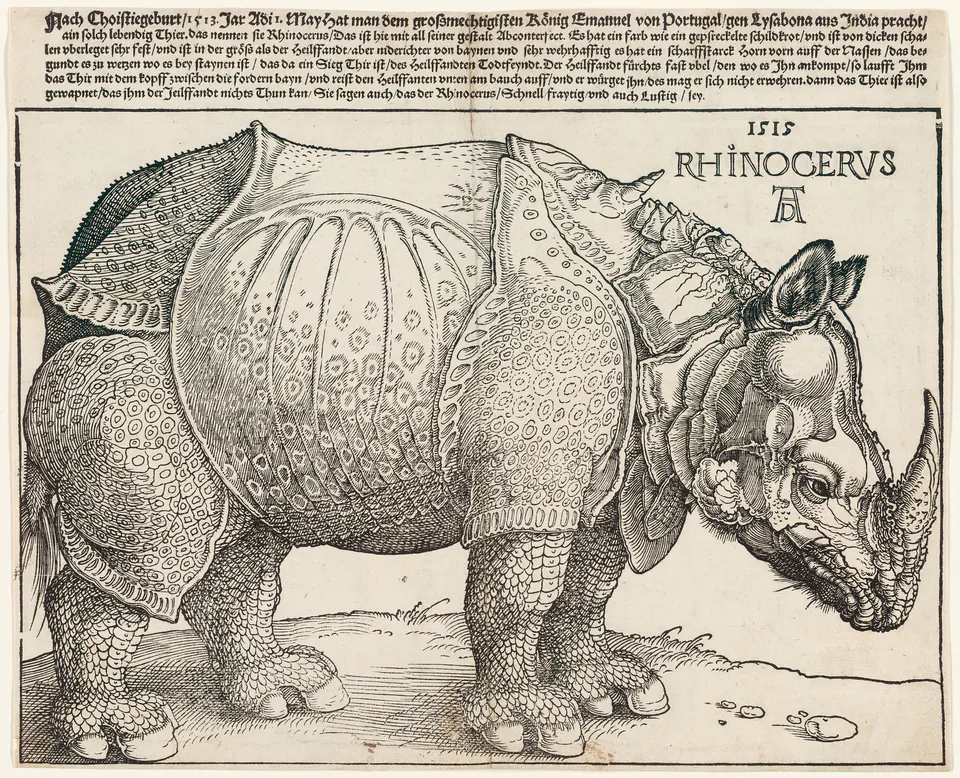
The Rhinoceros
1515 · Art Institute of Chicago · 1939.247
CC0 Public Domain Designation
Resized to 960 pixels wide and converted to WebP; no crop.

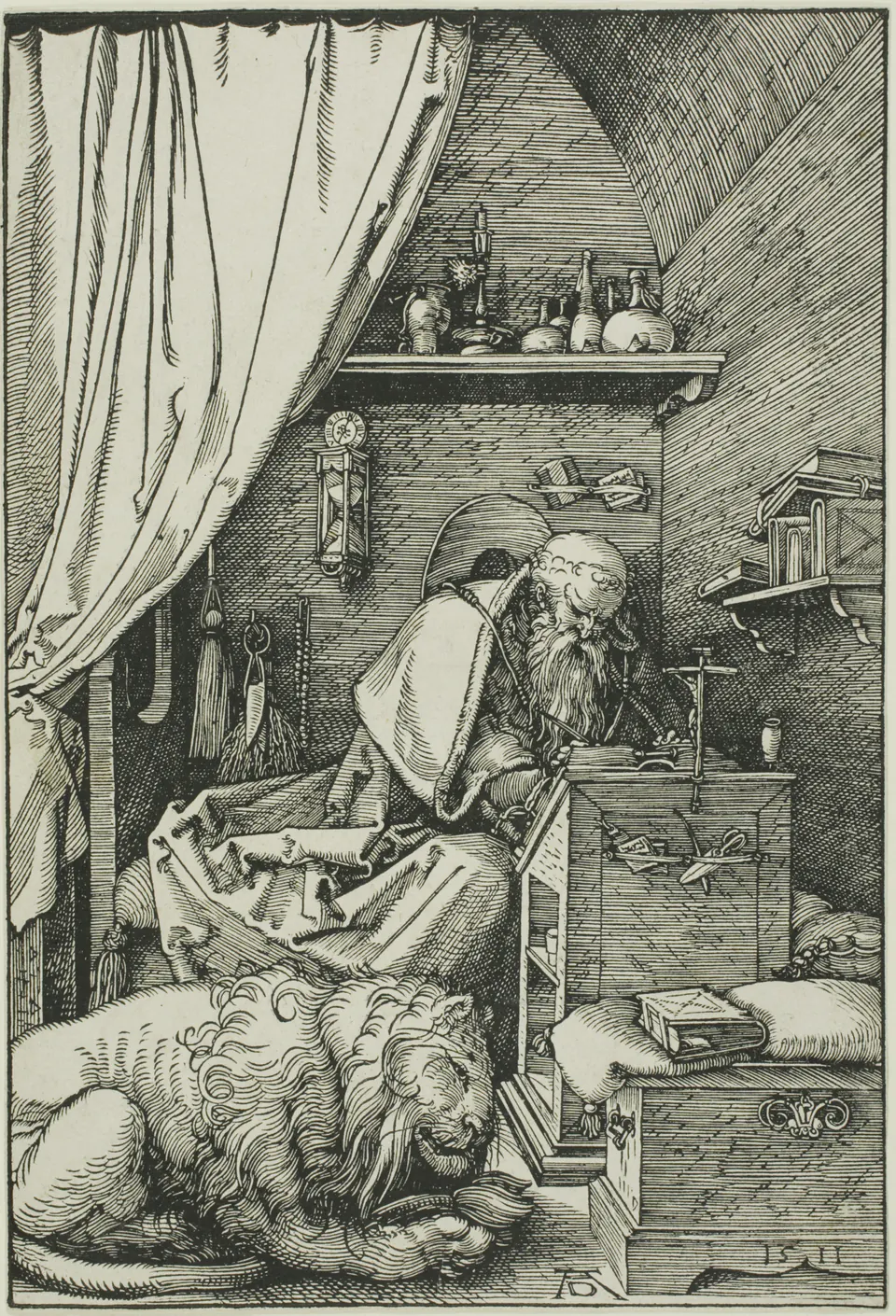
Saint Jerome in His Cell
1511 · Art Institute of Chicago · 1965.17
CC0 Public Domain Designation
Resized to 960 pixels wide and converted to WebP; no crop.

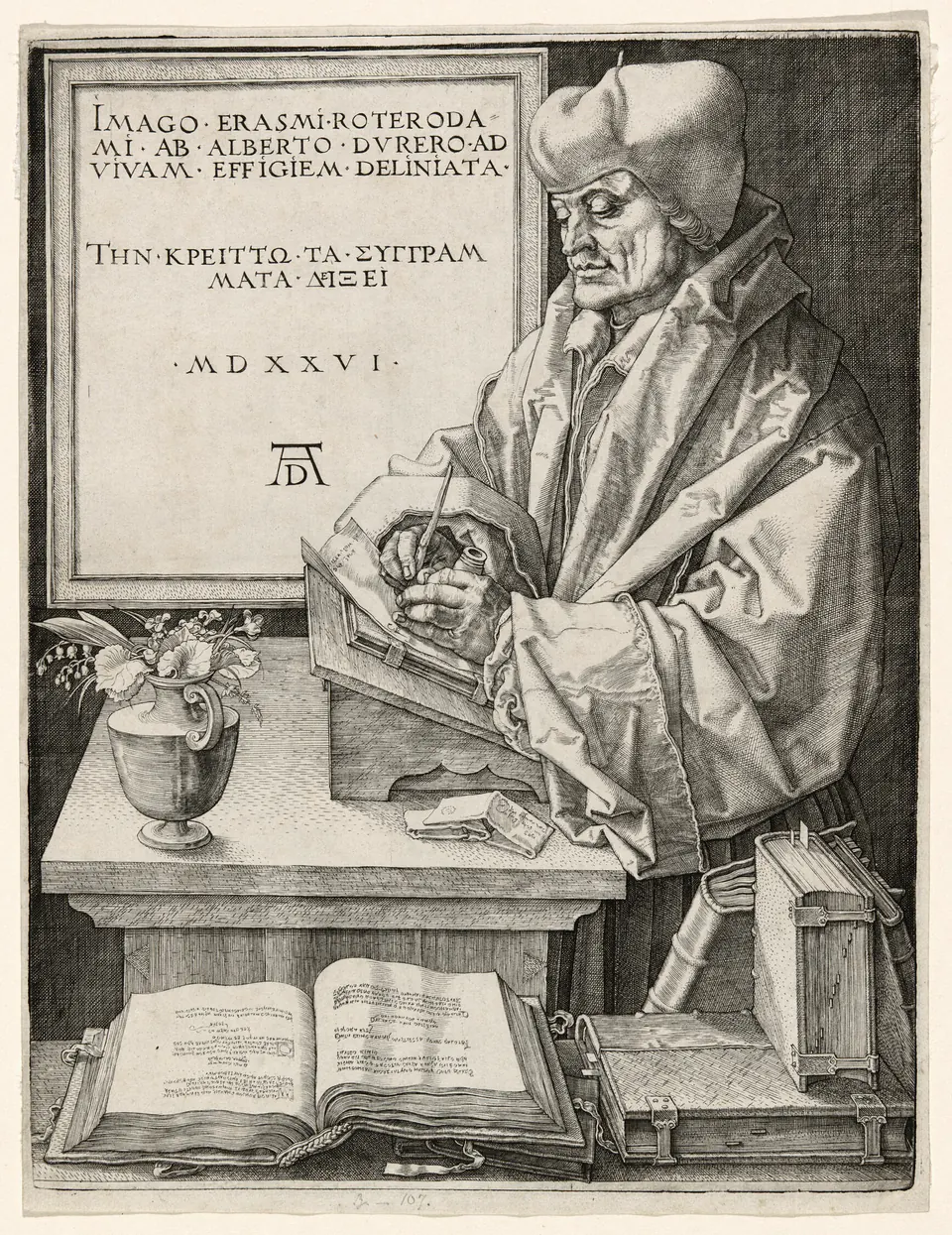
Erasmus of Rotterdam
1526 · Art Institute of Chicago · 1956.957
CC0 Public Domain Designation
Resized to 960 pixels wide and converted to WebP; no crop.

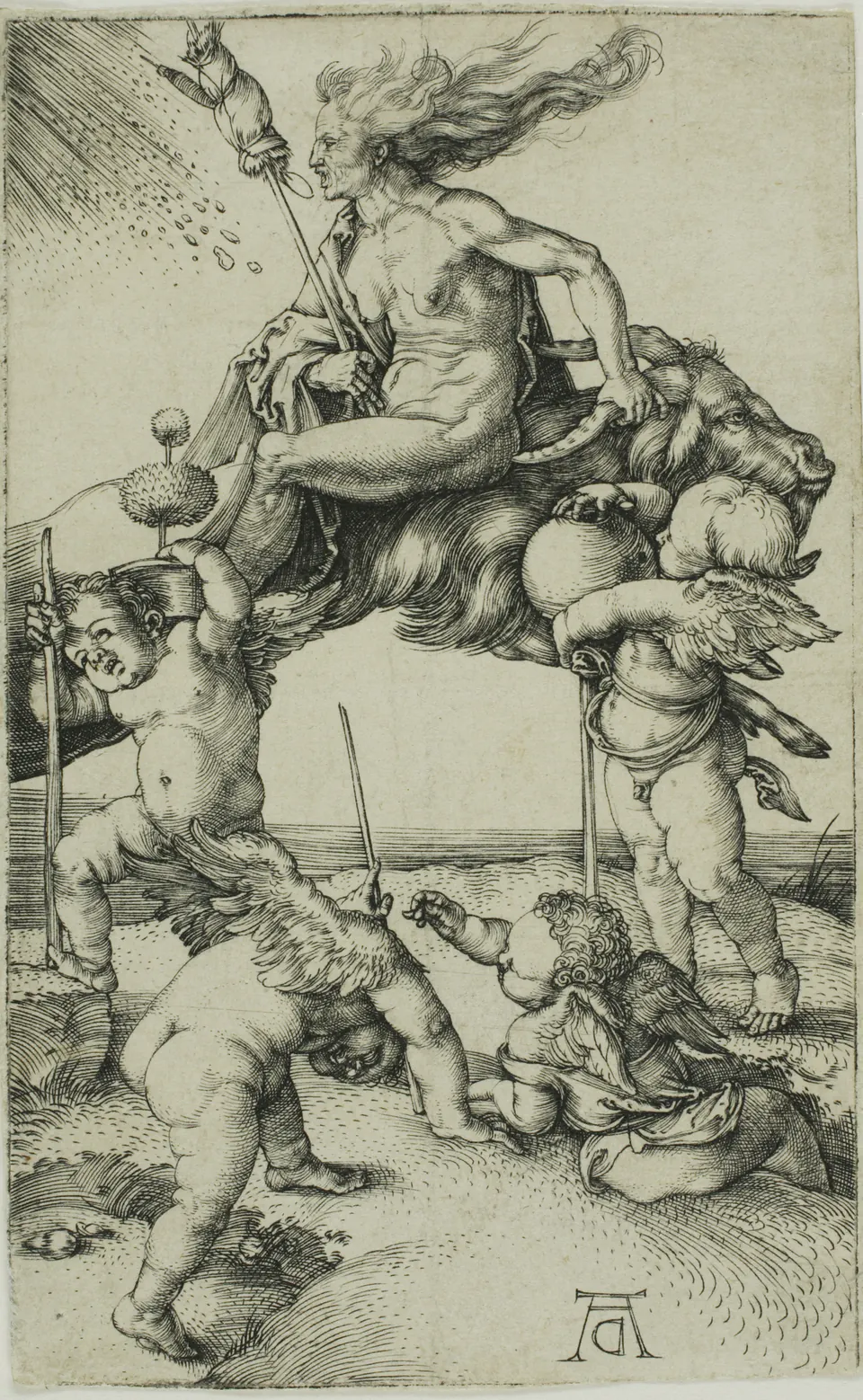
Witch Riding Backwards on a Goat
1500/02 · Art Institute of Chicago · 1938.1476
CC0 Public Domain Designation
Resized to 960 pixels wide and converted to WebP; no crop.

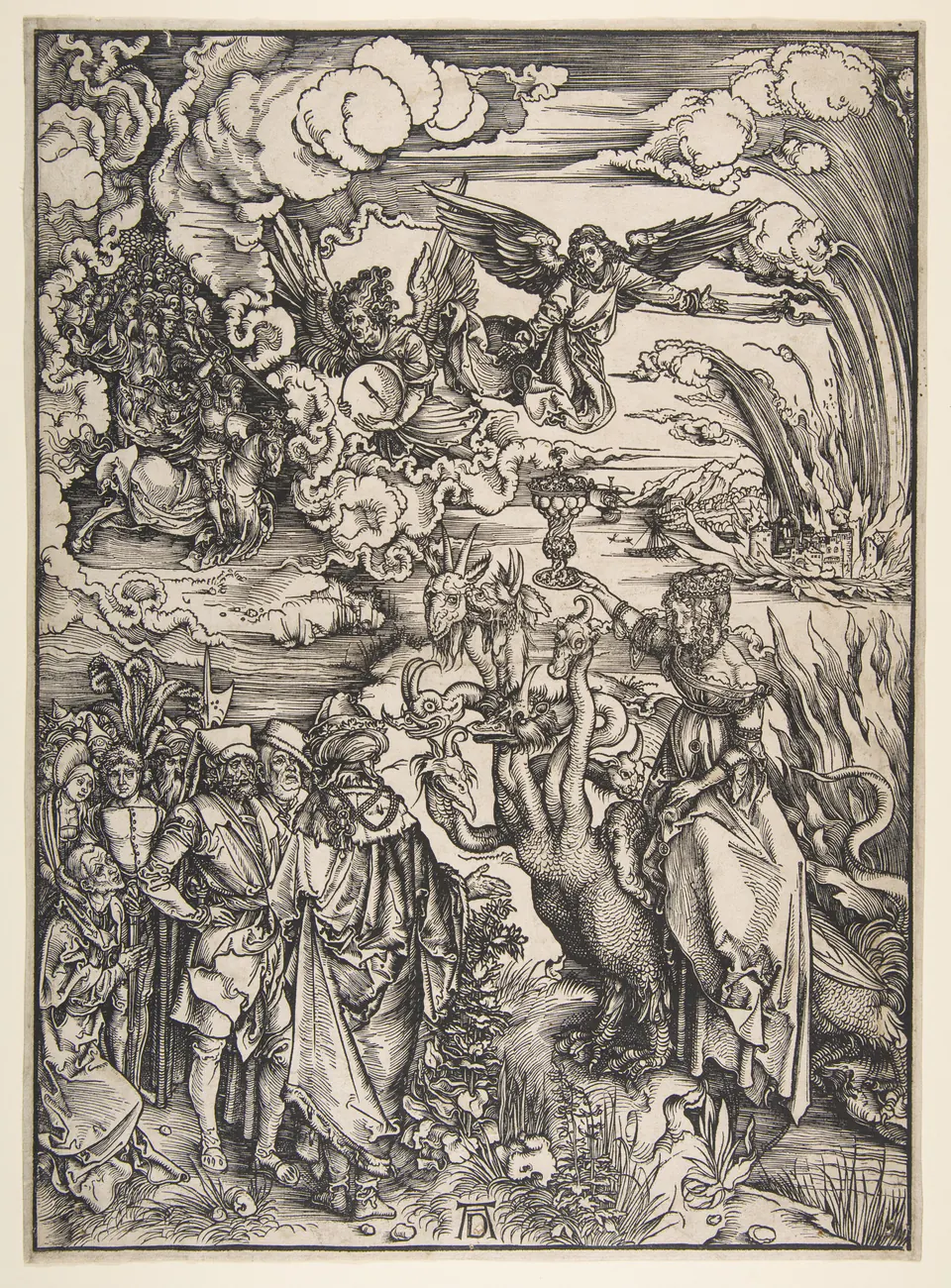
The Whore of Babylon, from The Apocalypse
1498 · The Metropolitan Museum of Art · 18.65.8
Public Domain / Open Access (CC0)
Resized to 960 pixels wide and converted to WebP; no crop.
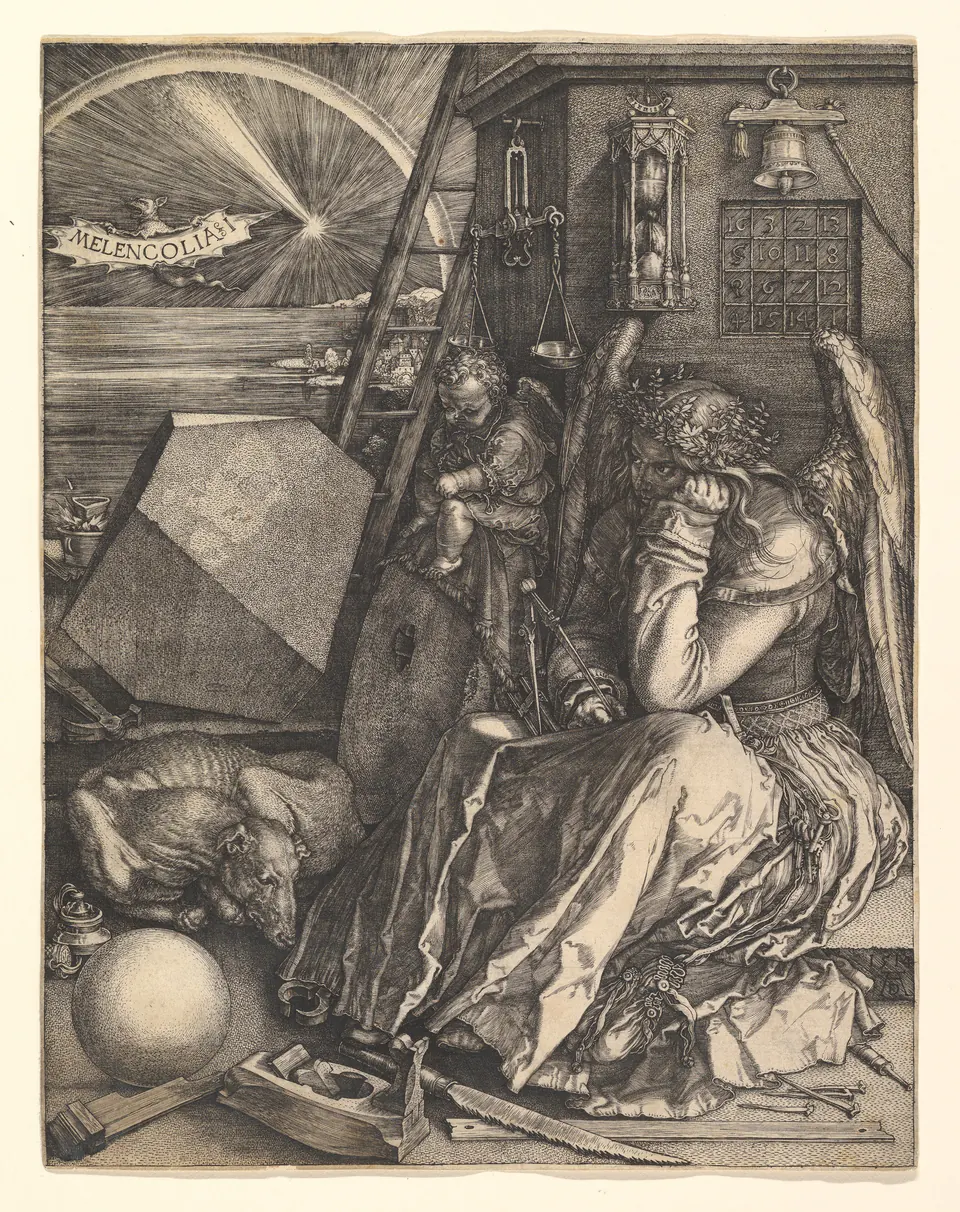
Melencolia I
1514 · The Metropolitan Museum of Art · 43.106.1
Public Domain / Open Access (CC0)
Resized to 960 pixels wide and converted to WebP; no crop.
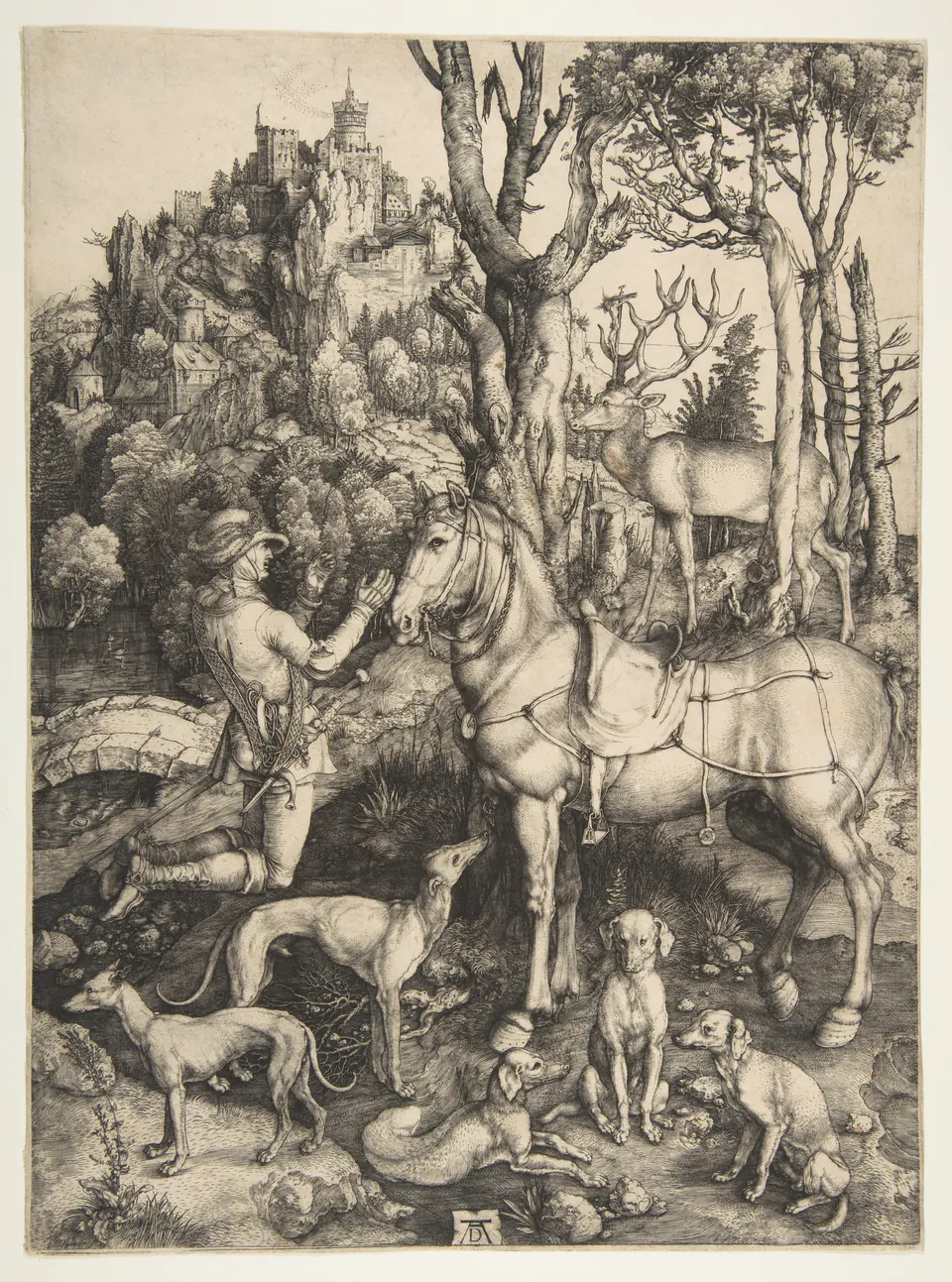
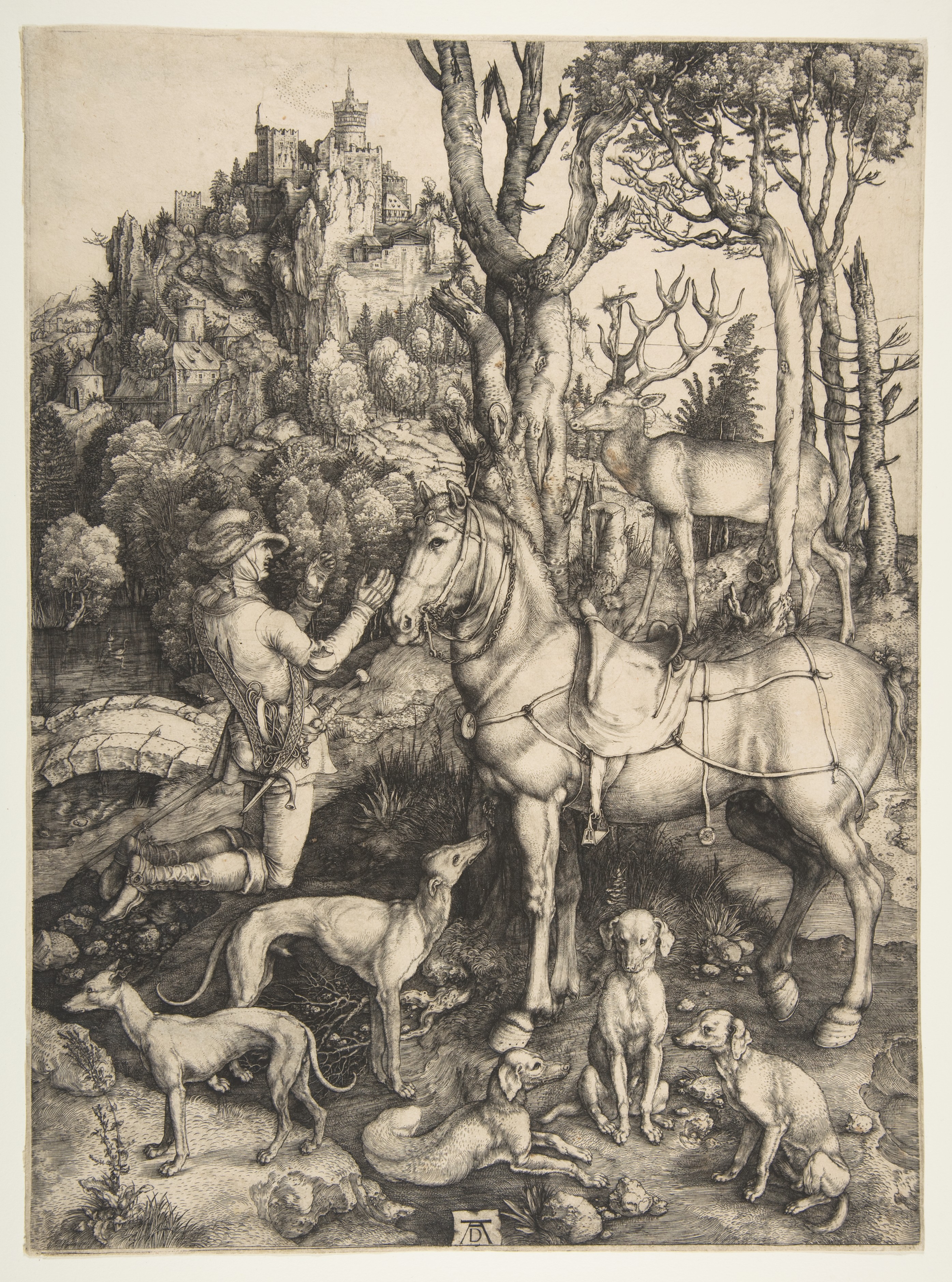
Saint Eustace
ca. 1501 · The Metropolitan Museum of Art · 19.73.65
Public Domain / Open Access (CC0)
Resized to 960 pixels wide and converted to WebP; no crop.
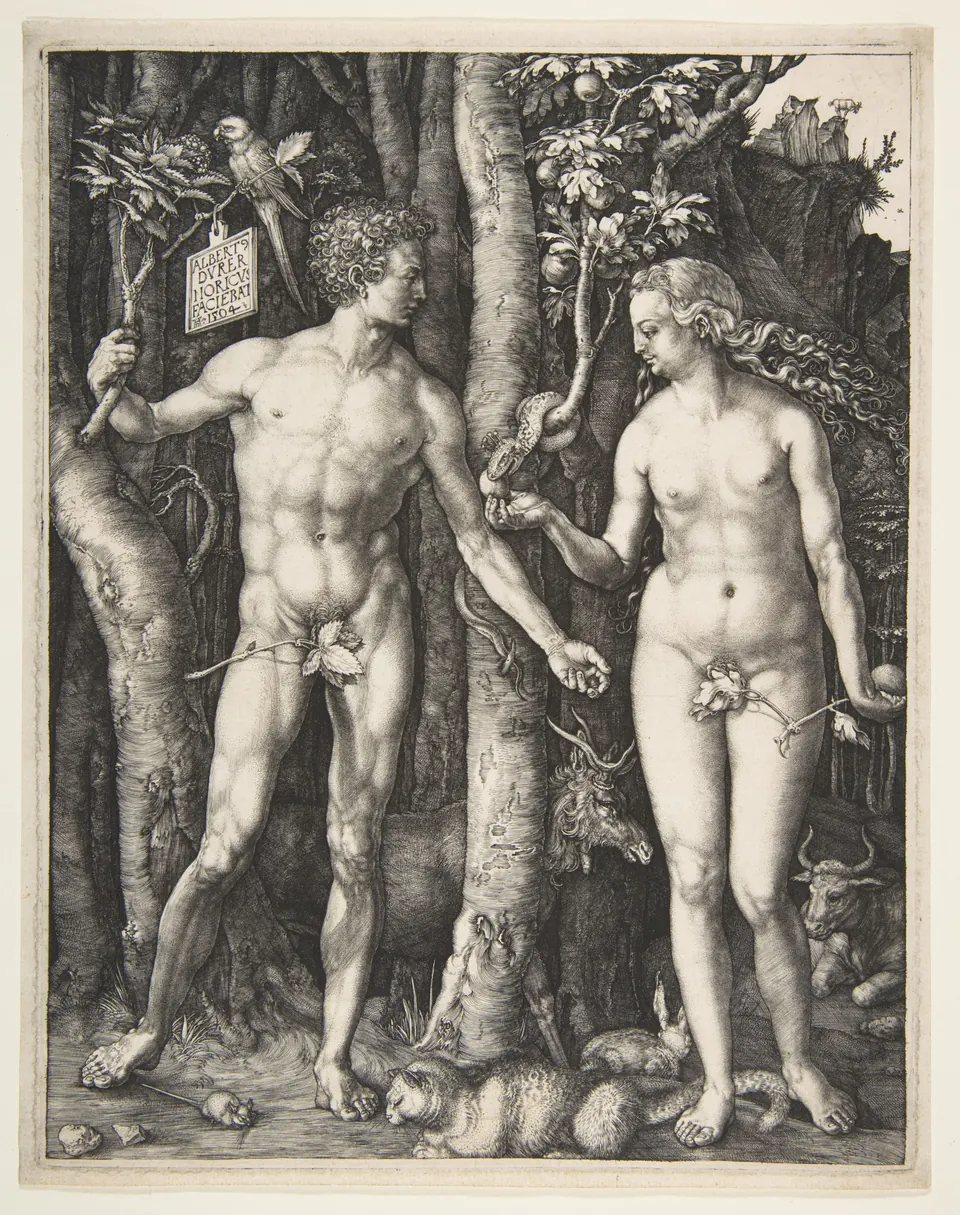
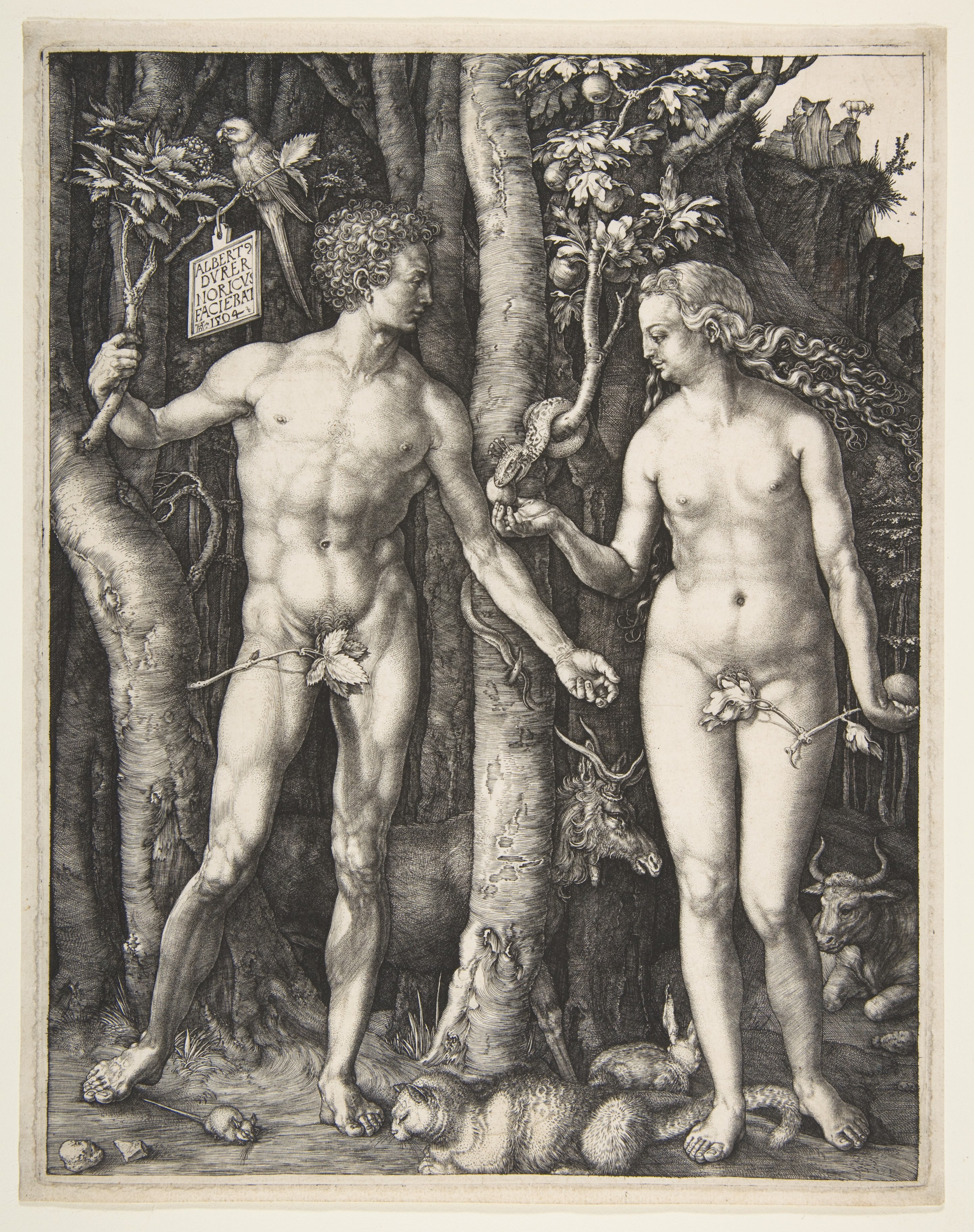
Adam and Eve
1504 · The Metropolitan Museum of Art · 19.73.1
Public Domain / Open Access (CC0)
Resized to 960 pixels wide and converted to WebP; no crop.
Sources and review method
We checked the artist chronology against museum records, treated each named jurisdiction separately, and recorded the provider policy for the image set. These sources support the legal framework and artist dates used above; the source file for any individual image still needs its own record.
- Melencolia I — Art Institute of Chicago. Feature impression identity, creator, date, accession, and CC0 Public Domain Designation.
- Open Access Images — Art Institute of Chicago. Files labelled CC0 Public Domain Designation may be reused for commercial and non-commercial purposes.
- Adam and Eve — The Metropolitan Museum of Art. Impression identity, accession, date, catalogue context, and Public Domain Open Access file status.
- Image and Data Resources — The Metropolitan Museum of Art. The Met makes images marked Public Domain available for unrestricted use under its Open Access programme.
- The Print in the North: The Age of Albrecht Dürer and Lucas van Leyden — The Metropolitan Museum of Art. Institutional context for northern print production, circulation, copying, editions, and collecting.
- The Babylonian Whore — Princeton University Art Museum. Independent Dürer object record and maximum-size public-domain download policy.
- Directive 2006/116/EC, Article 1 — EUR-Lex. The EU term for an artistic work is the author’s life plus 70 years.
- How long copyright lasts — UK Government. UK guidance gives 70 years after the author’s death for artistic works.
- Law No. 5846 on Intellectual and Artistic Works, Article 27 — WIPO Lex. The Turkish economic-rights term is the author’s life plus 70 years.
- Circular 15A: Duration of Copyright — U.S. Copyright Office. The 2026 term table places works published before 1931 outside the maximum 95-year publication term.
- Certain Unpublished, Unregistered Works Enter Public Domain — U.S. Copyright Office. Older unpublished works have a separate U.S. term analysis; discovery and first-publication history can matter.
- 17 U.S.C. Chapter 3, including §303 — U.S. Copyright Office. Section 303 states the transition rules and minimum 2002 or 2047 expiry floors for works that were unpublished on 1 January 1978.
- Visual Artists: Publication — U.S. Copyright Office. Distribution can publish a visual artwork, while public display by itself does not establish publication.
- Compendium of U.S. Copyright Office Practices, Chapter 900, §909.3(A) — U.S. Copyright Office. A purely faithful scan or “slavish copy” does not add registrable authorship, while substantial restoration or alteration can require a separate analysis.
- Copyright notice: digital images, photographs and the internet — UK Intellectual Property Office. A digital image can require a separate rights and website-terms check even when its subject is old.
Editorial record
About this article
- Author
- Publisher
- GeMarkt
- Published
- Reviewed
- Internal source & rights check. Conducted by GeMarkt Research Review. This is an internal editorial check—not independent peer review.
- Source standard
- Rights guide source standardSeparates the underlying work from the source file, records the review date, and links the evidence used for the conclusion.
Found a claim that needs checking? Report a factual error.