GeMarkt Journal · Practical guide
Is Francisco Goya Public Domain? Prints, Paintings, and Image Files
Goya's established works are public domain in the markets checked here, but publication, edition, impression, restoration, and file need separate evidence.
Rights check · reviewed
The short answer
Yes—for Goya’s established works and the 12 published institutional print impressions documented here in the European Union, United Kingdom, Türkiye, and United States. Publication, plate, state, edition, impression, translation, restoration, and exact file remain separate layers.
| What is being checked | Result | Why |
|---|---|---|
| European Union, United Kingdom & Türkiye | Public domain | Francisco Goya died in 1828, far beyond the ordinary life-plus-70 economic-rights terms. |
| United States — named print set | Clear for the documented publications | The selected series were published from 1799 through the nineteenth century; a private painting or drawing still needs its own §303 chronology. |
| Plate, state, edition, and impression | Keep every print layer | Lifetime and posthumous impressions can share Goya’s design while differing in plate state, publisher, paper, ink, condition, accession, and file. |
| Translation, restoration, or provider file | Audit modern work and terms | An old Spanish inscription does not clear a modern translation, restoration, hosted image, museum brand, or commercial-use restriction. |
This guide clears a named AIC and Met print set and answers Saturn Devouring His Son at the work/file boundary. It excludes the Prado web image, private works without a U.S. publication chronology, and unverified later editions or restored files.
This is a documented research summary, not legal advice. Copyright and moral-rights rules can vary by country and by the history of a particular work.

What we’ll look at
When can a Goya image be reused, and why do the work, copperplate, edition, impression, translated title, restoration, and digital file need separate records?
The useful answer is yes for Francisco Goya’s established works and for the 12 institutional print impressions documented here—but not automatically for every painting, proof, edition, translated title, restoration, or file carrying his name. Goya died in 1828. His established works are public domain in the European Union, United Kingdom, and Türkiye. The named print series were also published early enough to support a public-domain conclusion in the United States.
That first answer is unusually easy to misuse. Goya worked across paintings, drawings, etchings, aquatints, lithographs, albums, and murals. Some prints appeared during his lifetime; others were first issued as formal series decades after his death. One copperplate could produce proofs, lifetime impressions, posthumous editions, and later restrikes. A museum can accurately label one supplied file Public Domain while another institution applies restrictive terms to its photograph of a different Goya work.
This guide therefore asks:
- Is the underlying Goya work outside copyright in the market being checked?
- Was the work published, and what does its U.S. chronology show?
- Which plate, state, edition, and physical impression is being reproduced?
- Is the title Goya’s inscription, a historical series title, or a modern translation?
- Is the exact digital file affirmatively available for the intended reuse?
- Have restoration, colourisation, cleanup, typography, compositing, or generative editing added modern work?
It is a research summary, not legal advice. Its release boundary is the named institutional set, not Goya’s fame or age alone.
The short answer is yes for the named set
The 12 records below come from the Art Institute of Chicago and The Metropolitan Museum of Art. Each joins a museum object page to one exact source file and one local derivative. Eight AIC files carry a CC0 Public Domain Designation; four Met files are marked Public Domain through Open Access.
The set is intentionally made of prints with traceable publication histories. It includes plates from Los Caprichos, The Disasters of War, Disparates or Los Proverbios, and La Tauromaquia, plus The Garrotted Man. It spans lifetime and posthumous publication without pretending those labels describe the same object.
The clearance does not automatically include:
- a drawing or painting whose U.S. publication history has not been established;
- a plate reworked by another hand or a facsimile mistaken for an original impression;
- a modern book, exhibition catalogue, restored scan, or colourised edition;
- an English title, essay, transcription, or translation copied from a current publisher;
- a marketplace image or stock file without an institutional source chain;
- a museum logo, caption, trademark, or endorsement claim;
- the Prado website image of Saturn, whose stated use terms are not the same as AIC or Met Open Access.
The old work and the selected file remain separate evidence layers.
Life-plus-70 markets are clear
Goya’s 1828 death is far beyond ordinary life-plus-70 copyright terms. The European Union term directive, UK government guidance, and Article 27 of Türkiye’s Law No. 5846 each support a public-domain conclusion for his established works.
| Market checked | Rule relevant here | Result for Goya’s established works |
|---|---|---|
| European Union | author’s life plus 70 years | public domain |
| United Kingdom | 70 years after the creator’s death | public domain |
| Türkiye | economic rights ordinarily last life plus 70 | public domain |
This does not erase other layers. Ownership of a painting or copperplate is not copyright ownership. Open access does not authorise use of an institution’s trademark. Moral-rights rules, cultural-property law, contract terms, privacy, and a modern contributor’s work can vary by place and context.
The careful claim is narrower and stronger: the established Goya works identified here are outside ordinary economic copyright terms in the checked life-plus-70 markets.
The US answer depends on publication
United States duration analysis depends heavily on publication. In 2026, a work published before 1 January 1931 is beyond the maximum 95-year publication term shown in the Copyright Office’s duration table.
That route is clear for this selected print set. Los Caprichos was published in 1799 and La Tauromaquia in 1816. Formal editions of The Disasters of War and Disparates appeared in the nineteenth century. Each precedes the current cutoff by decades.
The reasoning cannot be transferred automatically to a private work. Section 303 governs works that were unpublished on 1 January 1978 and includes transition floors through 2002 or, for some qualifying first publications, the end of 2047. The Copyright Office also distinguishes distribution from public display. Hanging a painting in an exhibition does not by itself prove publication.
Use this split:
- Named print with documented eighteenth- or nineteenth-century publication: the publication route is clear.
- Proof or state not issued as part of that edition: identify its own distribution history.
- Private drawing, album sheet, mural, or painting: build an item-level chronology rather than borrowing the series date.
- Modern facsimile or scholarly edition: identify its publisher, restoration, translation, layout, file source, and date.
A museum’s current Public Domain label is important file evidence. It is not a substitute for historical analysis of a different object.
Four print series create more than one date
Goya’s major print series resist the idea that an artwork has one date.
Los Caprichos was advertised and offered for sale in 1799. A record may therefore carry a design date, plate-making range, publication year, impression date, and acquisition date. La Tauromaquia was issued in 1816, but later editions differ in paper, ink, plate wear, numbering, and sometimes order.
Goya worked on The Disasters of War during and after the Peninsular War. The first formal edition was published in 1863, long after his death. Disparates was likewise printed posthumously, with plates issued under titles Goya did not necessarily supply. An 1815–19 design date and an 1864 publication date can both be correct because they answer different questions.
A reusable record should preserve:
- Design. What did Goya conceive or draw?
- Plate. Which copperplate and state carry that design?
- Edition. Who printed and published this group, and when?
- Impression. Which sheet, paper, ink, condition, and accession survives?
- Inscription and title. What appears on the plate, and what was added later?
- Digital file. Which institution supplied this scan or photograph?
- Derivative. What did the present user resize, clean, crop, translate, or add?
“An original Goya print” is too imprecise for those layers.
Posthumous edition does not mean one modern right
A posthumous impression is a physical print made after Goya died, often from a plate he prepared. That fact changes object history. It does not revive Goya’s expired copyright or make every later impression a newly copyrighted composition.
The distinction still matters. A posthumous publisher may select plate order, supply titles, add numbers, print on different paper, alter or steel-face a plate, create a cover, and assemble an edition. A modern photographer or restorer may make additional choices. Some elements can be old and public domain while a current edition’s new text, layout, restoration, or file remains separately protected or contractually controlled.
The safe method is not to guess whether the word “posthumous” grants or removes rights. Record the exact impression and exact file. The AIC and Met rows below do that for the released set.
Is The Sleep of Reason Produces Monsters public domain
Yes for Goya’s plate 43 from Los Caprichos and for the AIC impression and file documented here in the checked markets. The feature is AIC accession 1927.3241. Its object page identifies Goya, dates the etching and aquatint to 1797–99, places it in the published series, and applies a CC0 Public Domain Designation to the supplied image.
The familiar English title translates the Spanish inscription commonly transcribed as El sueño de la razón produce monstruos. A current English rendering can be editorial work even when the short conventional title is widely shared. For a scholarly or commercial edition, transcribe the plate, state the translation source, and do not silently copy a museum’s full caption or interpretive text.
The source file measured 1949 × 3000 pixels. GeMarkt resized it to 1584 × 2438 pixels, converted it to WebP, and did not crop it. The paper edge, plate tone, marks, and condition remain part of this impression rather than defects to erase without a restoration record.
Is Saturn Devouring His Son public domain
Goya’s underlying 1820–23 work is outside ordinary economic copyright terms in the checked life-plus-70 markets, but that does not make the Prado website image an unrestricted commercial file. This is precisely why work rights and file rights must not be collapsed.
The Prado records Saturn as one of the Black Paintings made on the walls of the Quinta del Sordo. It was later transferred from mural to canvas, a process the museum says caused substantial paint loss. The object now seen is therefore connected to a wall painting, a nineteenth-century physical transfer, later conservation, museum photography, and a current website delivery file.
The Prado’s legal information limits its website materials to private, study, or teaching use and directs editorial and commercial image use through its image bank and permission process. GeMarkt therefore does not import that web file into this open candidate set, does not promise commercial clearance, and does not launch a separate download-oriented Saturn page.
This is not a claim that the museum owns a new copyright in Goya’s composition everywhere. It is a practical source decision: the provider terms attached to that exact hosted file are incompatible with this release’s open production chain. A different, adequately documented source could produce a different file-level answer.
Titles translations and restorations are separate work
Goya’s prints often carry Spanish inscriptions, but series titles and English titles have complicated histories. Disparates is also known as Los Proverbios. The Disasters of War was organised and titled for posthumous publication. Different catalogues translate irony, idiom, and punctuation differently.
The underlying image may be public domain while a modern translator’s paragraph, catalogue entry, or carefully reconstructed title set is not. Use the original inscription where possible, cite the translation source, and write new descriptive alt text rather than copying a museum’s prose.
Restoration creates a parallel issue. Aquatint invites tonal correction. A scan may be cleaned, stains removed, paper neutralised, missing plate tone rebuilt, borders expanded, or several impressions composited. Some steps are mechanical; others may contain creative choice. The U.S. Copyright Office distinguishes faithful copying from sufficiently creative alteration, and other jurisdictions or contracts may differ.
Keep exact provenance:
- object URL and accession;
- plate, state, edition, and impression evidence;
- exact source-file URL and provider label;
- original inscription and translation source;
- source dimensions, local dimensions, and checksum;
- crop, cleanup, colour, reconstruction, compositing, typography, or generative-edit history;
- review date.
Twelve open files form the published set
Eight impressions come from AIC and four from The Met. The visible rights ledger below is the publication boundary. Every row connects a specific object, accession, exact source image, provider label, local file, dimensions, and transformation.
The set shows several rights-relevant patterns:
- Three Los Caprichos plates keep their series and impression identity rather than becoming generic “Goya drawings.”
- The Disasters of War rows pair an early-nineteenth-century plate history with documented 1863 publication.
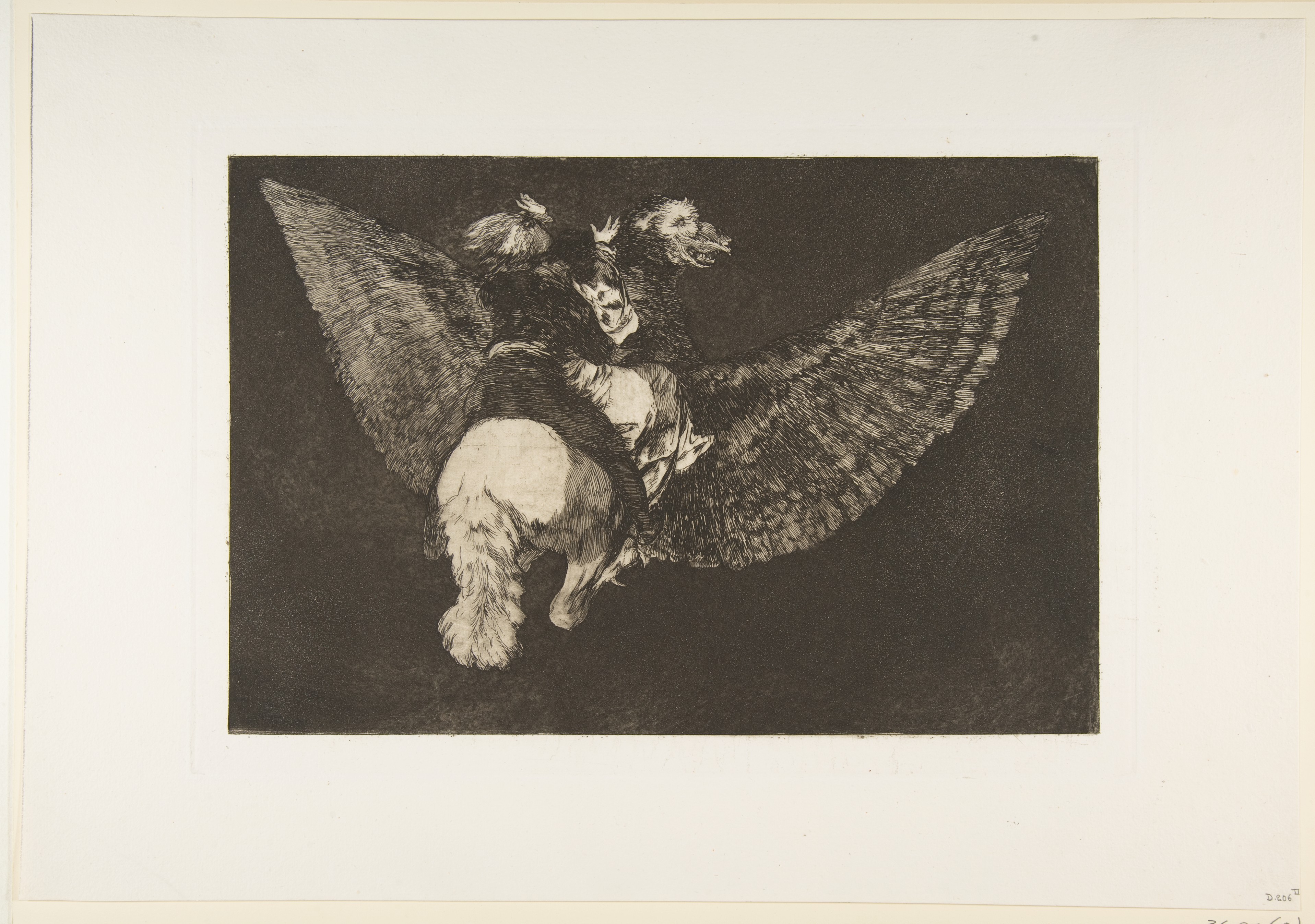
- A Way of Flying, Flying Folly, and Dancing Giant show why Goya’s design dates and posthumous Disparates publication dates coexist.
- La Tauromaquia supplies a documented 1816 lifetime-publication route.
- The Garrotted Man remains one identified etching and accession, not a universal representative file for every impression.
None should be downloaded, renamed, and detached from its object record.
A commercial reuse checklist
Before using a Goya image in a print, book, apparel design, advertisement, or digital collection:
- Identify the work and medium. Painting, mural, drawing, etching, aquatint, lithograph, or facsimile?
- Check the intended market. Use a territorial rule rather than a worldwide slogan.
- Establish publication. A documented print series and a private painting need different U.S. reasoning.
- Name the plate and state. Record reworking, inscriptions, numbering, and plate order.
- Name the edition and impression. Preserve publisher, date, paper, accession, and condition.
- Audit the title. Distinguish Goya’s inscription from later Spanish titles and modern translation.
- Follow the exact file. Start with the provider object record, not a search engine or reseller.
- Read the provider policy. AIC or Met Open Access is not interchangeable with the Prado website’s stated terms.
- Record modern work. Document cleaning, reconstruction, colourisation, crop, typography, and generative edits.
- Avoid false endorsement. Do not use institutional branding or imply museum approval.
Recheck before each release. Attribution, object metadata, file availability, and provider policy can change even though Goya’s own term cannot return.
Where Goya fits inside GeMarkt
The artwork research guide shows how to build an object record and source map. The guide to citing art and images adds captions, editions, and file rights. Provenance, Attribution, Restitution explains why an object’s story changes when evidence changes. Public Domain Is Not a Free-for-All gives the neighbouring rule: an old work and a modern hosted file are not one question.
Future collection and wallpaper paths are reserved as /collections/goya/ and /free/wallpapers/goya/. They are not live product promises. They should open only after selected files have been restored, quality checked, and prepared for the actual format.
Until then, readers can consult GeMarkt’s copyright approach, browse existing free wallpapers, or visit the shop for work that genuinely exists today. Goya’s images have passed through plates, editions, transfers, restorations, catalogues, and screens. Responsible reuse begins by naming which one reached the present.
Rights-checked image ledger
A documented starting set
These files were selected from the holding institutions rather than from search-result copies. Each card keeps the artwork record, exact source file, provider statement and GeMarkt transformation visible as separate facts.
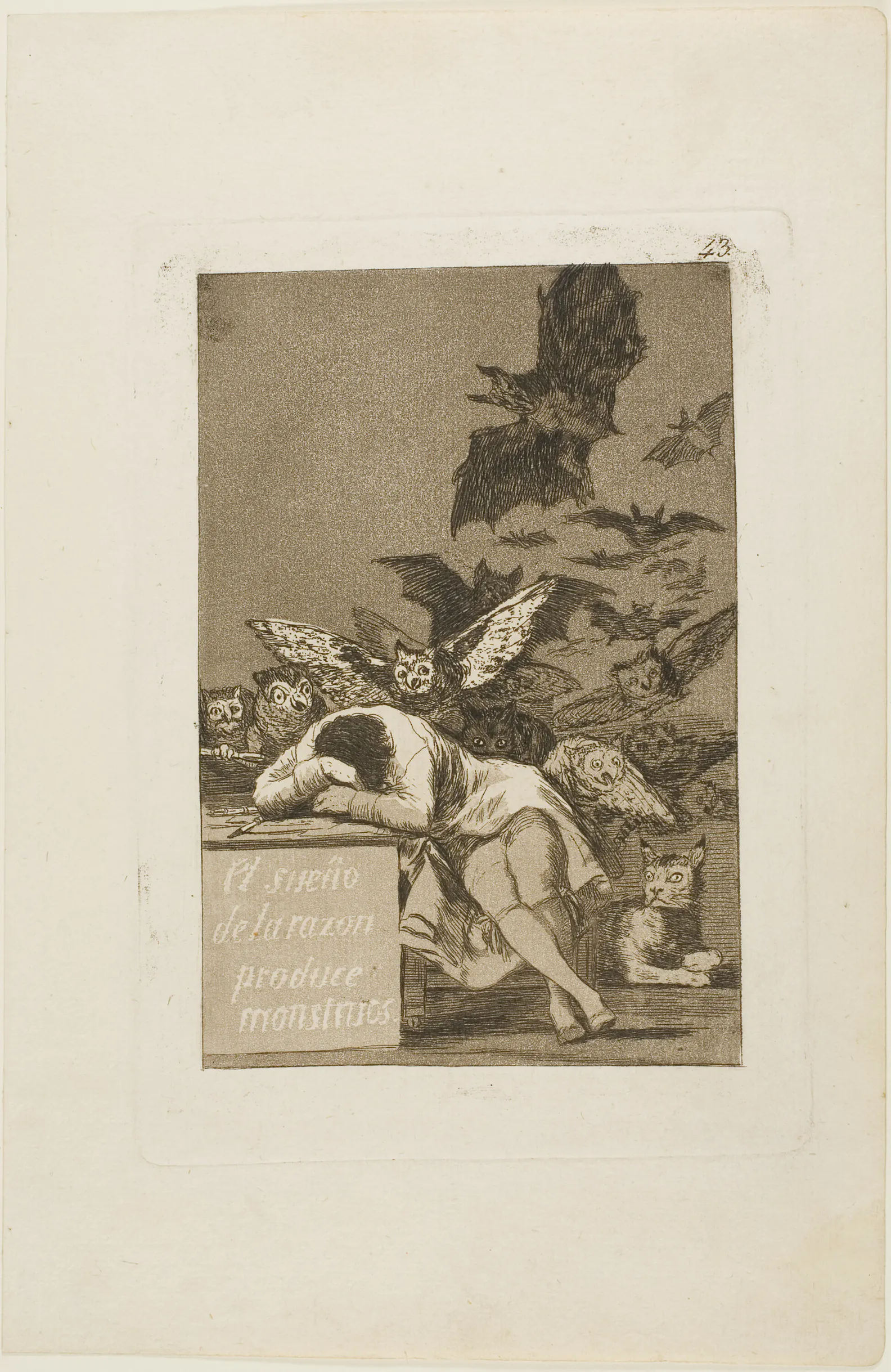
The Sleep of Reason Produces Monsters, plate 43 from Los Caprichos
1797/99 · Art Institute of Chicago · 1927.3241
CC0 Public Domain Designation
Resized to 1584 pixels wide and converted to WebP; no crop.

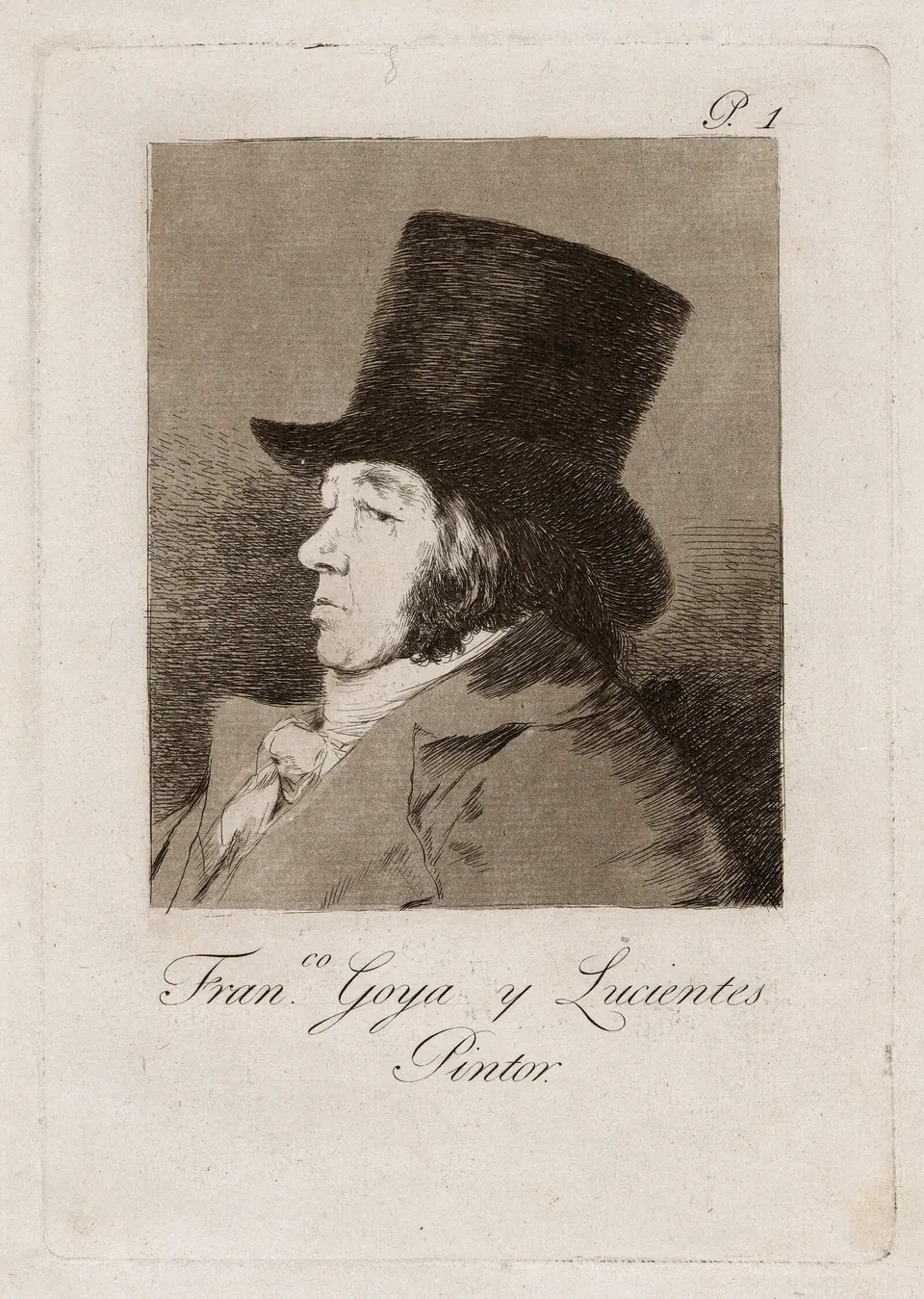
Francisco Goya y Lucientes, Painter, plate one from Los Caprichos
1797/99 · Art Institute of Chicago · 1948.110.1
CC0 Public Domain Designation
Resized to 960 pixels wide and converted to WebP; no crop.

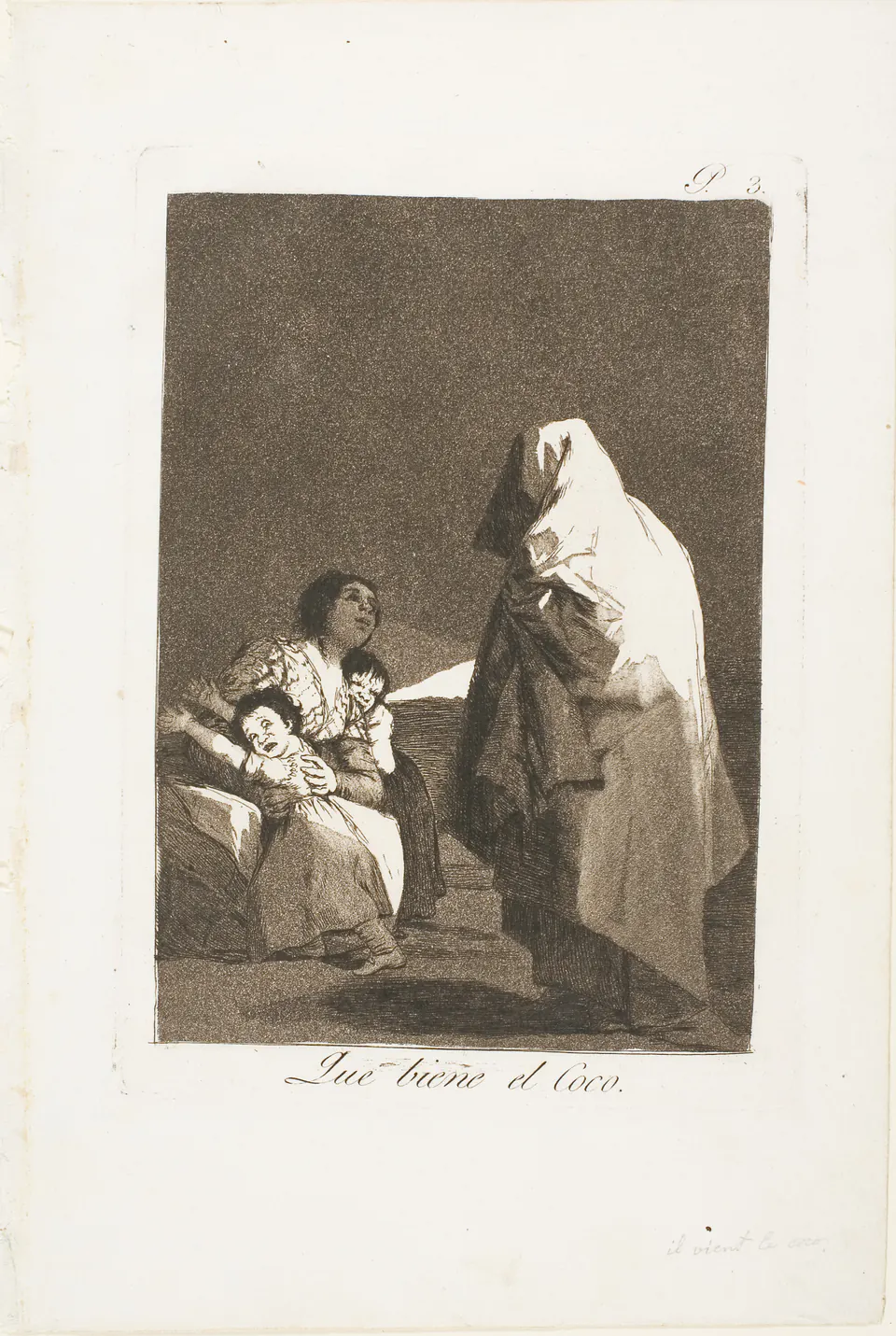
Here Comes the Bogeyman, plate three from Los Caprichos
1797/99 · Art Institute of Chicago · 1948.110.3
CC0 Public Domain Designation
Resized to 960 pixels wide and converted to WebP; no crop.

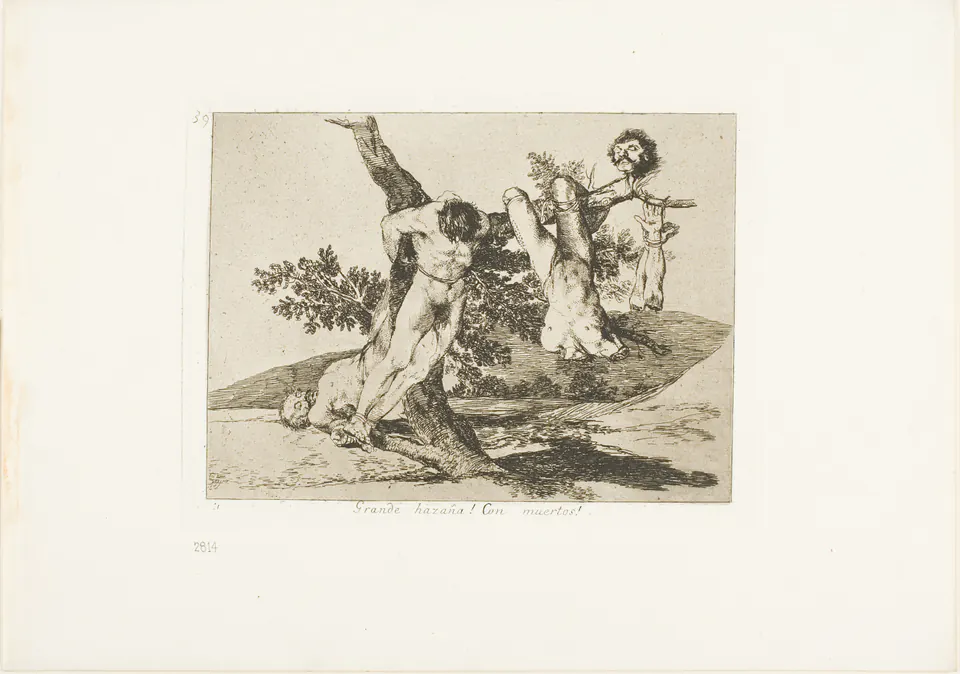
A Heroic Feat! With Dead Men!, plate 39 from The Disasters of War
1812/15, published 1863 · Art Institute of Chicago · 1920.1344
CC0 Public Domain Designation
Resized to 960 pixels wide and converted to WebP; no crop.

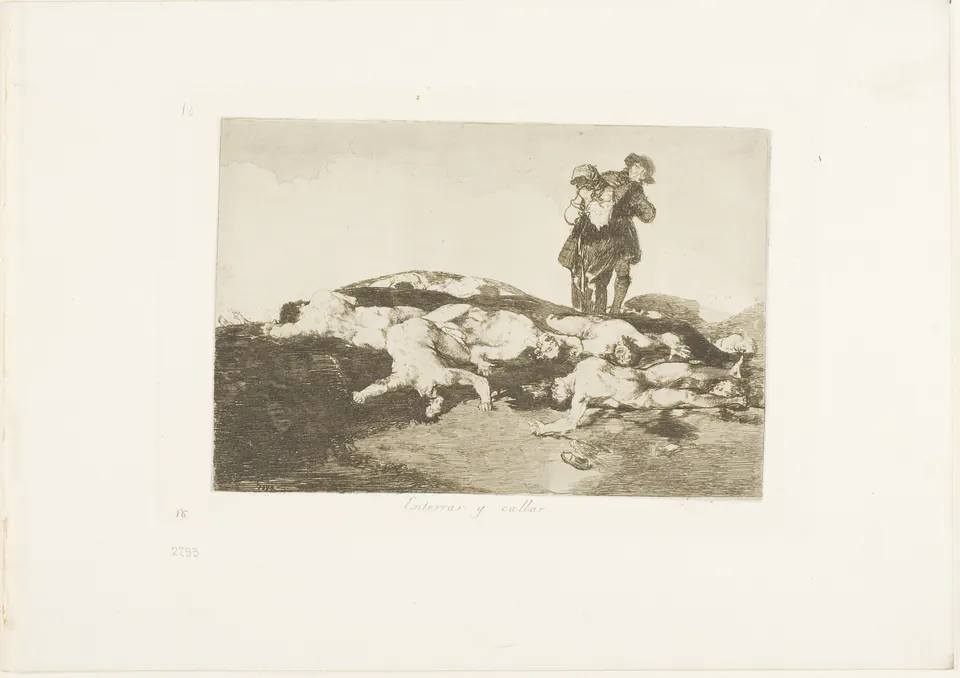
Bury Them and Keep Quiet, plate 18 from The Disasters of War
1810/12, published 1863 · Art Institute of Chicago · 1920.1323
CC0 Public Domain Designation
Resized to 960 pixels wide and converted to WebP; no crop.

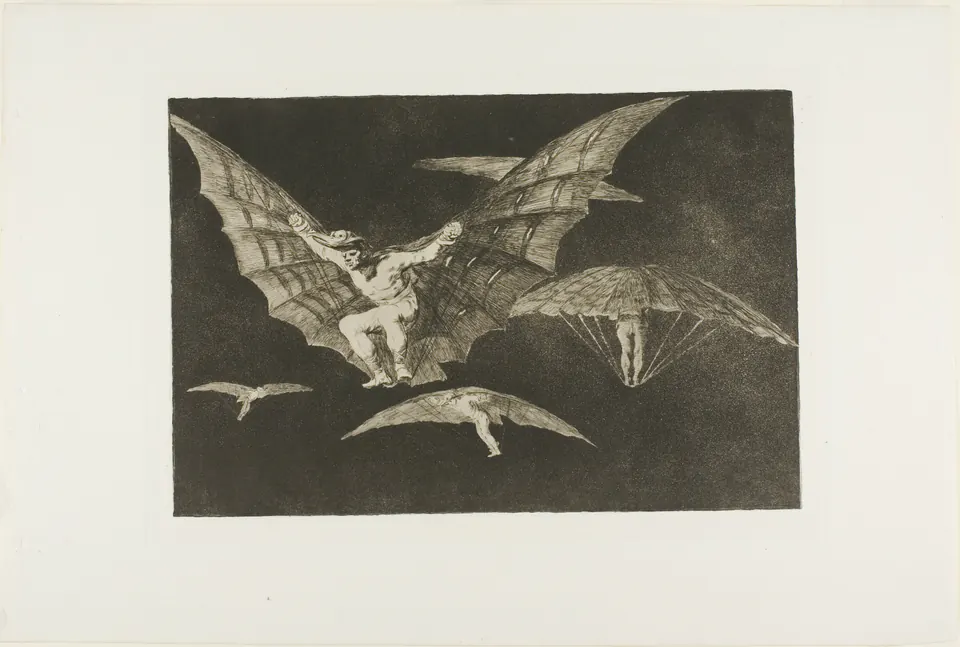
A Way of Flying, from Disparates
1815–17, published 1864 · Art Institute of Chicago · 1927.3322
CC0 Public Domain Designation
Resized to 960 pixels wide and converted to WebP; no crop.

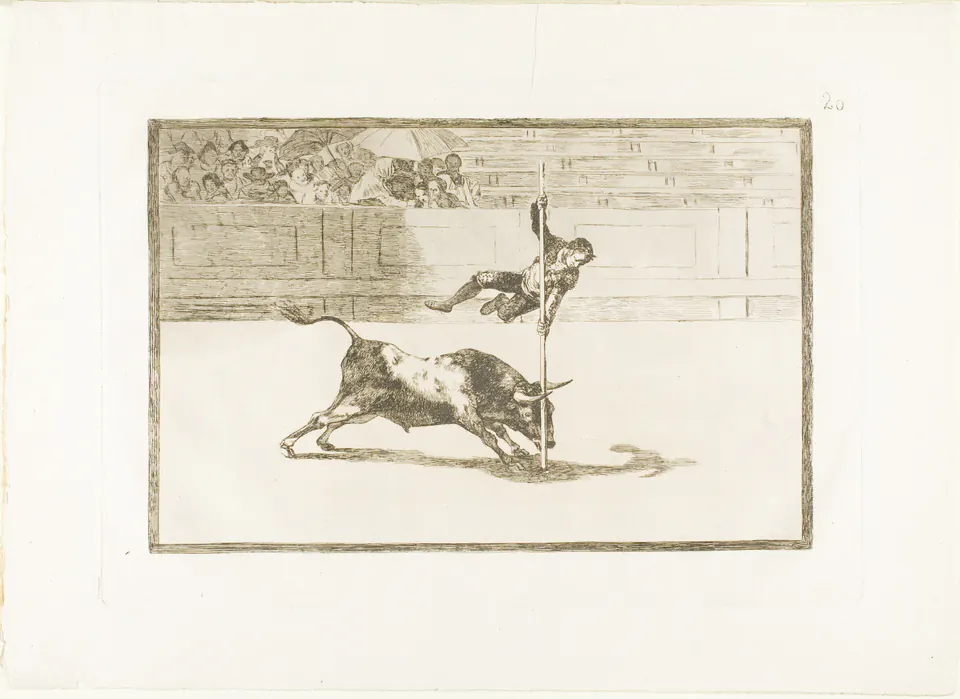
The Agility and Audacity of Juanito Apiñani in the Ring at Madrid
1814/16, published 1816 · Art Institute of Chicago · 1927.3378.20
CC0 Public Domain Designation
Resized to 960 pixels wide and converted to WebP; no crop.

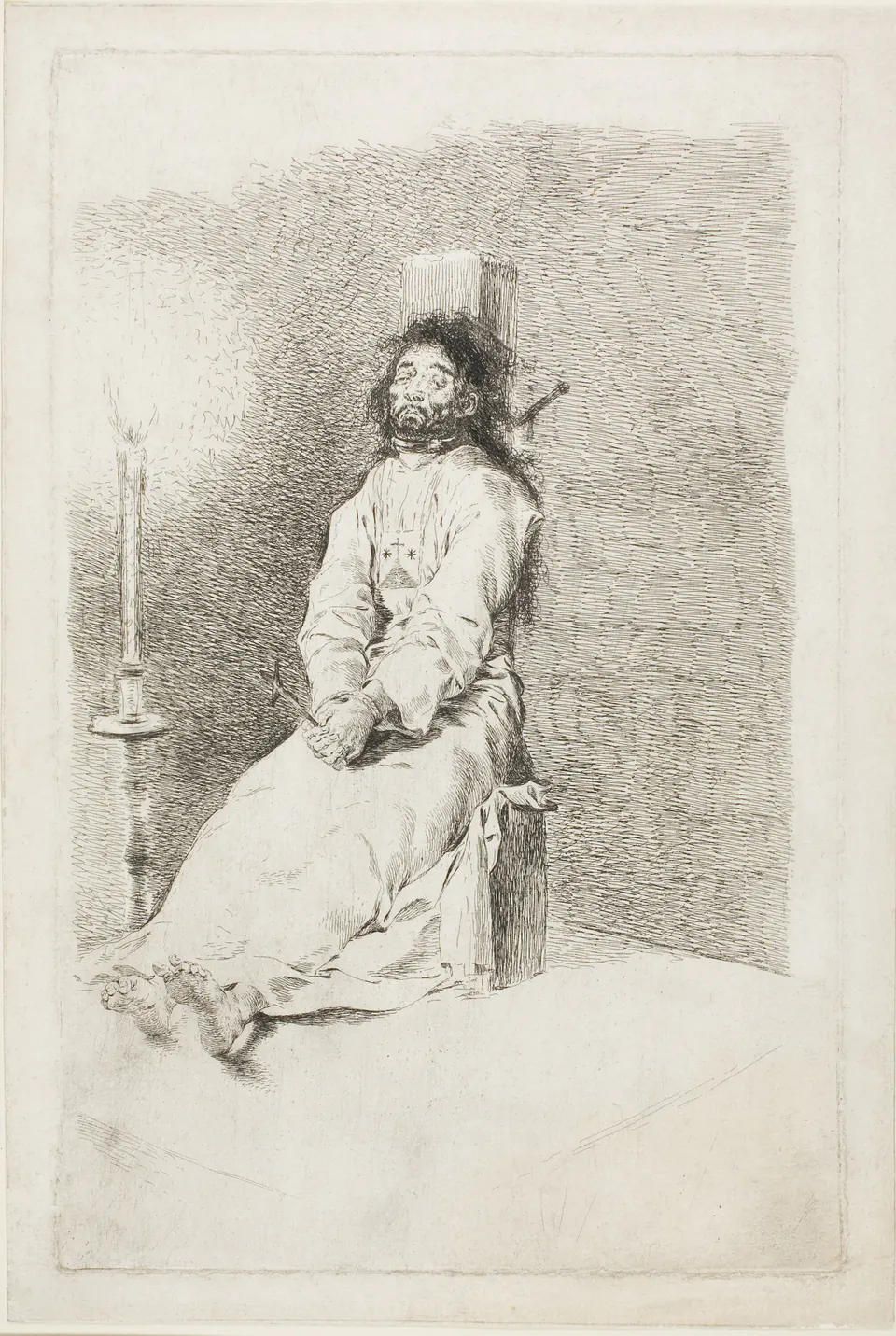
The Garrotted Man
1778–80 · Art Institute of Chicago · 1962.320
CC0 Public Domain Designation
Resized to 960 pixels wide and converted to WebP; no crop.

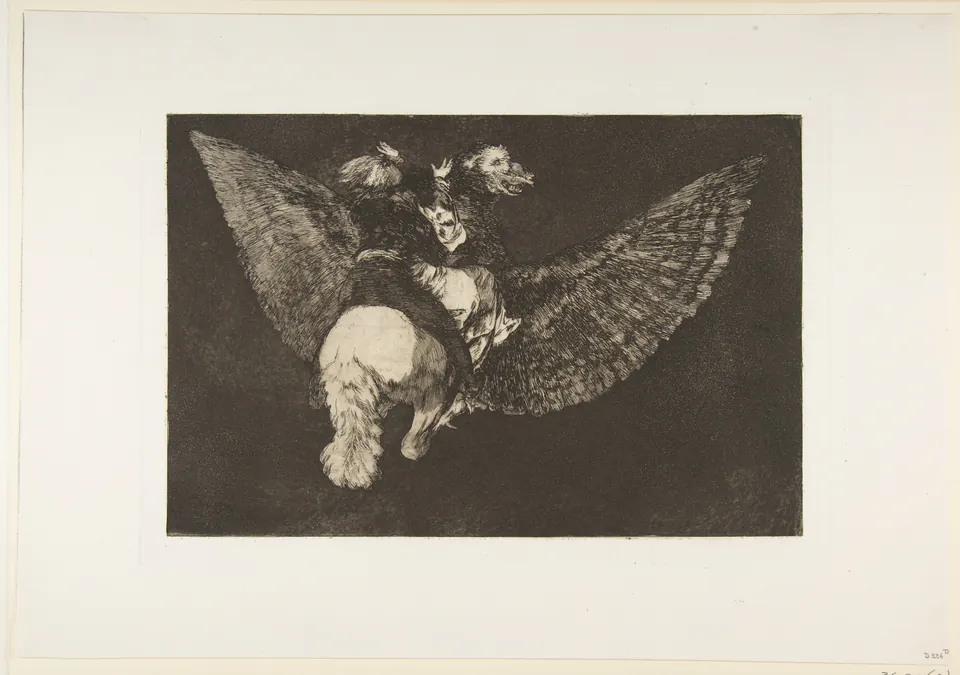
Flying Folly, from Disparates
ca. 1815–19, published 1864 · The Metropolitan Museum of Art · 36.20(5)
Public Domain / Open Access (CC0)
Resized to 960 pixels wide and converted to WebP; no crop.
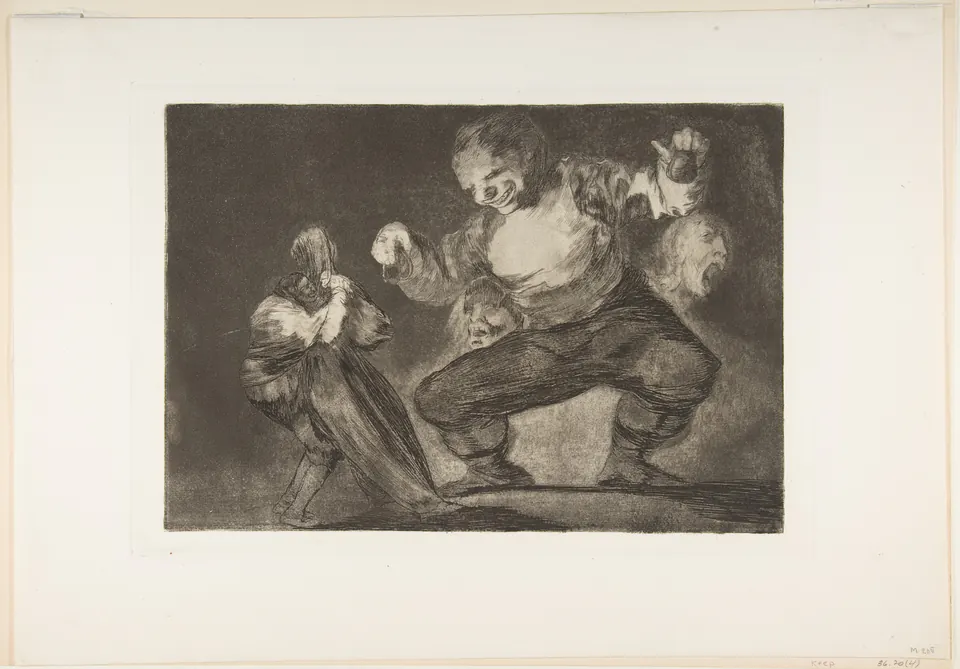
Dancing Giant, from Disparates
ca. 1815–19, published 1864 · The Metropolitan Museum of Art · 36.20(4)
Public Domain / Open Access (CC0)
Resized to 960 pixels wide and converted to WebP; no crop.

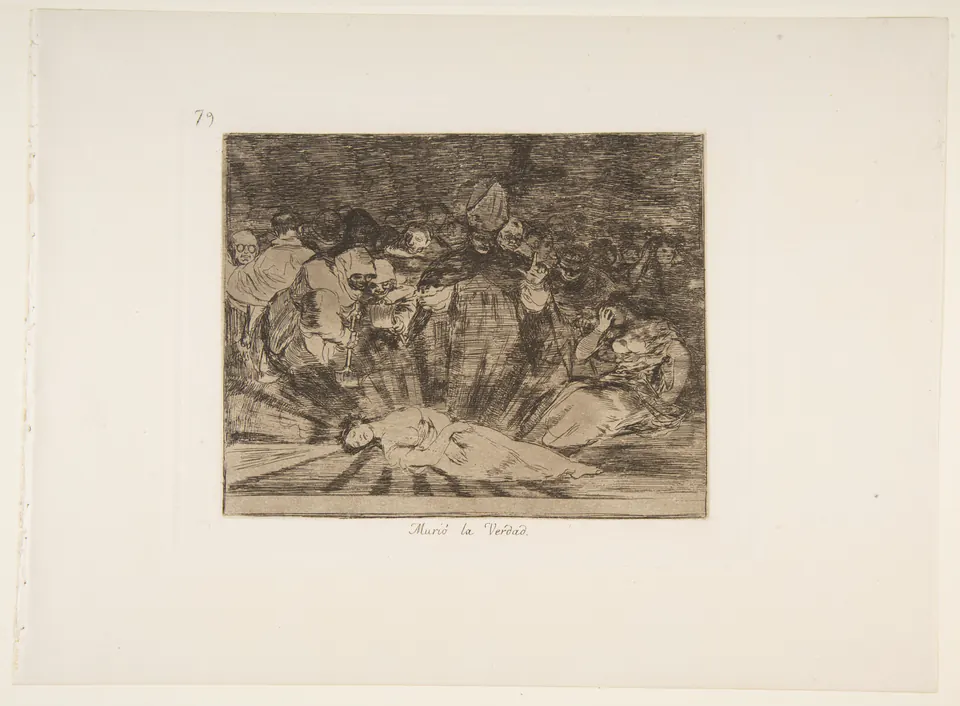
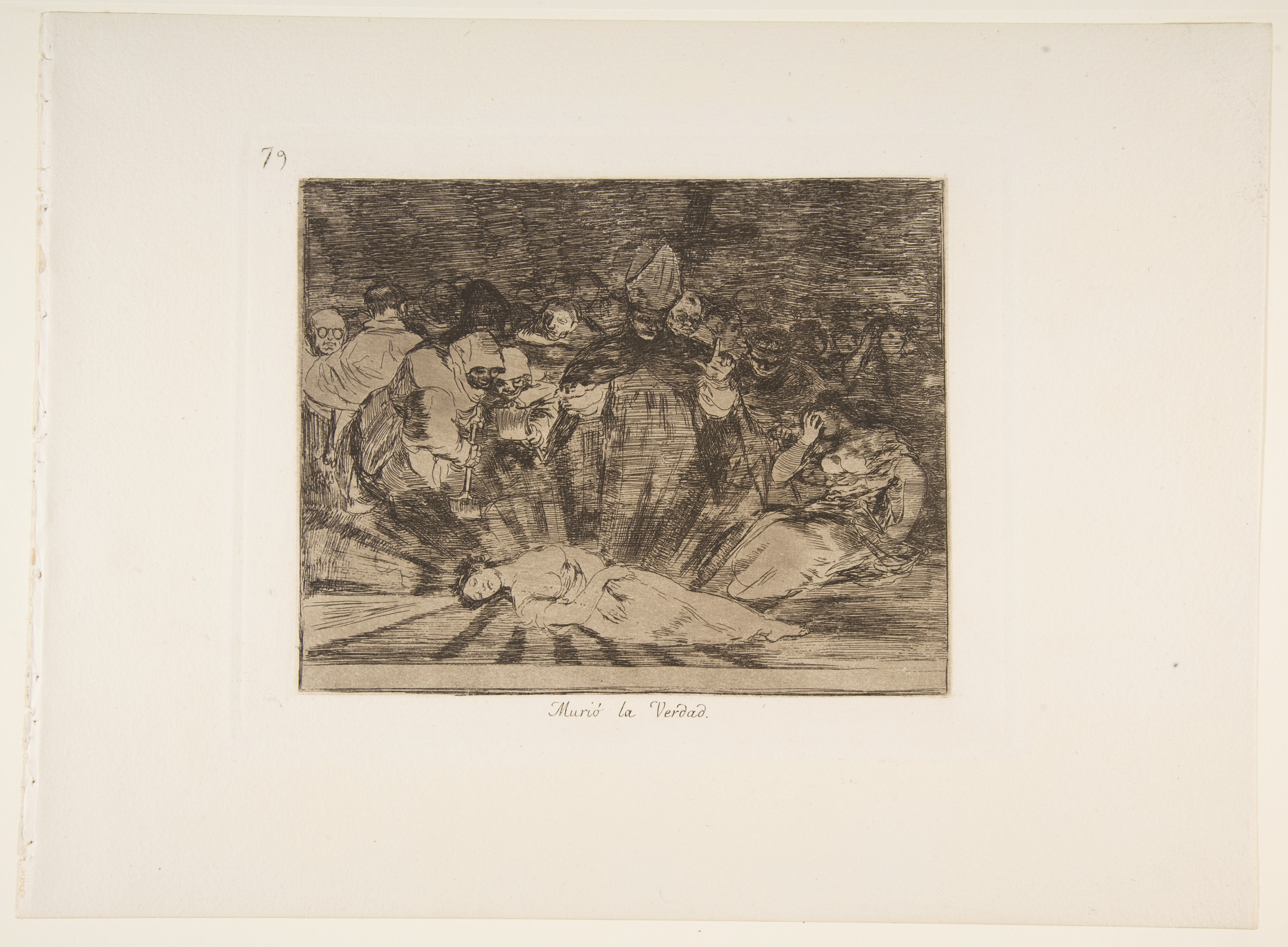
Truth Has Died, plate 79 from The Disasters of War
1814–15, published 1863 · The Metropolitan Museum of Art · 22.60.25(79)
Public Domain / Open Access (CC0)
Resized to 960 pixels wide and converted to WebP; no crop.
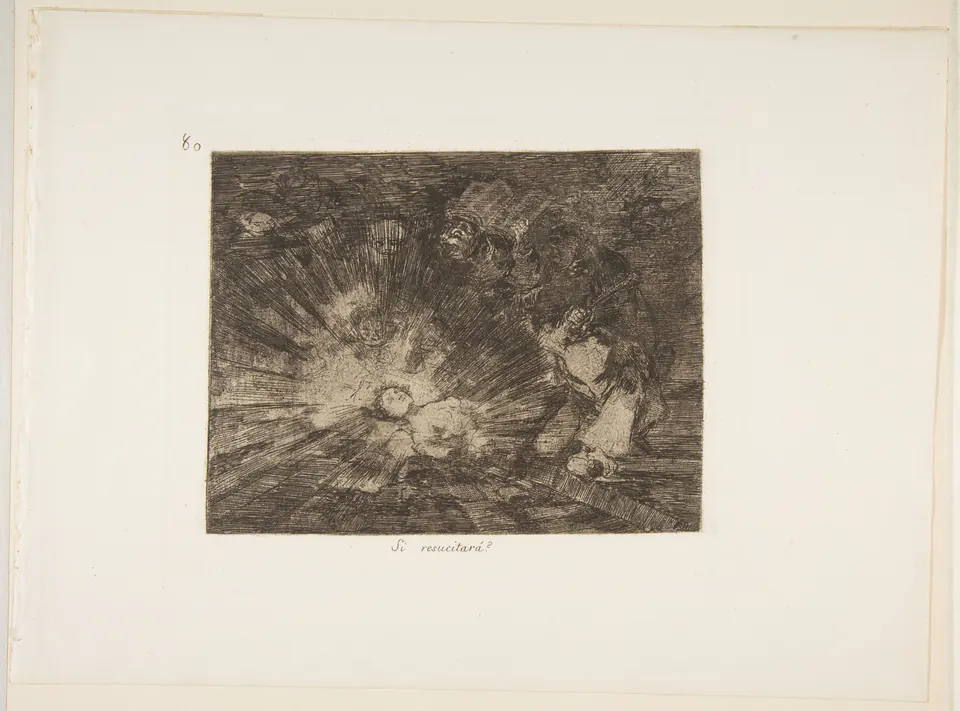
Will She Rise Again?, plate 80 from The Disasters of War
1814–15, published 1863 · The Metropolitan Museum of Art · 22.60.25(80)
Public Domain / Open Access (CC0)
Resized to 960 pixels wide and converted to WebP; no crop.

Sources and review method
We checked the artist chronology against museum records, treated each named jurisdiction separately, and recorded the provider policy for the image set. These sources support the legal framework and artist dates used above; the source file for any individual image still needs its own record.
- The Sleep of Reason Produces Monsters — Art Institute of Chicago. Feature impression identity, creator, date, accession, dimensions, series context, and CC0 Public Domain Designation.
- Open Access Images — Art Institute of Chicago. Files labelled CC0 Public Domain Designation may be reused for commercial and non-commercial purposes.
- Flying Folly — The Metropolitan Museum of Art. Posthumously published Disparates impression identity, accession, date, and Public Domain Open Access file status.
- Image and Data Resources — The Metropolitan Museum of Art. The Met makes images marked Public Domain available for unrestricted use under its Open Access programme.
- Goya in The Metropolitan Museum of Art — The Metropolitan Museum of Art. Institutional context for Goya’s paintings, drawings, plates, states, series, editions, and impressions.
- Saturn — Museo Nacional del Prado. Exact-work identity, Black Paintings context, transfer from mural to canvas, and museum history.
- Legal information — Museo Nacional del Prado. The Prado website limits supplied images to private, study, or teaching use and directs commercial requests to its image bank.
- Directive 2006/116/EC, Article 1 — EUR-Lex. The EU term for an artistic work is the author’s life plus 70 years.
- How long copyright lasts — UK Government. UK guidance gives 70 years after the author’s death for artistic works.
- Law No. 5846 on Intellectual and Artistic Works, Article 27 — WIPO Lex. The Turkish economic-rights term is the author’s life plus 70 years.
- Circular 15A: Duration of Copyright — U.S. Copyright Office. The 2026 term table places works published before 1931 outside the maximum 95-year publication term.
- Certain Unpublished, Unregistered Works Enter Public Domain — U.S. Copyright Office. Older unpublished works have a separate U.S. term analysis; discovery and first-publication history can matter.
- 17 U.S.C. Chapter 3, including §303 — U.S. Copyright Office. Section 303 states the transition rules and minimum 2002 or 2047 expiry floors for works that were unpublished on 1 January 1978.
- Visual Artists: Publication — U.S. Copyright Office. Distribution can publish a visual artwork, while public display by itself does not establish publication.
- Compendium of U.S. Copyright Office Practices, Chapter 900, §909.3(A) — U.S. Copyright Office. A purely faithful scan or “slavish copy” does not add registrable authorship, while substantial restoration or alteration can require a separate analysis.
- Copyright notice: digital images, photographs and the internet — UK Intellectual Property Office. A digital image can require a separate rights and website-terms check even when its subject is old.
Editorial record
About this article
- Author
- Publisher
- GeMarkt
- Published
- Reviewed
- Internal source & rights check. Conducted by GeMarkt Research Review. This is an internal editorial check—not independent peer review.
- Source standard
- Rights guide source standardSeparates the underlying work from the source file, records the review date, and links the evidence used for the conclusion.
Found a claim that needs checking? Report a factual error.