GeMarkt Blog · Practical guide
Digital Download or Physical Print: Which Should You Buy?
Compare the work, choices and costs behind a digital art file, an unframed print and a framed print before choosing what should arrive after your purchase.

Buy a digital download if you want to arrange the printing yourself and already have a workable plan for doing it. Buy a physical print if you want the seller to supply the printed object. Then make a second decision: do you want to choose the frame separately, or have that work included too?
Neither route is automatically cheaper or better. A download can give you useful control over size and paper, but it also leaves decisions and costs with you. A physical print removes some of those tasks; it does not remove the need to read the listing.
Choose the job you want to take on
Imagine buying a landscape for a home office. You already own a suitable frame and know a local printer whose samples you like. A file could fit that plan well: you can ask for the dimensions and paper that work with the frame, provided the file and its terms allow the intended use.
Now imagine sending the same landscape as a housewarming gift to someone in another city. A file may leave the recipient with a printing project rather than a finished present. A physical option could be more considerate, particularly if you know their taste in frames and can confirm the delivery arrangements.
The difference is not how serious you are about art. It is which parts of the process you want to manage. Enjoying the choice of paper is a reason to take on printing; disliking that task is an equally good reason not to.
Compare three purchase paths
For paper prints, the useful comparison has three columns rather than two. An unframed physical print has already been printed, but may still need a frame. A framed print should specify the complete assembly included. A digital file supplies neither by itself.
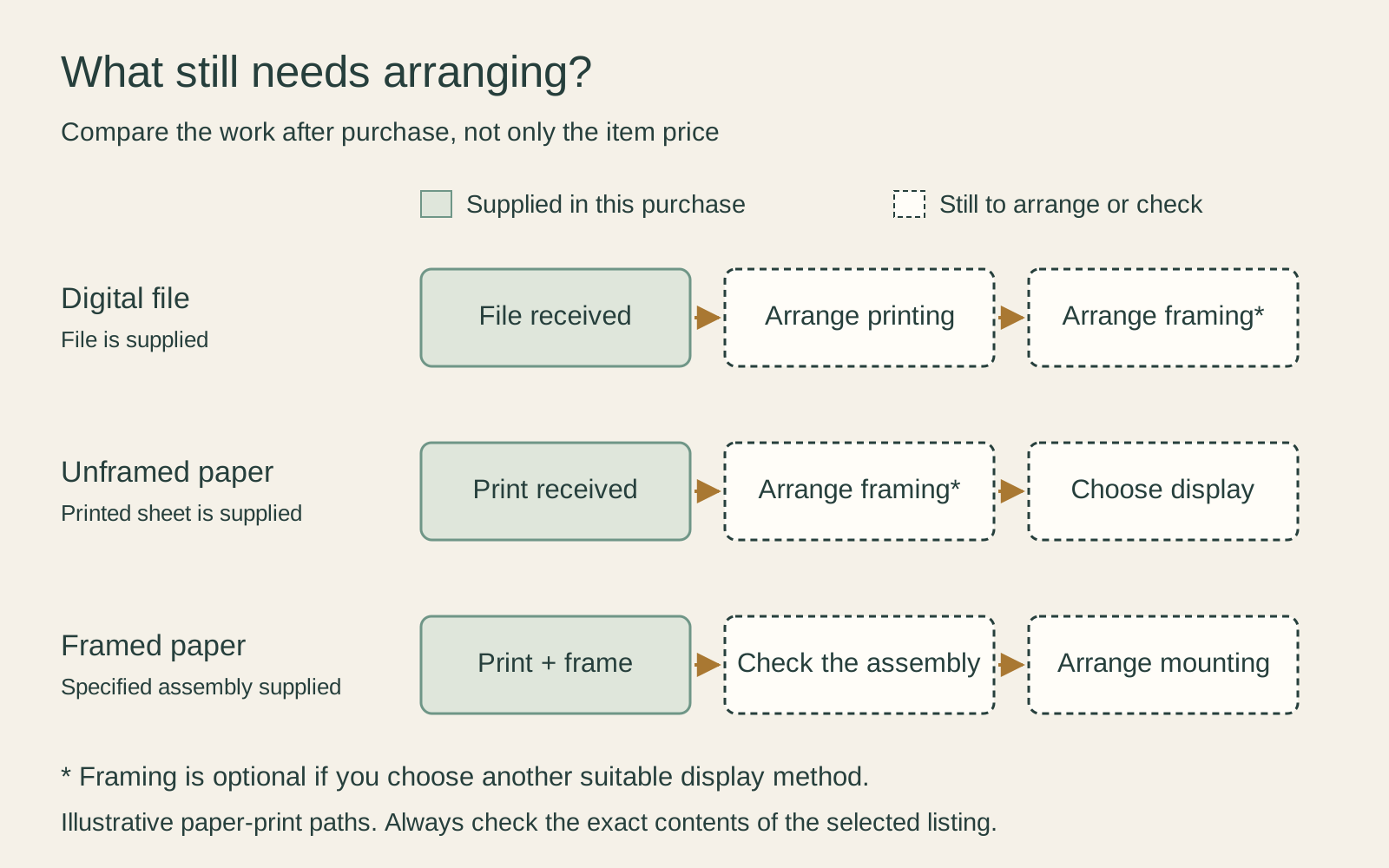
Canvas needs a different question: is it a loose roll, stretched over a wooden support, or supplied with an outer frame? Do not apply the paper diagram literally to every product. Start with the exact object that will arrive, then identify what remains before you can display it.
Ask yourself one practical question at each remaining stage: who is going to do this? If the answer is unclear, you have found part of the purchase that still needs planning.
Check the file before planning the print
A download listing should state the pixel dimensions, file type and included image proportions. Those details tell a printer more than a promise of “high resolution”. Ask whether the download contains separate crops, a single full composition, or files with borders already included.
Adobe distinguishes the number of pixels in a file from their density on paper. Without resampling, spreading those pixels over a larger print reduces the pixels per inch. A resolution label alone is therefore not a complete size specification. Adobe’s printed-resolution explanation.
For illustration, a 3,000 × 4,500 pixel image gives 300 pixels per inch at 10 × 15 inches, or 150 at 20 × 30 inches. The arithmetic is exact; whether either result looks good depends on the source detail, printing process and viewing distance. Neither number guarantees sharpness.
Before paying, give your printer the intended size and the listed file specifications. Ask whether they can accept that format and produce a result suitable for your purpose. Our image resolution and print size guide explains the calculation in more detail.
Count the cost of the finished picture
Write down the costs that still stand between the purchase and the wall. With a download, these may include printing, a proof, collection or delivery, a frame, a mat and assembly. With an unframed physical print, the printing is included but the framing may not be. With a framed print, check whether anything remains to be fitted or arranged.
An inexpensive file is not a bargain if the only acceptable printing option exceeds your budget. Conversely, paying for a supplied frame may make little sense when you already own one that genuinely fits and suits the print.
Do not count an existing frame as suitable just because its advertised size looks familiar. Check the actual opening, the sheet it can accommodate and the condition of the assembly. Decide on the finished size before ordering the print, rather than trying to rescue a mismatch afterwards.
Distinguish a fast download from a ready gift
Receiving a file and having a finished picture are different milestones. A download may arrive quickly, but a printer’s production queue, proofing and framing can still determine when the gift is ready. Digital delivery can also depend on payment processing or custom preparation; read the actual offer.
For a physical order, distinguish the dispatch estimate from expected arrival. If a birthday matters, ask about that date rather than assuming the first time shown on the page covers the entire journey. Check the destination and address before comparing options.
There is also a preference question. A digital gift lets someone choose their own format but asks them to spend time and possibly money. A finished print removes that work but commits them to your choices. Neither is universally more thoughtful.
Decide who will handle colour and proofing
With your own printing arrangement, you can request a paper sample or a small proof before committing to the final size. That control is useful only if you are willing to use it. Printing the largest file immediately on an unfamiliar paper can turn flexibility into avoidable uncertainty.
With a physical print, ask for evidence relevant to the actual product: a close view of the printed surface, accurate material information, and any sample or proof service the seller really offers. A furnished-room mockup helps you imagine placement; it is not a colour proof.
If a particular pale blue must work beside a curtain, do not judge the match solely on a phone. Our screen and print colour guide explains why the two appearances can differ. For this decision, the useful question is whether you can inspect something physical before the expensive step.
Read the permitted use
A file purchase should explain what you may do with it. Check whether the proposed use is covered: a print for your own wall, a gift, several copies, or work for a business. Permission to print is not automatically permission to redistribute the file or sell reproductions.
For the United States, copyright law expressly separates owning a material object from owning copyright in the work it contains. Buying a print does not by itself transfer that copyright. The status of the underlying artwork and the terms of a particular file remain separate questions. US Copyright Office, section 202.
You need not solve every copyright question to choose a format. You do need a clear answer about the use you intend. If the listing’s terms contradict its sales description, ask before buying.
Match the option to your situation
Choose a download when the printing route, file suitability and permitted use are clear, and you value making the remaining choices. Choose an unframed physical print when you want the printing handled but prefer your own frame. Choose a framed physical print when the specified assembly suits the room and you want fewer separate purchases.
If you are still undecided, price and plan one complete route for each option. Comparing two unfinished ideas rarely settles the question. Comparing two pictures that could actually reach your wall usually does. For the practical printing steps after choosing a file, continue with how to print a digital art download.
Editorial record
About this article
- Author
- Publisher
- GeMarkt
- Published
- Reviewed
- Internal source & rights check. Conducted by GeMarkt Research Review. This is an internal editorial check—not independent peer review.
- Source standard
- Buying guide source standardSeparates measured or first-hand evidence from general guidance and keeps practical limits visible.
Found a claim that needs checking? Report a factual error.