GeMarkt Blog · Practical guide
Gifts for Art Lovers by Favourite Artist
Go beyond an artist’s name when choosing a gift. Compare Monet, Hokusai and Van Gogh, check the exact image and choose a format the recipient will enjoy.

Knowing someone’s favourite artist gives you a starting point, not a finished gift choice. Find out which work they return to, what they notice in it and whether they want it on a wall. A familiar name on an unrelated object can be less thoughtful than a carefully chosen reproduction of one painting they love.
The most useful question is often simple: “Which picture would you go back to see?” Their answer may reveal a subject, a museum memory or a small detail that a general search for gifts by artist would miss.
Ask which work not just which artist
An admirer can love one period and feel little connection with another. They may enjoy an artist’s drawings more than the best-known paintings, or know the famous work so well that they would rather explore something else. Do not assume that popularity is a measure of personal relevance.
Listen for the reason behind the preference. Someone may describe the handling of light, the texture of a painted surface or the way a print tells a story through small figures. Those clues help you assess the reproduction: does it preserve the feature they care about, or has the product cropped it away?
If you cannot ask without spoiling the surprise, look at what they have voluntarily chosen before. A museum postcard on their desk says more than an algorithm’s bestseller label. Keep the inference modest, though. A single postcard may be a souvenir, not a request for the same picture at a much larger scale.
For a Monet admirer notice the light and the people
Monet does not have to mean water lilies. Woman with a Parasol—Madame Monet and Her Son, 1875, places Camille and Jean Monet on a grassy rise, with the sky surrounding the main figure. This is the National Gallery of Art’s upright painting, not a generic parasol scene.
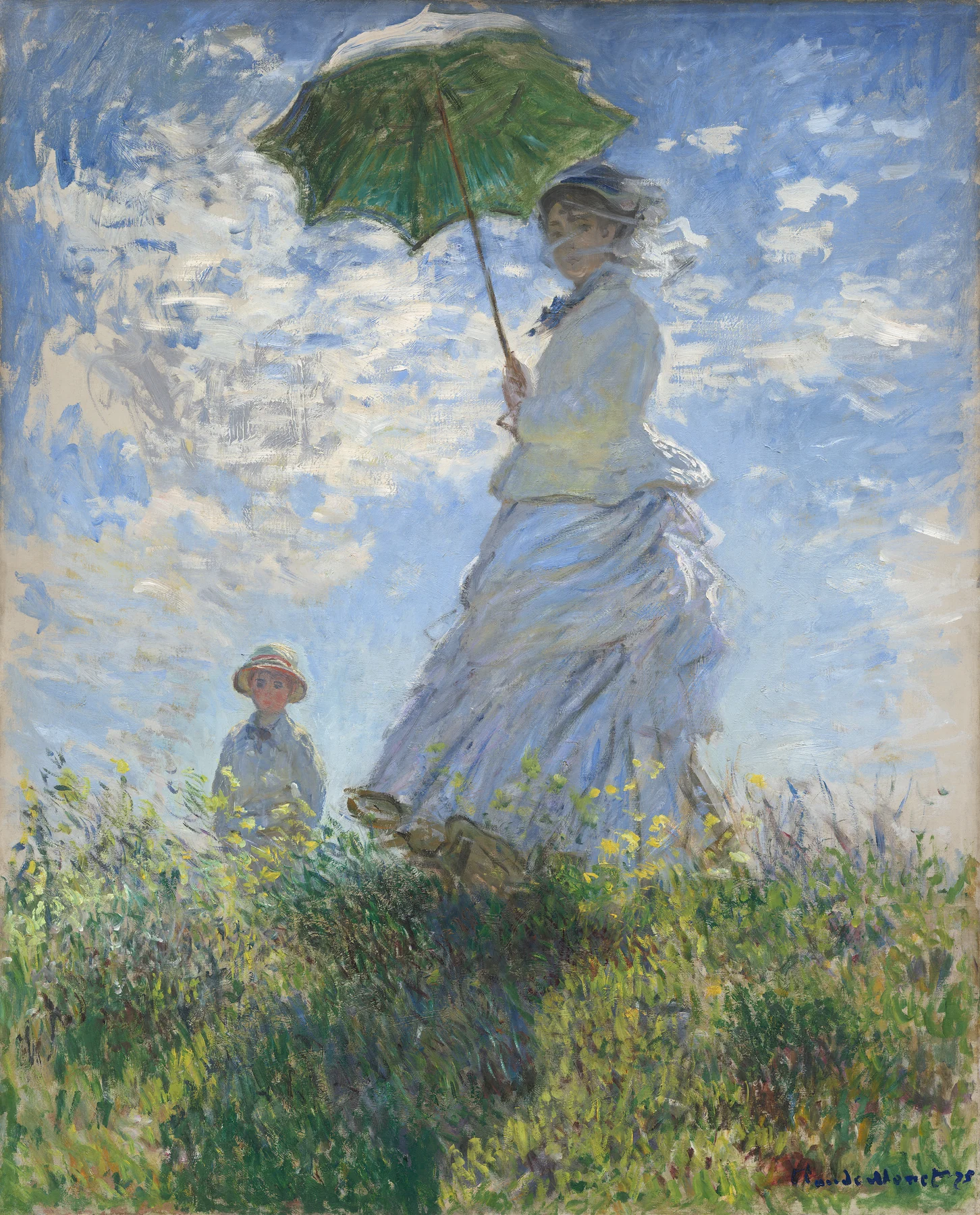
Look at the pale dress rather than treating it as plain white. Blue and green marks pass through it; the grass is full of quick changes in colour. A recipient interested in Monet’s brushwork may care about these passages more than about a fashionable frame around the image.
Keep the parasol, boy and lower foreground together when comparing products. A crop centred only on Camille’s upper body becomes a different encounter with the work. It might still be wanted, but it should be an informed detail choice. Our Monet guide offers more works to discuss if this is not their favourite.
For a gift intended for a narrow wall, the vertical shape may be useful. For someone whose only free space is a broad strip above a sideboard, do not force it into a horizontal format. Change the location or ask about another Monet rather than distorting this one.
For a Hokusai admirer keep the whole print in view
Hokusai’s Under the Wave off Kanagawa, known as The Great Wave, is a colour woodblock print dated ca. 1830–32 in the Met’s record. The small Mount Fuji beyond the boats is part of the image’s structure, not a spare detail around a wave logo.
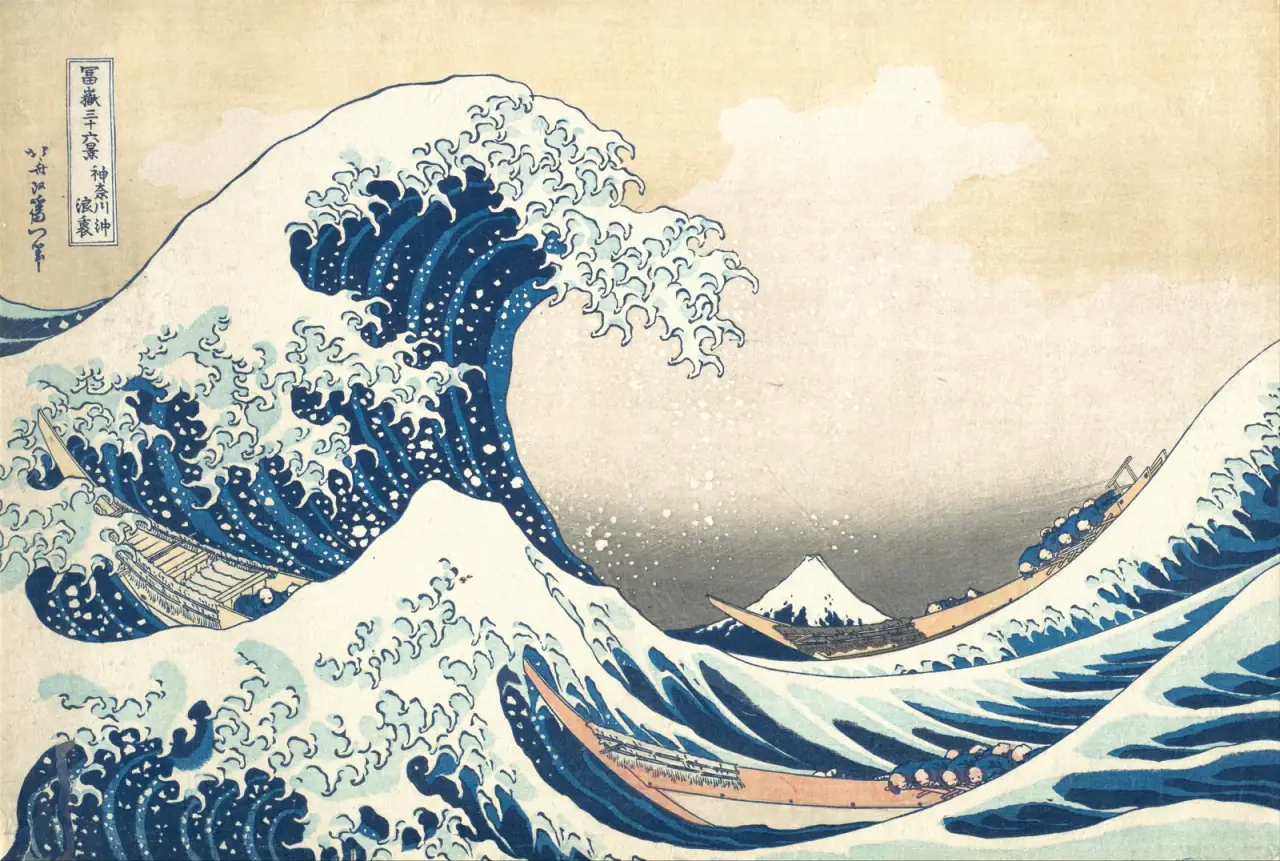
The boats make the scene more than a decorative curl. Their long shapes pull across the water while the mountain remains comparatively small and still. For an admirer who enjoys looking closely, a complete image with readable detail is a stronger proposition than a heavily cropped fragment.
A historical woodblock impression and a newly printed reproduction are different objects. The gift description should tell the recipient which they are receiving. A modern paper print is not an original Hokusai impression, and an edition number on a contemporary product does not turn it into one.
If they already own the wave, ask whether the interest is Hokusai himself or Japanese landscape prints more broadly. Our Hokusai and Hiroshige comparison can start that conversation without pretending that the two artists are interchangeable.
For a Van Gogh admirer consider branches as well as stars
Van Gogh’s Almond Blossom, 1890, offers pale flowers against a strong blue background. The Van Gogh Museum’s gallery text identifies it as a gift for his newborn nephew Vincent Willem. That history can be meaningful, but the recipient need not be a parent to enjoy the painting.
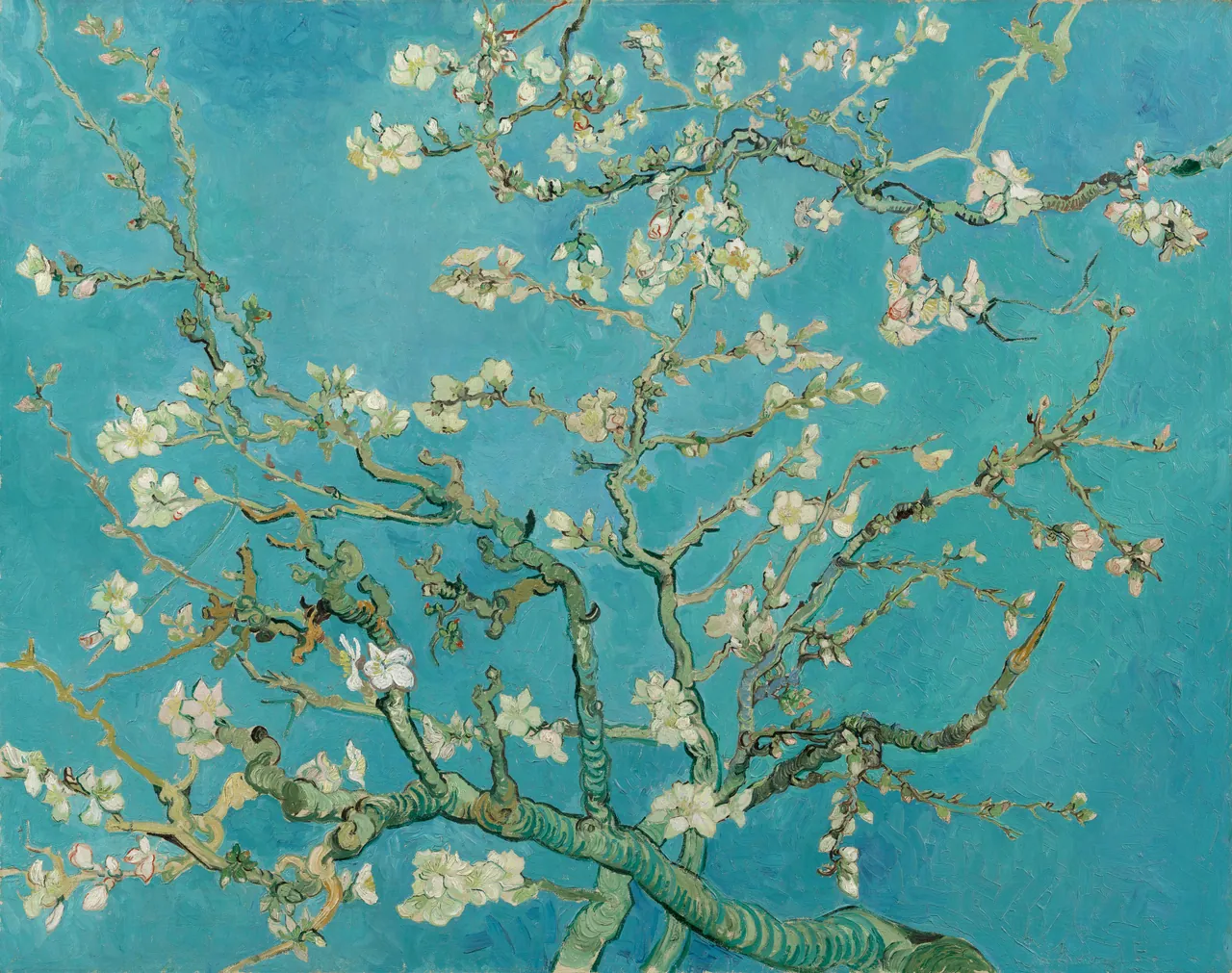

Its branches form an uneven network rather than a neatly repeated floral pattern. Some flowers remain in bud; open blossoms gather along thinner stems. Give the recipient enough image area to enjoy those differences. A product that turns the painting into a seamless repeat is a redesign, not the complete composition shown here.
The large blue field deserves attention when choosing the gift. Someone who loves Van Gogh’s warm yellow interiors may not want this much blue in their room. Artist loyalty does not remove colour preferences. A short choice between two works is usually more revealing than a long list of merchandise carrying the same signature.
Check what they already own
Before buying a second version of a familiar image, ask about the first. It might be a treasured museum souvenir, a print they plan to replace or simply the only one they found in a suitable size. An unsolicited “upgrade” can unintentionally dismiss something they value.
For a collector of reproductions, different images may be more useful than different formats of the same image. For someone with one dedicated reading corner, the reverse may be true: they may want a better-fitting version of the work already associated with that space. Let their habits guide the decision.
Keep track of the exact title and museum record. Similar compositions and translated titles can make two products look equivalent when they are not. Save a small reference image with your notes so that the right artist does not lead to the wrong painting at checkout.
Match the gift format to their interest
Someone who studies small details may appreciate a reproduction to inspect nearby. Someone who enjoys an artist through museum visits may prefer a book or a future outing over another framed object. A wall print is one option, not the compulsory outcome of liking art.
If you do choose a print, clarify its visible image size, sheet size and finished outer dimensions. Check whether the border or crop differs from the image they recognise. The image-resolution guide explains why a large output needs more than a large number in a size menu.
Avoid buying material claims you cannot interpret. Words such as “archival” do not identify the paper, ink or care conditions on their own. Ask for the actual specification where it matters, and do not promise a lifespan on the gift card. Keep any framing decision proportionate to how much you know about their home.
Add a specific note and leave room for choice
Write why you chose this work for this person. A remembered conversation about the small boats in Hokusai, or the moving dress in Monet, says more than a general claim about artistic genius. Use your own shared memory rather than inventing a quotation from the artist.
Include a route to the museum’s object page if the recipient likes to read further. Keep that information separate from the seller’s care and purchase details. One describes the historical object; the other describes the thing you bought.
Finally, allow a graceful change of plan. Confirm the actual exchange policy before presenting a swap as an option. The ideal gift is not proof that you guessed perfectly: it is an invitation to spend more time with an artist they already enjoy.
Editorial record
About this article
- Author
- Publisher
- GeMarkt
- Published
- Reviewed
- Internal source & rights check. Conducted by GeMarkt Research Review. This is an internal editorial check—not independent peer review.
- Source standard
- Buying guide source standardSeparates measured or first-hand evidence from general guidance and keeps practical limits visible.
Found a claim that needs checking? Report a factual error.