GeMarkt Blog · Practical guide
Art Gift Guide: Housewarming Ideas
Choose a housewarming art gift around the recipient’s taste, available wall and move. Compare garden, blossom and seascape ideas without guessing the frame.

A good housewarming art gift fits the person before it fits the house. Start with something they already enjoy, then check that the size and format will be easy to accommodate. A new home is not an invitation to decide somebody else’s whole decorating scheme.
If you know their taste but not their walls, offer a small shortlist and choose together. If you know neither, wait until they have unpacked. The gift can still be thoughtful without arriving on moving day or taking over the largest wall in the living room.
Give them a picture not a decorating assignment
Think about what happens after the wrapping comes off. A framed picture needs a suitable place, an appropriate fixing and someone willing to install it. An unframed sheet needs protection and usually a frame. A digital file requires decisions about printing. None is automatically the convenient choice.
Ask yourself what you actually know. Have you seen the recipient choose art, or have you only seen their sofa? A beige sofa does not prove they want beige pictures. A collection of gardening books, an often-mentioned museum visit or a particular artist they return to offers a more useful starting point.
For a close friend, you can ask directly: would they prefer the finished gift or the pleasure of choosing a frame? For a colleague whose home you have never visited, avoid an imposing size or a strongly personal subject. A smaller commitment is often more considerate than a larger surprise.
Learn one thing about the new room
You do not need a floor plan. One photograph of a likely wall, with its usable width, can rule out several awkward choices. Look for doors, switches, lamps and furniture before treating the entire photographed surface as available space. Find out whether the room is finished or still being painted.
Suppose a clear wall is 90 cm wide and the proposed frame measures 60 cm across its outside edges. Centring it leaves 15 cm on each side. That is simply the remaining space, not a recommended universal margin. A nearby door opening may make the arrangement feel crowded even though the arithmetic works.
Measure the finished frame rather than the image alone. A mount and frame can add substantially to the visible print dimensions. Our print-size guide explains the differences to check before ordering. If the wall is still uncertain, do not buy a large format on the assumption that they will find somewhere for it.
A garden for someone who notices plants
Claude Monet’s The Japanese Footbridge, 1899, offers a garden without requiring the room itself to look botanical. This particular painting belongs to the National Gallery of Art in Washington; the bridge and surrounding pond occupy almost the whole composition.
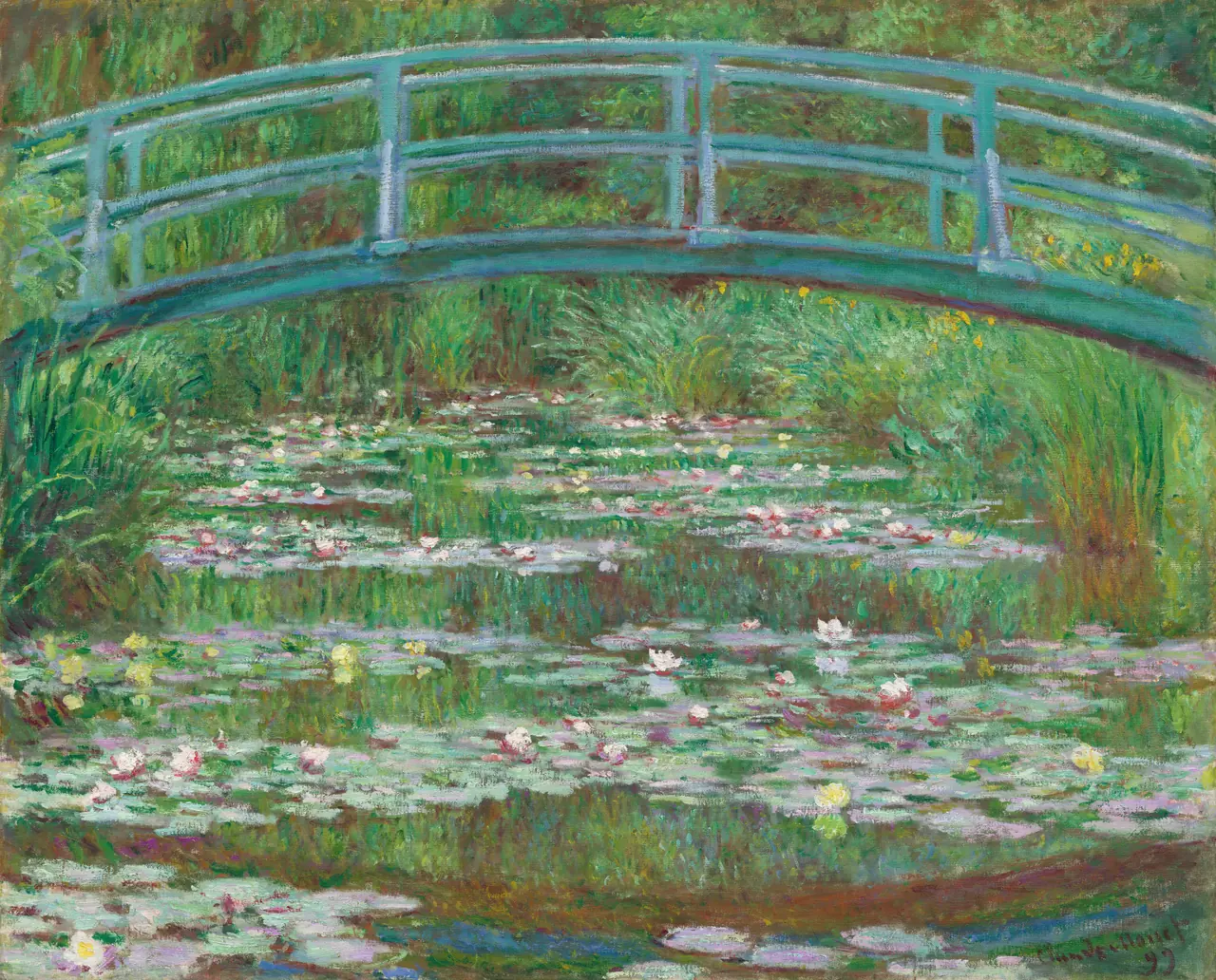
Look beyond the general label “green painting.” The curve of the bridge is quite definite, while the water is full of smaller marks. That contrast could appeal to someone who enjoys both garden structure and unruly planting. It is a better reason to choose this image than assuming green will have a particular effect on their mood.
In a room with patterned curtains, compare a preview of the whole painting with the surroundings. Its dense surface will not behave like a single flat colour. You might offer the work as a garden memory rather than as an exact match for a cushion. If they prefer sparse botanical drawings, this busy pond may not be their choice at all.
A tall print for a smaller patch of wall
Hiroshige’s Plum Garden at Kamata, 1857, is a vertical colour woodblock print. Its tall trunks and pink sky offer a very different arrangement from Monet’s horizontal pond. The blossoms are plum, not cherry.
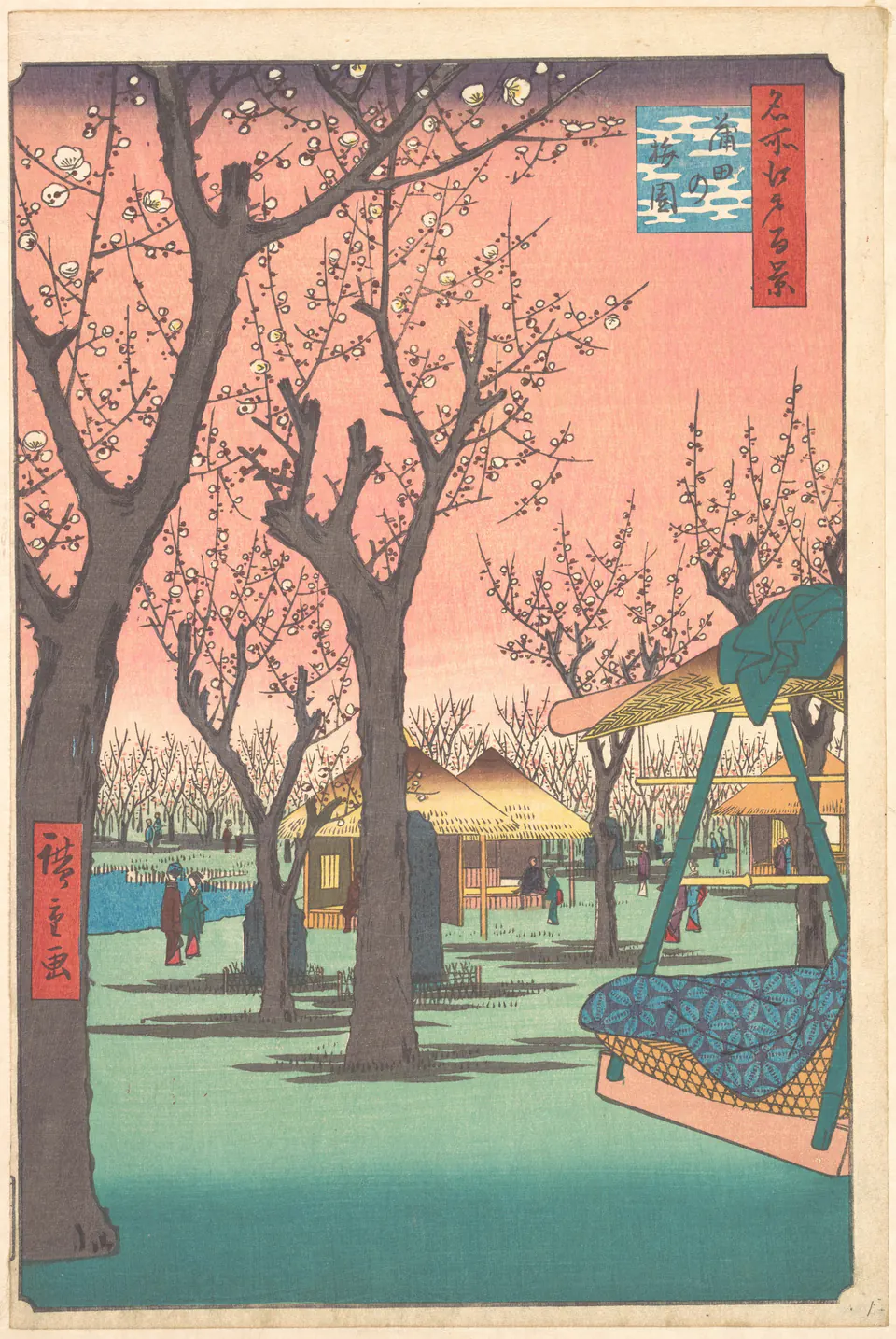
This shape is worth considering for a narrow wall beside a doorway, provided there is enough clearance and a suitable fixing. It is not a reason to stretch another picture into the same proportions. Let the artwork’s shape help you choose the location.
There is also more here than blossom. Small visitors, buildings and a large covered conveyance occupy the lower part. A reproduction so tiny that these disappear might miss the details that make the gift interesting. Ask whether the recipient wants a picture to approach and study or an image that reads from across the room; those are different choices.
A seascape with a personal connection
For somebody who grew up beside the sea or enjoys ships, a marine painting may be more personal than a picture of a house. Aivazovsky’s Ship by Moonlight shows a steamship against a dark sea. The Met’s current record does not give it a date, so there is no need to add a guessed year to a gift label.
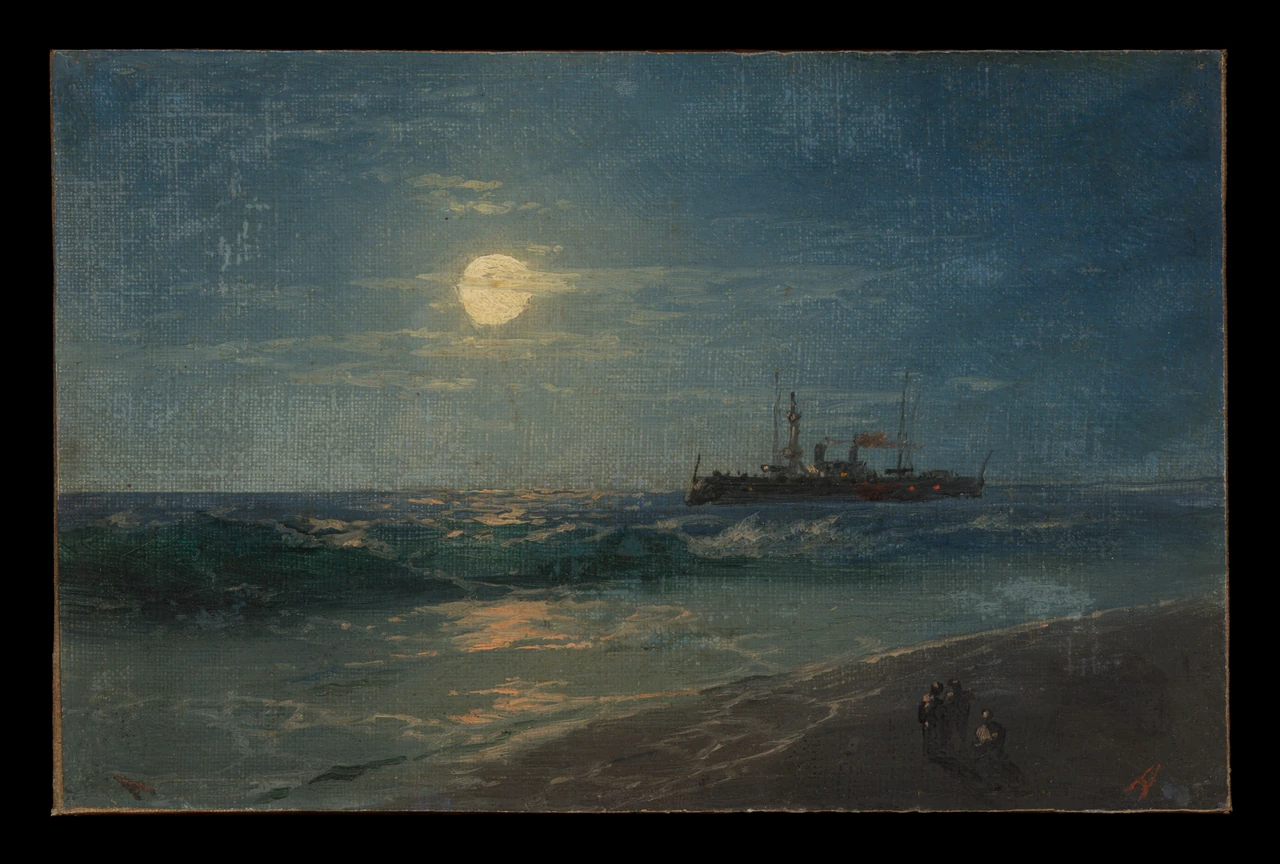
The small lights on the vessel and the moon’s reflection matter as much as its outline. A person who likes bright beach scenes might find this nocturnal view too dark; a maritime enthusiast may enjoy precisely that difference. “Coastal” is not one taste.
Include the personal connection in a short card: perhaps the image recalled an evening ferry journey you took together. That memory belongs to you and the recipient. It does not need to become an invented story about where the artist stood or what the painting symbolises.
Decide who chooses the frame
A complete frame can remove a task, but only if its appearance and size suit the recipient. Ask about existing frames or send two finish samples. Choosing together need not reveal the whole gift: you can keep the image a surprise while confirming whether a dark or pale surround would be welcome.
If you give an unframed print, say so clearly and consider contributing to the framing rather than leaving an unexpected cost. Confirm whether the advertised measurement describes the image or the sheet, and whether a white border is included. Do not describe a reproduction as an original print made by the historical artist.
The framed-or-unframed guide can help compare the whole purchase. Use the actual seller’s current delivery and return terms, especially for personalised or made-to-order items. A gift receipt is useful only if the item is eligible for the exchange you have in mind.
Make the handover easy
Check the moving date and delivery address rather than sending a bulky parcel into an uncertain handover. If they are travelling or renovating, give a card first and arrange the artwork later. Do not make immediate hanging part of the thank-you ritual.
Keep the artwork title, artist, dimensions and care information with the gift. The story can be one or two sentences; the recipient does not need an essay attached to the back. Leave protective packaging available until they decide where the picture belongs.
Most importantly, let the new home remain theirs. An invitation to swap the size, choose another image or wait for a suitable wall makes the gift easier to enjoy. The success is not that your picture dominates their room, but that they are glad to live with it.
Editorial record
About this article
- Author
- Publisher
- GeMarkt
- Published
- Reviewed
- Internal source & rights check. Conducted by GeMarkt Research Review. This is an internal editorial check—not independent peer review.
- Source standard
- Buying guide source standardSeparates measured or first-hand evidence from general guidance and keeps practical limits visible.
Found a claim that needs checking? Report a factual error.