GeMarkt Journal · Practical guide
Is Utagawa Kuniyoshi Public Domain? Cats, Warriors, and Prints
Kuniyoshi's established prints are public domain in the markets checked here, but publisher, impression, multi-sheet assembly, and exact museum file remain separate checks.
Rights check · reviewed
The short answer
Yes—for established works by Utagawa Kuniyoshi and the 12 nineteenth-century institutional print impressions documented here in Japan, the European Union, United Kingdom, Türkiye, and United States. Designs, publishers, blocks, impressions, multi-sheet assemblies, restorations, and exact files remain separate layers.
| What is being checked | Result | Why |
|---|---|---|
| Japan | Public domain | Kuniyoshi died in 1861. Japan’s 2018 term extension did not revive works whose protection had already expired under the earlier ordinary term. |
| European Union, United Kingdom & Türkiye | Public domain | Established works by Kuniyoshi are far beyond the ordinary life-plus-70 economic-rights terms in the checked markets. |
| United States — named print set | Clear for the documented nineteenth-century issues | The selected woodblock prints were issued and distributed between the late 1820s and 1854. A private drawing or newly surfaced unpublished design needs its own §303 chronology. |
| Design, impression, assembly, or file | Identify the exact layer | One design, publisher’s issue, physical sheet or multi-sheet assembly, later impression, restoration, and museum file do not share one provenance record. |
This guide clears one Met, three AIC, and eight Cleveland print records. It answers cat-print intent through the documented Okazaki Cat Demon diptych without clearing every sheet labelled Kuniyoshi or every modern copy worldwide.
This is a documented research summary, not legal advice. Copyright and moral-rights rules can vary by country and by the history of a particular work.

What we’ll look at
When can a Kuniyoshi print be reused, and why must the design, publisher's issue, physical impression, multi-sheet assembly, and digital file remain separate records?
The useful answer is yes for Utagawa Kuniyoshi’s established works and for the 12 institutional print records documented here—not automatically for every sheet, later printing, restoration, or image labelled “Kuniyoshi.” The artist died in 1861. His established works are public domain in Japan and beyond the ordinary economic-rights term in the European Union, United Kingdom, and Türkiye. The selected United States set consists of woodblock prints issued between the late 1820s and 1854.
That answer needs more precision than the familiar categories “cats” and “warriors.” Kuniyoshi designed for a commercial print system. A publisher commissioned and marketed a series; carvers and printers turned a drawing into printable blocks and impressions; censorship seals and publisher marks helped locate an issue; individual sheets could join as a diptych, triptych, or pentaptych. Museums then acquired, conserved, photographed, and catalogued particular surviving objects.
This guide therefore keeps six layers together:
- the historical design attributed to Kuniyoshi;
- the nineteenth-century publisher’s issue and its publication evidence;
- the blocks, state, and edition where known;
- the physical sheet or multi-sheet assembly identified by an accession;
- the exact museum photograph or scan and its provider statement;
- GeMarkt’s documented resize, or any more creative modern intervention.
It is a research summary, not legal advice. It names the territories, objects, and files actually checked instead of turning an artist’s death date into a worldwide licence.
The short answer is yes for the named print set
The release boundary is one Met diptych, three Art Institute of Chicago print records, and eight Cleveland Museum of Art records. The Met marks Scene from a Ghost Story: The Okazaki Cat Demon Public Domain and supplies its Open Access file. AIC gives each selected impression a CC0 Public Domain Designation. Cleveland’s API and object pages identify each selected file as CC0.
The set is deliberately broader than one visual stereotype. It includes a giant cat apparition, the fight between Yoshitsune and Benkei, heroes from the Water Margin, Nichiren confronting waves, views of Edo, the Sumida River, Odawara, Futamigaura Bay, and two unusually wide multi-sheet assemblies. That range reflects Kuniyoshi’s practice more honestly than a page assembled from interchangeable cat thumbnails.
The answer does not automatically include:
- a drawing that was kept private or first published in the modern period;
- a sheet attributed to Kuniyoshi’s school, a pupil, or a later Utagawa artist;
- a later printing from worn, replaced, or newly carved blocks;
- one panel downloaded and presented as the complete diptych, triptych, or pentaptych;
- a colour reconstruction, repaired scan, translated cartouche, expanded composition, or generative completion;
- a marketplace image or search-result copy whose provider terms and object identity are unknown.
The old design and the selected digital file are related evidence, not the same right.
Japan and life plus 70 markets are clear
Japan’s Agency for Cultural Affairs describes the current ordinary term as the author’s life plus 70 years. Its 2018 extension did not revive protection that had already expired under the earlier term. Kuniyoshi died in 1861, so his established works had already passed through that earlier ordinary term long before the extension.
Article 1 of the European Union term directive, UK government guidance, and Article 27 of Türkiye’s Law No. 5846 use an ordinary life-plus-70 framework for artistic works. Kuniyoshi’s death lies far beyond those periods.
| Market checked | Rule used here | Result for established works by Kuniyoshi |
|---|---|---|
| Japan | expired protection was not revived by the 2018 extension | public domain |
| European Union | author’s life plus 70 years | public domain |
| United Kingdom | 70 years after the creator’s death | public domain |
| Türkiye | economic rights ordinarily last life plus 70 | public domain |
Those results do not erase moral rights, cultural-property rules, trademarks, ownership of a physical sheet, modern authorship, or a provider’s terms. Nor do they prove that an object is actually by Kuniyoshi. Attribution and file identity still need records.
The US answer follows the issued print
United States duration analysis depends heavily on publication. The Copyright Office defines publication through distribution of originals or copies, including sale or other transfer, and warns that public display alone does not establish publication. In 2026, a work published before 1 January 1931 is beyond the maximum 95-year publication term described in Circular 15A.
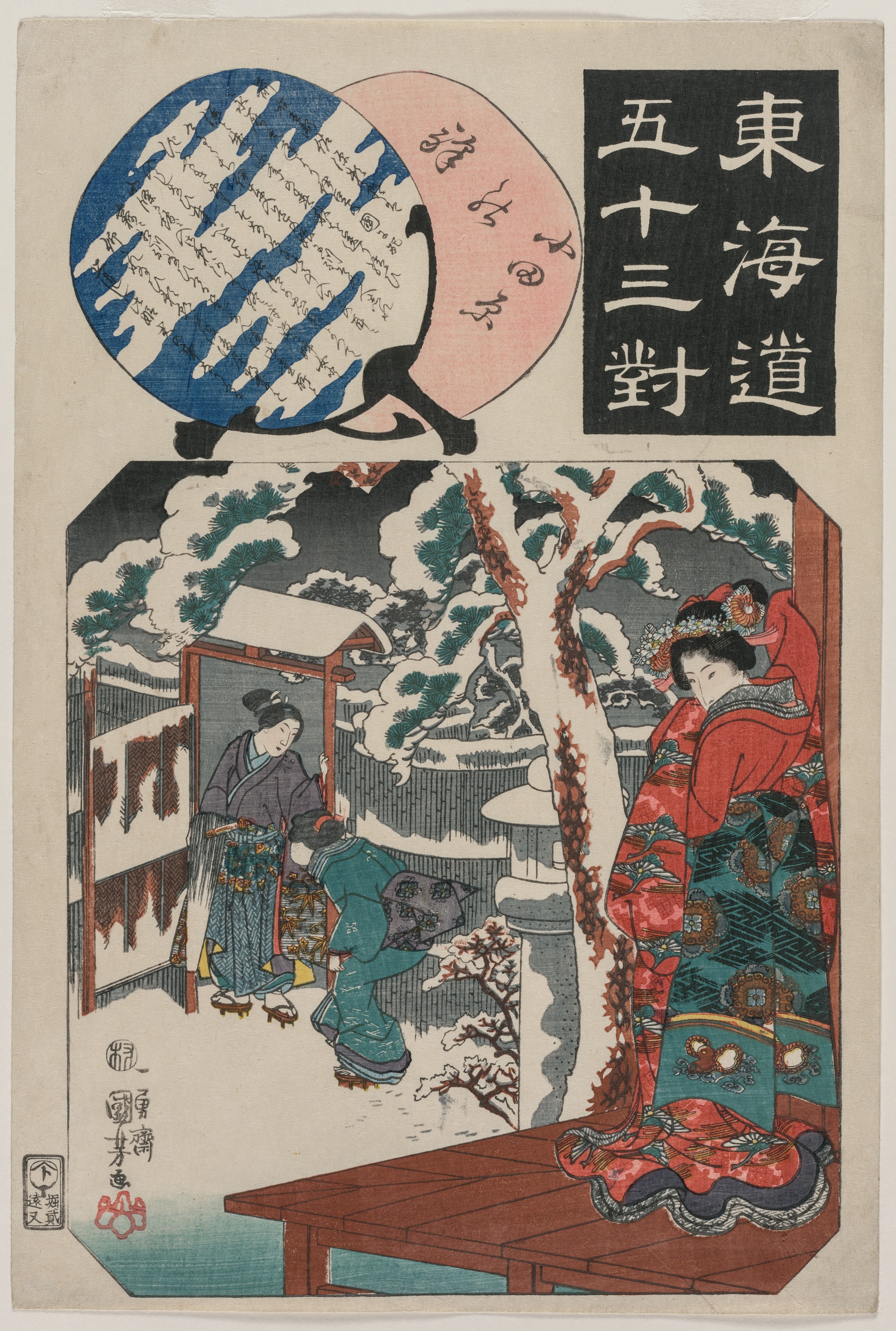
The 12 selected objects are nineteenth-century print issues rather than newly discovered private drawings. Their institutional records date them between the late 1820s and 1854 and identify woodblock-print formats, named series, publisher marks, censorship seals, or multi-sheet commercial assemblies. Cleveland’s records are especially explicit: Ōmori names publisher Kagaya Kichibei and a kiwame seal; Odawara Station names Enshūya Matabei and a Mura seal; Splendid View at Futamigaura Bay names Yamadaya Shōhei and an aratame seal.
That evidence closes the U.S. branch for the named set. It does not create a shortcut for every work in Kuniyoshi’s archive. Section 303 governs works that were still unpublished on 1 January 1978 and can produce a different transition result, including a possible end-2047 floor for qualifying first publication. A preparatory drawing, private painting, or newly surfaced design therefore needs its own chronology.
The same restraint applies to later impressions. A twentieth-century printing may reproduce an old public-domain design, but the printer, blocks, edition, additions, and file still need identification.
Cats warriors and landscapes used one commercial system
Kuniyoshi’s cats are a real and important search intent, but “cat artist” is not a rights category. The feature diptych belongs to a ghost-story performance world. Its giant cat apparition operates across two sheets while actors occupy the foreground. Other cat designs use puns, bodies arranged as characters, domestic observation, comic transformation, or actor imagery. Those works do not share one accession or one file simply because the subject is feline.
Warrior prints are equally varied. Lu Zhishen and Rori Hakucho Chojun come from the popular Water Margin tradition, but they are separate designs, impressions, and institutional records. The Young Yoshitsune defeats Benkei at Gojo Bridge is a triptych whose horizontal action depends on the relation among three sheets. Nichiren’s mantra on the waves belongs to a religious biography series rather than a generic “samurai print.”
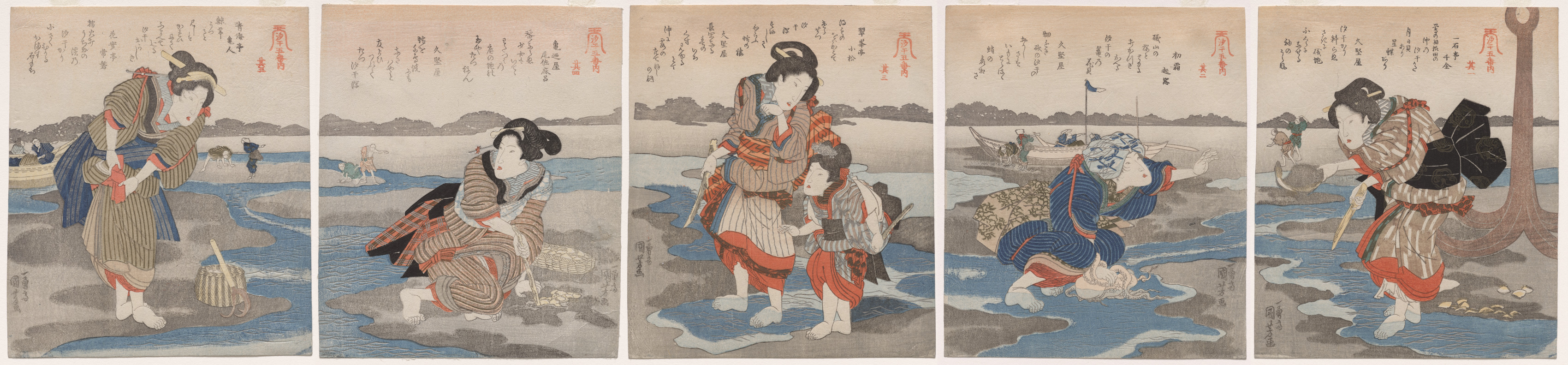
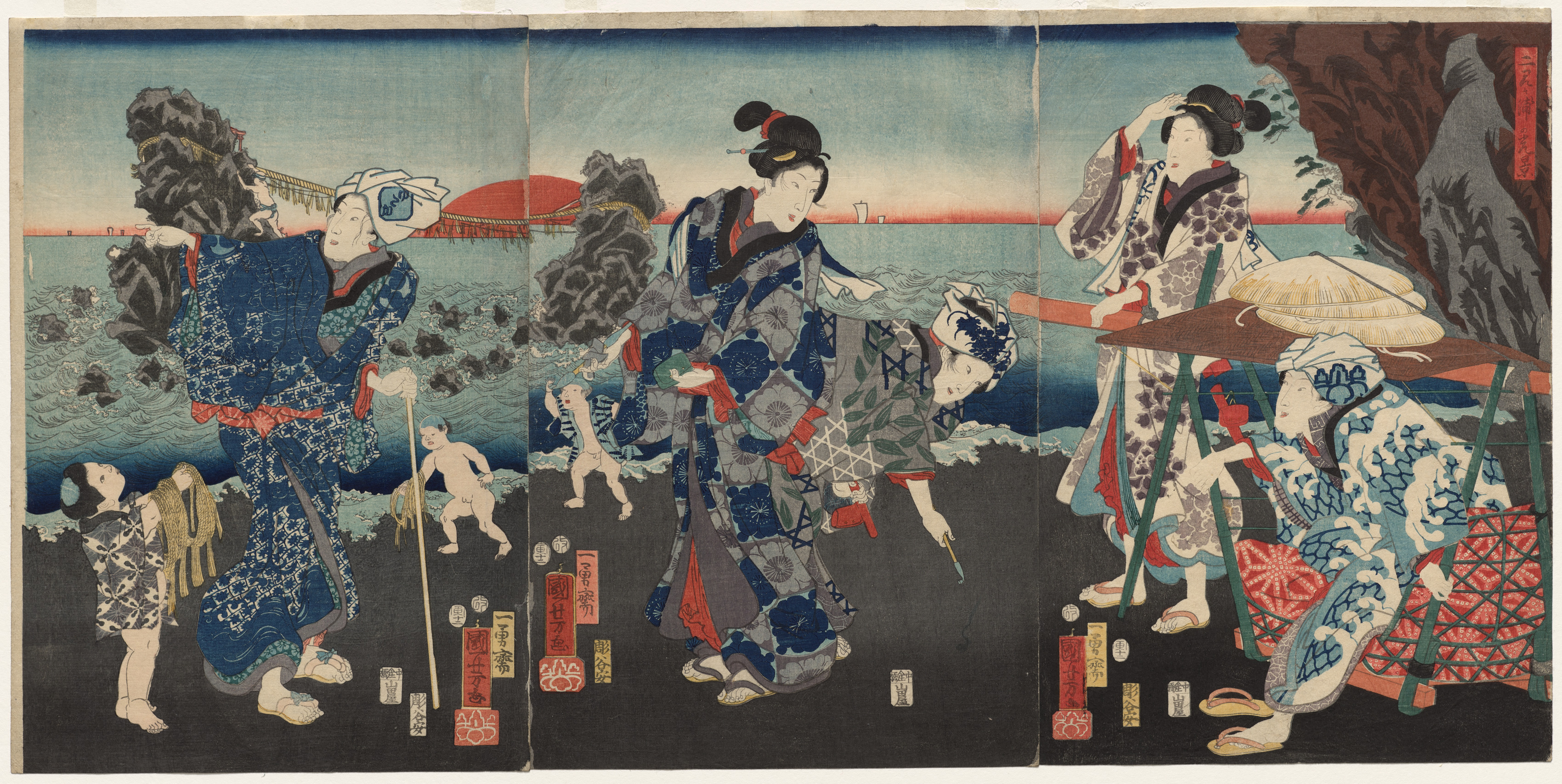
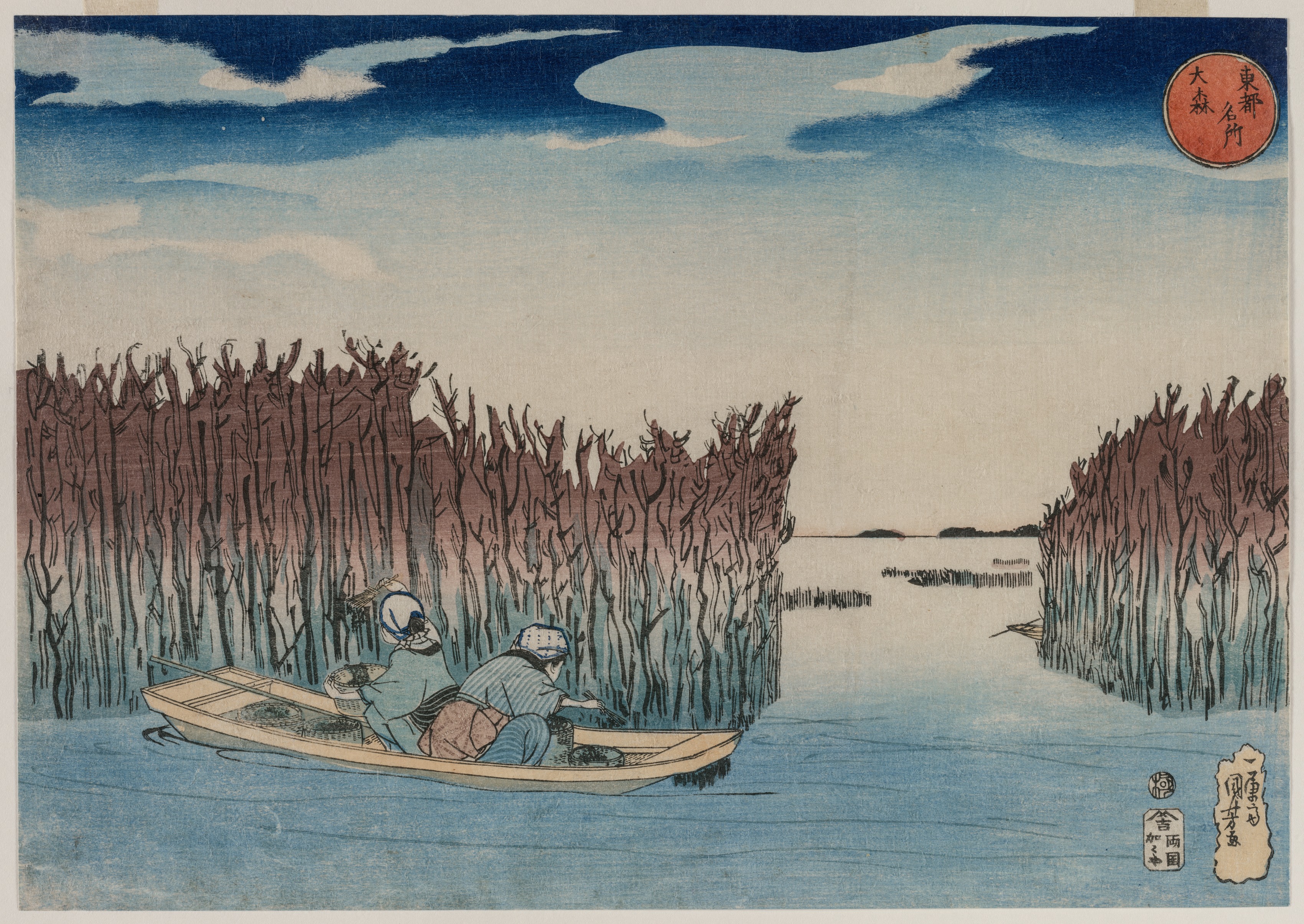
Landscape does not sit outside this system. Ōmori and New Yoshiwara were issued in Famous Places in the Eastern Capital. Splendid View at Futamigaura Bay uses a triptych to connect pilgrims, shore, sacred rocks, and sunrise. A Low Tide Pentaptych stretches a coastal event across five sheets. In each case, format is part of the published object.
The practical lesson is to begin with the full institutional title and accession, not a subject keyword.
Publisher seals and series titles are evidence
An ukiyo-e inscription field can do legal and material work. A publisher’s emblem links a sheet to the commercial network that issued it. A censorship seal can help date the issue. The artist’s signature and series title connect the surviving impression to a catalogued design. None of those elements, taken alone, proves every point about state or edition, but together they are stronger than a filename such as kuniyoshi-warrior.jpg.
For reuse research, record at least:
- artist as catalogued, including any qualification such as “attributed to” or “after”;
- full sheet and series title;
- date or date range and the institution’s degree of certainty;
- publisher, censor, signature, and seal evidence when supplied;
- format such as single sheet, diptych, triptych, or pentaptych;
- accession and holding institution;
- exact source-file URL and provider statement;
- local dimensions, checksum, and transformation.
The absence of one field does not automatically invalidate a print, but it should not be filled with an invented fact. The published set uses multiple independent institutional records and stays bounded to what those records support.
Is the Okazaki Cat Demon public domain
Yes for Kuniyoshi’s ca. 1850 diptych and for The Met accession JP1563 and exact Open Access file documented here in the checked markets. The Met names Kuniyoshi, identifies the object as a diptych of colour woodblock prints, dates it to about 1850, labels it Public Domain, and makes the image available for unrestricted commercial and noncommercial reuse through Open Access.
The local master came from The Met’s exact DP146821.jpg download. The institutional source measured 3863 × 2819 pixels and 2,961,712 bytes. GeMarkt resized it to 1584 × 1156 pixels, converted it to WebP, and did not crop it. The resulting 272,506-byte master has SHA-256 259b3587c0f3ec97938529acf2a05ecde5f576e70ff8506ebe35c238aabbfae0.
That answer does not cover a different museum’s impression, a photographed exhibition installation, a modern poster using translated text, a recoloured monster, or an image assembled from unmatched left and right panels. Those are new object-and-file questions.
This page owns the cat-demon exact intent inside the artist-level guide. A separate Kuniyoshi cats public domain canonical would repeat the same rights method without a distinct release boundary, so none is opened here.
Multi sheet assemblies need exact records
Diptychs, triptychs, and pentaptychs expose a common asset error: treating the composition and the available sheets as interchangeable. A complete design may survive as separate panels in different conditions. One institution may catalogue the assembly as one accession with component records; another may hold only a single sheet. Trimming, mounting, panel order, gaps, colour balance, and replacement blocks can all change what the file represents.
The selected Cleveland records use the complete parent assembly for A Low Tide Pentaptych and Splendid View at Futamigaura Bay. Component records are not counted as extra works. The AIC Yoshitsune–Benkei triptych likewise enters the ledger once. This prevents an apparent 12-work set from being inflated by counting the same composition and its panels repeatedly.
For production, preserve the supplied assembly without silently closing gaps, repainting missing edges, rearranging panels, or extending the image to a new aspect ratio. A preview crop may be useful in an interface, but the registered master and download need to remain identifiable as the exact institutional file.
Exact file terms still control the download
The Met, AIC, and Cleveland each provide an affirmative open-access route for the selected files. That does not bind another museum, photographer, book publisher, marketplace, or image host. It also does not make a modern restoration automatically equivalent to the institutional scan.
The U.S. Copyright Office distinguishes a faithful copy from an alteration containing enough new authorship. The UK Intellectual Property Office likewise treats the old subject and the supplied digital image as separate questions. The operational response is to document the file and transformation rather than guessing from visual similarity.
Before commercial reuse:
- confirm that the object record names Utagawa Kuniyoshi without an attribution qualifier;
- keep the series, date, publisher or seal evidence, format, accession, and institution;
- identify the exact impression or multi-sheet assembly;
- use the provider’s direct file rather than a search-result copy;
- preserve the rights label and policy reviewed for that file;
- audit recarving, restoration, colour reconstruction, translation, compositing, and cropping;
- recheck the record before release because metadata and file availability can change;
- avoid implying museum endorsement or using institutional trademarks as product branding.
Open access is evidence for a particular delivery chain, not permission to discard provenance.
Twelve open files form the published set
The candidate ledger below is the release boundary. It joins title, date, institution, accession, object page, exact source file, rights label, local derivative, dimensions, and transformation for every record.
The institutional balance is intentional: one Met feature file, three AIC IIIF files, and eight Cleveland print files. The set contains no private drawing, no component panel counted alongside its parent assembly, no record labelled “after Kuniyoshi,” and no image copied from a marketplace. Every local derivative was resized without enlargement, converted to WebP, and left uncropped.
The 12 records are not a claim that these are Kuniyoshi’s 12 “best” works. They are a rights-complete teaching and reuse set. A future addition should enter only after its own publication, object, provider, and transformation chain reaches the same standard.
Where Kuniyoshi fits inside GeMarkt
Kuniyoshi is a natural neighbour to the Hokusai public-domain guide and the Hiroshige public-domain guide, but the three pages should not collapse into a generic ukiyo-e answer. Hokusai’s guide distinguishes designs and impressions while answering The Great Wave intent. Hiroshige’s guide handles inherited artist names, landscapes, and later printings. This guide concentrates on publisher evidence, cats and warriors, and the special identification problem created by multi-sheet assemblies.
The Edo Japanese art chapter supplies the larger city, theatre, publishing, status, and workshop context. Public Domain Is Not a Free-for-All explains why the historical work and digital file remain separate. GeMarkt’s copyright approach states the operational boundary.
The future collection path /collections/utagawa-kuniyoshi/ is reserved but not published. No product, collection, wallpaper room, Turkish guide, or legacy allowlist entry is created here. Until an actual production set has been restored, quality checked, and prepared for a real format, the honest internal link is research—not a fabricated shop promise.
Rights-checked image ledger
A documented starting set
These files were selected from the holding institutions rather than from search-result copies. Each card keeps the artwork record, exact source file, provider statement and GeMarkt transformation visible as separate facts.
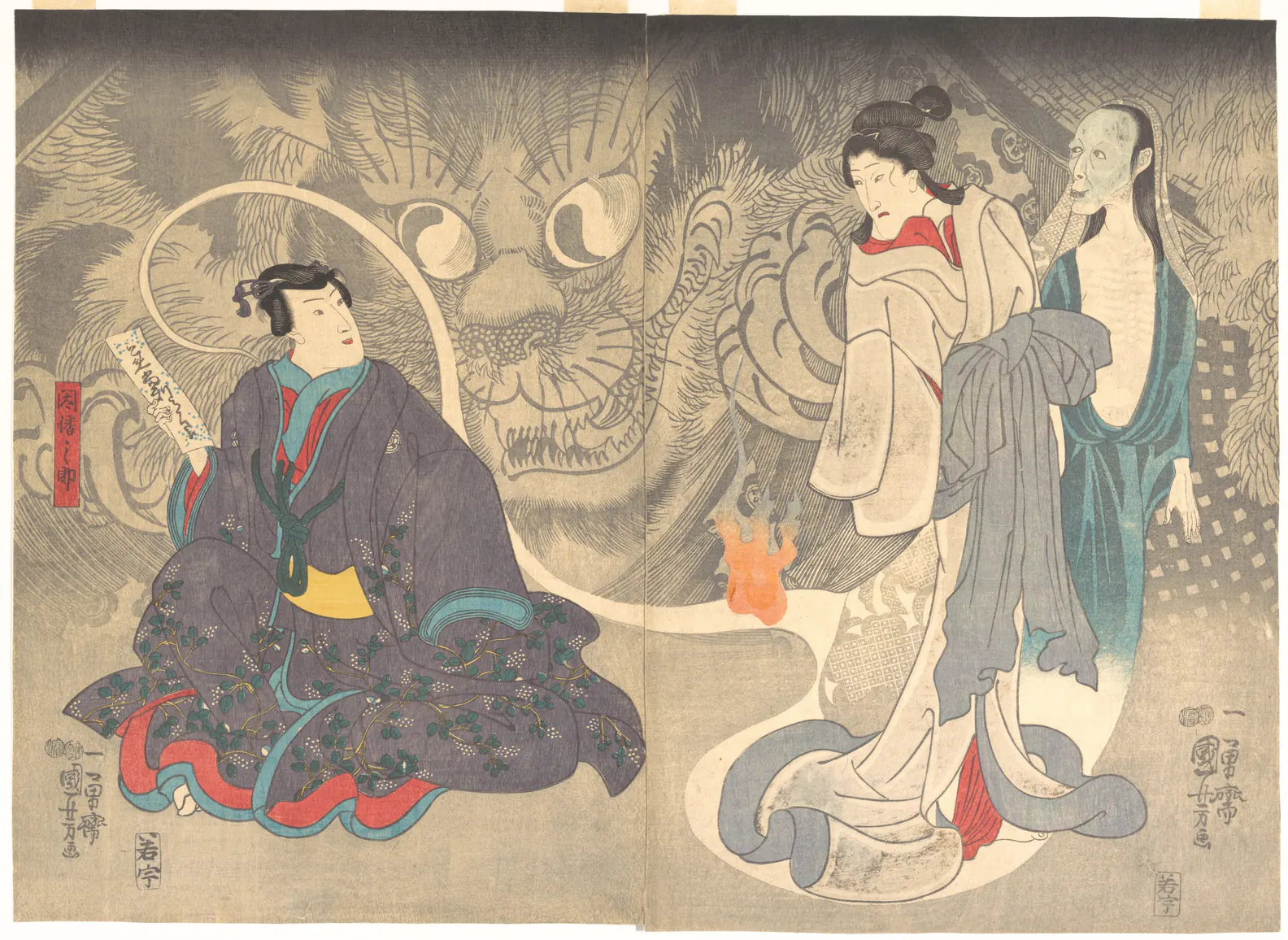
Scene from a Ghost Story: The Okazaki Cat Demon
ca. 1850 · The Metropolitan Museum of Art · JP1563
Public Domain / Open Access (CC0)
Resized to 1584 pixels wide and converted to WebP; no crop.
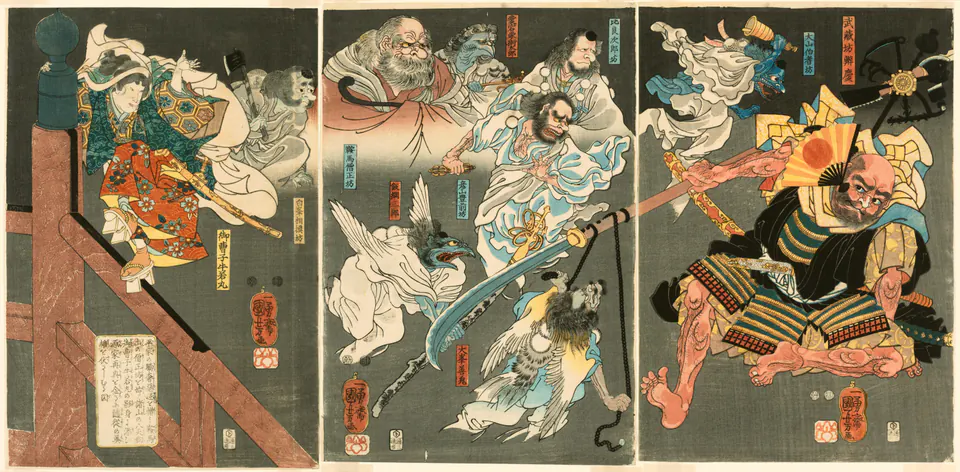
The Young Yoshitsune defeats Benkei at Gojo Bridge
c. 1848 · Art Institute of Chicago · 1975.477
CC0 Public Domain Designation
Resized to 960 pixels wide and converted to WebP; no crop.

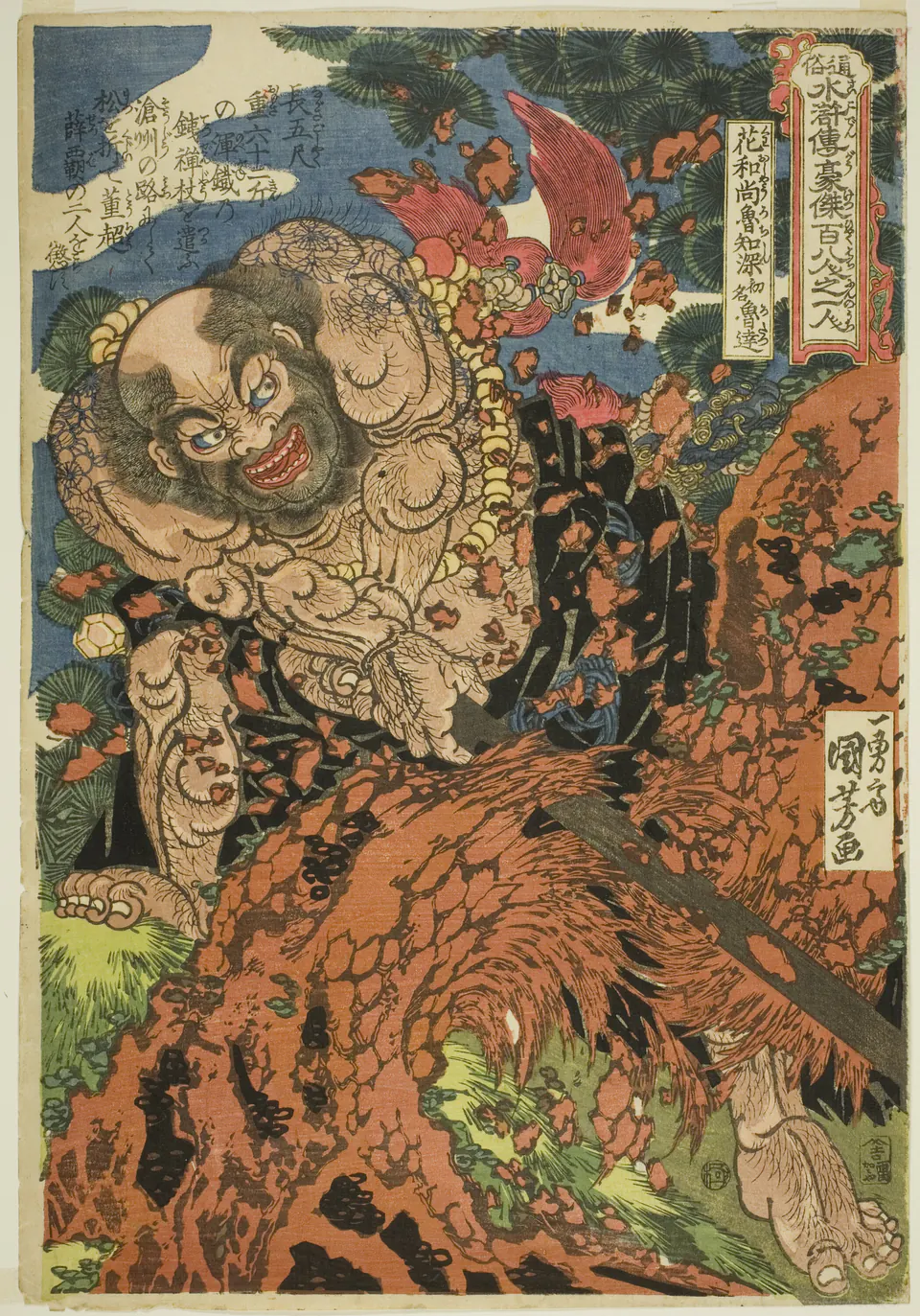
Lu Zhishen, Originally Named Lu Da, from One Hundred and Eight Heroes of the Popular Water Margin
c. 1827 · Art Institute of Chicago · 1975.489
CC0 Public Domain Designation
Resized to 960 pixels wide and converted to WebP; no crop.

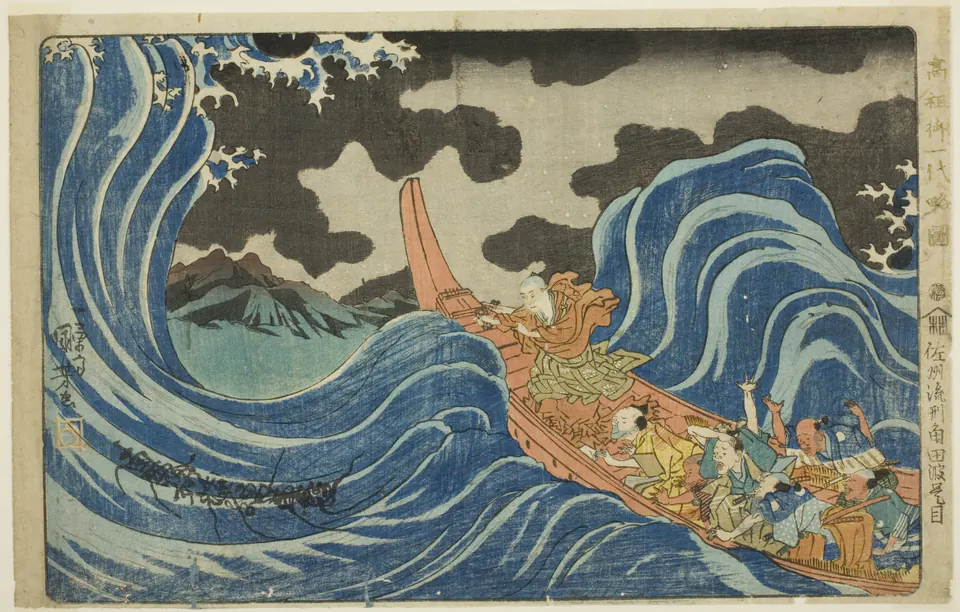
Casting a Mantra on the Waves at Kakuta on His Exile to Sado Island
c. 1830/35 · Art Institute of Chicago · 1959.115
CC0 Public Domain Designation
Resized to 960 pixels wide and converted to WebP; no crop.

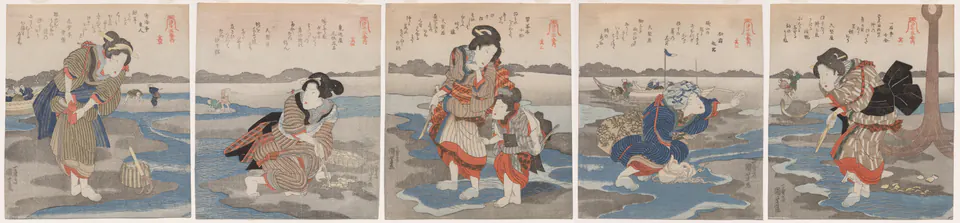
A Low Tide Pentaptych
c. 1830 · Cleveland Museum of Art · 1916.1108
CC0 Public Domain / Open Access
Resized to 960 pixels wide and converted to WebP; no crop.
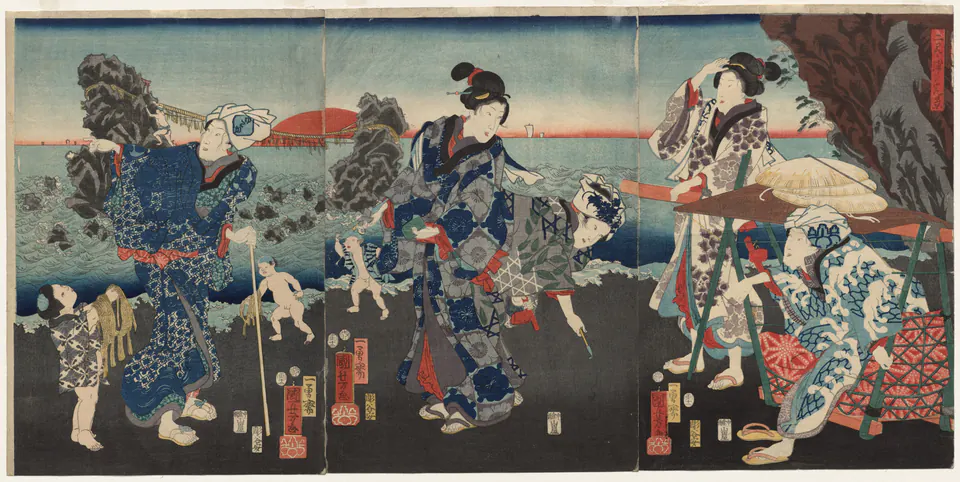
Splendid View at Futamigaura Bay
1854 · Cleveland Museum of Art · 1943.10
CC0 Public Domain / Open Access
Resized to 960 pixels wide and converted to WebP; no crop.
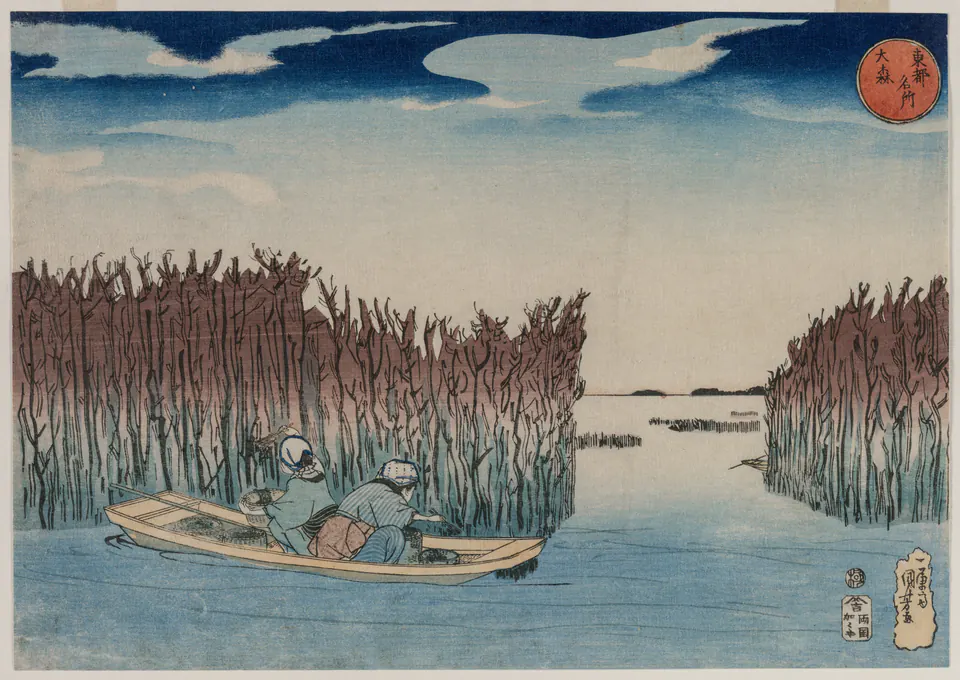
Ōmori, from the series Famous Places in the Eastern Capital
early 1830s · Cleveland Museum of Art · 1985.335
CC0 Public Domain / Open Access
Resized to 960 pixels wide and converted to WebP; no crop.
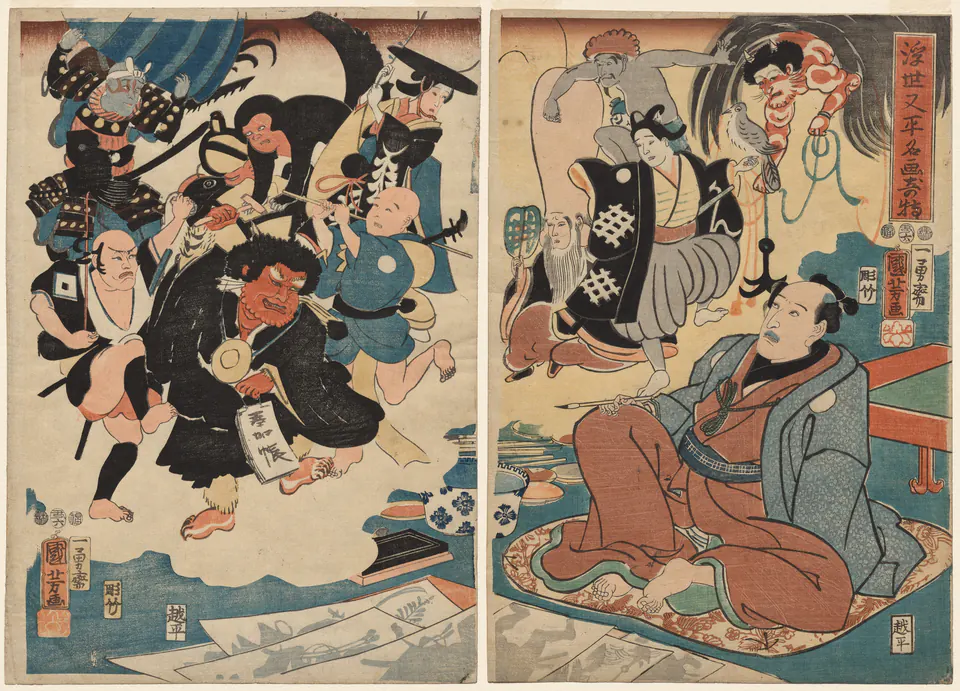
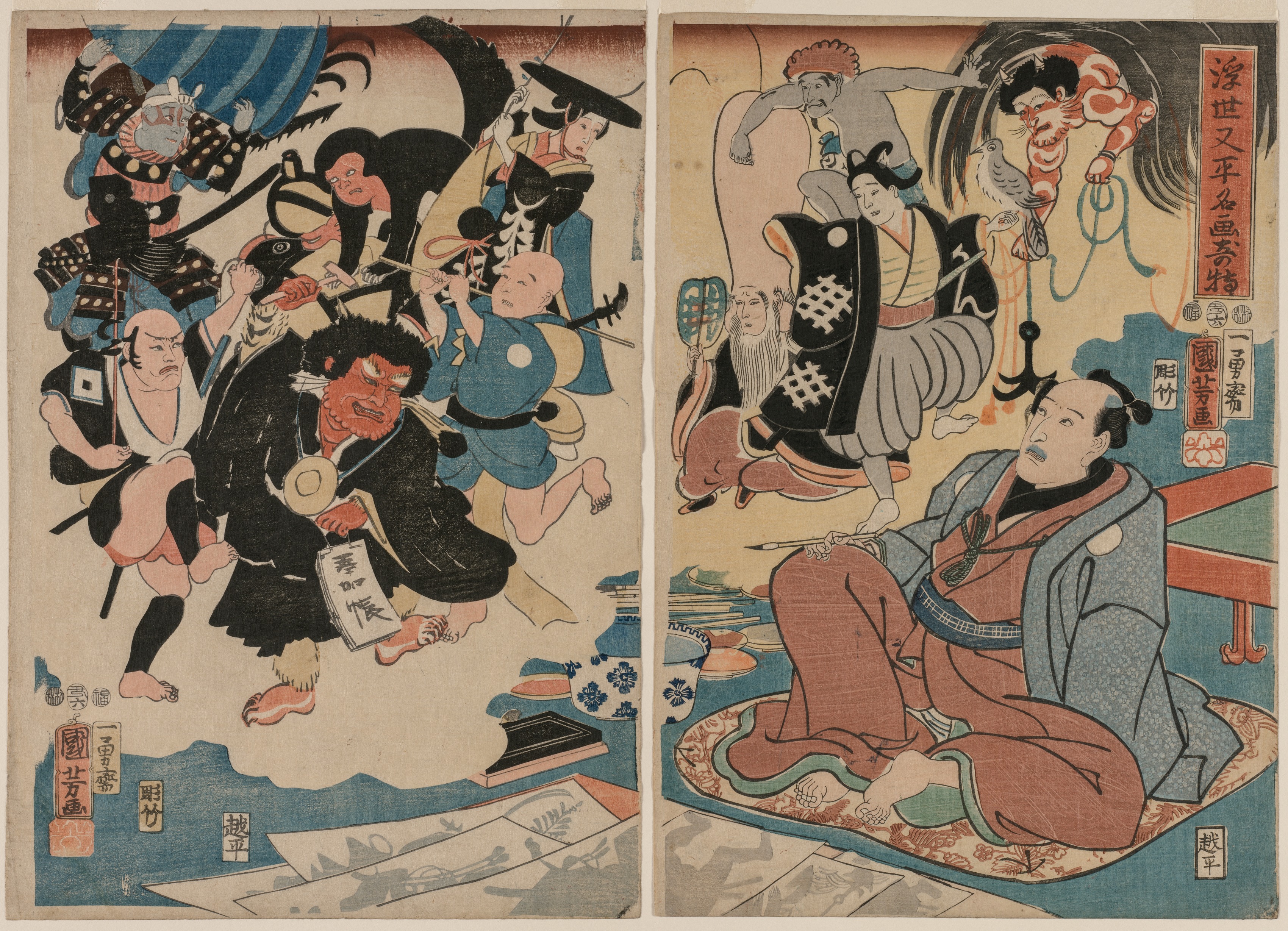
The Strange Occurence of Ukiyo Matahei and his Famous Paintings
1853 · Cleveland Museum of Art · 1916.1160
CC0 Public Domain / Open Access
Resized to 960 pixels wide and converted to WebP; no crop.
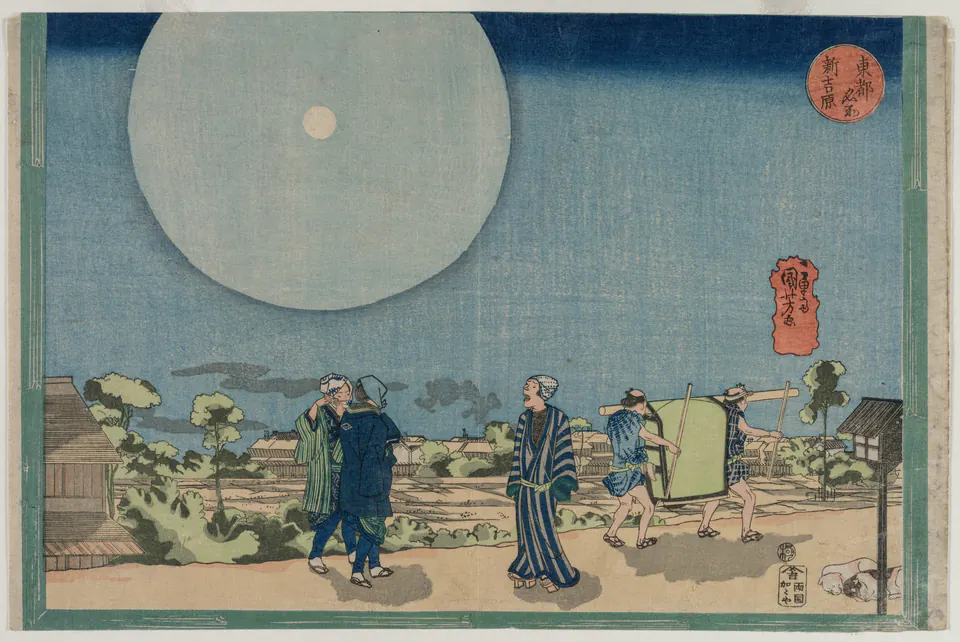
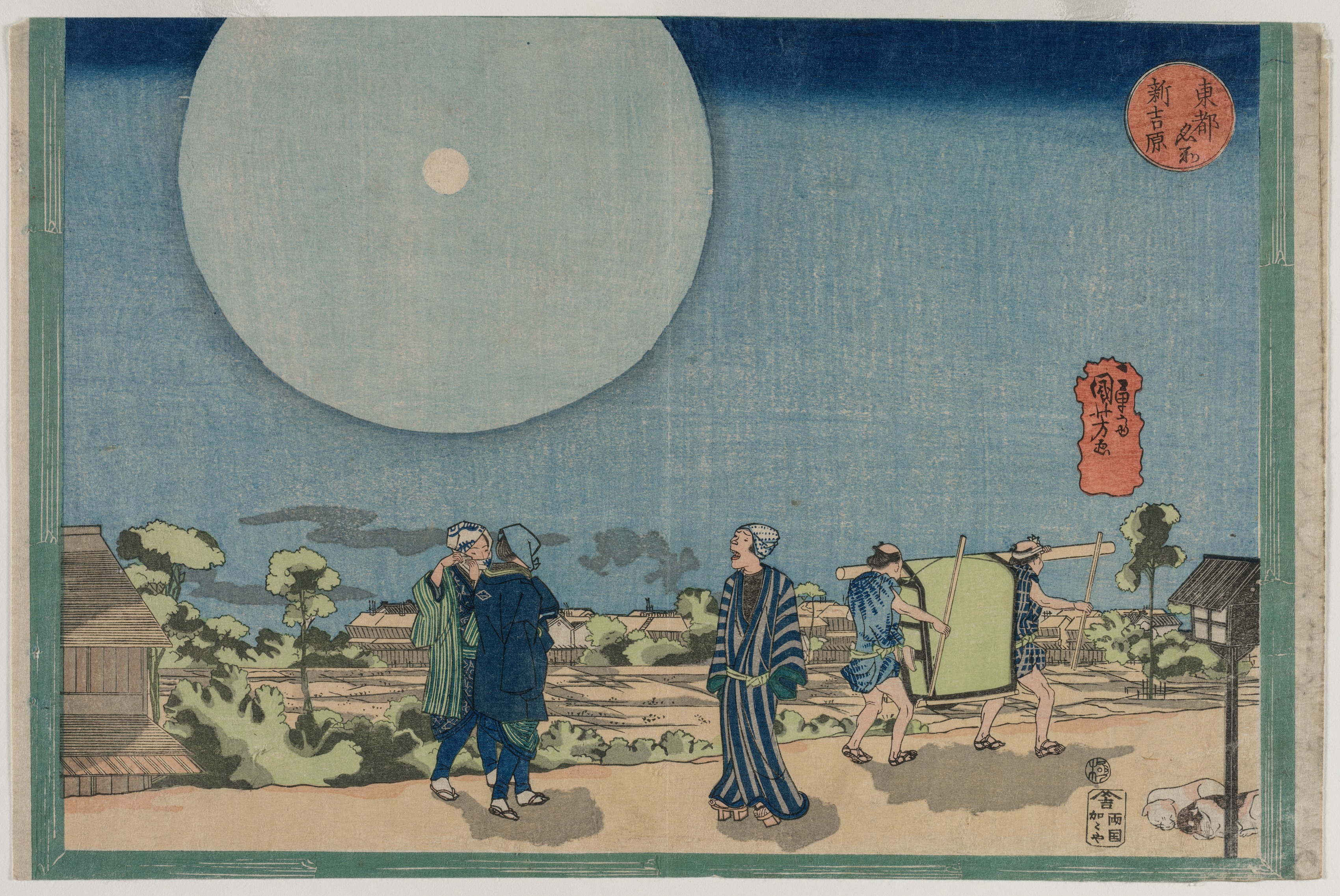
New Yoshiwara, from the series Famous Places in the Eastern Capital
early 1830s · Cleveland Museum of Art · 1930.202
CC0 Public Domain / Open Access
Resized to 960 pixels wide and converted to WebP; no crop.
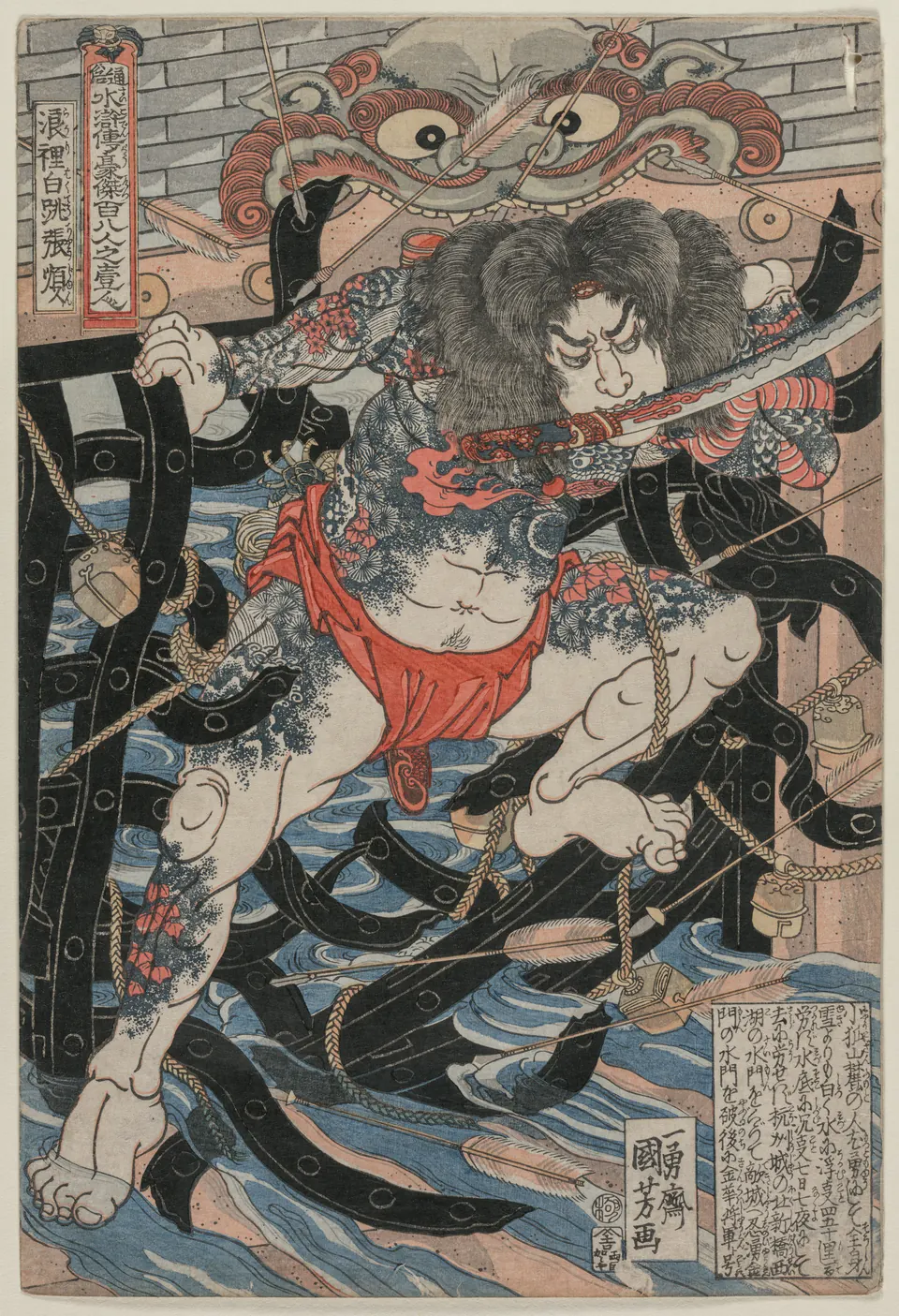
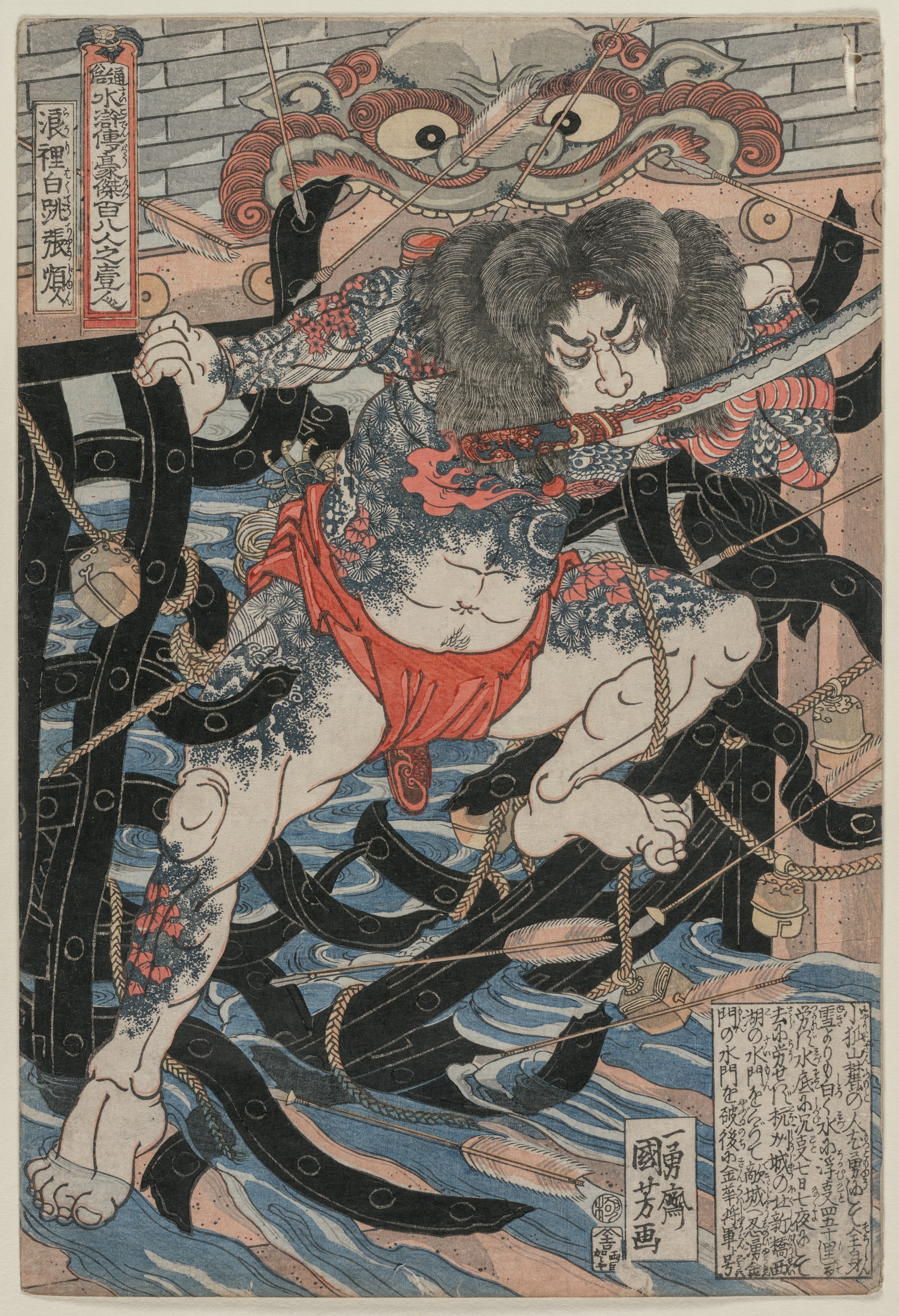
Rori Hakucho Chojun, from 108 Heroes of the Novel Shui Hu Chuan
late 1820s · Cleveland Museum of Art · 1980.85
CC0 Public Domain / Open Access
Resized to 960 pixels wide and converted to WebP; no crop.
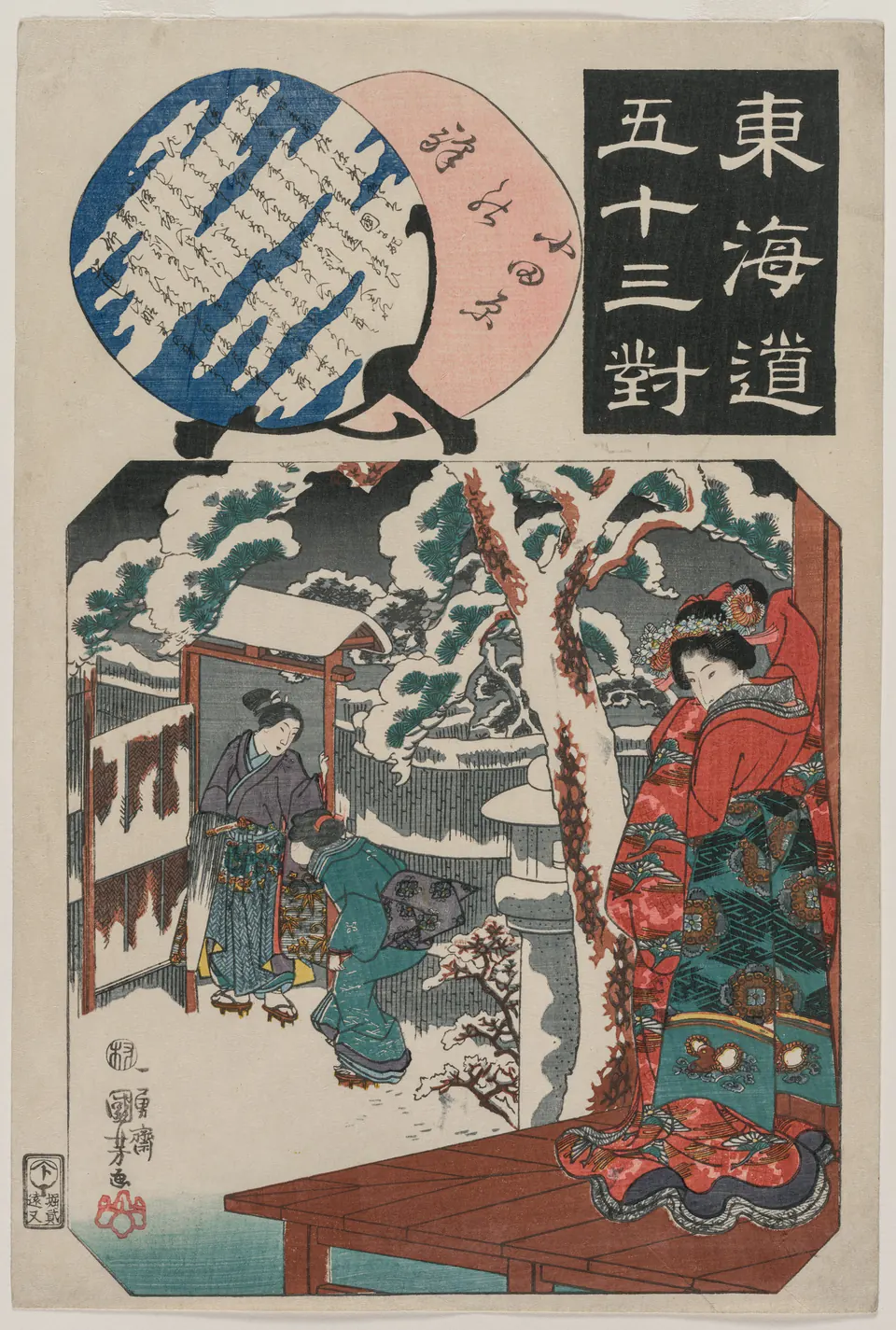
Odawara Station: Minamoto Yoritomo Visits the Daughter of Ito Nyudo
mid-1840s · Cleveland Museum of Art · 1985.336
CC0 Public Domain / Open Access
Resized to 960 pixels wide and converted to WebP; no crop.
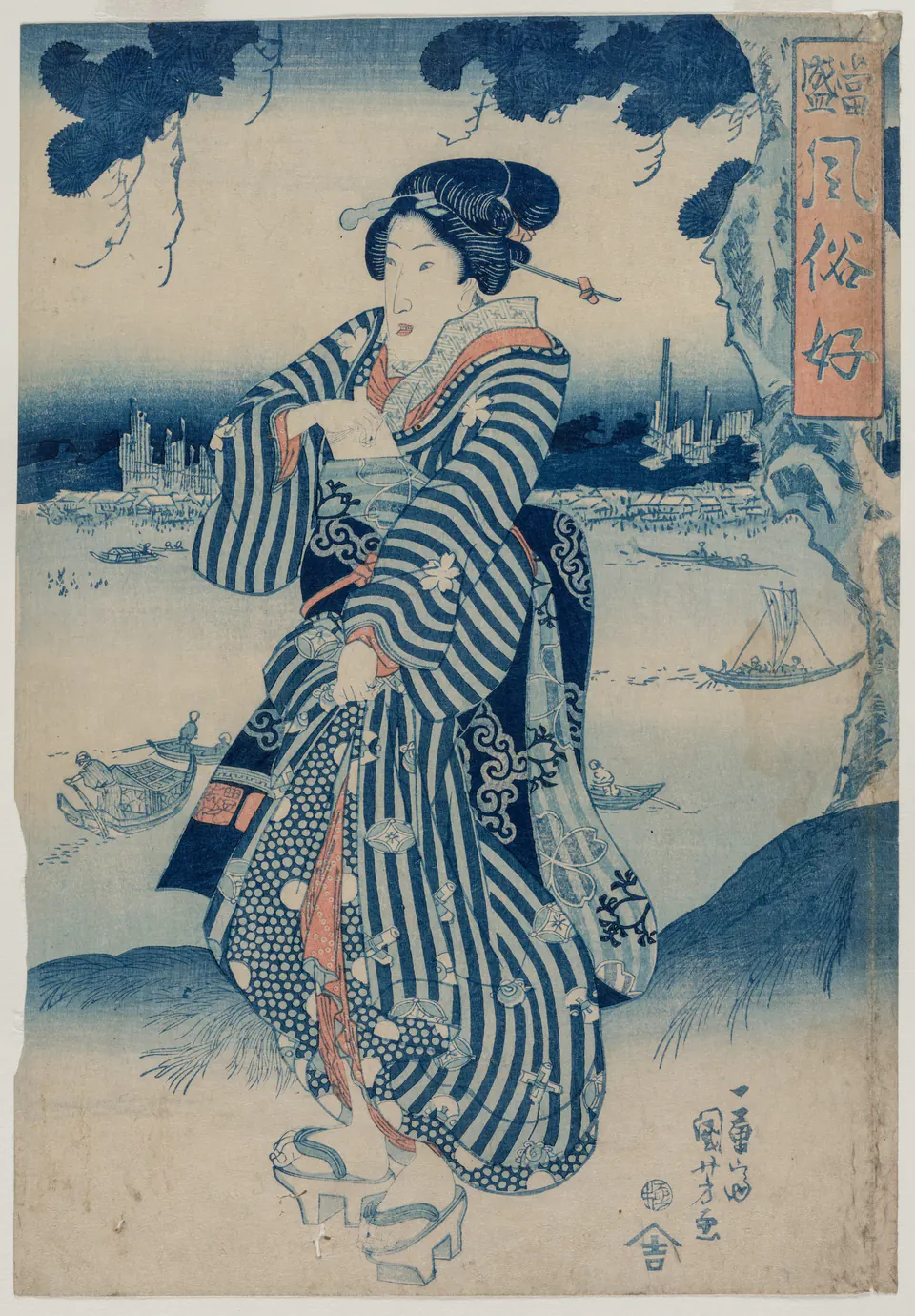
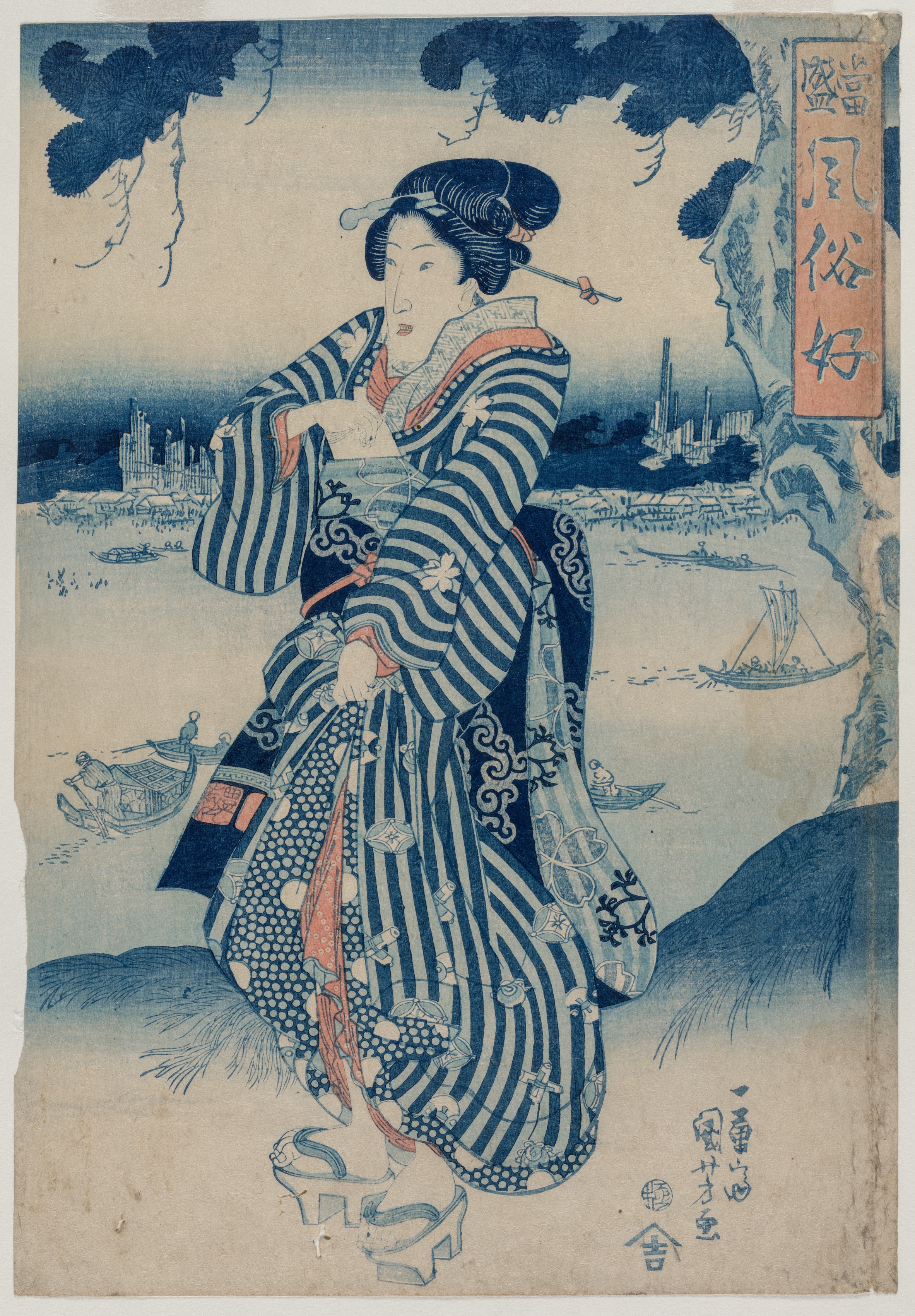
Geisha Standing on the Bank of the Sumida River
early 1830s · Cleveland Museum of Art · 1916.1171
CC0 Public Domain / Open Access
Resized to 960 pixels wide and converted to WebP; no crop.
Sources and review method
We checked the artist chronology against museum records, treated each named jurisdiction separately, and recorded the provider policy for the image set. These sources support the legal framework and artist dates used above; the source file for any individual image still needs its own record.
- Scene from a Ghost Story: The Okazaki Cat Demon — The Metropolitan Museum of Art. Feature diptych identity, date, accession JP1563, exact download, and object-level Public Domain statement.
- The Young Yoshitsune defeats Benkei at Gojo Bridge — Art Institute of Chicago. Triptych identity, Kuniyoshi attribution, nineteenth-century date, accession, IIIF image, and CC0 status.
- Casting a Mantra on the Waves at Kakuta — Art Institute of Chicago. Series and impression identity, artist inscription, date, exact IIIF image, and CC0 status.
- Ōmori, from Famous Places in the Eastern Capital — Cleveland Museum of Art. Exact impression, Kagaya Kichibei publisher inscription, kiwame seal, accession, print file, and CC0 status.
- Splendid View at Futamigaura Bay — Cleveland Museum of Art. Triptych assembly, Yamadaya Shōhei publisher inscription, 1854 date, exact print file, and CC0 status.
- Rori Hakucho Chojun — Cleveland Museum of Art. Hero-print identity, Kagaya publisher inscription, kiwame seal, exact print file, and CC0 status.
- Open Access Images — Art Institute of Chicago. Files labelled CC0 Public Domain Designation may be reused for commercial and non-commercial purposes.
- Open Access — Cleveland Museum of Art. Cleveland releases eligible collection images and metadata under CC0 for commercial and non-commercial reuse.
- Image and Data Resources — The Metropolitan Museum of Art. The Met makes images marked Public Domain available for unrestricted use under its Open Access programme.
- Frequently Asked Questions concerning the Extension of the Term of Protection — Agency for Cultural Affairs, Japan. Japan moved from life plus 50 to life plus 70 in 2018 without reviving works whose terms had already expired.
- Directive 2006/116/EC, Article 1 — EUR-Lex. The EU term for an artistic work is the author’s life plus 70 years.
- How long copyright lasts — UK Government. UK guidance gives 70 years after the author’s death for artistic works.
- Law No. 5846 on Intellectual and Artistic Works, Article 27 — WIPO Lex. The Turkish economic-rights term is the author’s life plus 70 years.
- Circular 15A: Duration of Copyright — U.S. Copyright Office. The 2026 term table places works published before 1931 outside the maximum 95-year publication term.
- Certain Unpublished, Unregistered Works Enter Public Domain — U.S. Copyright Office. Older unpublished works have a separate U.S. term analysis; discovery and first-publication history can matter.
- 17 U.S.C. Chapter 3, including §303 — U.S. Copyright Office. Section 303 states the transition rules and minimum 2002 or 2047 expiry floors for works that were unpublished on 1 January 1978.
- 17 U.S.C. §104A and Circular 38B — U.S. Copyright Office. Foreign-work restoration requires that the work was not already public domain through term expiry in its source country.
- Visual Artists: Publication — U.S. Copyright Office. Distribution can publish a visual artwork, while public display by itself does not establish publication.
- Compendium of U.S. Copyright Office Practices, Chapter 900, §909.3(A) — U.S. Copyright Office. A purely faithful scan or “slavish copy” does not add registrable authorship, while substantial restoration or alteration can require a separate analysis.
- Copyright notice: digital images, photographs and the internet — UK Intellectual Property Office. A digital image can require a separate rights and website-terms check even when its subject is old.
Editorial record
About this article
- Author
- Publisher
- GeMarkt
- Published
- Reviewed
- Internal source & rights check. Conducted by GeMarkt Research Review. This is an internal editorial check—not independent peer review.
- Source standard
- Rights guide source standardSeparates the underlying work from the source file, records the review date, and links the evidence used for the conclusion.
Found a claim that needs checking? Report a factual error.