GeMarkt Journal · Practical guide
Is Hiroshige Public Domain? Prints, Editions, and Image Files
Hiroshige's established prints are public domain in the markets checked here, but artist identity, impression, later printing, restoration, and image file need separate records.
Rights check · reviewed
The short answer
Yes—for established works by Utagawa Hiroshige I and the 12 nineteenth-century institutional impressions documented here in Japan, the European Union, United Kingdom, Türkiye, and United States. Successor names, editions, impressions, recarvings, restorations, and exact files remain separate layers.
| What is being checked | Result | Why |
|---|---|---|
| Japan | Public domain | Hiroshige I died in 1858. Japan’s 2018 term extension did not revive works whose earlier protection had already expired. |
| European Union, United Kingdom & Türkiye | Public domain | Established works by Hiroshige I are far beyond the ordinary life-plus-70 economic-rights terms. |
| United States — named print set | Clear for the documented nineteenth-century publications | The 12 selected commercial prints were issued before 1931; a newly surfaced unpublished drawing or painting needs its own §303 chronology. |
| Artist identity, impression, recarving, or file | Identify the exact layer | Hiroshige I, successors using the name, one physical impression, a later printing, modern restoration, and museum file do not share one provenance record. |
This guide clears a named AIC and Met set and answers Sudden Shower exact intent inside the artist-level canonical. It does not clear every object labelled Hiroshige, every later printing, or every online copy worldwide.
This is a documented research summary, not legal advice. Copyright and moral-rights rules can vary by country and by the history of a particular work.

What we’ll look at
When can a Hiroshige print be reused, and why must the artist name, physical impression, later printing, and digital file remain separate records?
The useful answer is yes for established works by Utagawa Hiroshige I and for the 12 institutional print impressions documented here—but not automatically for every object or file labelled “Hiroshige.” The artist died in 1858. His established works are public domain in Japan, the European Union, United Kingdom, and Türkiye, and the named commercial prints were published early enough to support the same conclusion in the United States.
That answer still leaves most practical reuse mistakes untouched. Hiroshige designed images for a collaborative publishing system. Publishers commissioned and marketed series; carvers translated drawings into blocks; printers controlled registration, pressure, ink, and colour gradation; sheets were then trimmed, faded, mounted, conserved, and photographed. Hiroshige’s name was also inherited by later artists. A modern seller may offer a new recarving, a colour reconstruction, or an edited scan under the same familiar label.
This guide therefore makes five linked checks:
- Is the underlying work outside copyright in the market being checked?
- Does “Hiroshige” mean Utagawa Hiroshige I, rather than a successor or a work merely attributed to him?
- Which series, state, edition, and physical impression is being described?
- Does the selected digital file carry an affirmative provider statement?
- Have restoration, translation, typography, compositing, or other modern additions introduced new authorship?
It is a research summary, not legal advice. It names the works, territories, and files actually checked instead of turning an artist’s death date into a worldwide licence.
The short answer is yes for the named set
The 12 prints below come from the Art Institute of Chicago and The Metropolitan Museum of Art. Each object record names Utagawa Hiroshige, identifies a particular museum impression, and marks the corresponding image Public Domain or CC0. Each local WebP was generated from the exact institutional URL recorded in the rights ledger.
The set deliberately ranges beyond a single famous rainstorm. It includes the Tōkaidō in mist and snow, Edo seen past a cat on a windowsill, Mount Fuji from Satta Peak, birds, a shrine in snow, foxfire, the Naruto whirlpool, and Suruga Street. Hiroshige’s importance lies partly in how a commercial print system could reorganise travel, weather, season, labour, and urban spectatorship across many sheets.
The clearance does not automatically include:
- a sheet by Hiroshige II or Hiroshige III;
- a work catalogued as “after,” “school of,” or “attributed to” Hiroshige;
- a modern impression pulled from surviving blocks;
- a new block carved after a historical print;
- a colourised, repaired, expanded, or generatively completed scan;
- a modern translation, book design, caption, logo, or type treatment;
- an image copied from a marketplace or search result without its source record.
The public-domain status of the historical design and permission to use one particular digital file are separate findings.
Japan and life-plus-70 markets are clear
Japan’s Agency for Cultural Affairs describes the current ordinary term as the author’s life plus 70 years. The transition matters: Japan previously used a shorter ordinary term, and its 2018 extension did not revive protection that had already expired. Hiroshige I’s established works had passed through that earlier term long before the revision.
The European Union term directive, UK government guidance, and Article 27 of Türkiye’s Law No. 5846 use an ordinary life-plus-70 framework for artistic works. Hiroshige’s 1858 death is far beyond those periods.
| Market checked | Rule relevant here | Result for established works by Hiroshige I |
|---|---|---|
| Japan | expired protection was not revived by the 2018 extension | public domain |
| European Union | author’s life plus 70 years | public domain |
| United Kingdom | 70 years after the creator’s death | public domain |
| Türkiye | economic rights ordinarily last life plus 70 | public domain |
This table does not clear a modern edition or a successor’s work. Nor does it answer moral rights, trademarks, privacy, cultural-property restrictions, ownership of a physical sheet, or a provider’s contractual terms. Those questions cannot be compressed into “the artist died long ago.”
The US answer follows publication history
United States analysis is unusually dependent on publication. The selected sheets were commercial prints issued and distributed in the nineteenth century. In 2026, a work published before 1 January 1931 is beyond the maximum 95-year publication term described by the Copyright Office’s duration tables.
The same shortcut should not be applied to every object attributed to Hiroshige. Section 303 governs works that were still unpublished on 1 January 1978. It created a minimum term through 2002 and, for qualifying works first published by the end of 2002, potentially through 2047. A museum exhibition is not automatically publication; the Copyright Office distinguishes display from distribution of originals or copies.
That produces a practical split:
- Named nineteenth-century commercial impressions: strong publication evidence and a clear pre-1931 route.
- A drawing prepared for a publisher: investigate whether and when copies were distributed.
- A private painting or newly surfaced sketch: build a work-specific chronology before stating a U.S. result.
- A later edition: identify what was printed, by whom, from which blocks, and when.
URAA restoration does not create a fresh term merely because the work originated abroad. Source-country status is part of the restoration test, and Hiroshige’s established works had already expired in Japan.
The name Hiroshige is not enough
The familiar English label usually refers to Utagawa Hiroshige I, born Andō Tokutarō in 1797 and active in Edo. But Japanese art names could be transmitted. Hiroshige II married the first artist’s daughter and used the name; Hiroshige III later did so as well. Museum catalogues may also use Andō Hiroshige, Utagawa Hiroshige, Hiroshige I, or Japanese characters.
This is not a cosmetic cataloguing problem. The creator’s identity affects the death date, publication history, term analysis, attribution, and caption. A file named hiroshige-landscape.jpg provides none of that evidence.
A reliable record should preserve:
- creator as stated by the holding institution;
- whether the record means Hiroshige I, II, III, a workshop, or an attribution;
- series title and sheet title;
- publisher and censor seals when recorded;
- object date and accession number;
- the exact provider image associated with that record.
The GeMarkt set is limited to records that name the first Hiroshige. A separate object by Hiroshige II in the Edo art chapter is not silently absorbed into this guide.
A woodblock print is a collaborative object
Hiroshige supplied designs, but an ukiyo-e sheet was made through divided labour. A publisher selected subjects, financed production, coordinated specialist carvers and printers, and sold the result. Carvers translated the design into a key block and colour blocks. Printers aligned those blocks and controlled effects such as bokashi, the hand-printed gradation visible in skies, water, and darkness.
That physical process matters for both description and reuse. Two museum sheets made from the same blocks may differ because of printing sequence, pigments, wiping, pressure, paper, fading, trimming, or wear. A later impression may lose fine rain lines or alter the relation between a dark sky and pale water. Neither sheet is simply “the original JPEG.”
The British Museum’s account of making a woodblock print like Hiroshige emphasises the coordinated production behind the apparent immediacy. The lesson is not that every collaborator necessarily creates a new modern copyright term today. It is that the object needs more precise identification than designer and title alone.
For research and production, keep five layers distinct:
- Design: the composition associated with Hiroshige.
- Blocks and production: carving, printing, publisher, state, and edition evidence.
- Physical impression: one surviving sheet with its own material history.
- Digital file: a modern photograph or scan supplied under stated terms.
- Derivative: GeMarkt’s resize or any more creative modern edit.
Is Sudden Shower public domain
Yes for the 1857 Hiroshige design and for the specific Art Institute of Chicago impression and file documented here in the checked markets. The feature image is AIC accession 1981.1206. Its object page names Utagawa Hiroshige, dates the sheet to 1857, and carries a CC0 Public Domain Designation. The exact local master came from AIC’s recorded 3000-pixel IIIF endpoint.
This answer does not mean that every online version is interchangeable. The Met holds another impression, JP644, used in GeMarkt’s guide to comparing two artworks. Tokyo Fuji Art Museum publishes its own impression under CC0. Their differences in colour, trimming, condition, and capture are evidence, not errors to be blended away.
The design’s fame also creates a modern-derivative trap. Van Gogh’s painted response, a contemporary poster, an expanded canvas, restored colours, translated cartouches, and a new print cut from recreated blocks are separate works or files. Reusing the historical composition does not transfer the rights statement from AIC 1981.1206 to those versions.
This guide therefore answers the exact intent without opening a competing Sudden Shower canonical. The existing comparison chapter explains how the image works beside Hokusai; this page explains how to identify and clear an impression and file.
Later impressions and restorations need new records
The safest workflow is not “find the largest image.” It is “select the documented object and follow its file chain.”
A later printing may be historically old and still public domain. It nevertheless deserves a new record because it may use worn blocks, replacement blocks, different pigments, altered seals, or posthumous publishing. A twentieth- or twenty-first-century recarving may involve new carving decisions. A digital restoration may repair paper damage, reconstruct line, rebalance colour, remove seals, or expand the image beyond the surviving sheet.
The U.S. Copyright Office distinguishes a faithful copy from an alteration containing enough new authorship. Other jurisdictions and provider contracts do not necessarily draw the line identically. The operational answer is to document the transformation rather than guessing from appearance.
Record at least:
- object URL and accession;
- exact source-file URL;
- provider’s rights label and policy;
- source and local dimensions;
- crop, resize, colour, repair, or compositing history;
- local checksum;
- review date.
For the feature file, AIC’s source measured 2055 × 3000 pixels. GeMarkt resized it to 1584 × 2312 pixels, converted it to WebP, and did not crop it. Responsive delivery is generated from that locked master; it is not a newly claimed artwork.
Twelve open files form the published set
The set includes eight AIC impressions and four Met impressions. Both institutions explicitly mark the selected object images for open reuse. That does not bind another museum, archive, marketplace, or photographer.
The visible candidate ledger below is the release boundary. Each row joins title, date, institution, accession, object page, exact image file, rights label, local file, dimensions, and transformation. Removing any one of those joins weakens the result.
The variety also prevents a misleading single-masterpiece answer. Mishima and Kanbara show how atmosphere can be built from sparse silhouettes and snow. Asakusa Rice Fields makes a cat, a window ledge, rooftops, festival objects, and distant Fuji coexist across near and far space. Macaw on a Pine Branch and Oystercatchers show the vertical and compact bird-print formats. Foxfires and Naruto Whirlpool turn darkness and water into technically demanding printing events.
Treat each as an impression, not as a generic design asset.
A commercial reuse checklist
Before putting a Hiroshige image into a print, book, textile, advertisement, or digital collection:
- Name the creator precisely. Confirm Hiroshige I rather than a successor, workshop, or attribution.
- Identify the object. Keep the full title, series, date, accession, and holding institution.
- Check the intended market. Do not replace territorial analysis with “old equals free.”
- Confirm publication evidence. Commercial nineteenth-century prints are different from an unpublished drawing.
- Identify the impression. State, edition, publisher, seals, paper, colour, and condition may matter.
- Follow the exact file. Use the provider’s object page and direct file, not a search-result copy.
- Read the provider policy. A public-domain work does not force every website to offer its file on identical terms.
- Audit modern intervention. Recarving, restoration, colourisation, translation, cropping, and generative edits need records.
- Preserve provenance. Store URLs, rights label, dimensions, checksum, transformation, and review date together.
- Avoid implied endorsement. Open access to an image does not permit use of a museum’s logo or a false institutional association.
Recheck the record before a new release. Museum metadata, attribution, image availability, and provider policies can change even when the underlying nineteenth-century work remains public domain.
Where Hiroshige fits inside GeMarkt
Hiroshige creates a useful bridge between the Hokusai rights guide and the worked comparison of Hokusai and Hiroshige. Those pages should reinforce one another without repeating the same job: Hokusai’s guide handles his designs and impressions, the comparison chapter teaches relational analysis, and this guide handles Hiroshige’s identity, collaborative print history, and exact-file reuse.
Future collection and wallpaper routes are reserved as /collections/hiroshige/ and /free/wallpapers/hiroshige/. They are not live promises. They should open only when the selected works have been restored, quality checked, and prepared for their actual formats.
Until then, the useful path is research rather than a fabricated product claim:
- start with the object-level evidence in this guide;
- use Public Domain Is Not a Free-for-All for the larger distinction between work and file;
- consult GeMarkt’s copyright approach;
- browse free wallpapers and the shop only for formats that genuinely exist today.
Hiroshige’s prints circulated because they were reproducible objects. Reusing them responsibly now begins by restoring that material specificity, not erasing it.
Rights-checked image ledger
A documented starting set
These files were selected from the holding institutions rather than from search-result copies. Each card keeps the artwork record, exact source file, provider statement and GeMarkt transformation visible as separate facts.
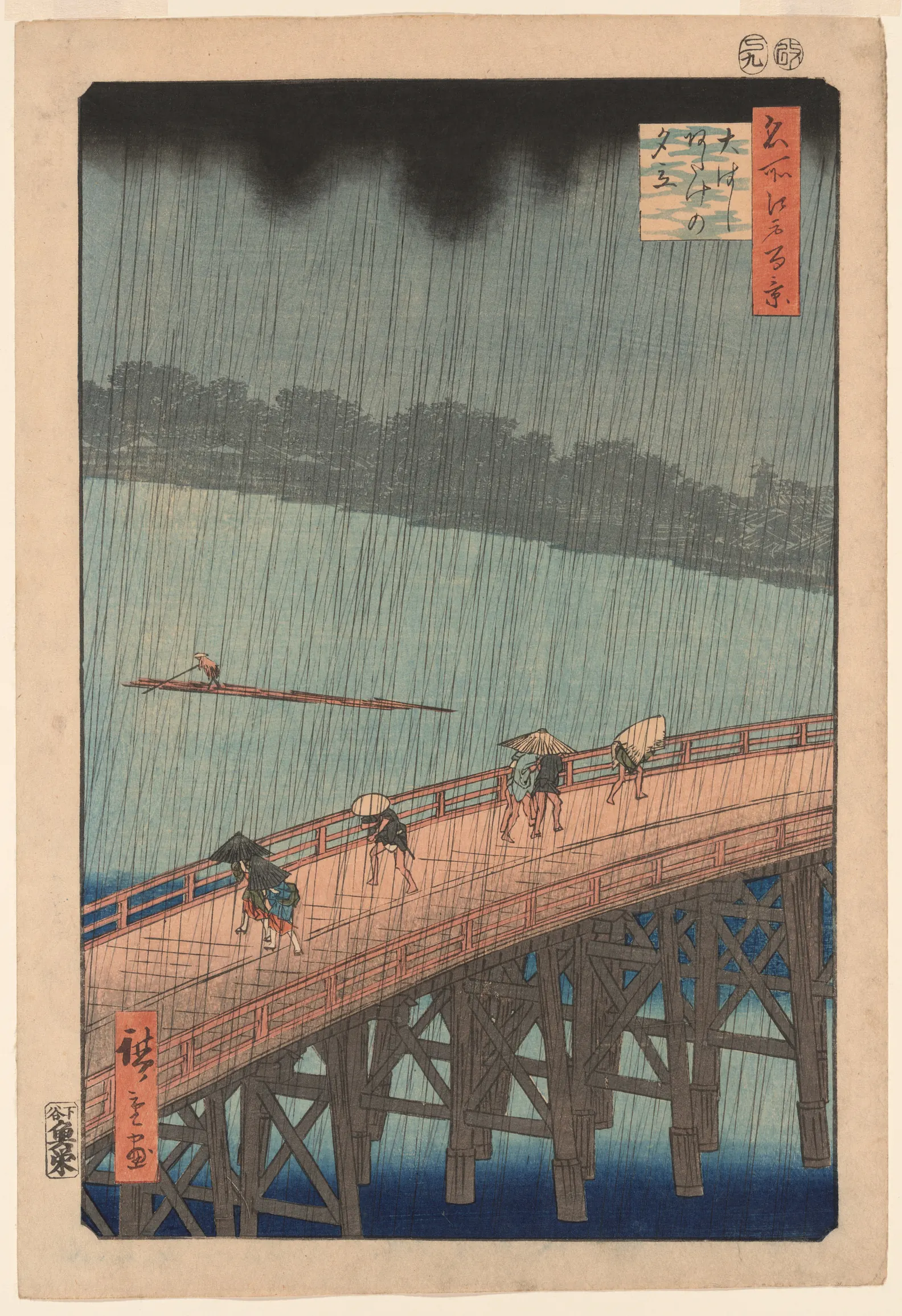
Sudden Shower over Shin Ohashi Bridge and Atake
1857 · Art Institute of Chicago · 1981.1206
CC0 Public Domain Designation
Resized to 1584 pixels wide and converted to WebP; no crop.

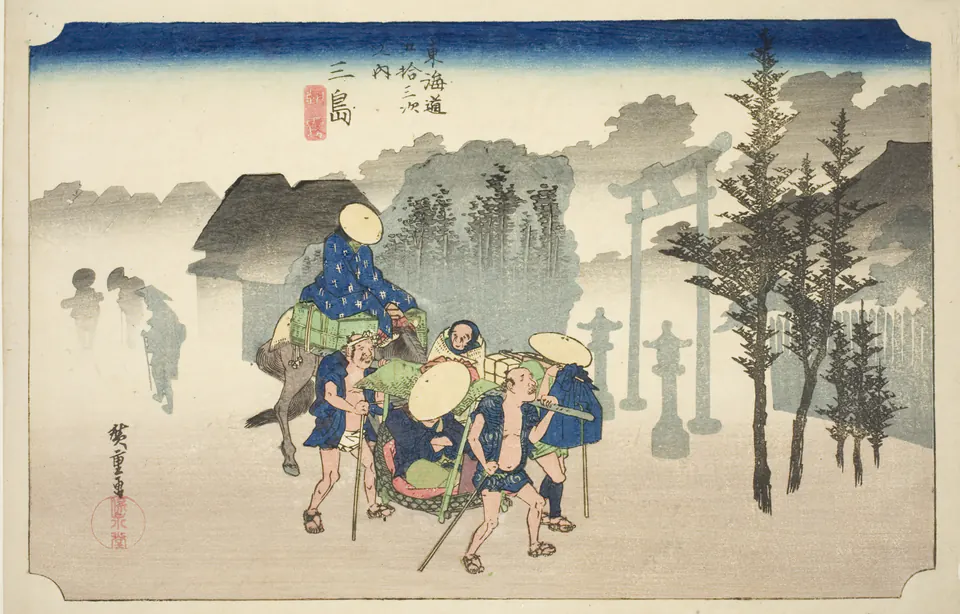
Mishima: Morning Mist
c. 1833/34 · Art Institute of Chicago · 1932.170
CC0 Public Domain Designation
Resized to 960 pixels wide and converted to WebP; no crop.

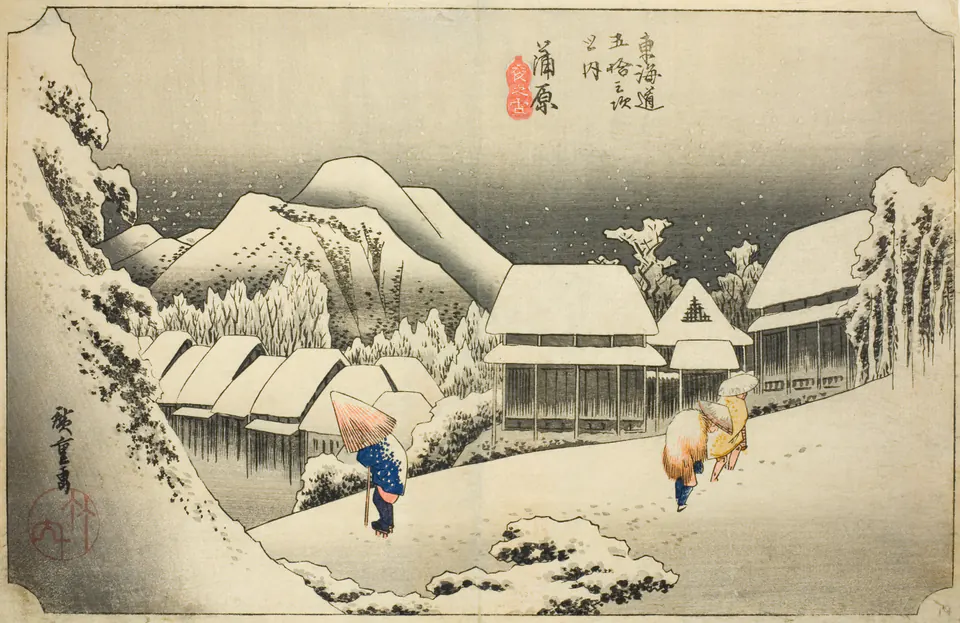
Kanbara: Evening Snow
c. 1833/34 · Art Institute of Chicago · 1925.3517
CC0 Public Domain Designation
Resized to 960 pixels wide and converted to WebP; no crop.

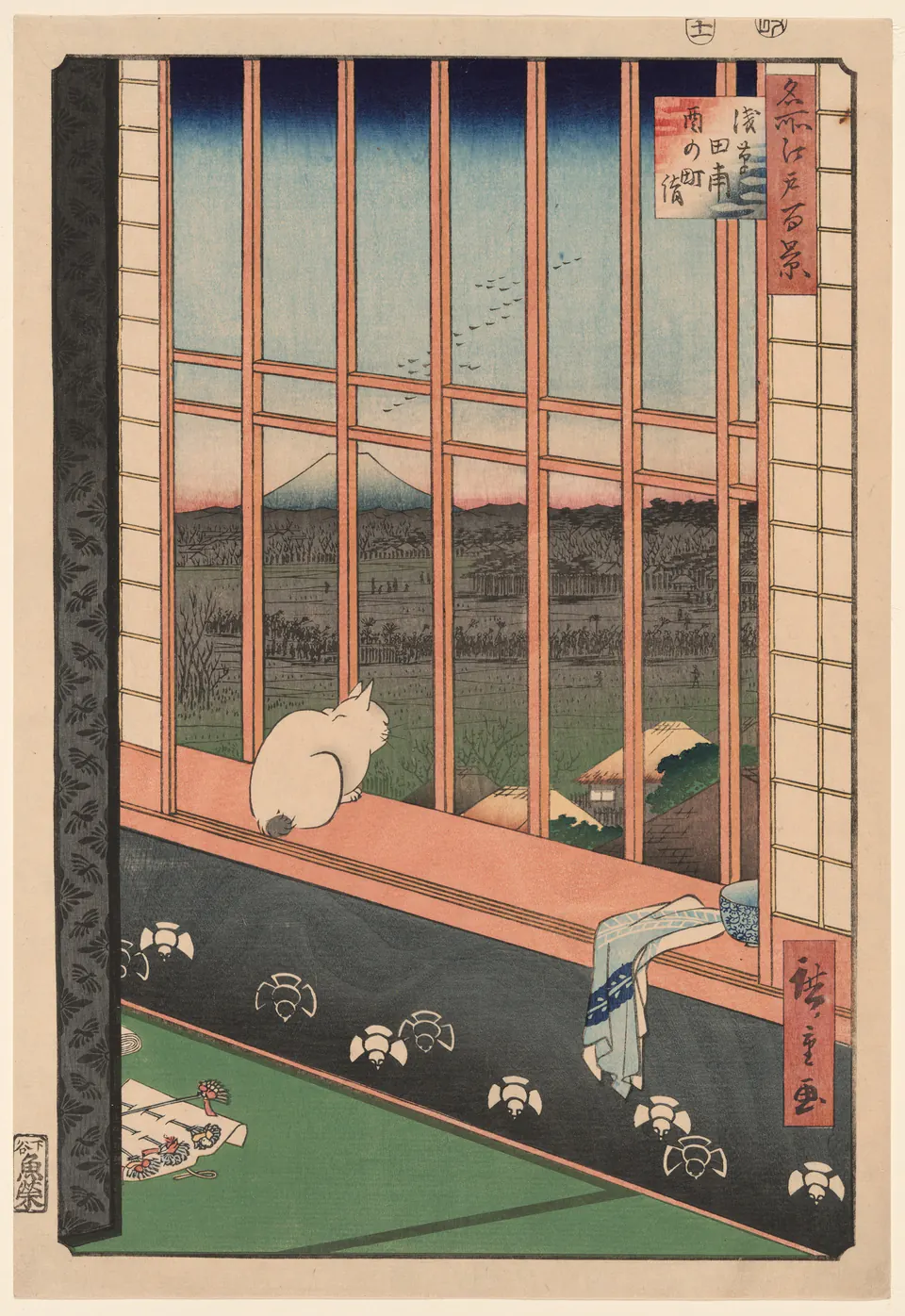
Asakusa Rice Fields and Torinomachi Festival
1857 · Art Institute of Chicago · 1961.147
CC0 Public Domain Designation
Resized to 960 pixels wide and converted to WebP; no crop.

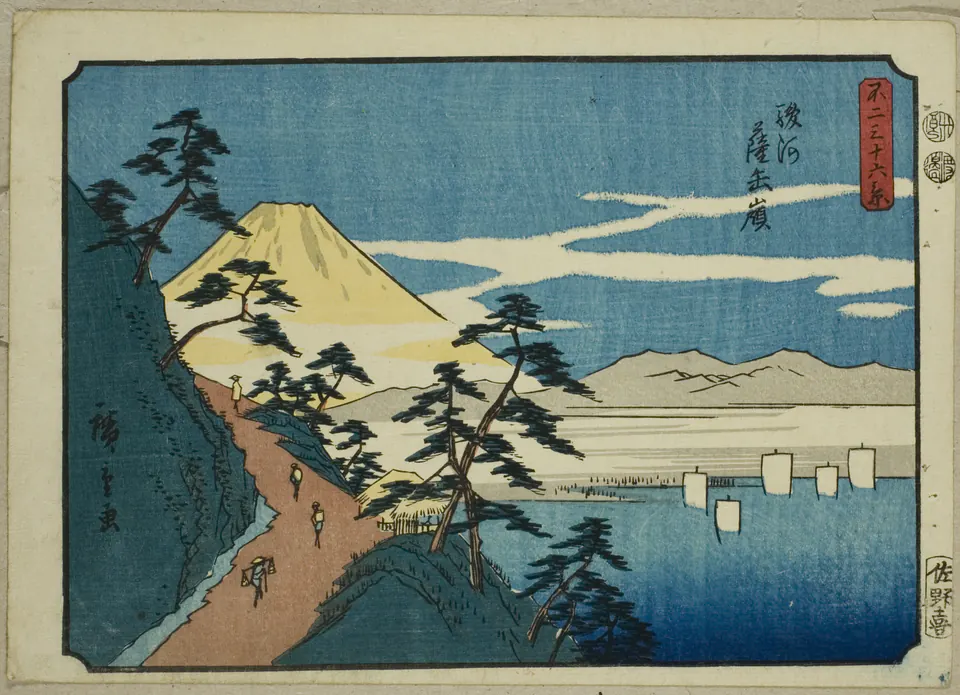
Satta Peak in Suruga Province
1852 · Art Institute of Chicago · 1934.272
CC0 Public Domain Designation
Resized to 960 pixels wide and converted to WebP; no crop.

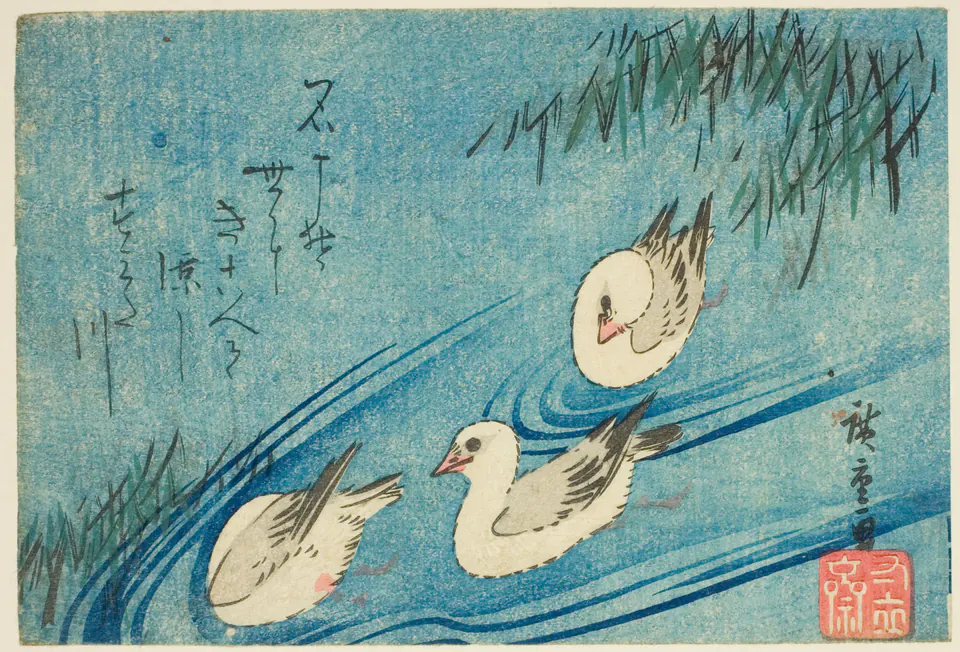
Oystercatchers
c. 1833/34 · Art Institute of Chicago · 1934.279a
CC0 Public Domain Designation
Resized to 960 pixels wide and converted to WebP; no crop.

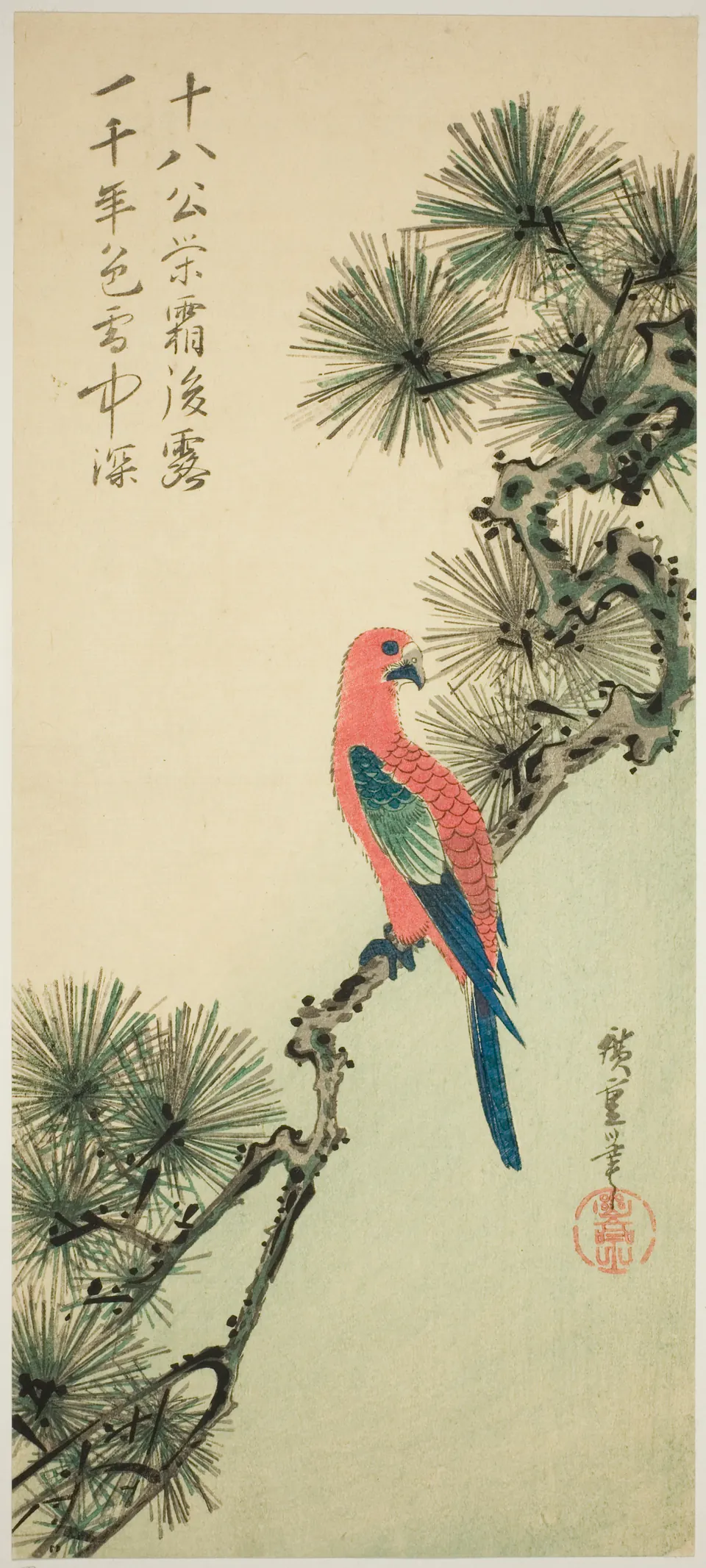
Macaw on a Pine Branch
c. 1835 · Art Institute of Chicago · 1932.169
CC0 Public Domain Designation
Resized to 960 pixels wide and converted to WebP; no crop.

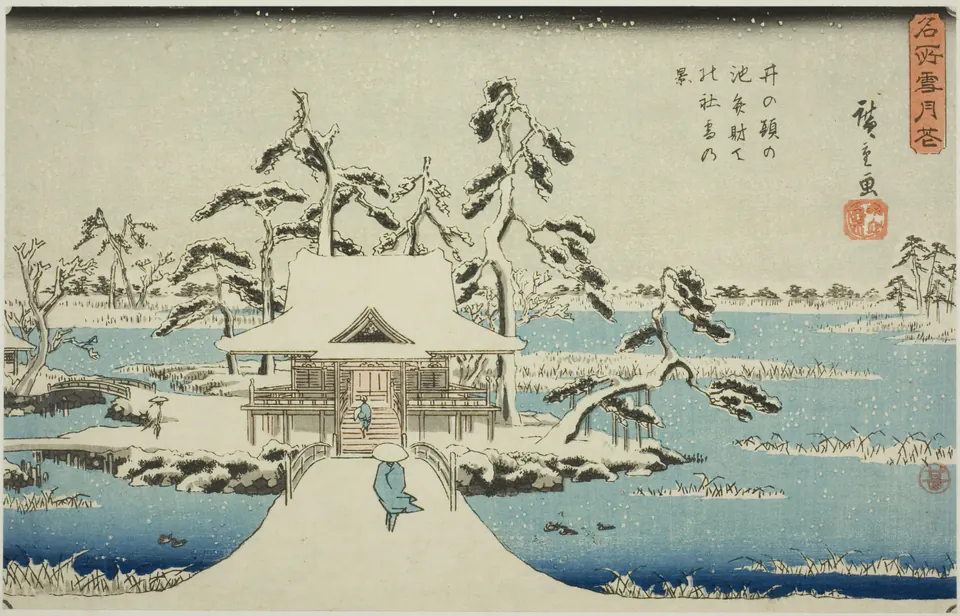
Snow at Benzaiten Shrine in Inokashira Pond
c. 1844/45 · Art Institute of Chicago · 1934.283
CC0 Public Domain Designation
Resized to 960 pixels wide and converted to WebP; no crop.

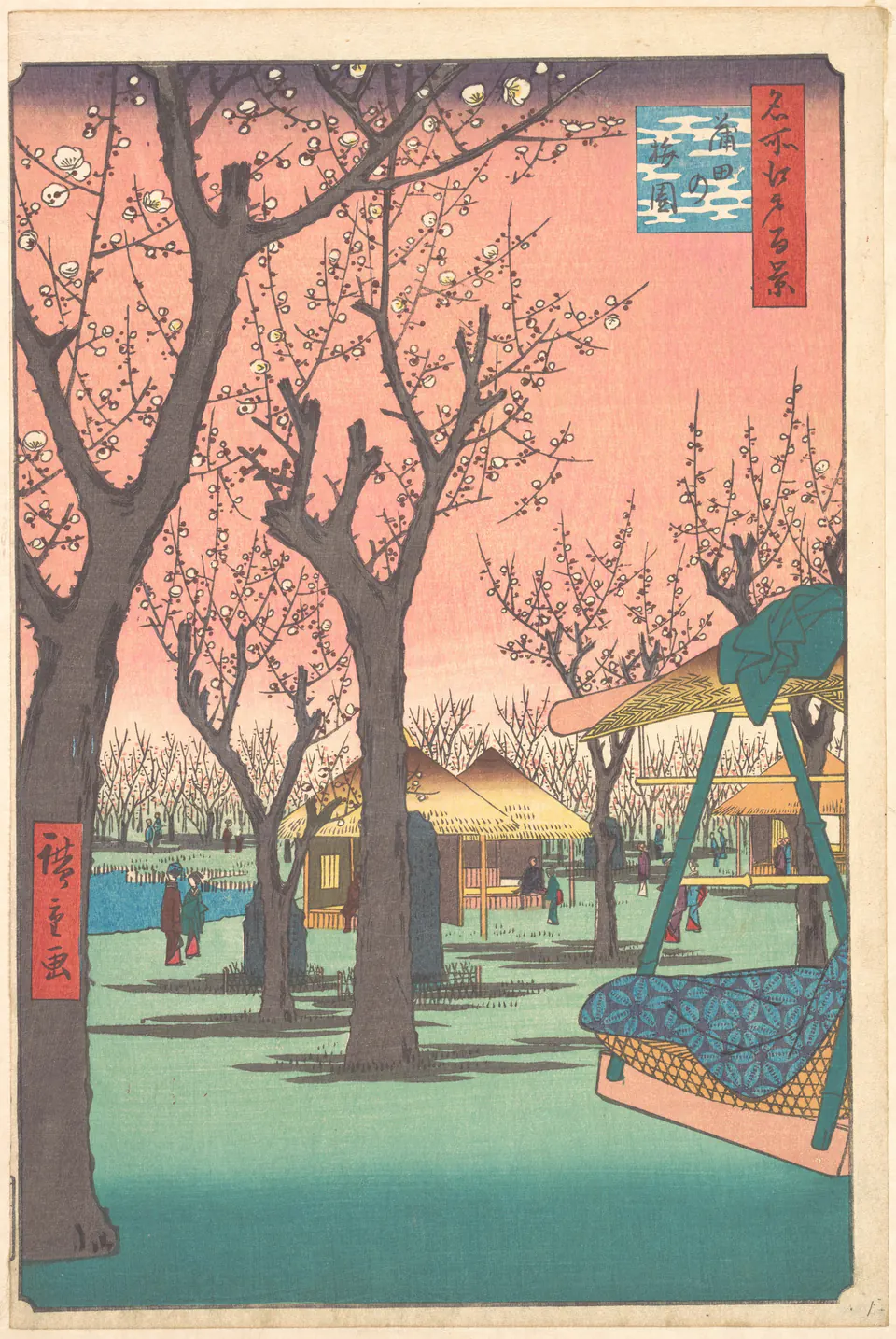
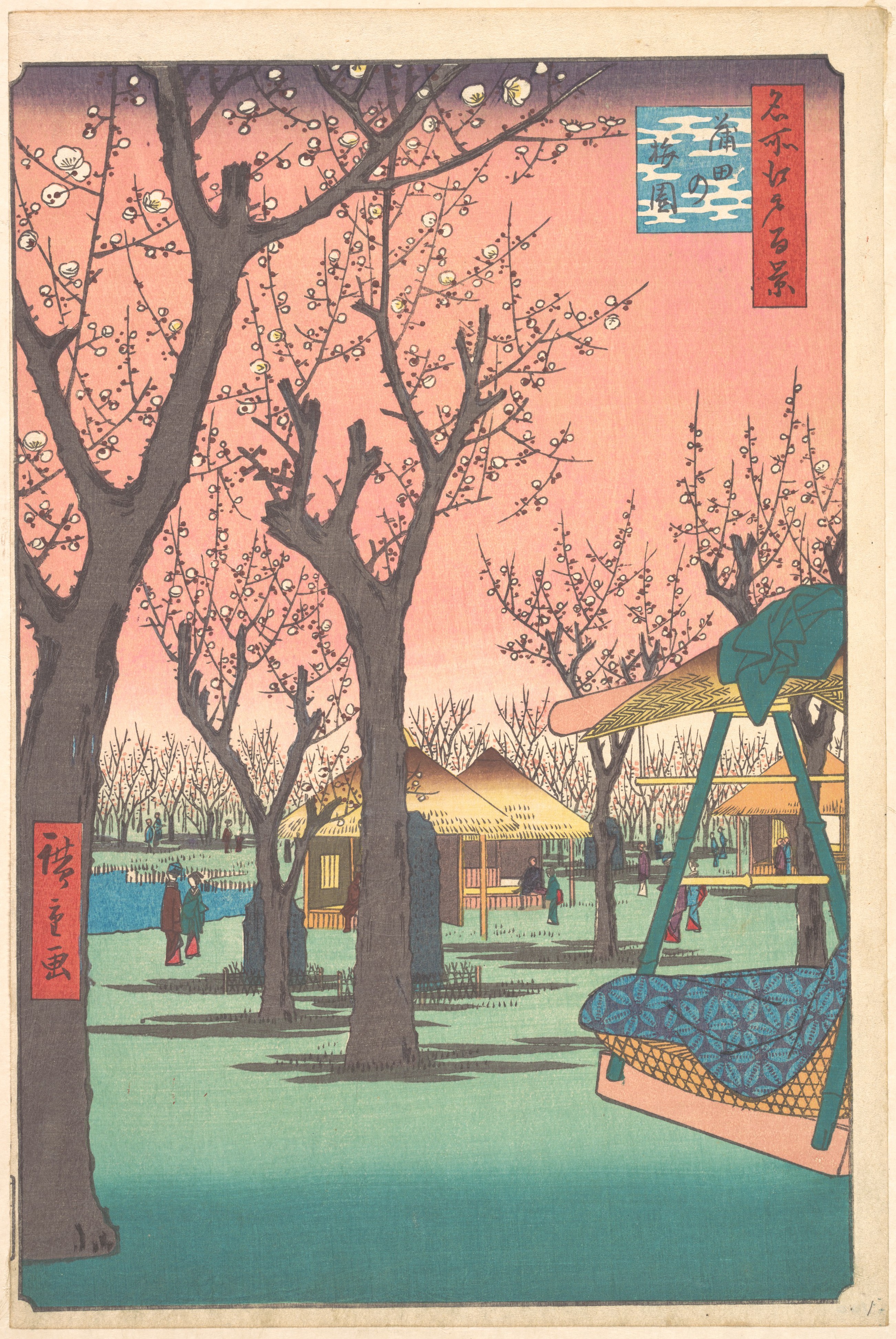
Plum Garden at Kamata
1857 · The Metropolitan Museum of Art · JP2510
Public Domain / Open Access (CC0)
Resized to 960 pixels wide and converted to WebP; no crop.
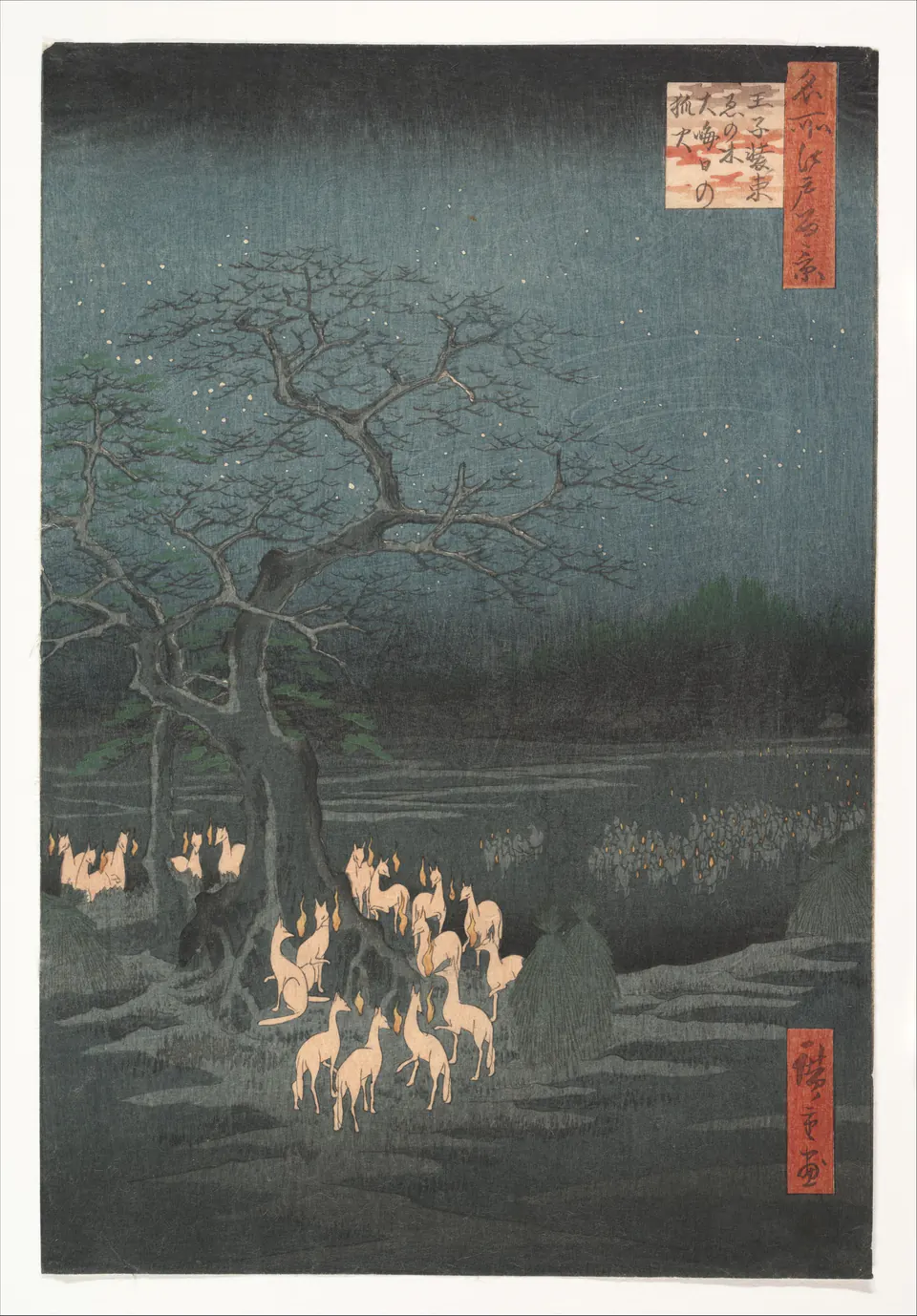
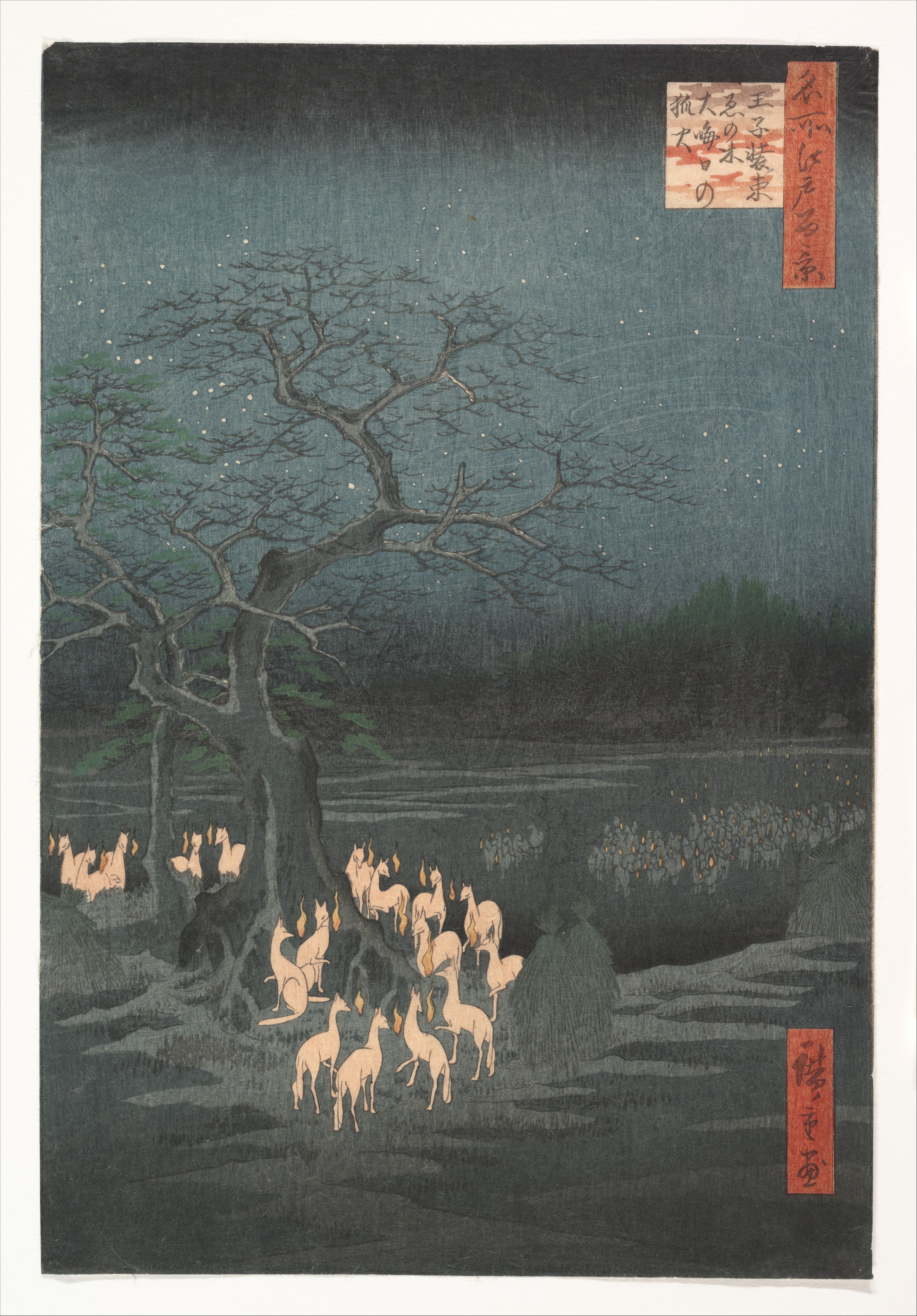
New Year's Eve Foxfires at the Changing Tree, Oji
ca. 1857 · The Metropolitan Museum of Art · JP1470
Public Domain / Open Access (CC0)
Resized to 960 pixels wide and converted to WebP; no crop.
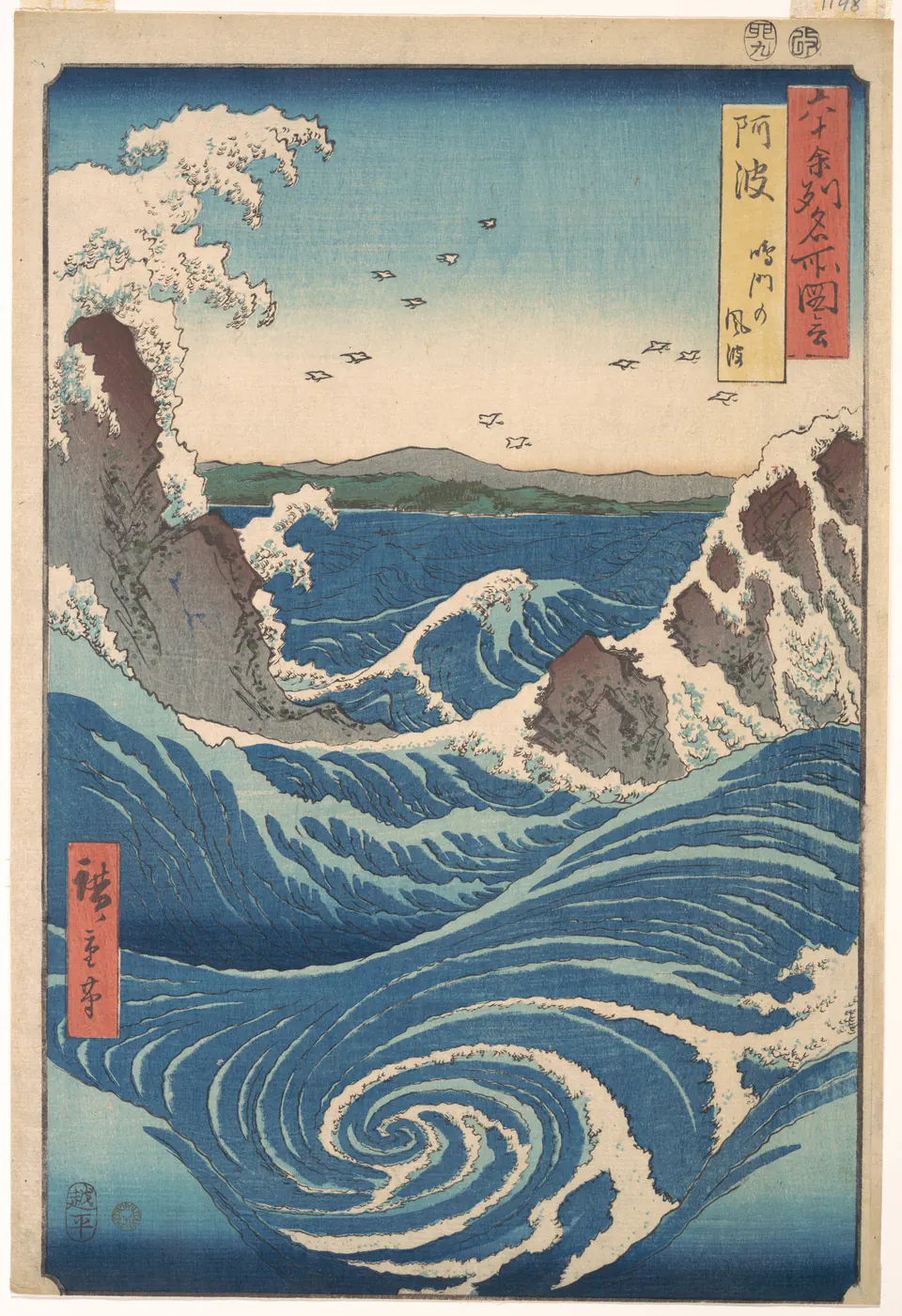
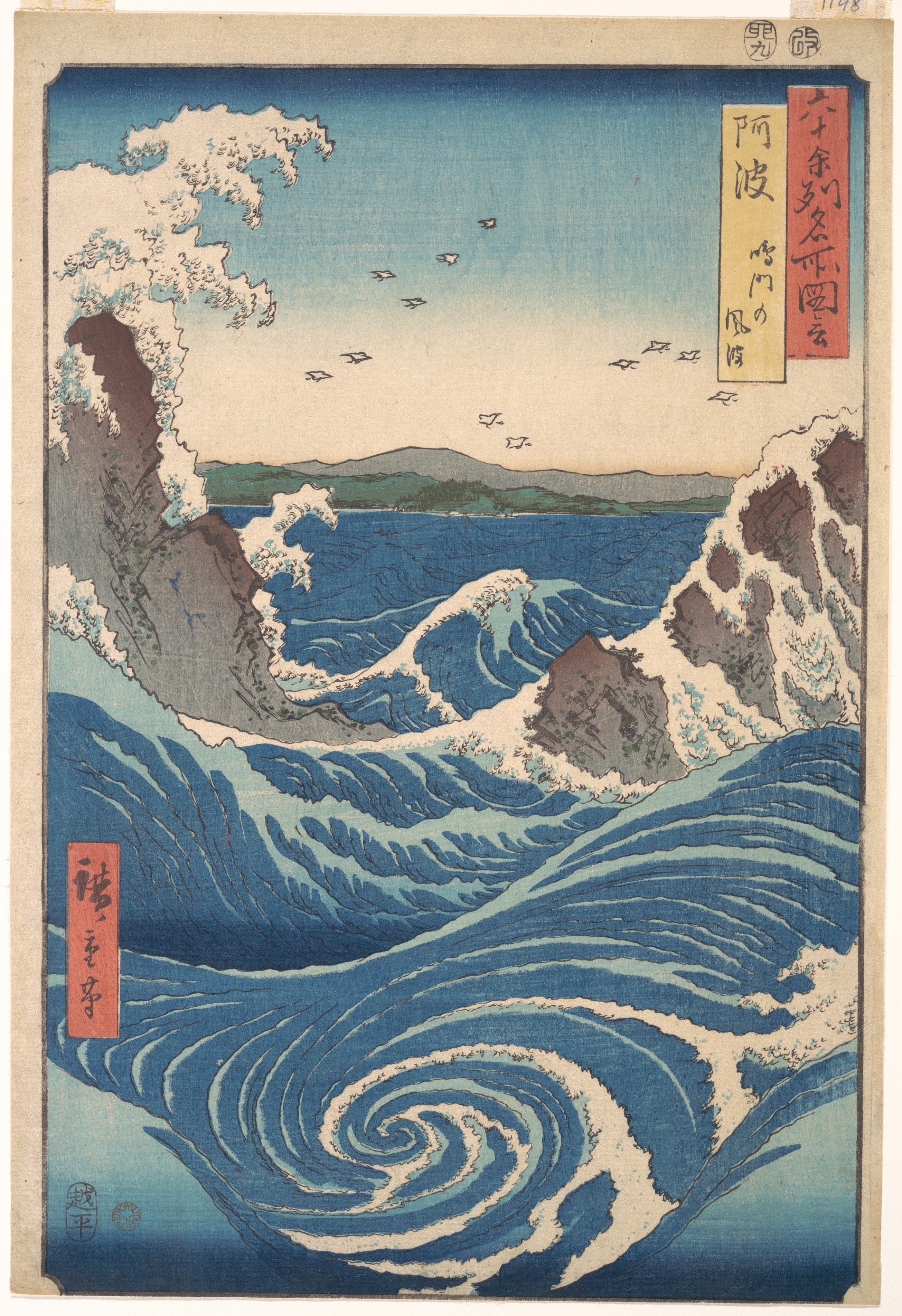
Naruto Whirlpool, Awa Province
ca. 1853 · The Metropolitan Museum of Art · JP1198
Public Domain / Open Access (CC0)
Resized to 960 pixels wide and converted to WebP; no crop.
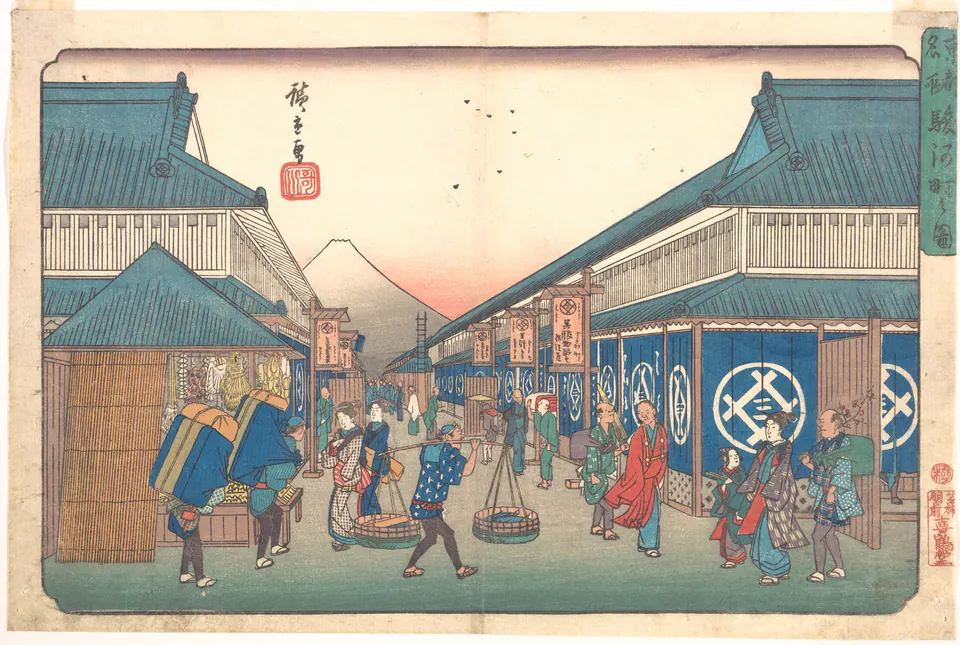
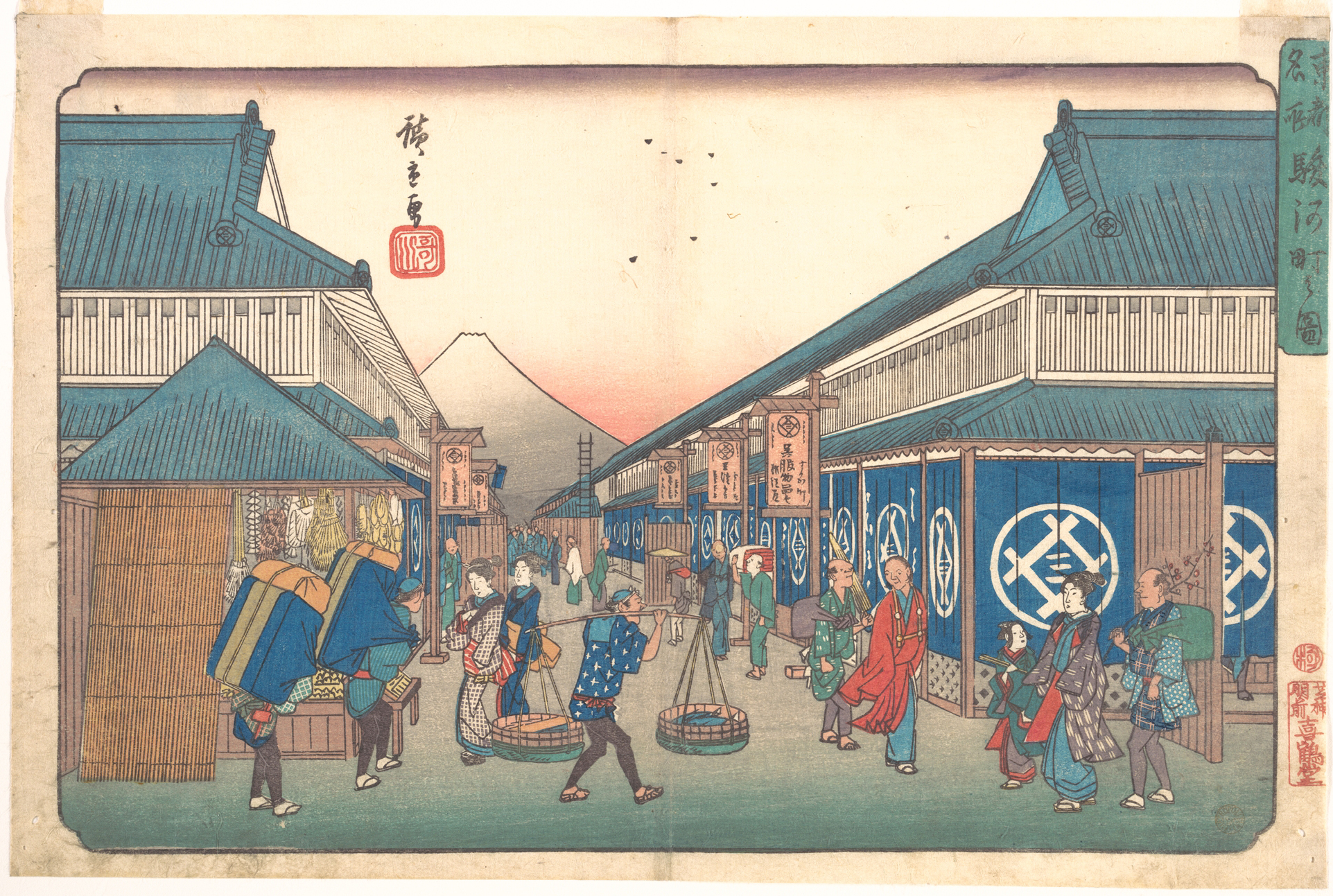
Suruga Street
ca. 1836 · The Metropolitan Museum of Art · JP601
Public Domain / Open Access (CC0)
Resized to 960 pixels wide and converted to WebP; no crop.
Sources and review method
We checked the artist chronology against museum records, treated each named jurisdiction separately, and recorded the provider policy for the image set. These sources support the legal framework and artist dates used above; the source file for any individual image still needs its own record.
- Sudden Shower over Shin Ohashi Bridge and Atake — Art Institute of Chicago. Feature impression identity, creator, date, accession, and CC0 Public Domain Designation.
- Open Access Images — Art Institute of Chicago. Files labelled CC0 Public Domain Designation may be reused for commercial and non-commercial purposes.
- Suruga Street — The Metropolitan Museum of Art. Object identity, accession, publication-era date, and Public Domain Open Access file status.
- Image and Data Resources — The Metropolitan Museum of Art. The Met makes images marked Public Domain available for unrestricted use under its Open Access programme.
- How to make a woodblock print like Hiroshige — British Museum. Institutional account of the publisher, designer, carver, printer, blocks, registration, and bokashi process.
- Sudden Shower over Shin Ohashi Bridge and Atake — Tokyo Fuji Art Museum. Independent exact-work record with a CC0 digital-image statement including commercial reuse.
- Frequently Asked Questions concerning the Extension of the Term of Protection — Agency for Cultural Affairs, Japan. Japan moved from life plus 50 to life plus 70 in 2018 without reviving works whose terms had already expired.
- Directive 2006/116/EC, Article 1 — EUR-Lex. The EU term for an artistic work is the author’s life plus 70 years.
- How long copyright lasts — UK Government. UK guidance gives 70 years after the author’s death for artistic works.
- Law No. 5846 on Intellectual and Artistic Works, Article 27 — WIPO Lex. The Turkish economic-rights term is the author’s life plus 70 years.
- Circular 15A: Duration of Copyright — U.S. Copyright Office. The 2026 term table places works published before 1931 outside the maximum 95-year publication term.
- Certain Unpublished, Unregistered Works Enter Public Domain — U.S. Copyright Office. Older unpublished works have a separate U.S. term analysis; discovery and first-publication history can matter.
- 17 U.S.C. Chapter 3, including §303 — U.S. Copyright Office. Section 303 states the transition rules and minimum 2002 or 2047 expiry floors for works that were unpublished on 1 January 1978.
- Visual Artists: Publication — U.S. Copyright Office. Distribution can publish a visual artwork, while public display by itself does not establish publication.
- 17 U.S.C. §104A and Circular 38B — U.S. Copyright Office. Foreign-work restoration requires that the work was not already public domain through term expiry in its source country.
- Compendium of U.S. Copyright Office Practices, Chapter 900, §909.3(A) — U.S. Copyright Office. A purely faithful scan or “slavish copy” does not add registrable authorship, while substantial restoration or alteration can require a separate analysis.
- Copyright notice: digital images, photographs and the internet — UK Intellectual Property Office. A digital image can require a separate rights and website-terms check even when its subject is old.
Editorial record
About this article
- Author
- Publisher
- GeMarkt
- Published
- Reviewed
- Internal source & rights check. Conducted by GeMarkt Research Review. This is an internal editorial check—not independent peer review.
- Source standard
- Rights guide source standardSeparates the underlying work from the source file, records the review date, and links the evidence used for the conclusion.
Found a claim that needs checking? Report a factual error.