GeMarkt Journal · Practical guide
Is Hokusai Public Domain? Prints, Impressions, and Image Files
Hokusai's established prints are public domain in the markets checked here, but each impression, later printing, modern recarving, and museum file needs its own record.
Rights check · reviewed
The short answer
Yes—for the 12 early nineteenth-century print impressions documented here in Japan, the European Union, United Kingdom, Türkiye and United States. The design, blocks, physical impression, later reprinting and exact digital file remain separate layers.
| What is being checked | Result | Why |
|---|---|---|
| Japan | Public domain | Hokusai died in 1849. Japan’s 2018 term extension did not revive works whose earlier terms had already expired. |
| European Union, United Kingdom & Türkiye | Public domain | Hokusai’s established works are far beyond the ordinary life-plus-70 economic-rights terms. |
| United States | Clear for the 12 published print impressions below | These commercial prints were issued and distributed in the early nineteenth century; a newly surfaced unpublished drawing or painting needs its own §303 history. |
| Blocks, impression, reprint, or digital file | Identify the exact object and file | A design, woodblocks, one physical impression, a modern recarving and a museum scan do not share one provenance or rights record. |
This guide clears a named institutional set and answers The Great Wave exact intent inside the artist-level canonical. It does not clear every later impression, modern recarving, restoration, translation, or online copy worldwide.
This is a documented research summary, not legal advice. Copyright and moral-rights rules can vary by country and by the history of a particular work.

What we’ll look at
When can a Hokusai print be reused, and why is The Great Wave one design surviving through materially different impressions and digital files?
The useful answer is yes for the established Hokusai designs and 12 institutional print impressions documented here—but not automatically for every later print or online image. Katsushika Hokusai died in 1849. His underlying works are public domain in Japan, the European Union, United Kingdom, and Türkiye, and the named commercial prints have publication histories that support the same result in the United States.
That does not turn “Hokusai” into a universal file licence. Ukiyo-e was a collaborative, repeatable medium. Hokusai supplied designs; publishers financed and marketed series; specialist carvers cut blocks; printers registered and layered inks; individual sheets then aged, faded, were trimmed, or survived in different conditions. Modern recarvings and digital restorations add still more layers.
This guide makes four linked decisions:
- Is the underlying design outside copyright in the market being checked?
- Which edition, state, and physical impression is being described?
- Is the selected digital file affirmatively covered by the provider’s open-access statement?
- Have modern carving, restoration, typography, translation, or compositing introduced new authorship?
The answer is a research summary, not legal advice. It names the territories and files actually checked rather than claiming worldwide freedom.
The short answer is yes for the named set
The 12 prints below come from the Art Institute of Chicago and The Metropolitan Museum of Art. Every object record names Hokusai, every selected file carries an object-level Public Domain or CC0 statement, and every local derivative was made from the exact institutional source recorded in the ledger.
The set includes six Art Institute impressions—among them The Great Wave, A Mild Breeze on a Fine Day, Shower Below the Summit, and Ejiri in Suruga Province—and six Met impressions spanning landscape, flowers, shrine visits, coastal labour, and surimono. That range matters because Hokusai cannot be reduced to one famous crest.
The clearance does not automatically include:
- an unattributed drawing newly found in an archive;
- a modern impression pulled from surviving or reconstructed blocks;
- a newly carved reproduction made “after Hokusai”;
- an edited scan with reconstructed colours or missing lines;
- a modern book layout, translation, caption, logo, or typographic treatment;
- a file copied from search results without its institutional source.
Old subject matter and a reusable exact file are two separate conclusions.
Japan and life-plus-70 markets are clear
Japan’s Agency for Cultural Affairs states the current ordinary term as the author’s life plus 70 years. The transition matters: before the 2018 revision, the ordinary term was life plus 50, and the Agency’s extension FAQ says protection that had already expired was not reinstated. Hokusai’s works had exhausted that earlier term long before 2018.
The EU term directive, UK government guidance, and Article 27 of Türkiye’s Law No. 5846 each use an ordinary life-plus-70 framework for artistic works. Hokusai’s 1849 death is far beyond all of them.
| Market checked | Rule relevant here | Result for the established designs |
|---|---|---|
| Japan | expired terms were not revived by the 2018 extension | public domain |
| European Union | author’s life plus 70 years | public domain |
| United Kingdom | 70 years after the creator’s death | public domain |
| Türkiye | life plus 70 years for economic rights | public domain |
These are economic-rights conclusions. Attribution, integrity interests, cultural-context questions, trademarks, and provider conditions can operate differently. “Public domain” should not be used to erase the publisher, printmakers, holding institution, or physical history of the sheet.
The U.S. answer follows publication history
Hokusai’s death date does not by itself answer U.S. law. Copyright Office Circular 15A organises older works by publication date; in 2026, works published before 1 January 1931 are beyond the maximum 95-year publication term.
The prints in this ledger were made as commercial, multiple impressions in the early nineteenth century. Their museum records identify series, publishers or production context, and particular surviving sheets. That distributed print history is stronger publication evidence than the mere exhibition of a one-off painting.
The fail-closed rule remains important. Under 17 U.S.C. §303, a work that was still unpublished on 1 January 1978 receives a transition regime with an end-of-2002 floor, or an end-of-2047 floor if first publication occurred by the end of 2002. A newly discovered drawing, private painting, or manuscript should therefore be checked rather than swept into this print conclusion.
URAA restoration does not restart the term for the underlying Hokusai designs. Restoration requires, among other conditions, that a work was not already public domain through expiry of its source-country term. Hokusai’s works had entered the public domain in Japan long before the relevant restoration date.
A woodblock print is a collaborative object
Calling the sheets “Hokusai prints” identifies the designer but compresses the production system. A commercial colour woodblock print depended on publisher decisions, carved key and colour blocks, paper, pigments, registration, pressure, wiping, and distribution. The process made many impressions possible, not one singular painted original.
For responsible reuse, keep five records:
- Design. The composition associated with Hokusai.
- Blocks and state. The carved surfaces and their changes or wear.
- Impression. One physical sheet with a particular accession, paper, colour, trimming, and condition.
- Digital file. The museum photograph or scan and its current provider statement.
- Local derivative. The resize, format conversion, crop, restoration, or other transformation used in production.
Colours are especially vulnerable to false certainty. Different impressions can use different palettes, and pigments fade unevenly. A bright online image may reflect a well-preserved sheet, colour management, or modern intervention; it is not proof that every nineteenth-century impression looked identical.
Is The Great Wave public domain?
Yes—the underlying Hokusai design is public domain in Japan, the EU, UK, Türkiye, and the United States under the analysis above. For reuse, choose and document an exact impression and file.
This guide’s feature is the Art Institute of Chicago impression 1925.3245. The object page gives it a CC0 Public Domain Designation, and the AIC Open Access policy permits labelled files to be reused for commercial and non-commercial purposes. The local master comes from the recorded 3000-pixel IIIF JPEG and was resized to 1600 pixels wide, converted to WebP, and not cropped.
The AIC also explains that its three Great Wave sheets are later impressions than the first state. That statement prevents a common error: the feature is not “the original Great Wave.” It is one surviving sheet from a reproducible design. The line quality, colour, block wear, paper, trimming, and condition may differ from The Met’s JP1847 or JP2972 impressions—or from the Tokyo Fuji Art Museum sheet.
An image search can mix those impressions without warning. It can also mix museum scans with modern recarvings, posters, colour reconstructions, and merchandise photography. The correct commercial answer is therefore not “download any Great Wave.” It is “reuse this documented public-domain impression and this provider-cleared file, then record your changes.”
GeMarkt does not publish a separate /blog/the-great-wave-public-domain-guide/ at this stage. This section gives the exact rights answer, while the existing comparison guide uses a Met impression for a genuinely different learning task. A second rights canonical would duplicate intent without adding a distinct outcome.
Later impressions and modern recarvings need new records
A later nineteenth-century impression can still be an old public-domain object, but it is not the same physical evidence as the sheet in this ledger. A posthumous printing may use worn or altered blocks. A modern recarving may reproduce Hokusai’s composition while adding new carved interpretation, colour choices, inscriptions, paper, or layout.
Treat the following as new review events:
- the institution or accession changes;
- the sheet is described as a later impression, restrike, reproduction, or recarving;
- missing colour or line work has been reconstructed;
- a publisher adds modern Japanese or translated text;
- generative fill, upscaling, recolouring, or compositing changes the image;
- the source moves from an institutional open file to a commercial image provider.
The U.S. Copyright Office says that a purely faithful photographic copy lacks new registrable authorship, while sufficiently creative restoration or alteration can be separately protectable. Other jurisdictions and provider contracts can differ. Documenting the exact file is safer than arguing from a generic thumbnail.
Twelve open files form the published set
The ledger below is both editorial evidence and a production boundary. Six files come from AIC records carrying the CC0 Public Domain Designation, and six come from The Met’s Public Domain Open Access programme. All 12 source endpoints were fetched during implementation.
Every derivative preserves:
- the institution and accession number;
- the object record and exact source-file URL;
- the provider’s current rights label;
- the local dimensions and no-crop transformation;
- a stable local path tested by the rights registry.
The feature additionally has a checksum and deterministic responsive renditions in the Journal delivery lock. If it changes, the build fails until the registry, source metadata, and generated files agree.
This set does not imply that GeMarkt sells a Hokusai product. It proves that the article is illustrated by real, processed, rights-checked files rather than an aspirational list.
A commercial reuse checklist
Before a Hokusai image enters a product, book, campaign, or downloadable file, verify:
- Designer and title. The object record names Hokusai and preserves the institution’s current title.
- Impression. The accession and sheet are the ones actually shown; do not silently substitute another impression.
- Source file. The production master came from the recorded institutional endpoint.
- Provider status. The page still carries the Public Domain/CC0 status relied on here.
- Modern authorship. Recarving, restoration, typography, translation, photography, or layout has its own clearance where required.
- Transformations. Cropping, colour changes, generative edits, and upscaling are recorded and do not imply an exact facsimile.
- Territory. Distribution markets match the legal review; the named markets are not “worldwide.”
- Presentation. Museum names and logos do not imply sponsorship or endorsement.
If the file’s provenance cannot be recovered, source it again. Public domain is not a free-for-all explains the wider attribution, trademark, privacy, and platform boundaries.
Where Hokusai fits inside GeMarkt
The published comparison guide pairs Hokusai’s wave with Hiroshige to teach relational visual analysis. This rights guide complements it by identifying the legal and material evidence needed for reuse. The pages should link because their tasks differ, not because Hokusai needs repeated SEO summaries.
There is no Hokusai collection or dedicated wallpaper room on GeMarkt at publication time. The wallpaper library and shop should not imply otherwise. Future routes are reserved as /collections/hokusai/ and /free/wallpapers/hokusai/; they must remain inactive until product-specific file, restoration, quality, and territory checks pass.
The editorial guide can publish now because its research, exact-file ledger, local visual set, and delivery records exist. Inventory can follow later without rewriting the rights answer into a sales claim.
Rights-checked image ledger
A documented starting set
These files were selected from the holding institutions rather than from search-result copies. Each card keeps the artwork record, exact source file, provider statement and GeMarkt transformation visible as separate facts.
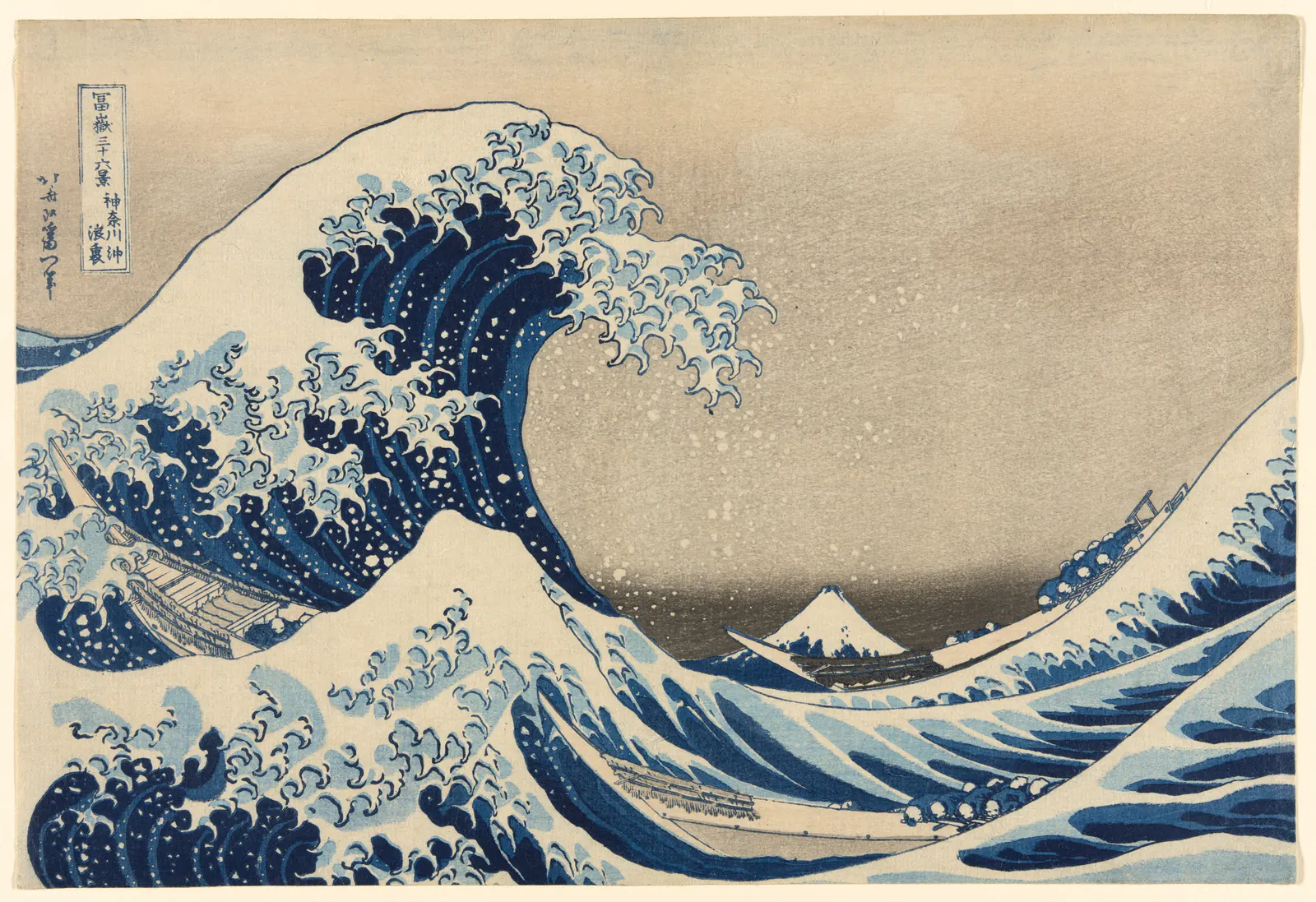
Under the Wave off Kanagawa (The Great Wave)
1830/33 · Art Institute of Chicago · 1925.3245
CC0 Public Domain Designation
Resized to 1600 pixels wide and converted to WebP; no crop.

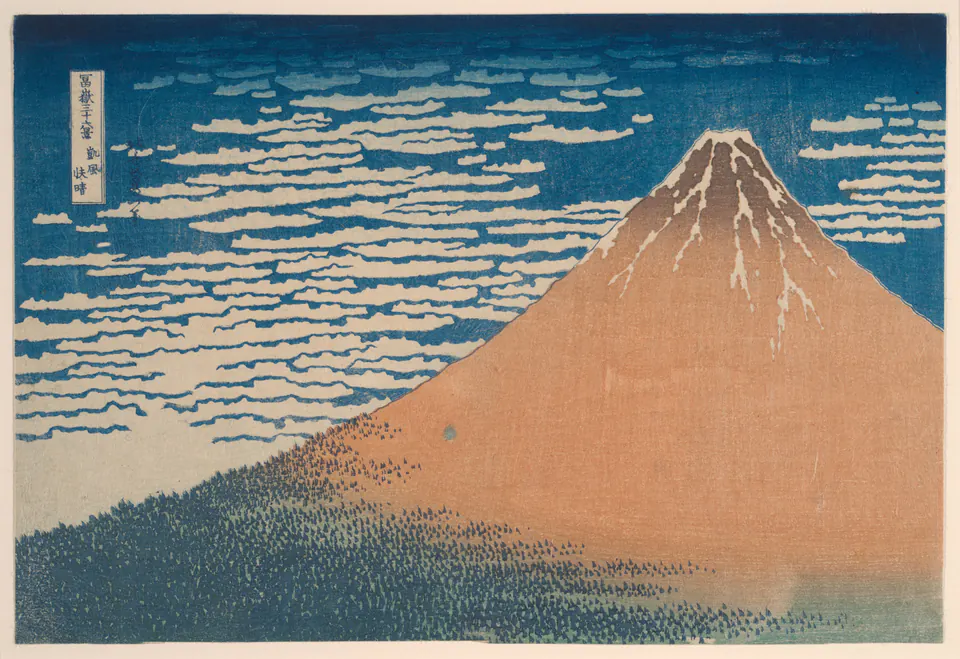
A Mild Breeze on a Fine Day
ca. 1830/33 · Art Institute of Chicago · 1925.3243
CC0 Public Domain Designation
Resized to 960 pixels wide and converted to WebP; no crop.

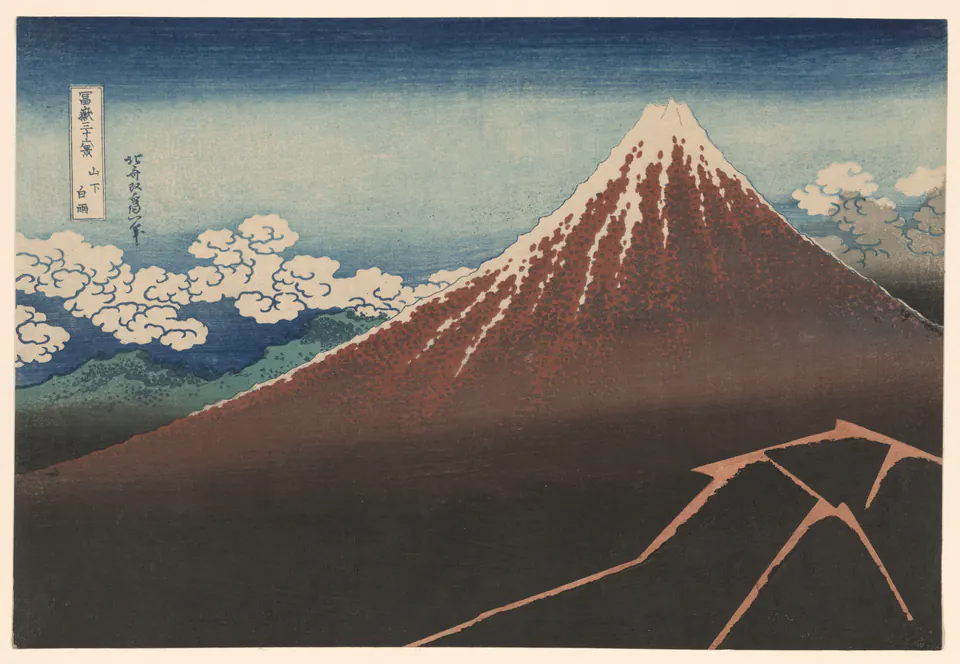
Shower Below the Summit
ca. 1830/33 · Art Institute of Chicago · 1925.3244
CC0 Public Domain Designation
Resized to 960 pixels wide and converted to WebP; no crop.

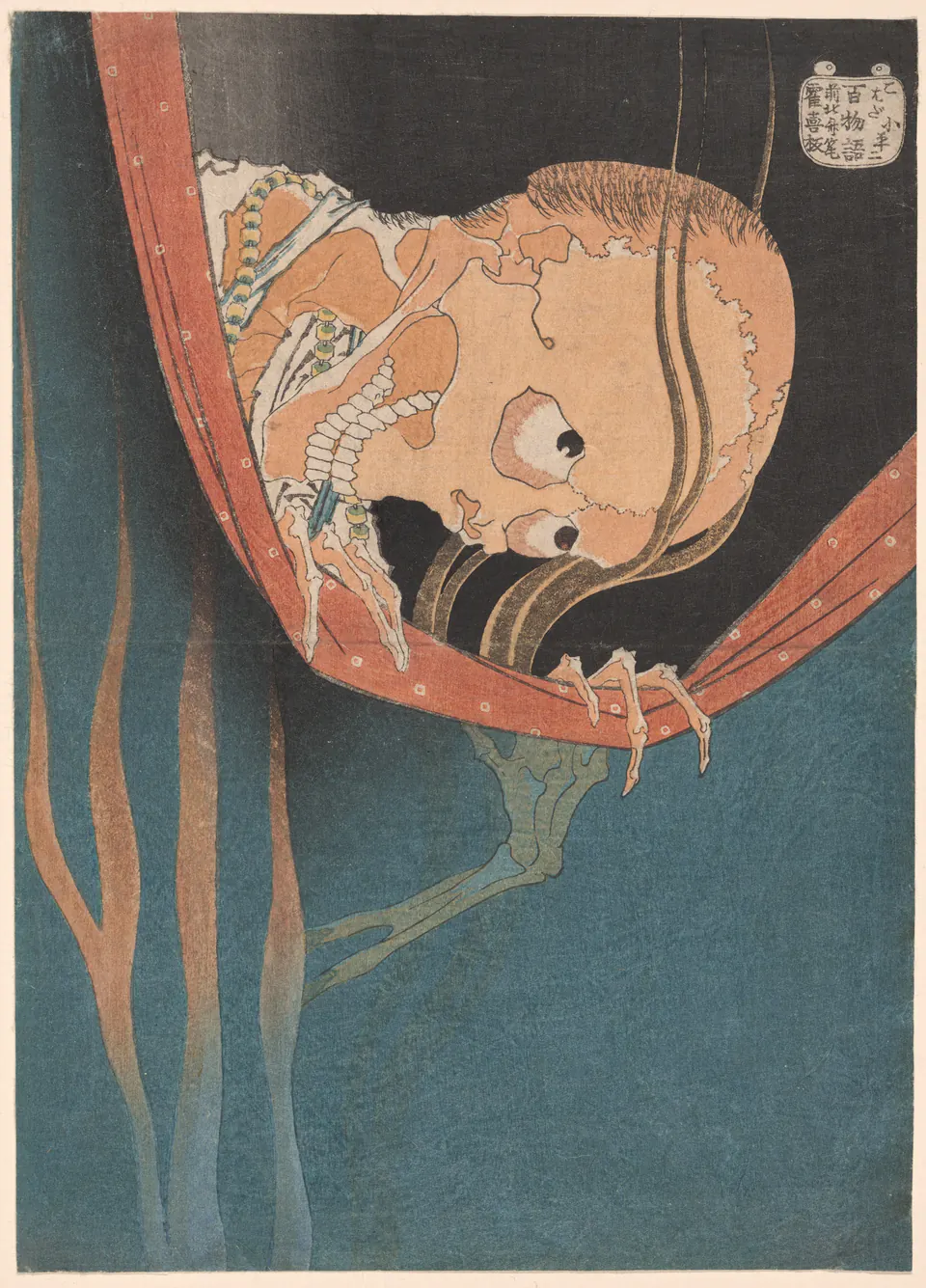
Kohada Koheiji, from One Hundred Ghost Tales
1831–32 · Art Institute of Chicago · 1943.602
CC0 Public Domain Designation
Resized to 960 pixels wide and converted to WebP; no crop.

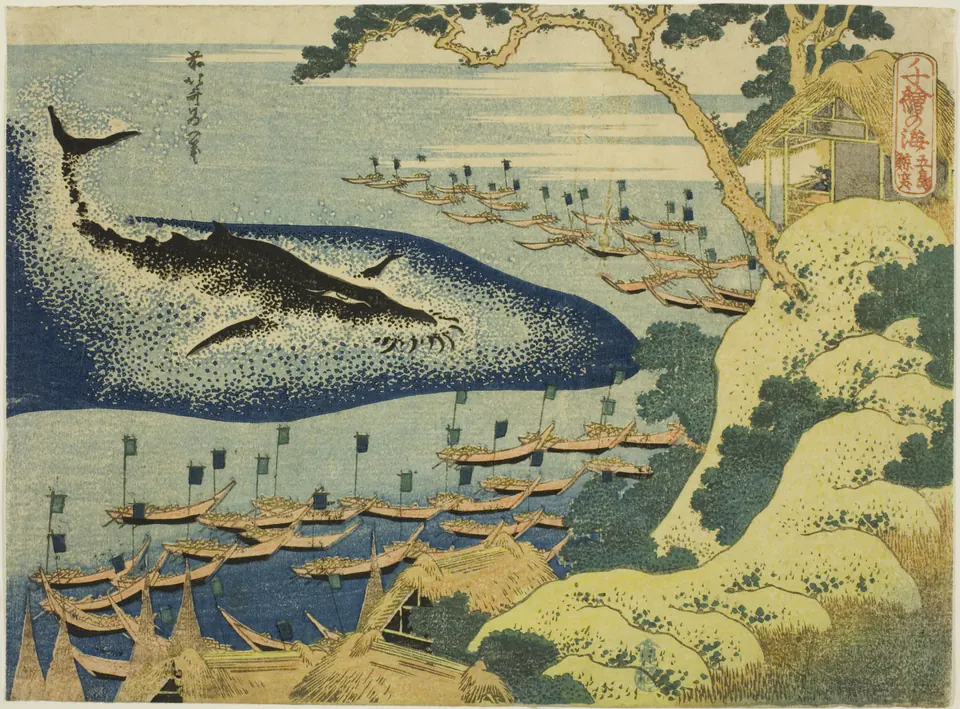
Whaling off the Coast of the Goto Islands
ca. 1831–33 · Art Institute of Chicago · 1983.582
CC0 Public Domain Designation
Resized to 960 pixels wide and converted to WebP; no crop.

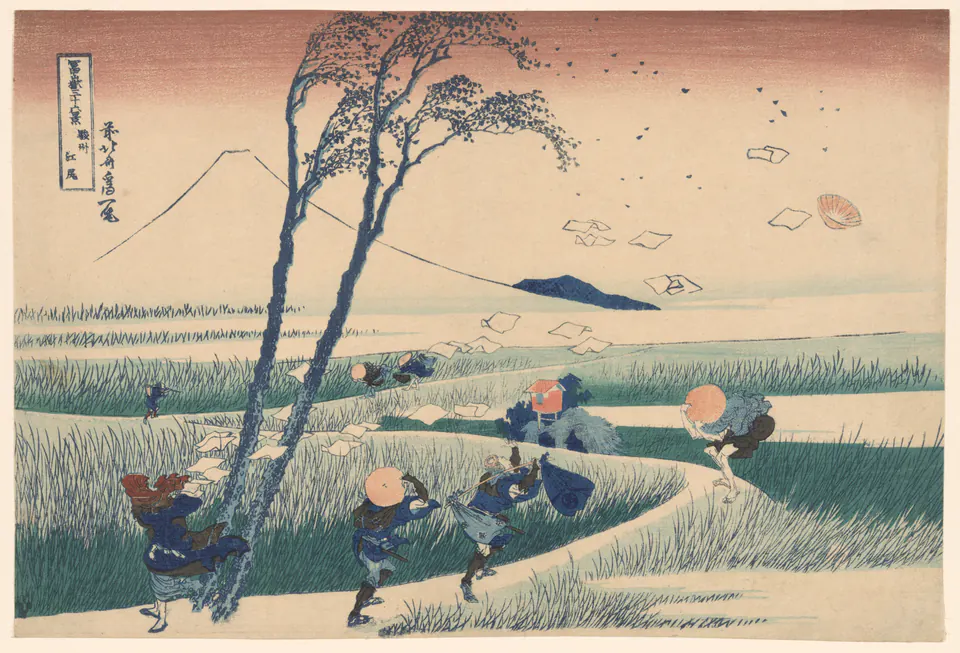
Ejiri in Suruga Province
ca. 1830/33 · Art Institute of Chicago · 1925.3285
CC0 Public Domain Designation
Resized to 960 pixels wide and converted to WebP; no crop.

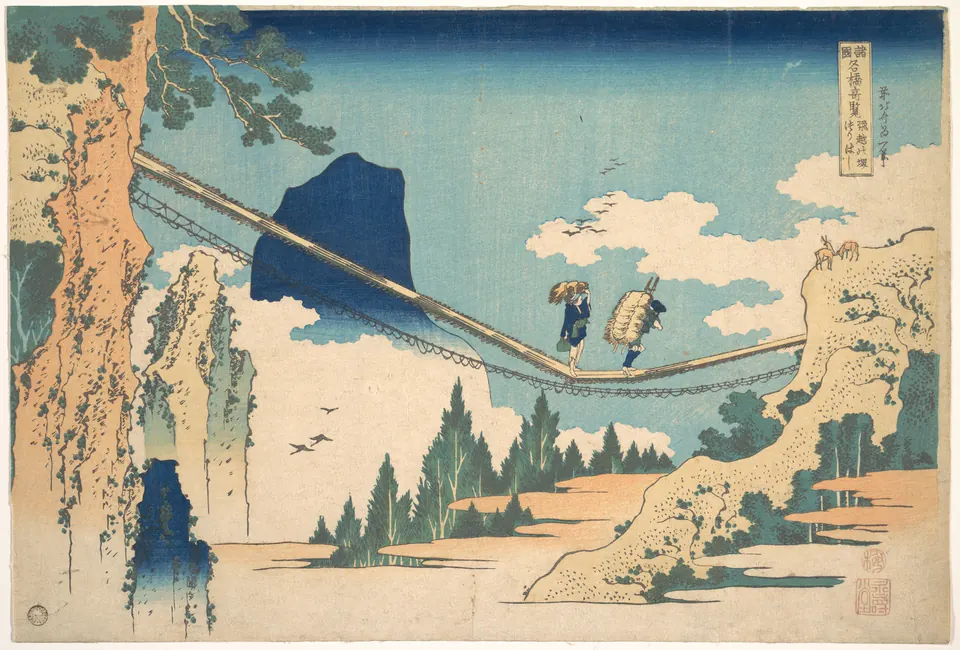
The Suspension Bridge on the Border of Hida and Etchū Provinces
ca. 1830 · The Metropolitan Museum of Art · JP1397
Public Domain / Open Access (CC0)
Resized to 960 pixels wide and converted to WebP; no crop.

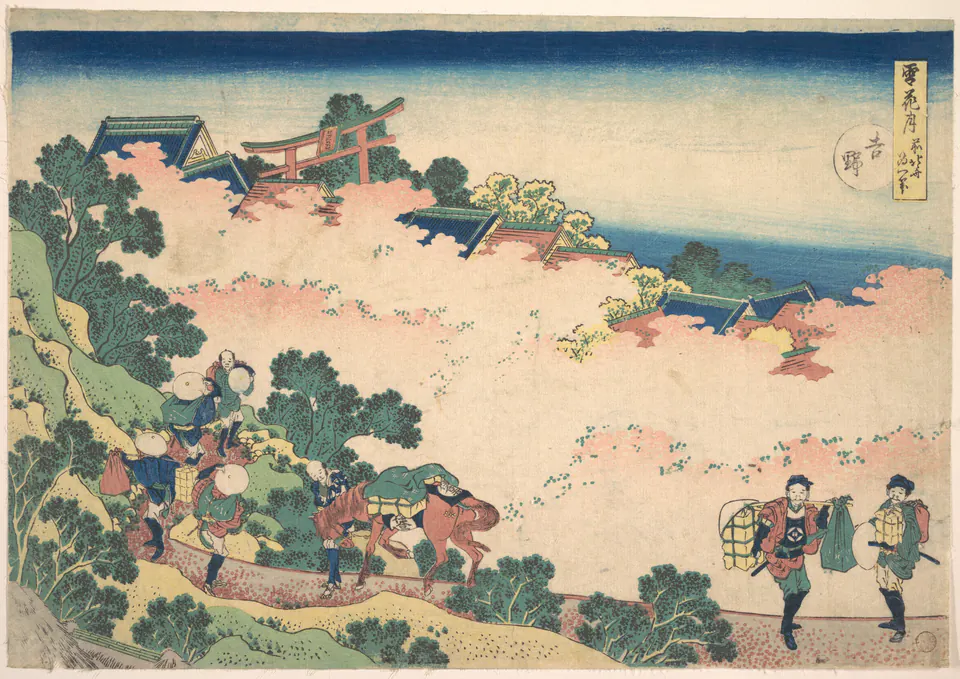
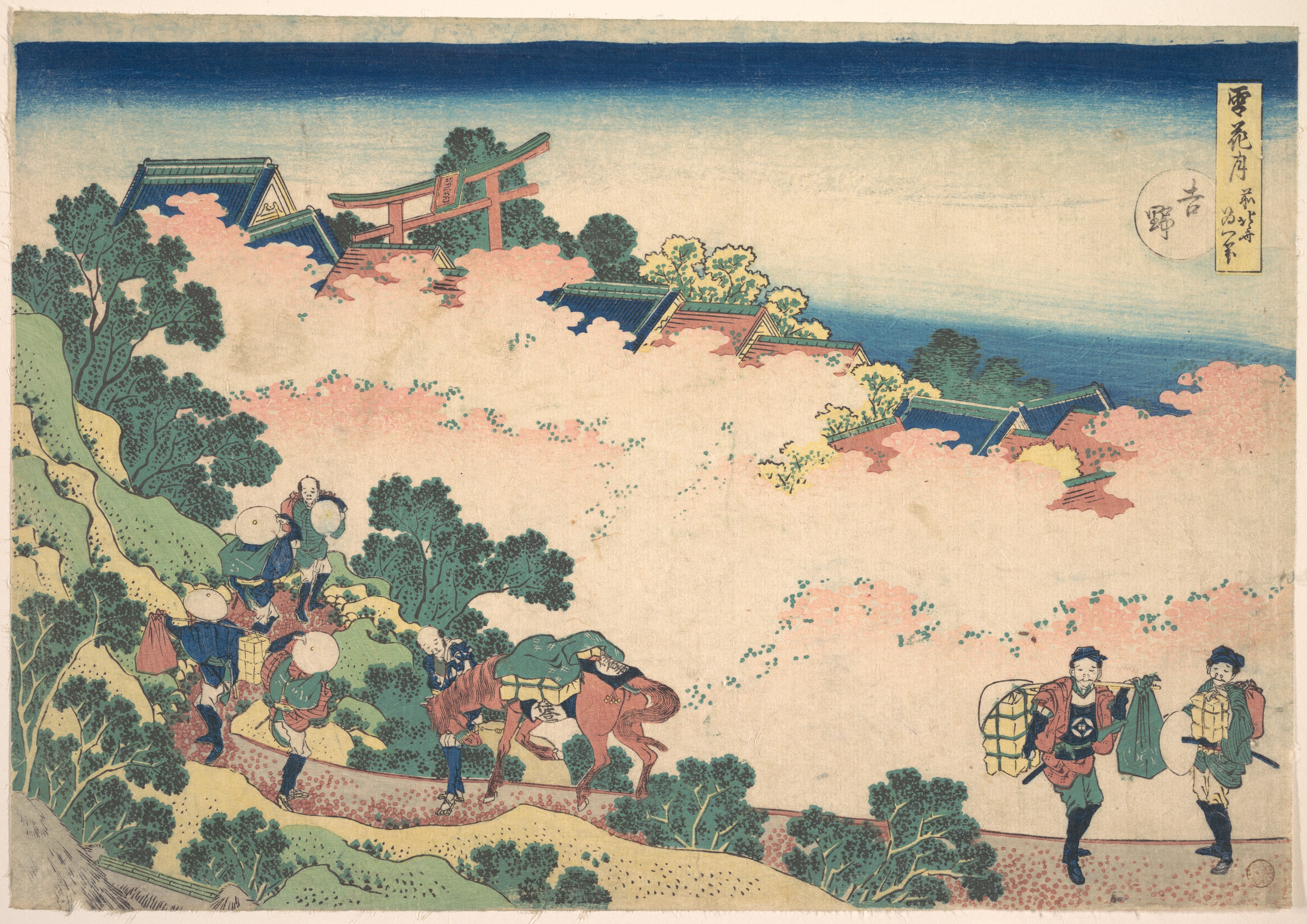
Cherry Blossoms at Yoshino
ca. 1833 · The Metropolitan Museum of Art · JP1395
Public Domain / Open Access (CC0)
Resized to 960 pixels wide and converted to WebP; no crop.
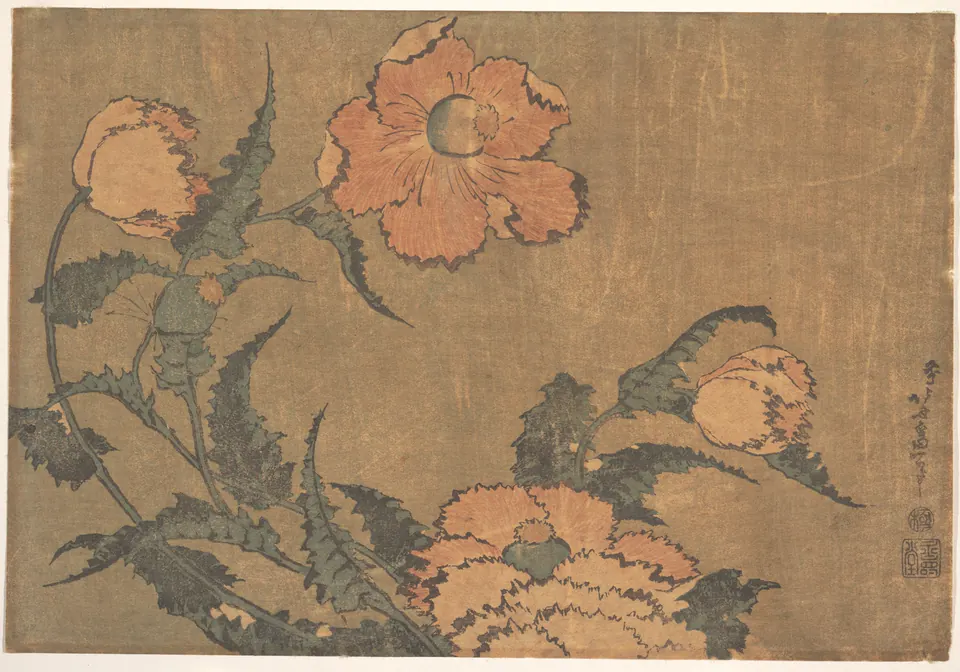
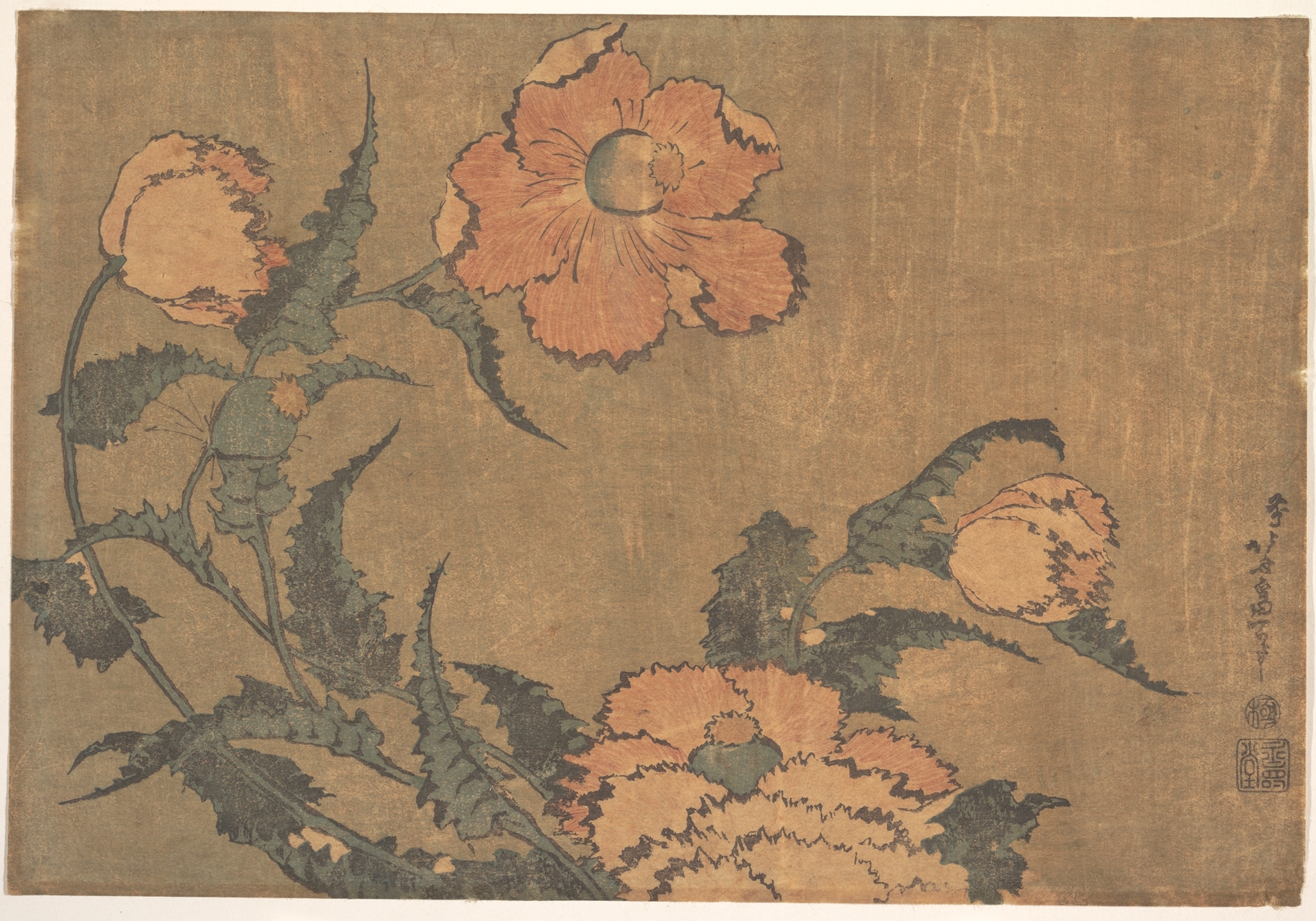
Poppies in the Wind
1820–34 · The Metropolitan Museum of Art · JP1860
Public Domain / Open Access (CC0)
Resized to 960 pixels wide and converted to WebP; no crop.
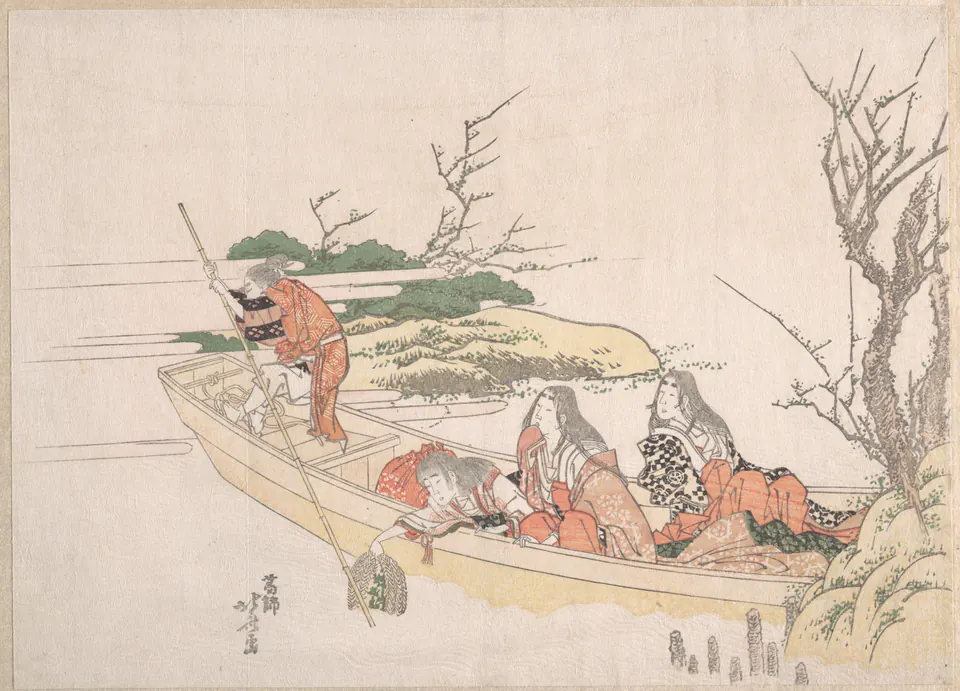
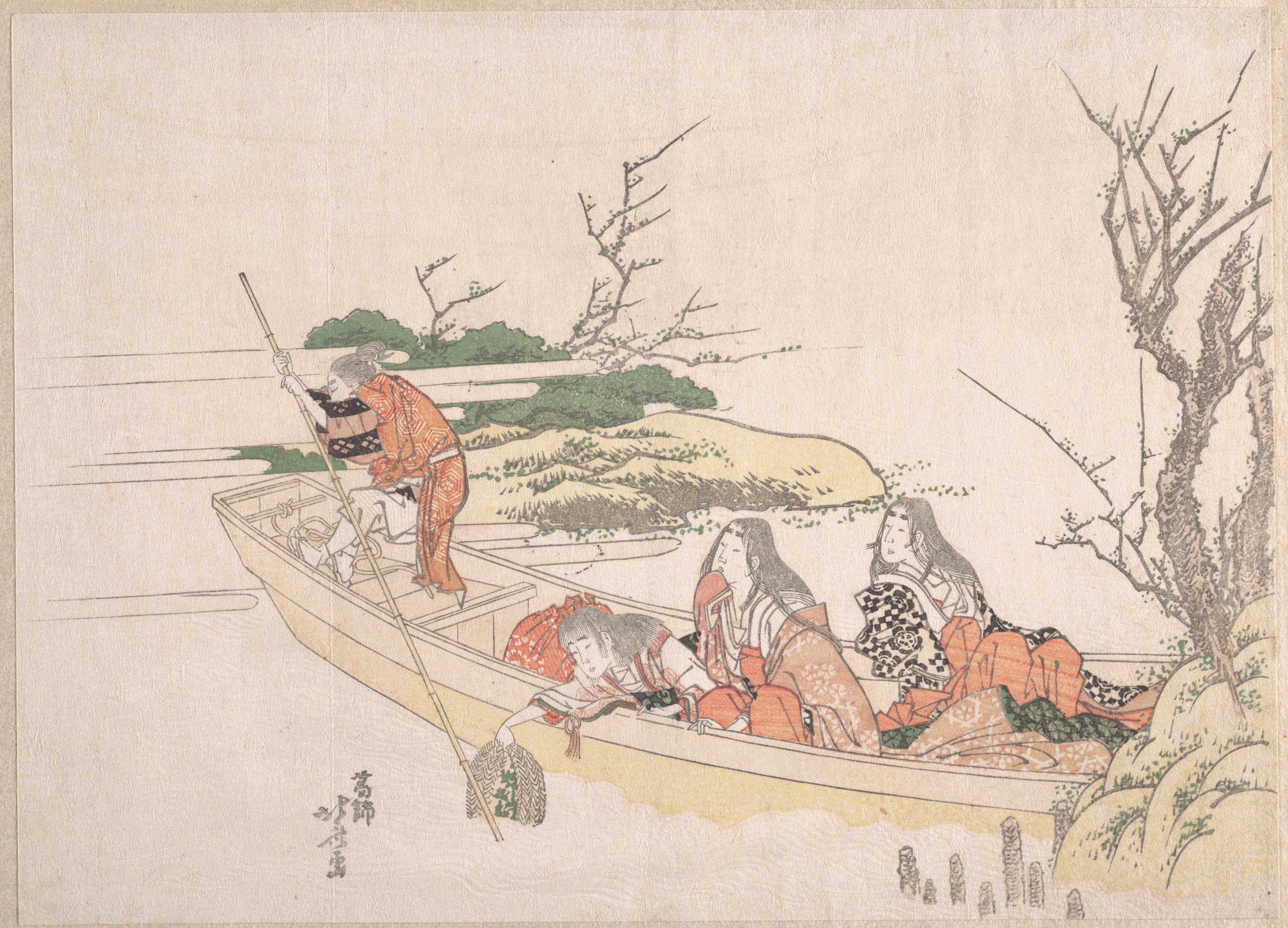
Gathering Sea-Weed
early nineteenth century · The Metropolitan Museum of Art · JP2150
Public Domain / Open Access (CC0)
Resized to 960 pixels wide and converted to WebP; no crop.
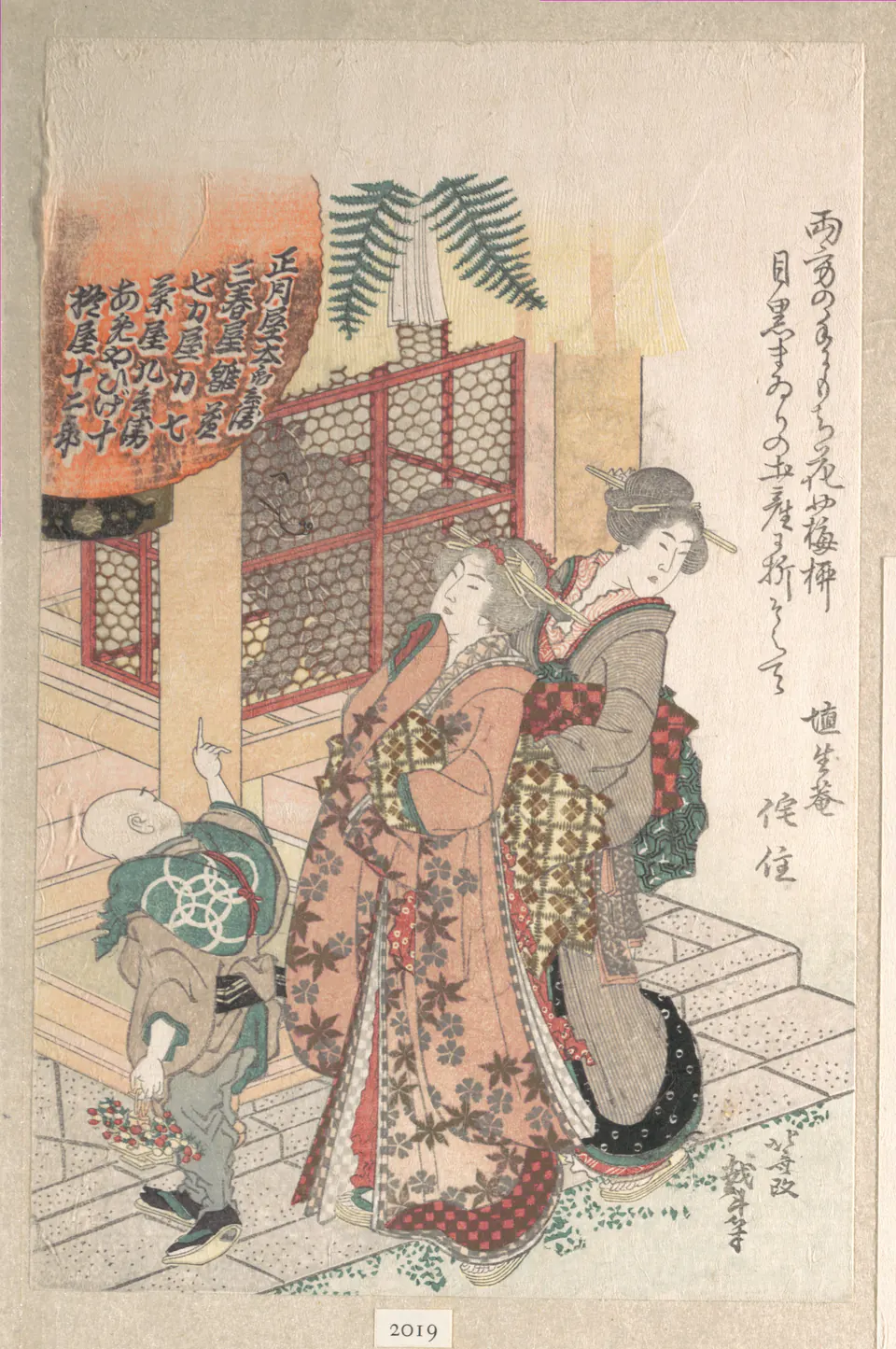
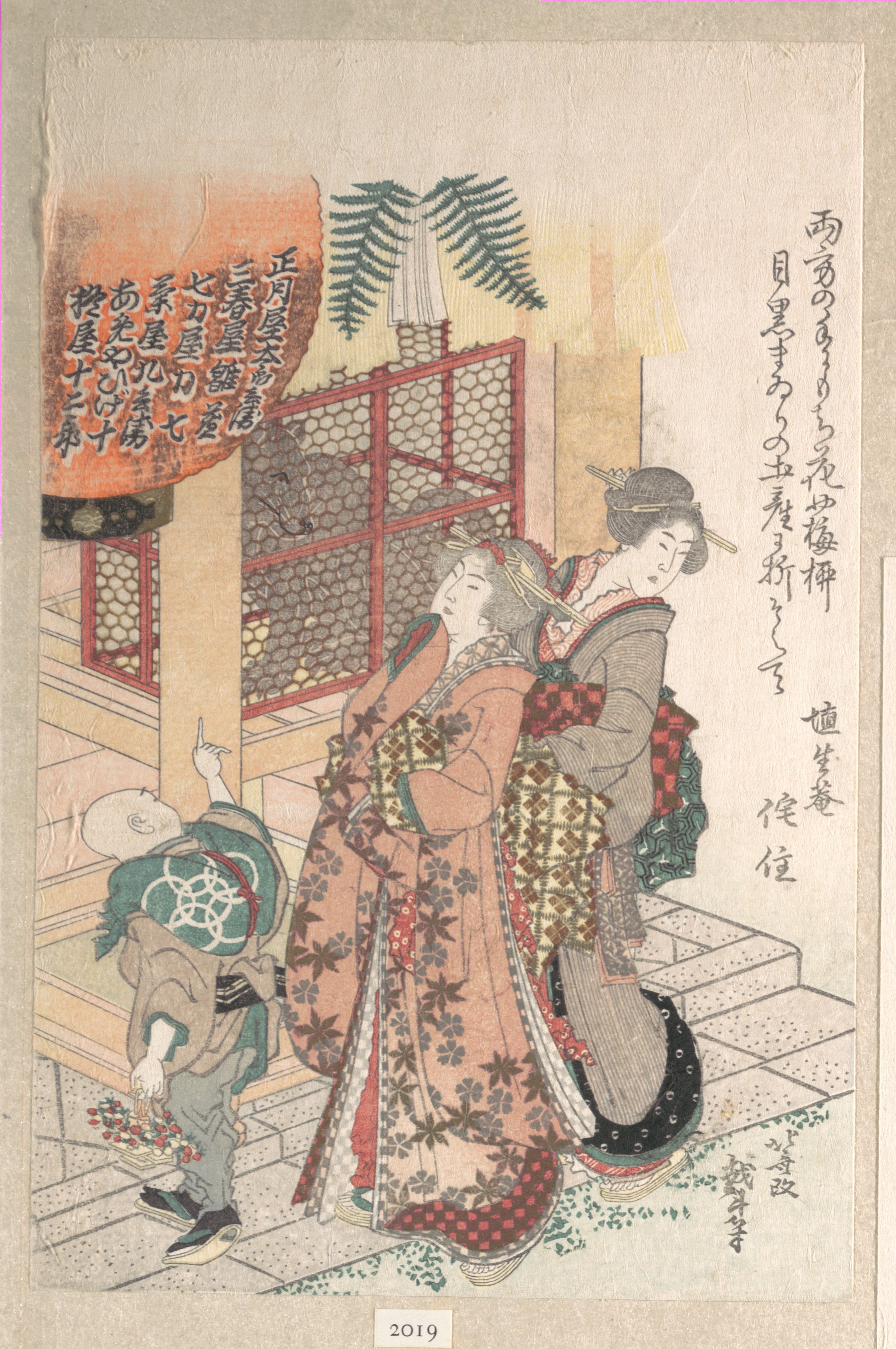
Young Women Visiting a Shinto Shrine
1814 · The Metropolitan Museum of Art · JP2019
Public Domain / Open Access (CC0)
Resized to 960 pixels wide and converted to WebP; no crop.
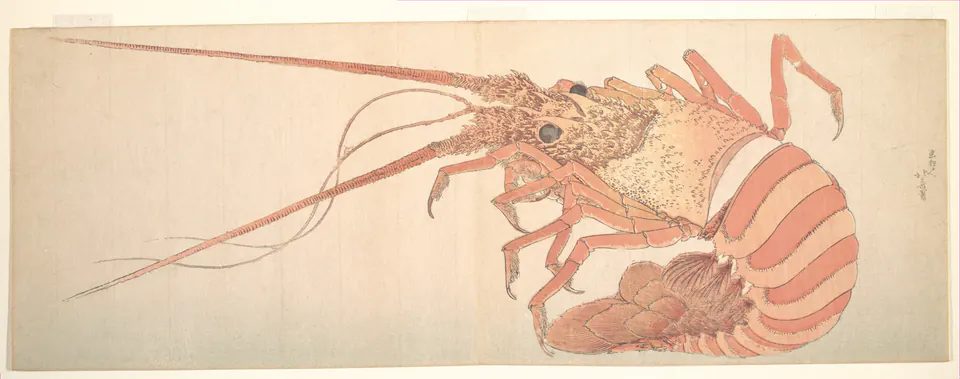
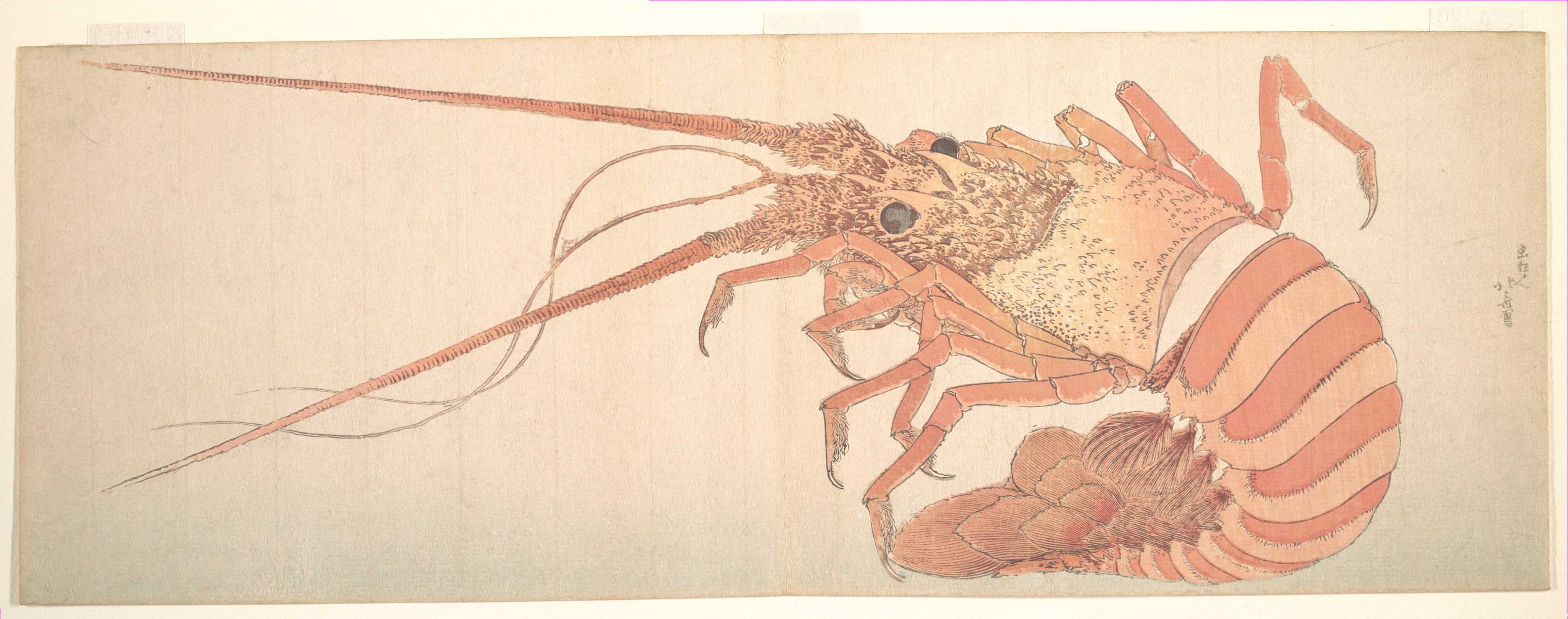
Large Lobster
1800–1815 · The Metropolitan Museum of Art · JP1865
Public Domain / Open Access (CC0)
Resized to 960 pixels wide and converted to WebP; no crop.
Sources and review method
We checked the artist chronology against museum records, treated each named jurisdiction separately, and recorded the provider policy for the image set. These sources support the legal framework and artist dates used above; the source file for any individual image still needs its own record.
- Under the Wave off Kanagawa (The Great Wave) — Art Institute of Chicago. Feature impression identity, accession, later-impression note and CC0 Public Domain Designation.
- Open Access Images — Art Institute of Chicago. Files labelled CC0 Public Domain Designation may be reused for commercial and non-commercial purposes.
- Image and Data Resources — The Metropolitan Museum of Art. The Met makes images marked Public Domain available for unrestricted use under its Open Access programme.
- Overview of the Copyright System — Agency for Cultural Affairs, Japan. Current Japanese author-based term and the distinction between economic and moral rights.
- Frequently Asked Questions concerning the Extension of the Term of Protection — Agency for Cultural Affairs, Japan. Japan moved from life plus 50 to life plus 70 in 2018 without reviving works whose terms had already expired.
- Thirty-six Views of Mount Fuji: The Great Wave off Kanagawa — Tokyo Fuji Art Museum. Independent Japanese institutional record for the exact work and its educational, non-commercial and commercial image-use categories.
- Directive 2006/116/EC, Article 1 — EUR-Lex. The EU term for an artistic work is the author’s life plus 70 years.
- How long copyright lasts — UK Government. UK guidance gives 70 years after the author’s death for artistic works.
- Law No. 5846 on Intellectual and Artistic Works, Article 27 — WIPO Lex. The Turkish economic-rights term is the author’s life plus 70 years.
- Circular 15A: Duration of Copyright — U.S. Copyright Office. The 2026 term table places works published before 1931 outside the maximum 95-year publication term.
- Certain Unpublished, Unregistered Works Enter Public Domain — U.S. Copyright Office. Older unpublished works have a separate U.S. term analysis; discovery and first-publication history can matter.
- 17 U.S.C. Chapter 3, including §303 — U.S. Copyright Office. Section 303 states the transition rules and minimum 2002 or 2047 expiry floors for works that were unpublished on 1 January 1978.
- Visual Artists: Publication — U.S. Copyright Office. Distribution can publish a visual artwork, while public display by itself does not establish publication.
- 17 U.S.C. §104A and Circular 38B — U.S. Copyright Office. Foreign-work restoration requires that the work was not already public domain through term expiry in its source country.
- Compendium of U.S. Copyright Office Practices, Chapter 900, §909.3(A) — U.S. Copyright Office. A purely faithful scan or “slavish copy” does not add registrable authorship, while substantial restoration or alteration can require a separate analysis.
- Copyright notice: digital images, photographs and the internet — UK Intellectual Property Office. A digital image can require a separate rights and website-terms check even when its subject is old.
Editorial record
About this article
- Author
- Publisher
- GeMarkt
- Published
- Reviewed
- Internal source & rights check. Conducted by GeMarkt Research Review. This is an internal editorial check—not independent peer review.
- Source standard
- Rights guide source standardSeparates the underlying work from the source file, records the review date, and links the evidence used for the conclusion.
Found a claim that needs checking? Report a factual error.