GeMarkt Blog · Essay
Symbolism: Redon, Munch and the Inner World
Eight works by six artists reveal Symbolism’s strange creatures, suspended stories and emotional landscapes, from Redon’s eyes to Munch’s dark shore.

An enormous eye rises over the sea. A boat carries a white figure towards an island with no welcoming shore. A man sits beside water whose curves seem to continue his thoughts. These images are recognisable enough to enter, but none behaves like an ordinary account of somewhere we could visit.
That tension is a useful entrance to Symbolism. Its artists made visible things carry experiences that cannot be photographed directly: longing, fear, belief, memory or the feeling of being absorbed in yourself. The point is not always to solve a puzzle. Sometimes it is to notice how a picture makes certainty fall away.
What Symbolism means
Symbolism names a late nineteenth-century tendency across art and literature, rather than one painting technique or a club with a single membership list. As the Met’s introduction explains, Jean Moréas gave the literary movement a manifesto in 1886. Artists with related concerns had already been working for years. Earlier paintings by Moreau and Burne-Jones therefore belong to this discussion without having been responses to that manifesto.
Look for a subject arranged to suggest something beyond its immediate appearance. Strange scale, simplified space, dreamlike stillness and emotionally charged colour can help. Yet a winged creature alone does not make an image Symbolist, and a realistic landscape can carry a powerful inner drama. These eight works by six artists offer different routes into that distinction.
Redon: two eyes that cannot see normally
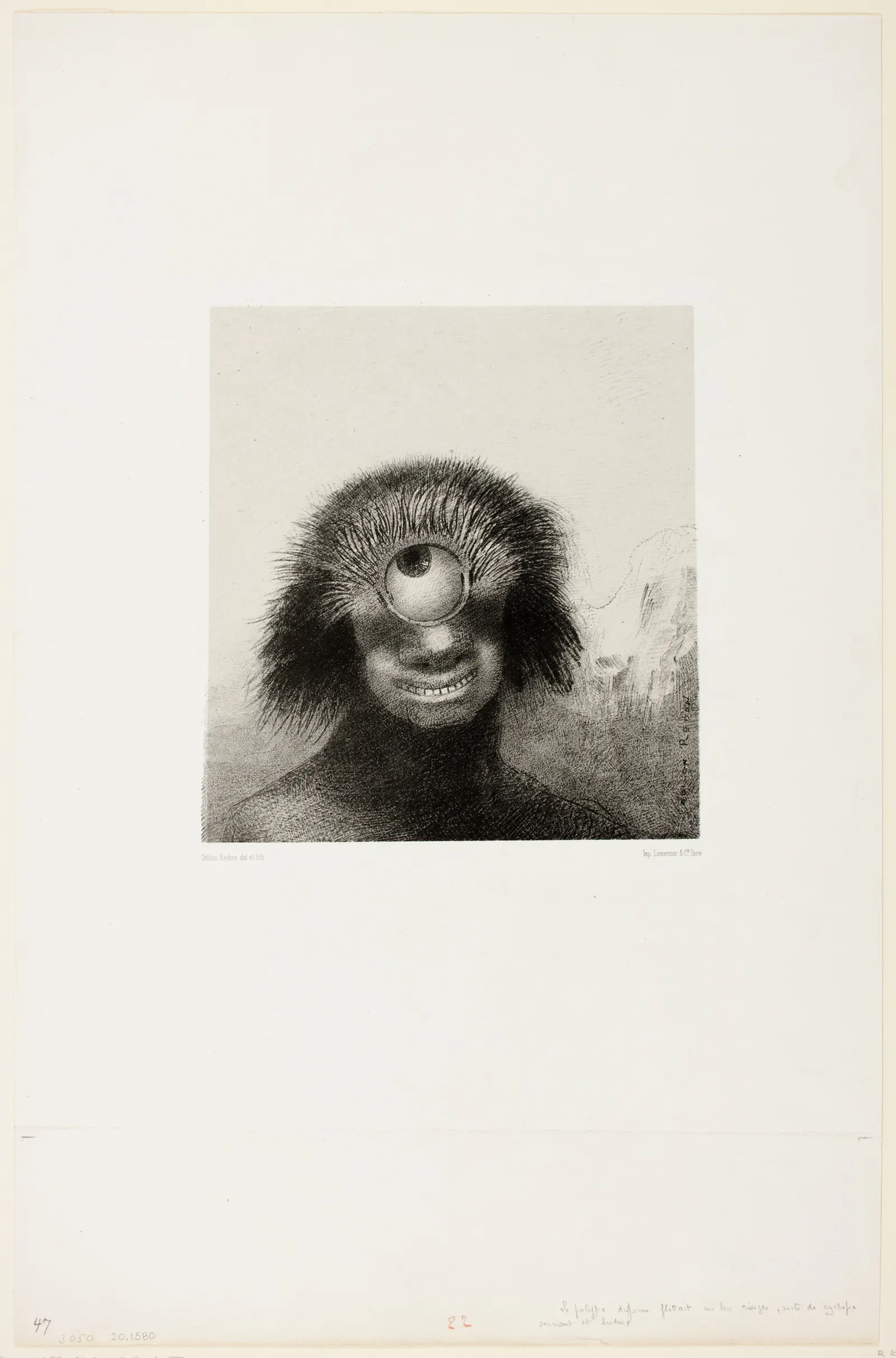
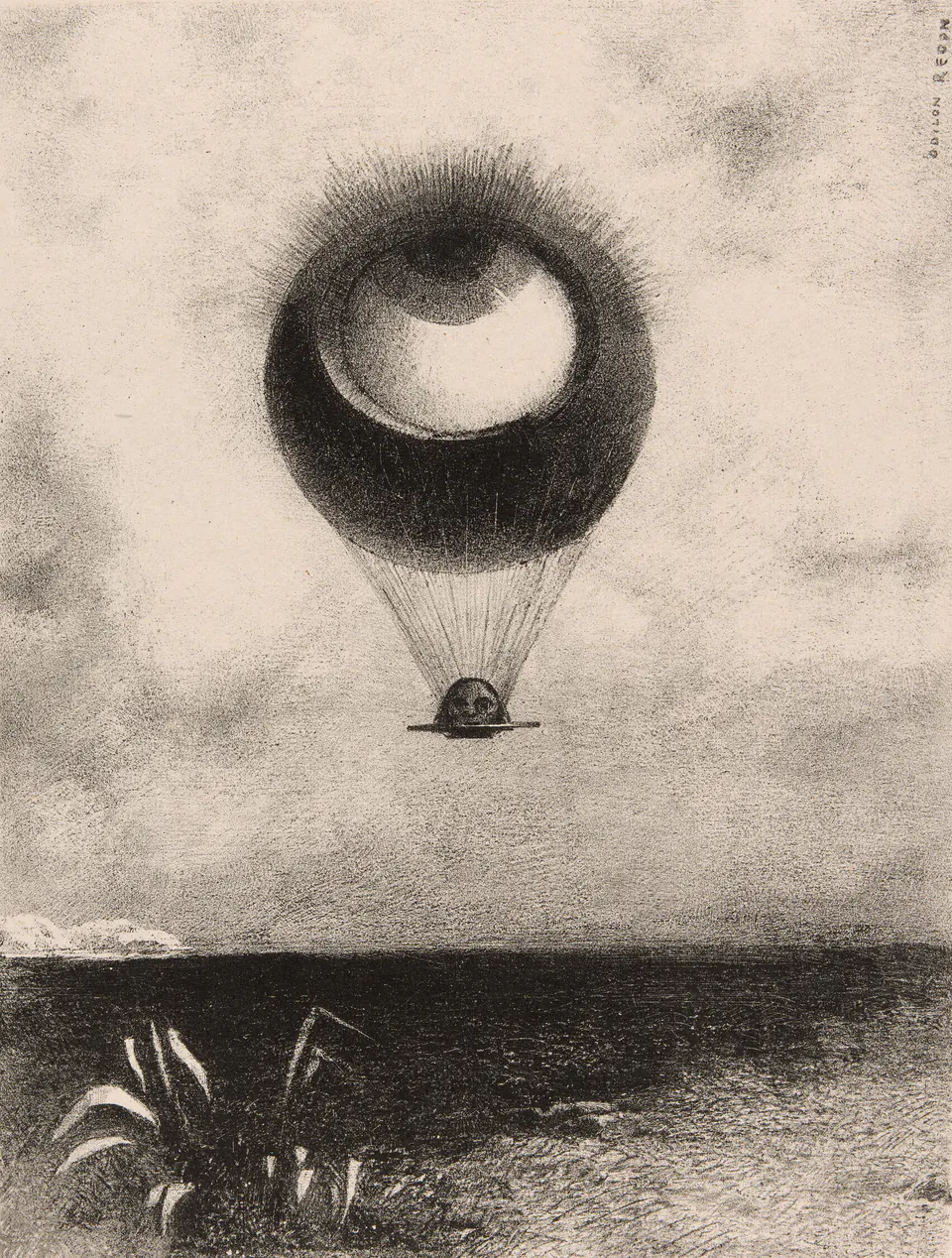
The cyclops is startling partly because it smiles. Its teeth and soft facial shading invite recognition, while its single enormous eye makes that recognition impossible to complete. The spiky halo of hair could seem comic, radiant or alarming. Redon lets those reactions coexist instead of supplying one correct emotional response.
In the earlier Eye, vision leaves the body altogether. Fine lines attach the balloon-like globe to a tiny load below; a low, dark horizon makes the upward movement more pronounced. A thing normally used to observe the world becomes something we must observe. This is a visual invention, not an illustration of how an eye works.
The Art Institute’s records identify both as lithographs, printed from images drawn on stone, in separate portfolios. Black ink can produce a grainy atmosphere as well as a sharp outline. Their strangeness depends on that range: neither would have quite the same effect as a clean diagram of a monster. Our Redon guide follows the particular prints and their files in more detail.
Redon: closed eyes and an inward world
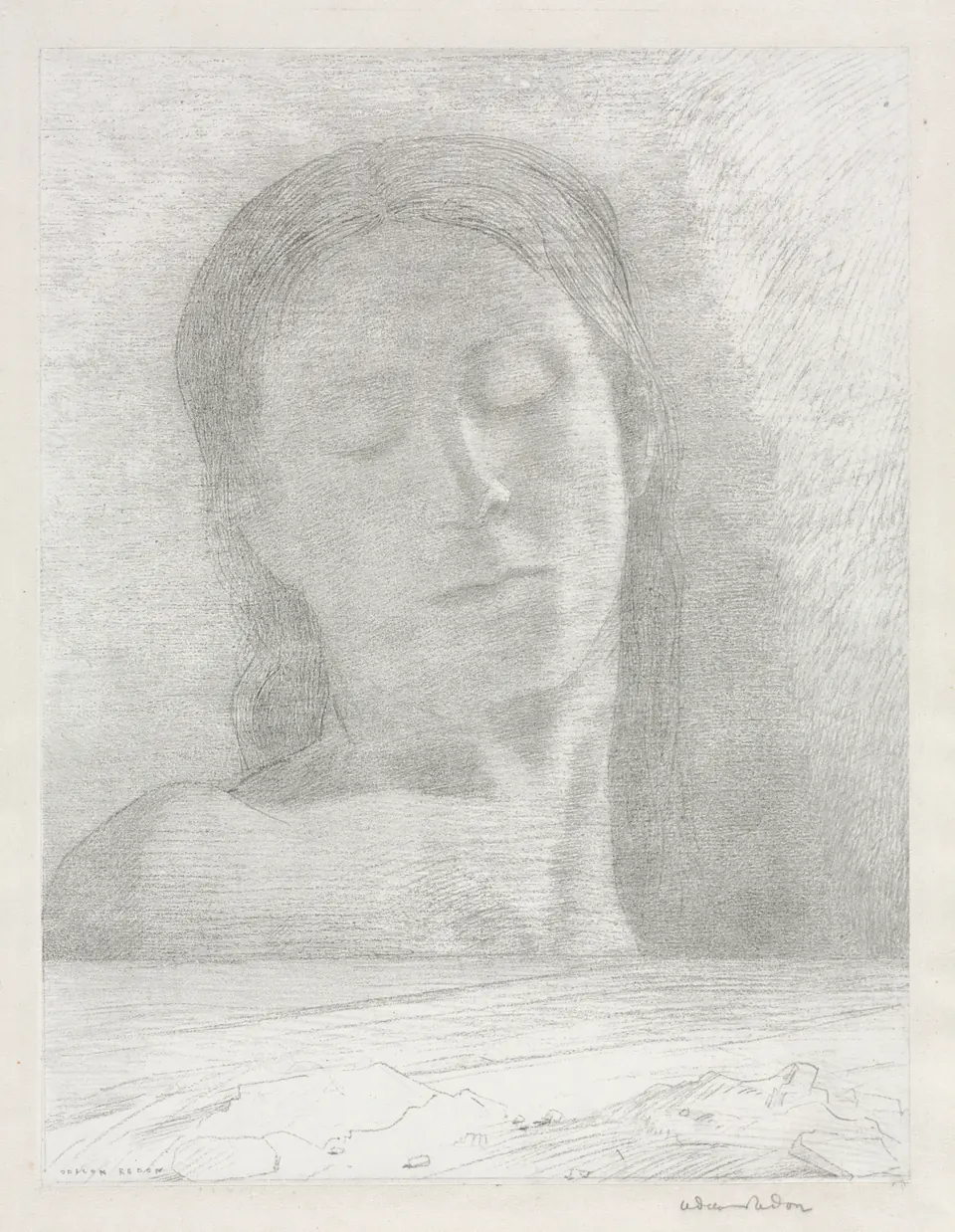
Here the fantastic creature disappears. A head and shoulders emerge above a sketchy foreground, but the eyelids shut us out. The mouth offers no explanation either. Compared with the emphatic black of the two previous prints, the shading seems almost to withdraw into the paper.
Cleveland identifies this sheet as a trial proof made before the lettering was added, during Redon’s collaboration with the printer Becquet. It also connects the closed eyes with an inward, meditative state. The important visual point is the reversal of ordinary portrait exchange: we can examine the face, but cannot meet its gaze. Quietness becomes as strange as the floating eye, without requiring an impossible body.
Moreau: a riddle without a safe distance
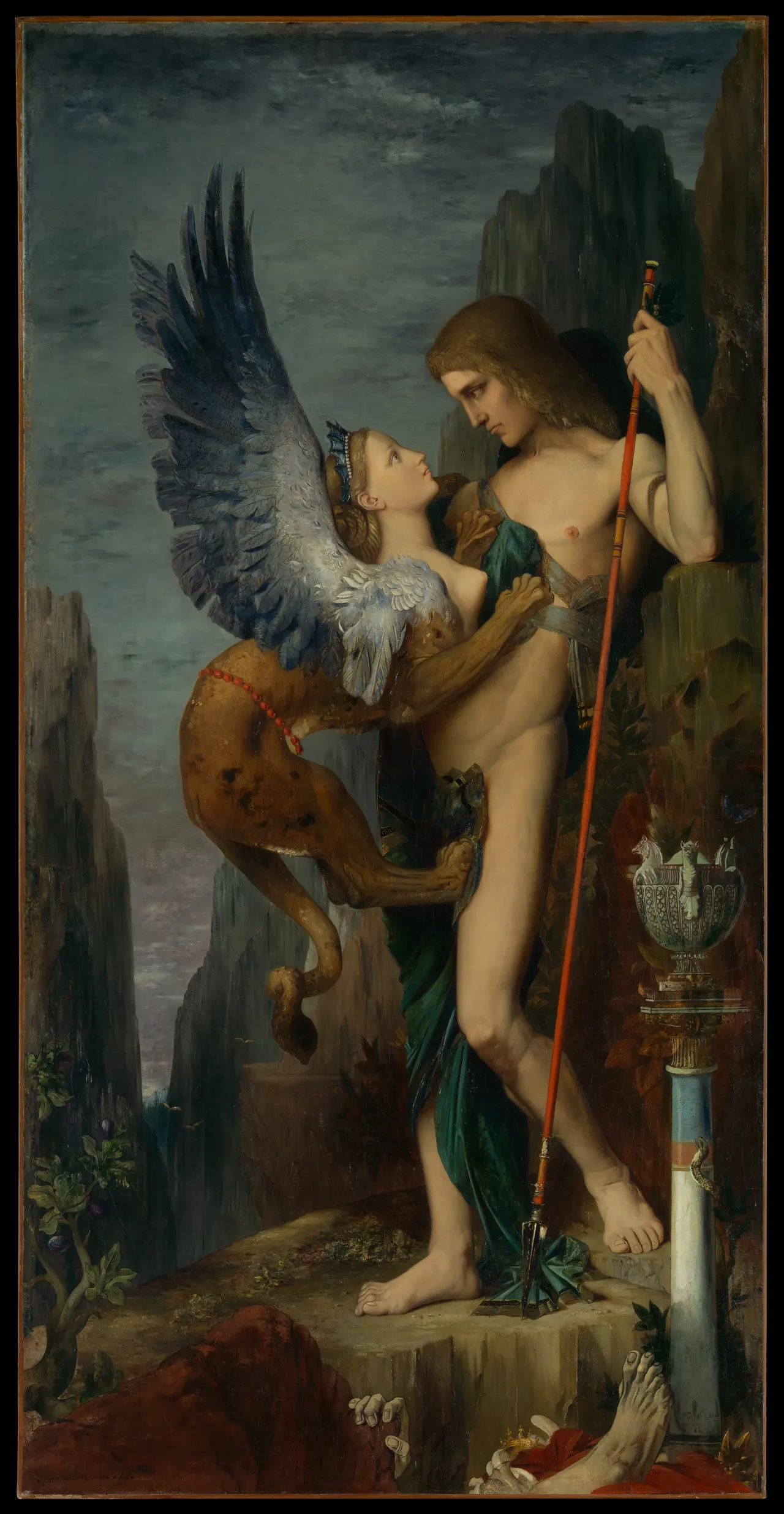
Moreau brings the mythological contest uncomfortably close. The sphinx does not sit at a distance waiting for an answer: its paws press against Oedipus, its wings occupy the narrow space between the cliffs, and its face meets his. Below, a hand and foot recall the cost of failure.
The Met’s account of the 1864 painting supplies the story: the sphinx kills travellers who cannot answer its riddle. Moreau holds the encounter before its resolution. We see poised bodies, polished surfaces and an ornate vessel, not the rapid action of a fight. That stillness turns a familiar myth into a prolonged confrontation. Its later attraction for Symbolist viewers does not require calling every nineteenth-century mythological painting Symbolist.
Burne-Jones: a painting that works like music
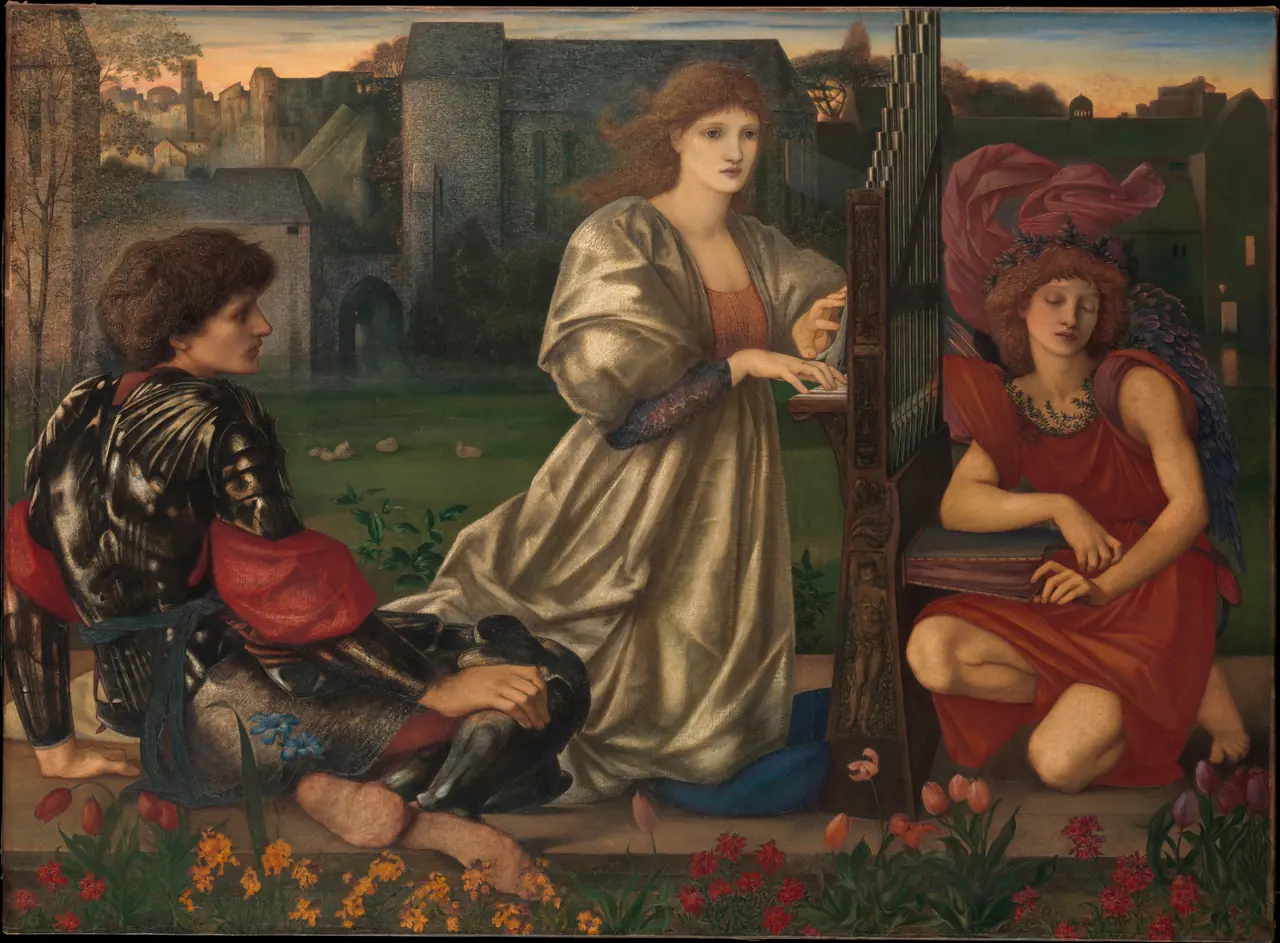
The organ separates two kinds of attention: the woman plays, while the armoured man listens. At the right, the winged Cupid works the bellows. Behind them, architecture recedes towards a low evening sky. No clear dramatic event tells us what will happen next.
The Met connects the work with music’s appeal to emotion, rather than a story that needs decoding. Look at the recurring curves of cloth and the long upright organ pipes. The picture offers visual rhythms while withholding an ending. Burne-Jones belongs to British Pre-Raphaelite and Aesthetic circles, but this ability to make atmosphere carry meaning also helps explain his place among Symbolism’s international affinities.
Böcklin: a place that feels like a threshold
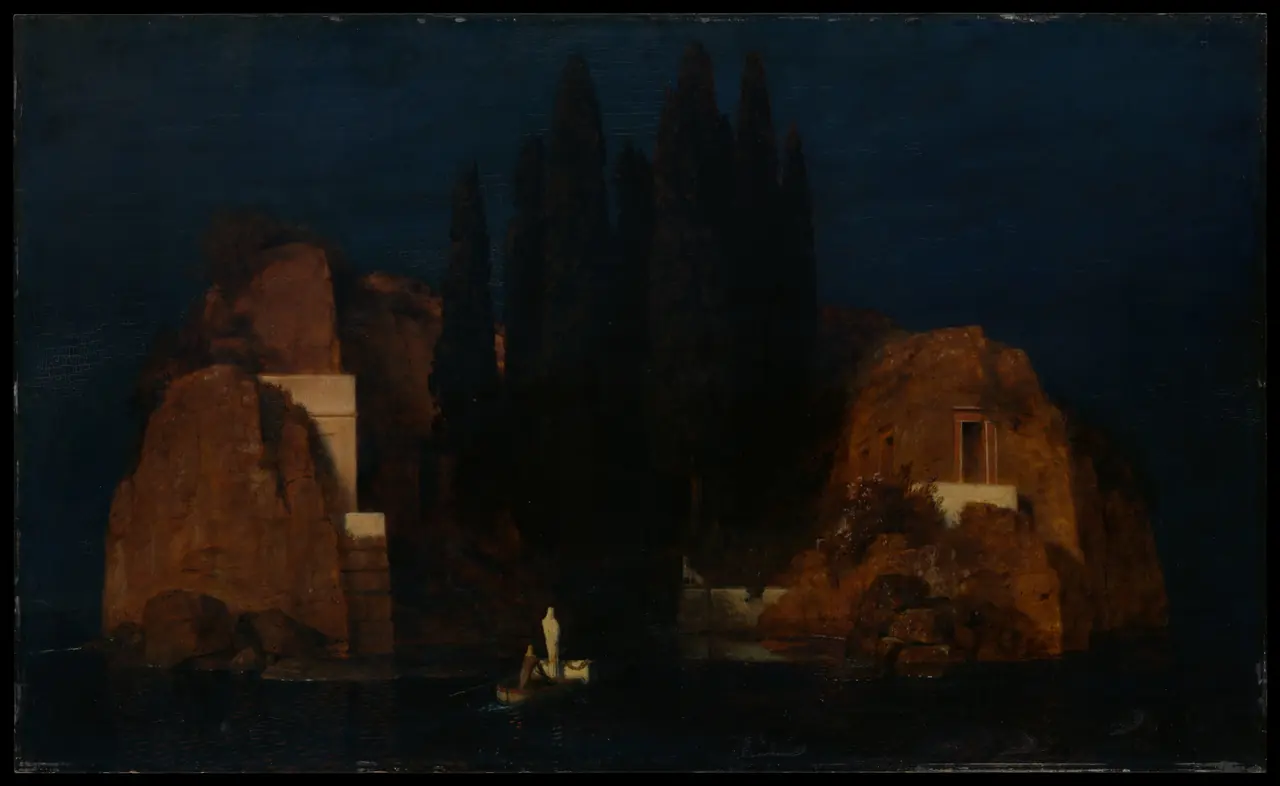
The white figure is tiny, but its brightness makes it difficult to look elsewhere. Almost everything around it appears closed: the cypresses form a dense central screen, the rocks curve inward, and the water offers no busy harbour life. Movement has narrowed to one boat approaching one destination.
This is the Met’s 1880 version, not a generic image interchangeable with Böcklin’s other treatments. The museum records Marie Berna’s commission in memory of her husband and the addition of a coffin and shrouded figure. That history gives the scene a concrete memorial context. Its broader power comes from how arrival and separation occupy the same image: the boat moves closer, but the island remains inaccessible to us.
Gauguin: a sacred scene built from different sources
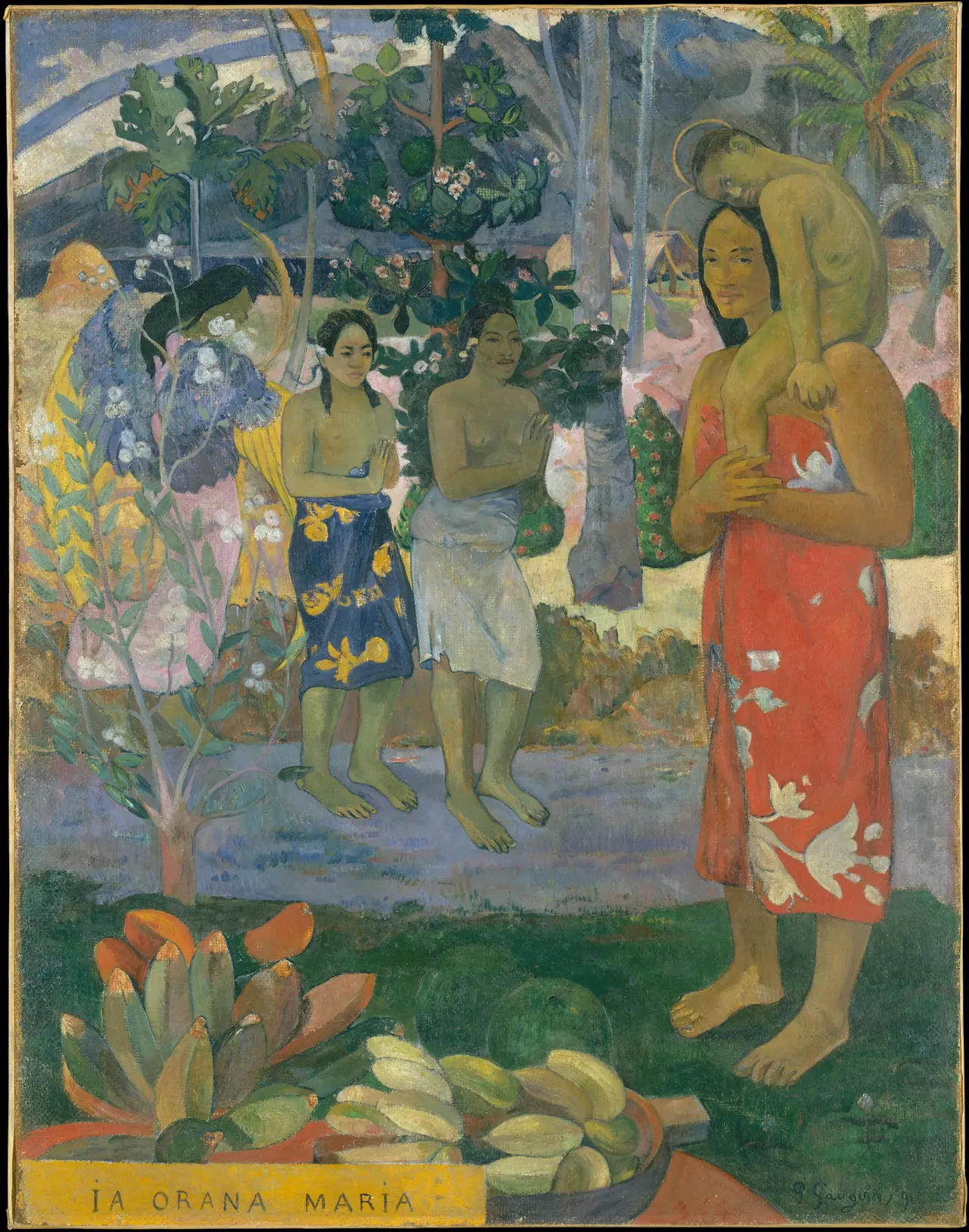
Mary and the child occupy the right side, with halos giving a Christian identity to a setting of patterned cloth and tropical plants. Two approaching women repeat a gesture, while the yellow-winged angel nearly disappears among the vegetation. Colour binds people and surroundings into broad, interlocking areas.
The Met documents Gauguin’s borrowing from a photograph of a Borobudur relief. The scene combines a Christian subject, Tahitian figures and a Javanese source. It is therefore not a neutral record of local belief. Recognising its construction is more useful than treating the painting as access to an untouched spiritual world. The Gauguin guide provides another route into the artist’s work.
Munch: when the landscape shares a mood
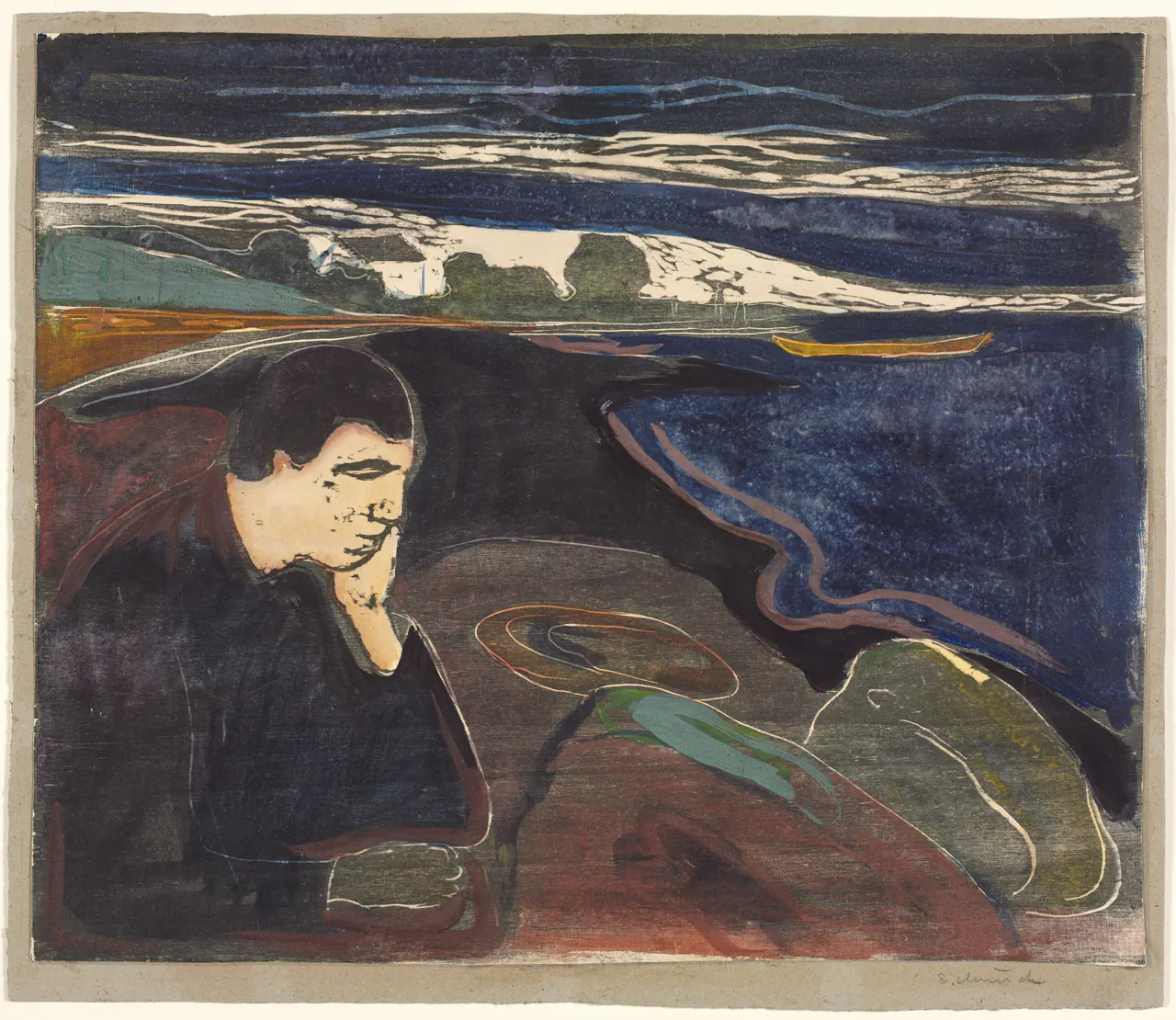
Nothing supernatural appears here. Yet the curving shore, dark water and isolated face make the landscape feel inseparable from a state of mind. The man’s hand holds his chin; his eyes turn down, while the long bands behind him carry our gaze away.
Cleveland identifies the figure as Munch’s friend Jappe Nilssen and this object as a hand-coloured woodcut. Visible grain and uneven colour are part of that particular print’s character. We need not diagnose either sitter or artist to notice how the compressed space makes isolation visible. Munch’s later importance for Expressionism does not cancel these Symbolist concerns; movements overlap where artists give feeling a form. See the Munch guide for the wider print context.
How to look without inventing a secret code
Start with what the image actually changes: an eye’s scale, a body’s setting, a landscape’s colour or a story’s pace. Then ask what the title and documented context add. Keep an observation separate from a proposed meaning. A closed eye is visible; calling it a rejection of a particular political event would need further evidence.
These six artists do not share one finish or one belief. Their connection lies in making a picture suggest more than it literally describes. For further looking, follow the artist guides above or browse our collection directory. It is a route through available collections, not a claim that every work discussed here is offered as a print.
Editorial record
About this article
- Author
- Publisher
- GeMarkt
- Published
- Reviewed
- Internal source & rights check. Conducted by GeMarkt Research Review. This is an internal editorial check—not independent peer review.
- Source standard
- Art history source standardPrioritises object records and research sources, distinguishes evidence from interpretation, and states material uncertainty.
Found a claim that needs checking? Report a factual error.