GeMarkt Blog · Practical guide
Is Paul Gauguin's Art Public Domain? Check the Print
Paul Gauguin's designs are public domain in the checked markets; ten later Pola prints need further review outside the U.S. Explore twelve AIC files.
Rights check · reviewed
The short answer
Paul Gauguin’s underlying designs are beyond ordinary life-plus-70 copyright, and the selected publications predate 1931 in the United States. Ten sheets were printed by Pola Gauguin in 1921; any separately creative contribution by him needs its own country check.
| What is being checked | Result | Why |
|---|---|---|
| EU, UK & Türkiye — Paul’s underlying designs | Ordinary term expired | Paul Gauguin died in 1903. This result concerns his designs, not any new protected expression introduced by a later contributor. |
| EU, UK & Türkiye — Pola’s printing contribution | Further review needed | Pola Gauguin died in 1961. Printing from Paul’s original blocks does not automatically create a new copyright, but the contribution has not been resolved for each country. If protected authorship applies, the ordinary life-plus-70 term would run through 31 December 2031. |
| United States — named 12-print set | Published before 1931 | AIC identifies the 1895 issue, the 1919 Mallarmé book edition and ten Pola/Christian Cato editions published in 1921. |
| Printer, edition, cultural context, or file | Do not flatten the record | Later printers, publisher, exact impression, file terms, and the colonial conditions of Gauguin’s imagery remain material facts. |
The twelve AIC files are CC0. Pola Gauguin died in 1961: Paul’s 1903 death does not settle any protected contribution by Pola. This guide does not give those ten impressions an unconditional EU, UK, or Türkiye commercial-use clearance.
This is a documented research summary, not legal advice. Copyright and moral-rights rules can vary by country and by the history of a particular work.

What we’ll look at
When is a Gauguin print public domain, and why can its printer and issue date matter?
Yes for Paul Gauguin’s original designs under the ordinary life-plus-70 rules checked here, and for the twelve selected publications under the U.S. term analysis. But check the print, not just the artist’s name. Ten examples were printed by his son Pola Gauguin in 1921. Whether Pola added separately protected expression remains unresolved here for the EU, UK, and Türkiye; a printer credit does not prove new copyright, and a museum’s CC0 label does not settle every contributor’s rights.
Paul Gauguin died in 1903. The life-plus-70 markets checked are the European Union, United Kingdom, and Türkiye; the U.S. evidence includes 1895 publication and 1919 or 1921 printing records. The dates matter because some sheets were made after his death. Their captions should preserve the later printer and publisher, as well as the historical context of Gauguin’s imagery.
The short answer
All twelve examples come from the Art Institute of Chicago. Each has its own accession number, museum page, and source image. AIC marks the selected files with its CC0 Public Domain Designation. That is a useful file-level permission signal, not a worldwide warranty covering every historical contribution.
The examples include works issued during Gauguin’s lifetime and prints made after his death from his blocks or designs. A short caption might attribute both simply to “Paul Gauguin,” but that hides how the later sheet was made. Read the museum’s production credits alongside its title and date. For commercial reuse of the ten Pola impressions outside the U.S., resolve the contribution question before relying on this guide as clearance.
Copyright in the EU, UK, and Türkiye
Article 1 of the EU term directive, UK copyright guidance, and Article 27 of Türkiye’s Law No. 5846 provide the ordinary life-plus-70 terms used here. Paul’s 1903 death places his underlying designs beyond those economic-rights periods.
| Market checked | Paul’s underlying designs | Possible original contribution in Pola’s 1921 impressions |
|---|---|---|
| European Union | ordinary life-plus-70 term expired | not resolved by this review |
| United Kingdom | ordinary life-plus-70 term expired | not resolved by this review |
| Türkiye | ordinary life-plus-70 term expired | not resolved by this review |
Originality comes before the term calculation. In the EU, Cofemel, paragraphs 30–31, distinguishes free creative choices from results dictated by technical constraints. UK law requires an original artistic work; Türkiye’s Articles 1/B and 6 require the author’s or adaptor’s own characteristic contribution. These are legal starting points, not findings about Pola’s particular sheets.
Pola died in 1961. If a country recognises a separate original contribution by him and applies the ordinary life-plus-70 term, that term would run through 31 December 2031. His death date alone does not establish that protection. Equally, Paul’s expired term does not automatically clear an original addition by someone else. The table therefore gives no unconditional commercial-use clearance for the ten Pola impressions.
Why the U.S. answer follows the edition
The U.S. Copyright Office’s duration tables use publication as a central fact for many older works. Applying the maximum 95-year term in 2026 gives a boundary of publication before 1931. AIC records a March 1895 issue for Ia orana Maria, the 1919 Charles Morice book edition for the Mallarmé portrait, and the ten Pola/Christian Cato editions published in Copenhagen in 1921. Any protected expression published in those 1921 impressions is beyond that maximum U.S. term, independently of Pola’s later death.
This approach avoids borrowing a woodblock’s design date for every later sheet. It also avoids treating exhibition as publication. A later printing does not by itself restart copyright: 17 U.S.C. §103(b) limits a derivative-work copyright to new material. A different proof, unpublished drawing, painting, or later edition needs an object-specific history, including §303 analysis when the old-unpublished transition could apply.
Later printers and publishers must remain visible
A posthumous impression is not simply “Gauguin, 1898.” The object record can identify the block or design, the person who printed it, the person or institution that published the edition, and the date the physical sheet was made. Those credits explain what the viewer is actually seeing.
The featured Three People, a Mask, a Fox and a Bird derives from an 1899 design. The selected impression was printed by Pola Gauguin and published by Christian Cato in 1921. Keeping those names and dates in the caption distinguishes the physical sheet from the earlier design.
AIC’s Gauguin’s Pages from the Pacific describes printing from Paul’s original blocks. Its study of Manao tupapau contrasts Pola’s clear printing with the selective inking and wiping of lifetime impressions. The National Gallery of Australia credits him with devising a method that reproduced his father’s marks consistently.
These accounts show that printing affected the appearance of the sheets. They do not establish that Pola recut the designs, nor do they decide whether the result contains legally original expression rather than skilled reproduction. That narrow question remains open here. It does not change the expired ordinary term of Paul’s design or the documented U.S. publication analysis.
Reusing the image without erasing its context
Gauguin’s Polynesian imagery was made inside French colonial rule and often turns Indigenous people into symbols for a European primitivist project. A public-domain ruling answers a copyright question; it does not certify the artist’s account as truthful, reciprocal, or harmless.
Commercial reuse should avoid exoticising captions, invented translations, or claims that Tahitian sitters endorsed later products. When Indigenous names, places, or source traditions can be identified, they should not be replaced by vague “tropical” styling. Legal availability is not a reason to remove historical specificity.
Check the museum image’s terms
The underlying print and its modern image file are separate questions. The UK IPO’s digital-image notice explains that an original photograph or image can have its own rights, while mere digitisation is unlikely to create them. AIC’s Open Access policy permits reuse of files that carry its CC0 designation, including the selected downloads linked here. It does not substitute for the country-specific contributor check above.
GeMarkt resized the files and converted them to WebP without cropping. A scan from a book, an auction photograph, or a colour-restored derivative needs a new file record even if it depicts the same composition.
Twelve prints to explore
The twelve illustrated records below connect each print to its museum page and image terms. Compare the work’s design date with the date of the selected impression, and read the printer and publisher credits where given. Those details can change how you caption and explain a reproduction.
Ten records credit Pola as printer: every example except the Portrait of Stéphane Mallarmé and Ia orana Maria. Those ten retain the non-U.S. contribution limit described above. The examples do not establish the status of every Gauguin work or every later printing. If you choose a different image, start again with its object history and file terms.
A practical Gauguin reuse checklist
- Name the exact object, medium, date, institution, and accession.
- Record the design date and the selected impression’s issue date separately.
- Credit later printers, publishers, and editors named by the institution.
- Save the image’s download link and the provider’s current rights statement.
- Check every target country’s copyright rules; for the ten Pola prints outside the U.S., resolve his possible contribution or choose a separately checked alternative.
- Document crop, colour, restoration, compositing, and format changes.
- Review captions and product context for colonial stereotypes or false endorsement.
- Check moral rights, trademarks, cultural-property, access, and contract terms separately.
Keep exploring
The museum pages provide the sources for the images discussed here. GeMarkt does not currently offer a Gauguin product or download room.
For a fuller discussion of historical framing, read Modernism and the problem of colonial appropriation. How to cite art and images helps you carry the production history into an accurate caption.
Rights-checked image ledger
A documented starting set
These files were selected from the holding institutions rather than from search-result copies. Each card keeps the artwork record, exact source file, provider statement and GeMarkt transformation visible as separate facts.
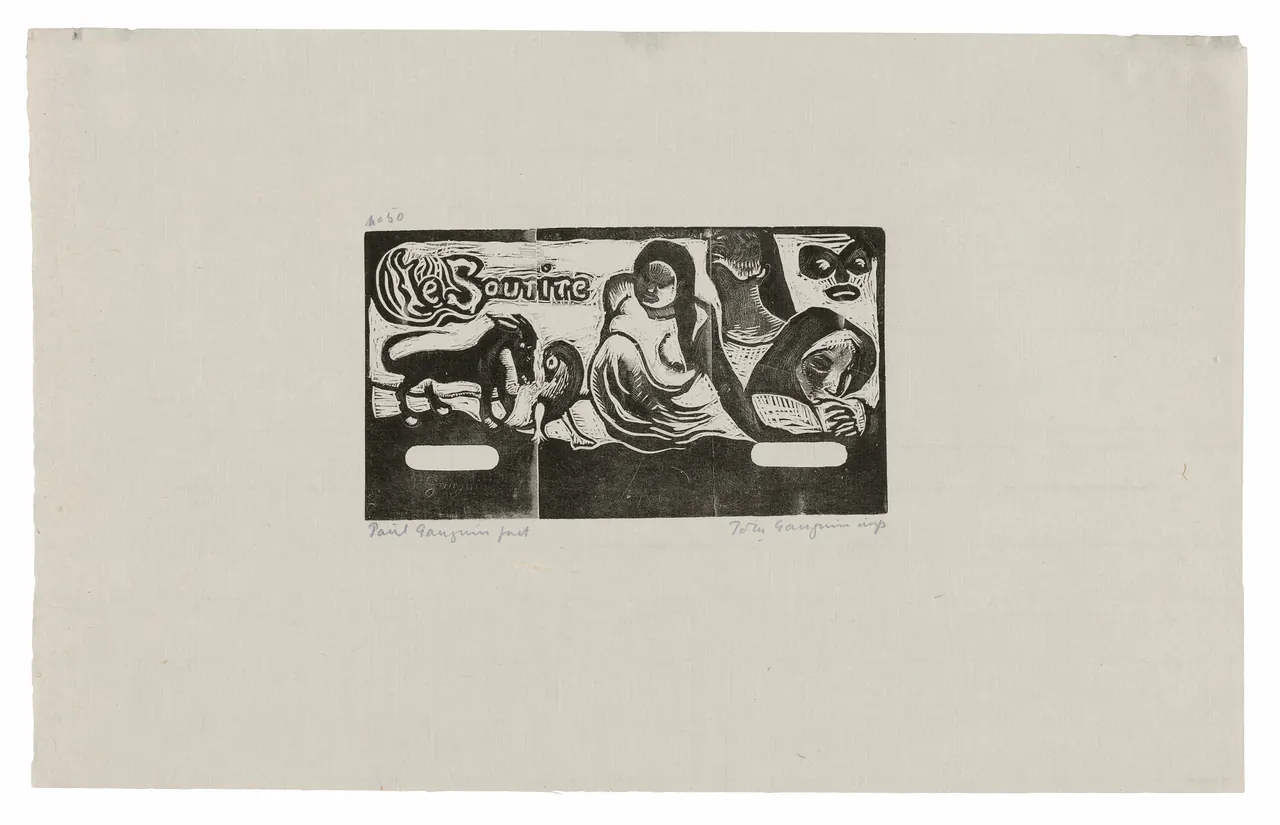
Three People, a Mask, a Fox and a Bird, headpiece for Le sourire
Paul Gauguin; printed by Pola Gauguin; published by Christian Cato, Copenhagen
1899 design; printed and published 1921 · Art Institute of Chicago · 1924.1194
CC0 Public Domain Designation
Reuse check: Published in 1921 for U.S. term analysis. Any separately protected Pola Gauguin contribution remains an open country-specific question outside the U.S.; the CC0 file label does not settle it.
Resized to 1280 pixels wide and converted to WebP; no crop.

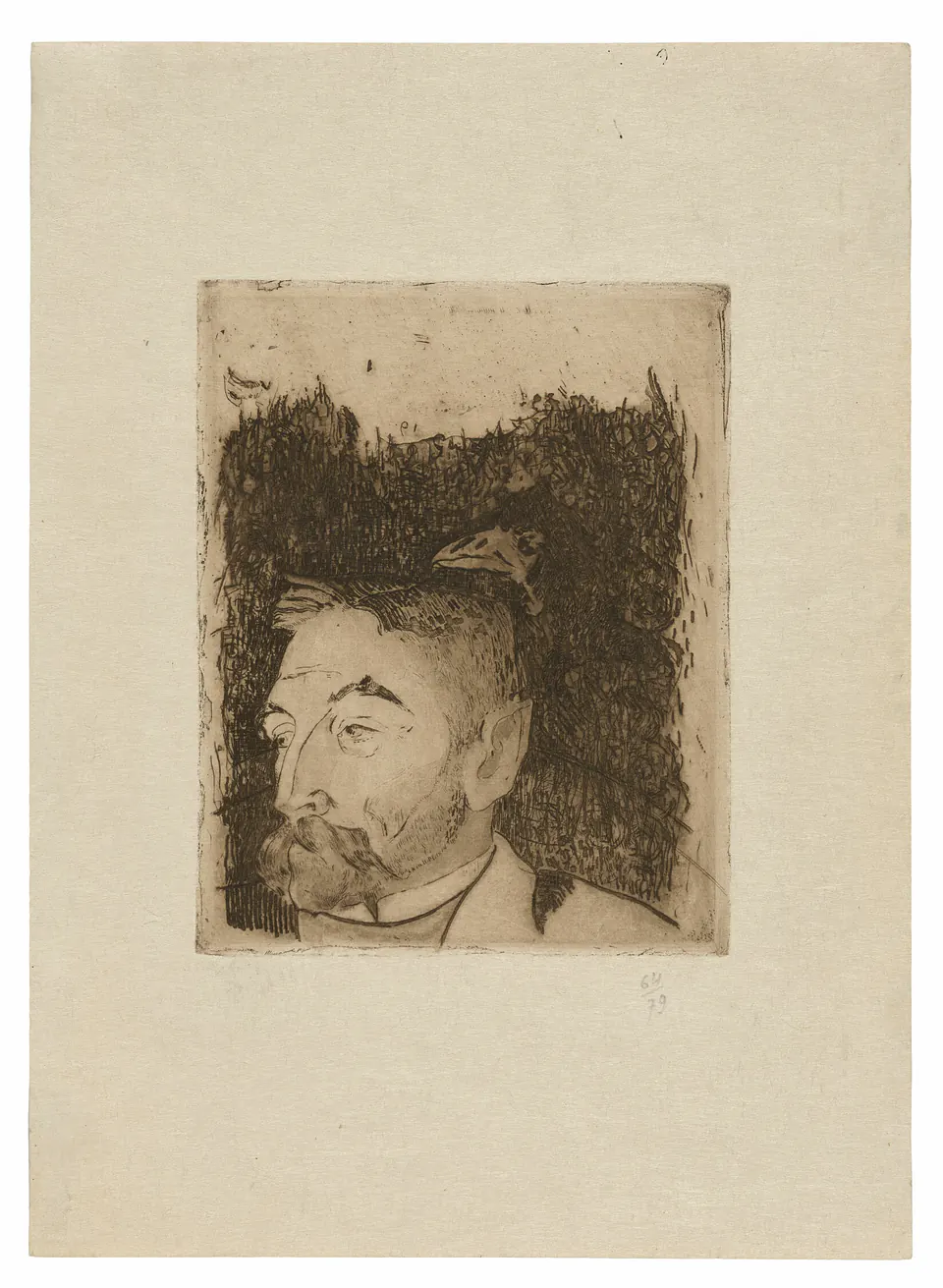
Portrait of Stéphane Mallarmé
Paul Gauguin
1891 design; printed 1919 · Art Institute of Chicago · 1935.46
CC0 Public Domain Designation
Resized to 960 pixels wide and converted to WebP; no crop.

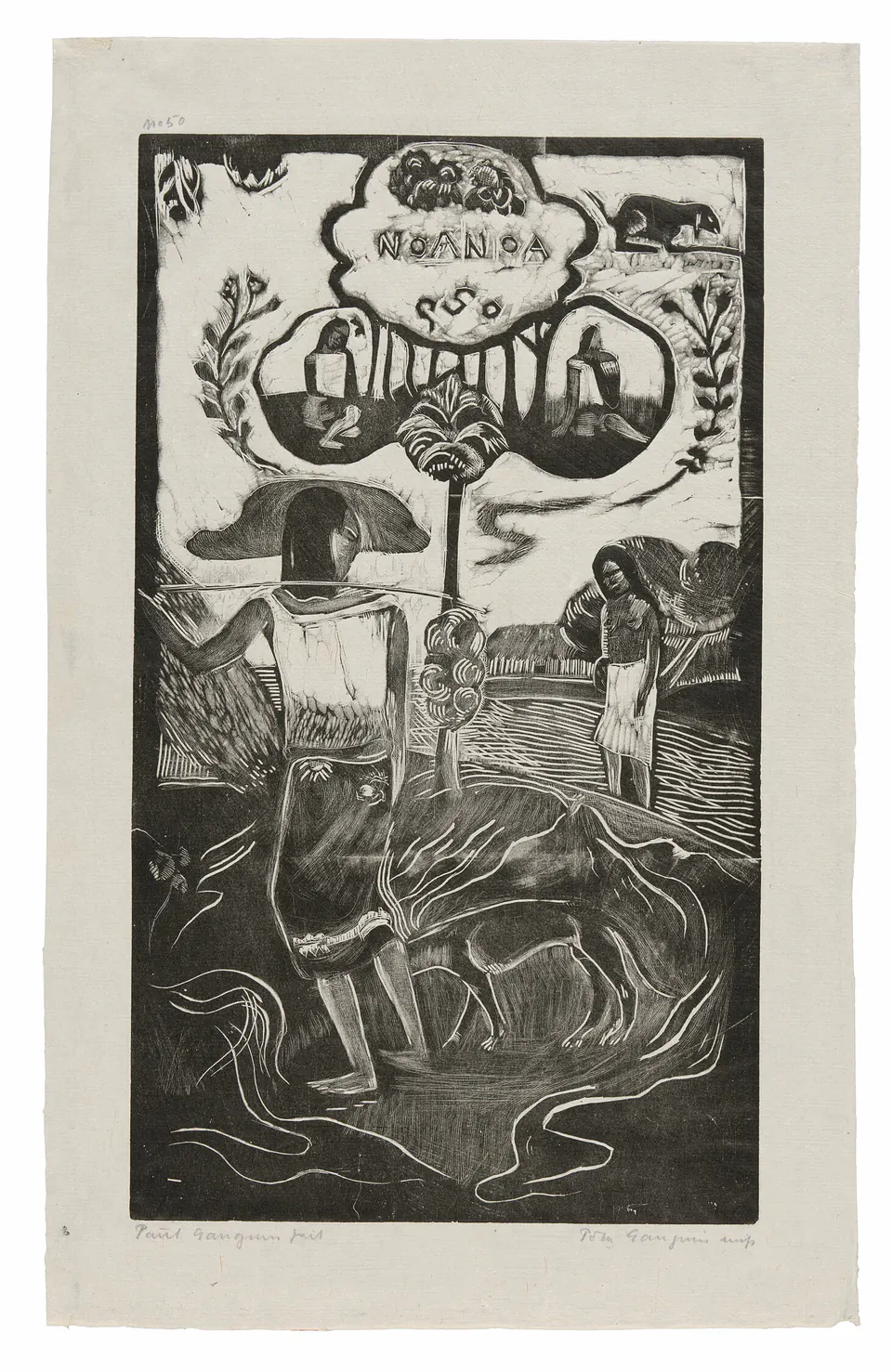
Noa Noa (Fragrant), from the Noa Noa Suite
Paul Gauguin; printed by Pola Gauguin; published by Christian Cato, Copenhagen
1893/94 design; printed and published 1921 · Art Institute of Chicago · 1924.1197
CC0 Public Domain Designation
Reuse check: Published in 1921 for U.S. term analysis. Any separately protected Pola Gauguin contribution remains an open country-specific question outside the U.S.; the CC0 file label does not settle it.
Resized to 960 pixels wide and converted to WebP; no crop.

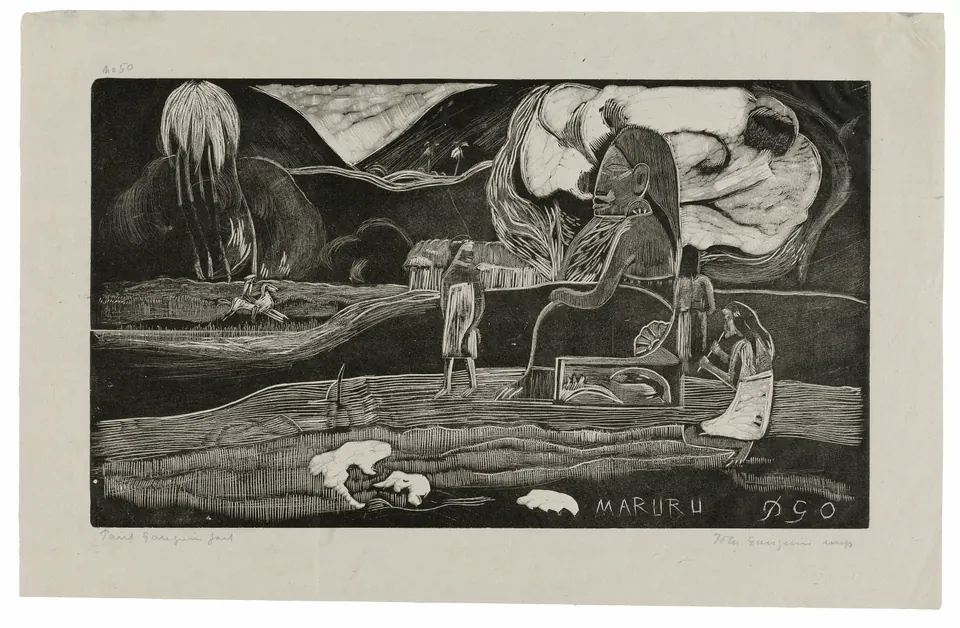
Maruru (Offerings of Gratitude), from the Noa Noa Suite
Paul Gauguin; printed by Pola Gauguin; published by Christian Cato, Copenhagen
1893/94 design; printed and published 1921 · Art Institute of Chicago · 1924.1200
CC0 Public Domain Designation
Reuse check: Published in 1921 for U.S. term analysis. Any separately protected Pola Gauguin contribution remains an open country-specific question outside the U.S.; the CC0 file label does not settle it.
Resized to 960 pixels wide and converted to WebP; no crop.

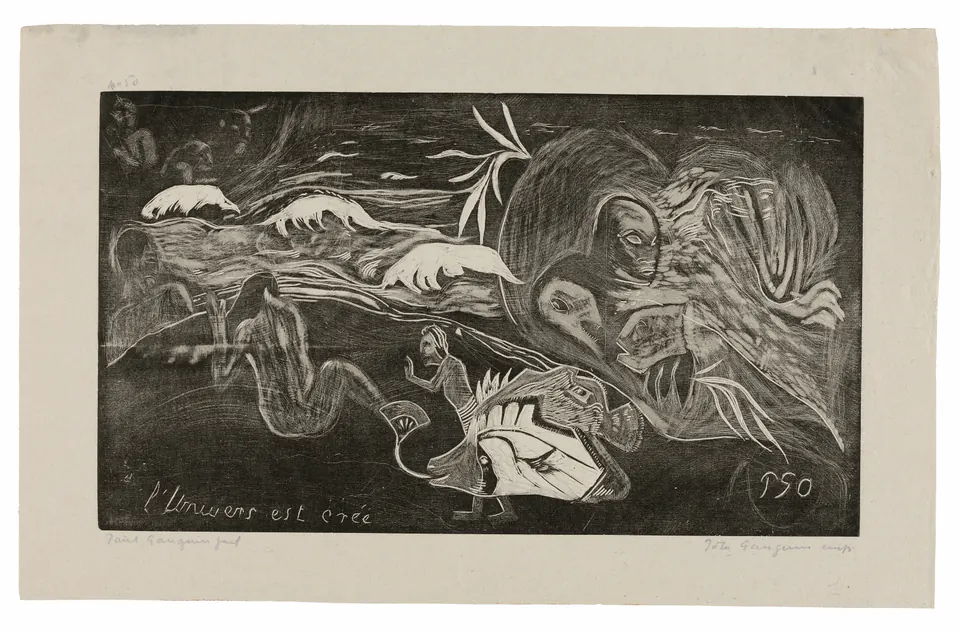
L’univers est créé (The Universe Is Being Created)
Paul Gauguin; printed by Pola Gauguin; published by Christian Cato, Copenhagen
1893/94 design; printed and published 1921 · Art Institute of Chicago · 1924.1203
CC0 Public Domain Designation
Reuse check: Published in 1921 for U.S. term analysis. Any separately protected Pola Gauguin contribution remains an open country-specific question outside the U.S.; the CC0 file label does not settle it.
Resized to 960 pixels wide and converted to WebP; no crop.

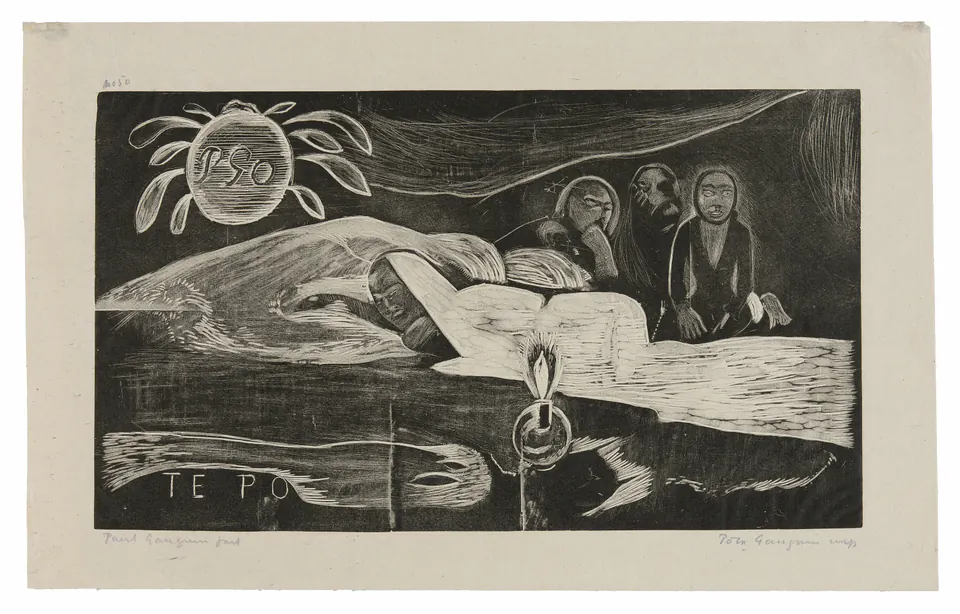
Te po (The Night), from the Noa Noa Suite
Paul Gauguin; printed by Pola Gauguin; published by Christian Cato, Copenhagen
1893/94 design; printed and published 1921 · Art Institute of Chicago · 1924.1199
CC0 Public Domain Designation
Reuse check: Published in 1921 for U.S. term analysis. Any separately protected Pola Gauguin contribution remains an open country-specific question outside the U.S.; the CC0 file label does not settle it.
Resized to 960 pixels wide and converted to WebP; no crop.

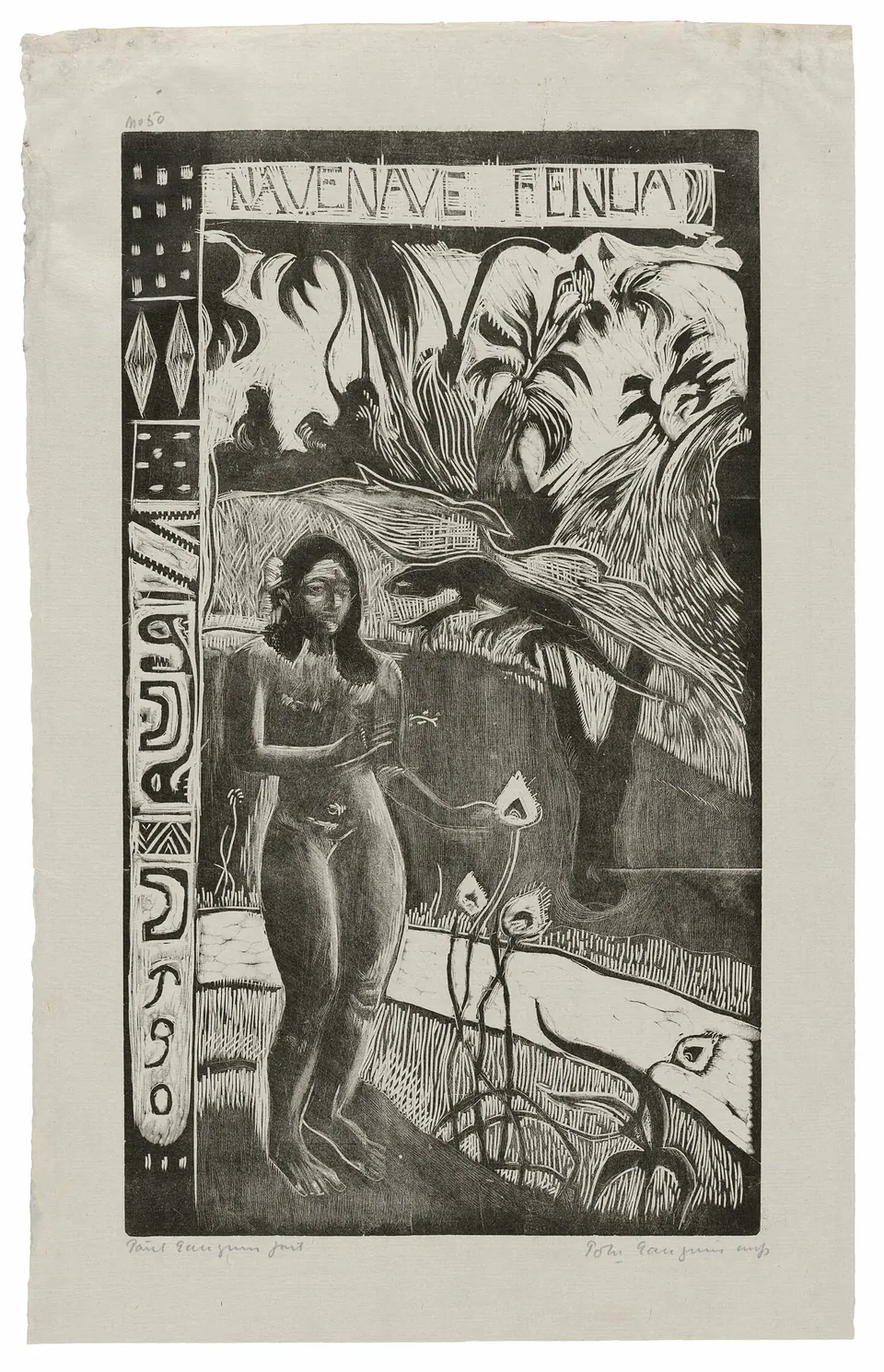
Nave nave fenua (Delightful Land), from the Noa Noa Suite
Paul Gauguin; printed by Pola Gauguin; published by Christian Cato, Copenhagen
1893/94 design; printed 1921 · Art Institute of Chicago · 1924.1201
CC0 Public Domain Designation
Reuse check: Published in 1921 for U.S. term analysis. Any separately protected Pola Gauguin contribution remains an open country-specific question outside the U.S.; the CC0 file label does not settle it.
Resized to 960 pixels wide and converted to WebP; no crop.

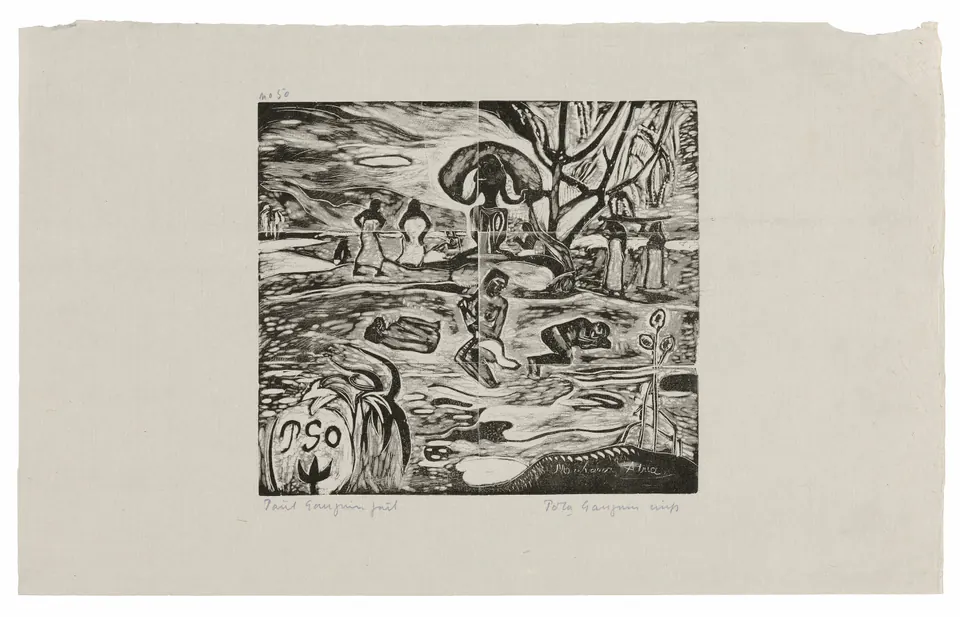
Mahana atua (Day of the God)
Paul Gauguin; printed by Pola Gauguin; published by Christian Cato, Copenhagen
1894/95 design; printed and published 1921 · Art Institute of Chicago · 1924.1195
CC0 Public Domain Designation
Reuse check: Published in 1921 for U.S. term analysis. Any separately protected Pola Gauguin contribution remains an open country-specific question outside the U.S.; the CC0 file label does not settle it.
Resized to 960 pixels wide and converted to WebP; no crop.

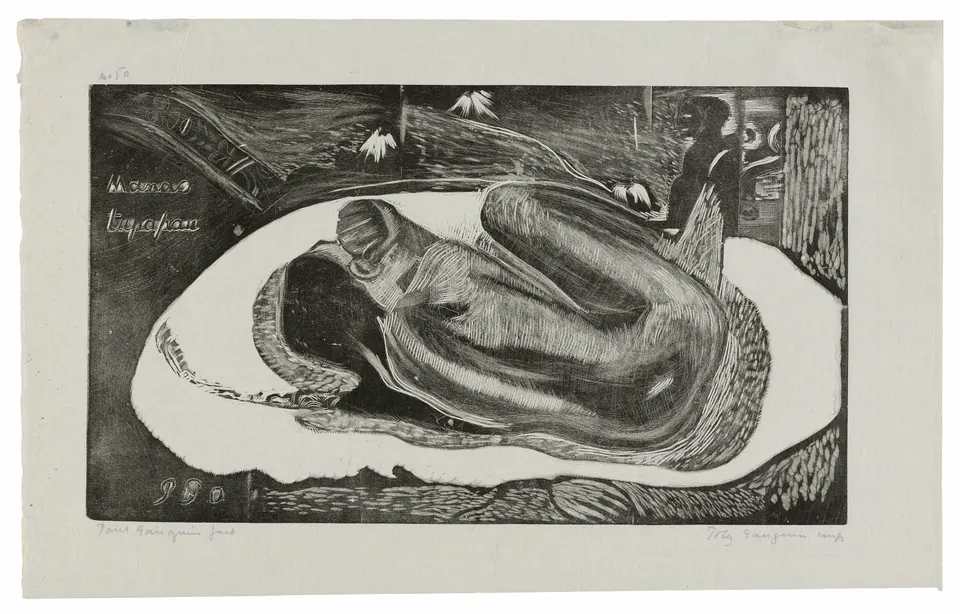
Manao tupapau (She Thinks of the Ghost or the Ghost Thinks of Her)
Paul Gauguin; printed by Pola Gauguin; published by Christian Cato, Copenhagen
1893/94 design; printed and published 1921 · Art Institute of Chicago · 1924.1198
CC0 Public Domain Designation
Reuse check: Published in 1921 for U.S. term analysis. Any separately protected Pola Gauguin contribution remains an open country-specific question outside the U.S.; the CC0 file label does not settle it.
Resized to 960 pixels wide and converted to WebP; no crop.

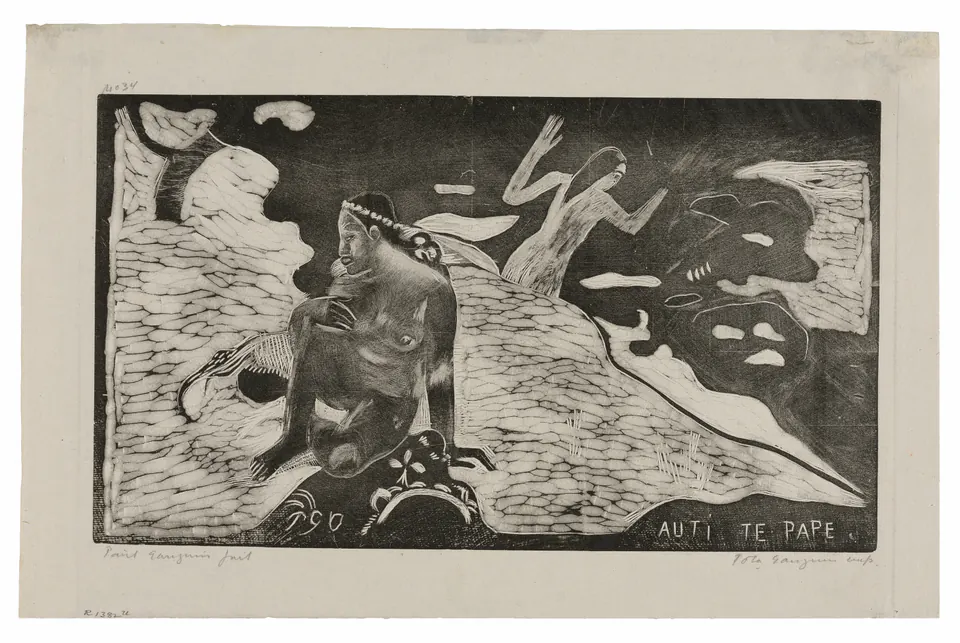
Auti te pape (Women at the River), from the Noa Noa Suite
Paul Gauguin; printed by Pola Gauguin; published by Christian Cato, Copenhagen
1893/94 design; printed and published 1921 · Art Institute of Chicago · 1926.96
CC0 Public Domain Designation
Reuse check: Published in 1921 for U.S. term analysis. Any separately protected Pola Gauguin contribution remains an open country-specific question outside the U.S.; the CC0 file label does not settle it.
Resized to 960 pixels wide and converted to WebP; no crop.

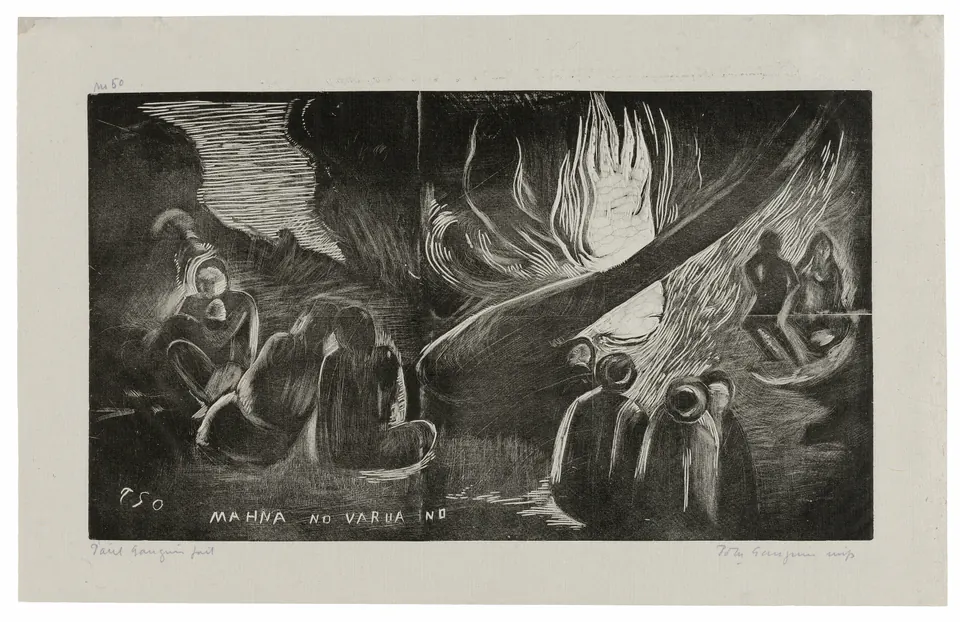
Mahna no varua ino (The Devil Speaks), from the Noa Noa Suite
Paul Gauguin; printed by Pola Gauguin; published by Christian Cato, Copenhagen
1893/94 design; printed and published 1921 · Art Institute of Chicago · 1924.1196
CC0 Public Domain Designation
Reuse check: Published in 1921 for U.S. term analysis. Any separately protected Pola Gauguin contribution remains an open country-specific question outside the U.S.; the CC0 file label does not settle it.
Resized to 960 pixels wide and converted to WebP; no crop.

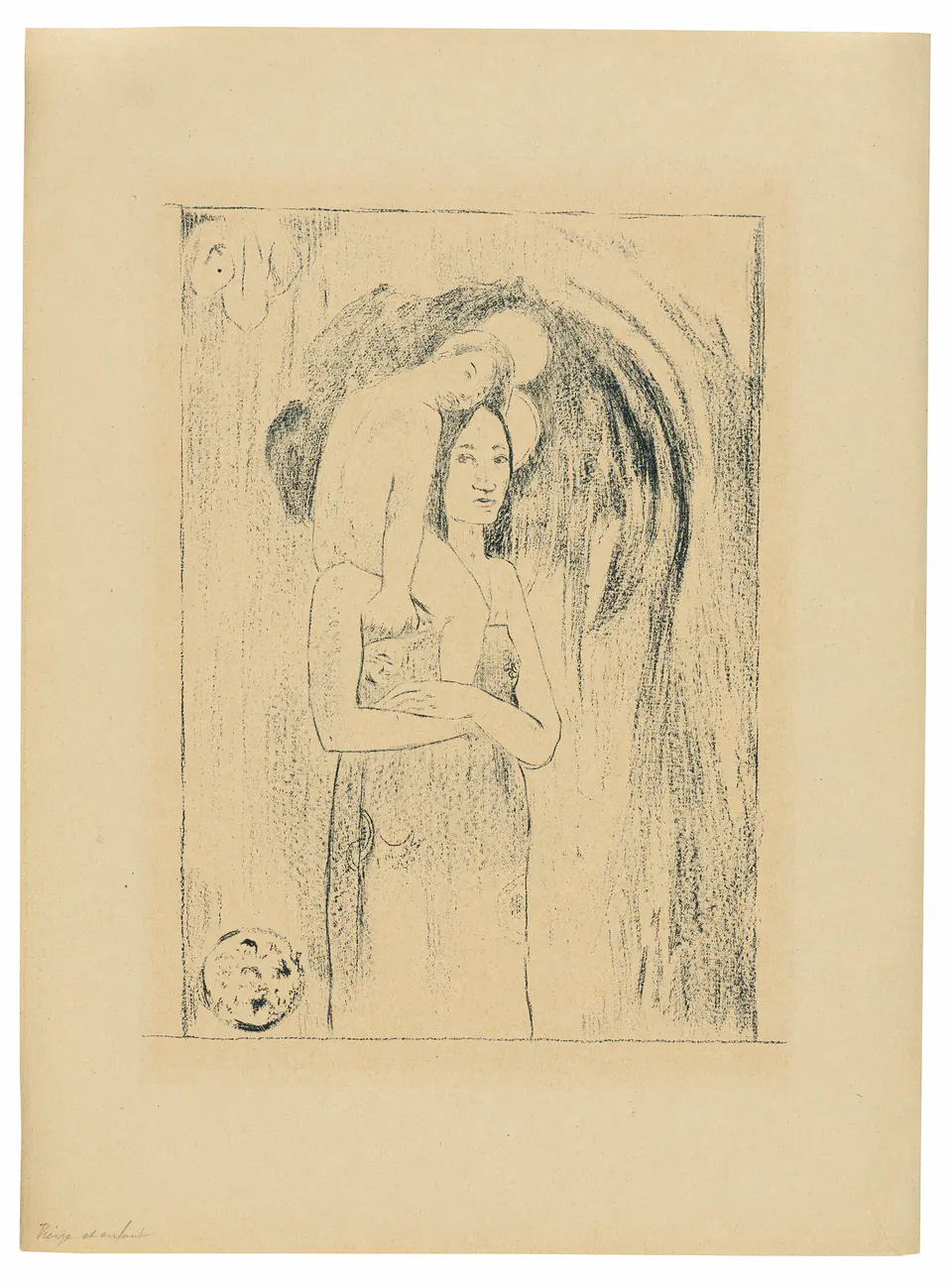
Ia orana Maria (Hail Mary)
Paul Gauguin
1894/95; published March 1895 · Art Institute of Chicago · 1921.370
CC0 Public Domain Designation
Resized to 960 pixels wide and converted to WebP; no crop.

Sources and review method
We checked the artist chronology against museum records, treated each named jurisdiction separately, and recorded the provider policy for the image set. These sources support the legal framework and artist dates used above; the source file for any individual image still needs its own record.
- Three People, a Mask, a Fox and a Bird — Art Institute of Chicago. Feature identity, 1921 issue, exact IIIF file, and Public Domain Designation.
- Ia orana Maria (Hail Mary) — Art Institute of Chicago. Exact March 1895 publication evidence and source file.
- Portrait of Stéphane Mallarmé, cat. 26.2 — Art Institute of Chicago. Accession 1935.46: edition of 79 for the 1919 Charles Morice volume.
- Gauguin’s Pages from the Pacific (1995) — Art Institute of Chicago. Original-block printing, the 1921 Copenhagen edition of 100, Pola Gauguin and Christian Cato credits.
- Manao tupapau: technical study — Art Institute of Chicago. Selected impression and original-block printing evidence; material differences do not alone determine whether Pola introduced protected expression.
- The artist and the printer — National Gallery of Australia. Institutional context for Pola Gauguin’s later printing role.
- Cofemel, C-683/17 — Court of Justice of the European Union. Paragraphs 30–31: originality concerns the author’s own intellectual creation. A printer credit is not itself a finding of independent copyright.
- Copyright, Designs and Patents Act 1988, section 1 — UK legislation. Originality is required for artistic-work copyright; historical works also need the applicable transitional provisions.
- Copyright, Designs and Patents Act 1988, Schedule 1 — UK legislation. Transitional provisions relevant to historical artistic works; no automatic present-day authorship conclusion is inferred from the 1921 printer credit.
- Open Access Images — Art Institute of Chicago. AIC permits reuse of files carrying its CC0 Public Domain Designation.
- Directive 2006/116/EC, Article 1 — EUR-Lex. The EU term for an artistic work is the author’s life plus 70 years.
- How long copyright lasts — UK Government. UK guidance gives 70 years after the author’s death for artistic works.
- Law No. 5846 on Intellectual and Artistic Works, Article 27 — WIPO Lex. The Turkish economic-rights term is the author’s life plus 70 years.
- Circular 15A: Duration of Copyright — U.S. Copyright Office. Applying the maximum 95-year publication term to 2026 places works published before 1931 outside that term.
- 17 U.S.C. Chapter 3, including §303 — U.S. Copyright Office. Section 303 keeps the unpublished-work transition and the 1978–2002 first-publication floor separate.
- Visual Artists: Publication — U.S. Copyright Office. Distribution can publish visual art; public display alone does not establish publication.
- Copyright notice: digital images, photographs and the internet — UK Intellectual Property Office. The old work and the exact modern digital file remain separate checks.
Editorial record
About this article
- Author
- Publisher
- GeMarkt
- Published
- Reviewed
- Internal source & rights check. Conducted by GeMarkt Research Review. This is an internal editorial check—not independent peer review.
- Source standard
- Rights guide source standardSeparates the underlying work from the source file, records the review date, and links the evidence used for the conclusion.
Found a claim that needs checking? Report a factual error.