GeMarkt Blog · Essay
Self-Portraits: How Artists Saw Themselves
Look closely at eight self-portraits by Leyster, Rembrandt, Van Gogh, Fantin-Latour, Matisse and Rha Hye-seok: faces that also show how painting works.

A self-portrait can feel like the shortest possible route to knowing an artist. The person who made the picture is looking back from inside it. Surely this is the real Rembrandt, the real Van Gogh, the person behind the work?
It is a compelling feeling, but an incomplete one. The artist has chosen a pose, clothing, light, background and way of painting. A self-portrait can be a professional introduction, a practical exercise, a record of change or an experiment in colour. It can be several of these at once.
These eight paintings offer different kinds of encounter. Rather than treating every expression as a confession, start with what each artist has actually put in front of us.
A face is also a composition
Before reading a life story into a face, ask three simple questions. How much of the body can you see? What surrounds it? Where is the most concentrated painting?
A hand carrying brushes identifies a profession. A head filling almost the entire canvas leaves little room for a social setting. Thick marks on a nose and barely described clothing direct attention differently from evenly finished detail. These are visible choices, whether or not we can recover the artist’s private reasons for them.
Comparing two self-portraits by the same person is especially useful. The sitter remains recognisable while the picture changes. That makes it harder to confuse an artistic decision with a permanent personality trait. We can notice an effect without claiming access to a mind.
Judith Leyster introduces the painter
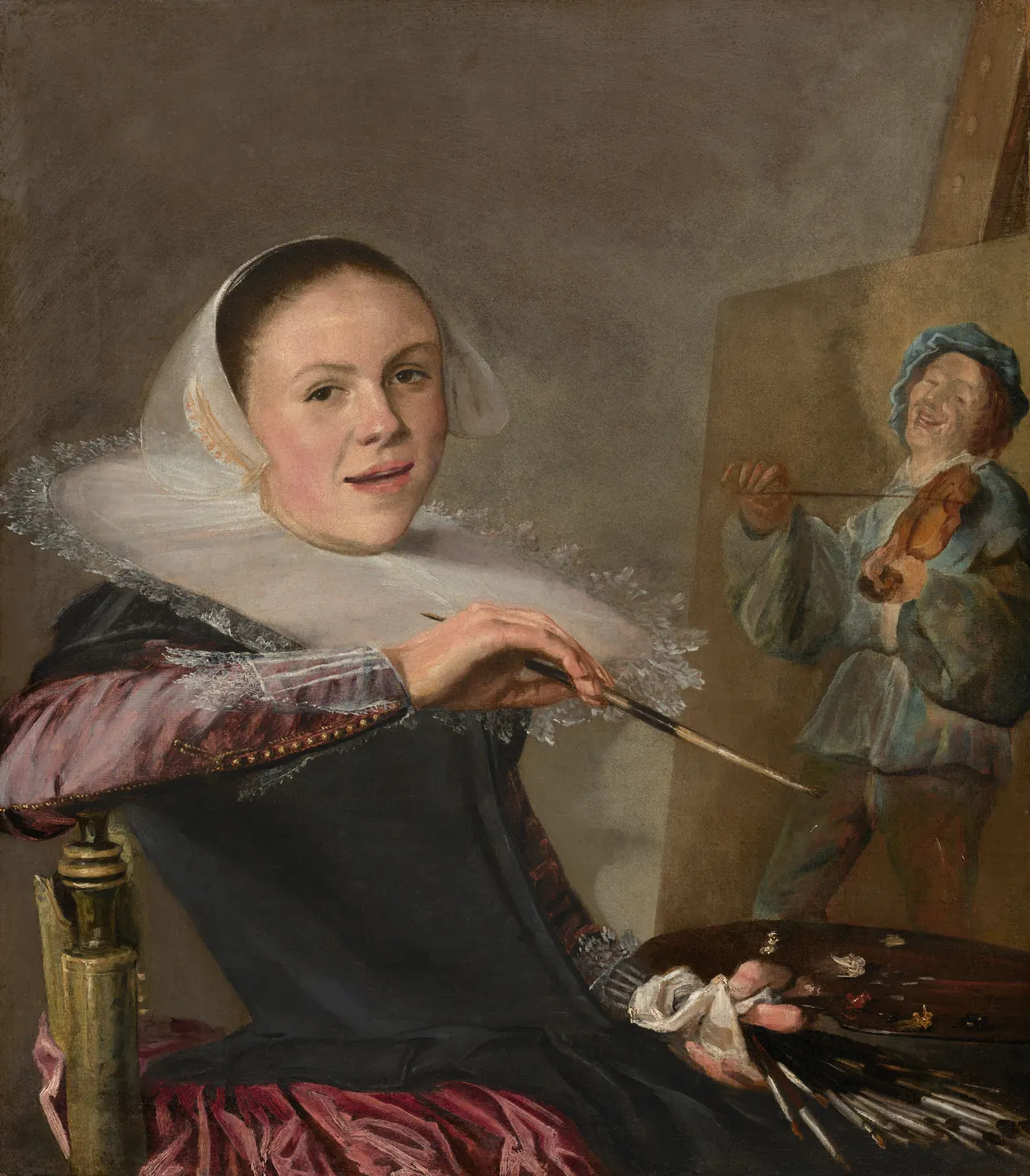
Leyster turns towards us with a brush still raised. On the easel, a violinist appears to be enjoying his own performance. Painter and painted musician make a lively double introduction: here is the person at work, and here is something she can do.
The large white collar matters visually. Its bright disc separates the face from the dark bodice, while the pink sleeve leads towards the hand. Palette, brushes and the second painting fill the lower and right-hand spaces. The picture is not only a likeness; it displays different kinds of painted material and a command of figures.
The National Gallery of Art’s account places Leyster among the early women admitted to Haarlem’s artists’ guild. That professional context helps us see why the equipment is more than incidental clutter. Yet the friendly turn of the body also keeps this demonstration from feeling like an inventory of qualifications.
Two Rembrandts a year apart
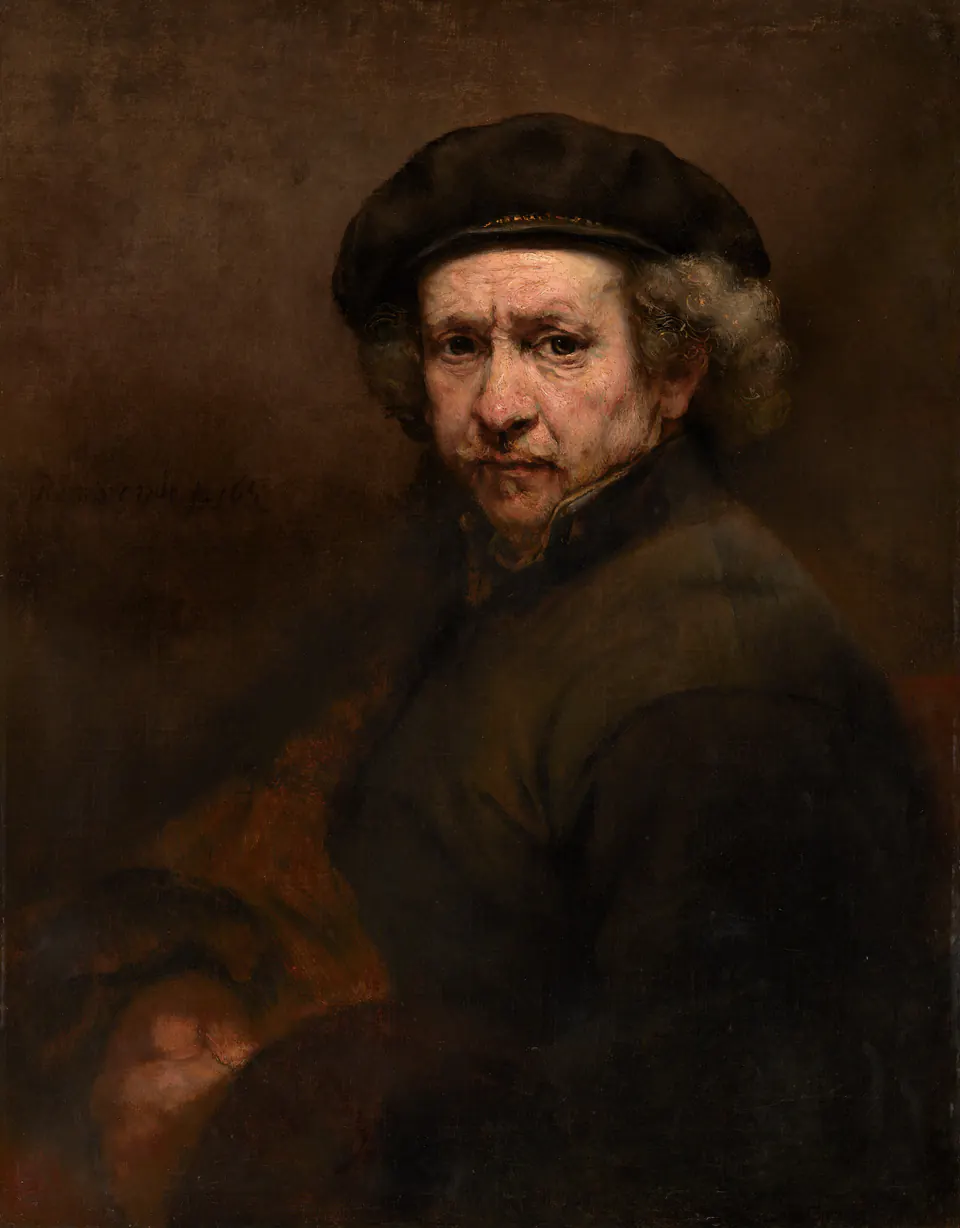
In the Washington painting of 1659, the body’s turn creates a large dark shoulder beneath the illuminated face. Folded hands remain visible near the bottom. The NGA identifies this specific canvas as a work made when Rembrandt was fifty-three; it is not the similarly familiar Metropolitan Museum painting dated the following year.
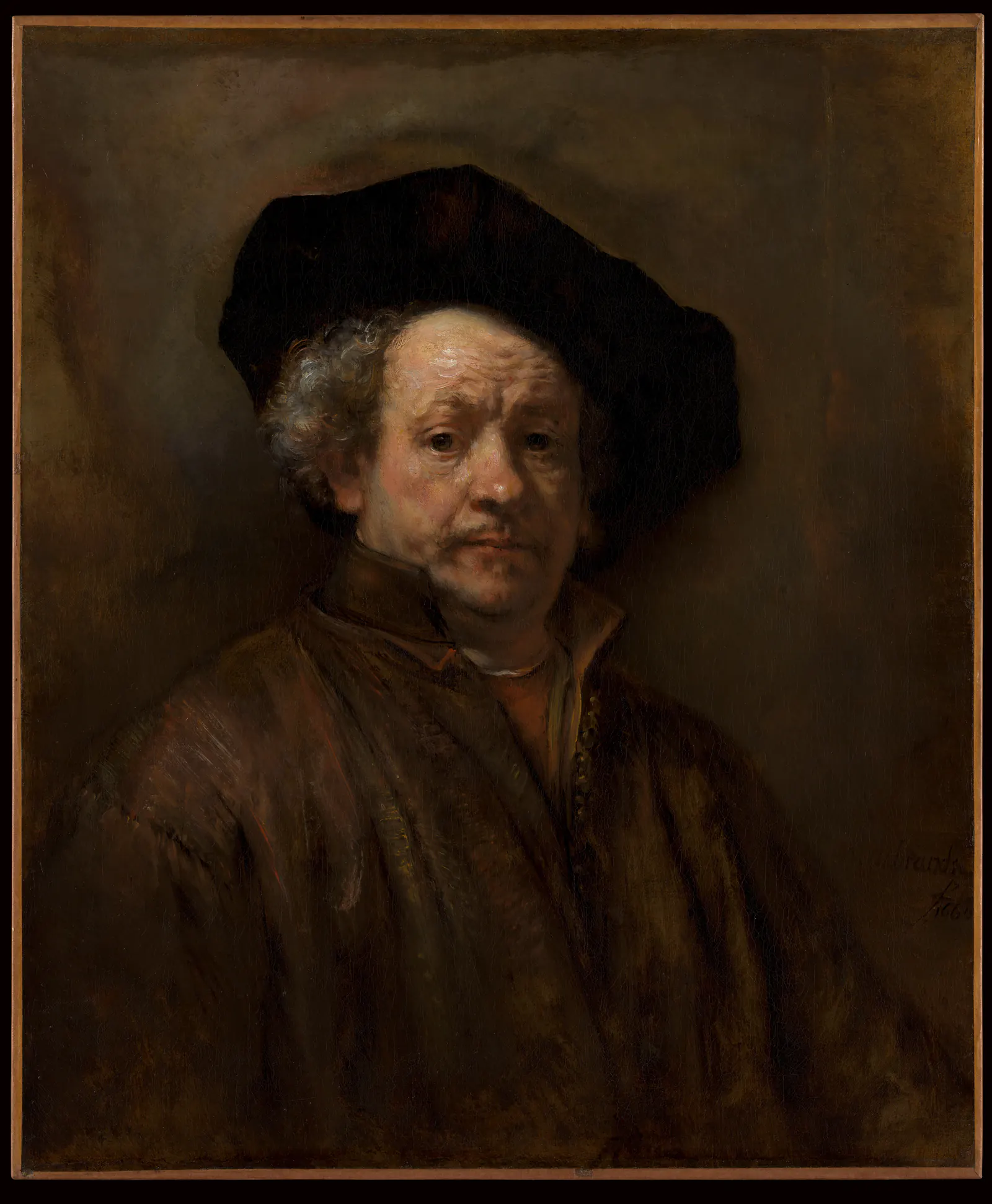
The 1660 portrait brings us closer. The black cap spreads out above a face built with conspicuous patches of light. The Met describes raised paint modelling the aging features and curls scratched with the other end of the brush. A photograph cannot fully convey that relief, but the unequal treatment of flesh, hair and clothing remains visible.
It is tempting to turn both faces into illustrations of hardship. Biography provides context, but these pictures also demonstrate decisions about distance, light and touch. The two are not interchangeable entries in a sadness timeline. Our Rembrandt guide offers a wider route through his work.
Fantin-Latour without the studio props
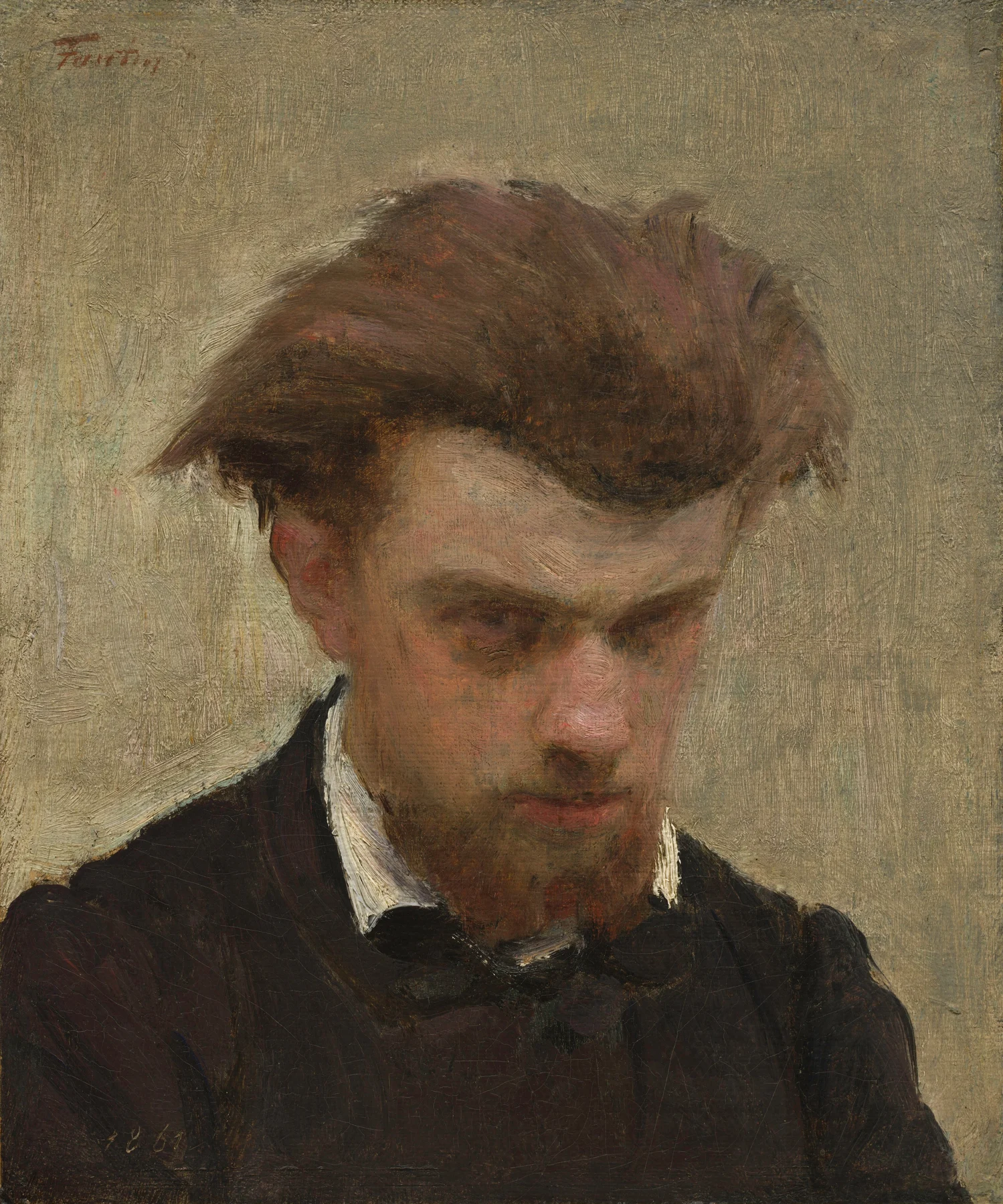
Fantin-Latour removes the palette, easel and conspicuous costume. A dark jacket, a narrow white collar and a head tipped down occupy nearly all the picture. His hair breaks into the pale background in loose, irregular strokes.
The NGA’s 1861 portrait invites a different comparison with Leyster: not cheerful versus unhappy, but an expanded working space versus a compressed head-and-shoulders encounter. Both are staged images of painters, even though only one supplies the tools that tell us so.
Try following the edge of the hair before looking at the eyes. Then follow the jacket into the lower corners. The concentration we feel is partly made by those shapes and by the limited space around the head. An apparently private encounter still has a carefully organised surface.
Van Gogh tries two kinds of presence
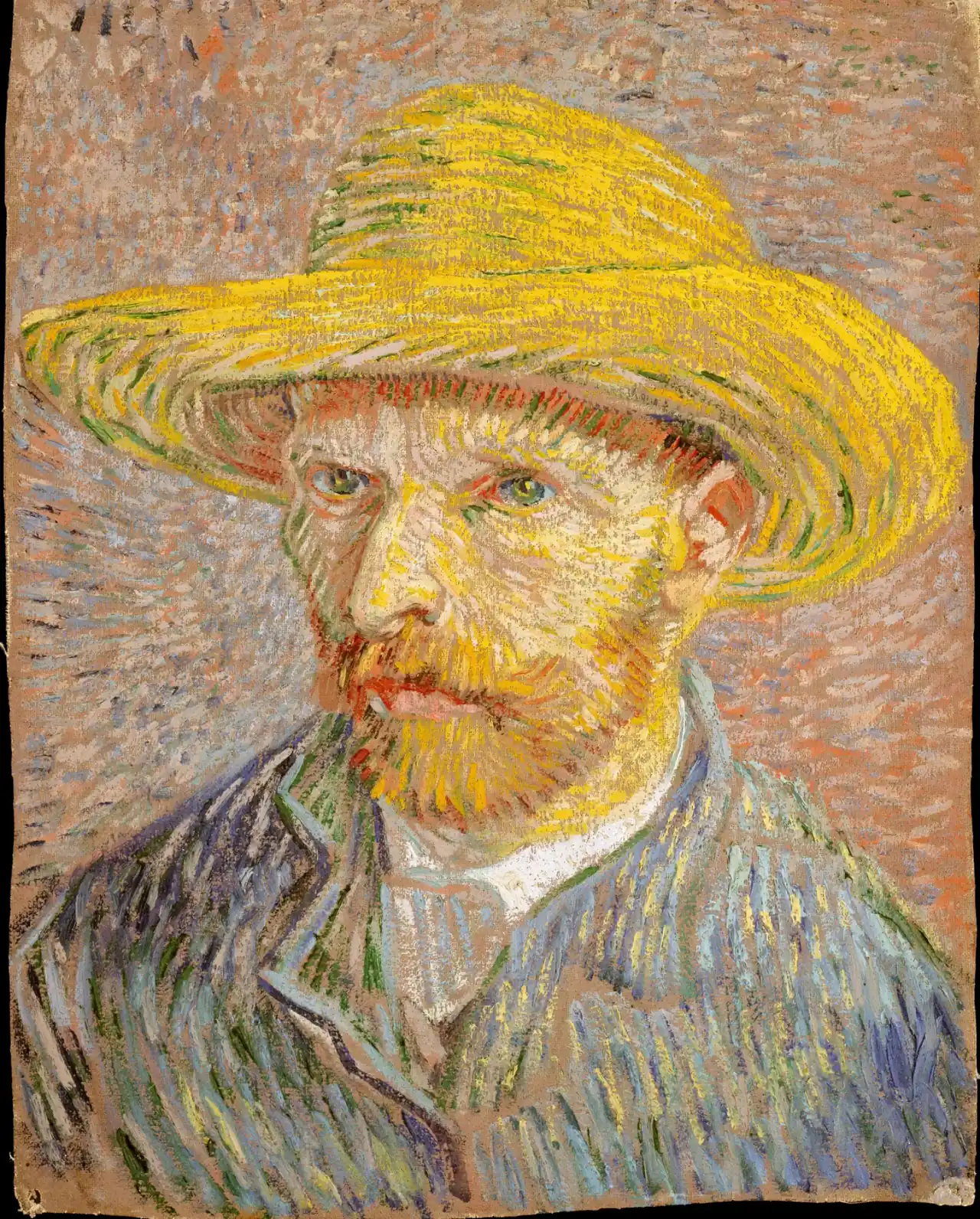
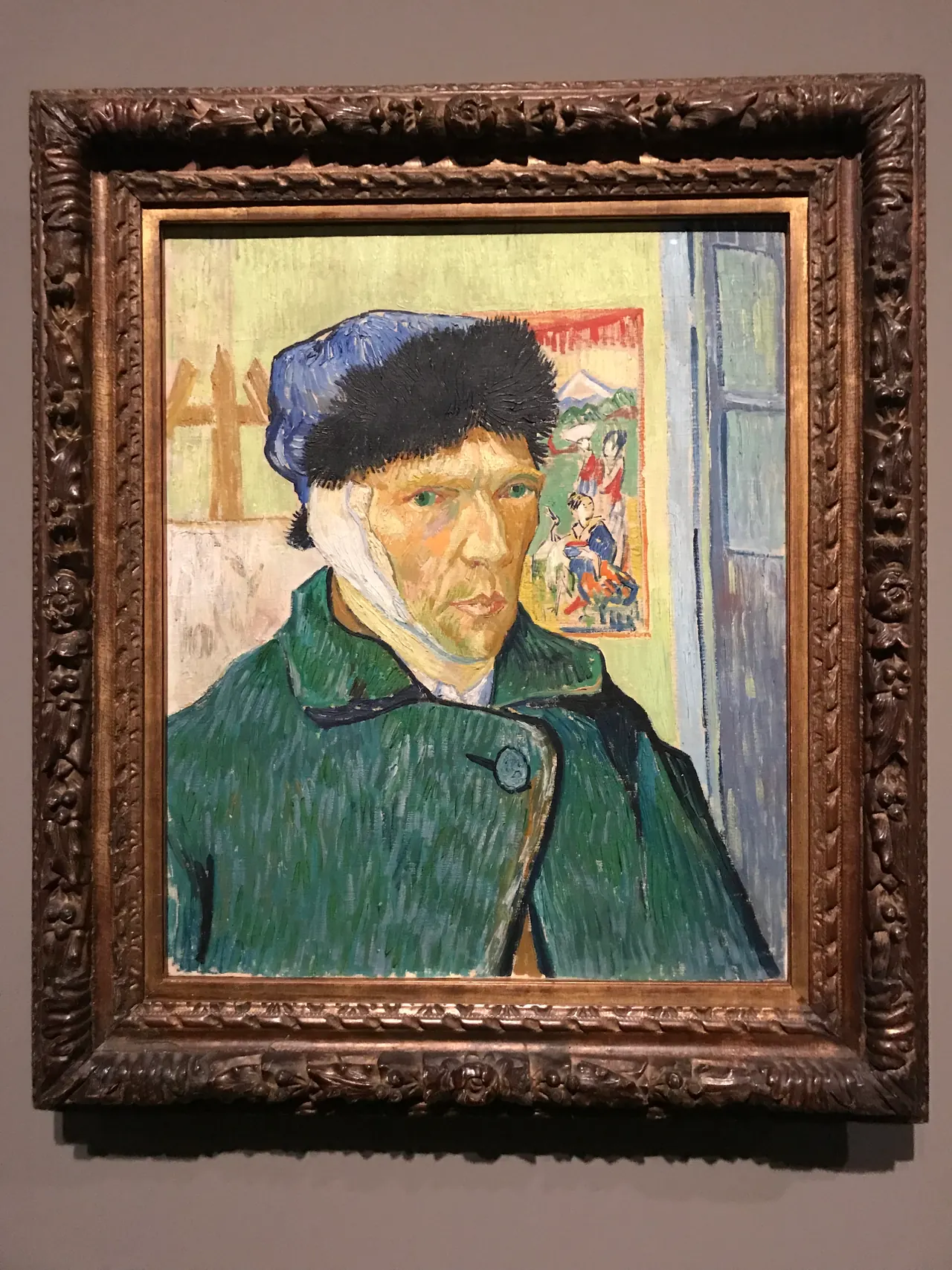

The straw-hat portrait turns the face into a meeting of short coloured strokes. Marks run around the head and across the coat without disappearing into a smooth illusion. The Met explains that Van Gogh used himself as an available model during his Paris years, testing figure painting and colour. This canvas has another painting on its reverse: practice could also involve making scarce materials work harder.
The 1889 portrait supplies a studio setting. Behind the green coat are an easel and a Japanese print. The Courtauld dates it to January, after his return from hospital. The bandaged ear appears on the opposite side because he worked from a mirror.
The injury is part of the picture’s history, not a reason to ignore its arrangement. Compare the straw hat’s wide horizontal sweep with the upright shapes behind the fur cap. One foregrounds a painted head; the other places that head among the materials of continued work. Neither gives us grounds to diagnose the artist from his expression.
Matisse makes colour visible
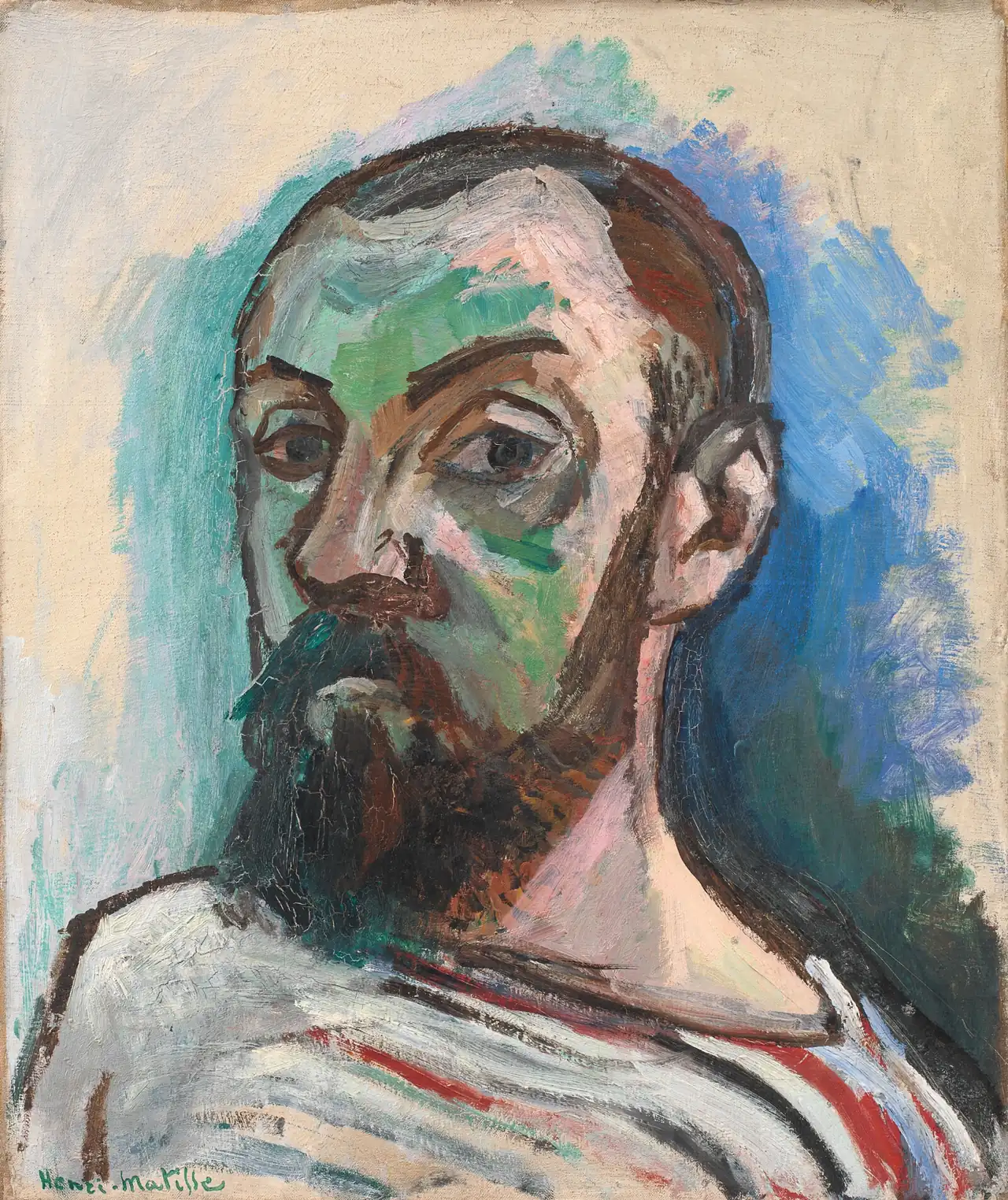
Matisse’s 1906 self-portrait at SMK lets green cross the forehead and cheek while pink marks separate other areas of the face. Blue and turquoise remain visible as individual strokes around the head. The shirt’s stripes add another set of colours and directions.
The recognisable likeness has not vanished. Eyes, beard, ear and turned shoulder hold together even where the paint refuses ordinary skin colour. This is a useful answer to the idea that accuracy requires hiding every brushstroke. The portrait can describe a person while displaying the means of description.
Alongside Van Gogh’s straw-hat picture, notice the change in scale: small repeated strokes there, broader patches here. Colour participates in building the face in both, without making the two approaches identical. Our Matisse guide places this early work within a much longer career.
Rha Hye-seok and the limits of biography
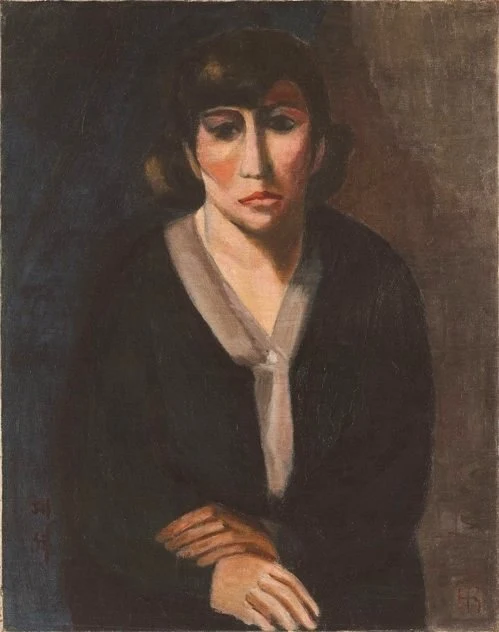

The pale collar makes a long V through Rha Hye-seok’s dark clothing. Her hands cross near the bottom, bringing a second area of exposed skin into a picture otherwise dominated by deep tones. Here the hands are not carrying professional equipment, but their placement still shapes our encounter.
LACMA’s exhibition guide describes her training in Tokyo, her work as a painter and writer, and her advocacy for women’s independence. It also connects the portrait’s darkness with biographical difficulty. That is a contextual interpretation, not something a colour alone proves.
Holding those levels apart makes the picture more, not less, interesting. We can learn about the person while noticing the particular relationships of face, collar and hands. A painting need not become a coded medical or emotional record to matter historically.
Look at the painting before the legend
These portraits range from Leyster’s animated studio introduction to Rha’s compact seated figure. They do not form a simple journey from formal public image to honest private feeling. Performance, practical study and self-examination can coexist in any period.
Choose two and compare their backgrounds first, then their hands, then the paint on their faces. Only afterwards return to what you know about the artists’ lives. That order gives the pictures a chance to surprise you rather than merely confirm a familiar story.
Continue with the Van Gogh guide or browse our collection directory for other ways to follow an artist. The museum links above identify the particular paintings shown here; a familiar title alone does not distinguish one self-portrait from another.
Editorial record
About this article
- Author
- Publisher
- GeMarkt
- Published
- Reviewed
- Internal source & rights check. Conducted by GeMarkt Research Review. This is an internal editorial check—not independent peer review.
- Source standard
- Art history source standardPrioritises object records and research sources, distinguishes evidence from interpretation, and states material uncertainty.
Found a claim that needs checking? Report a factual error.