GeMarkt Blog · Practical guide
Protecting Prints from Sunlight and Fading
Choose a better wall, reduce unnecessary light exposure and understand what UV glazing can and cannot do for a framed print.

Keep a print out of direct sun, reduce light when nobody is enjoying it, and treat UV-filtering glazing as extra protection—not permission to use the brightest wall. You do not need to turn your home into a dark museum. You do need to notice what happens to that particular picture through the day.
A print beside a window might avoid the morning sun but receive a bright afternoon beam. Another on the opposite wall may be exposed for longer than you expect. Choosing a less exposed position can be more useful than buying an expensive frame while leaving the picture in the same place.
Choose the wall before the glass
Light damage is not dirt that you can wipe off. The Library of Congress explains that exposure can permanently change colour, paper and other collection materials. Moving a faded image into darkness does not restore its earlier appearance.
Start with two or three possible walls. Reject places where a sunbeam crosses the image. Compare the remaining positions during the hours the room is normally used, rather than deciding from an evening photograph with all the curtains closed.
The Canadian Conservation Institute’s paper-care guidance recommends avoiding sunlight from windows and skylights and using blinds, curtains or shutters. It also advises keeping paper away from heating sources. A wall can have a light problem, a heat problem, or both.
This does not mean that the corner furthest from the window is automatically ideal. It still needs to be dry, practical to hang on and pleasant to look at. If the only attractive spot is exposed, reconsider the room layout before asking the frame to solve everything.
Count time as well as brightness
Lux is a measure of the light reaching a surface. Multiply a lux reading by the hours of exposure to obtain lux hours. The CCI’s explanation of light exposure uses this relationship to show why both intensity and duration matter.
For an illustrative calculation, 200 lux for three hours gives 600 lux hours. So does 100 lux for six hours. Reducing the second example to three hours gives 300 lux hours—half the exposure, not a promise of twice the useful life.
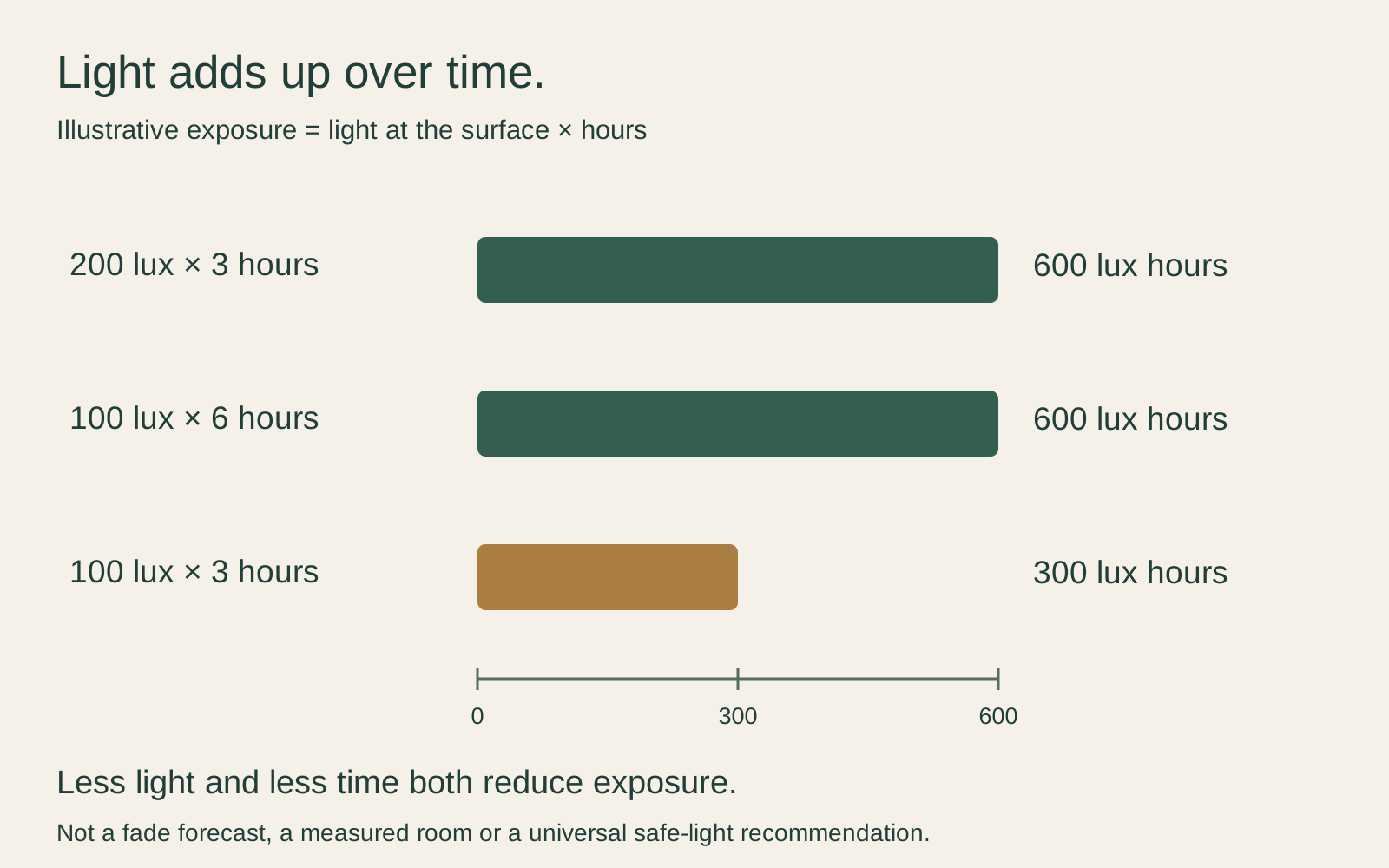
These simple numbers help with a familiar choice. If you switch a picture light off after dinner instead of leaving it on until morning, you reduce an exposure that provides no viewing benefit. You have not made the earlier hours harmless.
A light meter can help compare positions, but a reading needs a place and a time attached to it. One reading in the middle of the room does not describe a sunlit picture beside the window. Nor can a phone photograph reliably predict how quickly the ink will change.
Understand what UV protection does
Ultraviolet radiation is only part of the problem. CCI’s guidance on UV filters explicitly warns that visible light also contributes to fading. Removing UV does not remove all light-related damage.
Ask a framer for the actual glazing product and its documented properties. “Glass,” “acrylic,” “anti-reflective” and “UV-filtering” describe different things. Low reflection helps you see the image; it should not be treated as proof of a particular UV specification.
The practical question is not which impressive percentage appears on a label. It is whether the proposed glazing suits this object and whether the whole display arrangement reduces exposure. Do not transfer a tested specification from one branded product to an unidentified sheet already in a frame.
Likewise, no generic “archival print” description can establish a fade-free lifetime in your room. Different inks, papers, coatings and exposure conditions need their own evidence. A guarantee must come from the actual product terms, not from the age of the painting reproduced on it.
Make a daylight map of your room
For a simple check, note the candidate walls in the morning, around midday and later in the afternoon. Write down where direct light falls, which curtains are open, and whether your usual seat faces a reflection. Repeat when the season changes enough to alter the light pattern.
For example, you might record: “Wall A: sun on the lower half at 4 pm. Wall B: no direct beam observed today. Wall C: lamp reflection from sofa.” That is a useful record of one day, not a declaration that Wall B will never receive sun.
Then make one change and check again. Move the proposed picture position, adjust the blind or alter when a lamp is used. Do not hang the valuable original first and use its fading as the test.
A paper template can help establish the position without exposing the artwork during this experiment. Our guide to planning a gallery wall on paper explains how to work with the outside frame dimensions.
Light the picture when you use the room
Keep the lighting decision connected to everyday use. A reading corner needs useful light for reading; the artwork does not necessarily need its own bright spotlight as well. Check the view with your normal lamps before adding another fitting.
If you do use a picture light, seek information about its output and heat at the proposed position. A lamp’s name or technology alone is not a complete assessment. Follow the fitting’s installation instructions; this is not a reason to improvise electrical work or reduce required clearances.
Controls that are easy to reach are more likely to be used. An ordinary routine—close the blind during the exposed period and switch unnecessary lights off—can be more practical than a complicated arrangement you repeatedly forget.
Decide what you want to preserve
A replaceable contemporary reproduction and an irreplaceable family drawing need not carry the same acceptable risk. With a valued original, ask a conservator about display duration and protective framing. With a reproduction, decide whether its replacement cost and significance justify a more elaborate setup.
“Replaceable” is a decision about the object, not evidence that its surface is tougher. A digitally printed image of an oil painting is still a print with its own materials. Original vs Reproduction vs Print separates those descriptions.
Keep a useful record
Save the purchase details, paper or canvas specification and glazing information together. Take a reference photograph when the picture arrives, noting the lighting used. Later photographs may reveal a concern, but changes in camera settings or illumination can also change colour; they are not a laboratory fade test.
If you notice a difference, reduce the exposure and seek appropriate advice rather than attempting to brighten the surface with a cleaner. The best result is a picture you can enjoy in a sensible position—not a promise that any print will remain unchanged forever.
Editorial record
About this article
- Author
- Publisher
- GeMarkt
- Published
- Reviewed
- Internal source & rights check. Conducted by GeMarkt Research Review. This is an internal editorial check—not independent peer review.
- Source standard
- Buying guide source standardSeparates measured or first-hand evidence from general guidance and keeps practical limits visible.
Found a claim that needs checking? Report a factual error.