GeMarkt Journal · Practical guide
Is Camille Pissarro Public Domain? A Work-and-File Guide
Pissarro's named works are public domain in the markets checked here, but U.S. publication, print-state, attribution, and exact-file evidence still matter.
Rights check · reviewed
The short answer
Yes—for the 12 named paintings, drawing and print impressions documented here in the European Union, United Kingdom, Türkiye and United States. The conclusion is limited to this long-published set and the exact AIC and Cleveland files reviewed.
| What is being checked | Result | Why |
|---|---|---|
| European Union & United Kingdom | Public domain | Pissarro died in 1903, beyond the ordinary life-plus-70 term for artistic works. |
| Türkiye | Public domain | Türkiye also applies a life-plus-70 economic-rights term. Pissarro’s established works are beyond it. |
| United States | Clear for the 12 documented works and impressions below | The set uses pre-1931 sales, dealer transfers, print dates, publication records or museum accessions. An unreviewed work still needs its own publication chronology. |
| Museum image or download | Check the exact file | Keep the underlying work, physical painting or impression, institutional file and local derivative as separate records. |
This guide does not turn Pissarro’s death date into a worldwide claim. A formerly unpublished work, a later print state, a family collaboration or a file from another provider requires its own evidence.
This is a documented research summary, not legal advice. Copyright and moral-rights rules can vary by country and by the history of a particular work.

What we’ll look at
When can a Camille Pissarro work be reused, and which publication, impression, attribution, and source-file facts must travel with it?
The useful answer is yes for the 12 Camille Pissarro works, objects, print impressions, and institutional files documented here—not automatically for every Pissarro attribution or image online. Pissarro died in 1903. His established sole-authored works are beyond the ordinary economic-rights term in the European Union, United Kingdom, and Türkiye. The selected U.S. set also carries pre-1931 sale, print, publication, distribution, or accession evidence.
The answer still requires a chain of records:
- Identify the underlying work and its author or authors.
- Establish the publication or distribution history relevant to the United States.
- Identify the physical painting, drawing, print state, and impression represented.
- Verify the exact museum file and its current provider statement.
- Record every local transformation before commercial use.
This guide is a research summary, not legal advice. It names the reviewed markets and files rather than claiming that “Pissarro is public domain worldwide.”
The short answer is yes for the named set
The ledger below contains six Art Institute of Chicago files and six Cleveland Museum of Art files, all marked with a CC0 Public Domain Designation. Its paintings include The Place du Havre, Paris, Woman and Child at the Well, and Young Peasant Having Her Coffee. The rest of the set uses a drawing and graphic works whose dates, impressions, and techniques remain visible.
The three AIC paintings have unusually useful market histories. The Place du Havre was sold by Pissarro to Durand-Ruel in March 1893 and then to Potter Palmer in 1894. Woman and Child at the Well entered Durand-Ruel’s stock in 1882 and circulated through several New York owners before 1892. Young Peasant Having Her Coffee was sold in 1881 and again in the 1880s and 1890s. These are distribution records, not inferences from exhibition alone.
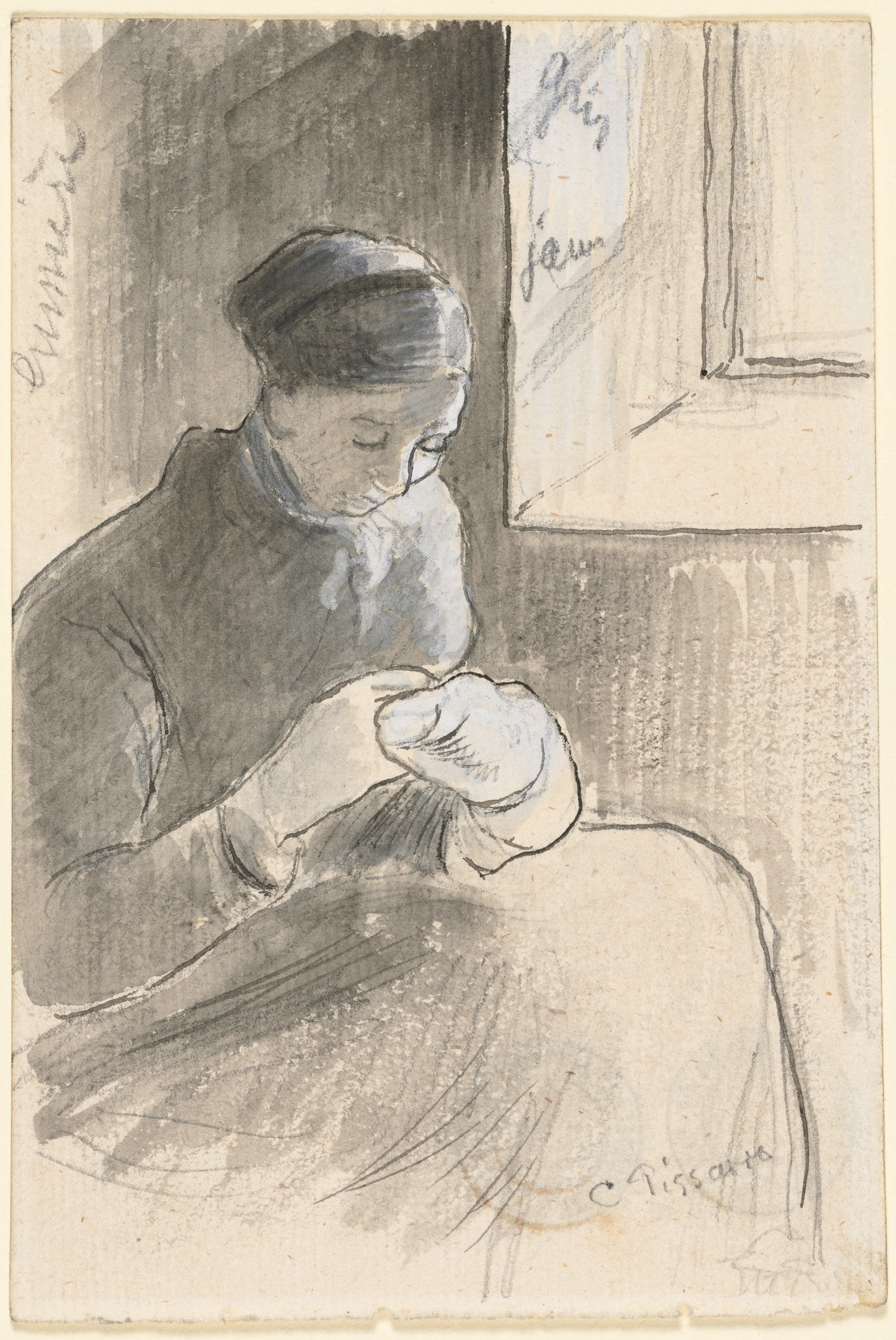
The selected prints make their chronology explicit: the AIC dates its Paul Cézanne impression “1874, printed 1920,” Women Tossing the Hay “1890, printed 1906,” and Promenade à Rouen “1884/96, printed 1896.” Cleveland’s At the Market entered the collection in 1925, while The Mender moved from Kraushaar Galleries to the museum in 1927.
The clearance does not automatically include:
- a private work whose U.S. publication history has not been recovered;
- a sheet by Lucien, Georges Henri, Félix, Ludovic-Rodo, Orovida, or another member of the Pissarro family;
- a later state, posthumous impression, restrike, facsimile, or reproduction after a Pissarro work;
- a work jointly made with another artist or printed later by an unidentified printer;
- a modern photograph, conservation image, scan, restoration, or commercial download from another provider.
Old artist, old-looking image, and usable file are not interchangeable categories.
Life plus 70 markets are clear
The EU term directive, UK government guidance, and Article 27 of Türkiye’s Law No. 5846 each apply an ordinary life-plus-70 framework to artistic works. Camille Pissarro died in 1903, so his established sole-authored works are beyond that term in all three systems.
| Market checked | Ordinary rule applied | Result for Pissarro’s established works |
|---|---|---|
| European Union | author’s life plus 70 years | public domain |
| United Kingdom | 70 years after the creator’s death | public domain |
| Türkiye | life plus 70 years for economic rights | public domain |
That is a work-level conclusion. A later printer, photographer, restorer, editor, or family collaborator can add a different author and date. Attribution and integrity interests, trademarks, contractual terms, and museum endorsement questions also operate separately from the expired economic right in Pissarro’s work.
The production caption should therefore identify “Camille Pissarro” and the exact object, not rely on the family name alone.
The US answer needs real publication evidence
The United States does not use Pissarro’s 1903 death as a universal shortcut. Copyright Office Circular 15A separates many older works by publication history. In 2026, a work published before 1 January 1931 is outside the maximum 95-year publication term.
Copyright Office guidance for visual artists explains that distributing an original or copies can publish a work, while public display alone does not. A dated Impressionist exhibition can help reconstruct history, but it is not automatically the publication event.
This guide therefore prefers evidence such as:
- Pissarro’s documented sale of a canvas to Durand-Ruel;
- dealer transfers of the original through Paris and New York;
- an explicitly dated print impression;
- edition and publication records for graphic work;
- transfer of a drawing or monotype to an institution before 1931.
Section 303 supplies the fail-closed exception. If a pre-1978 work was still unpublished on 1 January 1978, separate transition rules apply. A work first published between 1978 and the end of 2002 after remaining unpublished can be protected through the end of 2047. A drawing found in family papers is therefore not cleared simply by putting “c. 1885” beside it.
For the 12 named records, the evidence supports a clear U.S. result. For an unreviewed work, reconstruct the chronology first.
One design can have many print impressions
Pissarro’s prints show why a work title is not enough. An etched or lithographic design can exist through a plate or stone, multiple states, proofs, lifetime impressions, later editions, and posthumous printings. Ink, paper, wiping, pressure, inscriptions, margins, and condition vary between sheets.
The AIC and Cleveland each hold an impression of Pissarro’s portrait of Paul Cézanne. The AIC title is Paul Cézanne and dates its sheet “1874, printed 1920”; Cleveland titles its sheet Portrait of Paul Cézanne and dates it 1874. They share a design but have different accessions, digital files, object histories, and visible material qualities. This guide keeps both because the duplicate composition demonstrates the object-level distinction.
For any Pissarro print, record:
- the design’s title and date;
- technique and matrix;
- state, edition, and printer when known;
- lifetime or posthumous printing status;
- physical accession, support, sheet dimensions, inscriptions, and condition;
- object page, exact scan, provider label, and local derivative.
Do not move an edition statement from one institution’s sheet to another merely because the composition matches.
The Pissarro name is not one artist
“Pissarro” can refer to Camille, his children, later descendants, or a family exhibition label. Their copyright terms do not collapse into Camille’s 1903 death date.
Lucien Pissarro was an artist, printer, and publisher in his own right and died in 1944. Georges Henri Manzana Pissarro died in 1961; Ludovic-Rodo Pissarro in 1952; Félix Pissarro in 1897; Orovida Camille Pissarro in 1968. Works by these artists require their own author, death date, jurisdiction, publication, and file analysis. A modern catalogue or archive can also contain protected text, layout, photography, and research even when it documents Camille’s work.
Collaboration matters too. Pissarro worked alongside Edgar Degas in printmaking, and later printers could affect an edition. If a source record names a co-author, printer, publisher, or posthumous edition, preserve that wording and reopen the relevant term analysis instead of simplifying the credit.
The artist-rights ledger only admits records that the institution attributes to Camille Pissarro. It does not treat “Pissarro family” as one reusable corpus.
Is The Place du Havre public domain?
Yes—the 1893 Camille Pissarro painting is public domain in the EU, UK, Türkiye, and United States under the named-work analysis used here. Reuse the exact AIC file only under its recorded CC0 statement.
The Art Institute of Chicago record identifies the artist, title, date, oil-on-canvas medium, and accession 1922.434. Its provenance documents Pissarro’s 1893 sale to Durand-Ruel and the dealer’s 1894 sale to Potter Palmer. The same record lists contemporary exhibition catalogues and press coverage. That is stronger U.S. evidence than the painting’s creation date alone.
The AIC supplies the selected image under its CC0 Public Domain Designation. The local master was resized to 1600 pixels wide, converted to WebP, and not cropped. Its checksum and deterministic responsive renditions are registered. A search thumbnail, auction photograph, or differently colour-managed reproduction is not the same cleared file.
The work’s urban traffic also makes it useful editorially: Pissarro’s high viewpoint organises carriages, omnibuses, pedestrians, façades, and open sky without turning the city into a static monument. That visual relevance does not substitute for rights evidence; the object and file records do.
Exact files and restorations need their own clearance
The U.S. Copyright Office’s visual-arts compendium says a faithful scan or “slavish copy” lacks new registrable authorship, while a sufficiently original restoration or alteration can receive a different analysis. Other jurisdictions can set a different originality threshold, and website or access terms can matter independently.
The production record for each file keeps:
- the institutional object page;
- the exact AIC IIIF or Cleveland Open Access JPEG endpoint;
- the provider’s CC0 statement;
- the physical accession and impression represented;
- local dimensions and checksum;
- resize, crop, colour, restoration, compositing, or AI-assisted changes.
Technical images deserve particular care. An X-radiograph, infrared reflectogram, stitched macro capture, pigment map, reconstructed colour layer, or conservator’s comparison can contain new choices and may sit under different access conditions from the ordinary collection image.
If the provider record changes, recheck the exact file before a new product edition, licensing commitment, or high-visibility campaign.
Twelve CC0 files form the published set
The documented set below is a real production boundary: six AIC and six Cleveland files, each processed locally and connected to a distinct object URL, source endpoint, accession, provider label, dimensions, alt text, and transformation statement.
It deliberately combines three paintings, one drawing, a monotype, etchings, drypoint, and colour lithography. That breadth answers the reuse question without pretending that all forms share the same evidence. The two Cézanne portraits also make the difference between design and impression visible.
Automated tests verify that exactly 12 candidates exist, both institutional programmes are represented six times, source URLs and accessions are unique, all local files are valid WebP images at their recorded dimensions, the feature belongs to the set, and the feature checksum has not drifted.
This evidence does not claim that GeMarkt currently sells a Pissarro product or operates a Pissarro collection. Any future inventory would need separate print-quality, restoration, labelling, territory, and source-file checks.
A commercial reuse checklist
Before using a Pissarro image in a product, publication, campaign, or download, verify:
- Which Pissarro? The institution names Camille rather than a child, descendant, collaborator, or family archive.
- U.S. chronology. Sale, distribution, edition, printing, or publication evidence is real; creation and display are not treated as automatic publication.
- Section 303. A formerly unpublished work was not first published in 1978–2002 without a 2047 review.
- Object or impression. Technique, state, edition, printer, support, accession, and side match the image.
- Exact file. The production master came from the recorded institutional endpoint.
- Provider statement. The selected file still carries the CC0 or public-domain status relied on here.
- New authorship. Photography, restoration, technical imaging, typography, translation, and layout are separately cleared where necessary.
- Presentation. Attribution is accurate and no museum endorsement, edition claim, or product availability is implied.
If one link in the chain is missing, source the object and file again. Public domain is not a free-for-all explains the broader attribution, privacy, trademark, provider, and platform boundaries.
Where Pissarro fits inside GeMarkt
The Journal’s Impressionism chapter places Pissarro within independent exhibitions, urban reconstruction, labour, leisure, and changing systems of display. This guide has a different job: it follows term, publication, authorship, object, impression, and file evidence to a usable decision.
How to research an artwork provides the object-record and source-map method behind that decision. When ownership or artist naming changes, provenance, attribution, and restitution explains why the record must be revised rather than smoothed over.
There is no Pissarro collection, dedicated wallpaper room, or Pissarro product on GeMarkt at publication time. The current wallpaper library and shop are general destinations, not inventory claims. This article publishes because its answer and 12 exact files are ready; any future product must pass its own gate.
Rights-checked image ledger
A documented starting set
These files were selected from the holding institutions rather than from search-result copies. Each card keeps the artwork record, exact source file, provider statement and GeMarkt transformation visible as separate facts.
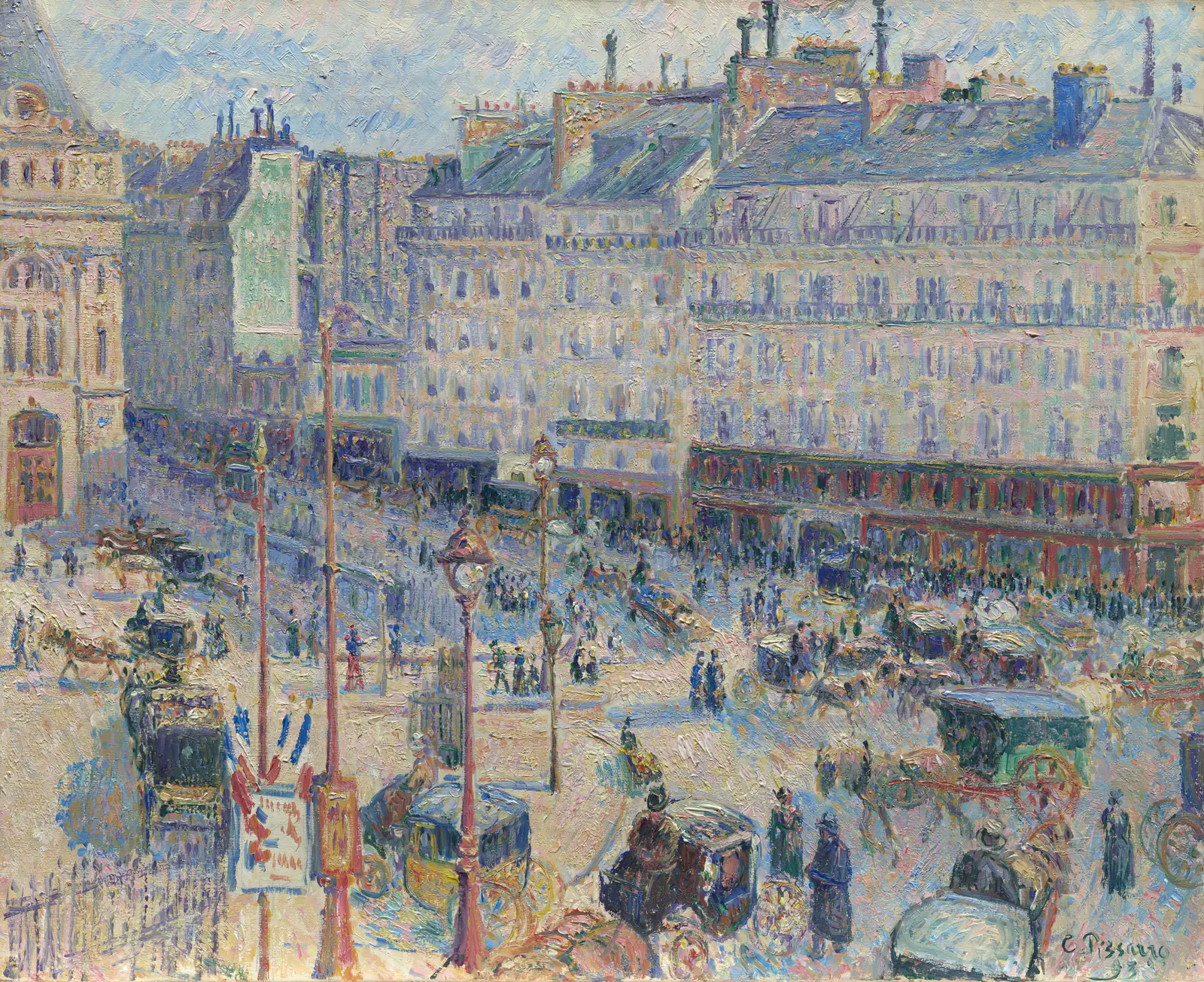
The Place du Havre, Paris
1893 · Art Institute of Chicago · 1922.434
CC0 Public Domain Designation
Resized to 1600 pixels wide and converted to WebP; no crop.

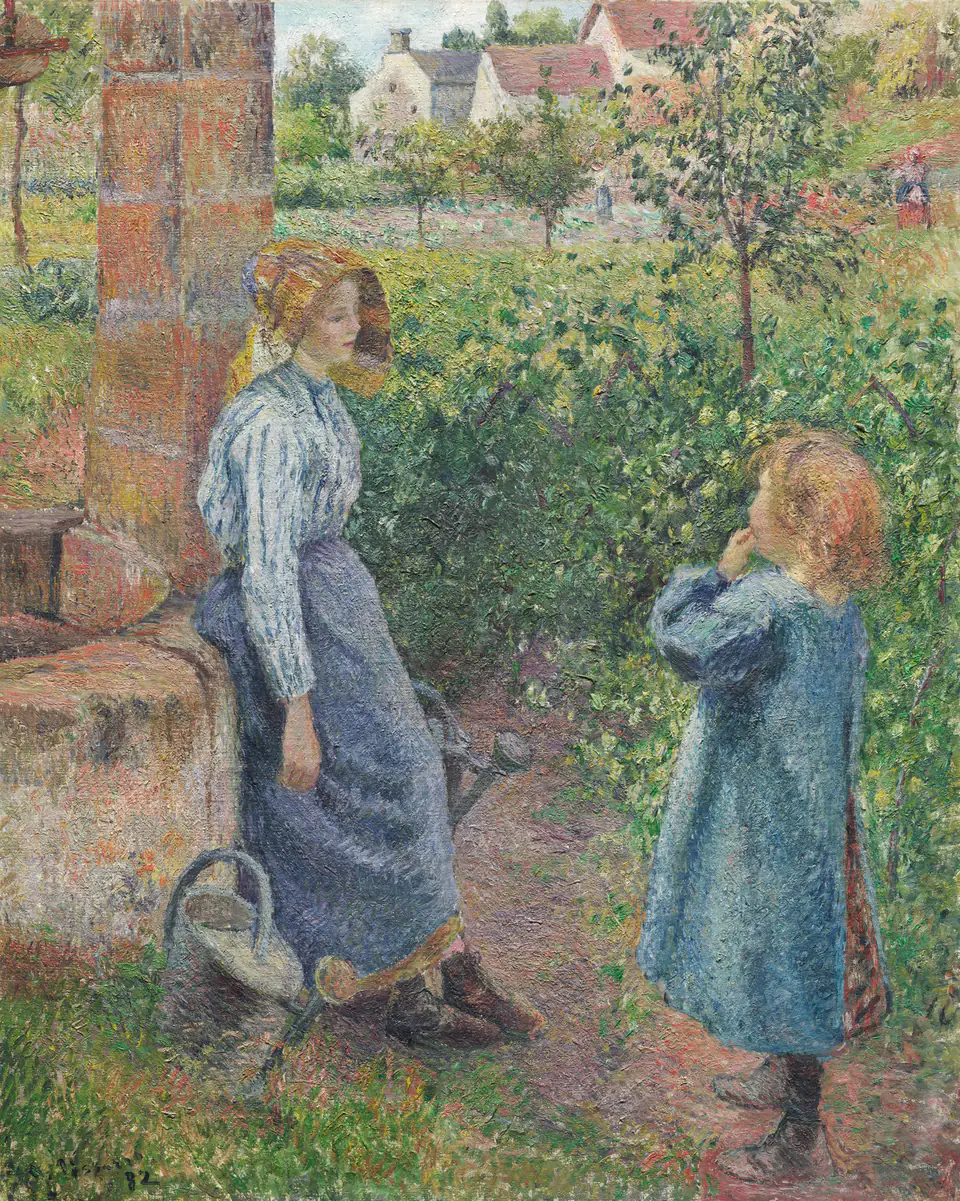
Woman and Child at the Well
1882 · Art Institute of Chicago · 1922.436
CC0 Public Domain Designation
Resized to 960 pixels wide and converted to WebP; no crop.

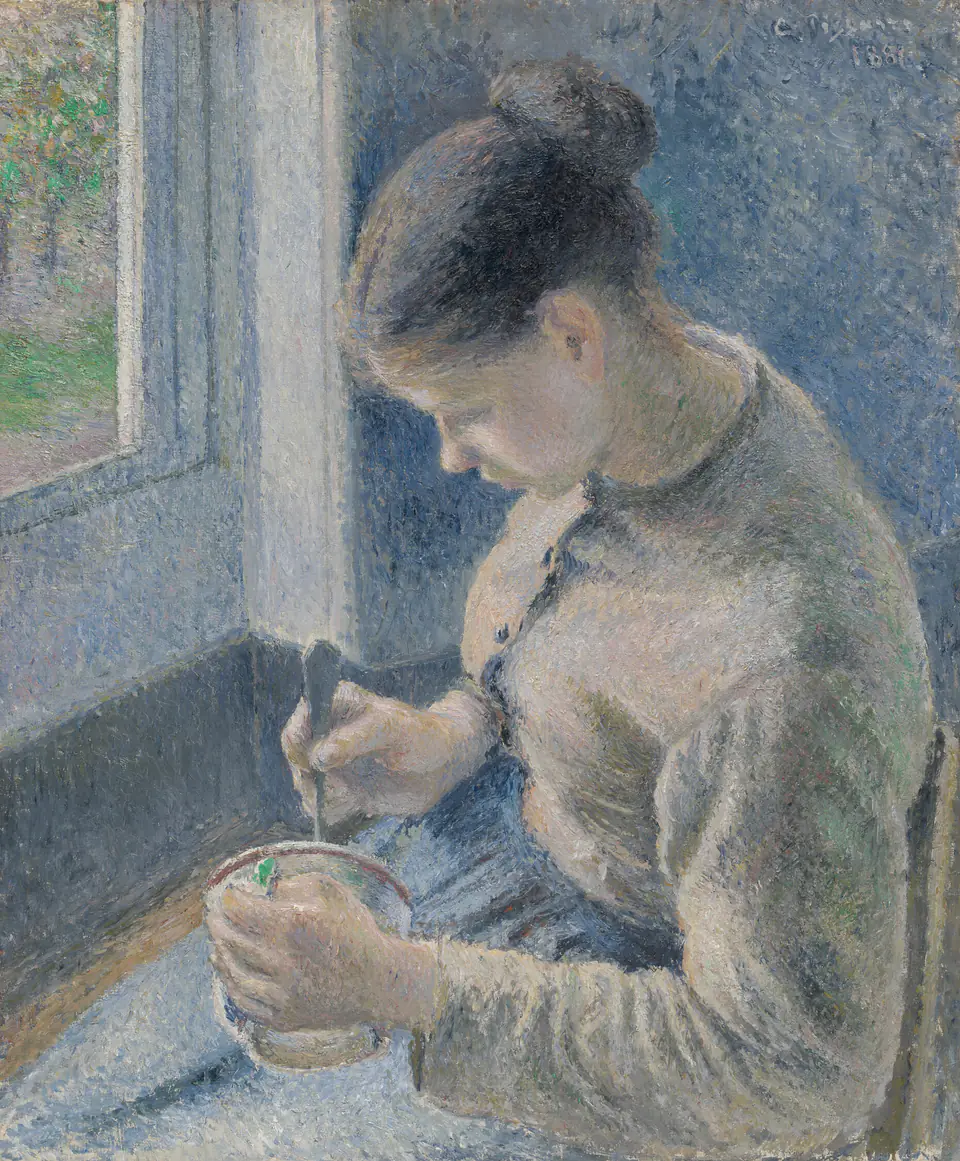
Young Peasant Having Her Coffee
1881 · Art Institute of Chicago · 1922.433
CC0 Public Domain Designation
Resized to 960 pixels wide and converted to WebP; no crop.

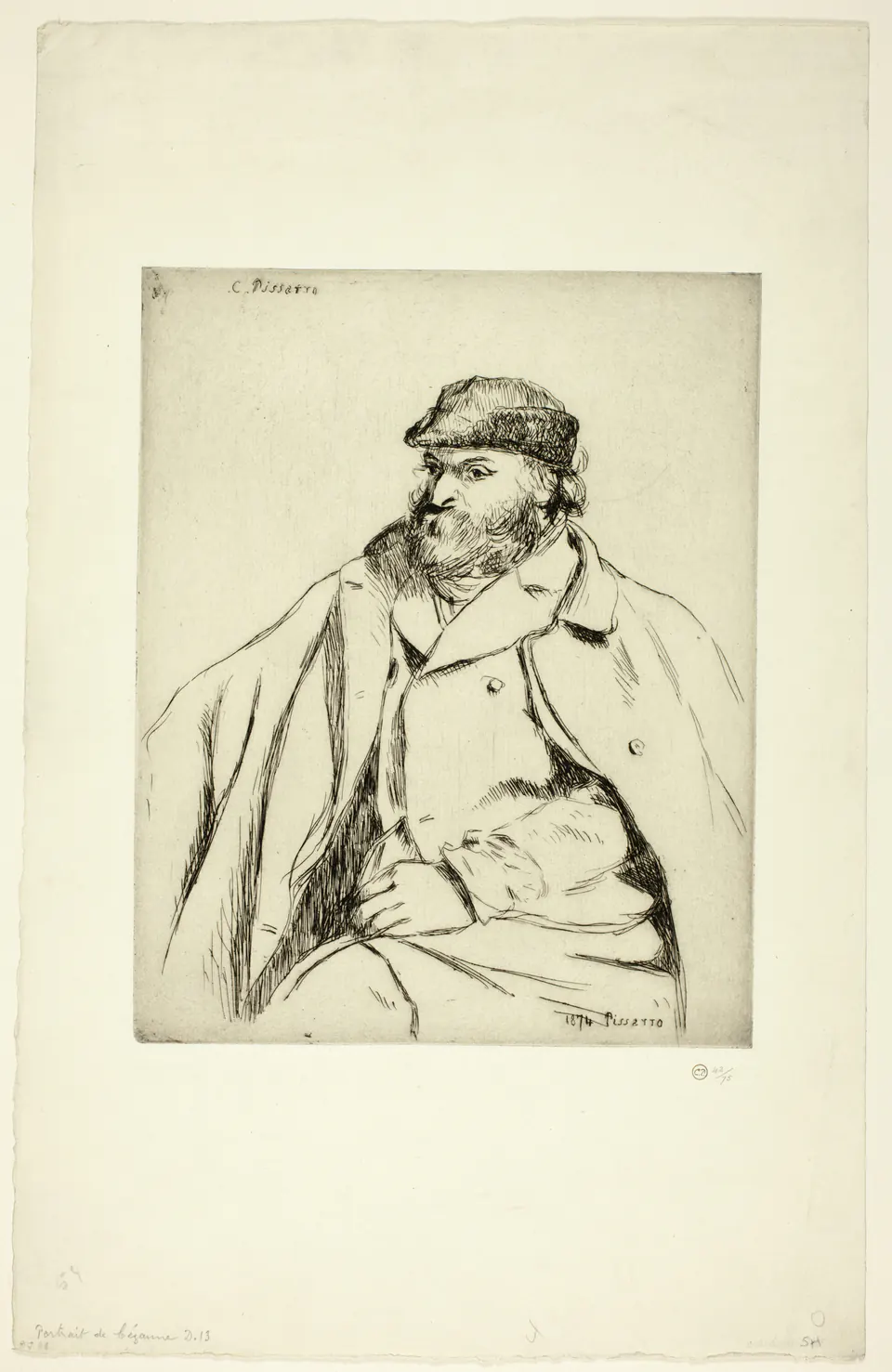
Paul Cézanne
1874, printed 1920 · Art Institute of Chicago · 1946.442
CC0 Public Domain Designation
Resized to 960 pixels wide and converted to WebP; no crop.

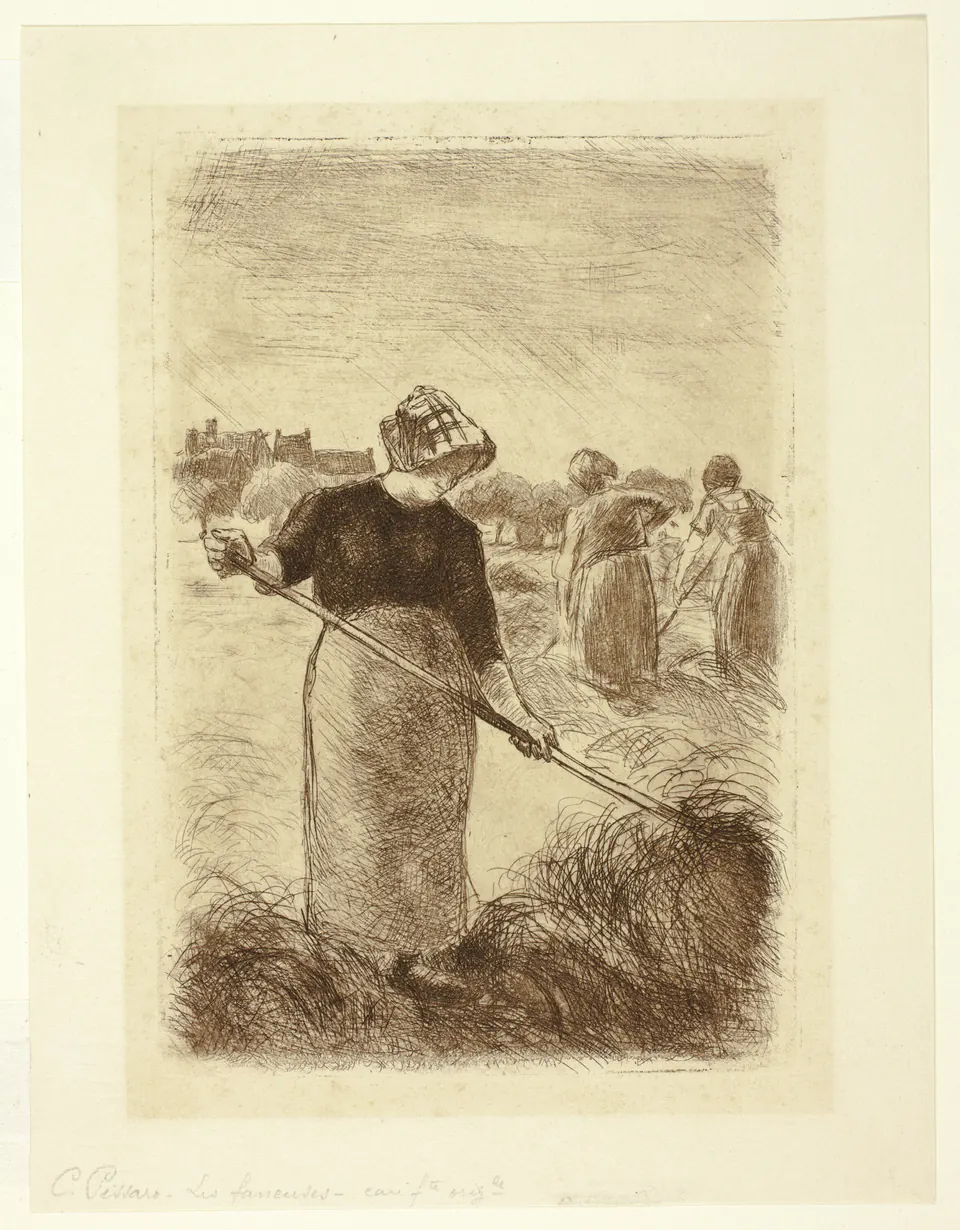
Women Tossing the Hay
1890, printed 1906 · Art Institute of Chicago · 1968.87
CC0 Public Domain Designation
Resized to 960 pixels wide and converted to WebP; no crop.

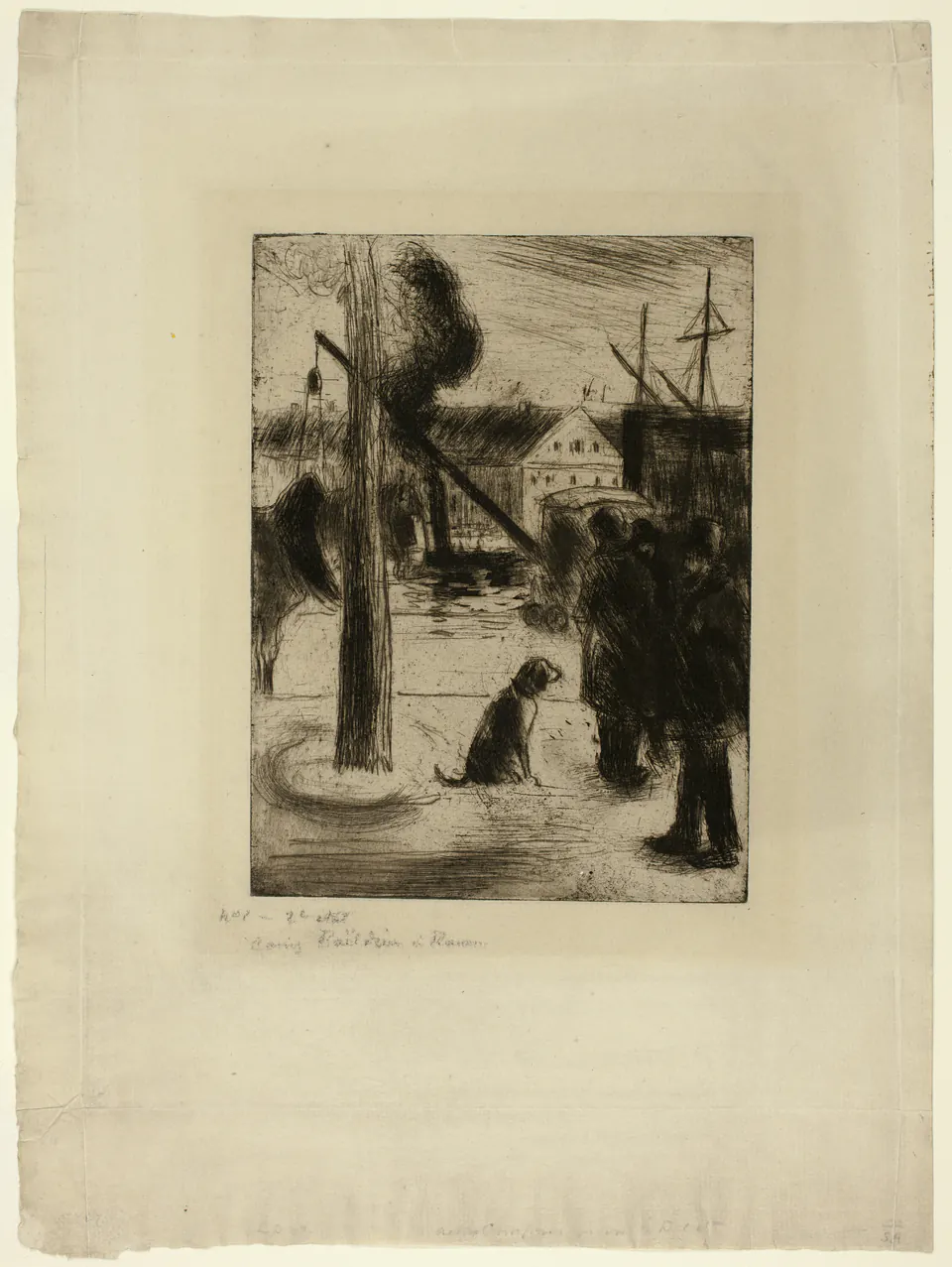
Promenade à Rouen: Cours Boieldieu
1884/96, printed 1896 · Art Institute of Chicago · 1982.48
CC0 Public Domain Designation
Resized to 960 pixels wide and converted to WebP; no crop.

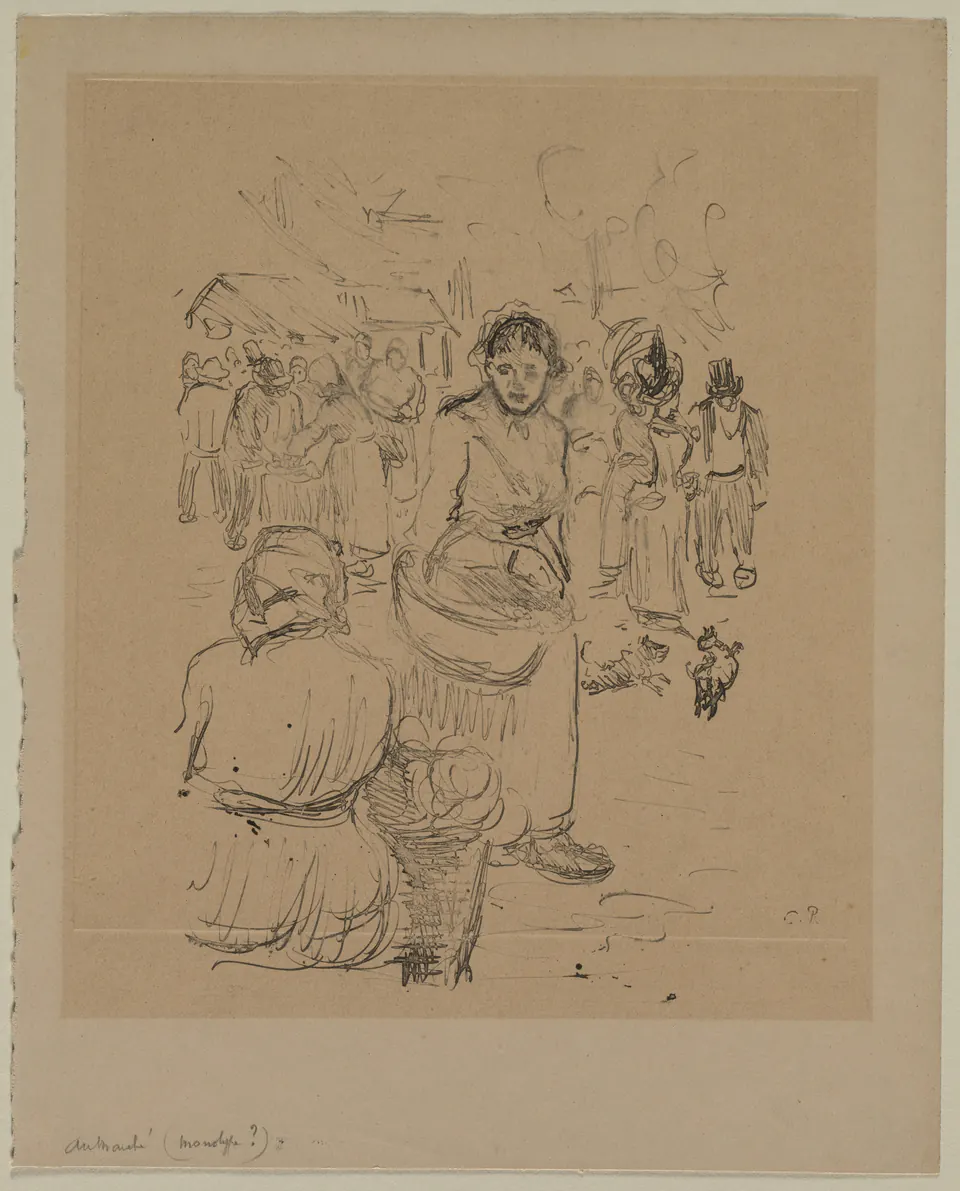
At the Market
late 1800s · Cleveland Museum of Art · 1925.1050
CC0 Public Domain Designation
Resized to 960 pixels wide and converted to WebP; no crop.
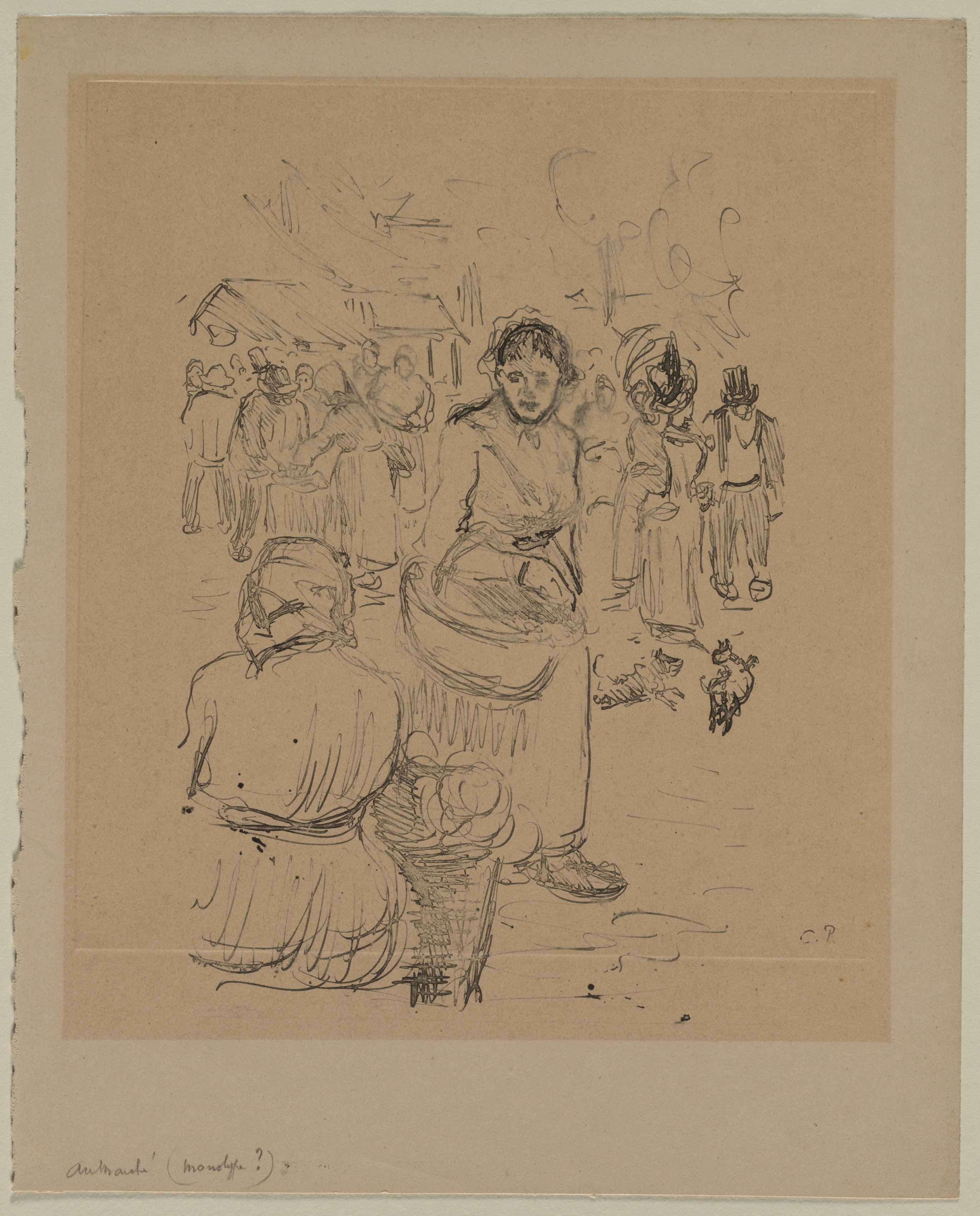
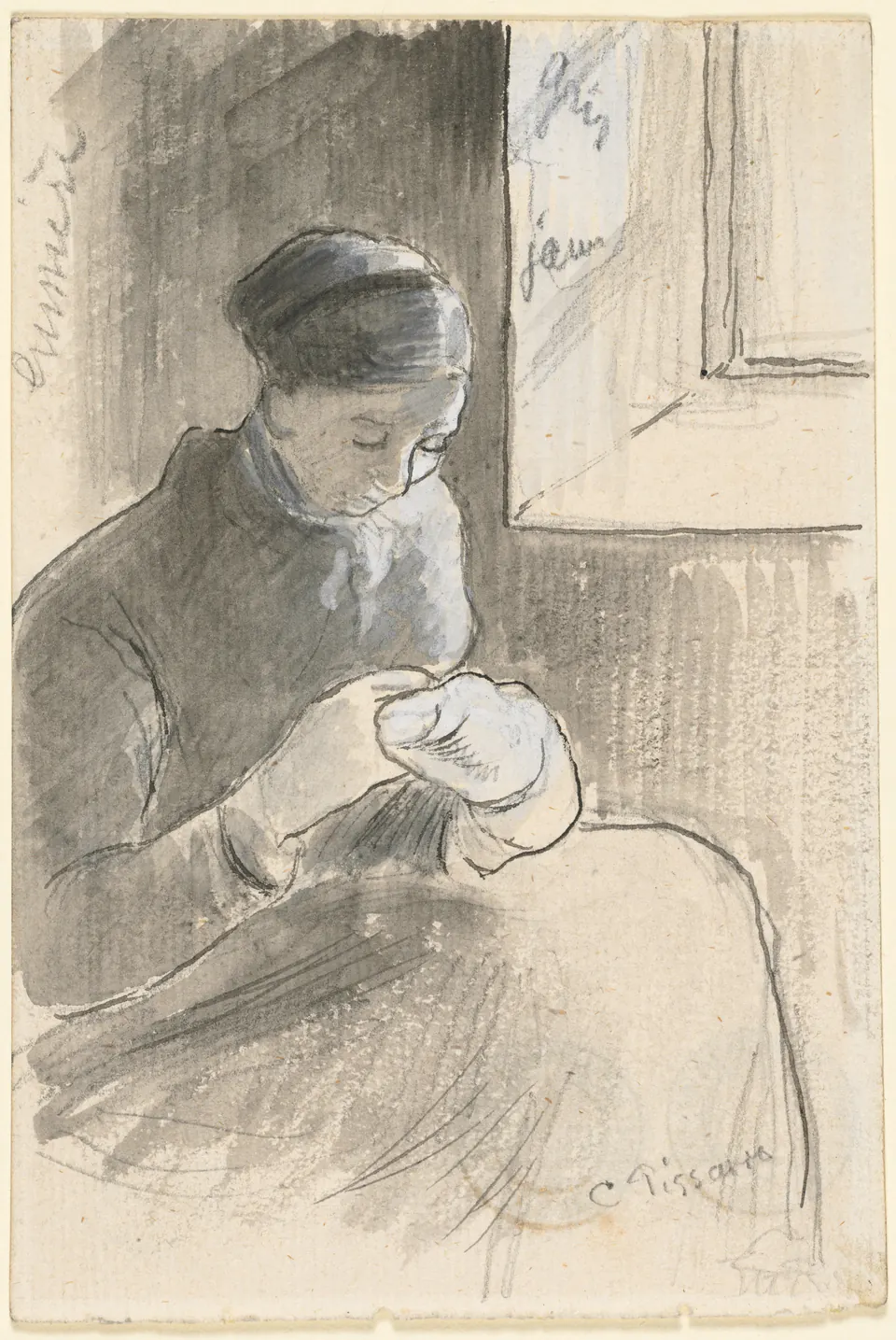
The Mender
c. 1881 · Cleveland Museum of Art · 1927.298
CC0 Public Domain Designation
Resized to 960 pixels wide and converted to WebP; no crop.
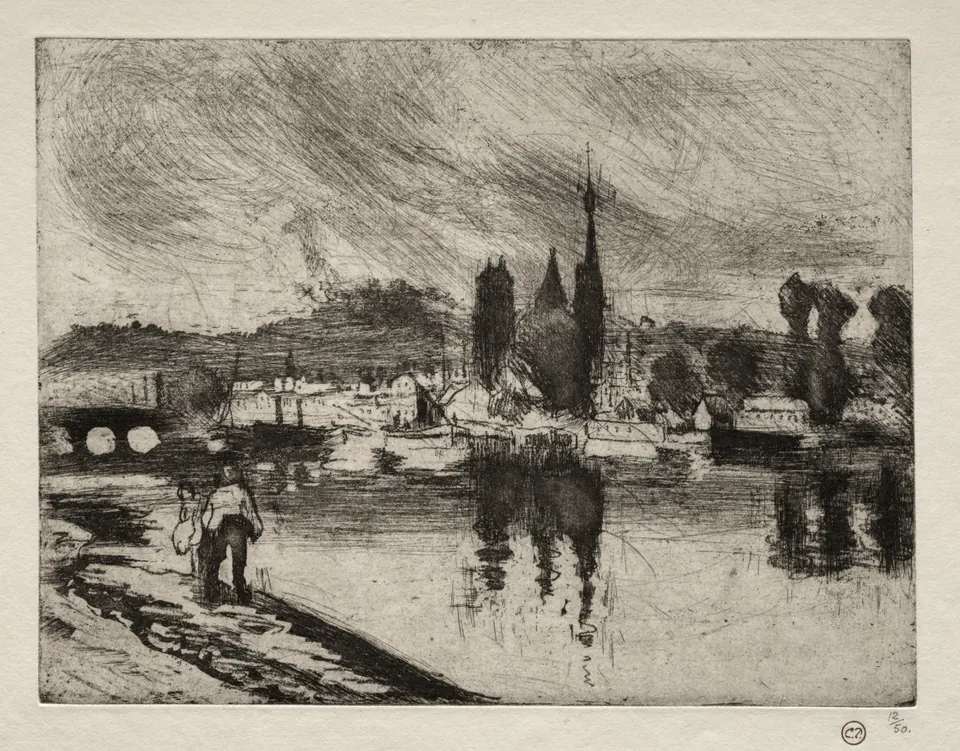
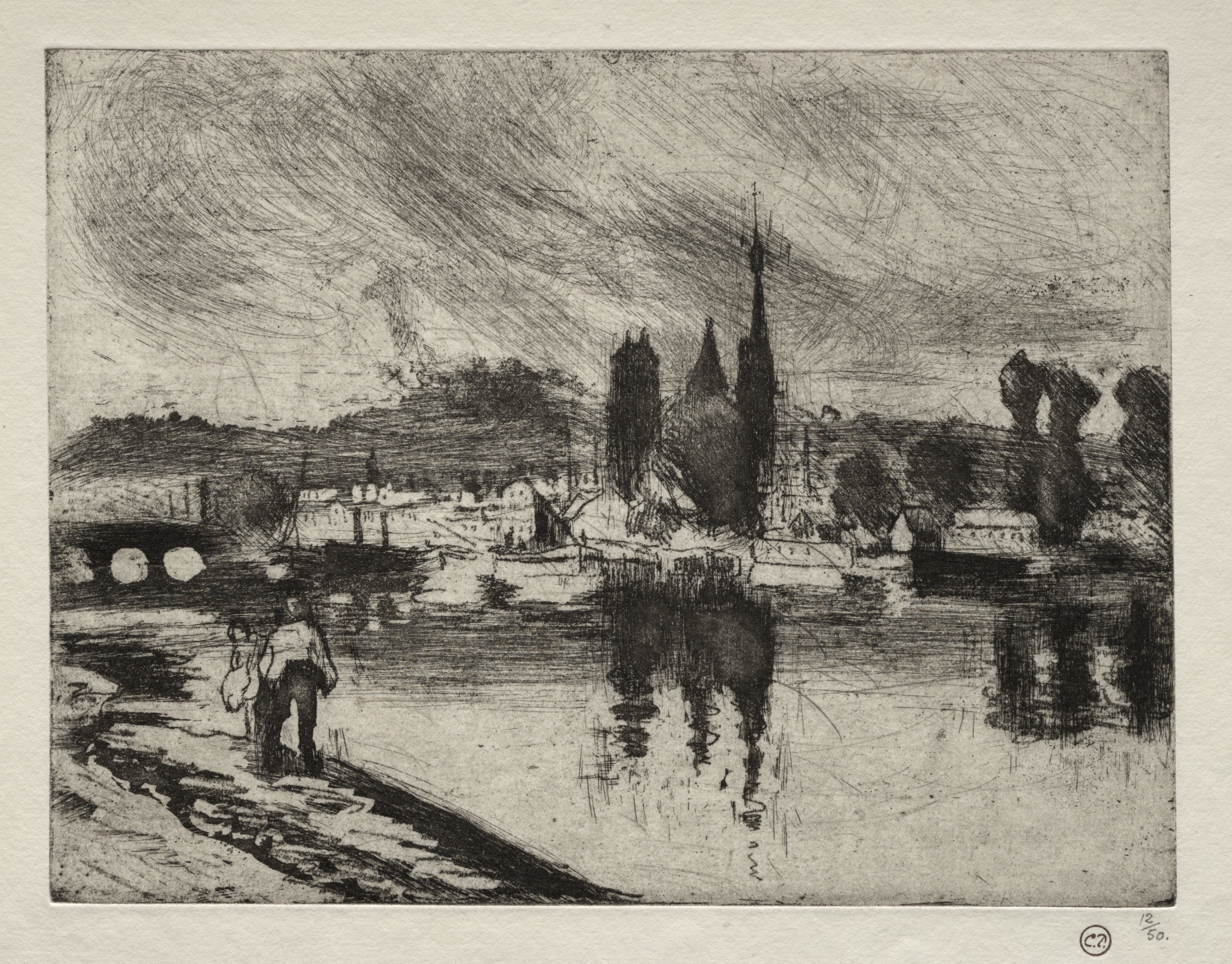
View of Rouen
1884 · Cleveland Museum of Art · 1950.164
CC0 Public Domain Designation
Resized to 960 pixels wide and converted to WebP; no crop.
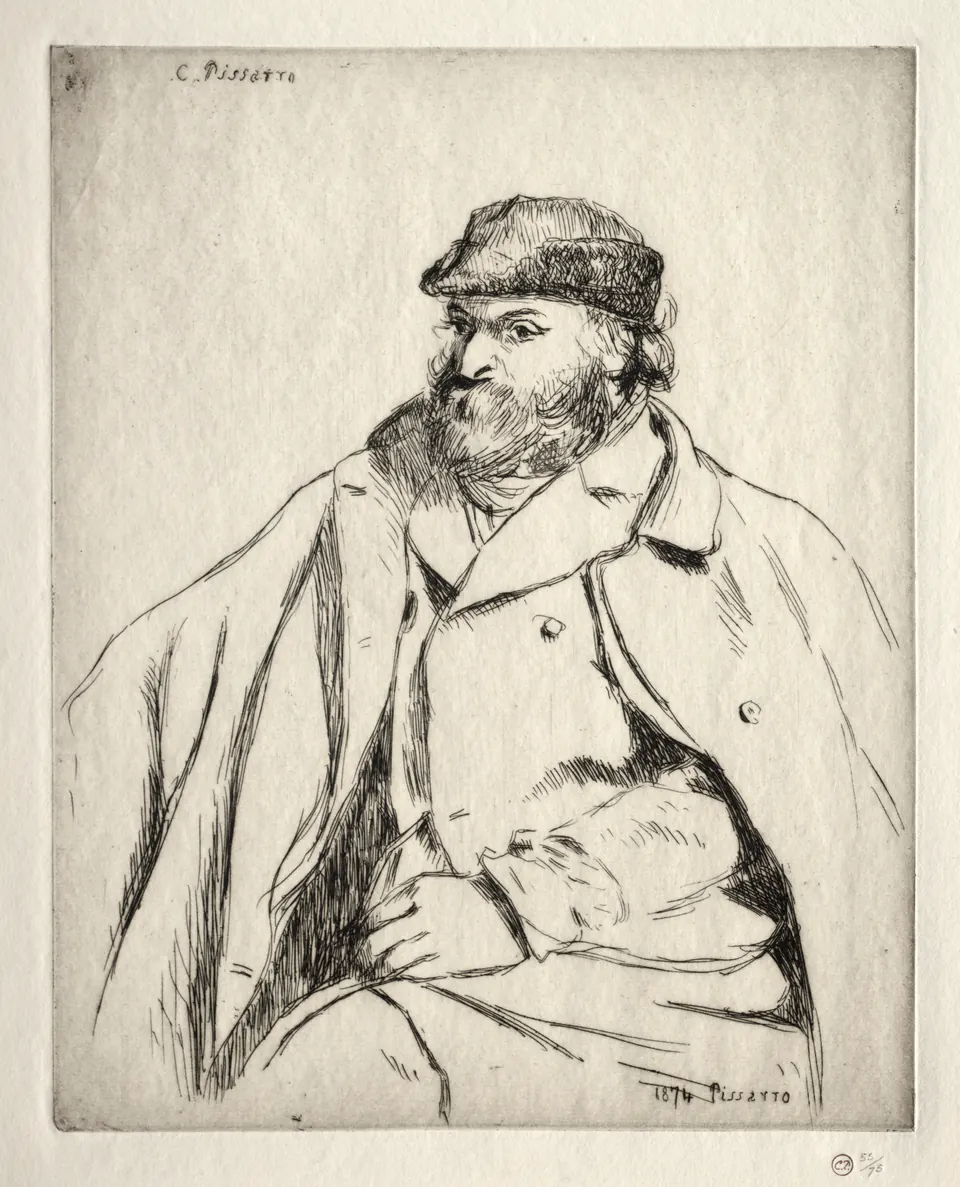
Portrait of Paul Cézanne
1874 · Cleveland Museum of Art · 1956.645
CC0 Public Domain Designation
Resized to 960 pixels wide and converted to WebP; no crop.
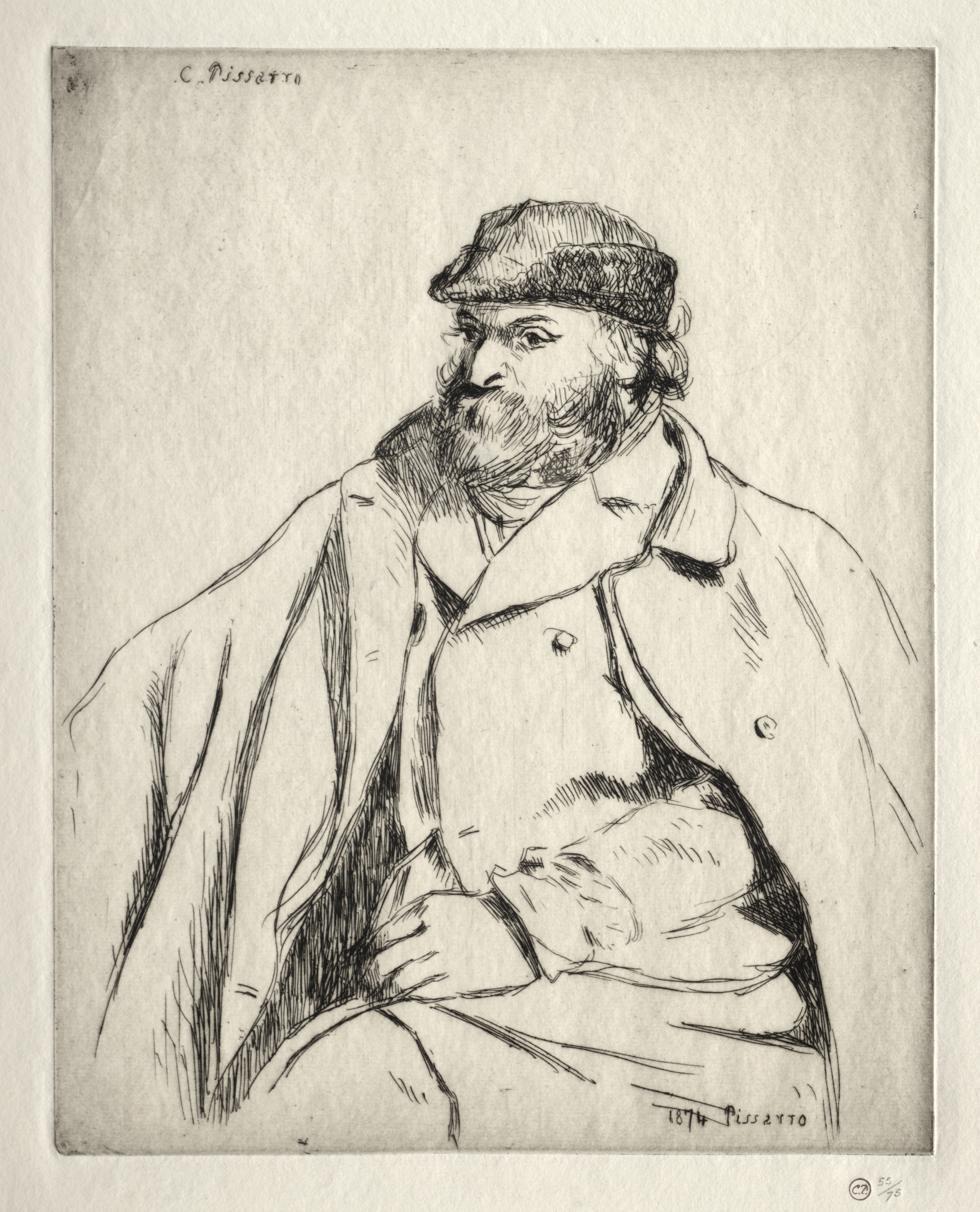
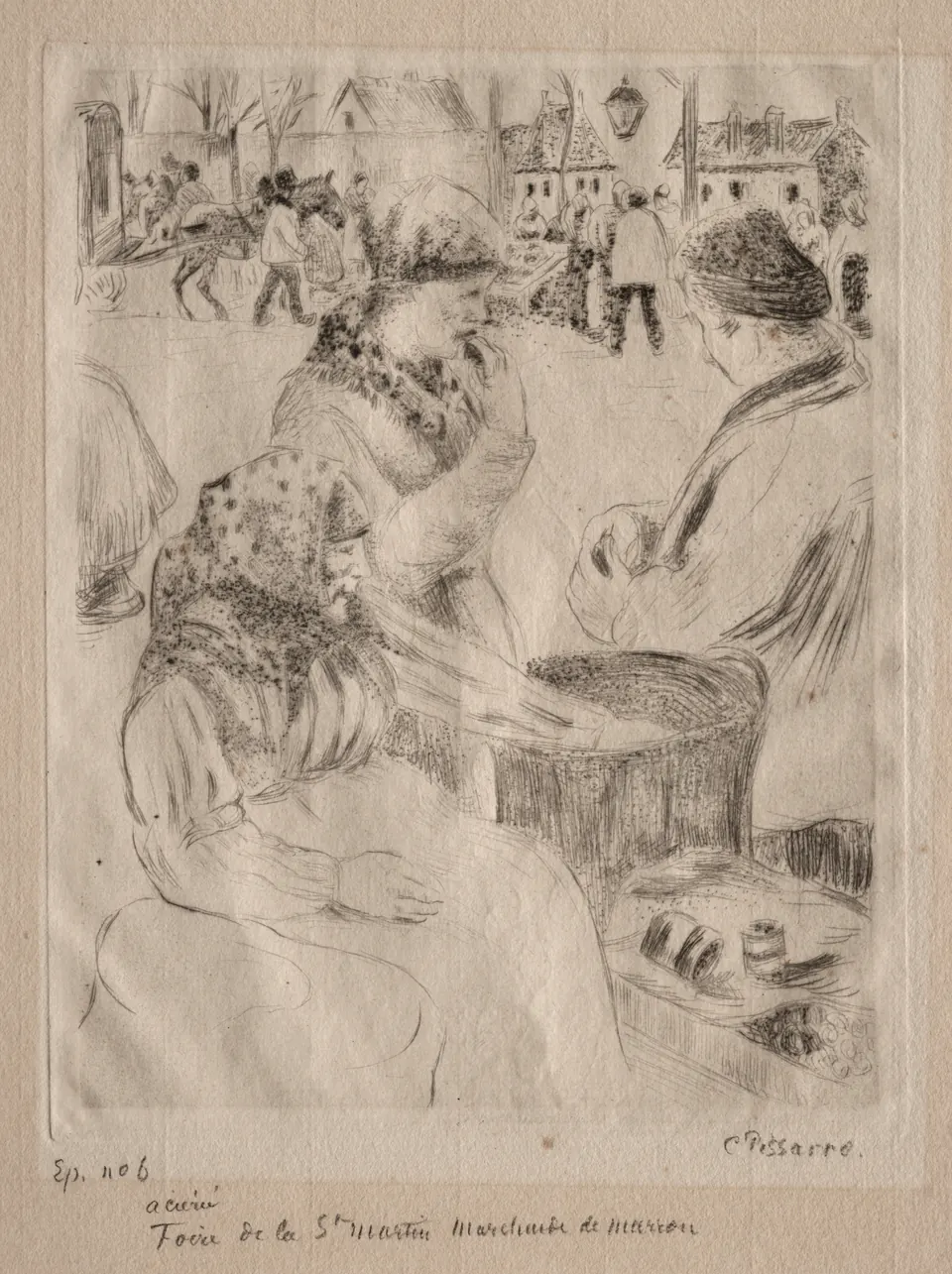
Chestnut Vendor, St. Martin's Day Fair (Pontoise)
1878 · Cleveland Museum of Art · 1956.646
CC0 Public Domain Designation
Resized to 960 pixels wide and converted to WebP; no crop.
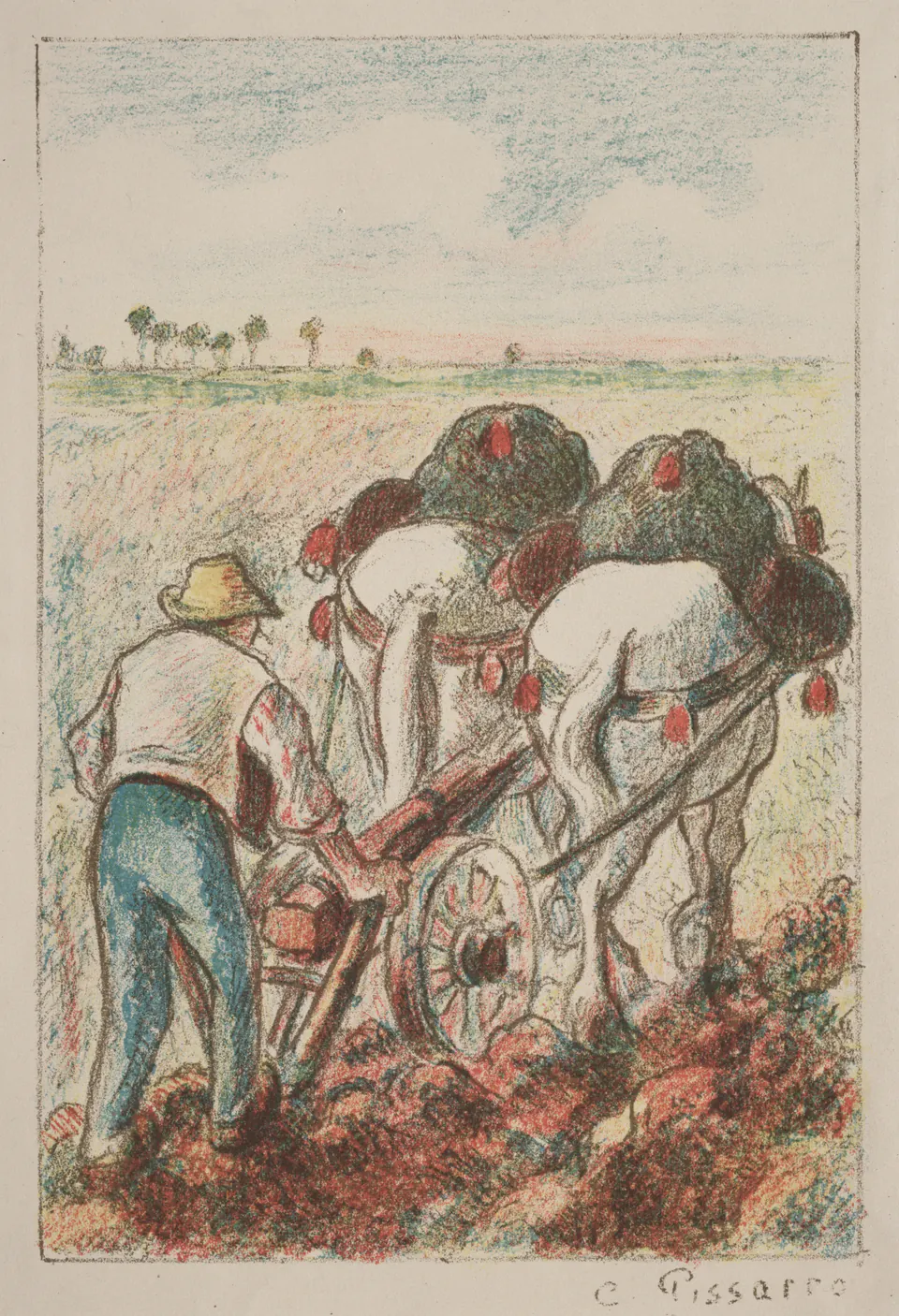
The Plow
1901 · Cleveland Museum of Art · 1962.105
CC0 Public Domain Designation
Resized to 960 pixels wide and converted to WebP; no crop.
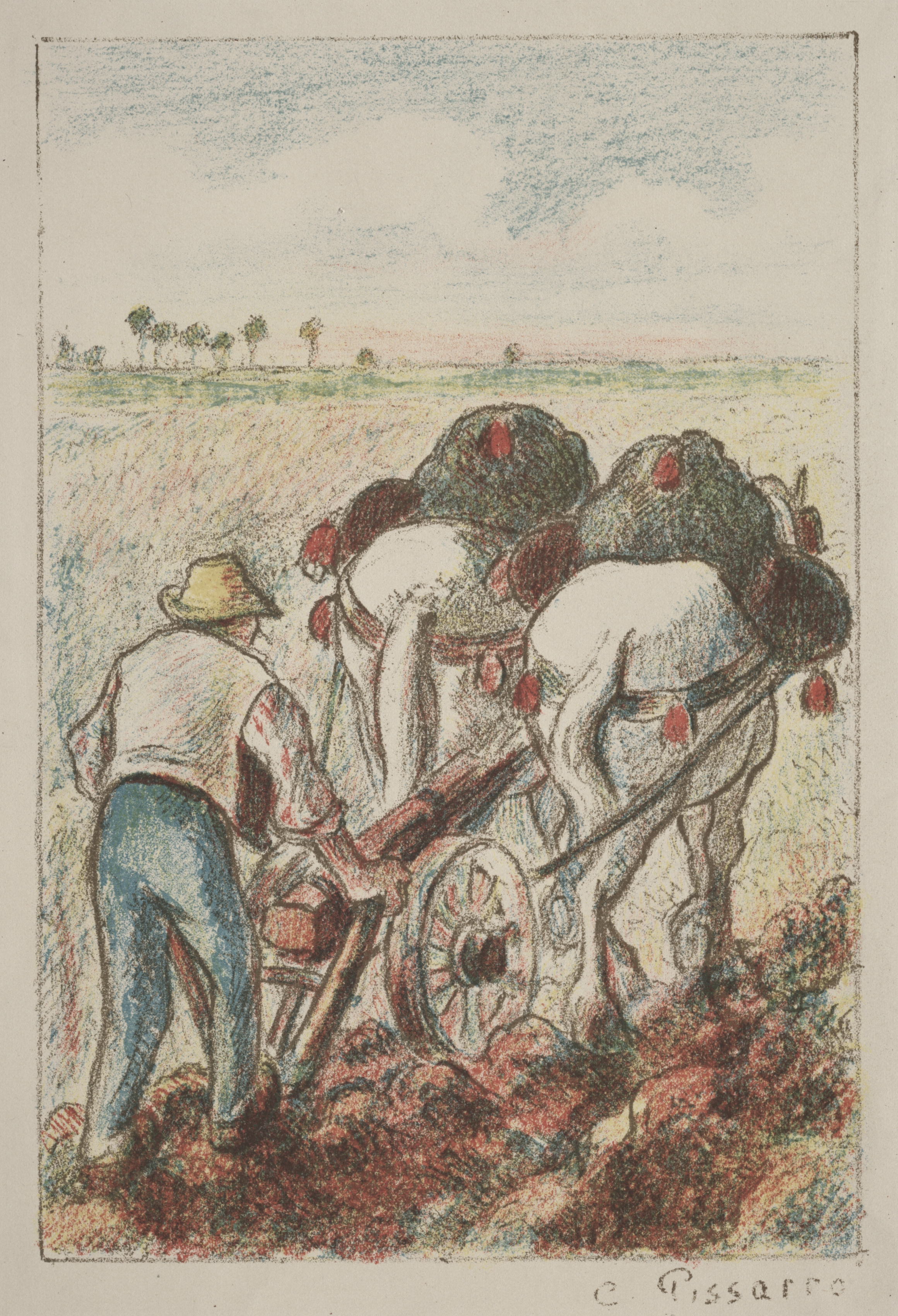
Sources and review method
We checked the artist chronology against museum records, treated each named jurisdiction separately, and recorded the provider policy for the image set. These sources support the legal framework and artist dates used above; the source file for any individual image still needs its own record.
- The Place du Havre, Paris — Art Institute of Chicago. Feature identity, accession, 1893 and 1894 sale history, early catalogue records, and CC0 file status.
- Open Access Images — Art Institute of Chicago. Files labelled CC0 Public Domain Designation may be reused for commercial and non-commercial purposes.
- The Mender — Cleveland Museum of Art. Drawing identity, dealer-to-museum transfer by 1927, accession, medium, and CC0 file status.
- At the Market — Cleveland Museum of Art. Monotype identity, pre-1931 accession, technique, and CC0 file status.
- Open Access — Cleveland Museum of Art. Cleveland releases eligible collection images and metadata under CC0 for commercial and non-commercial reuse.
- Directive 2006/116/EC, Article 1 — EUR-Lex. The EU term for an artistic work is the author’s life plus 70 years.
- How long copyright lasts — UK Government. UK guidance gives 70 years after the author’s death for artistic works.
- Law No. 5846 on Intellectual and Artistic Works, Article 27 — WIPO Lex. The Turkish economic-rights term is the author’s life plus 70 years.
- Circular 15A: Duration of Copyright — U.S. Copyright Office. The 2026 term table places works published before 1931 outside the maximum 95-year publication term.
- Certain Unpublished, Unregistered Works Enter Public Domain — U.S. Copyright Office. Older unpublished works have a separate U.S. term analysis; discovery and first-publication history can matter.
- 17 U.S.C. Chapter 3, including §303 — U.S. Copyright Office. Section 303 states the transition rules and minimum 2002 or 2047 expiry floors for works that were unpublished on 1 January 1978.
- Visual Artists: Publication — U.S. Copyright Office. Distribution can publish a visual artwork, while public display by itself does not establish publication.
- Compendium of U.S. Copyright Office Practices, Chapter 900, §909.3(A) — U.S. Copyright Office. A purely faithful scan or “slavish copy” does not add registrable authorship, while substantial restoration or alteration can require a separate analysis.
- Copyright notice: digital images, photographs and the internet — UK Intellectual Property Office. A digital image can require a separate rights and website-terms check even when its subject is old.
Editorial record
About this article
- Author
- Publisher
- GeMarkt
- Published
- Reviewed
- Internal source & rights check. Conducted by GeMarkt Research Review. This is an internal editorial check—not independent peer review.
- Source standard
- Rights guide source standardSeparates the underlying work from the source file, records the review date, and links the evidence used for the conclusion.
Found a claim that needs checking? Report a factual error.