GeMarkt Journal · Practical guide
Is John James Audubon Public Domain? Birds of America, Plates, and Image Files
Audubon is public domain in the markets checked here, but design, engraver, edition, impression, bird name, and digital file need separate evidence.
Rights check · reviewed
The short answer
Yes—for John James Audubon’s established works and the 12 documented Birds of America impressions in the European Union, United Kingdom, Türkiye, and United States. The original design, Havell engraving and printing, hand-coloured impression, edition, physical sheet, and exact digital file remain separate evidence layers.
| What is being checked | Result | Why |
|---|---|---|
| European Union, United Kingdom & Türkiye | Public domain | John James Audubon died in 1851 and Robert Havell Jr. in 1878, both beyond ordinary life-plus-70 economic-rights terms for the established work documented here. |
| United States — named published set | Clear for the documented folio impressions | The selected plates belong to the double-elephant folio published from 1827 to 1838; a private watercolour or manuscript still needs its own §303 chronology. |
| Design, plate, edition, impression & colour | Name the makers and material object | Audubon’s design, Havell’s etching, aquatint and engraving, workshop hand-colouring, one plate state, and one physical impression should not collapse into “an Audubon image.” |
| Facsimile, restoration or digital file | Audit modern production | A public-domain plate does not automatically clear a later octavo page, facsimile, restored composite, colour reconstruction, hosted scan, logo, or endorsement claim. |
This guide clears a named AIC and Met set from the 1827–38 double-elephant folio and answers Birds of America exact intent inside the artist-level canonical. It excludes unidentified editions, later octavo or facsimile pages, private watercolours without a U.S. publication chronology, modern restorations, and unverified marketplace files.
This is a documented research summary, not legal advice. Copyright and moral-rights rules can vary by country and by the history of a particular work.

What we’ll look at
When can an Audubon bird image be reused, and why do the design, Havell engraving, edition, plate, hand-coloured impression, bird name, and exact digital file need separate records?
The useful answer is yes for John James Audubon’s established artworks and for the 12 institutional impressions documented here—but not automatically for every book, plate, print, facsimile, restoration, or file carrying his name. Audubon died in 1851. Robert Havell Jr., whose etched, aquatinted, engraved, printed, and supervised production work is inseparable from the first folio, died in 1878. Their established work is public domain in the European Union, United Kingdom, and Türkiye. The selected plates were published between 1827 and 1838, supporting the same result in the United States.
The familiar shorthand “an Audubon print” hides a production chain. Audubon supplied watercolour designs. William Home Lizars began the engraving project; Robert Havell Sr. and Robert Havell Jr. continued it, with Havell Jr. directing the work to completion. Printers transferred designs through etching, aquatint, and engraving. Colourists finished impressions by hand. Subscribers received plates in groups before binding them. Later publishers reduced, rearranged, lithographed, restored, or reproduced the images in other editions.
This guide therefore asks:
- Is the underlying Audubon design outside copyright in the market being checked?
- Who made the plate, printed the impression, and supervised its hand-colouring?
- Which edition, plate number, state, sheet, and accession are being reproduced?
- Was that object published, and what does its U.S. chronology show?
- Which historical and current bird names belong to the record?
- Is the exact museum file affirmatively available for the intended reuse?
- Have crop, colour reconstruction, cleanup, compositing, typography, or generative editing added modern work?
It is a research summary, not legal advice. Its release boundary is the named institutional set, not Audubon’s fame or the age of the series alone.
The short answer is yes for the named set
The 12 records below come from the Art Institute of Chicago and The Metropolitan Museum of Art. Each connects one catalogued impression to one accession, one exact source image, one local derivative, and one provider statement. Five AIC files carry a CC0 Public Domain Designation. Seven Met files are marked Public Domain and supplied through Open Access.
The set is intentionally narrow. All 12 are associated with the large first-edition project commonly called the double-elephant folio of The Birds of America. It includes AIC impressions such as Harlequin Duck, Black Backed Gull, and Florida Jay, plus seven Met sheets whose records preserve both historical labels and current bird names.
The clearance does not automatically include:
- a watercolour treated as though its later print date proves the watercolour’s publication;
- an octavo-edition lithograph confused with a double-elephant-folio engraving;
- a posthumous impression without a plate, state, printer, and issue history;
- a modern facsimile, re-colouring, restoration, or composite file;
- a cropped marketplace image without an institutional object record;
- a current field-guide illustration, taxonomy, translation, caption, or editorial layout;
- a museum logo, trademark, endorsement claim, or physical-object permission.
The old design and the selected file remain separate evidence layers.
Life-plus-70 markets are clear
Audubon’s 1851 death is far beyond ordinary life-plus-70 terms. Havell Jr., the last-surviving principal historical maker named across this set, died in 1878. The European Union term directive, UK government guidance, and Article 27 of Türkiye’s Law No. 5846 support a public-domain conclusion for their established work.
| Market checked | Rule relevant here | Result for the named historical work |
|---|---|---|
| European Union | author’s life plus 70 years | public domain |
| United Kingdom | 70 years after the creator’s death | public domain |
| Türkiye | economic rights ordinarily last life plus 70 | public domain |
This is not a declaration that every object “by Audubon” is free worldwide. Attribution can change. A later contributor may have a different term. A current edition can add protected text, layout, taxonomy, retouching, or illustrations. Ownership of a folio does not itself grant copyright, and public-domain status does not license an institution’s branding.
The careful claim is stronger because it is narrower: the named Audubon–Havell work documented here is outside ordinary economic copyright terms in the three life-plus-70 markets checked.
The US answer follows publication history
United States duration analysis depends heavily on publication. In 2026, the Copyright Office duration table places works published before 1 January 1931 beyond the maximum 95-year publication term. The double-elephant folio was published in Britain by subscription from 1827 to 1838. Its 435 hand-coloured plates were issued in groups and later bound. The selected impressions sit within that documented publication history.
That route is not transferable to every related object. Audubon’s private watercolours preceded the prints. A sheet may have been retained, sold, exhibited, or distributed at a different time. Public display alone does not establish U.S. publication. A newly identified drawing or manuscript first made public in the twentieth century needs its own facts under 17 U.S.C. §303.
Use this split:
- Named 1827–38 folio impression: the publication route is clear.
- Audubon source watercolour: establish its own distribution and publication history.
- Copper plate or trial proof: identify state, custody, distribution, and later printing.
- 1840–44 octavo edition: record the new edition, smaller format, lithographic production, and publisher.
- Later facsimile or restoration: check modern authorship and the exact supplied file.
For foreign works, restoration rules can complicate the historical route. They do not justify skipping the source-country term, maker dates, or publication facts. The release conclusion here rests on the documented nineteenth-century publication and the long-expired terms of the named historical makers.
The Birds of America is not one file or one edition
The Birds of America can name an artistic project, a publication, a set of plates, a bound copy, or one of several later editions. Those are not interchangeable.
The first edition used sheets large enough to show many birds at life size. Subscribers received groups of plates over more than a decade. Copies were then bound, sometimes later rebound, disbound, trimmed, conserved, or dispersed. Even two impressions pulled from the same copper plate can differ in paper, watermark, ink, hand-colouring, condition, margins, and subsequent treatment.
The first octavo edition, begun in the United States in 1840, reduced the images, joined plates and text in a more affordable format, and used lithographic production. Later chromolithographs, photomechanical reproductions, digital facsimiles, and decorative adaptations introduce further layers. A search result labelled only “Birds of America” may show any of them.
A reliable record should preserve:
- Edition: double-elephant folio, first octavo, or a named later edition.
- Plate: number, title, historical scientific name, and current name where the institution supplies one.
- Makers: Audubon, engraver/etcher, printer, publisher, and known colour-production roles.
- Impression: paper, watermark, margins, colour, state, condition, and accession.
- Binding context: bound volume, disbound sheet, or separately acquired impression.
- File: institution, source URL, rights statement, dimensions, and checksum.
- Derivative: crop, resize, colour work, repair, text removal, compositing, or generative additions.
“The original” is too vague for a publication made from hundreds of plates and surviving in many material configurations.
Audubon designed and Havell made the print
Museum records often identify the large folio sheets as “Robert Havell after John James Audubon.” That wording is not a downgrade of Audubon; it is a precise account of printmaking.
Audubon’s watercolours supplied the compositions. Translating them to copper required decisions about line, tone, aquatint grain, scale, lettering, and printable colour boundaries. The plate then produced an inked impression, which was hand-coloured according to a controlled production process. The finished sheet is neither the source watercolour nor a neutral photocopy of it.
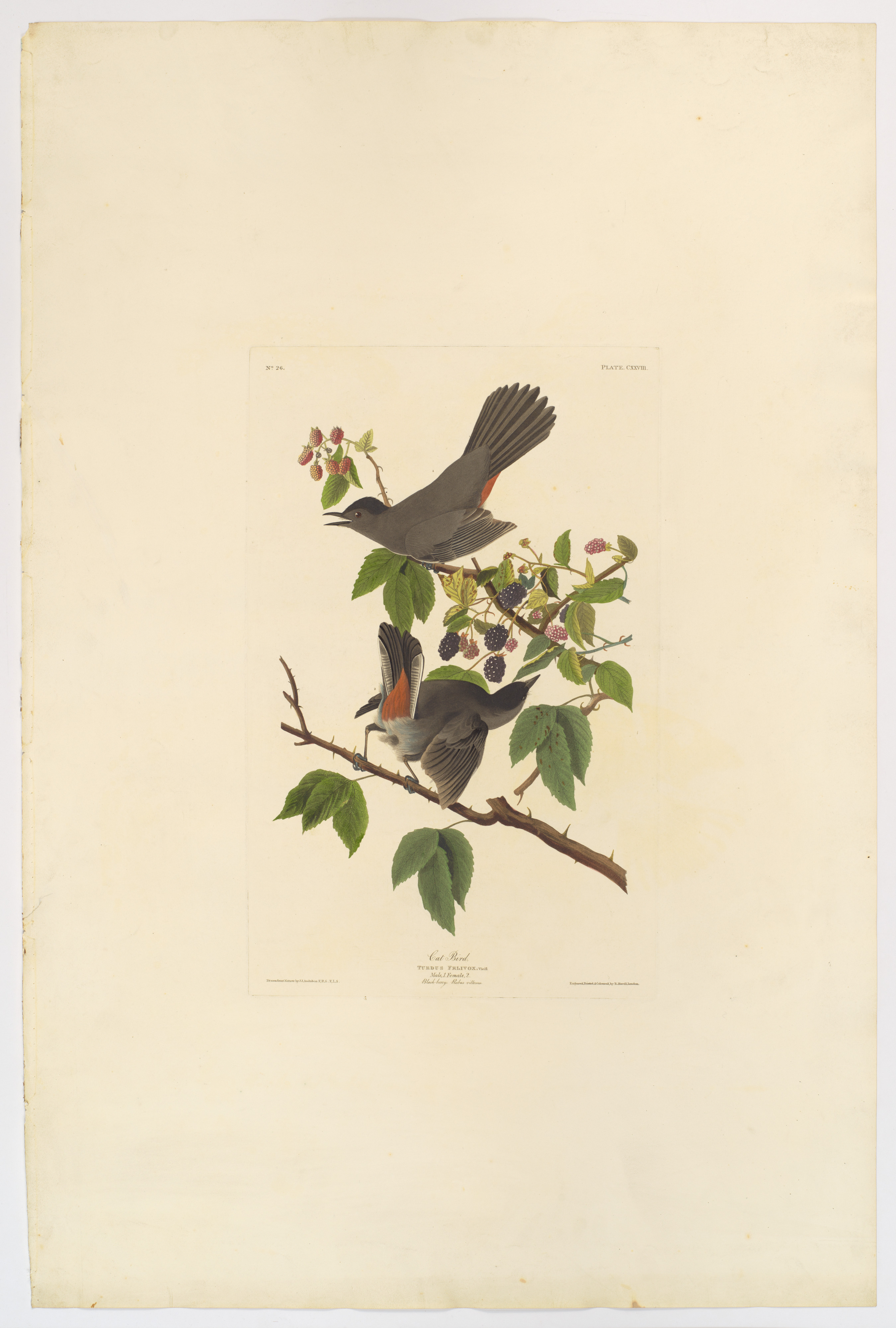
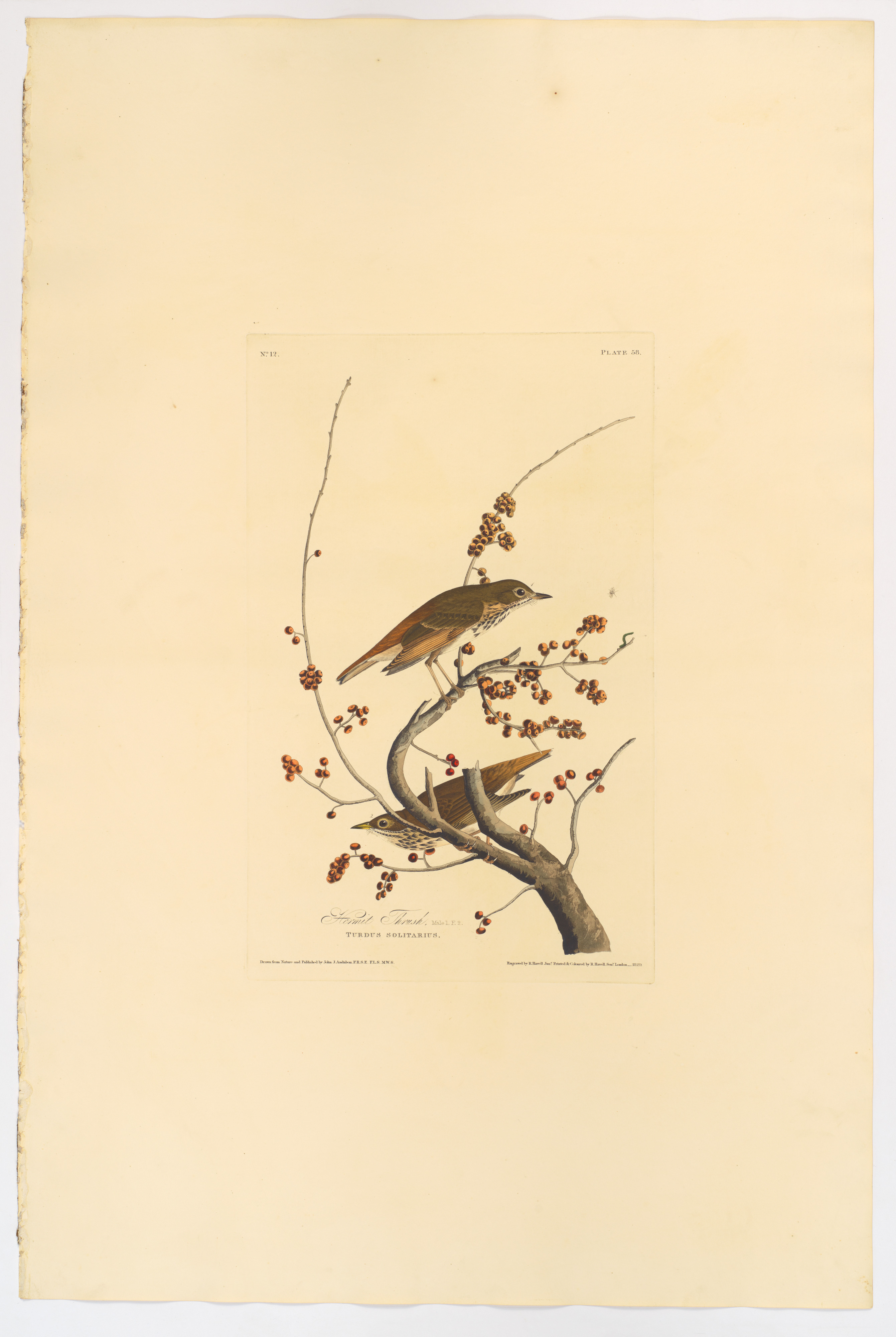
The Met’s records make the roles visible. Cat Bird names Audubon as the artist after whom the work was made, Robert Havell Jr. as etcher, aquatinter, and printer, and Audubon as publisher. Hermit Thrush names Havell Jr. as etcher and Robert Havell Sr. as printer. Some early sheets name R. Havell & Son. The AIC records used here credit Robert Havell after Audubon.
Credits should follow the object record. Depending on the sheet, a responsible caption may read:
Robert Havell Jr. after John James Audubon, Hermit Thrush, 1829, hand-coloured etching, aquatint, and engraving, The Metropolitan Museum of Art, 2024.587.8.
Calling every sheet simply “by Audubon” erases the material labour that made the published image. It can also lead a user to cite the wrong work date, medium, and file.
Is The Birds of America public domain
Yes for the nineteenth-century double-elephant-folio designs and plates and for the 12 exact institutional impressions and files documented here in the checked markets. The publication ran from 1827 to 1838. Audubon and the Havells died long ago. AIC and The Met provide the selected files under affirmative public-domain/open-access statements.
That answer does not flatten the title into a universal download licence. The question must still identify:
- which edition and publisher;
- which plate and impression;
- which makers and production roles;
- whether a modern text, taxonomy, layout, restoration, or facsimile was copied;
- which exact file and provider statement apply.
The exact-intent answer belongs inside this general guide at first release. A separate /blog/birds-of-america-public-domain-guide/ would repeat the same term, edition, plate, impression, and file analysis unless reader evidence later shows a distinct task that warrants a deeper edition-by-edition guide.
Plate numbers margins colour and names identify an impression
Plate numbers are evidence. The Met’s Hermit Thrush is a first variant numbered 58 before the number changed to LVIII. Its record also notes that the sheet retains original margins, unlike many impressions trimmed after sets were divided. Those facts distinguish the object from another print of the same composition.
Colour is evidence too. Hand-colouring can vary among impressions. Paper tone, faded pigments, conservation history, and photography alter the screen image. A modern user who replaces a yellowed ground, saturates plumage, repairs losses, or combines the “best” areas from several scans is no longer delivering one transparent institutional reproduction.
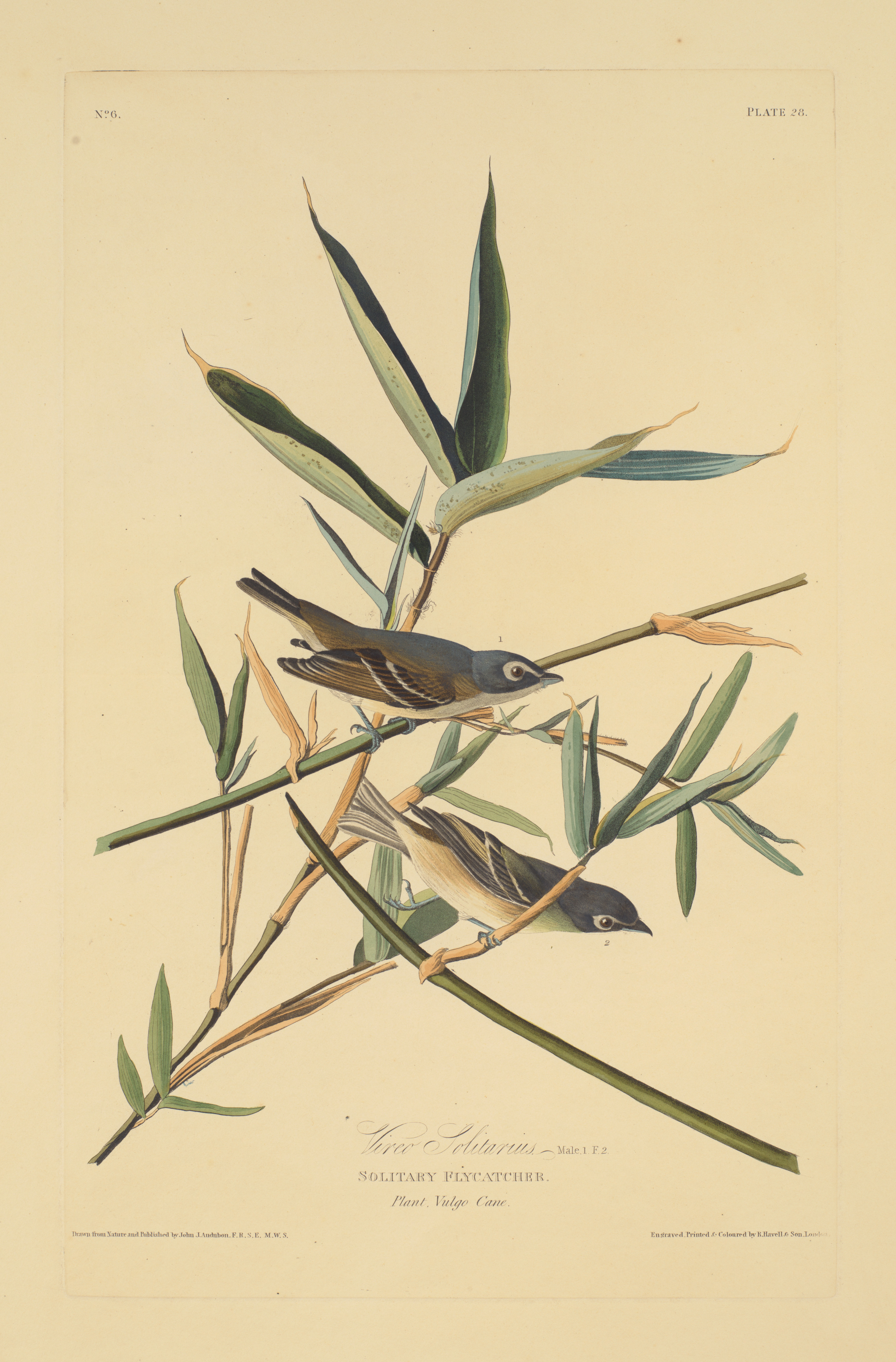
Bird names require care. Nineteenth-century English and scientific names can differ from current taxonomy. The Met preserves both in titles such as Solitary Flycatcher with the current name Blue-headed Vireo. A historical label should not silently replace a current identification, and a current label should not be presented as text printed on the original plate.
Record both when useful:
- transcription of the plate’s wording;
- institution’s current title and scientific-name note;
- plate number and variant;
- edition, date, makers, medium, and accession;
- full-sheet or cropped state;
- exact file and transformation history.
This is catalogue discipline, not clutter. It makes the image findable, comparable, and reusable without losing its material history.
Facsimiles restorations and digital files need new records
A modern facsimile may photograph one bound set, assemble plates from several owners, straighten every sheet, replace margins, remove foxing, neutralise paper, reconstruct colour, or reset titles. Some changes are mechanical. Others contain creative judgement or are governed by contract and platform terms.
The U.S. Copyright Office distinguishes faithful copying from sufficiently creative alteration. Other jurisdictions can analyse originality differently. The safest workflow does not guess from appearance. It records the old work and the supplied file separately.
Keep exact provenance:
- edition, plate, state, impression, makers, and accession;
- institution’s object page and item-level rights label;
- exact source-file URL, source dimensions, and acquisition date;
- local dimensions, checksum, and storage path;
- crop, resize, colour correction, stain removal, reconstruction, compositing, typography, or generative-edit history;
- the date on which provider terms were checked.
The feature source measured 3000 × 2023 pixels and 1,413,059 bytes at acquisition. GeMarkt resized it to 1584 × 1068 pixels, converted it to WebP, and did not crop it. Its local SHA-256 is 4a4f64f8c0404aafd4ad0ef100387c1de126adfd5f812d11386f64c955b9228b.
Rights clearance is not historical endorsement
Public-domain status is a copyright conclusion, not a moral endorsement of an artist or a promise that a historical catalogue is neutral. Audubon enslaved people and held racist views. The National Audubon Society now acknowledges that history directly. His project also emerged from practices of collecting, killing, naming, and classifying birds that deserve historical scrutiny rather than romantic shorthand.
Responsible reuse can hold two facts at once: The Birds of America is a major artistic and printmaking achievement, and its creator’s conduct and self-made mythology should not be sanitised. An institution’s open-access label permits reuse of a file; it does not require celebratory framing or prohibit critical context.
This distinction matters commercially. Product copy should not imply endorsement by a museum or conservation organisation. Historical bird names should not be used carelessly as modern scientific authority. A rights ledger can tell you whether a file is cleared; editorial judgement determines how honestly it is presented.
Twelve open files form the published set
Five impressions come from AIC and seven from The Met. The visible rights ledger below is the publication boundary. Every row connects a specific object, accession, exact source image, provider label, local file, dimensions, and transformation.
The set shows several rights-relevant patterns:
- AIC’s Harlequin Duck is a landscape-format full sheet, while most selected impressions are tall folio sheets.
- AIC credits Robert Havell after Audubon rather than collapsing both makers into one artist label.
- Met records preserve historical and current bird names together.
- Met accessions 2024.587.1–12 include plate-number variants and full-sheet evidence.
- Similar subjects do not merge edition, impression, accession, or file identity.
- The selected images are museum files, not downloads copied from a decorative-print seller.
None should be detached from its object record and treated as proof that another scan or edition is equally cleared.
A commercial reuse checklist
Before using an Audubon bird image in a print, book, textile, advertisement, or digital collection:
- Identify the object. Watercolour, copper plate, proof, folio impression, octavo lithograph, or facsimile?
- Check the intended market. Use a territorial rule rather than a worldwide slogan.
- Establish publication. Do not borrow the folio date for a private source drawing.
- Name the edition and plate. Preserve plate number, variant, publisher, and date.
- Credit the makers. Follow institutional roles for Audubon, Havell, printer, publisher, and colour production.
- Describe the impression. Record paper, margins, state, colour, binding context, condition, and accession.
- Handle names carefully. Separate printed historical labels from current taxonomy.
- Follow the exact file. Start with the provider object record, not a search engine or reseller.
- Audit modern work. Record crop, cleanup, colour, restoration, composite sources, typography, and generative edits.
- Avoid false endorsement. Do not use institutional or conservation branding to imply approval.
Recheck before release. Attribution, taxonomy, file availability, and provider policy can change even though the nineteenth-century makers’ own terms cannot return.
Where Audubon fits inside GeMarkt
The artwork research guide shows how to build an object record and source map. The guide to citing art and images adds captions, editions, maker roles, and file rights. Provenance, Attribution, Restitution explains why an object’s story changes when evidence changes. Public Domain Is Not a Free-for-All gives the neighbouring rule: an old work and a modern hosted file are not one question.
Future collection and wallpaper paths are reserved as /collections/john-james-audubon/ and /free/wallpapers/john-james-audubon/. They are not live product promises. They should open only after selected impressions have been processed, quality checked, and prepared for the actual format.
Until then, readers can consult GeMarkt’s copyright approach, browse existing free wallpapers, or visit the shop for work that genuinely exists today. Audubon’s name may lead the search query, but the reusable object is a collaboration among design, copperplate, press, hand-colouring, paper, surviving impression, museum record, and exact digital file.
Rights-checked image ledger
A documented starting set
These files were selected from the holding institutions rather than from search-result copies. Each card keeps the artwork record, exact source file, provider statement and GeMarkt transformation visible as separate facts.
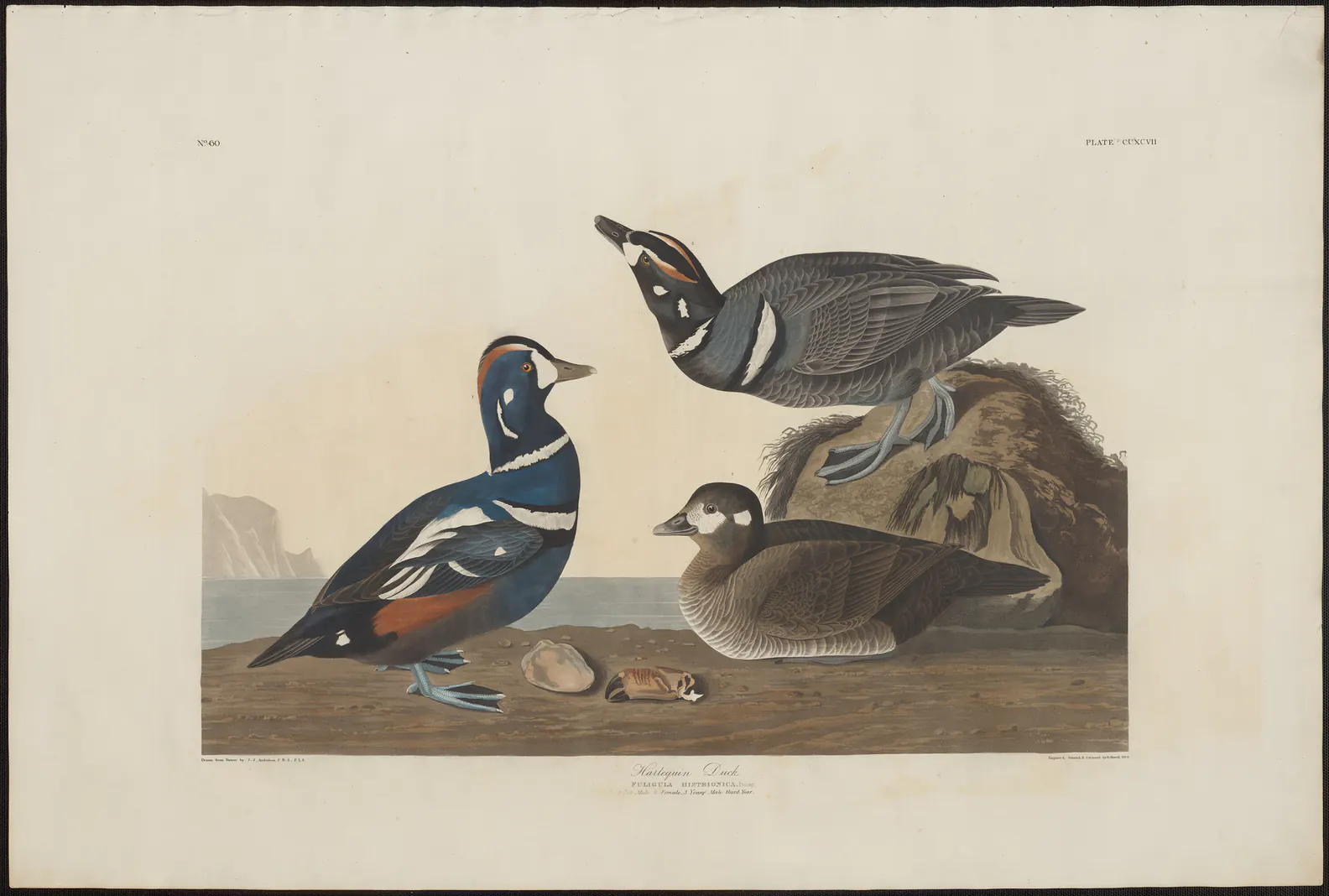
Harlequin Duck
1826/39 · Art Institute of Chicago · 2004.831
CC0 Public Domain Designation
Resized to 1584 pixels wide and converted to WebP; no crop.

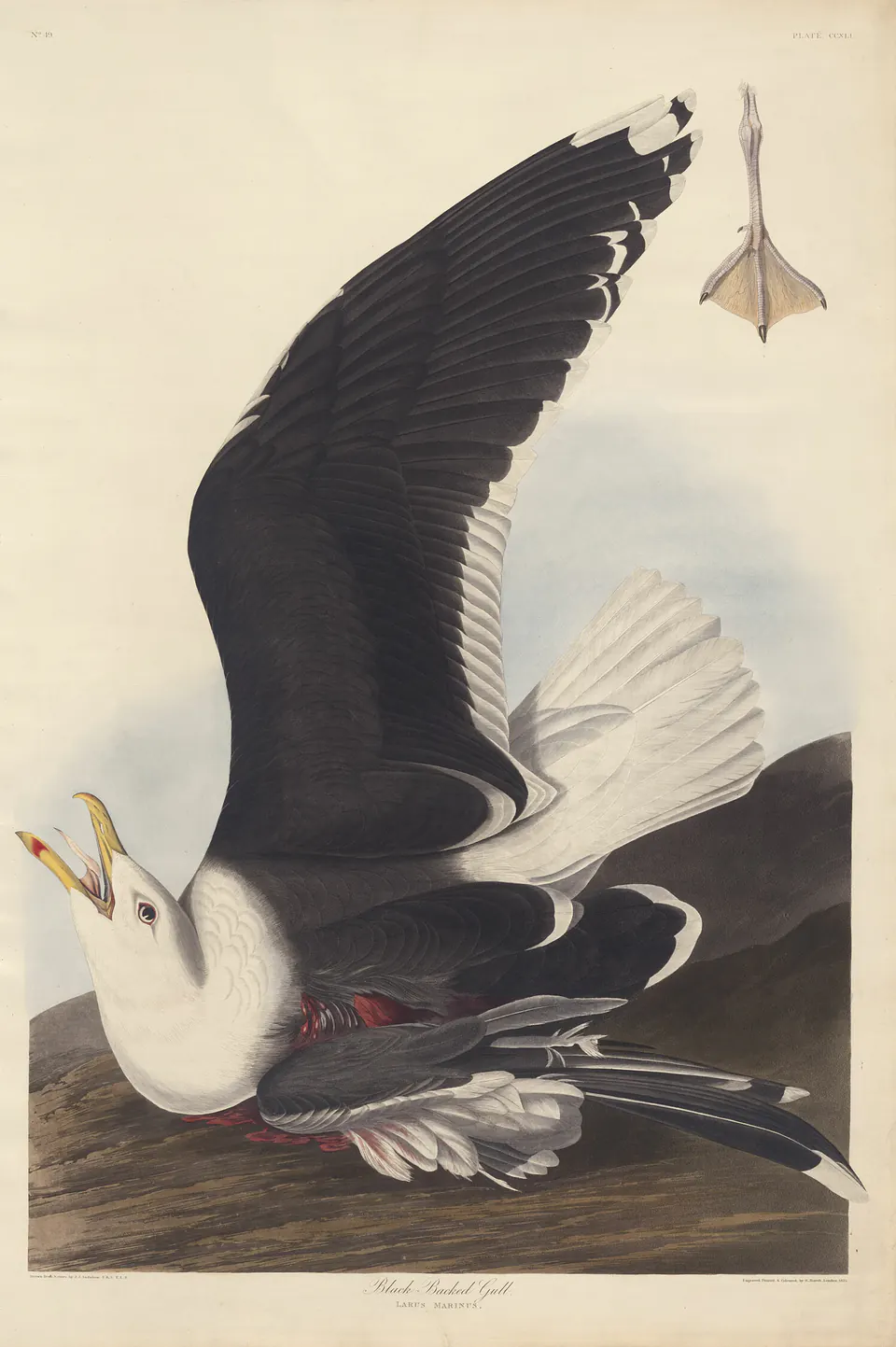
Black Backed Gull
1826/39 · Art Institute of Chicago · 2004.830
CC0 Public Domain Designation
Resized to 960 pixels wide and converted to WebP; no crop.

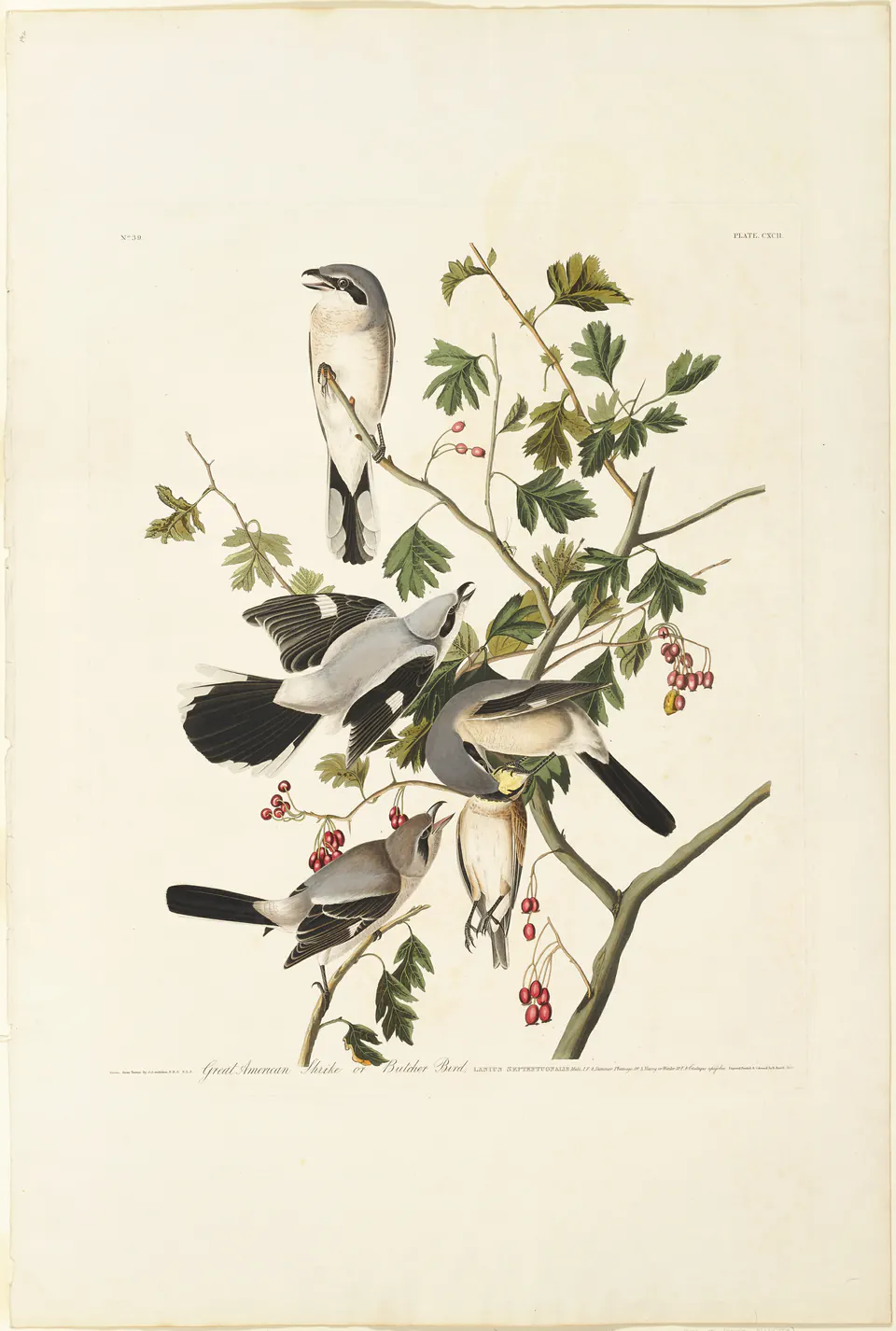
Great American Shrike
1834 · Art Institute of Chicago · 1925.1631
CC0 Public Domain Designation
Resized to 960 pixels wide and converted to WebP; no crop.

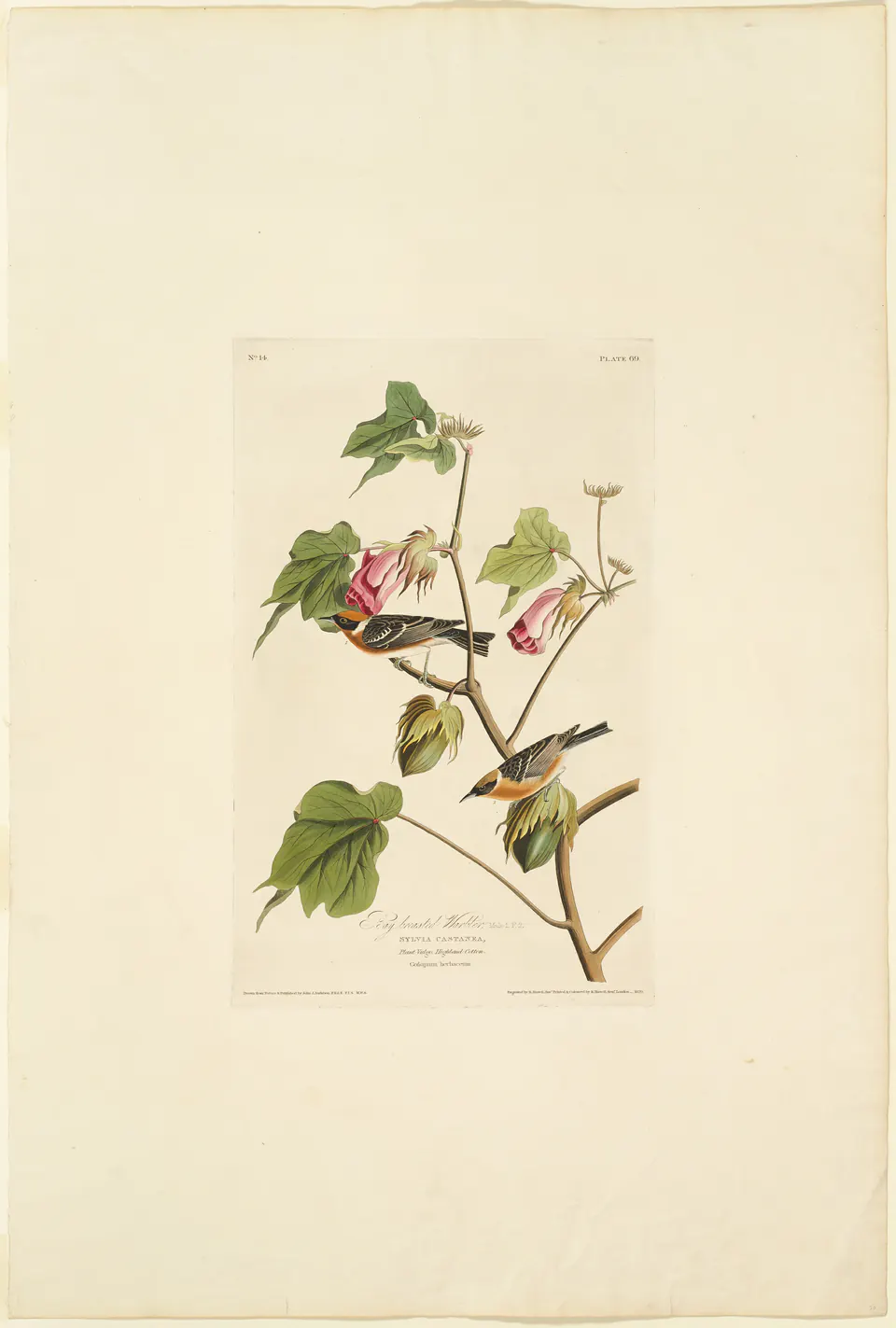
Male Bay Breasted Warbler
1829 · Art Institute of Chicago · 1925.1634
CC0 Public Domain Designation
Resized to 960 pixels wide and converted to WebP; no crop.

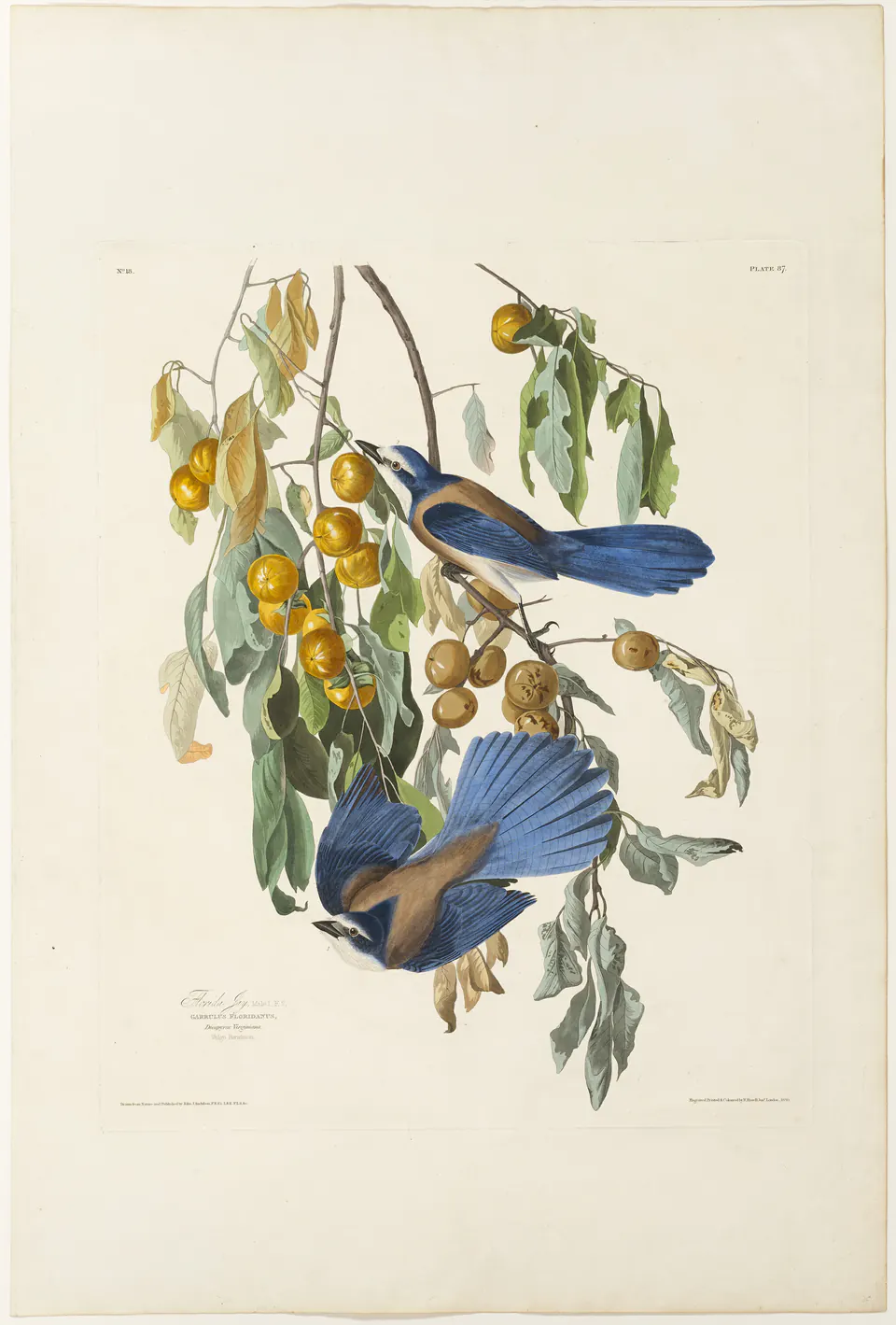
Florida Jay
1830 · Art Institute of Chicago · 1925.1632
CC0 Public Domain Designation
Resized to 960 pixels wide and converted to WebP; no crop.

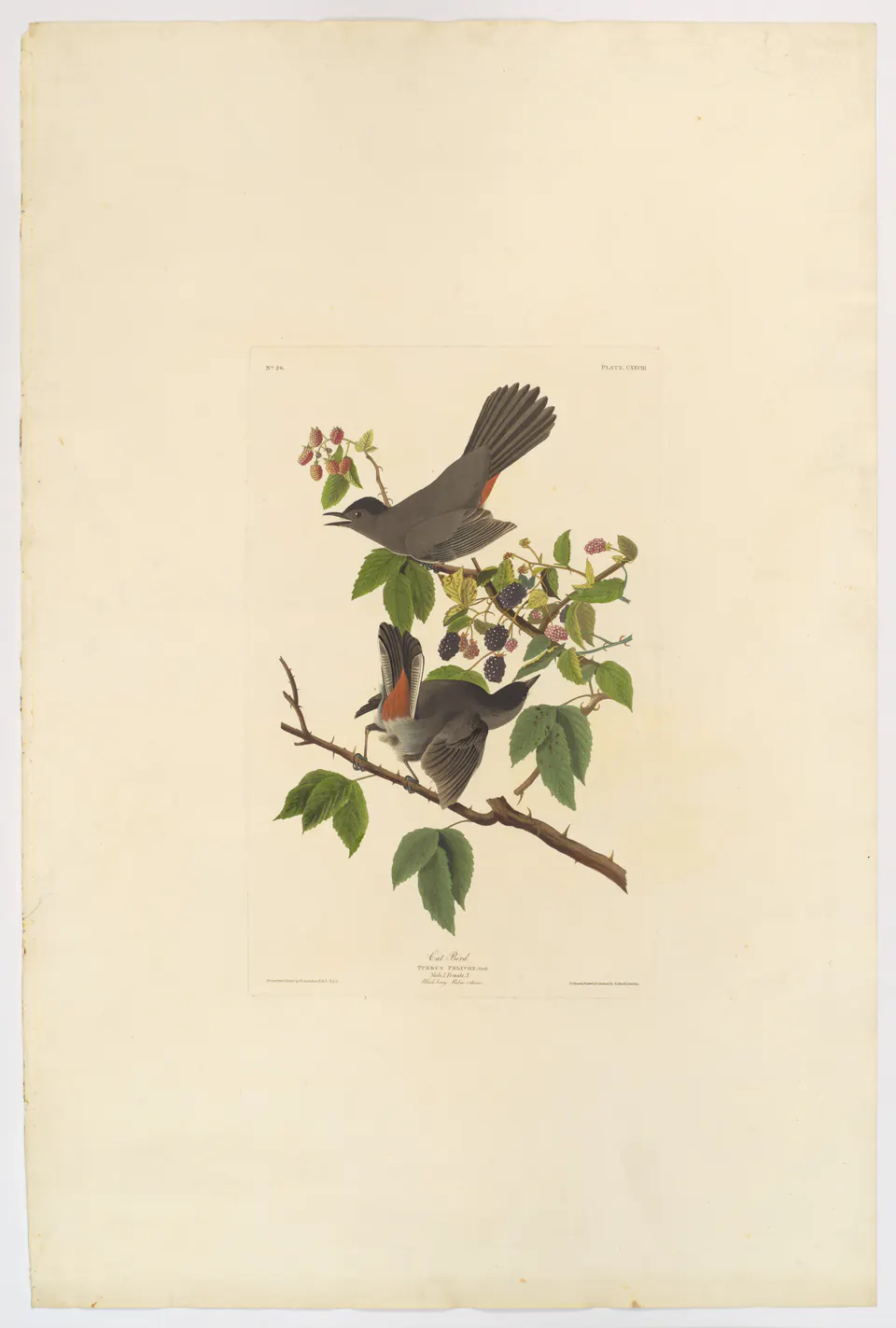
Cat Bird, plate CXXVIII
1827–38 · The Metropolitan Museum of Art · 2024.587.4
Public Domain / Open Access (CC0)
Resized to 960 pixels wide and converted to WebP; no crop.
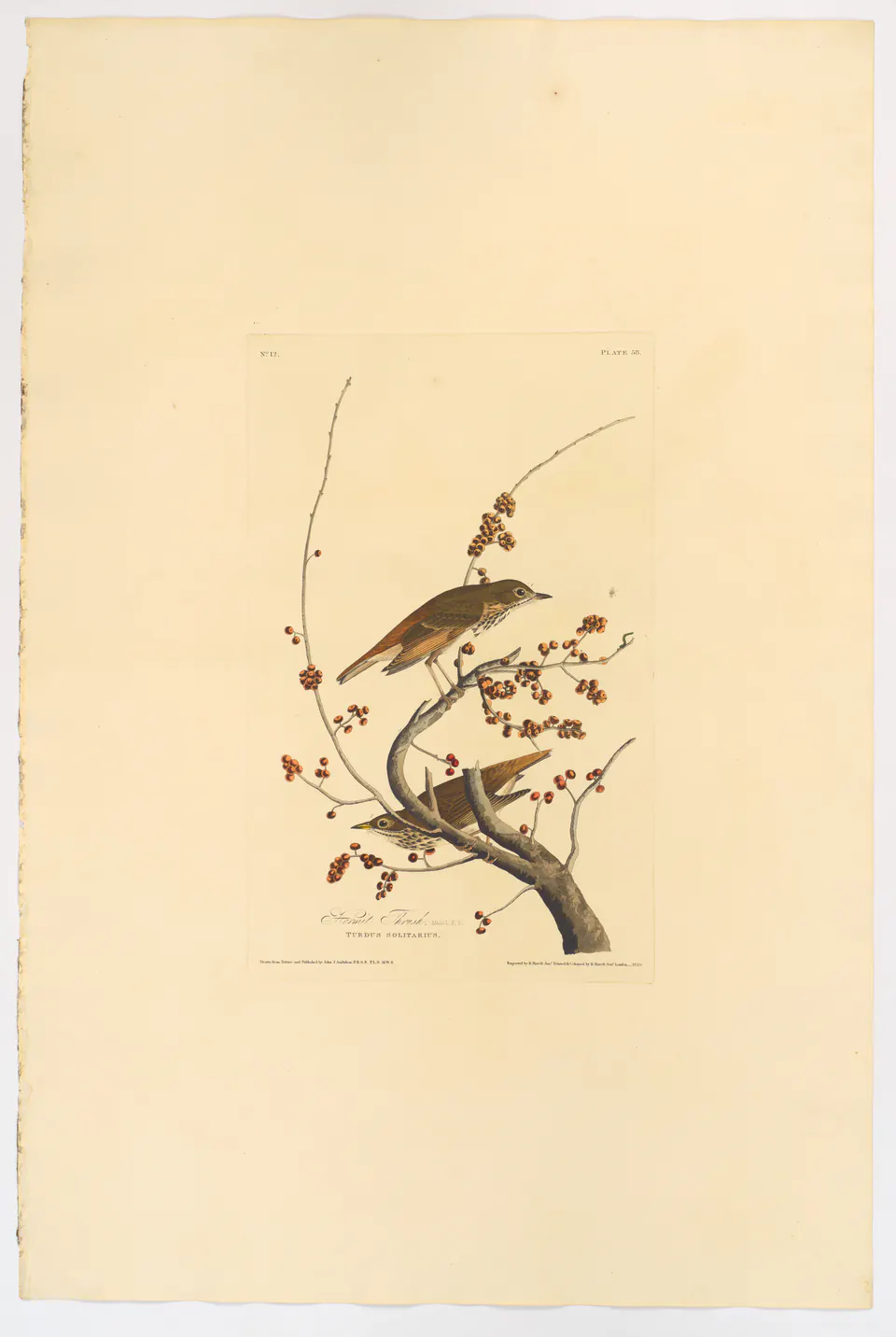
Hermit Thrush, plate 58, later LVIII
1829 · The Metropolitan Museum of Art · 2024.587.8
Public Domain / Open Access (CC0)
Resized to 960 pixels wide and converted to WebP; no crop.
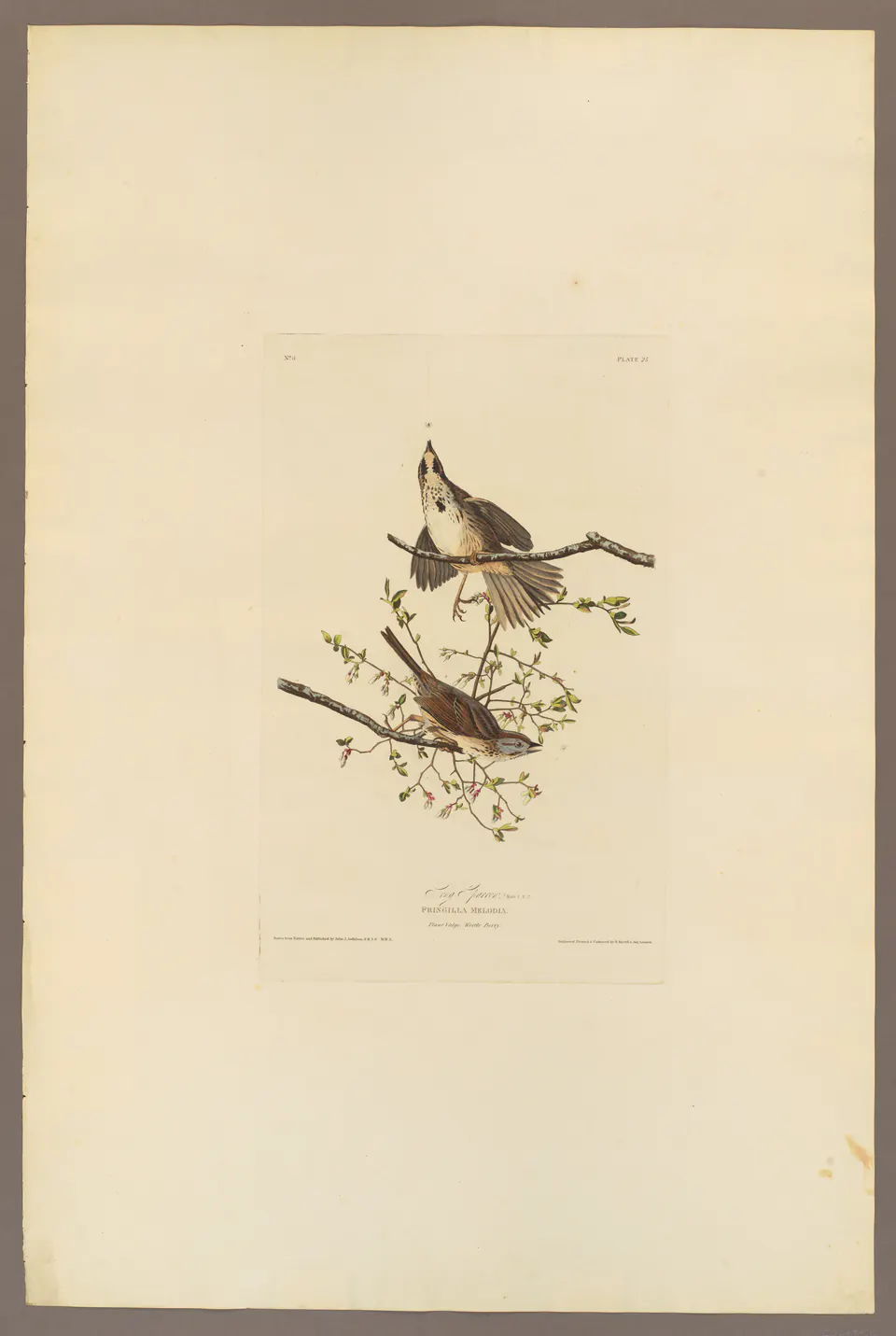
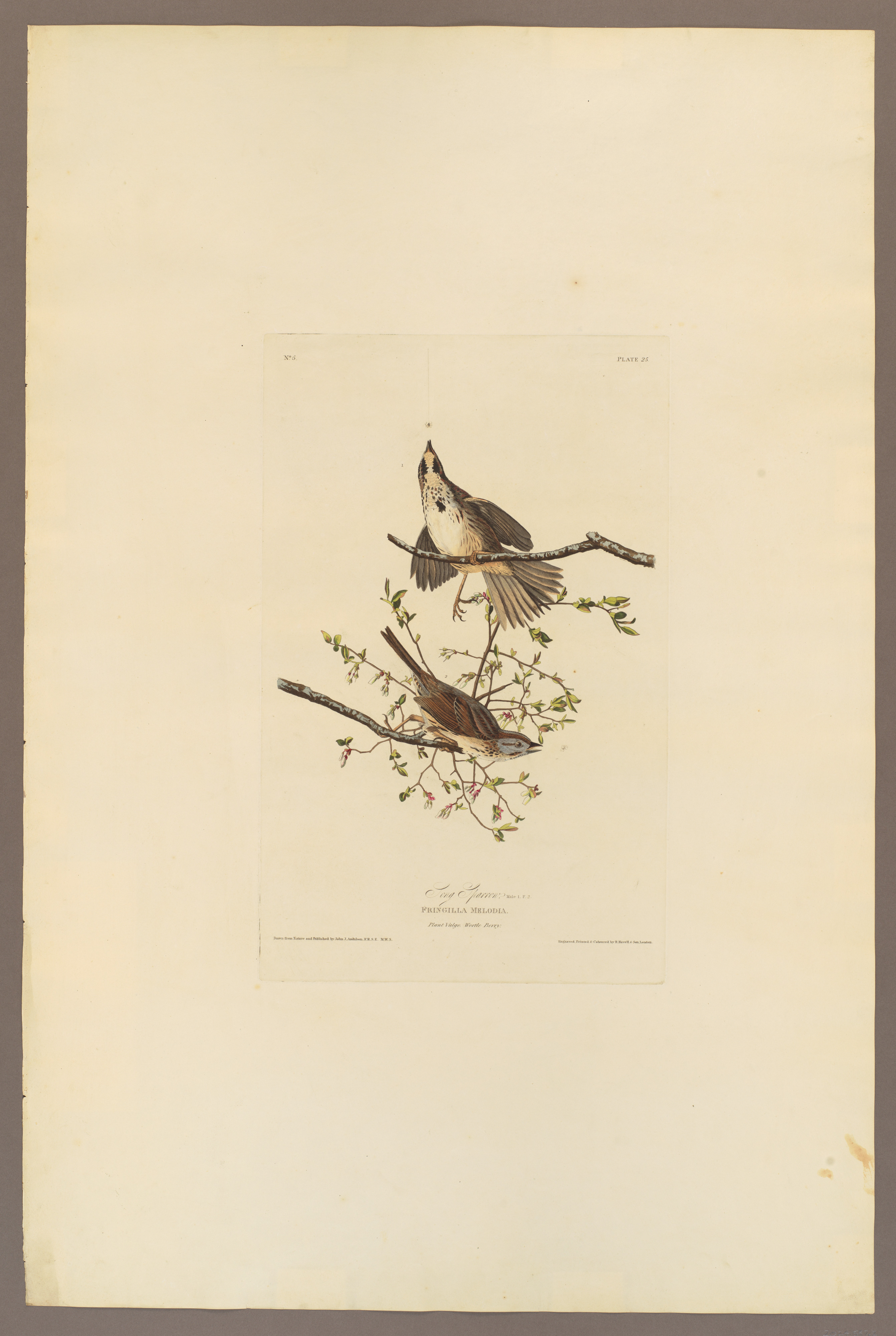
Song Sparrow, plate 25, later XXV
1827–38 · The Metropolitan Museum of Art · 2024.587.2
Public Domain / Open Access (CC0)
Resized to 960 pixels wide and converted to WebP; no crop.
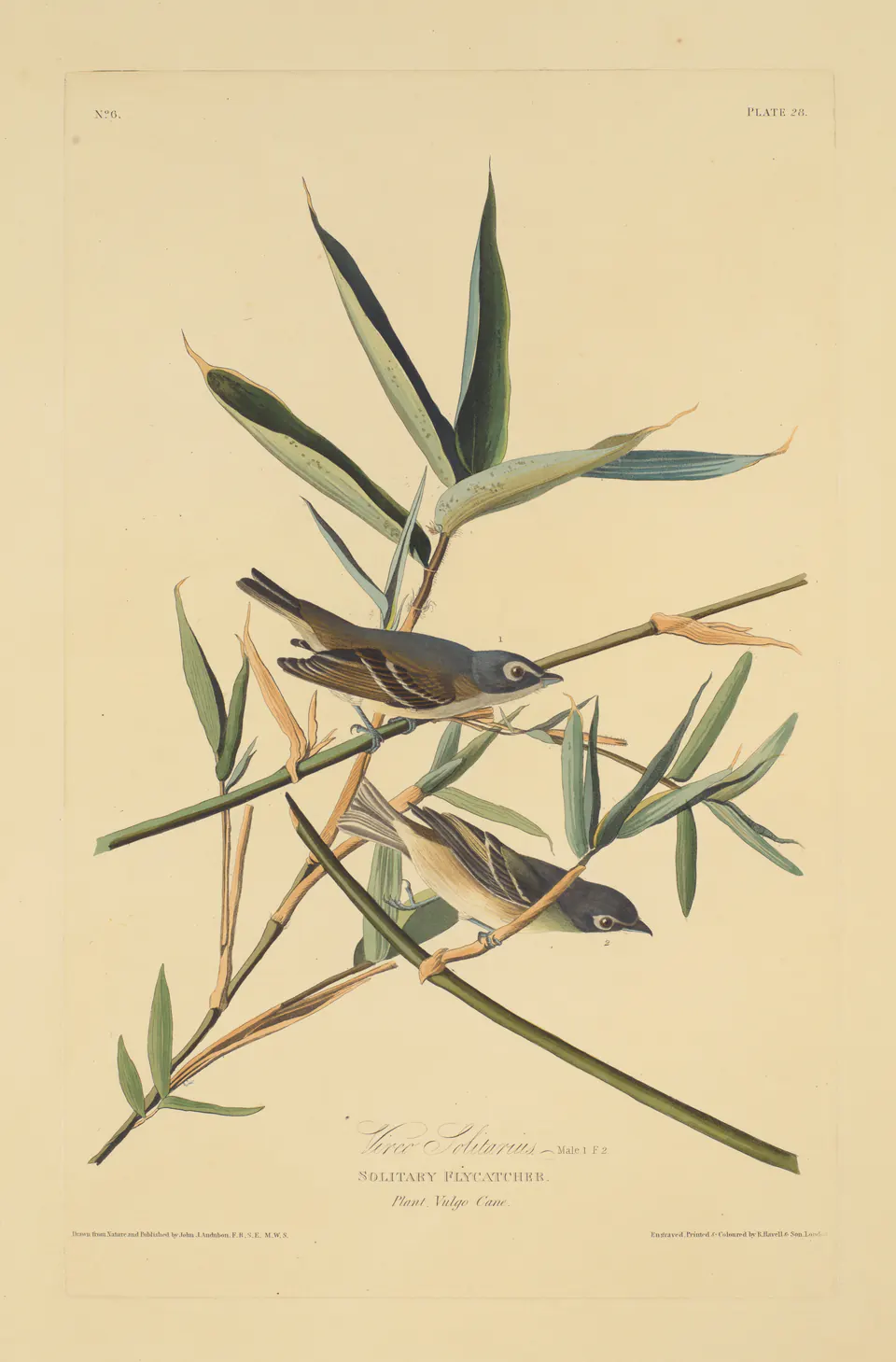
Solitary Flycatcher, plate 28, later XXVIII
1827–38 · The Metropolitan Museum of Art · 2024.587.6
Public Domain / Open Access (CC0)
Resized to 960 pixels wide and converted to WebP; no crop.
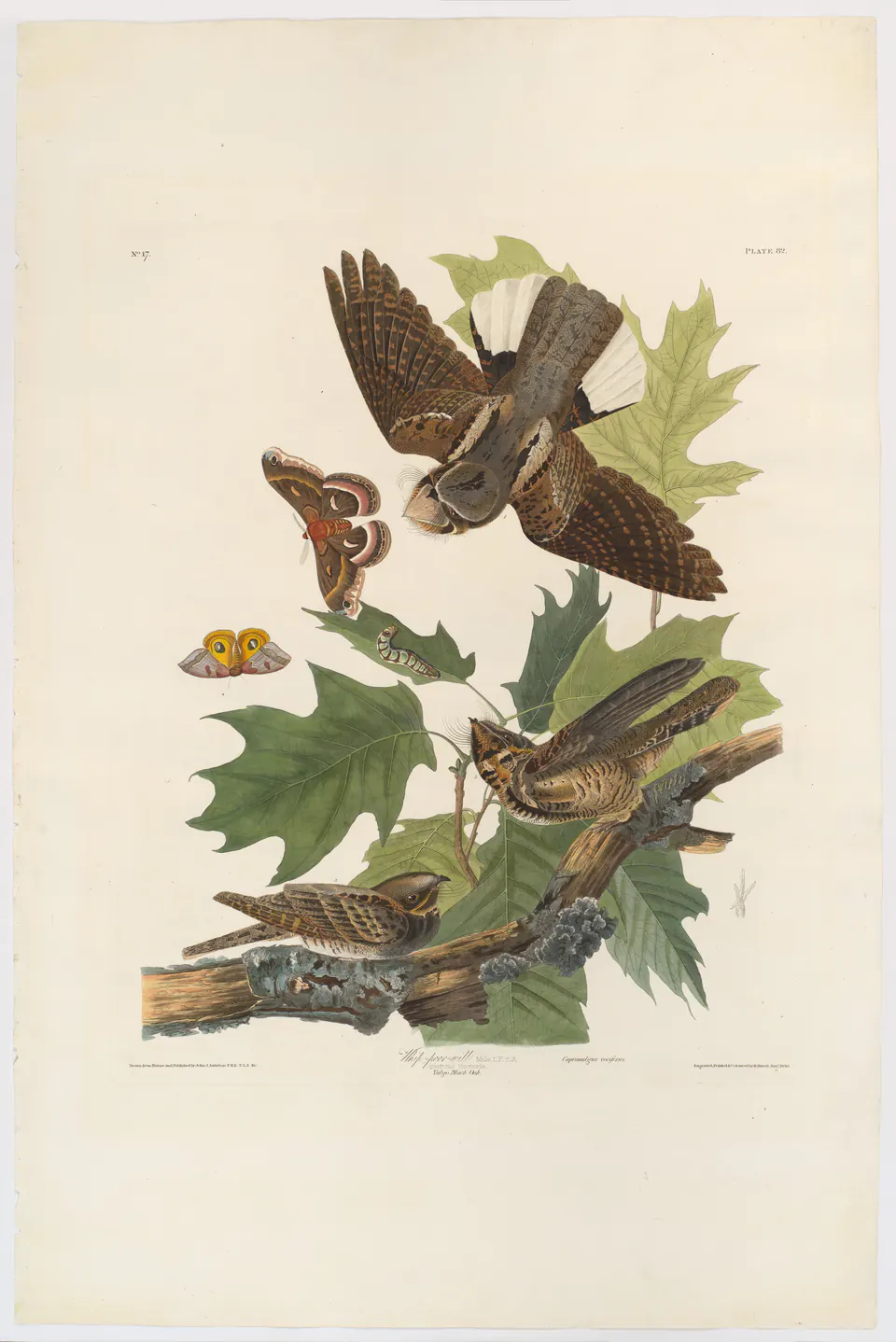
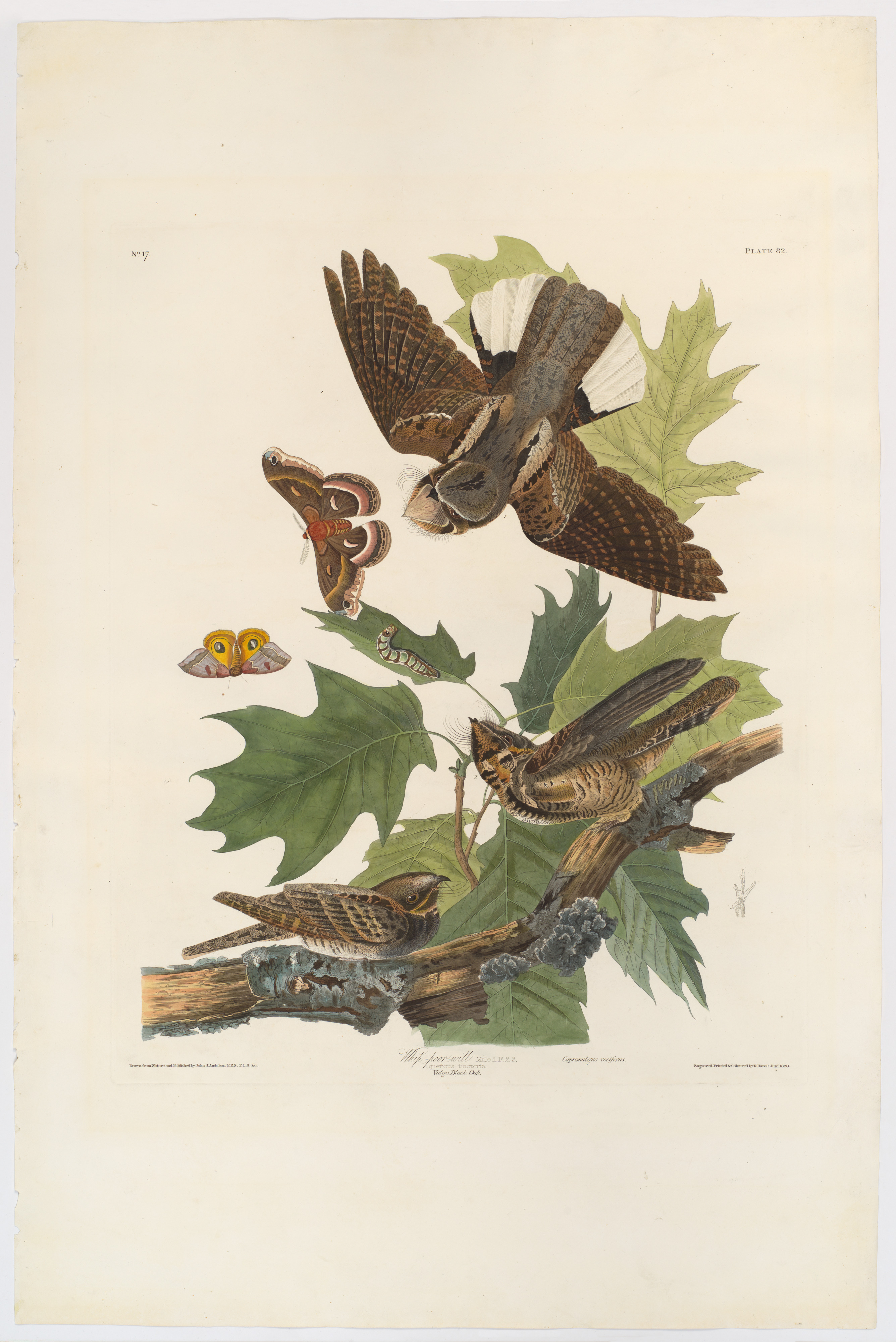
Whip-Poor-Will, plate 82, later LXXXII
1830 · The Metropolitan Museum of Art · 2024.587.5
Public Domain / Open Access (CC0)
Resized to 960 pixels wide and converted to WebP; no crop.
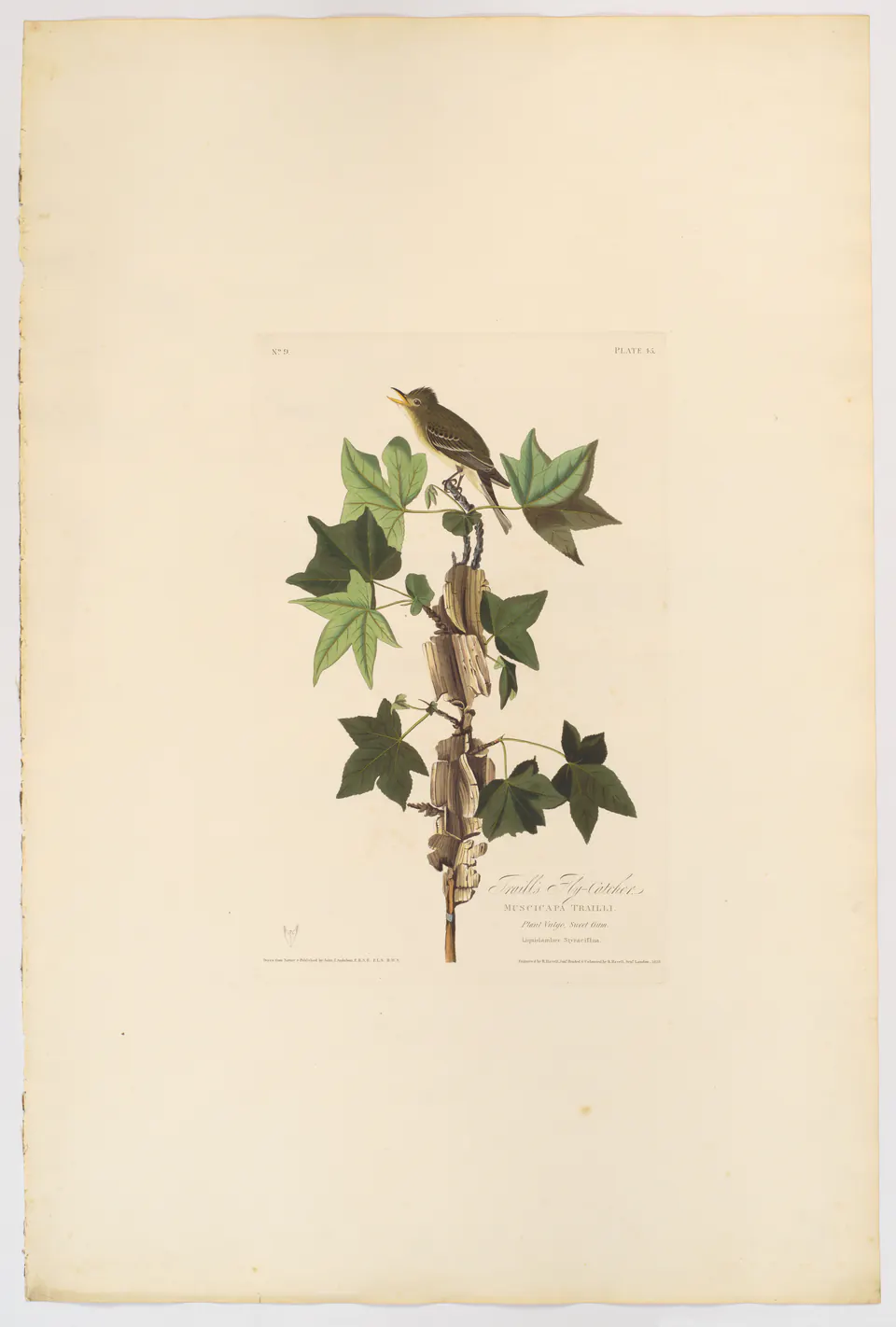
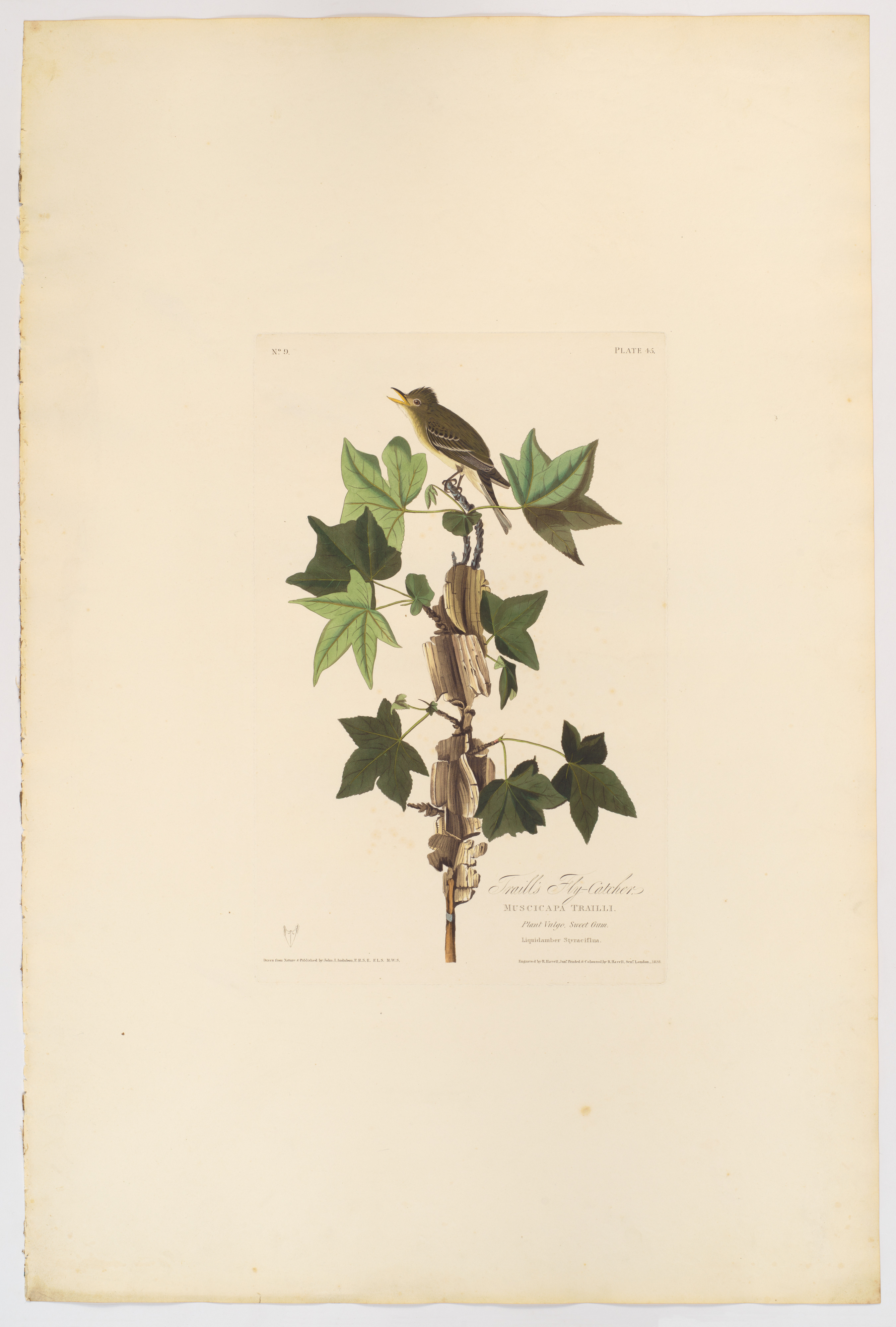
Traill’s Flycatcher, plate 45, later XLV
1828 · The Metropolitan Museum of Art · 2024.587.7
Public Domain / Open Access (CC0)
Resized to 960 pixels wide and converted to WebP; no crop.
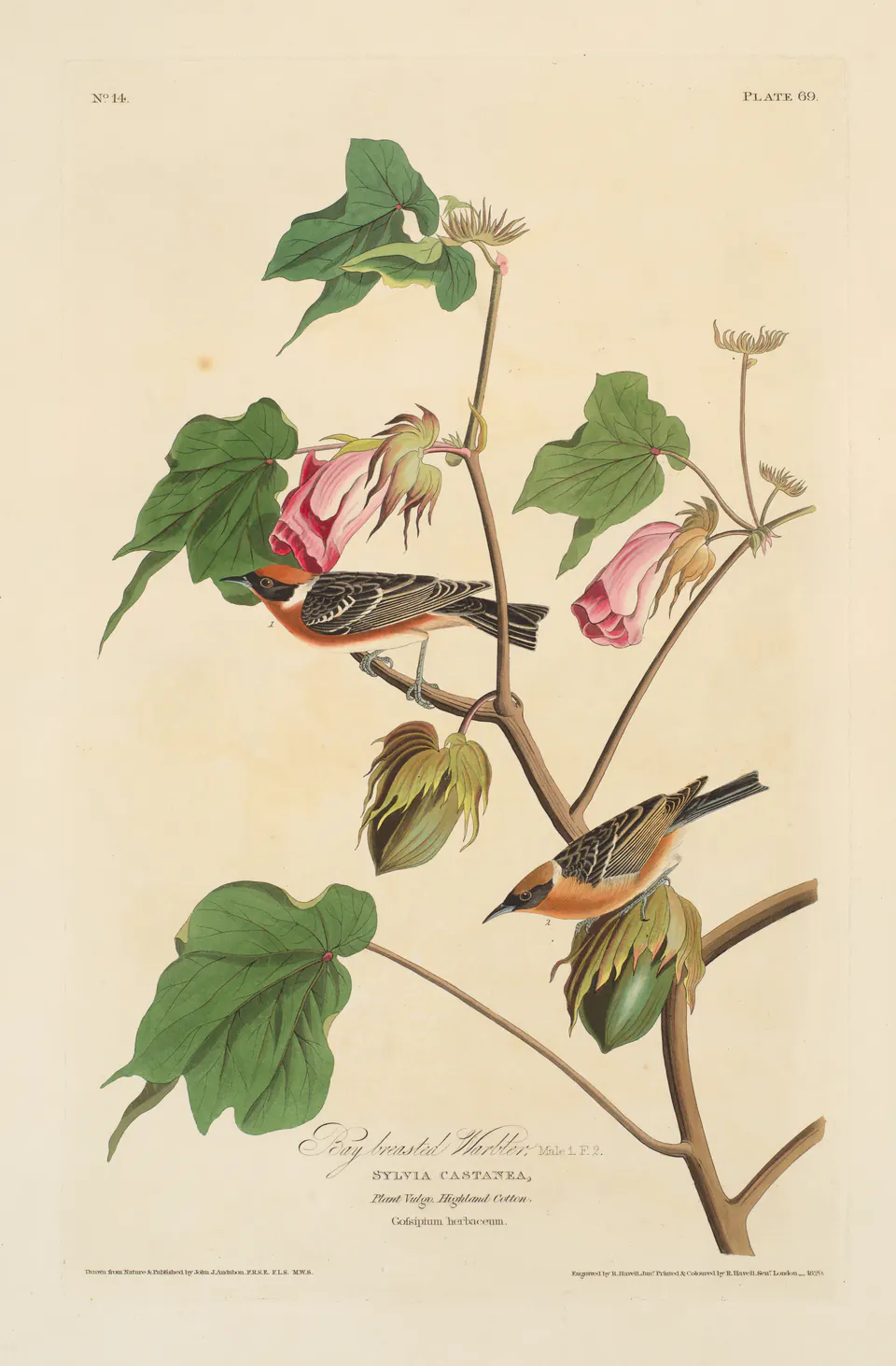
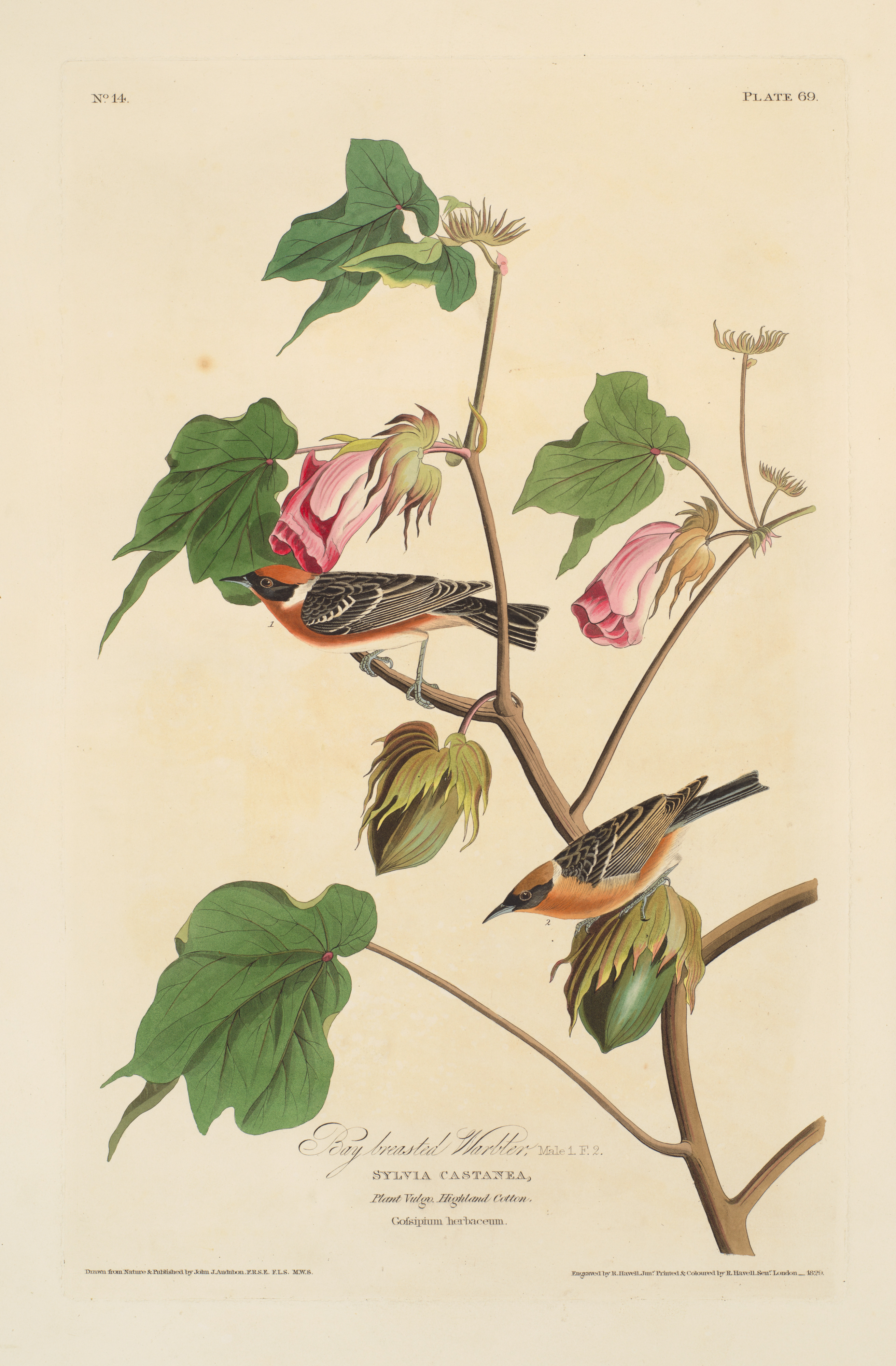
Bay-breasted Warbler, plate 69, later LXIX
1829 · The Metropolitan Museum of Art · 2024.587.3
Public Domain / Open Access (CC0)
Resized to 960 pixels wide and converted to WebP; no crop.
Sources and review method
We checked the artist chronology against museum records, treated each named jurisdiction separately, and recorded the provider policy for the image set. These sources support the legal framework and artist dates used above; the source file for any individual image still needs its own record.
- Harlequin Duck — Art Institute of Chicago. Feature impression identity, Robert Havell after Audubon credit, date, medium, accession, dimensions, and CC0 Public Domain Designation.
- Open Access Images — Art Institute of Chicago. Files labelled CC0 Public Domain Designation may be reused for commercial and non-commercial purposes.
- Hermit Thrush, from The Birds of America — The Metropolitan Museum of Art. Plate variant, full-sheet margins, subscriber issue, Audubon, Havell Jr. and Havell Sr. roles, medium, accession, and Public Domain Open Access status.
- Image and Data Resources — The Metropolitan Museum of Art. The Met makes images marked Public Domain available for unrestricted use under its Open Access programme.
- Brown Pelican printing plate — The Metropolitan Museum of Art. Institutional account of the 435 copper plates and the Lizars, Robert Havell Sr., and Robert Havell Jr. production sequence.
- Masterpiece of American Ornithology — Library of Congress. First-edition, 435-plate, double-elephant-folio, paper, engraving, printing, and hand-colouring context.
- Audubon & the Smithsonian — Smithsonian Libraries. Publication chronology distinguishing the 1827–38 large folio from the smaller U.S. octavo edition begun in 1840.
- Frequently Asked Questions About the Audubon Name — National Audubon Society. Institutional acknowledgement that Audubon enslaved people and held racist and harmful attitudes; reuse is not historical endorsement.
- Directive 2006/116/EC, Article 1 — EUR-Lex. The EU term for an artistic work is the author’s life plus 70 years.
- How long copyright lasts — UK Government. UK guidance gives 70 years after the author’s death for artistic works.
- Law No. 5846 on Intellectual and Artistic Works, Article 27 — WIPO Lex. The Turkish economic-rights term is the author’s life plus 70 years.
- Circular 15A: Duration of Copyright — U.S. Copyright Office. The 2026 term table places works published before 1931 outside the maximum 95-year publication term.
- Certain Unpublished, Unregistered Works Enter Public Domain — U.S. Copyright Office. Older unpublished works have a separate U.S. term analysis; discovery and first-publication history can matter.
- 17 U.S.C. Chapter 3, including §303 — U.S. Copyright Office. Section 303 states the transition rules and minimum 2002 or 2047 expiry floors for works that were unpublished on 1 January 1978.
- Visual Artists: Publication — U.S. Copyright Office. Distribution can publish a visual artwork, while public display by itself does not establish publication.
- 17 U.S.C. §104A and Circular 38B — U.S. Copyright Office. Foreign-work restoration requires that the work was not already public domain through term expiry in its source country.
- Compendium of U.S. Copyright Office Practices, Chapter 900, §909.3(A) — U.S. Copyright Office. A purely faithful scan or “slavish copy” does not add registrable authorship, while substantial restoration or alteration can require a separate analysis.
- Copyright notice: digital images, photographs and the internet — UK Intellectual Property Office. A digital image can require a separate rights and website-terms check even when its subject is old.
Editorial record
About this article
- Author
- Publisher
- GeMarkt
- Published
- Reviewed
- Internal source & rights check. Conducted by GeMarkt Research Review. This is an internal editorial check—not independent peer review.
- Source standard
- Rights guide source standardSeparates the underlying work from the source file, records the review date, and links the evidence used for the conclusion.
Found a claim that needs checking? Report a factual error.