GeMarkt Blog · Practical guide
Glass vs Acrylic vs No Glazing
Compare glass, acrylic and an uncovered print surface. Check reflections, weight, static, protection and frame spacing without assuming one material suits all art.

For a paper print, begin by considering suitable protective glazing; choose between glass and acrylic by the exact product, object and location. Leaving the surface uncovered is a different decision, not a free upgrade to perfect visibility. It removes the front barrier as well as its reflections.
A small replaceable poster, an oversized photograph, a pastel drawing and a printed canvas do not ask the same questions of a frame. Identify what you are displaying before choosing the clear layer in front of it.
Start with the object not the frame name
Glazing means the transparent protective layer, usually glass or acrylic, rather than the decorative frame around it. “Framed” does not automatically mean “glazed.” Check the listing or ask the framer which material is included.
For a new reproduction, note its support, printing method and any surface treatment. For an original, valuable or fragile work, ask a conservator or suitably experienced framer before changing its enclosure. A print with hand-applied media may need more than the assumptions you would make about a flat machine-printed sheet.
Think about the location too. Will people pass close to it? Could a child reach it? Will you move or transport it frequently? These questions help identify relevant risks, but they do not replace checking the complete frame weight, wall and fixing arrangement.
Compare the physical trade-offs
The Canadian Conservation Institute’s materials guidance describes glass as rigid and a good barrier; it also remains breakable. Acrylic is substantially lighter and more impact-resistant than glass, but ordinary acrylic is more vulnerable to scratching unless a suitable resistant product is used. Large plastic sheets can flex more than glass.
Those distinctions help frame the conversation, not settle it. For an oversized piece that will travel, lower glazing weight may be especially useful. For a modest frame in a settled position, compare the whole specification and appearance rather than rejecting glass on principle. Neither choice removes the need for secure installation.
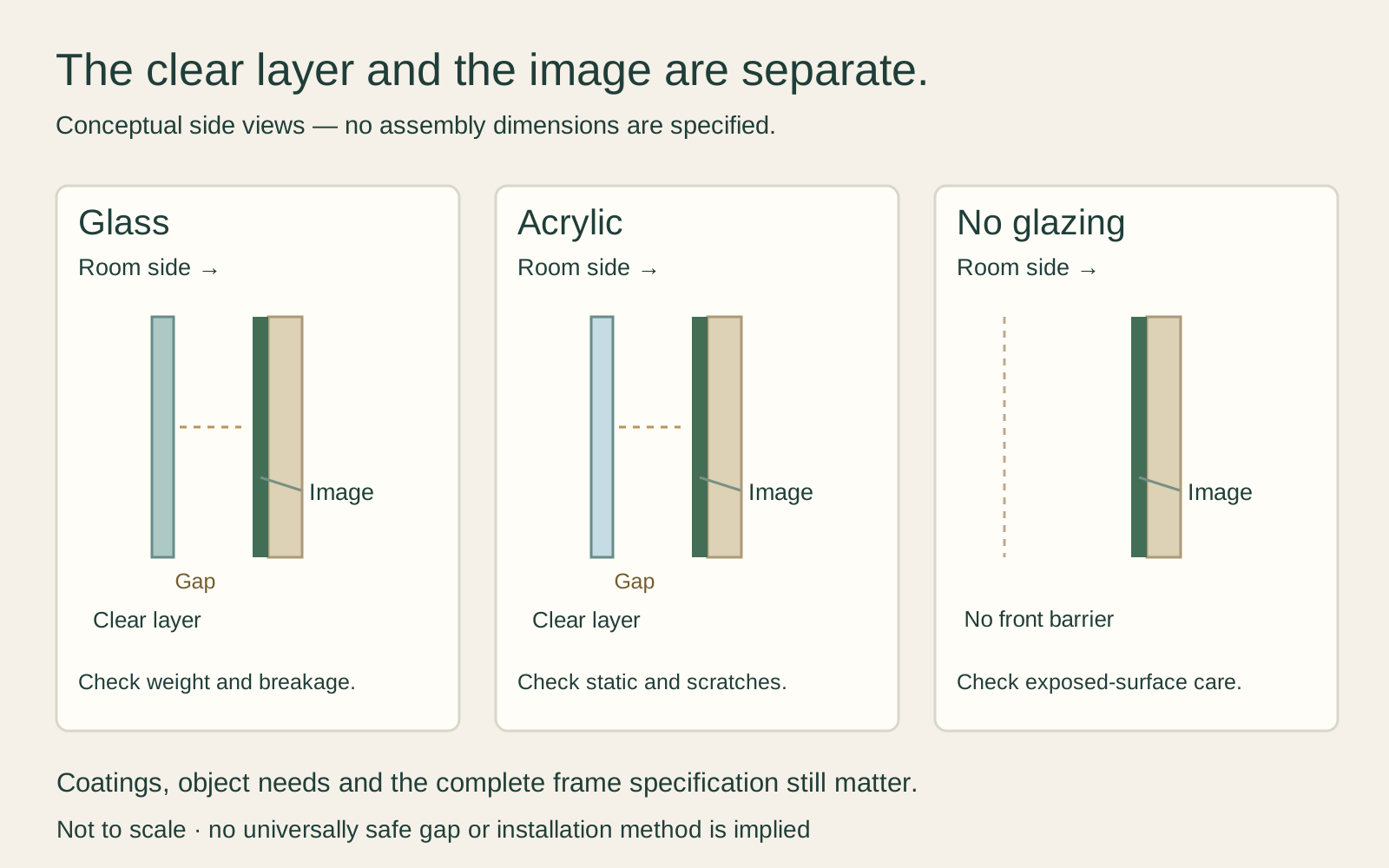
Do not calculate a safe hanging load from the glazing material alone. The moulding, backing, mount, size and fixings all belong to the finished object. Ask for the completed weight and appropriate installation guidance.
Ask about coatings not just material
“Acrylic” is not one uniform performance specification, and neither is “glass.” Reflection control, UV filtering, scratch resistance and static behaviour need separate answers. A claim about one does not establish the others.
For a manufacturer-specific example, Tru Vue’s Optium Acrylic identifies anti-reflective, abrasion-resistant and anti-static features. Those properties belong to that named product, not every sheet of acrylic. Nor does mentioning it here mean that a GeMarkt frame contains it.
Static is particularly important for loosely bound media such as pastel or charcoal. Tru Vue specifically lists static-sensitive media among the applications for its named anti-static product. Do not apply a general “acrylic is safer” rule to such an object without professional advice: the distinction is the exact material and object, not simply plastic versus glass.
UV filtration also does not make a print immune to visible-light damage. CCI’s UV-filter guidance makes that distinction. Ask what a product’s UV claim measures, and keep the light-sensitive object out of direct sunlight rather than treating filtration as permission for an otherwise unsuitable position.
Keep the image away from the glazing
A good choice of clear material still needs a suitable frame arrangement. The Library of Congress says the object should not touch the glazing; a window mat or appropriate spacers can provide separation. The required construction belongs to the actual print and frame, not a universal gap copied from an illustration.
Do not mistake a white border printed on the sheet for a physical spacer. It changes the image layout, but it is still part of the same paper. Our mat-board guide explains that difference and the measurements involved.
The same contact question can arise with paintings. CCI’s painting-framing guidance discusses glazing with separation from the paint surface. Canvas is therefore not, by itself, a reason to declare glazing unnecessary or forbidden. A valuable painting needs an object-specific decision, not a rule borrowed from a reproduction listing.
Decide what no glazing would expose
An uncovered surface removes the need to look through a separate sheet. It also means that dust, accidental contact and the room environment meet the exposed object more directly. Consider whether the product was actually intended to be displayed that way, and obtain its care instructions before buying.
For a modern canvas reproduction, ask whether a protective finish is present and how the maker says to care for it. Do not assume a coating makes it washable. For an unglazed paper print, ask how it will be supported and protected; simply removing the glass from a ready-made frame is not a complete display plan.
One useful test is to describe a normal week in the intended position. Does someone brush past the wall? Is a drink placed on the table beneath it? Does the area receive cooking residue or splashes? You need not invent an accident to notice that an exposed surface may be inconvenient there.
Compare samples in the intended position
If reflections are your main frustration, compare the available glazing samples under the actual room lighting. Look from the chair, doorway or desk where you normally see the picture. A demonstration under a shop’s lights does not reproduce that viewpoint.
Use the same image behind each sample if possible, and include dark areas where reflections may draw your attention. Ask about the intended spacing as part of the demonstration. The result should help you choose a product, not encourage you to press glazing against an artwork for a test.
Read care instructions before paying extra for a particular coating. For cleaning an existing frame, identify the exact product first; our framed-art and canvas care guide explains why an unfamiliar surface should not receive a generic spray-and-wipe treatment.
Make the final choice specific
Ask for a quote that names the glazing, relevant features, frame components and completed dimensions. If the object is valuable or fragile, record the professional advice as well. “Better glass” is not a specification you can reliably compare with another offer later.
For an ordinary reproduction, the successful choice is the one that suits the object and room, looks good from your real viewing positions and has care requirements you can follow. Glass, acrylic and no glazing can each appear in a considered display. What matters is knowing which trade-offs you accepted, rather than assuming the clearest-looking option in a mockup must be the safest one at home.
Editorial record
About this article
- Author
- Publisher
- GeMarkt
- Published
- Reviewed
- Internal source & rights check. Conducted by GeMarkt Research Review. This is an internal editorial check—not independent peer review.
- Source standard
- Buying guide source standardSeparates measured or first-hand evidence from general guidance and keeps practical limits visible.
Found a claim that needs checking? Report a factual error.