GeMarkt Blog · Practical guide
Framed or Unframed: Which Is Better Value?
Compare framed and unframed prints using the finished cost, frame specification and work still to do, with clearly labelled illustrative totals.

A framed print is better value when its complete specification suits you and the extra cost is worth avoiding separate purchases and assembly. An unframed print is better value when you can arrange a suitable frame for less, want more control, or already own one that genuinely works. The lower price beside the picture is only the starting point.
Compare the cost of getting the same image into the form you want to live with. A paper print still in its delivery tube and a finished framed picture are not equivalent outcomes, even if both contain the same artwork.
Compare the same finished picture
Start with what you want to see on the wall: the image size, the visible border, the frame’s appearance and the overall dimensions. Without that common destination, a price comparison can quietly change the product halfway through.
For example, a small image surrounded by a generous mat can occupy the same wall area as a larger image in a narrow frame. Neither arrangement is inherently better, but they produce different pictures. Comparing their outside dimensions alone would miss the difference.
Keep the reproduction itself comparable too. A different crop, paper or source image may explain part of a price difference. Decide which differences matter to you before concluding that one seller is charging more for the frame alone. If you are buying a paper print, also confirm that “unframed” means the finished printed sheet, not a file that still needs printing.
Add the costs that remain
The following example uses invented currency units, not actual prices. It assumes the same desired print and acceptable framing in each route. It is designed to show the calculation, not what framing ought to cost.
A framed bundle costs 120 units plus 15 delivery: 135. Buying separately costs 45 for the print, 8 delivery, 60 for a frame and 12 for fitting: 125. Reusing a suitable frame costs 45 for the print, 8 delivery, 12 for a new mat and 12 for fitting: 77 in new spending.
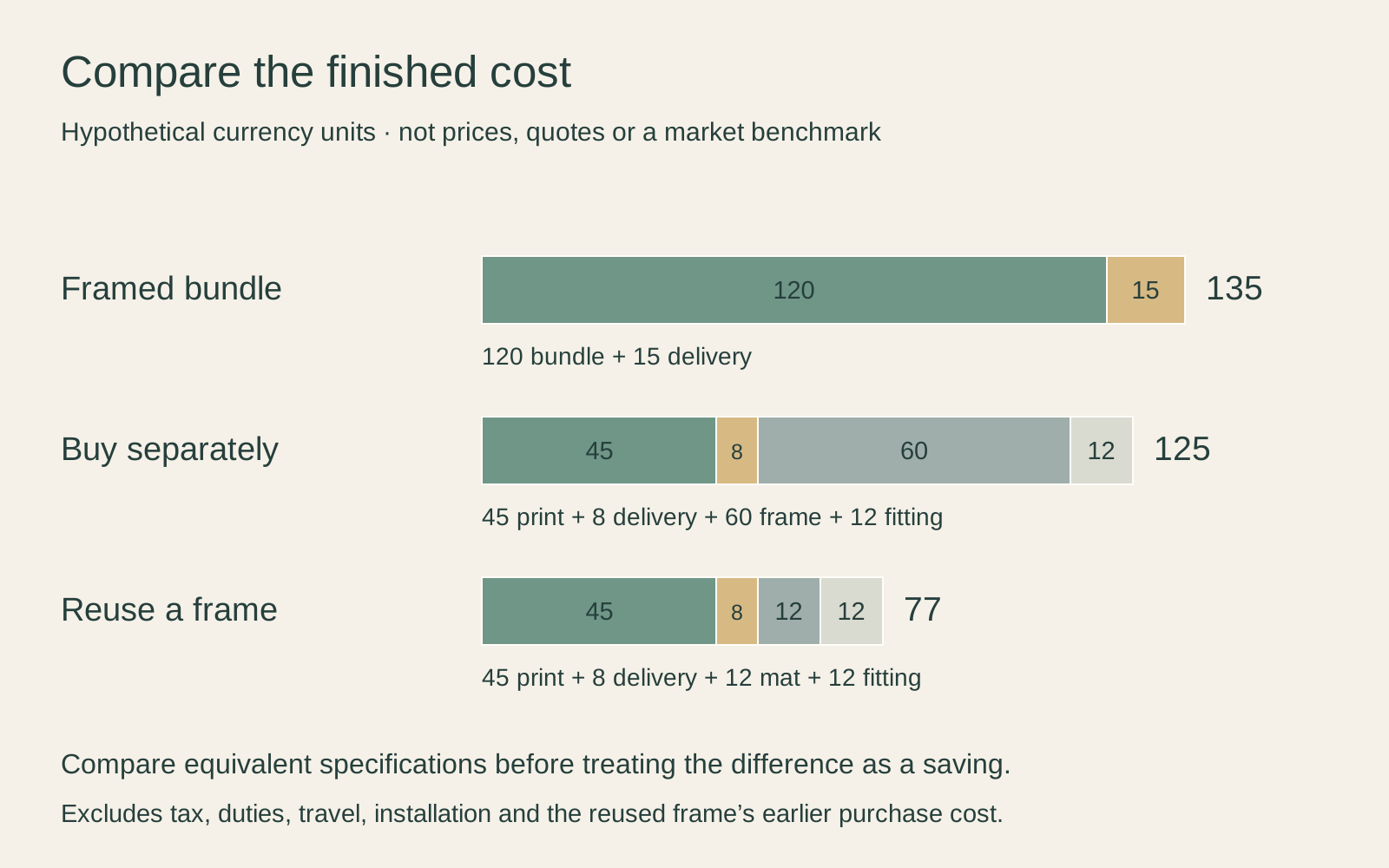
In this example, separate buying saves only 10 units against the bundle. Whether that saving is worthwhile depends on the additional choices and work involved. Reuse saves much more only because the frame is already owned and suitable. If it needs substantial repairs or replacement glazing, the comparison changes.
Write down costs even when you do not yet know them. A blank next to “fitting” means you need a quote, not that fitting is free. Include collection trips or extra deliveries if they create a meaningful expense for you.
Check whether an existing frame really helps
Take the frame out and inspect it before ordering a print around it. Measure the sheet size it can accommodate and any mat opening. Check its depth, backing and general condition. An old size label may describe something other than the visible opening you now have.
Do not trim the printed image simply to make an unsuitable frame feel like a saving. You might prefer a smaller image with a planned border, a new mat, or a different print size. Those choices should happen before production, not with scissors beside the unpacked order.
Ask a framer if the old assembly needs work, especially for a print you value. A free frame with a failing corner or inappropriate contents is not necessarily the economical route. On the other hand, a sound frame you like can be a strong reason to buy unframed rather than replace something useful.
Compare the assembly not just the colour
Two black frames can contain very different packages. Ask about the moulding material and profile, glazing, mat, backing and how the print is held. Also ask whether the quoted price includes fitting the print, or only supplying a frame for you to assemble.
The Library of Congress treats preservation framing as a combination of chemically stable materials and suitable methods, not a property of the decorative moulding alone. It also specifies keeping the paper object away from the glazing. Library of Congress framing guidance.
That does not mean every inexpensive decorative print needs the most elaborate framing available. It means the words “framed” and “conservation framed” should not be used as interchangeable price categories. Get the actual specification, then decide what protection and presentation are appropriate for this purchase.
For an original work or a fragile object, ask a qualified framer or conservator about the object itself. Do not use a budget comparison intended for replaceable reproductions as an assembly recipe.
Put a value on choice and coordination
Buying unframed lets you choose a profile, mat width or glazing that the print seller does not offer. That can matter when matching existing pictures or fitting a difficult wall. The extra choice has value even if the final price is not lower.
A ready-framed option can be useful when you already like the offered combination. You may have fewer suppliers to coordinate and fewer measurements to translate between businesses. This is a convenience advantage, not proof that the package uses better materials.
Think realistically about the work you will do. If an unframed print is likely to remain packed away because choosing a frame feels overwhelming, the cheaper unfinished route may not serve your purpose. If selecting frames is something you enjoy, paying to avoid it offers less benefit. Neither preference needs defending.
Think about delivery and future changes
Compare the actual delivery options for your address, not an assumption that a rolled print will always be cheaper to ship. A framed product and a flat or rolled sheet may have different packaging and handling needs. Read the selected offer and ask how a damaged item should be reported.
Consider future changes as well. Can the print be removed and reframed, or is it permanently bonded as part of the product? Can a damaged front cover be replaced? Ask about the construction rather than taking “ready to hang” as an answer to every question.
A frame is also an object in the room. Its external dimensions, projection and finished weight matter when choosing a position and a mounting method. Included hanging hardware does not establish that the wall fixing is suitable for your particular wall. Keep installation separate from the purchase-price comparison.
Ask for a quote you can compare
Describe one proposed result to each supplier: the same print, image dimensions, border arrangement, frame profile and colour, glazing type, and whether fitting is included. A quote for a broad category such as “wood frame” leaves too many differences hidden.
If you do not know the technical names, send the dimensions and explain the appearance you want. For instance, you may want a visible white surround but need the whole assembly to stay within a measured wall space. Ask the framer to distinguish the paper border from a separate mat and state the final outside size.
Our mat-board guide and frame colour and material guide can help you make those choices. You do not need to specify everything at once; you need enough agreement to compare the quotes fairly.
Make the choice that fits your priority
Choose the bundle if its specification is right and the price difference buys convenience you actually want. Buy unframed if you have a clear framing route, prefer a different finish, or can sensibly reuse an existing frame. If the quotes are close, the better fit for the room may matter more than a small saving.
The most useful final number is the total for the picture you will actually display. The most useful final question is whether you still want it after understanding that total. A low starting price should not make the rest of the purchase disappear.
Editorial record
About this article
- Author
- Publisher
- GeMarkt
- Published
- Reviewed
- Internal source & rights check. Conducted by GeMarkt Research Review. This is an internal editorial check—not independent peer review.
- Source standard
- Buying guide source standardSeparates measured or first-hand evidence from general guidance and keeps practical limits visible.
Found a claim that needs checking? Report a factual error.