GeMarkt Blog · Reference
CC0, Public Domain Mark and Museum Licences Explained
CC0 waives rights, a Public Domain Mark describes status, and a museum licence sets terms. Learn which record to check before reusing an art image.

CC0 is a way to give up rights; a Public Domain Mark is a statement about a work’s assessed copyright status; a museum licence gives permission on particular terms. They can all appear next to downloadable pictures, but they do not make the same promise.
Start with the image you actually want to use. The useful question is not simply whether a museum supports open access. It is whether its statement covers this file, and whether it addresses the rights relevant to your project. A museum’s collection photograph, a visitor’s photograph and a shop’s mockup are three different files even when they show the same painting.
Three labels, three different jobs
| Statement | Its main job | What to check next |
|---|---|---|
| CC0 | Relinquishes the affirmer’s copyright and related rights as far as legally possible | Who applied it, what material it covers and whether other rights matter |
| Public Domain Mark | Communicates an assessment that a work is free of known copyright restrictions | The identified work, source of that assessment and relevant country |
| Museum licence or permission | Allows stated uses under the particular agreement | File, purpose, commercial use, alterations, credit and any limits |
A download button is a delivery feature, not a fourth kind of permission. Equally, paying for a large file does not automatically mean you have acquired every right in its contents.
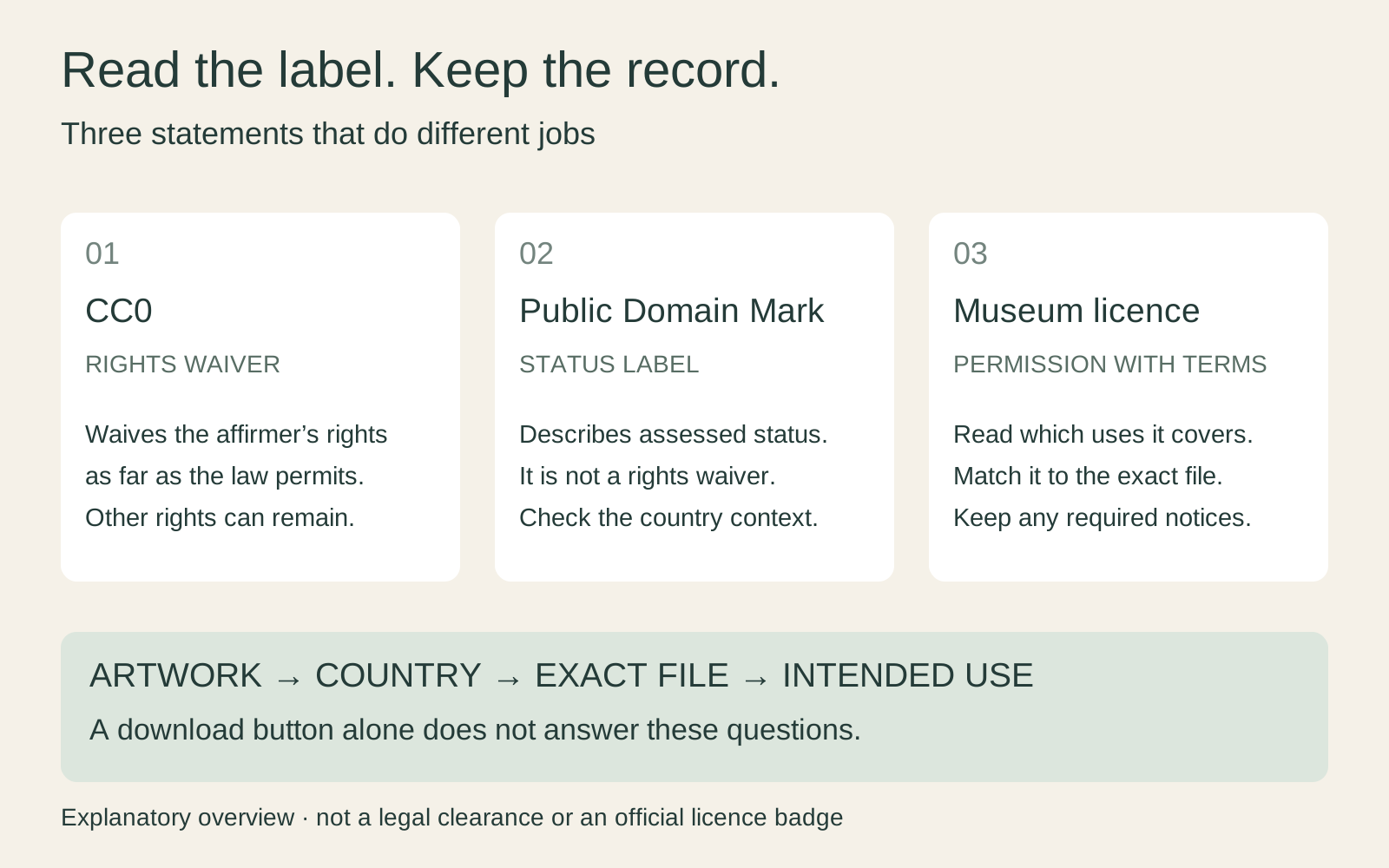
What CC0 does
Creative Commons’ CC0 summary describes a dedication that permits copying, adapting and commercial reuse without seeking the affirmer’s copyright permission. The underlying CC0 legal code provides a fallback licence where the waiver cannot fully operate.
That wording matters: a person or institution can only give up rights it has. CC0 does not waive somebody else’s copyright, clear trademarks or promise that every possible use is lawful. It also supplies no warranty that the material is suitable for your project.
In practice, a clearly identified institutional CC0 download is much more useful than a repost labelled “free art” with no source. It tells you whose policy you are relying on and which file it accompanies. Keep that evidence rather than replacing it with a generic copyright symbol of your own.
CC0 itself does not make attribution a condition. Crediting the artist and source is still good editorial practice, and separate obligations may matter. Our guide to crediting a public-domain artwork explains how to keep the caption useful without pretending the museum created the painting.
What a Public Domain Mark tells you
Creative Commons describes its Public Domain Mark as a label, not a tool for surrendering rights. It recommends the mark for material free of known copyright restrictions worldwide, rather than work known to have mixed status between countries.
The PDM description also warns that jurisdictions can differ, moral rights may persist, and other rights can affect a use. A mark is not an independent investigation of every legal system, and an incorrect label does not extinguish an existing right.
For a user, the practical distinction is straightforward. With CC0, ask who is relinquishing which rights. With PDM, ask who has assessed which work. Do not rewrite a PDM record as “licensed under CC0” just because both routes can lead to reusable images.
A modern photograph of an old sculpture illustrates why precision helps. The sculpture’s historical status and the photographer’s choices are not the same question. Read the record for the photograph rather than importing a status from a page about the sculpture.
What museum permission actually covers
There is no single licence shared by all museums. Even one institution can make some images openly reusable while keeping others outside its programme.
The Met’s image policy distinguishes open images from restricted material, and places qualifying open images under CC0. Its open collection data do not automatically include every digital image. Getty’s programme likewise identifies the qualifying files with a CC0 designation.
For a separately licensed image, read the actual terms. A hypothetical agreement might cover one book edition but not merchandise, or allow an uncropped reproduction but require a new request for a cover design. These are examples of clauses to look for, not claims about either museum’s open programme.
A payment for photography or delivery can also be different from copyright permission. If the terms and the object’s status seem inconsistent, ask what service and which rights the charge concerns. Do not assume either that every charge creates a new copyright or that every contractual condition can be ignored.
Follow the label to the file
Open the individual object page, not only the museum’s home page or a search thumbnail. Match the artist, title, date, accession and displayed version. Then find the specific image’s terms.
For example, the Met’s Great Wave, JP1847, has an identified object record and open image. Another museum’s impression is a different sheet. A seller’s framed-room photograph is different again. A licence attached to JP1847 is not evidence about that seller’s photograph.
Save the object page and file record together. If a file is replaced, revisit the evidence. This small habit prevents a common mismatch: an attractive new picture quietly inherits the old picture’s museum credit and rights label.
When the records do not agree
Pause when the object page, file page and general policy point in different directions. Note precisely what conflicts: the photographed object, the photographer, the stated jurisdiction or the scope of permission.
A missing download or blank API image field is not a verdict that the artwork is copyrighted. The Met’s FAQ lists several reasons images may be unavailable, including photographic work still to be done. Conversely, an available high-resolution file is not permission by itself.
For an important publication or commercial project, resolve a material conflict with the institution or qualified advice before proceeding. An alternative, clearly documented open file may answer the practical need without deciding every dispute about the first source.
Keep a small use record
Keep the original download, object URL, exact file identifier, rights page, access date and intended use in one folder or record. Add any important changes you make, such as a detail crop or colour reconstruction. This is our practical recordkeeping recommendation, not a new universal licence condition.
The purpose is to make your decision reproducible. A colleague should be able to see why this image was chosen and whether a later use is materially different. “Found online” cannot do that job.
Use Public Domain Is Not a Free-for-All for the wider distinction between the old artwork and the modern file. For the separate historical question in the United States, start with our publication-rule guide. This article is general research guidance, not a legal opinion about a particular use.
Editorial record
About this article
- Author
- Publisher
- GeMarkt
- Published
- Reviewed
- Internal source & rights check. Conducted by GeMarkt Research Review. This is an internal editorial check—not independent peer review.
- Source standard
- Rights guide source standardSeparates the underlying work from the source file, records the review date, and links the evidence used for the conclusion.
Found a claim that needs checking? Report a factual error.