GeMarkt Blog · Reference
How to Credit a Public Domain Artwork
Write a useful art credit with the artist, work, museum, exact image source and rights label. Separate optional CC0 credit from licence requirements.

Name the artist and work, identify the holding collection, and link the source of the exact image with its rights statement. That is a useful starting point for a public-domain art caption. It is not a substitute for checking whether the particular file is reusable.
A good credit lets somebody find the work again. It also prevents quieter mistakes: giving one museum credit for another museum’s print, calling a modern photograph an artist’s own image, or presenting a cropped detail as the whole composition.
A credit should help someone find the image
“Image: internet” gives no useful route back. “Van Gogh, public domain” is better, but it still leaves the reader guessing which work, version and file you mean.
Think of a credit as a short address. The artist and title identify the subject. The institution and accession identify the object. The source link identifies the reproduction you used. The rights label explains the file’s stated reuse basis.
You do not need to squeeze a research notebook under every picture. Keep the caption readable and place longer evidence behind descriptive links or in an image-credits section. What matters is that the short line and the detailed record refer to the same thing.
Separate good credit from a licence condition
A credit can be good scholarship without being a copyright condition. The Met’s Open Access FAQ says credit is not required for its open images, although the museum encourages a citation. The Smithsonian’s FAQ makes a similar distinction for its CC0 assets.
That is not the rule for every picture of an old artwork. A separately copyrighted photograph might be offered under CC BY 4.0. That licence requires appropriate attribution, a licence link and an indication of changes. Its legal text sets out which supplied notices and identifications must be retained, with flexibility about a reasonable presentation.
Other permissions can have different requirements. Read the terms attached to your file rather than assuming that an artist’s death makes every photograph CC0. Our guide to CC0, PDM and museum licences explains those labels.
For material identified as public domain, moral rights or other country-specific rules may still matter. Creative Commons’ PDM description expressly notes this. A polite credit neither solves an unresolved rights question nor makes an unauthorised use permissible.
Build the caption from four parts
Use this as an editorial checklist, then adjust it to the actual file and licence:
- Artwork: artist, title and date, retaining qualifications such as “about,” “attributed to” or “after.”
- Object: holding institution and, where useful, its accession or inventory number.
- Image: the source record and the exact rights designation, including a separate photographer if identified.
- Presentation: a material change such as a detail crop, annotation or colour alteration.
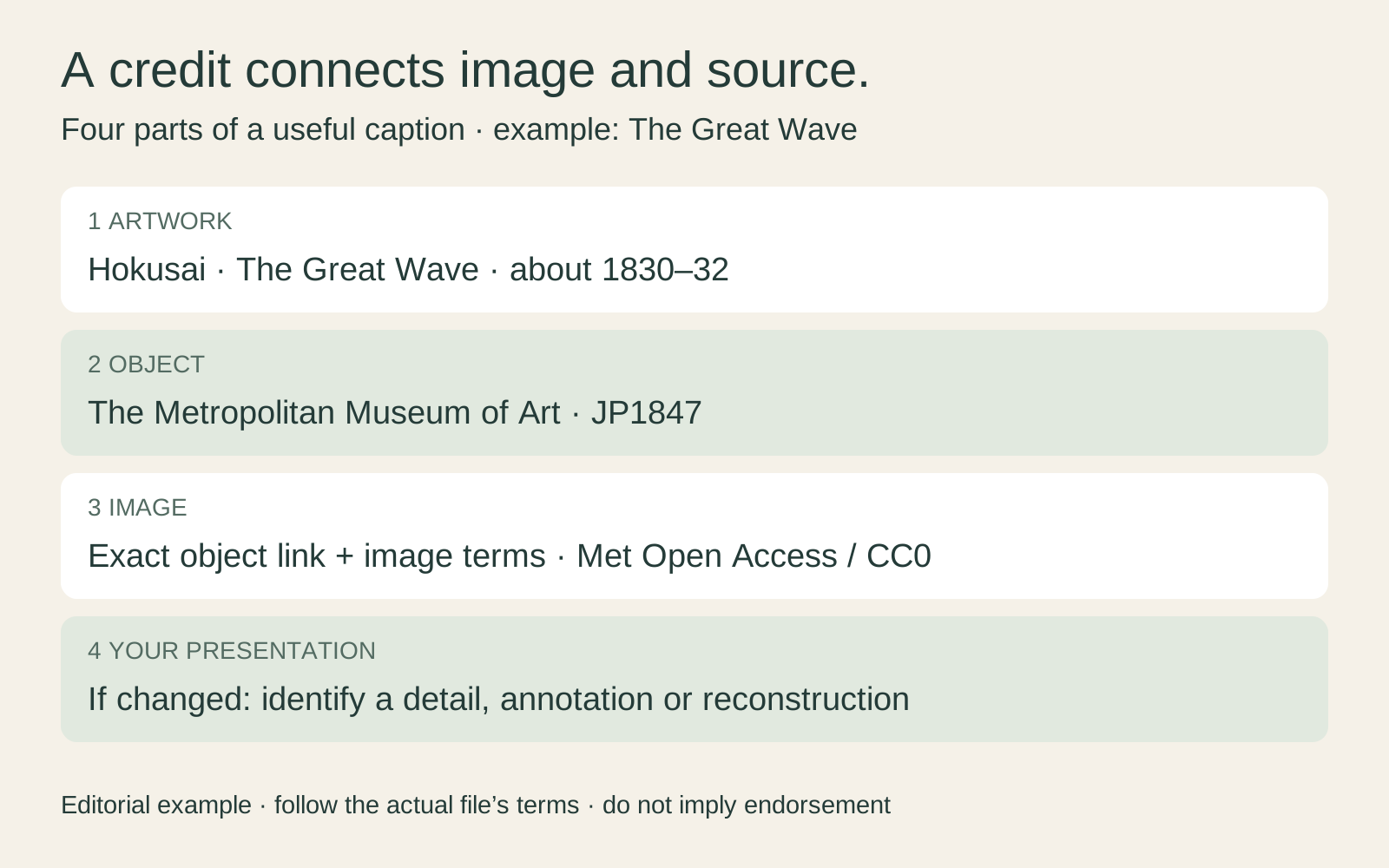
Keep a museum’s donor credit separate from image authorship. A collection credit records how an object entered or is associated with a collection; it does not mean the donor photographed it. Copying that field under “photographer” creates a new error.
A worked Great Wave credit
For the Met’s impression, a readable example is:
Katsushika Hokusai, Under the Wave off Kanagawa (The Great Wave), about 1830–32. The Metropolitan Museum of Art, New York, JP1847. H. O. Havemeyer Collection, Bequest of Mrs. H. O. Havemeyer, 1929. Image: The Met, Public Domain / CC0.
Link “The Met” or the title to the individual object record, and “CC0” to the CC0 explanation. The names, date, accession and collection credit come from that object record.
This example fits that sheet. It is not a universal credit for every photograph called The Great Wave. If you use a different impression, replace the institution, accession and image evidence rather than changing only the web link.
For a small image in an article, the visible caption might be shorter, with the full credit nearby. For a publication with a specified house style, preserve the same facts while following that style. Do not imply that the museum approved or sponsored the publication simply because you used its open image.
Keep the artist and photographer distinct
Suppose a photograph shows an old sculpture in a gallery. The sculptor made the object; the photographer made that particular view. If the file identifies a photographer and carries conditions covering their photograph, retain the required image credit as well as the artwork identification.
The same care applies to prints made “after” a painting. An engraver’s name should not disappear because the painting’s artist is more famous. Conversely, a modern file uploader is not automatically the creator of the scan or photograph. Follow the actual source fields instead of guessing from a username.
When authorship is uncertain, preserve the uncertainty. “Workshop of,” “formerly attributed to” and “after” are not decorative phrases. Removing them can turn a cautious museum record into a false assertion.
Describe changes that affect what we see
If you show a small part of a painting, label it as a detail. If you add arrows, distinguish those annotations from marks on the physical work. A reconstruction of faded colours needs more explanation than a straightforward reproduction.
Do not describe changes you did not make. Equally, avoid burying the artist’s name under a catalogue of ordinary delivery operations. The reader usually needs to know what changes the interpretation, while your working file record can retain the technical history. A particular licence may require more information; follow that requirement.
For a licensed photograph under CC BY, keep the modification information the licence requires. For a CC0 museum file, clearly describing a substantial change remains good editorial practice even where attribution is not a CC0 condition.
Choose a readable place for the credit
On a web page, a caption beside the image keeps the connection obvious. A clearly labelled image-credits section can carry longer entries when several images would otherwise overwhelm the layout. For slides, a short on-slide credit plus a sources slide is often readable; this is a layout suggestion, not a statement that every licence accepts every arrangement.
An image description for a screen reader does a different job. It describes what the image conveys. Keep visible source and licence links available rather than hiding all attribution in alt text. A reader should not have to inspect the page’s code to find the source.
If your format offers little space, decide where the full credit will live before publishing. A working link is more useful than a shortened name with no route back.
Check the caption when the image changes
Before finishing, compare the actual file with its credit. Check the version or impression, attribution, date, collection and rights label. Verify that links lead to the object and relevant terms, not just a search-results page.
Keep the downloaded source and the date you consulted its record. If you replace the picture later, repeat this check. A well-written caption becomes misleading the moment it points to the wrong image.
The aim is not a longer line of small print. It is a reliable connection between what the reader sees, who made it, where the image came from and how it may be used.
Editorial record
About this article
- Author
- Publisher
- GeMarkt
- Published
- Reviewed
- Internal source & rights check. Conducted by GeMarkt Research Review. This is an internal editorial check—not independent peer review.
- Source standard
- Rights guide source standardSeparates the underlying work from the source file, records the review date, and links the evidence used for the conclusion.
Found a claim that needs checking? Report a factual error.