GeMarkt Blog · Practical guide
Why Prints of the Same Painting Look Different: Scans, Restoration and Colour
Compare artwork versions, museum captures, conservation, digital edits and printing materials before deciding which reproduction is the right one for you.

Two prints carrying the same painting title can look surprisingly different. The reason may lie in the photograph, the painting’s condition when it was photographed, later digital changes or the printing materials. Sometimes they do not even show the same version of the work. Compare the source and the preparation, not just which thumbnail looks more vivid.
Make sure it is the same object
Check artist, full title, date, holding collection and, when available, the collection’s inventory number. A series title such as Water Lilies does not identify a single canvas. A painting, an artist’s second version and a later reproduction can look closely related without being the same object.
Look for structural differences before comparing colour: the position of a chair, a figure’s pose, the shape of a window or the distribution of flowers. For Van Gogh’s Bedroom, the work-specific guide distinguishes the versions instead of treating every bedroom image as interchangeable.
Then compare the edges. A closer crop can make an image feel more intense simply because a large pale border or area of sky is missing. A room mockup also surrounds the picture with different wall colours and lighting. Ask for the flat print preview when you need to compare the actual image.
Follow the image back to its source
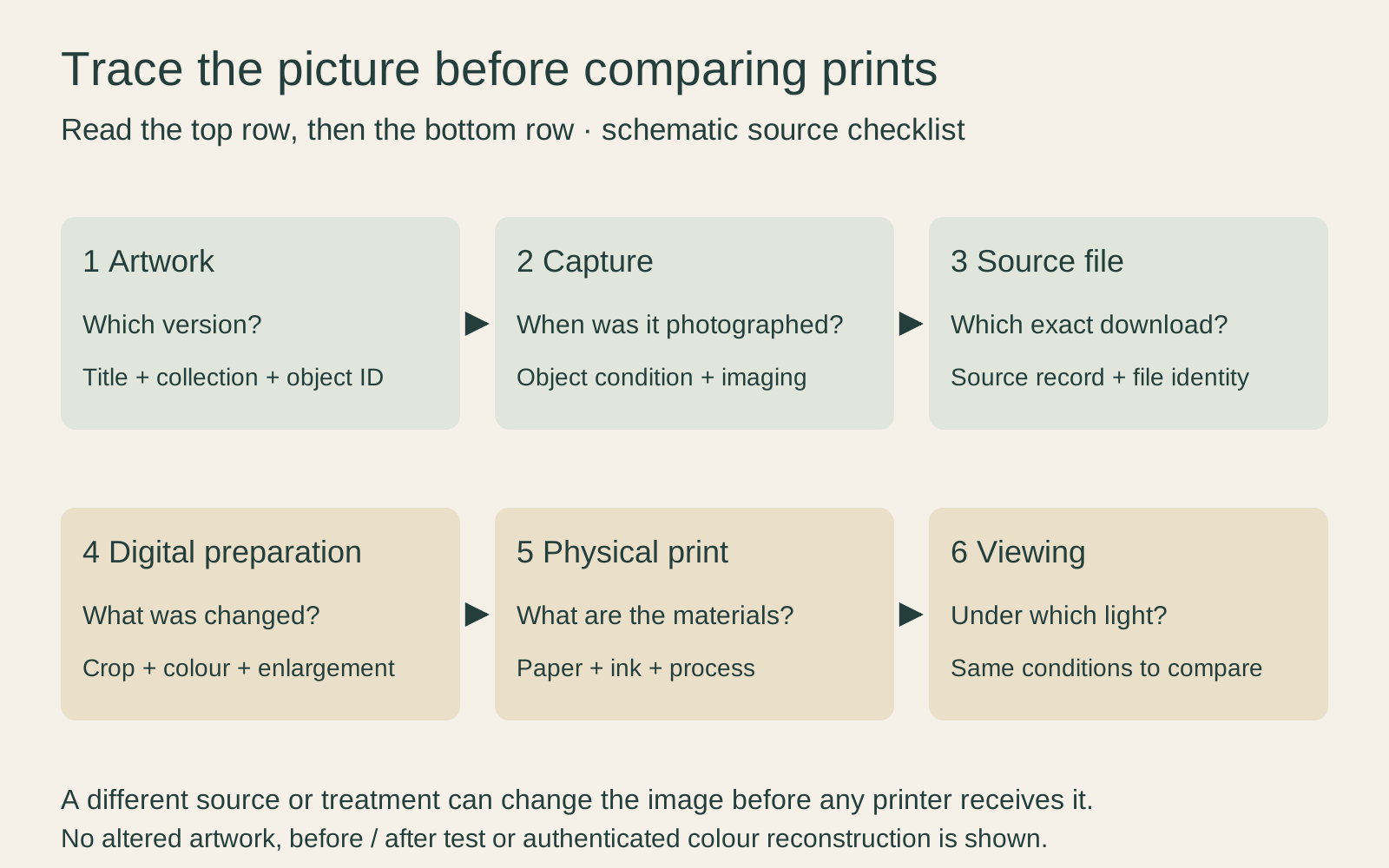
A useful listing names a museum, archive or other identifiable image provider. Follow that link to the object record and check that it matches the picture. If possible, find the exact downloadable file rather than assuming that the institution’s name authenticates every version circulating online.
The Metropolitan Museum of Art’s account of colour fidelity describes the problems caused by differing photographic and reproduction workflows. It distinguishes editing for a particular output from capture intended to record the artwork through measurements and colour references. A larger image alone does not settle which approach produced it.
The practical question is whether the seller can explain the file’s origin. “Museum quality” is not a source citation, and “restored” does not tell you what was changed. A named record and a clear account of preparation are more useful than a row of quality adjectives.
Separate a new photograph from a changed painting
A new capture can differ from an older reproduction because of its imaging workflow. But the physical object can also have changed between photographs. Those are different explanations and should not be collapsed into “the new file is better.”
The National Gallery’s account of cleaning Rembrandt’s Portrait of Hendrickje Stoffels describes a thick varnish that had yellowed with age. Removing a discoloured surface layer under conservation control is a physical treatment, not simply turning down yellow in an image editor.
A photograph from before a documented treatment can therefore record a different visible condition. That does not make every warm reproduction an old conservation image, or every cool one a recent capture. Check dates and records before telling that story about a particular file. Nor should a buyer attempt cleaning an original painting using general online instructions.
Recognise a colour reconstruction
Some images deliberately show a researched estimate of earlier colours rather than the painting’s present appearance. The Van Gogh Museum’s discussion of original colours explains how fading red pigments affected mixtures in Van Gogh’s paintings. It describes a digital reconstruction of The Bedroom with purple walls and doors where the painting now appears blue.
Such a reconstruction answers a different question from a current photograph. One asks what the object looks like now; the other uses research to investigate an earlier appearance. A reconstruction should be identified, with its research basis, instead of being passed off as the unmodified original file.
Preference is allowed: you might like one interpretation more. But liking a version does not establish its historical accuracy. Do not infer the artist’s intended colours from a seller’s saturation boost, and do not treat an unlabeled automated recolouring as equivalent to conservation research.
Ask what digital preparation changed
Useful preparation can include correcting a crooked scan or supplying a carefully checked file at an appropriate size. Other operations change the composition or its evidence: removing visible features, painting over damage, inventing missing detail or extending a canvas beyond its recorded edge.
Ask for the difference in concrete terms. Was the image cropped? Were colour and contrast altered? Was it enlarged using generated detail? Is text from the original poster still intact? A before-and-after comparison should identify the same object and keep the comparison conditions consistent, rather than making the “before” artificially small or dull.
Keep the distinction between repairing a digital capture and conserving a painting. A seller editing a file has not thereby restored the physical artwork. When the purpose is a faithful reproduction, substantial creative changes should not disappear behind that word. Our detail-print guide explains why a crop should be treated as a selected part of a composition.
Compare printing materials and viewing light
Even identical files can look different after printing. Paper colour and texture, the printer and ink combination, and the light in which you examine the result all matter. The ICC’s account of reproduction conditions explains why output media and viewing environments constrain the appearance that can be reproduced.
For a fair comparison, put samples near each other under the same light, away from glare, and compare equivalent image areas. Do not decide between two papers using photographs taken in different rooms. If one sample is framed behind reflective glazing and the other is bare, note that difference before attributing everything to the file.
Use a short comparison checklist
Before ordering, record the answers you can actually establish:
- Which exact painting or version does the print depict?
- Where did the image file come from, and is a capture or publication date supplied?
- Is it a current appearance, historical photograph or labelled reconstruction?
- What crop, retouching, colour change or enlargement has been applied?
- What image dimensions, paper and printing process will you receive?
- Is a representative sample or proof available if the differences matter to you?
An unanswered question need not make a modest decorative print unacceptable. It should limit what the seller claims and what you assume. For a reproduction bought specifically for close study, source identity and preserved detail deserve greater weight.
Choose a traceable version rather than the brightest one
There is no trustworthy “most authentic” button based solely on contrast, file size or a premium label. Prefer the reproduction whose source, alterations and physical specification you understand. If a seller cannot explain a conspicuous difference, ask before ordering rather than inventing a reassuring explanation yourself.
The aim is to choose knowingly: a traceable reproduction of the present object, a clearly identified historical view, or an openly described interpretation. Those can all be interesting images, but they are not the same promise.
Editorial record
About this article
- Author
- Publisher
- GeMarkt
- Published
- Reviewed
- Internal source & rights check. Conducted by GeMarkt Research Review. This is an internal editorial check—not independent peer review.
- Source standard
- Buying guide source standardSeparates measured or first-hand evidence from general guidance and keeps practical limits visible.
Found a claim that needs checking? Report a factual error.