GeMarkt Blog · Practical guide
Wedding and Anniversary Art Gifts
Choose an art gift both partners can enjoy. Compare embraces and shared-place imagery, then settle the size, framing and dedication without unwanted surprises.

Choose wedding and anniversary art around something both people value, not simply around a romantic title. An embrace may be exactly right, but a garden, a place they visited or an artist they enjoy together can make an equally personal gift. What matters is whether they want to see the image in their home after the celebration.
For a wedding, find out whether they are already choosing furnishings together. For an anniversary, look at how their tastes and home have changed. A present can acknowledge a long shared history without freezing the couple in the style they liked when they first met.
Choose for two people rather than an occasion
If the couple has a registry or has said that they do not want physical gifts, start there. Art does not become an exception merely because the giver considers it meaningful. You can offer to help choose something later instead of arriving with a large object that needs an immediate place.
When tastes differ, look for a point of overlap without flattening both preferences. One person might love a particular artist, while the other is drawn to gardens or bold patterns. A work that genuinely connects those interests is more promising than a generic “romantic” image neither would choose alone.
Ask both people if the picture is intended for a shared room. You might send two alternatives with a short explanation and let them choose. Preserve an element of surprise in the presentation or personal note rather than hiding the decision that determines what they will live with.
An anniversary gift from one partner to the other can be more personal. Even then, distinguish a picture for their own study from a decision about the main living-room wall. The scale of the gesture should not override their ability to choose.
Klimt’s Kiss is a bold choice not a neutral one
Gustav Klimt’s The Kiss (Lovers), dated c. 1907–1909 by the Belvedere, is an obvious candidate for a couple who likes his art. Its nearly enclosing gold shape and patterned robes make the embrace visible from a distance.
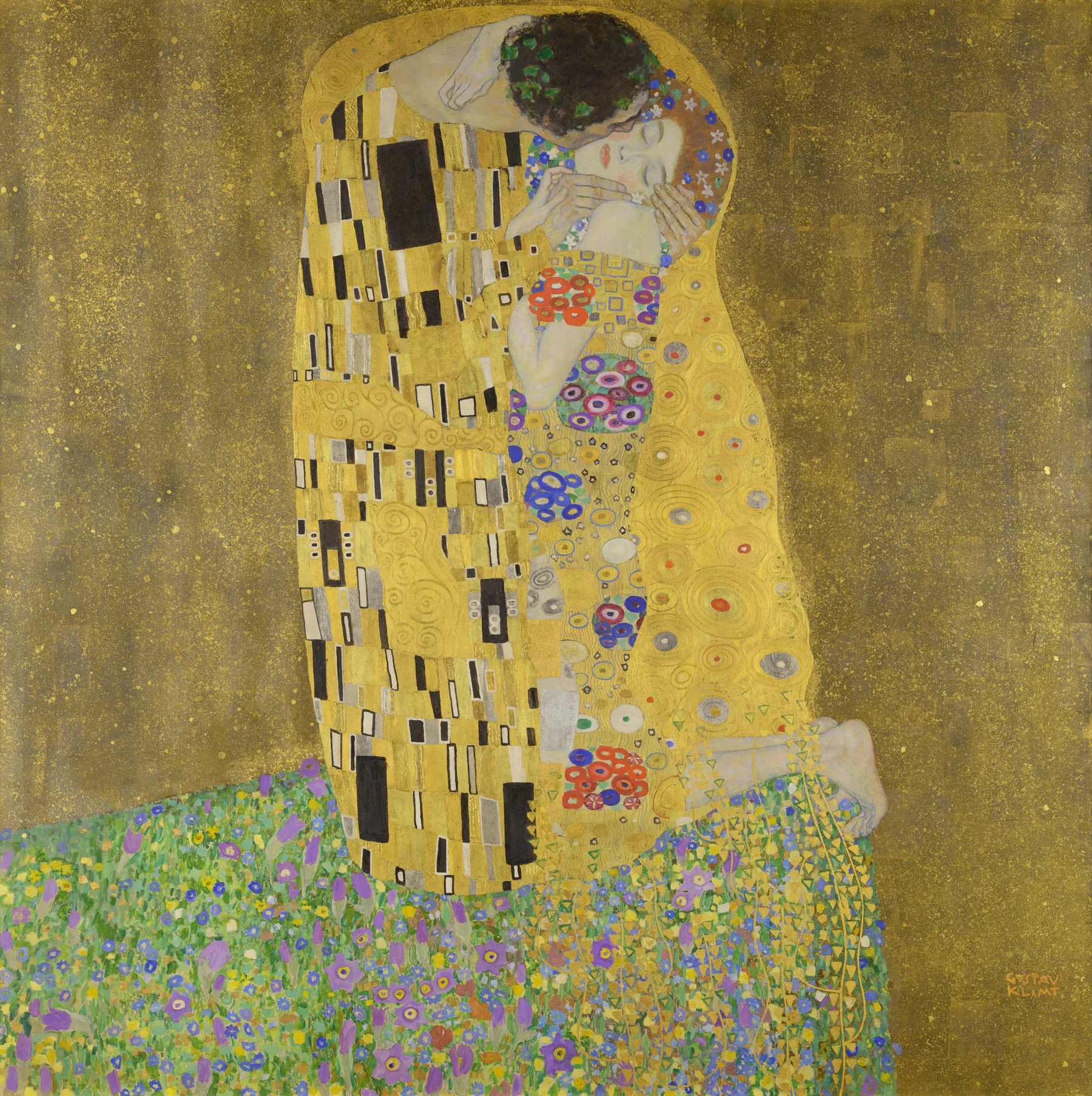

It is also a strong decorating decision. The large gold area and dark rectangles will have a presence even when the print is not enormous. Do not choose it only because the title seems appropriate: check whether they like that density, pattern and colour.
The original combines paint with metal leaf. A standard printed reproduction represents its appearance; it does not inherit the original’s reflective materials. If a product claims metallic effects, read that particular specification rather than assuming every Klimt print glitters.
Keep the surrounding field and flowered edge in mind when selecting a format. A narrow crop of the heads removes much of what makes this composition distinctive. That may be a deliberate detail print, but it should not be mistaken for the complete work. A personal note can explain why this image reminded you of the couple without claiming that Klimt painted a wedding portrait.
Rodin’s Kiss offers a different kind of image
Rodin’s The Kiss can appeal to someone who prefers bodies and movement to ornamental surface. The example shown here is a specific small bronze at the National Gallery of Art: its model dates to 1880–1887, and this cast to c. 1898/1902. It is not a photograph of the large marble version in Paris.
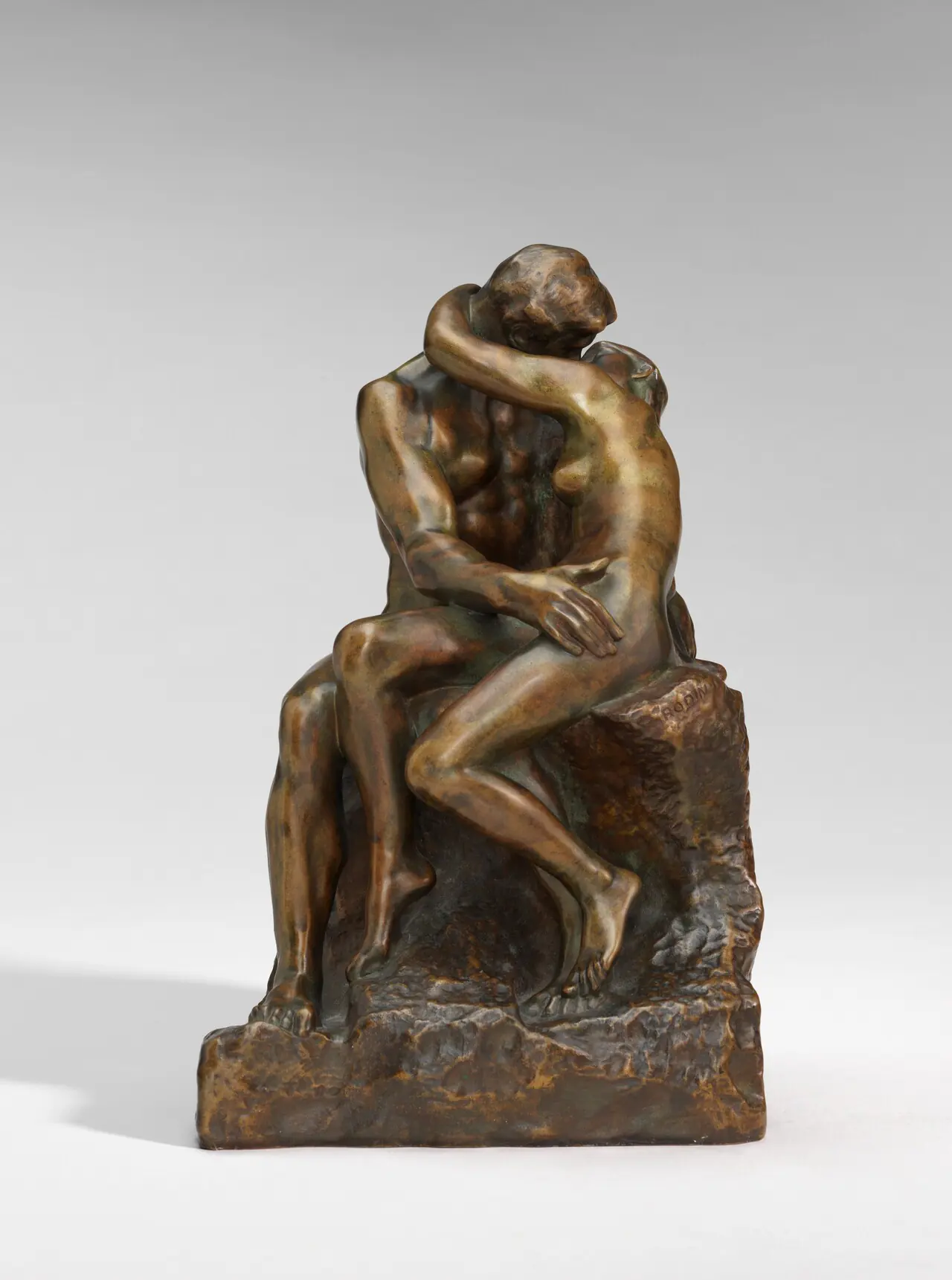
A photograph of sculpture brings its viewpoint and background into the gift. Here the pale background separates the figures from their surroundings, and the overlapping limbs provide most of the interest. Another angle would show different relationships; it would not necessarily be a different sculpture.
Be clear about what is being purchased. A photographic print of a bronze is not a bronze object, and a modern replica would be another kind of product again. Look at the whole description, not just a title shared by many listings.
The nudity also makes this a personal choice, not a universally appropriate wedding image. A couple may enjoy it privately but prefer another subject in a shared family room. Our comparison of the two Kisses explores their differences if you want to discuss the works together.
A shared place can say more than a couple
The gift need not contain lovers. Monet’s The Japanese Footbridge, 1899, could connect with a shared love of gardens or a visit to see his art. Its bridge, reflections and water lilies provide a subject that both people can enjoy without making the room announce a romantic occasion.
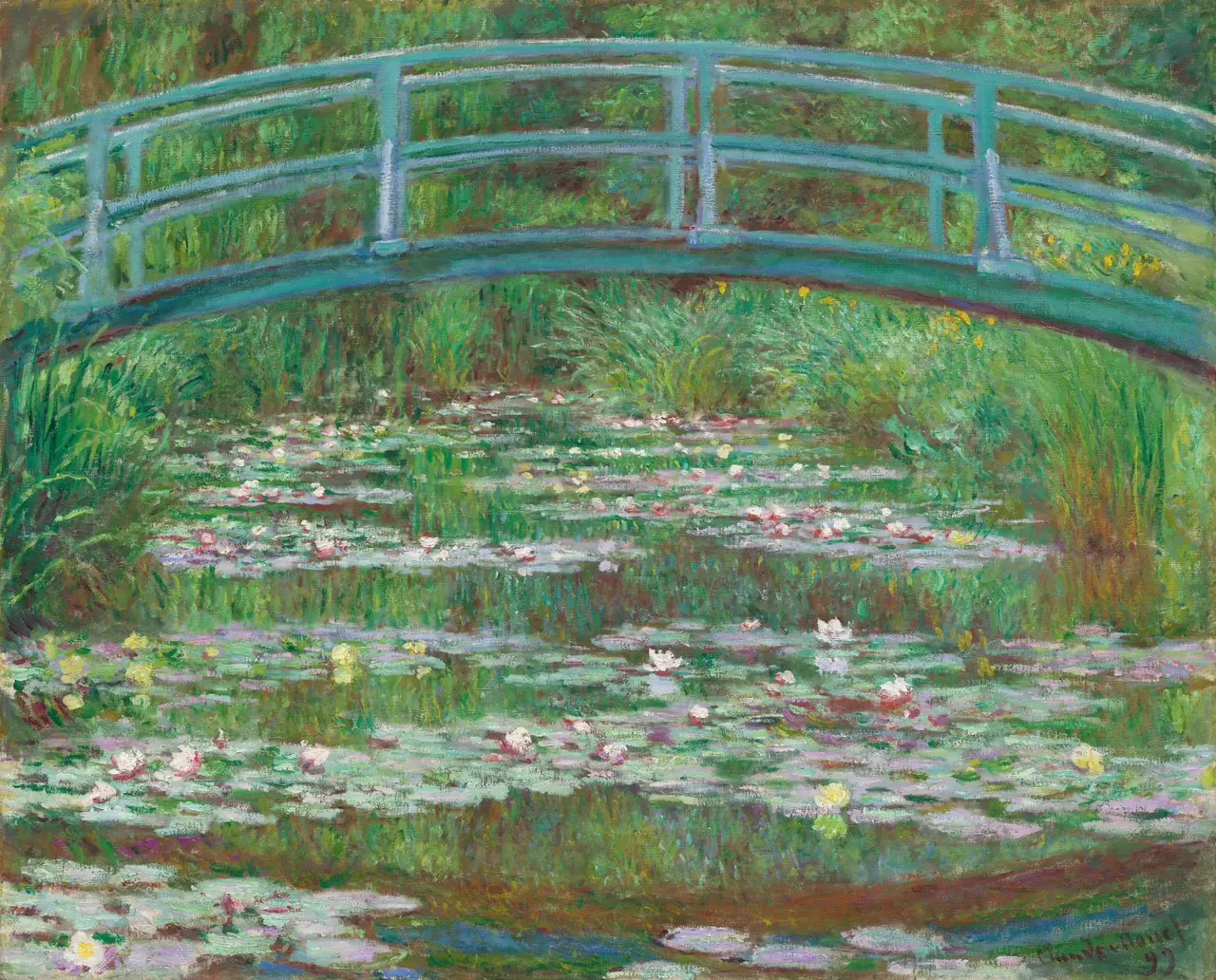
The connection does not have to be literal. Perhaps they garden together, or the painting recalls a day you spent in a museum with them. Describe that memory as your own rather than renaming the pictured location to fit their story.
If a particular place matters, verify it before buying an image labelled with its name. A painting of a bridge is not necessarily the bridge they crossed on their honeymoon. A looser visual association is perfectly valid when honestly explained. It is better than a confident but inaccurate location claim printed on the dedication.
Make the size and framing a shared decision
A large wedding gift can become a furnishing commitment. Confirm the intended wall and the finished outer dimensions before ordering. “They have a big house” tells you little about which surfaces are available, how the rooms are used or which pictures they already plan to hang.
For two smaller works, calculate the group rather than checking each frame in isolation. Two frames 35 cm wide with an 8 cm gap occupy 78 cm in total. This is an example for planning, not a spacing rule or a statement of available product sizes. Include the outer frames, not merely the printed images.
If framing is still undecided, agree who will arrange it and what the gift covers. An unframed reproduction may suit experienced print collectors, but someone else may experience it as a bill and an errand. Our frame-colour guide can support a joint choice rather than a guess based on one photograph of the room.
Put the dedication where it can be kept
A separate card allows the artwork to remain unchanged. It can explain the shared memory, name the occasion and record who gave it. Text over the image is harder to revise and may limit where the couple wants to display it later.
If they actively want personalisation, confirm the names, accents, date format and preferred wording with them. Do not assume a surname change. Show a proof before approving irreversible work, and check the seller’s terms for personalised items rather than promising an exchange after the fact.
For an anniversary, avoid making the material tradition more important than the recipient’s taste. You do not need to turn every element gold because of a particular number of years. A carefully chosen image with a brief, truthful message can acknowledge the occasion without forcing it into the picture’s design.
Plan the gift around their real life
Wedding schedules may include travel, a move or an uncertain delivery address. Arrange the parcel when somebody can receive and inspect it, rather than assuming the ceremony date is the best delivery date. Do not bring a large fragile frame to a venue unless the couple has agreed how it will travel home.
For a group gift, appoint one person to confirm the final image, format and delivery details. Several contributors should not generate several competing instructions for the recipient. Record the actual care information and purchase terms, and keep the packaging until the item has been checked.
Give the couple permission to take their time. They may frame the picture later or find that another room suits it better. A successful art gift joins their shared life; it does not require them to arrange that life around the gift.
Editorial record
About this article
- Author
- Publisher
- GeMarkt
- Published
- Reviewed
- Internal source & rights check. Conducted by GeMarkt Research Review. This is an internal editorial check—not independent peer review.
- Source standard
- Buying guide source standardSeparates measured or first-hand evidence from general guidance and keeps practical limits visible.
Found a claim that needs checking? Report a factual error.