GeMarkt Blog · Essay
The Vienna Secession: Klimt, Schiele and More Than Gold
Eight works by five makers explain the Vienna Secession and its wider legacy, from Olbrich’s building and Moser’s line to Klimt’s gold and Schiele’s prints.

Gold makes a convincing first impression of Vienna around 1900. It glints on the Secession building, surrounds Adele Bloch-Bauer and seems to absorb the lovers in Klimt’s best-known painting. But follow that impression too far and an entire artistic culture starts looking like one decorative finish.
The Vienna Secession was more interesting than that. Its story includes exhibition rooms, drawings, woodcuts and arguments about how art should meet public life. Eight works by five makers reveal those connections here. Four of the makers helped establish the association; Egon Schiele belonged to a later generation. Keeping that distinction visible makes the pictures, and the history, easier to understand.
An association before it was a look
The Secession began in 1897 as a break from Vienna’s established Künstlerhaus organisation. The Leopold Museum names Klimt as its first president, alongside founders including Koloman Moser, Carl Moll and architects Josef Hoffmann and Joseph Maria Olbrich. They wanted a platform for contemporary and international art, not simply another annual display under the same rules.
There was no single compulsory Secession style. The NGV’s account connects it with Jugendstil, the German-speaking form of Art Nouveau, while noting its changing balance of flowing line and geometry. A practical ambition united different media: a room, a picture, its setting and everyday objects could be considered together. Gesamtkunstwerk, often translated as total work of art, names that larger ideal—not a rule that everything had to be covered in ornament.
Olbrich: a building for a new kind of exhibition
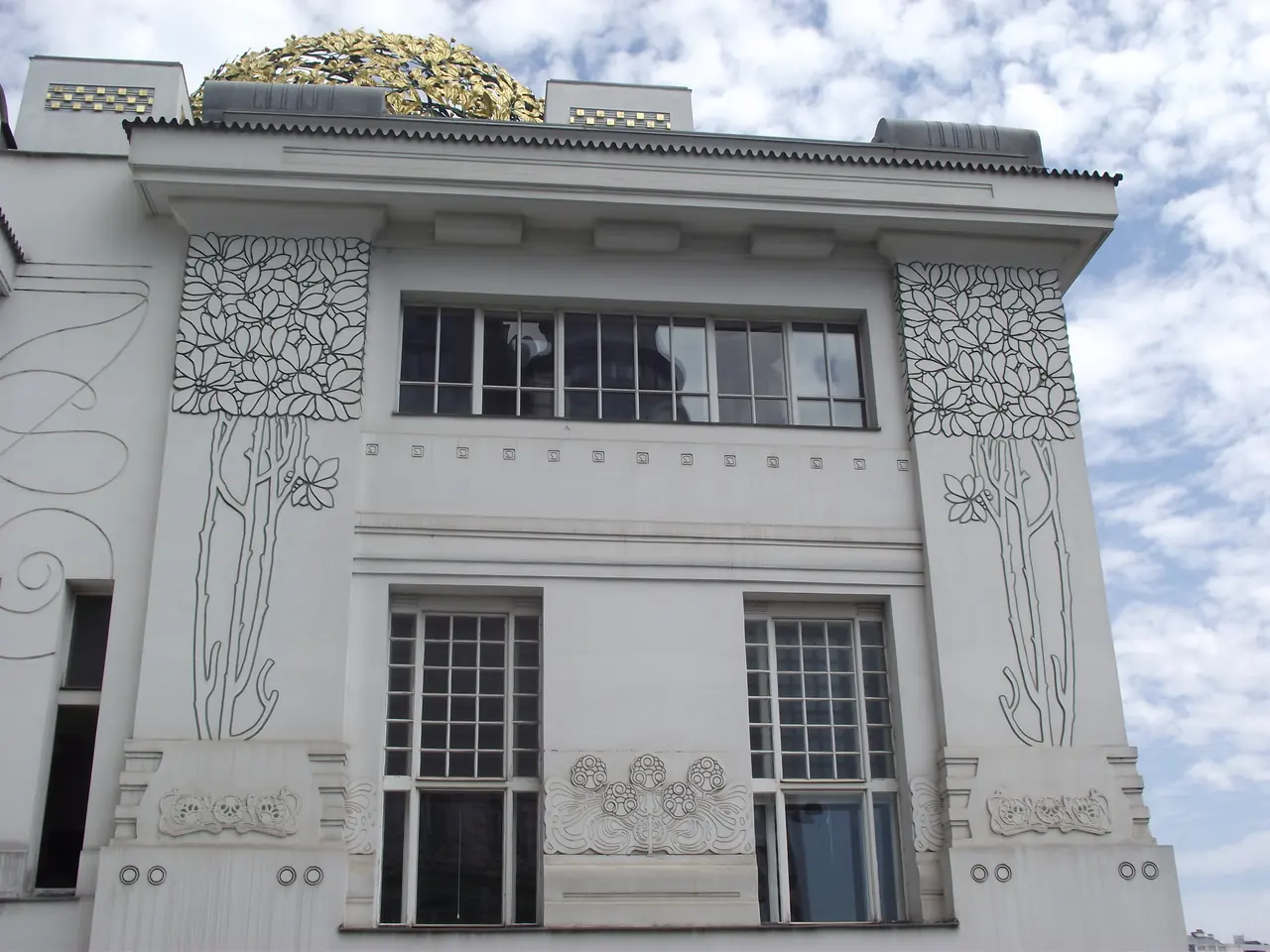

The building opened a physical space for the association’s programme. In this side view, the rectangular windows and large white surfaces matter as much as the gold dome. Stylised plants spread across the wall in outlines rather than pretending to grow out of it. Ornament and structure remain distinct enough for us to see how they have been arranged.
The NGV describes Olbrich’s 1898 design through simple geometric forms and gilded laurel leaves. The photograph shows a surviving building, not an untouched record of its opening day. Even so, its contrast between restrained surfaces and concentrated decoration offers a useful starting point: Secession design can frame an ornament carefully rather than filling every available inch.
Moser: intimacy in pen and ink
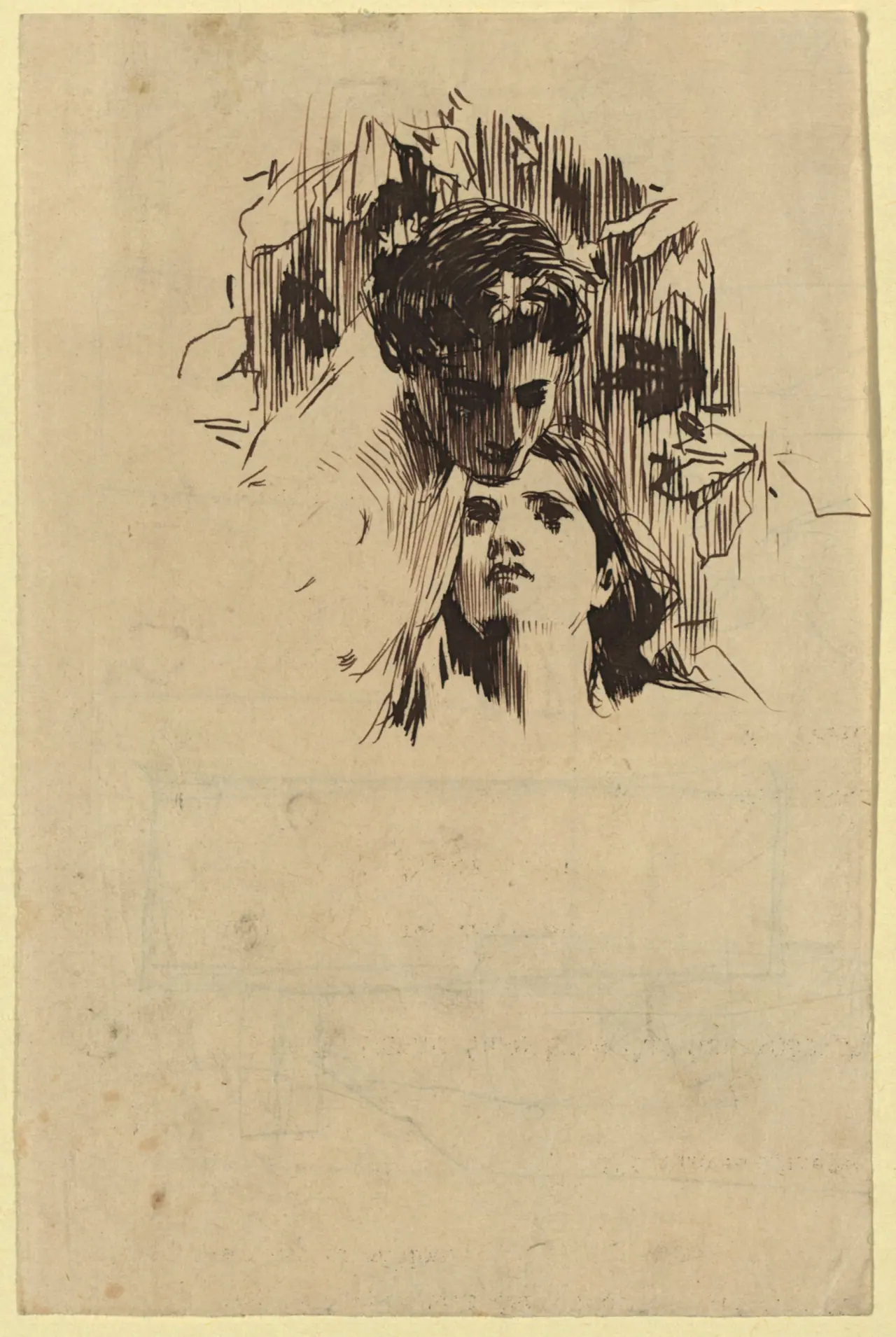
Moser’s drawing occupies a much smaller world than an exhibition building. The Wien Museum records its paper size as 17.1 by 11.11 centimetres. Two faces, leaning towards one another, are enough to establish its subject. Closely packed vertical strokes darken one head and the area behind it, while the lower face remains pale.
Notice how the drawing dissolves towards the edges. It does not finish every shoulder or explain a room. A small cluster of marks carries the encounter, surrounded by paper that has its own visible age and texture. This is a pen drawing, not a poster or a print advertisement. It shows why reducing Moser to a designer of neat repeating patterns would miss part of his range.
Moser also helped found the Wiener Werkstätte in 1903, with Hoffmann and Fritz Waerndorfer, as the Leopold Museum explains. That workshop and the Secession were connected enterprises, not two names for the same organisation.
Moll: a winter street without gold
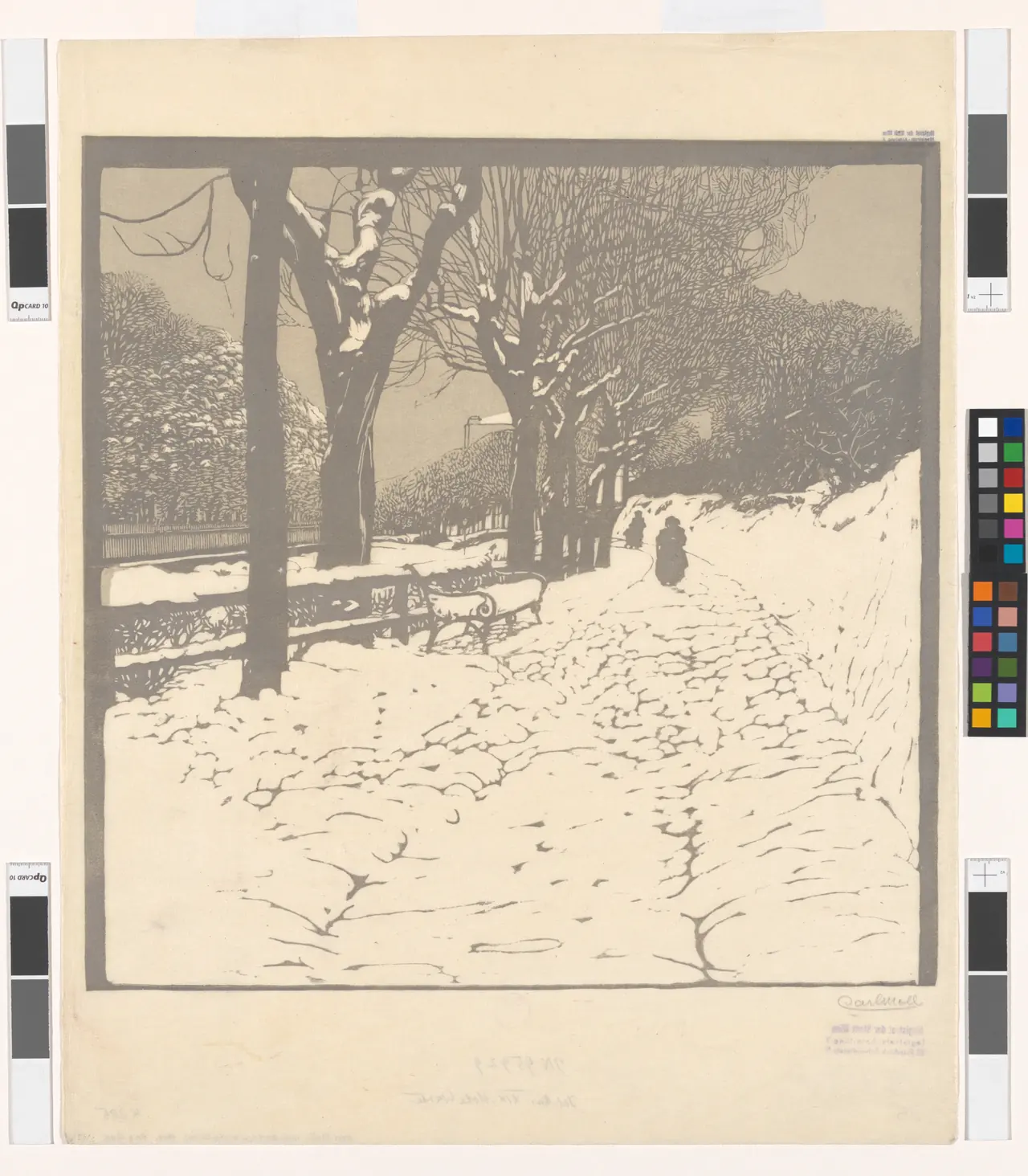
Snow creates large light spaces between the trees and across the rising road. Dark branches make a fine network above them. Near the middle distance, one small figure gives the route a human scale without turning it into a crowded street scene.
The Wien Museum identifies this as a colour woodcut, with a nearly square printed area on a taller sheet. The photograph includes the museum’s measuring and colour targets; those are documentation tools outside the artwork, not Moll’s border design.
Moll’s place among the founders does not depend on this print resembling Klimt’s portraits. Its restrained tonal areas and repeated branching forms suggest another way to organise a decorative surface. The route still recedes into depth, while the pattern of pale snow keeps bringing our attention back to the paper. Secession membership allowed more variety than the shorthand “Viennese gold” implies.
Klimt: two different uses of gold
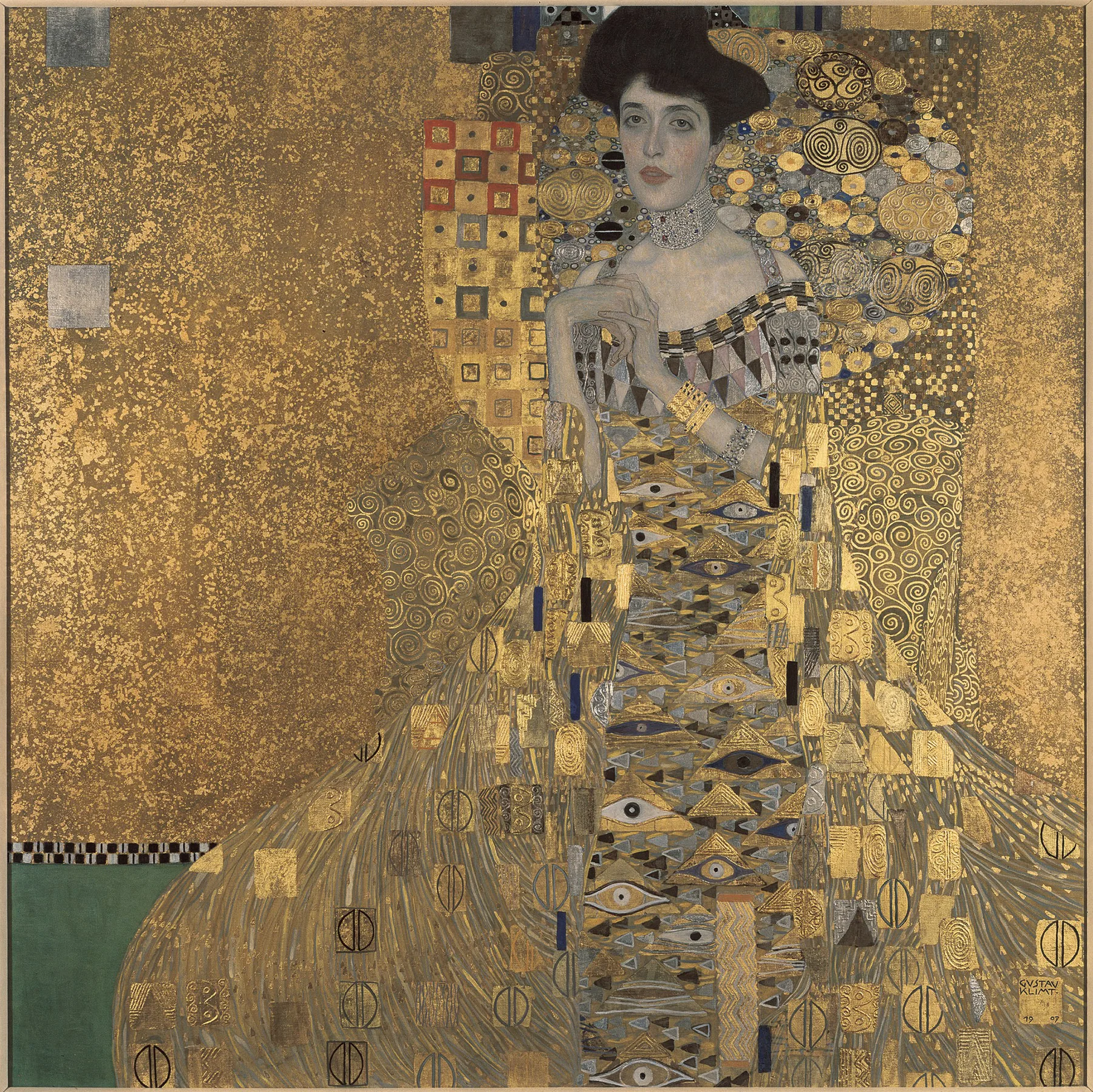


Adele’s face looks outward. Her hands gather in front of her, while the patterned dress, chair and surrounding gold make it difficult to separate body from setting. This is a portrait of a particular patron, not an anonymous personification. The Neue Galerie’s account records the painting’s 1907 date and its oil, gold and silver materials.
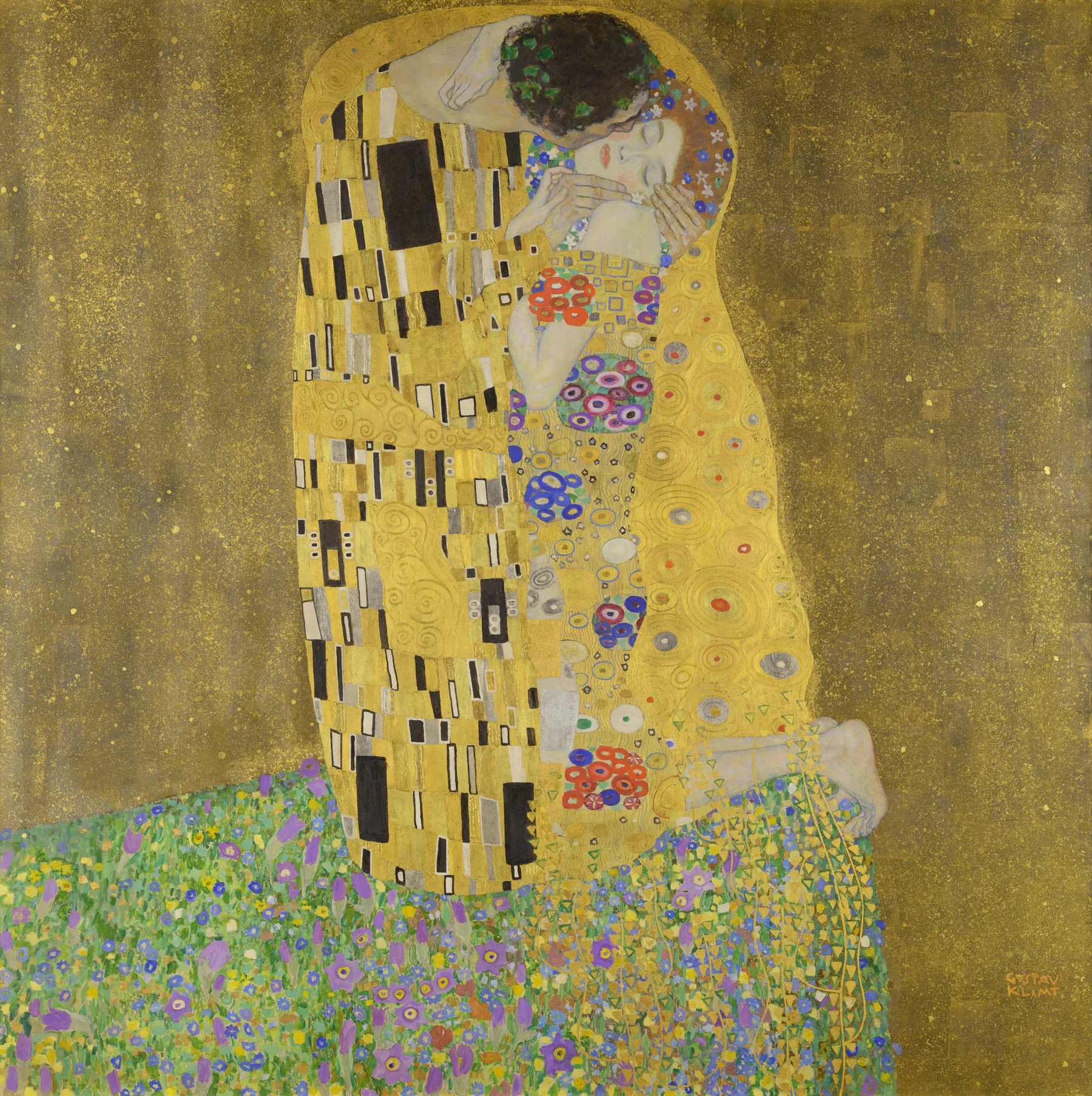
In The Kiss, attention closes around the couple instead. Rectangular marks and rounded coloured shapes distinguish the robes; faces, hands and feet remain legible where the decoration pauses. The Belvedere records real gold, silver and platinum, although a flat screen cannot reproduce the way those surfaces respond to changing light.
Both works postdate Klimt’s departure from the Secession in 1905, documented by the NGV. They belong to his wider Viennese development, not a single founding exhibition. That chronology stops the association from becoming an all-purpose label for every later Klimt painting. Our Klimt guide provides a separate introduction to the artist and his images.
Klimt: Death and Life after the golden period
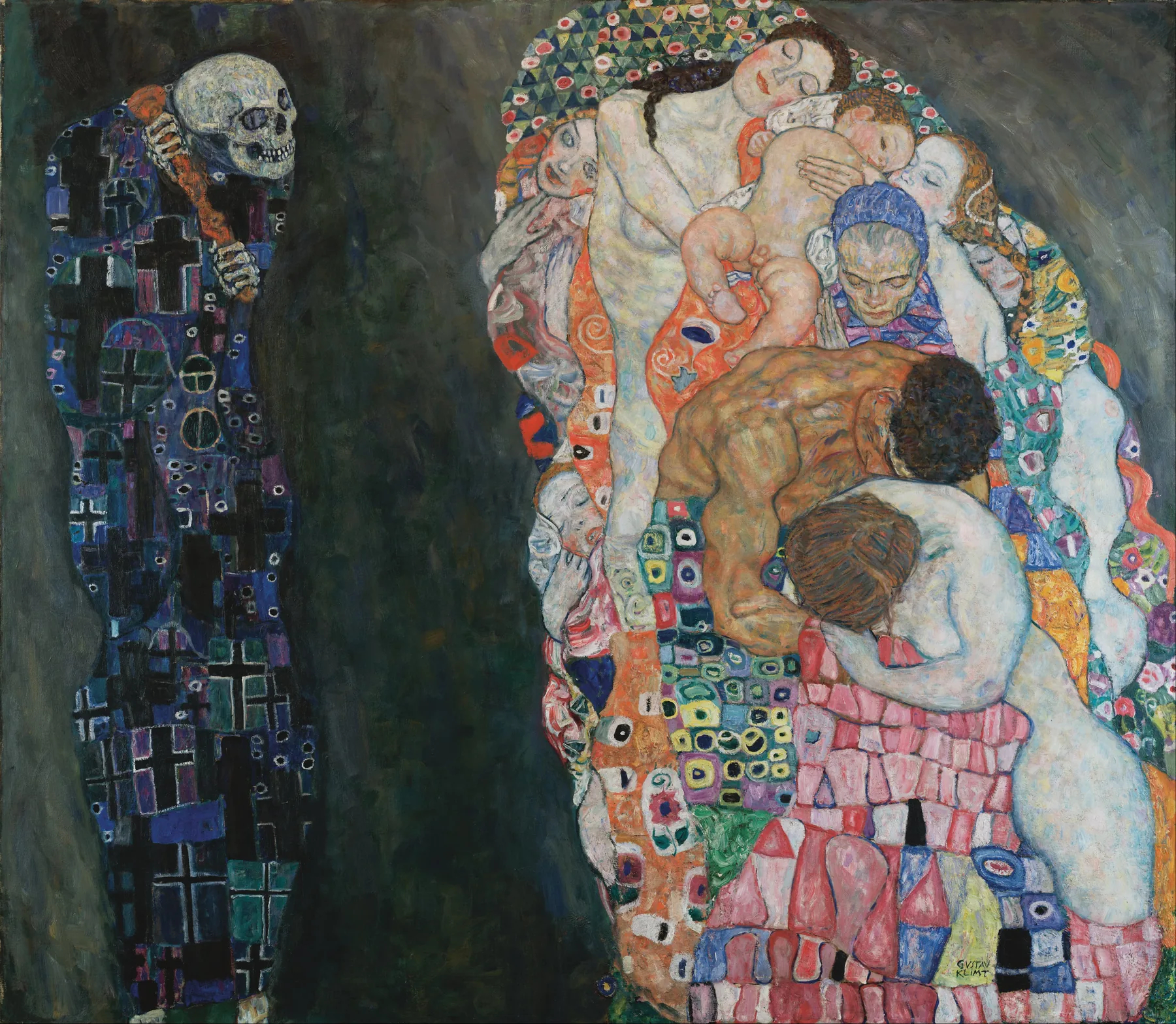

Here the important division is not between gold and flesh but between two groups separated by an open gap. Death stands alone, its skull turned towards the crowded living. Their different ages and intertwined bodies occupy a bright enclosure of pattern, while the skeleton’s robe repeats darker crosses and rectangles.
The Leopold Museum dates the first painting to 1910–11 and its revision to 1915–16. What we see is the revised composition, not a reconstruction of its first state. Ornament remains central, yet its purpose has changed: it helps hold the living together and distinguish them from the solitary figure. This is an allegory—an image that gives an abstract idea a visible form—not a straightforward report of a gathering.
Schiele: a later generation, not a founder
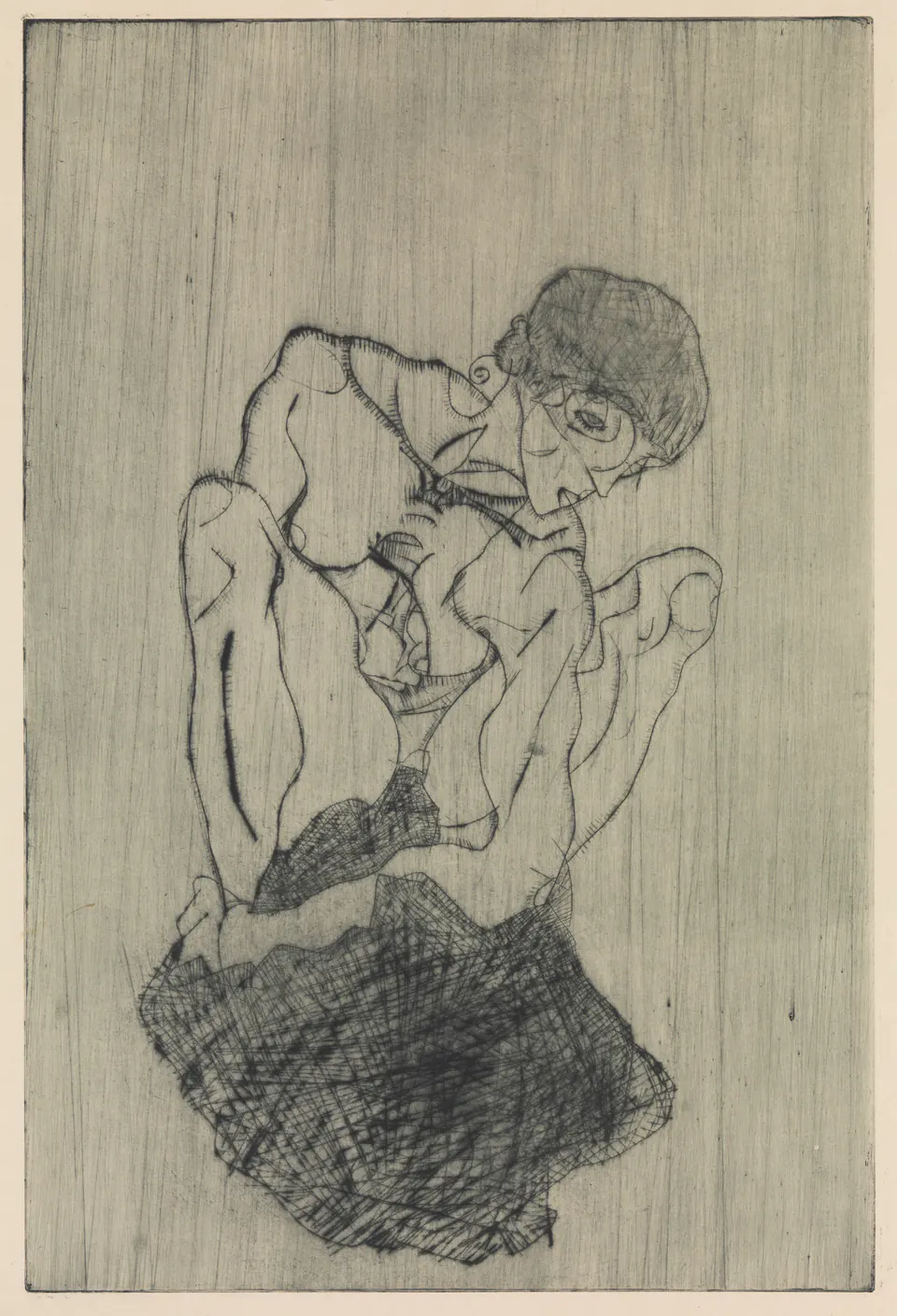
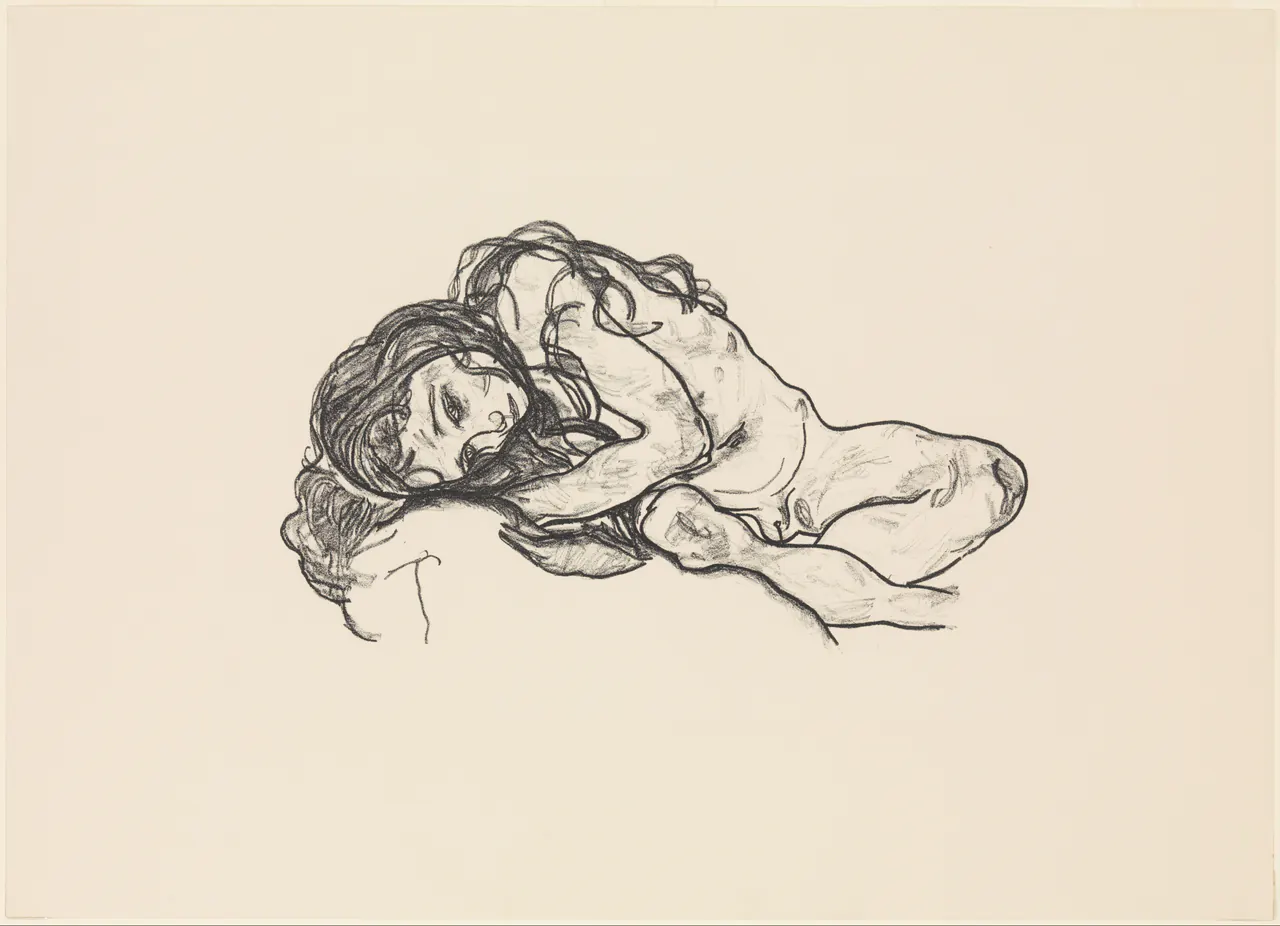
Schiele was born in 1890: he was a child when the Secession began. The Leopold Museum’s biography places his own Neukunstgruppe in 1909. His inclusion here concerns the younger Viennese generation, not a claim that he founded the 1897 association.
Compare the two prints before calling his line uniformly nervous. In Sorrow, the bent head and clasped hands pull the body inward; the long background marks keep the figure suspended rather than placing it in a furnished room. Girl spreads horizontally and leaves much of the sheet quiet. Her reclining pose can feel restful even though the outline repeatedly changes direction.
These are different print processes and later impressions: the Met identifies a 1914 drypoint design and a 1918 lithograph design, both represented here by sheets from a 1922 portfolio. They are not original pencil drawings or evidence of one exhibition installation. The Schiele guide follows those distinctions; Klimt versus Schiele looks more closely at their treatment of the figure.
Recognising the connection without flattening the differences
Begin with the relation between a figure and its surrounding surface. Does pattern swallow the body, frame it or disappear almost completely? Then look at the edges: a plant outline on Olbrich’s wall, a branch in Moll’s print and a shoulder in Schiele’s lithograph all make different uses of a clear contour.
Dates matter as much as similarities. An association, a workshop and a later generation can exchange ideas without becoming identical. These eight works offer that wider view of Vienna: gold is one expressive material among many, not a membership badge. Continue through the artist guides or our collection directory, which lists available collections rather than promising a dedicated Secession range.
Editorial record
About this article
- Author
- Publisher
- GeMarkt
- Published
- Reviewed
- Internal source & rights check. Conducted by GeMarkt Research Review. This is an internal editorial check—not independent peer review.
- Source standard
- Art history source standardPrioritises object records and research sources, distinguishes evidence from interpretation, and states material uncertainty.
Found a claim that needs checking? Report a factual error.