GeMarkt Blog · Practical guide
Is Egon Schiele Public Domain? Prints, Drawings and Images
Yes for the twelve Schiele works and museum images checked here. Learn why a drawing's publication history and a posthumous print's date matter for reuse.
Rights check · reviewed
The short answer
Yes for established Schiele works in the checked life-plus-70 markets, but the U.S. answer here is limited to the 1910 issues, the 1917 reproduced drawing, and the exact 1922 portfolio impressions in this ledger.
| What is being checked | Result | Why |
|---|---|---|
| European Union, United Kingdom & Türkiye | Public domain | Schiele died in 1918; the ordinary life-plus-70 term has expired in the checked markets. |
| United States — named 12-record set | Clear for the documented issues | The set uses three 1910 lithographs, eight impressions from a named 1922 portfolio, and a drawing reproduced in a 1917 volume. |
| Unpublished drawing or exact file | Check before reuse | A creation date or a modern Public Domain label does not by itself close a drawing’s U.S. publication history. |
Eleven Met files and one Cleveland file are cleared. Unpublished drawings without a documented pre-1931 distribution or reproduction event remain outside the result.
This is a documented research summary, not legal advice. Copyright and moral-rights rules can vary by country and by the history of a particular work.

What we’ll look at
Can you reuse a Schiele drawing, and how does a posthumous print differ?
Yes for the twelve Schiele works examined here, in the European Union, United Kingdom, Türkiye, and United States. Their selected museum images are available under CC0. For another drawing or print, check when it was published and which image you intend to use.
Schiele died in 1918. That date resolves the ordinary life-plus-70 term in the markets checked here. The U.S. answer also needs publication evidence: this guide uses documented 1910 issues, a 1922 portfolio, and one drawing reproduced in a 1917 volume.
The short answer
Eleven selected images come from The Metropolitan Museum of Art and one from the Cleveland Museum of Art. The Met objects include three 1910 Wiener Werkstätte lithographs and eight impressions from the 1922 portfolio Das graphische Werk von Egon Schiele. Cleveland’s Portrait of a Child (Anton Peschka Jr.) is a drawing reproduced as plate 10 in the 1917 volume Zeichnungen Egon Schiele, published by Richard Lanyi.
The museums identify the objects and provide Open Access or CC0 labels for the selected images. Those labels cannot be transferred to an uncatalogued drawing, a later facsimile, or a file whose source is unknown.
Copyright in the EU, UK, and Türkiye
The ordinary rules checked are the EU term directive, UK government duration guidance, and Article 27 of Türkiye’s Law No. 5846. Each uses life plus 70 years for the relevant economic rights in an artistic work. Because Schiele died in 1918, his established works passed those ordinary terms decades ago.
| Market checked | Ordinary rule applied | Result for established Schiele works |
|---|---|---|
| European Union | author’s life plus 70 years | public domain |
| United Kingdom | 70 years after the creator’s death | public domain |
| Türkiye | life plus 70 years for economic rights | public domain |
That conclusion does not waive attribution duties, museum access conditions, trademarks, privacy, cultural-property controls, or rights in a creative modern restoration.
Why 1918 does not answer the U.S. question
U.S. duration for older material often depends on publication history. The Copyright Office explains that distributing a visual work or authorised copies can publish it, while a public display alone does not necessarily do so. A date written on a drawing records creation, not automatically distribution.
In 2026, works published before 1931 have passed the maximum 95-year published-work term. Section 303 preserves a different path for works that were still unpublished at the start of 1978 and a 2047 floor for certain works first published by the end of 2002. That is why this guide uses explicit issue or reproduction records instead of turning Schiele’s death date into a universal U.S. answer.
Understanding the 1922 portfolio
Eight Met sheets are exact impressions from a portfolio issued in 1922, four years after Schiele’s death. The catalogue data distinguishes the date of a design from the date of the impression used here. Girl, for example, is a 1918 design represented by a 1922 portfolio sheet.
This distinction matters beyond copyright. A posthumous portfolio has an editor, publisher, production history, sequence, paper, and individual accessions. It should not be labelled simply “Schiele, 1918” if the object being reproduced is the 1922 impression.
What about Schiele’s drawings?
A Schiele drawing dated 1915 may be outside life-plus-70 terms in Europe and still need a U.S. publication investigation. Exhibition alone is insufficient; a catalogue reproduction, distributed photograph, sale of the original, or other authorised distribution may provide evidence, but each fact must be documented.
The Cleveland child portrait is included because its institutional record cites a 1917 reproduction in a named volume. That bounded fact does not clear every drawing in the same collection. When no comparable evidence exists, the responsible answer is “verify,” not “probably old enough.”
Check the museum image’s terms
The depicted work and its digital surrogate are two layers. The Met marks eligible Public Domain object images as Open Access under CC0; Cleveland also releases eligible collection files under CC0. The UK IPO’s digital-image notice is a useful reminder that a scan or photograph must be checked independently.
The images shown here come from the linked museum records and were resized and converted to WebP without cropping. If you choose a colourised scan, a book reproduction, or an auction photograph, check that file’s source and terms separately.
Twelve works to compare
The twelve illustrated records below let you compare three kinds of object: a print issued during Schiele’s lifetime, a posthumous portfolio impression, and a drawing known through an early reproduction. Each links to the museum page for that particular sheet.
Pay attention to the two dates in a portfolio caption. One may describe Schiele’s design; the other tells you when the sheet in front of you was printed. Keeping both makes a reproduction easier to identify and credit.
A practical Schiele reuse checklist
- Identify the precise object, date, medium, institution, and accession.
- Treat a design date and the date of a posthumous impression separately.
- For a U.S. use of a drawing, preserve evidence of authorised publication or distribution.
- Save the exact museum source-file URL and current rights label.
- Credit editors, publishers, printers, and portfolio titles where the record names them.
- Document any crop, restoration, colour change, compositing, or format conversion.
- Recheck attribution, privacy, moral-rights, trademark, access, and endorsement questions.
Keep exploring
Use the linked museum pages to find the selected images. GeMarkt does not currently offer a Schiele collection, product, or download room.
If a drawing’s history is unclear, How to research an artwork explains how to build a source trail. How to cite art and images helps you preserve the object, edition, and image credits in a caption.
Rights-checked image ledger
A documented starting set
These files were selected from the holding institutions rather than from search-result copies. Each card keeps the artwork record, exact source file, provider statement and GeMarkt transformation visible as separate facts.
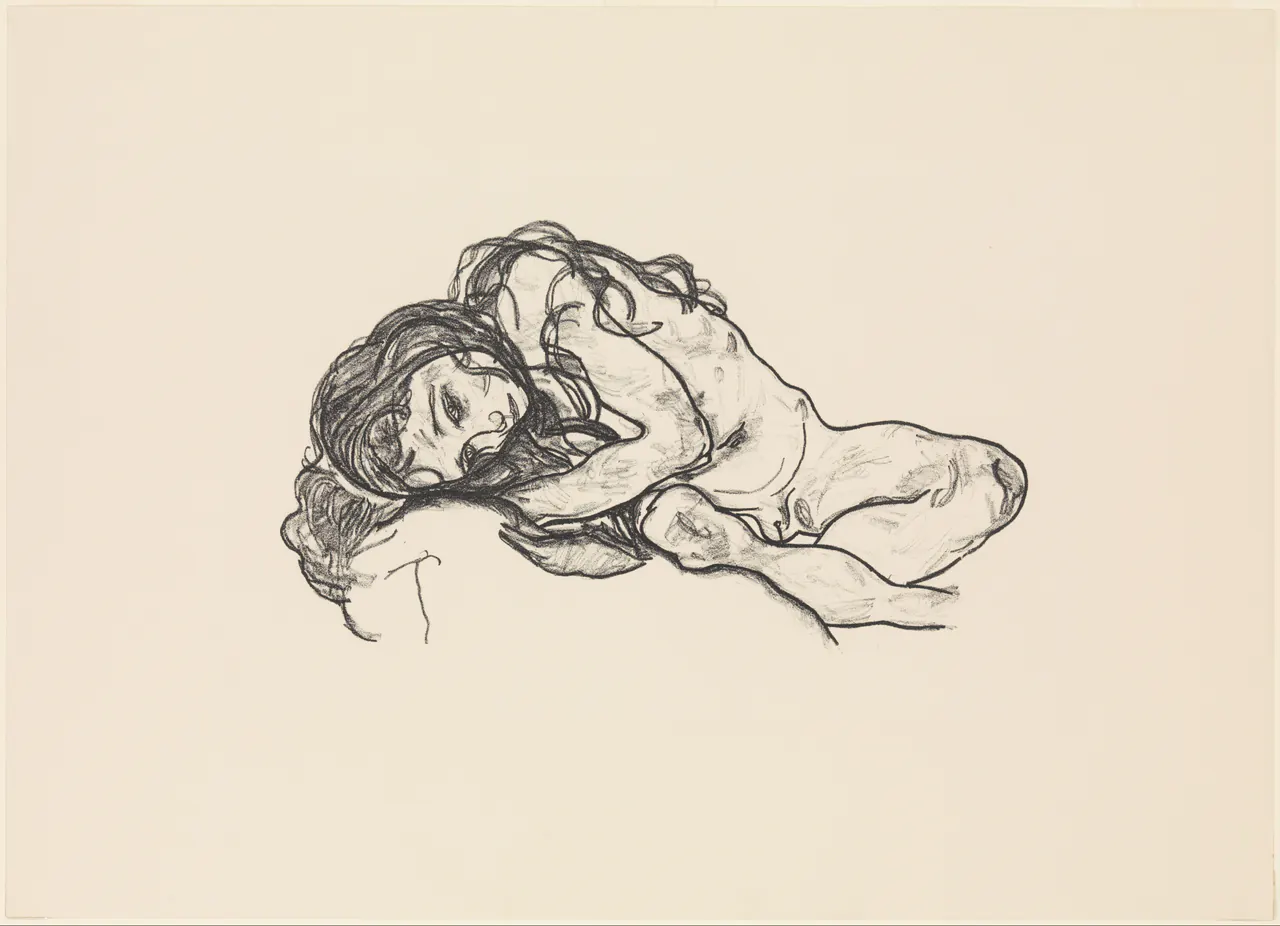
Girl
1918 design; 1922 portfolio impression · The Metropolitan Museum of Art · 1984.1203.198.1
Public Domain / Open Access (CC0)
Resized to 1280 pixels wide and converted to WebP; no crop.

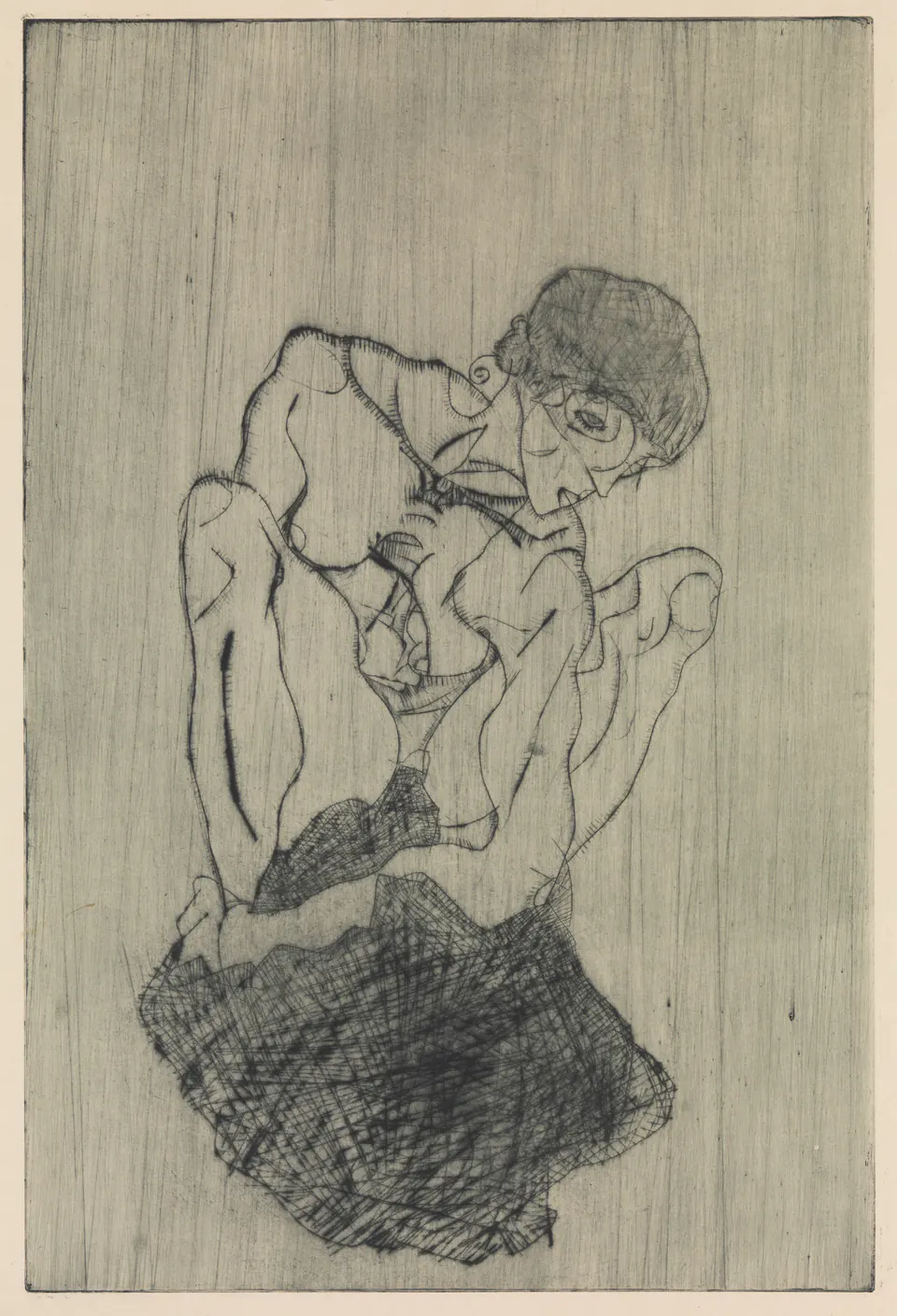
Sorrow
1914 design; 1922 portfolio impression · The Metropolitan Museum of Art · 1984.1203.198.4
Public Domain / Open Access (CC0)
Resized to 960 pixels wide and converted to WebP; no crop.

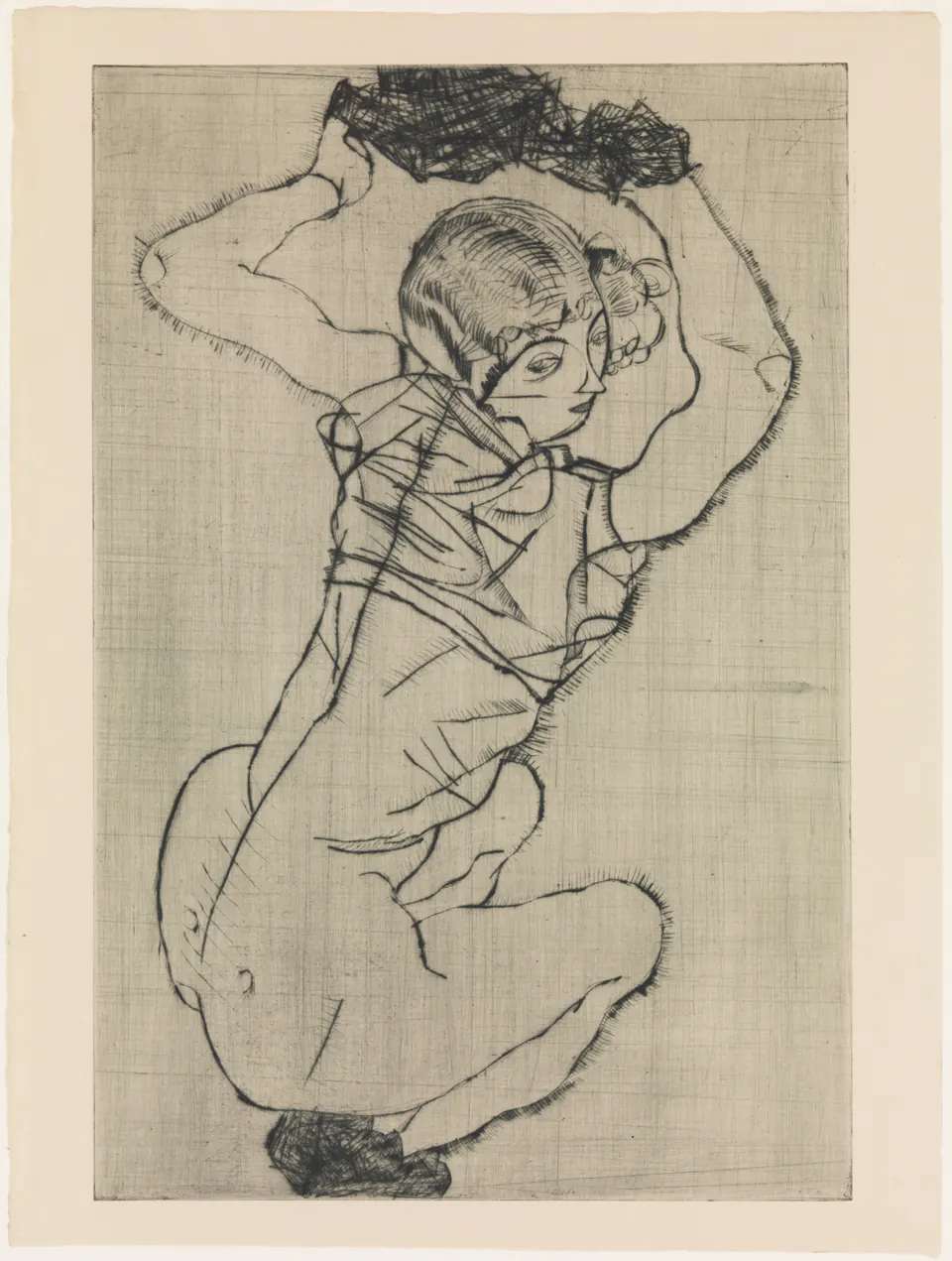
Squatting Woman
1914 design; 1922 portfolio impression · The Metropolitan Museum of Art · 1984.1203.198.3
Public Domain / Open Access (CC0)
Resized to 960 pixels wide and converted to WebP; no crop.

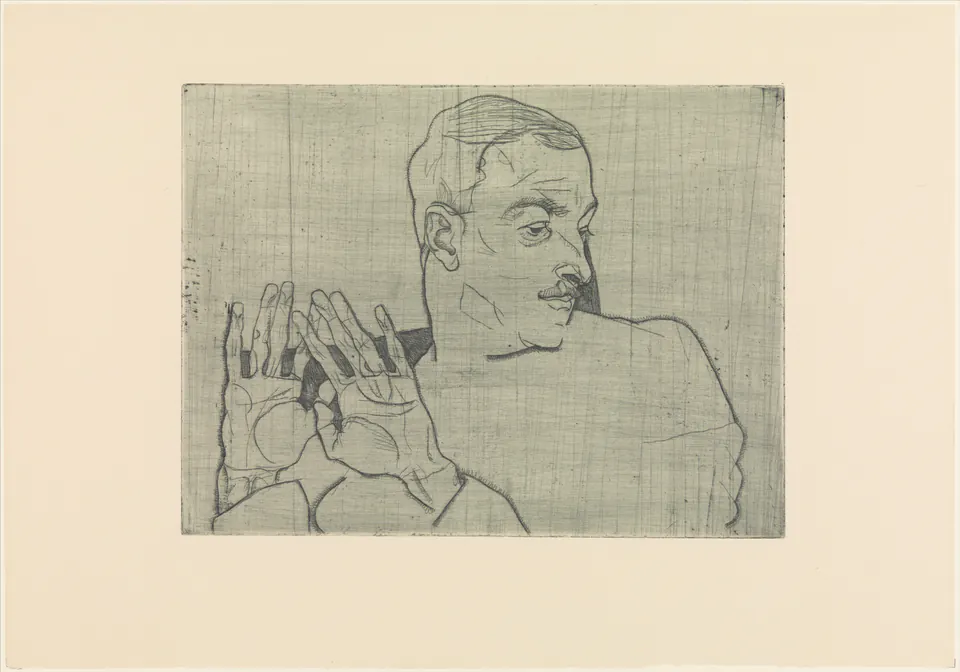
Portrait of Arthur Roessler
1914 design; 1922 portfolio impression · The Metropolitan Museum of Art · 1984.1203.198.5
Public Domain / Open Access (CC0)
Resized to 960 pixels wide and converted to WebP; no crop.

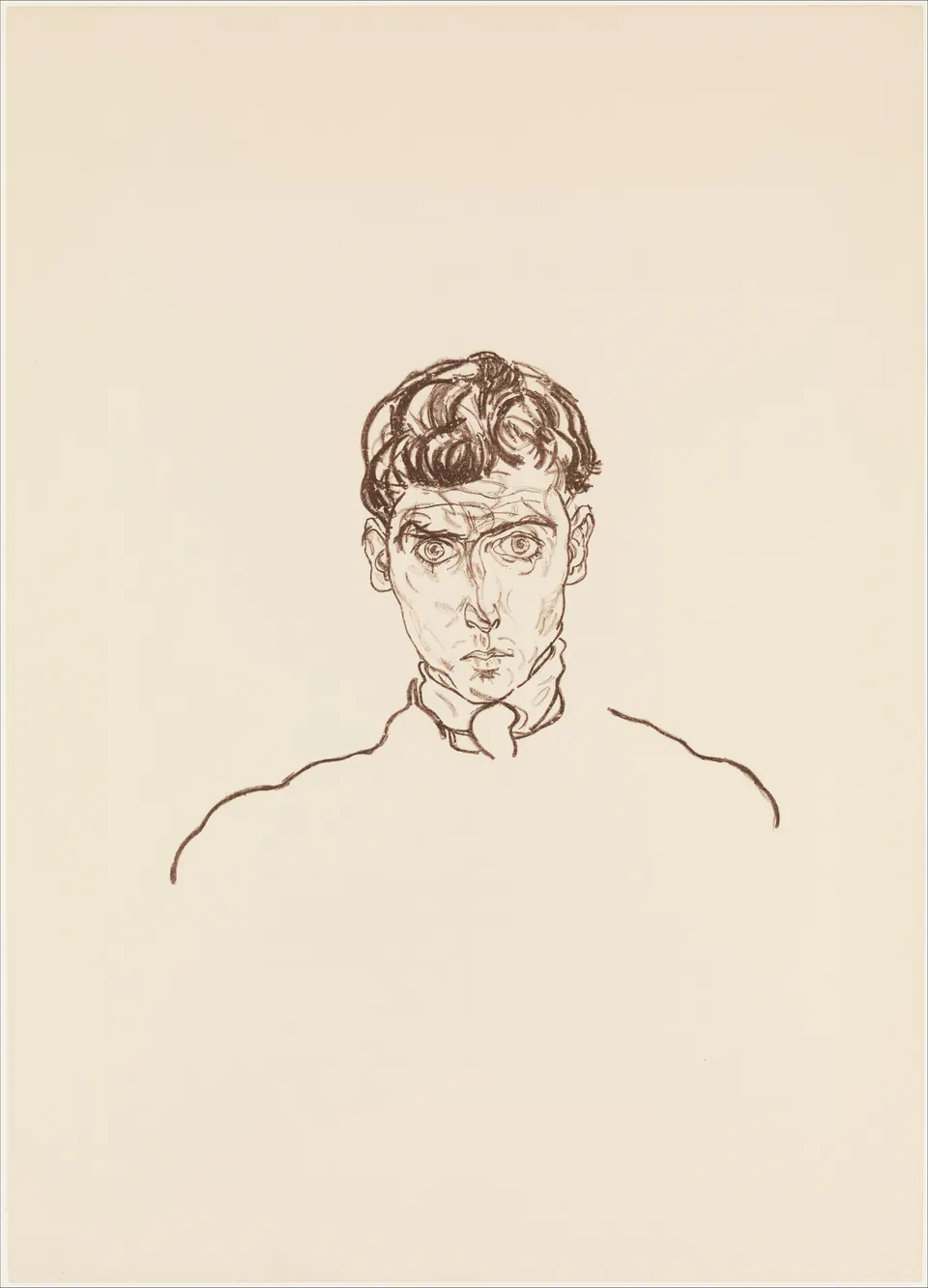
Portrait of Paris von Gütersloh
1918 design; 1922 portfolio impression · The Metropolitan Museum of Art · 1984.1203.198.2
Public Domain / Open Access (CC0)
Resized to 960 pixels wide and converted to WebP; no crop.

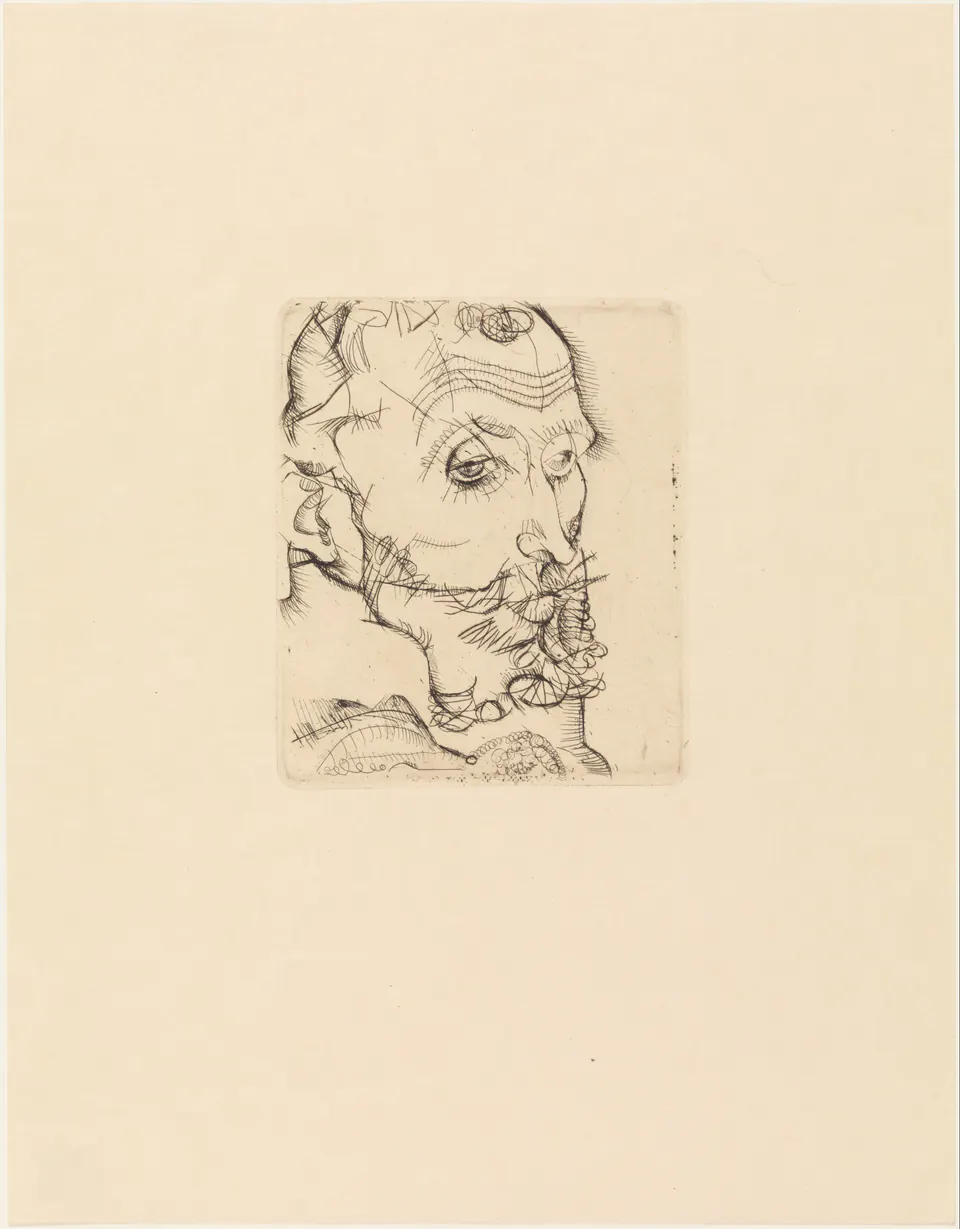
Portrait of Franz Hauer
1914 design; 1922 portfolio impression · The Metropolitan Museum of Art · 1984.1203.198.6
Public Domain / Open Access (CC0)
Resized to 960 pixels wide and converted to WebP; no crop.

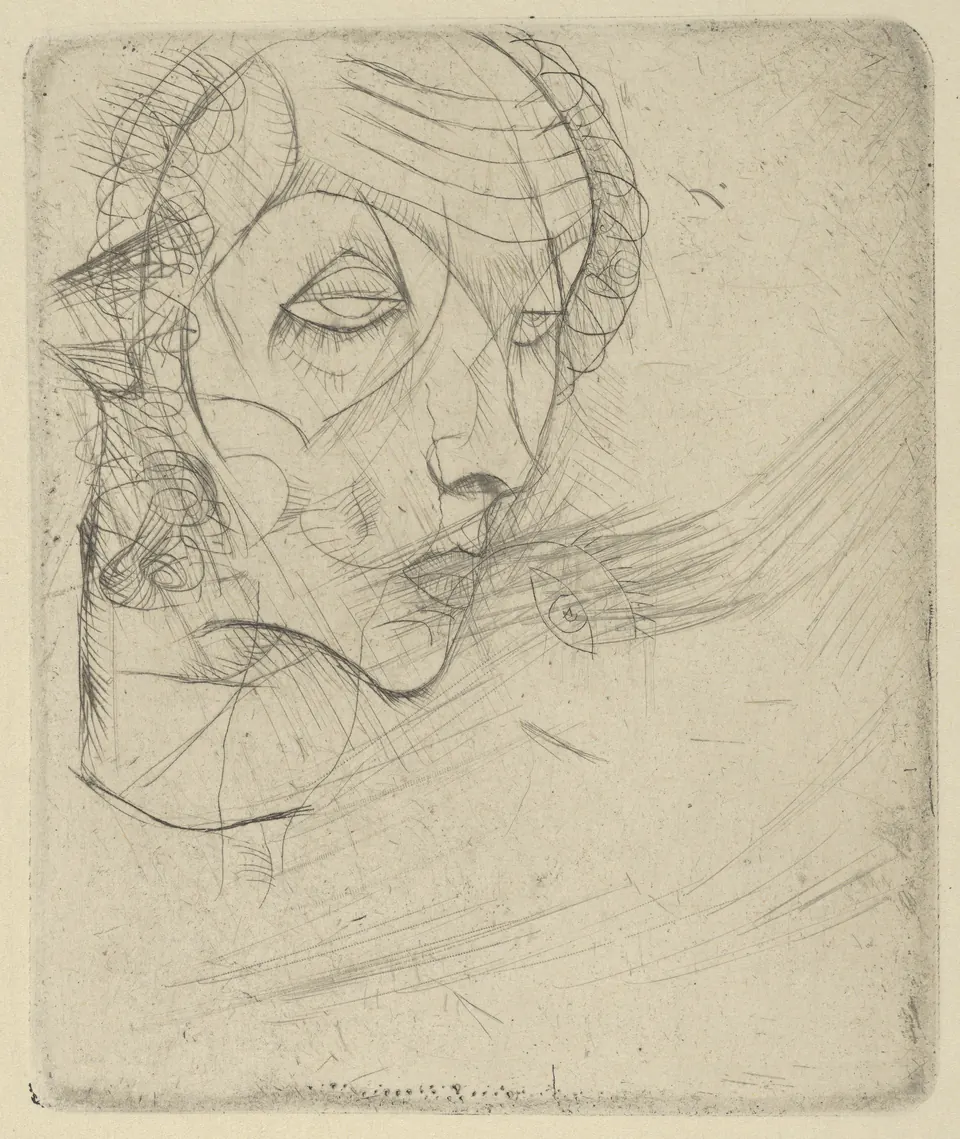
Self-Portrait
1914 design; 1922 portfolio impression · The Metropolitan Museum of Art · 1984.1203.198.7
Public Domain / Open Access (CC0)
Resized to 960 pixels wide and converted to WebP; no crop.

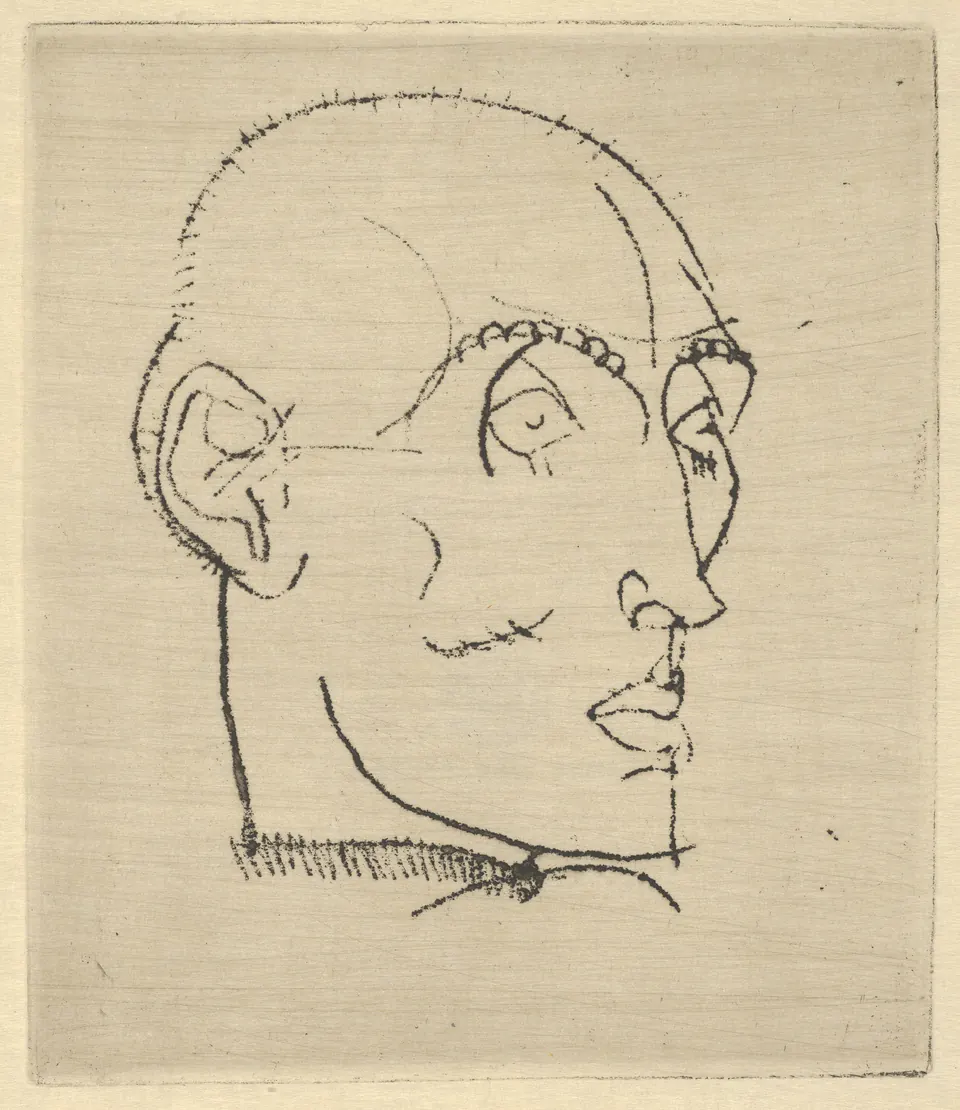
Portrait of a Man
1914 design; 1922 portfolio impression · The Metropolitan Museum of Art · 1984.1203.198.8
Public Domain / Open Access (CC0)
Resized to 960 pixels wide and converted to WebP; no crop.

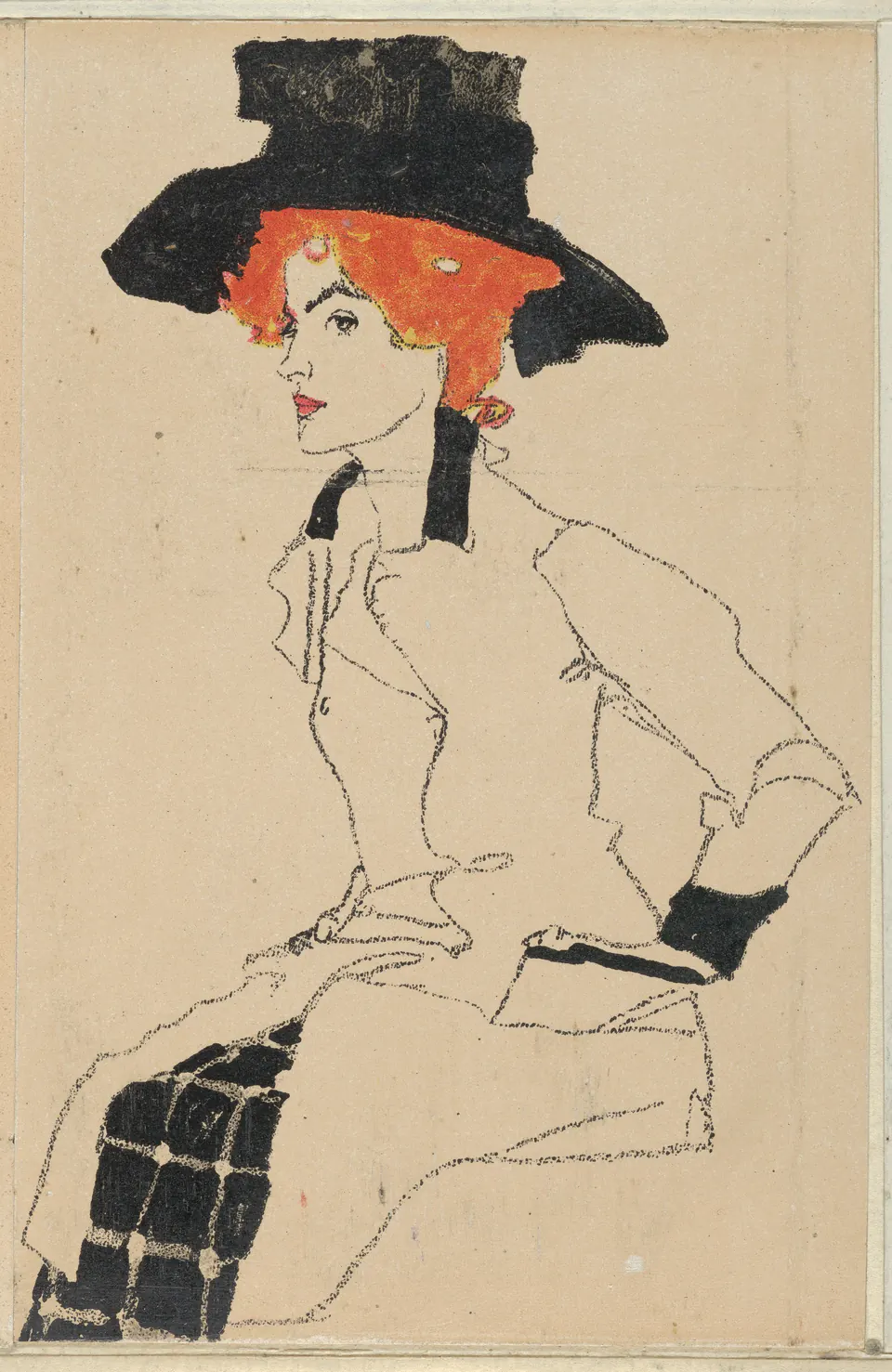
Portrait of a Woman, WW.288
1910 · The Metropolitan Museum of Art · WW.288
Public Domain / Open Access (CC0)
Resized to 960 pixels wide and converted to WebP; no crop.

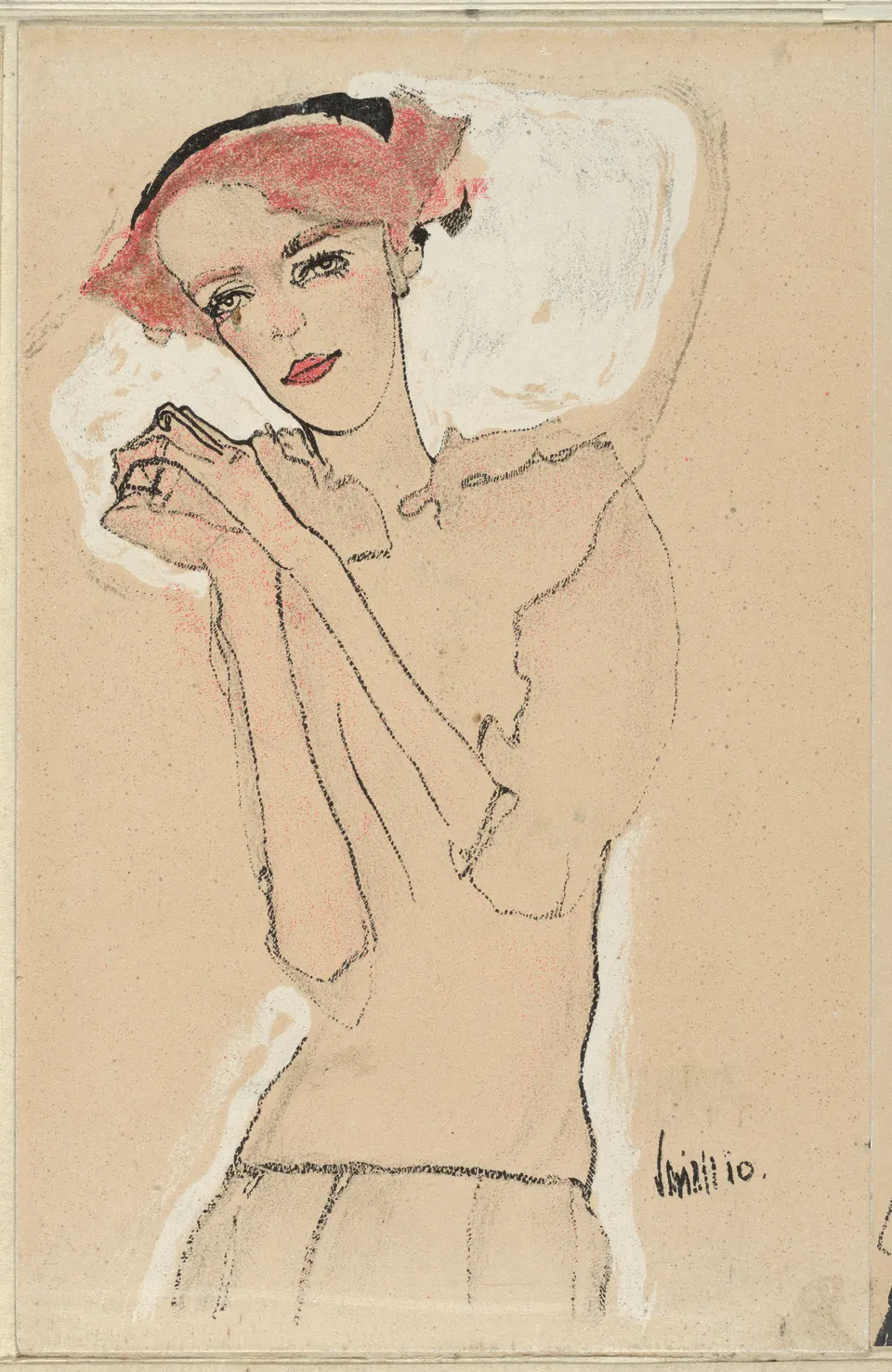
Portrait of a Woman, WW.289
1910 · The Metropolitan Museum of Art · WW.289
Public Domain / Open Access (CC0)
Resized to 960 pixels wide and converted to WebP; no crop.

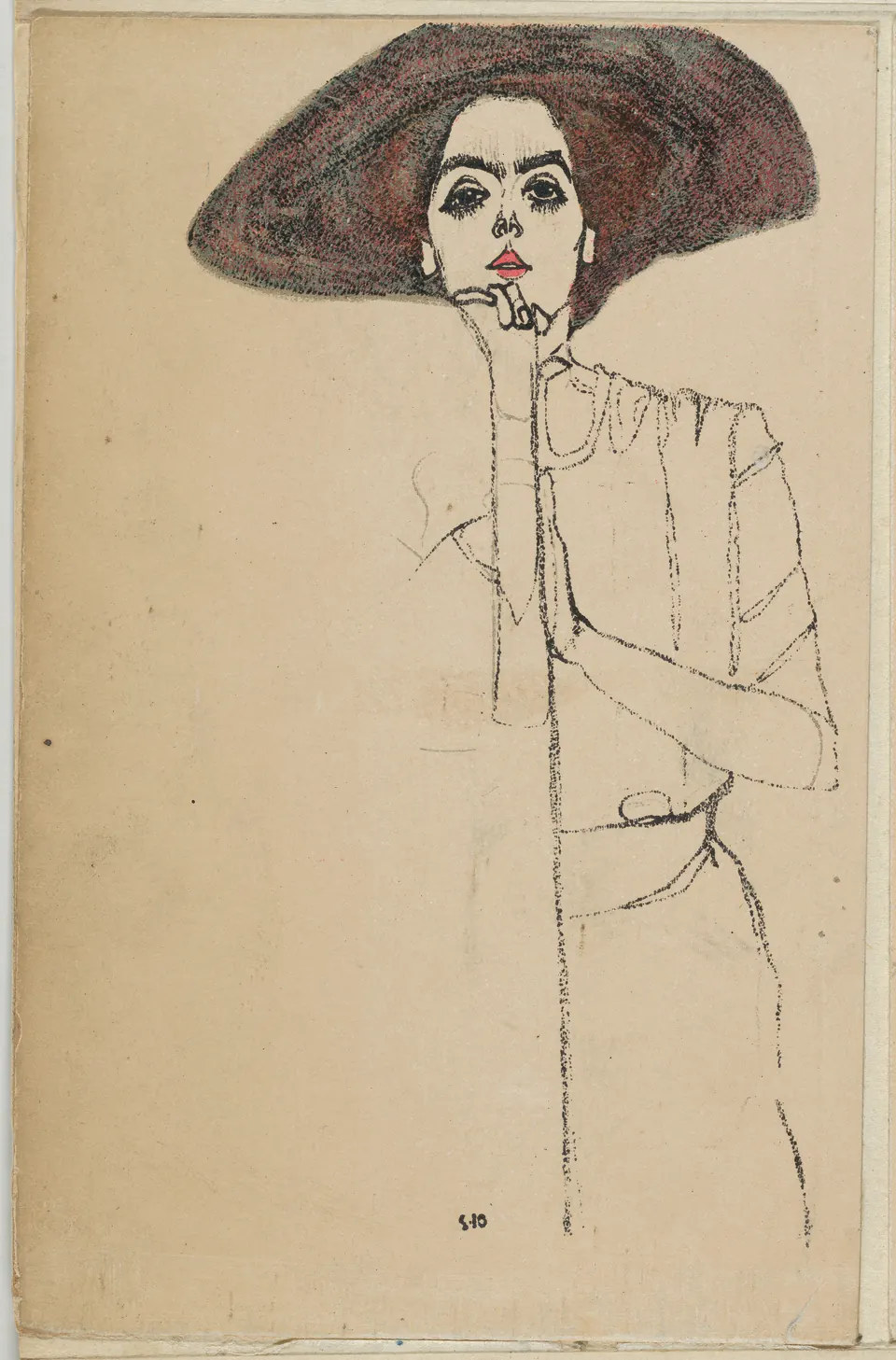
Portrait of a Woman, WW.290
1910 · The Metropolitan Museum of Art · WW.290
Public Domain / Open Access (CC0)
Resized to 960 pixels wide and converted to WebP; no crop.

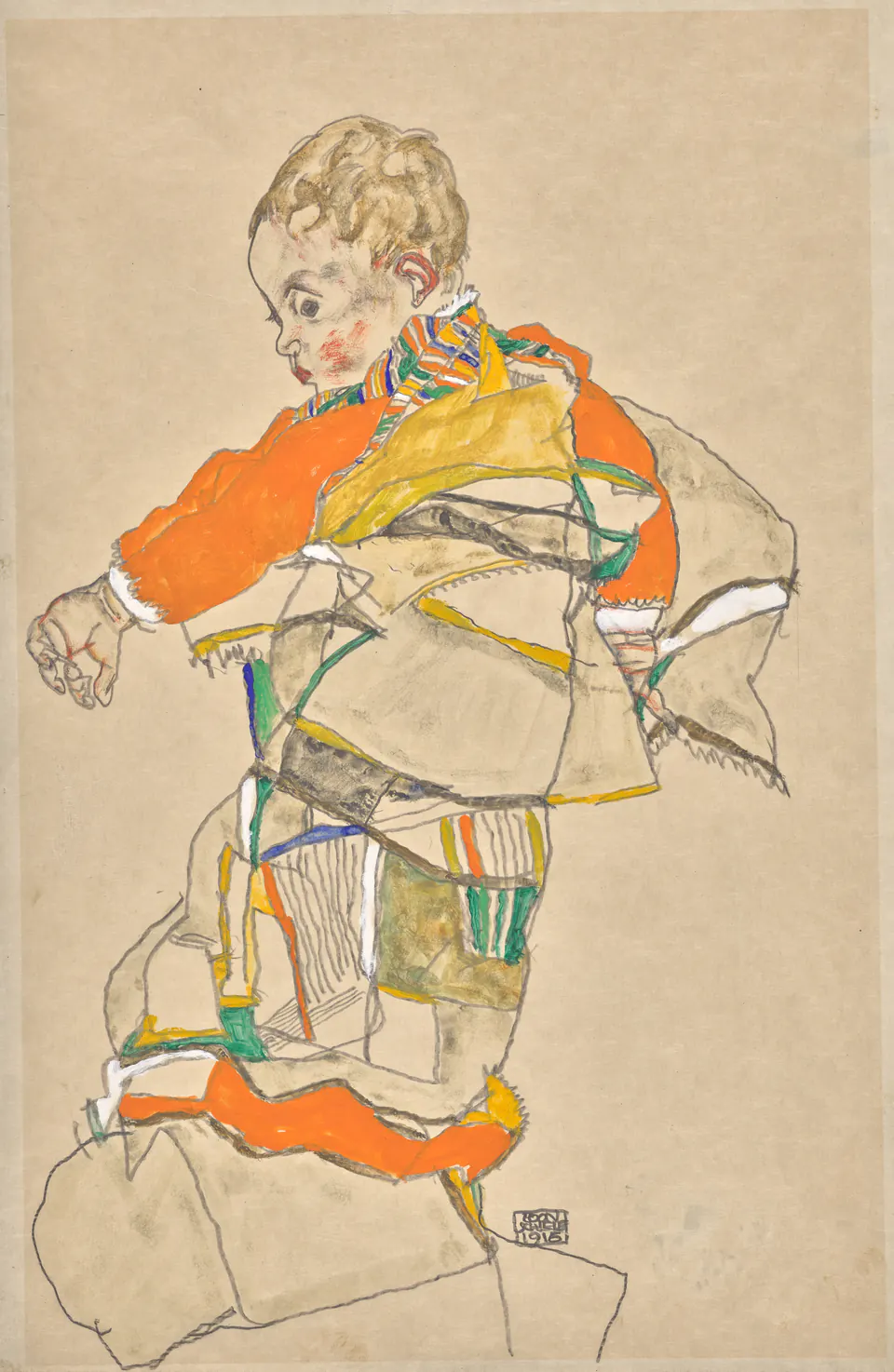
Portrait of a Child (Anton Peschka Jr.)
1916; reproduced 1917 · Cleveland Museum of Art · 1964.285
CC0 Public Domain / Open Access
Resized to 960 pixels wide and converted to WebP; no crop.

Sources and review method
We checked the artist chronology against museum records, treated each named jurisdiction separately, and recorded the provider policy for the image set. These sources support the legal framework and artist dates used above; the source file for any individual image still needs its own record.
- Girl — The Metropolitan Museum of Art. Feature identity and exact 1922 portfolio impression and file.
- Portrait of a Child (Anton Peschka Jr.) — Cleveland Museum of Art. Exact drawing, CC0 file, and the museum’s 1917 Lanyi-volume citation.
- Image and Data Resources — The Metropolitan Museum of Art. The Met makes files marked Public Domain available under Open Access CC0.
- Open Access — Cleveland Museum of Art. Cleveland releases eligible collection images and metadata under CC0.
- Directive 2006/116/EC, Article 1 — EUR-Lex. The EU term for an artistic work is the author’s life plus 70 years.
- How long copyright lasts — UK Government. UK guidance gives 70 years after the author’s death for artistic works.
- Law No. 5846 on Intellectual and Artistic Works, Article 27 — WIPO Lex. The Turkish economic-rights term is the author’s life plus 70 years.
- Circular 15A: Duration of Copyright — U.S. Copyright Office. Applying the maximum 95-year publication term to 2026 places works published before 1931 outside that term.
- 17 U.S.C. Chapter 3, including §303 — U.S. Copyright Office. Section 303 keeps the unpublished-work transition and the 1978–2002 first-publication floor separate.
- Visual Artists: Publication — U.S. Copyright Office. Distribution can publish visual art; public display alone does not establish publication.
- Copyright notice: digital images, photographs and the internet — UK Intellectual Property Office. The old work and the exact modern digital file remain separate checks.
Editorial record
About this article
- Author
- Publisher
- GeMarkt
- Published
- Reviewed
- Internal source & rights check. Conducted by GeMarkt Research Review. This is an internal editorial check—not independent peer review.
- Source standard
- Rights guide source standardSeparates the underlying work from the source file, records the review date, and links the evidence used for the conclusion.
Found a claim that needs checking? Report a factual error.