GeMarkt Blog · Practical guide
Seasonal Art Rotation: Changing Your Walls Through the Year
Change one picture without redecorating the room. Plan a small seasonal rotation, compare image shapes and keep the prints you take down properly stored.

A seasonal art rotation works best when one part of the room changes and the rest can stay familiar. Start with a single picture position and two or three reproductions you genuinely like. You do not need four complete decorating schemes, monthly purchases or a rule that snow must disappear on the first day of spring.
The useful question is whether you would enjoy seeing a different picture there for a while. If the answer is yes, plan the frame, the changeover and the storage together. A print that spends part of the year off the wall still needs a proper home.
Choose one place that can change
Pick a wall you notice during an ordinary day: beside your breakfast seat, opposite a desk or above a sideboard. Leave a much-loved family picture or a carefully balanced gallery wall alone. A small, deliberate change is easier to appreciate than a room in which every visual reference moves at once.
Consider the practical access, too. A large frame over a stairwell is a poor candidate for frequent changes. So is a location where lifting the picture means moving heavy furniture. Do not assume an existing hook will suit another frame with different weight or fittings; the wall, fixings and frame manufacturer’s instructions still govern safe hanging.
Decide what prompts a change. It could be longer evenings, a household celebration or the return of a favourite flower, rather than a date. A northern European snow scene need not define winter for a reader living somewhere warm. Your rotation can follow your own climate and memories.
Start with a picture you want to see again
Jean-François Millet’s Haystacks: Autumn, about 1874, belongs to a commissioned series of the four seasons. The sheep graze after the harvest. Its season is part of the subject, not a label added to make an autumn decorating collection.
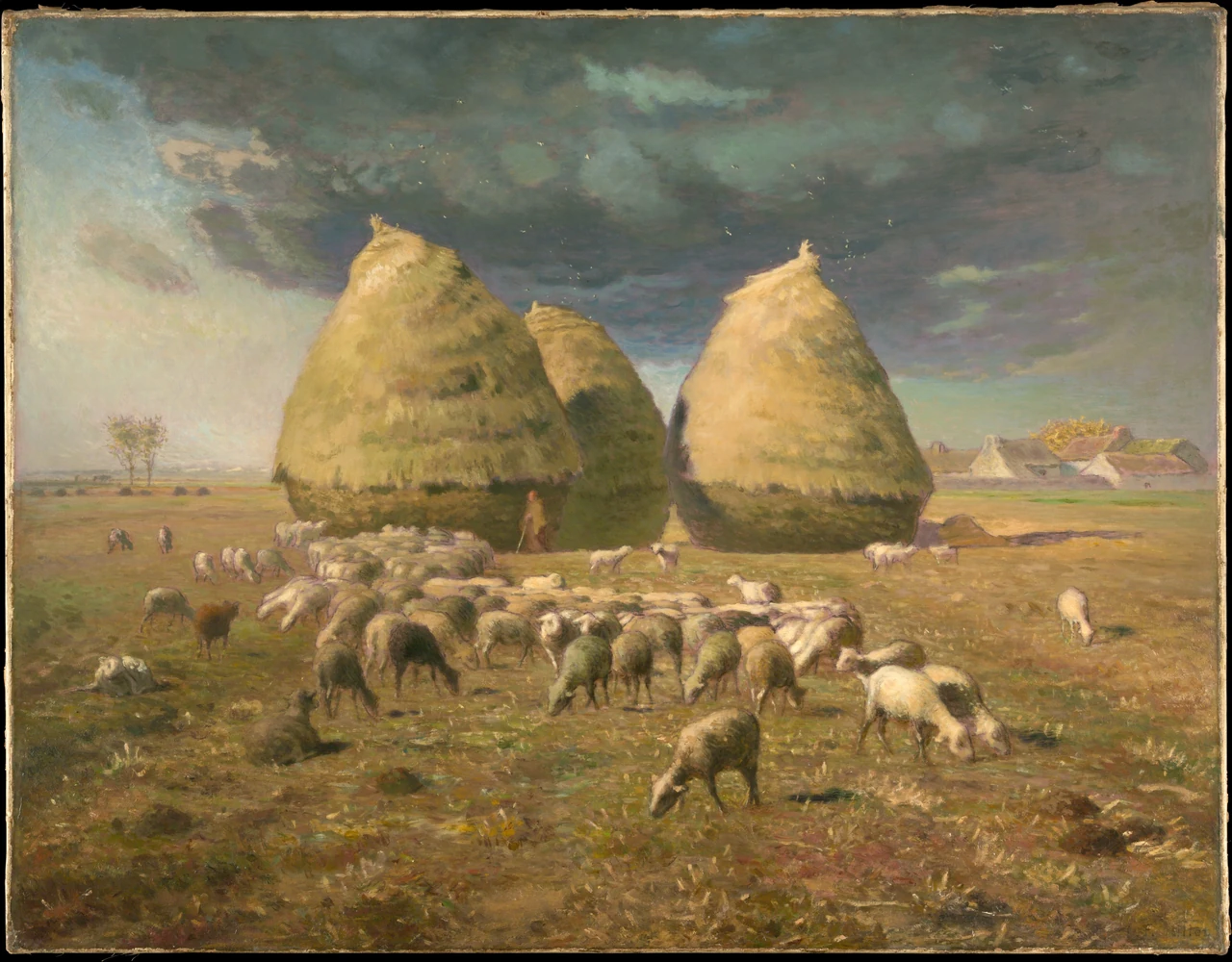
This is an autumn choice that does not rely on orange leaves. The large rounded stacks offer a strong shape at room distance; the flock gives you something smaller to follow when you move closer. The visible edges of the canvas remain in this reproduction, rather than being silently removed.
Try such an earthy picture against what you already own. Beside brown wood, its lighter stacks may stand out; against a mustard wall, they may blend more closely. Neither outcome is automatically better. Compare the picture with the actual wall before buying cushions to explain it.
Choose it only if you would want it back next year. A seasonal purchase that feels disposable usually adds more storage than pleasure.
Let winter change the balance
Hiroshige’s Kanbara: Evening Snow, about 1833–34, offers a different distribution of dark and pale areas. This colour woodblock print is an impression in the Art Institute of Chicago, not a photograph of the village.

Replacing Millet’s closely filled field with this larger stretch of pale snow would change the wall without requiring a new colour throughout the room. Small touches in the travellers’ clothing become noticeable precisely because the surrounding image is restrained.
That does not mean a snow picture makes a room feel a particular temperature. Try it where you sit in the evening and decide whether you enjoy its contrast. In a dim corner, the subtle roof edges may matter less than the broad dark sky; close to a reading chair, you may notice much more.
The two images also have different proportions. Do not squeeze the wider print into the old picture’s shape merely to preserve a framing routine.
Use blossom without a calendar deadline
Van Gogh’s Almond Blossom, 1890, is in the Van Gogh Museum’s collection. Here its spreading branches offer an alternative to both a distant landscape and a vase of flowers.
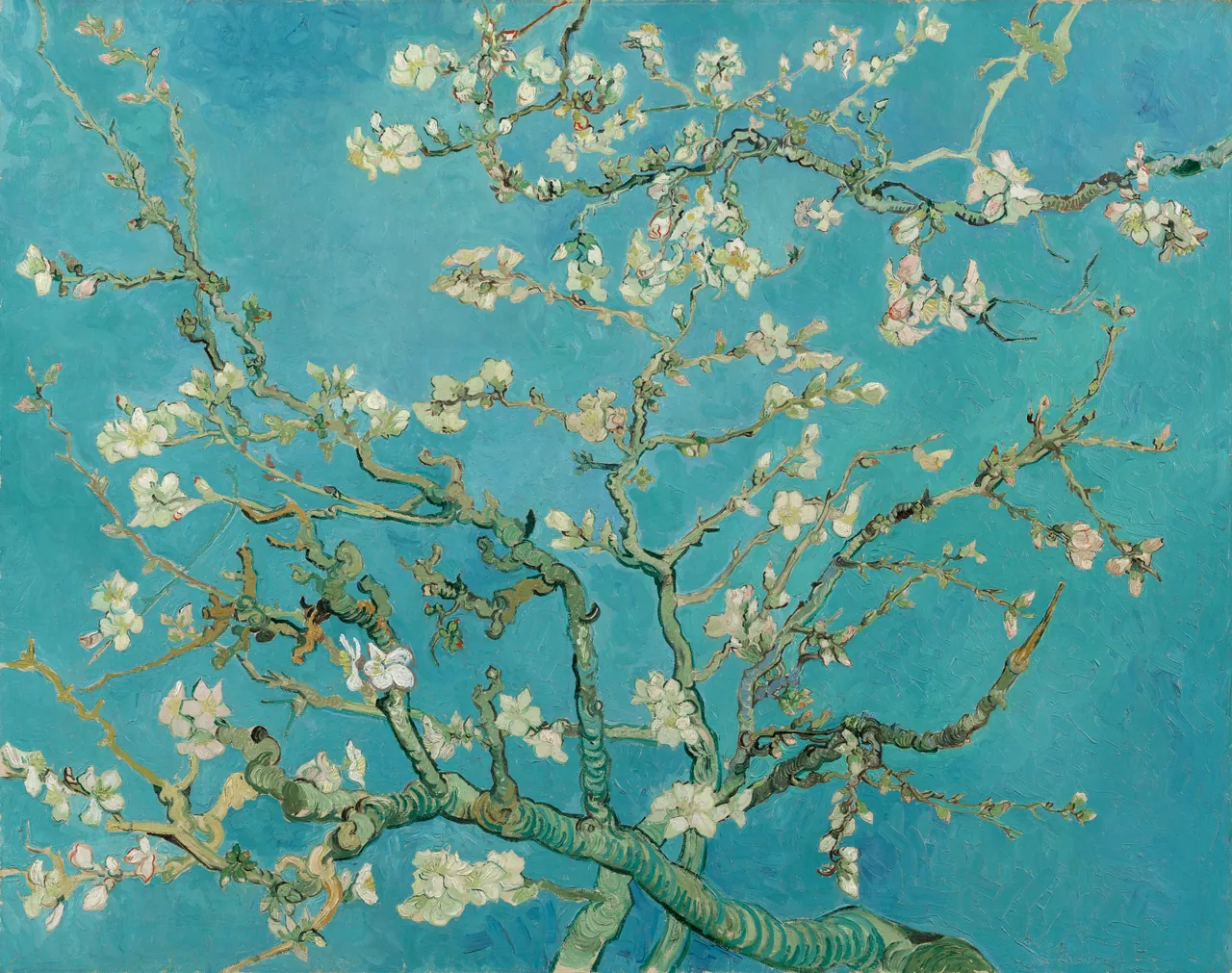

The branches can make the change to a blossom picture obvious even if the frame and furniture remain identical. Notice the amount of blue, however. This is not a mainly white floral image; choosing it for a white flower elsewhere in the room may overlook its largest area of colour.
It is fine to keep blossom on the wall through summer or winter. Seasonal rotation is a way to look again, not a duty to remove a work once its subject stops matching the weather. If this becomes your favourite permanent picture, the experiment has still been useful.
Decide what stays the same
You have two practical options: exchange complete framed pictures, or use a frame designed for accessible changes with appropriately prepared prints. The first avoids repeatedly handling the sheets, but requires more storage. The second may be compact, but can involve mounts, backing and glazing that are not convenient to reopen. Ask a framer before treating a sealed conservation frame as a seasonal display holder.
Keep the outer size separate from the image. For a hypothetical 40 × 50 cm sheet, a centred 30 × 40 cm image leaves 5 cm of paper on each side. That is a border on the sheet, not necessarily the visible mat width or the frame’s outside measurement. Another image may need different borders to preserve its proportions.
If several prepared mounts share an outside size, their openings can differ. Have the openings and attachment method chosen for the actual prints; do not cut every image to one template. Our guide to painting proportions and frame sizes explains the distinction.
Make changing and storing part of the plan
Set aside a clean, clear surface before taking a picture down. Keep drinks away, support the sheet and avoid touching the printed area. The Library of Congress’s paper-care guidance recommends supportive protective enclosures and avoiding self-adhesive tape or glue on paper. For ordinary modern prints, choose suitably sized folders or mounts rather than loose sheets sliding together in a drawer.
Label the enclosure, not the picture face. Keep a simple note of the title, sheet dimensions and which frame or mount it uses. Our unframed-print storage guide covers the choices in more detail. Originals, fragile surfaces and valuable works need advice appropriate to the object, not a routine devised for replaceable reproductions.
Time off the wall does not reverse fading. The Library of Congress explains that light damage accumulates. Reducing exposure can help limit future damage, but a rotation is not permission to use a sunny window as a display spot.
Keep the rotation small enough to enjoy
Photograph the wall once each arrangement is in place. The photograph is a memory aid for position and surrounding objects, not a reliable record of exact print colour. Note what you actually liked: perhaps the pale winter image worked beside the dark cabinet, or the spring branches needed fewer objects below them.
After the first year, keep the changes that felt worthwhile. You may prefer two pictures exchanged occasionally rather than a full set of seasons. You may also discover that moving one existing framed print from another room gives you the change you wanted without buying anything.
The point is to spend more time enjoying the pictures, not maintaining a decorating calendar. A good rotation ends with familiar works that feel welcome when they return.
Editorial record
About this article
- Author
- Publisher
- GeMarkt
- Published
- Reviewed
- Internal source & rights check. Conducted by GeMarkt Research Review. This is an internal editorial check—not independent peer review.
- Source standard
- Buying guide source standardSeparates measured or first-hand evidence from general guidance and keeps practical limits visible.
Found a claim that needs checking? Report a factual error.