GeMarkt Blog · Practical guide
Is Paul Signac Public Domain? Prints, Colour and Images
Signac's established work is public domain under ordinary life-plus-70 terms. U.S. reuse needs a publication check; two Harmony impressions remain unresolved.
Rights check · reviewed
The short answer
Signac’s established work is beyond ordinary life-plus-70 copyright in the EU, UK, and Türkiye. U.S. publication remains unresolved for both Harmony impressions; other early-state questions are identified individually. The twelve museum files have affirmative CC0 labels.
| What is being checked | Result | Why |
|---|---|---|
| European Union, United Kingdom & Türkiye | Public domain | Signac died in 1935; established works cleared the ordinary life-plus-70 term from 1 January 2006. |
| United States — published designs and selected states | Two Harmony records unresolved | Creation dates do not establish publication. Both Harmony sheets lack a closed early-publication history; The Buoy and comparisons between different states also retain specific limitations. Documented programme, portfolio, and journal issues support the other identified designs, not every possible state. |
| Printer, impression, colorway, or file | Check the exact record | Auguste Clot, Tailliardat, Eugène Verneau, and other production roles stay separate from Signac’s design and from the museum file. |
Eight AIC and four Cleveland sheets form a comparison and research set, not twelve unconditional commercial-use clearances. Published-design evidence, the selected state, and the exact digital file remain separate checks.
This is a documented research summary, not legal advice. Copyright and moral-rights rules can vary by country and by the history of a particular work.

What we’ll look at
Can you reuse a Signac print, and why do its printer, edition, and colours matter?
Yes for Signac’s established work under the ordinary copyright terms in the EU, UK, and Türkiye. The U.S. answer needs a closer look: the two Harmony impressions below remain unresolved. The museums provide the twelve selected image files under CC0, but that file label is not proof of when a print was first published.
Paul Signac died in 1935. His established work cleared the ordinary life-plus-70 term from 1 January 2006 in those markets. For U.S. reuse, a work’s creation date and its publication date are different facts. The examples below show both useful early-publication evidence and the limits of what a museum record can establish.
The short answer
Eight examples come from the Art Institute of Chicago and four from the Cleveland Museum of Art. Each sheet has its own accession number, museum page, and source image. Both institutions provide CC0 or Open Access labels for the selected files.
The examples include harbour subjects, social imagery, and the theatre-programme design catalogued as Chromatic Circle. They also show why two impressions—individual sheets pulled from a printing surface—deserve separate attention. This is not a twelve-image clearance list: read the reuse note on each card, especially the two Harmony sheets.
Copyright in the EU, UK, and Türkiye
The EU term directive, UK government guidance, and Article 27 of Türkiye’s Law No. 5846 use ordinary life-plus-70 terms. Signac’s 1935 death places his established work beyond those periods.
| Market checked | Ordinary rule applied | Result for Signac’s established work |
|---|---|---|
| European Union | author’s life plus 70 years | public domain from 1 January 2006 |
| United Kingdom | 70 years after the creator’s death | public domain |
| Türkiye | life plus 70 years for economic rights | public domain |
Moral rights, trademarks, ownership, access terms, endorsements, and modern creative restoration remain separate.
Why U.S. publication history matters
Applying the maximum 95-year published-work term described by the U.S. Copyright Office to 2026 places works published before 1931 beyond that term. A museum’s date of “1895–96” does not itself demonstrate publication: there must be evidence that copies were distributed or otherwise published, not simply made or exhibited.
The two Harmony records are the important exception here: AIC 1994.723 and Cleveland 1925.1053. They show the same lithographic project, not two independently documented published editions. An early proof is a sheet made while a print is being developed; it is not automatically part of a published edition. This review has not established a qualifying early publication of their selected version, so it gives neither sheet an unconditional U.S. reuse clearance.
The stronger evidence elsewhere is specific to a published design, and sometimes to a different state of it:
| Design or group | Institutional publication evidence | Limit of that evidence |
|---|---|---|
| Chromatic Circle | The Met’s programme record: a Théâtre Libre playbill published for 31 January 1889, used during the 1888–89 season | Does not date AIC’s individual sheet |
| Evening | MoMA: PAN, 1898, edition of 1,100 | Preserve the selected impression’s colour and printer record |
| Sunday in Paris | Québec’s institutional loan schedule, page 783, item 312: La Revue indépendante, January 1888 | The 1887 design date is not its publication date |
| The two landscape-format Saint-Tropez sheets | The Met: L’Estampe originale, album VII, 1894 | AIC 1960.725 and Cleveland 1965.463 are separate impressions |
| The portrait-format Saint-Tropez: The Port | MoMA’s exhibition catalogue, page 14: Vollard’s third album, 1898 | It is not the landscape-format design above |
| The Andelys, The Wreckers, and Boats at Flushing | Rijksmuseum, 1895; The Met, 1896; BnF, 1895 | The comparison records identify different states: they establish the designs, not publication of every selected variation |
| In Holland—The Buoy | Berlin’s museum work list, no. 34: purchase from Paul Cassirer in 1902 | Early commercial distribution, but the first authorised issue and its link to AIC’s state I remain unverified |
Unknown paper dates alone do not make an unchanged published design a new copyrighted work. The relevant uncertainty is whether a selected state contains distinct expression whose publication history has not been established. The card notes retain those state comparisons; this is not a claim that the remaining ten sheets are cleared in every detail.
That evidence cannot be borrowed by an unpublished drawing or private colour study. The Copyright Office distinguishes distribution from display, while §303 can preserve a different term for old unpublished material. The safest unit remains the exact work and issue.
Printers, impressions, and colourways matter
Colour lithography is collaborative production. The printer prepares stones or plates, registers colours, controls ink and pressure, and produces individual sheets. AIC and Cleveland name printers such as Eugène Verneau, Auguste Clot, and Tailliardat where their records support the credit.
Two impressions of a related subject can differ in paper, colour balance, condition, annotations, or edition. A colourway is a particular choice or arrangement of colours. If you select an image for its palette, make sure its caption and museum link identify that impression rather than another sheet with the same title.
Is Signac’s Chromatic Circle public domain?
Yes for the historic theatre-programme design; the museum file is a separate CC0 source. AIC identifies Chromatic Circle, accession 1985.965, and names Eugène Verneau as printer. The large T–L letters refer to the Théâtre Libre. The Met documents the programme’s publication for 31 January 1889 and use in the 1888–89 season. That supports the design without assigning AIC’s sheet to a particular performance, or transferring its publication history to Harmony.
GeMarkt resized the source to 1280 pixels wide and converted it to WebP without cropping. A diagram redrawn by a modern author, a colour-corrected reproduction, or a book scan is a different file.
Check the museum image’s terms
The public-domain print and its digital image are distinct questions. The UK IPO recommends checking image rights independently. AIC and Cleveland supply Open Access statements for the selected files. Keep the museum’s rights statement and download link with the image you use.
This is especially useful for colour prints: an image copied between websites may have been recoloured or adjusted without explanation. Return to the institution’s own image before treating that palette as a record of the original sheet.
Twelve prints to compare
The twelve illustrated records below link the selected images to their museum pages and rights information. Compare the named printers and the treatment of colour as well as the subjects. These details make a caption more informative and help you return to the same source image later.
The cards’ CC0 statements describe the museum files. Their reuse notes distinguish a published design from a selected impression and identify open questions. A museum making a scan available does not supply a missing historical publication event.
A practical Signac reuse checklist
- Identify the exact title, medium, date, institution, and accession.
- Save issue, edition, printer, and colourway details where the record provides them.
- Do not merge two impressions because their titles look similar.
- Preserve U.S. publication evidence for the exact issue.
- Save the image’s download link and the provider’s rights statement.
- Document crop, colour, restoration, compositing, and format changes.
- Recheck term, attribution, trademark, access, contract, and endorsement issues for the planned use.
Keep exploring
Use the museum links to find the selected images. GeMarkt does not currently offer a Signac collection or download room.
For the wider context of colour and printmaking, read Post-Impressionisms. How to cite art and images helps you preserve the printer, edition, and source in your credit line.
Rights-checked image ledger
A documented starting set
These files were selected from the holding institutions rather than from search-result copies. Each card keeps the artwork record, exact source file, provider statement and GeMarkt transformation visible as separate facts.
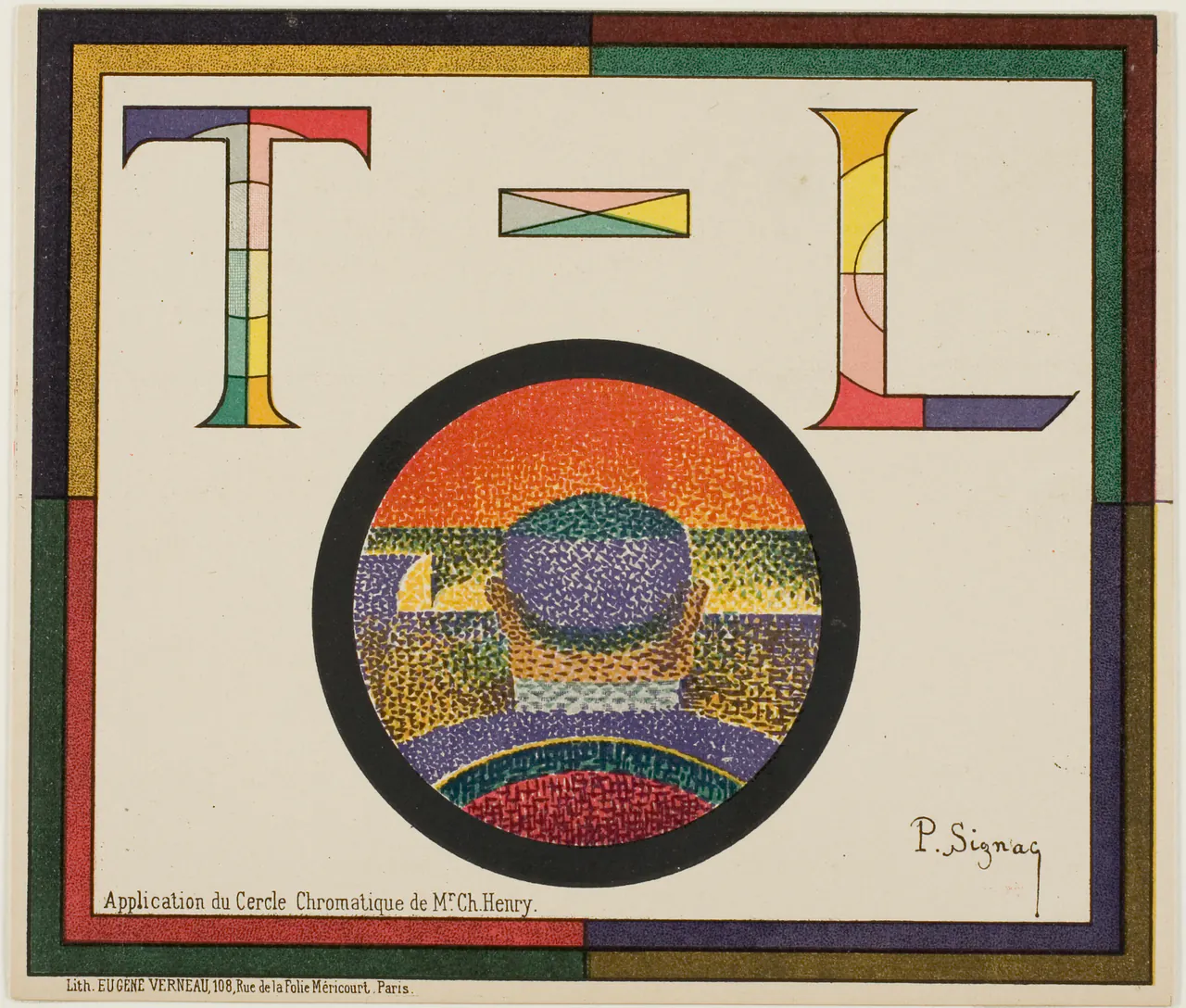
Chromatic Circle
Paul Signac; printed by Eugène Verneau
1888 · Art Institute of Chicago · 1985.965
CC0 Public Domain Designation
Reuse check: The Théâtre Libre programme design was used in 1889. This supports publication of the design; it is not a claim that the museum dates this individual sheet to an exact issue.
Resized to 1280 pixels wide and converted to WebP; no crop.

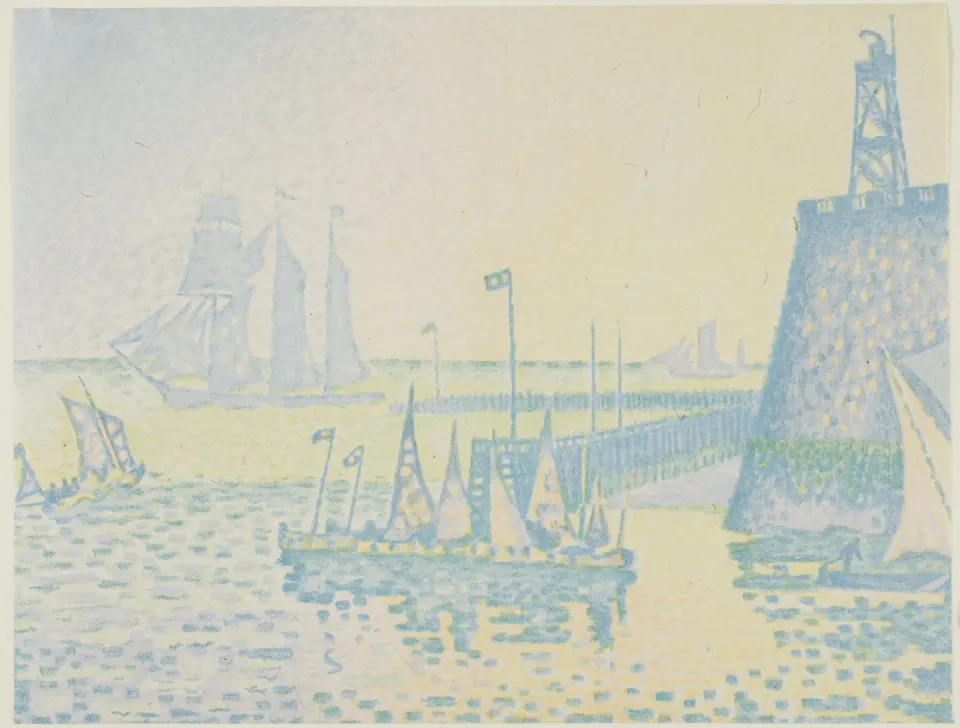
Evening
Paul Signac; printed by Auguste Clot
1898 · Art Institute of Chicago · 1960.850
CC0 Public Domain Designation
Reuse check: Published in PAN IV/1 in 1898; the Berlin museum records acquisition from the publisher in 1899. This supports the published design rather than relying on its creation date.
Resized to 960 pixels wide and converted to WebP; no crop.

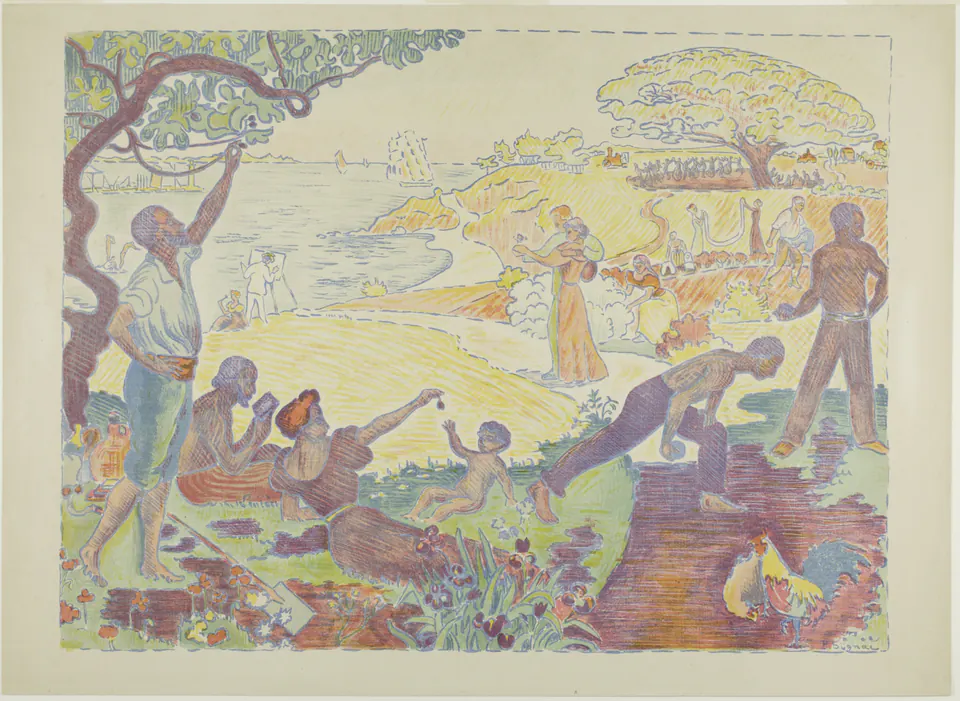
In Times of Harmony
Paul Signac; printed by Tailliardat
1895–96 · Art Institute of Chicago · 1994.723
CC0 Public Domain Designation
Reuse check: U.S. reuse remains unresolved: this Harmony lithograph was not issued in the proposed Les Temps nouveaux publication. A proof and an intended edition are not evidence of actual publication.
Resized to 960 pixels wide and converted to WebP; no crop.

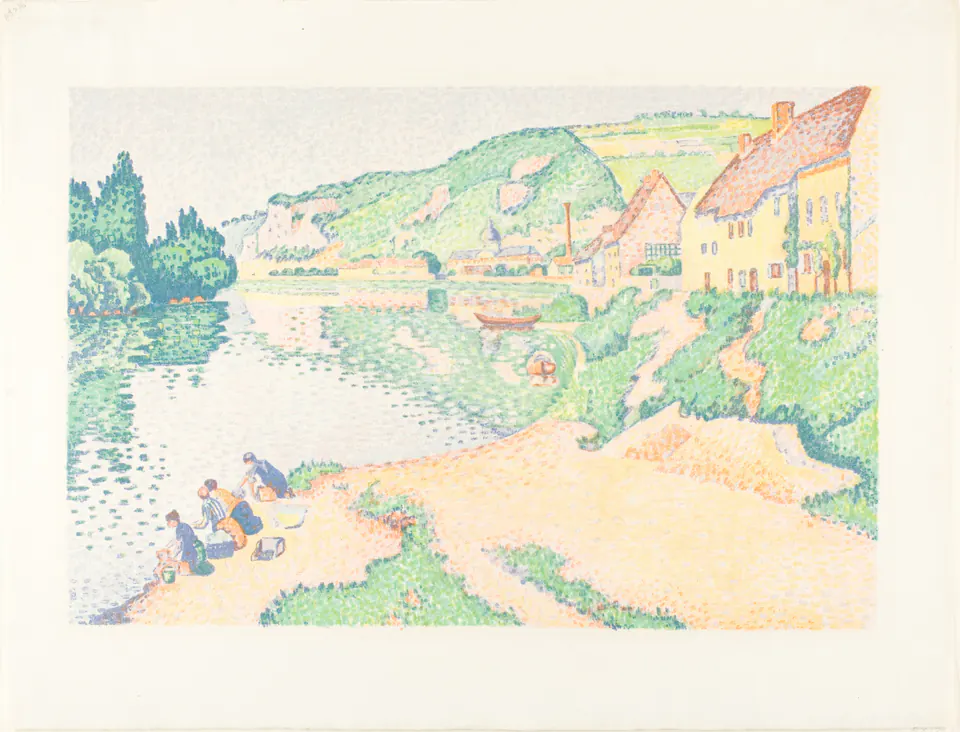
The Andelys
Paul Signac; printed by Auguste Clot
1895 · Art Institute of Chicago · 1956.704
CC0 Public Domain Designation
Reuse check: The Rijksmuseum records Pellet’s 1895 issue of Kornfeld–Wick 10 II; AIC identifies state Ib. This supports the published design, not publication of any distinct expression in the selected earlier state.
Resized to 960 pixels wide and converted to WebP; no crop.

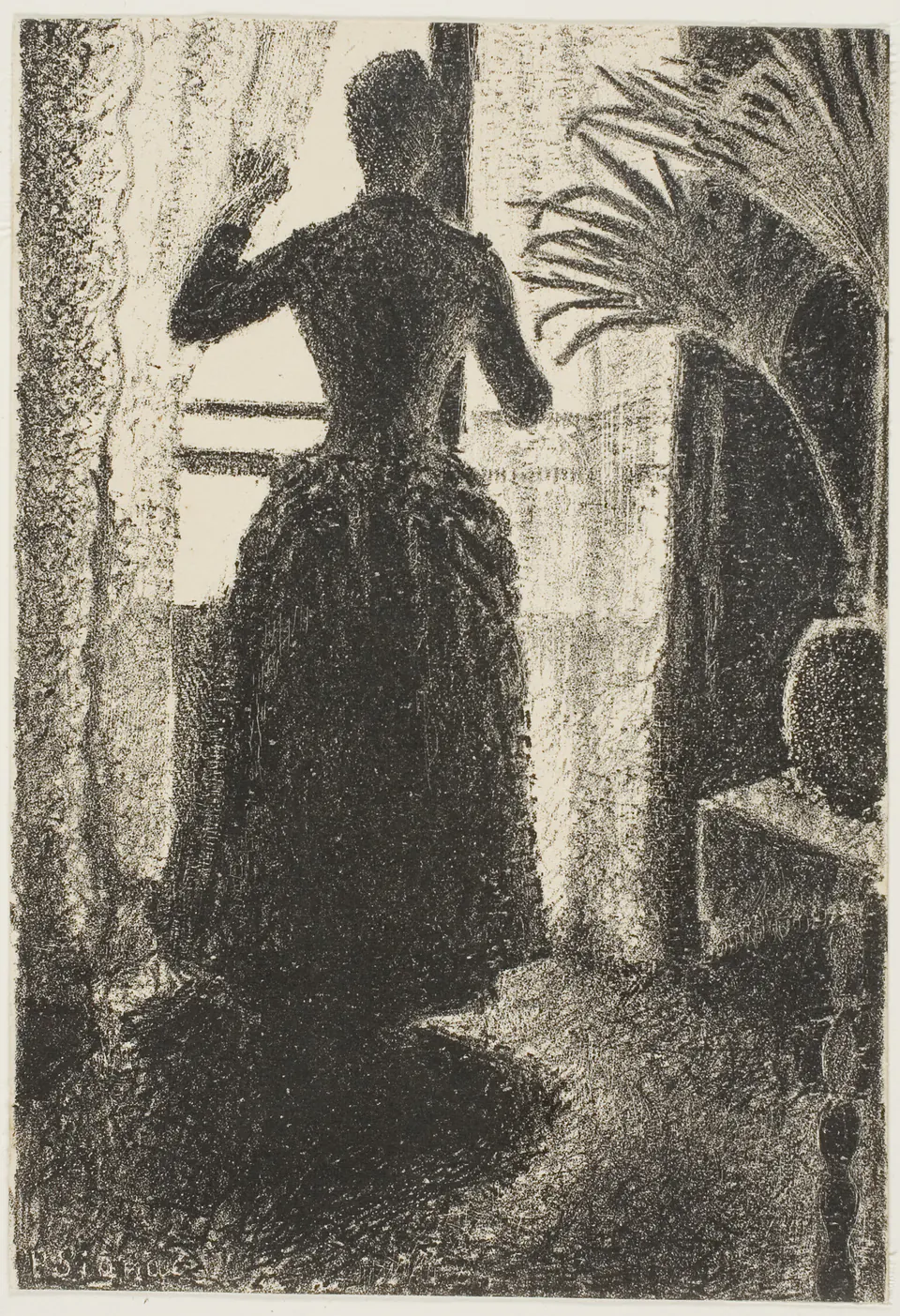
Sunday in Paris
Paul Signac
1887 · Art Institute of Chicago · 1921.384
CC0 Public Domain Designation
Reuse check: Published in La Revue indépendante in January 1888, as recorded in the Québec museum-loan catalogue. The 1887 design date is not the publication event.
Resized to 960 pixels wide and converted to WebP; no crop.

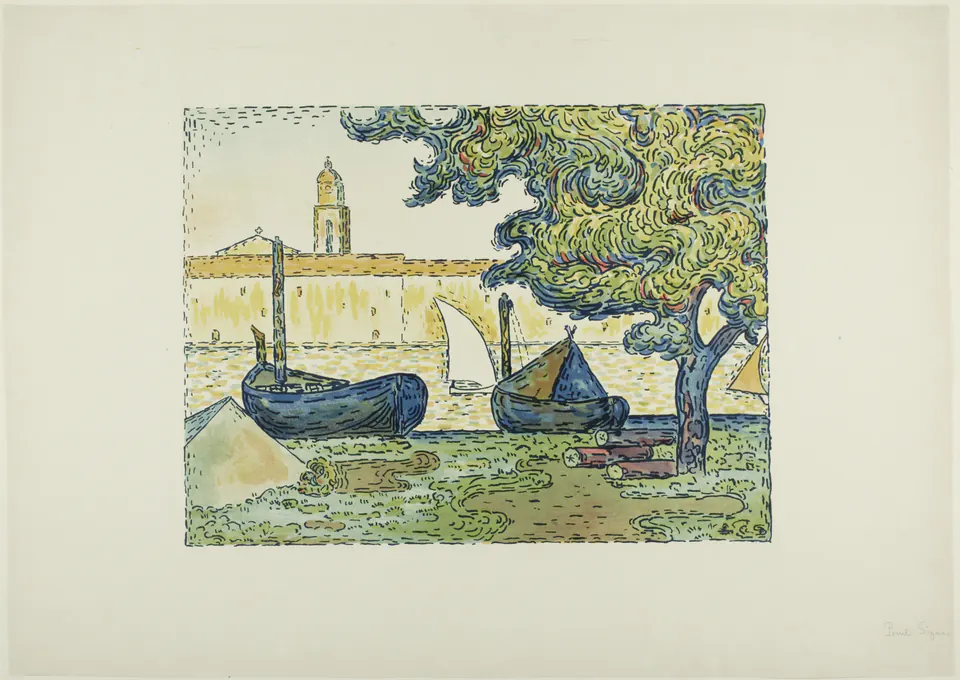
The Port of St. Tropez II
Paul Signac
1894 · Art Institute of Chicago · 1960.725
CC0 Public Domain Designation
Reuse check: The design was published in L’Estampe originale, album VII, in 1894. This impression and Cleveland 1965.463 share that design but retain separate files.
Resized to 960 pixels wide and converted to WebP; no crop.

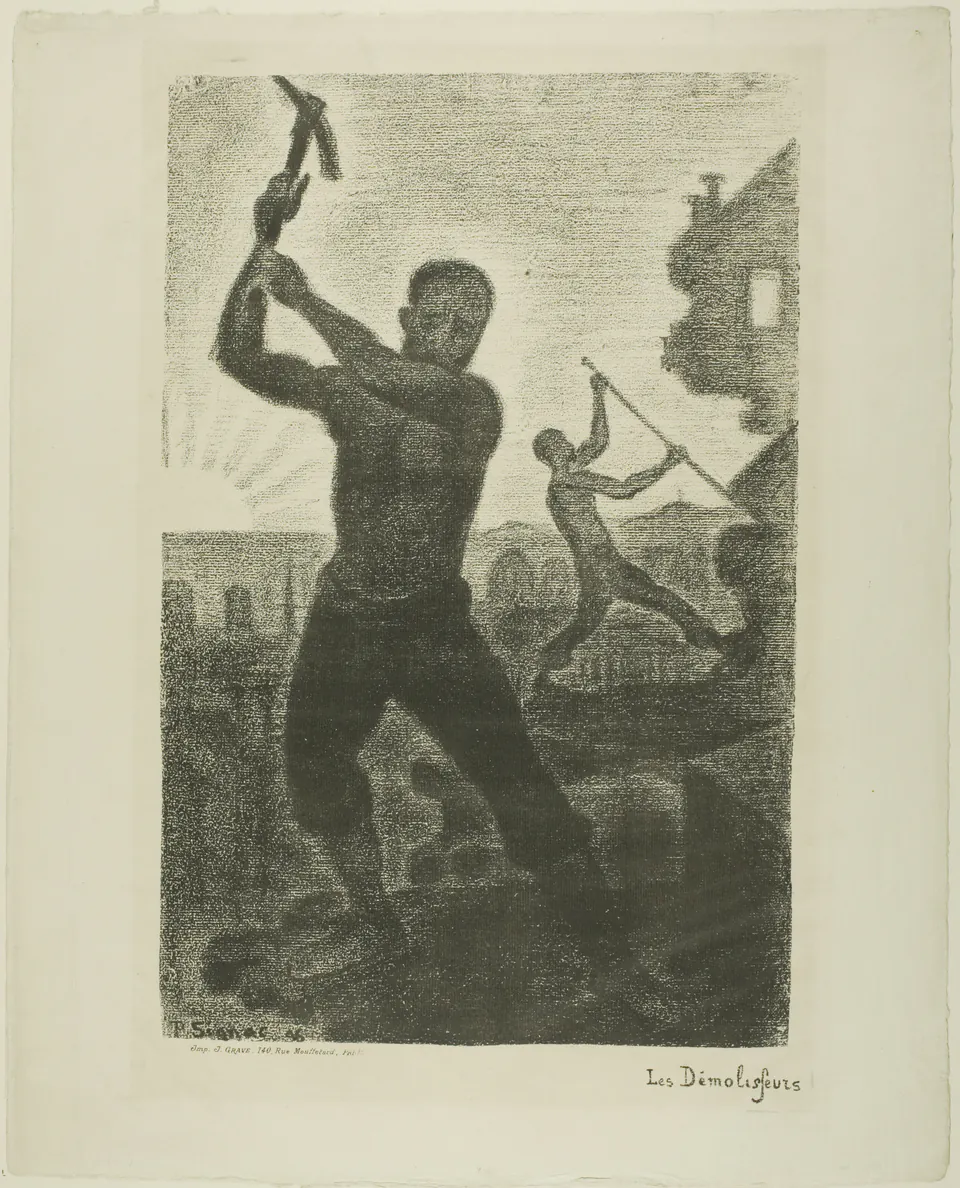
The Wreckers
Paul Signac; printed by Jean Grave
1896 · Art Institute of Chicago · 1928.643
CC0 Public Domain Designation
Reuse check: The Met records Jean Grave’s 1896 issue, state II of IV; AIC identifies state IVb. The design is documented, but later creative changes need their own check. This issue does not establish publication of Harmony.
Resized to 960 pixels wide and converted to WebP; no crop.

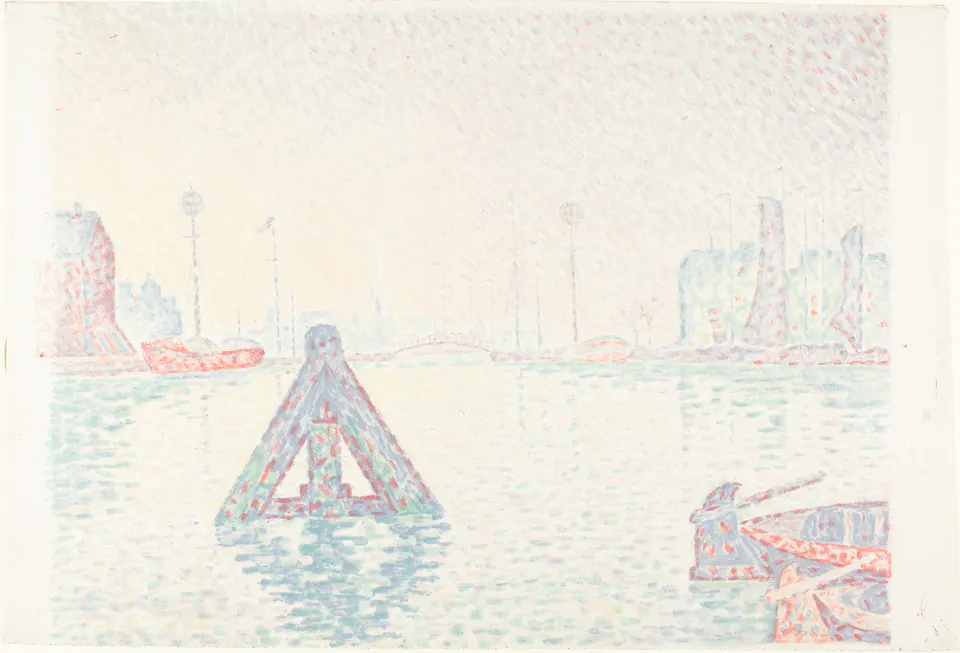
In Holland—The Buoy
Paul Signac; printed by Auguste Clot
1896 · Art Institute of Chicago · 1963.19
CC0 Public Domain Designation
Reuse check: Berlin records a purchase from Paul Cassirer in 1902. Early commercial distribution is documented, but the first authorised issue and a bridge to AIC’s selected Kornfeld–Wick 8 I state remain unverified.
Resized to 960 pixels wide and converted to WebP; no crop.

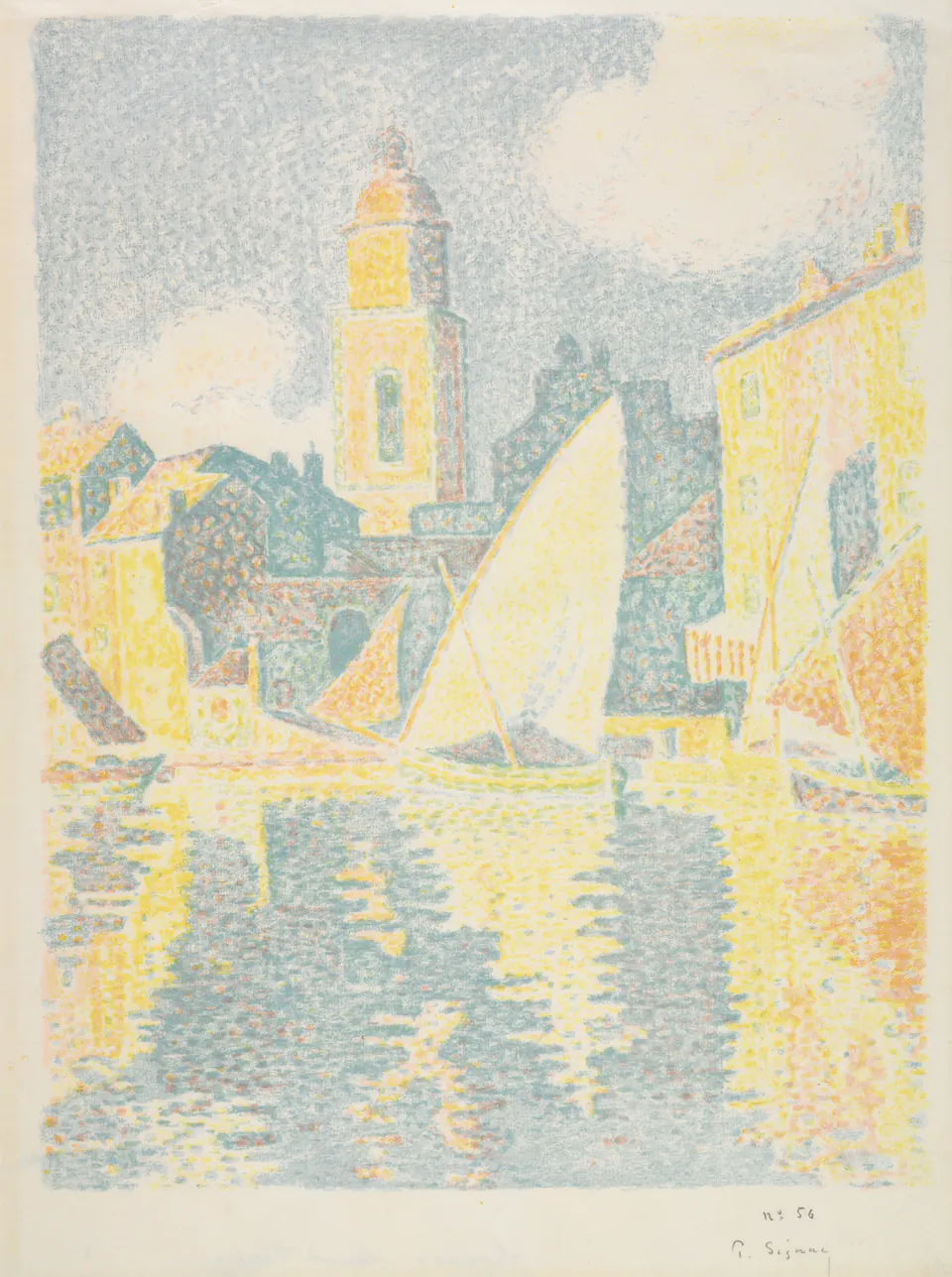
Saint-Tropez: The Port
Paul Signac
1897–98 · Cleveland Museum of Art · 1953.346
CC0 Public Domain / Open Access
Reuse check: The MoMA catalogue places this design in Vollard’s third print album of 1898. The dated issue concerns the design, not every physical impression.
Resized to 960 pixels wide and converted to WebP; no crop.

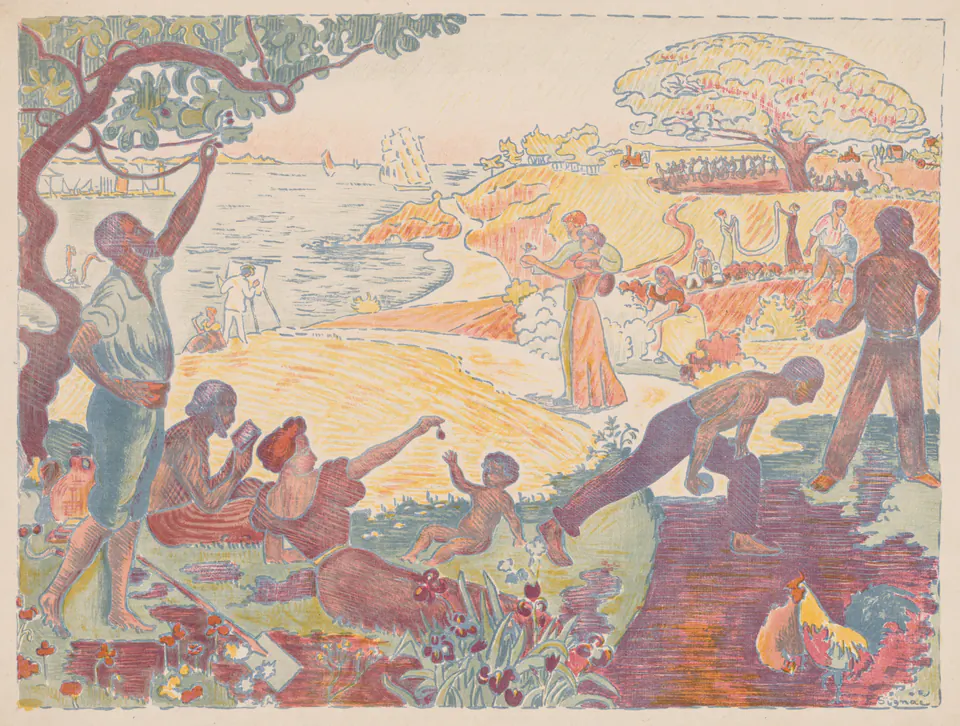
Harmonious Times
Paul Signac
1895–96 · Cleveland Museum of Art · 1925.1053
CC0 Public Domain / Open Access
Reuse check: U.S. reuse remains unresolved for the Harmony lithograph. Its 1925 museum accession alone is not proof of an authorised publication; the proposed published edition was abandoned.
Resized to 960 pixels wide and converted to WebP; no crop.

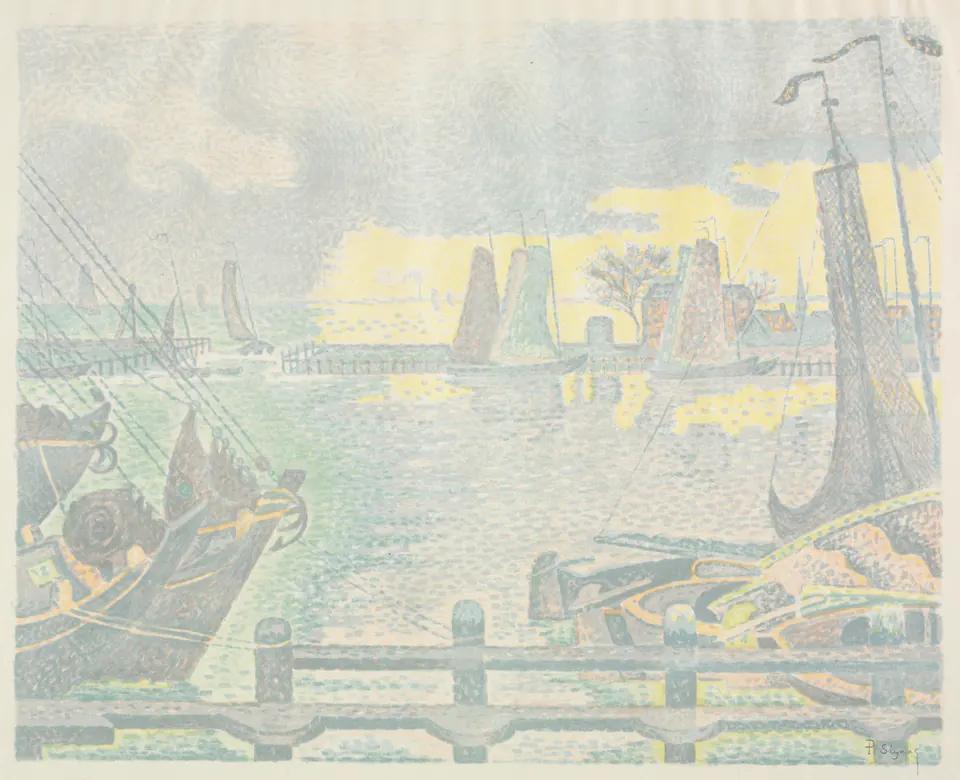
Boats at Flushing
Paul Signac
1895 · Cleveland Museum of Art · 1941.525
CC0 Public Domain / Open Access
Reuse check: BnF records Pellet’s 1895 publication of Kornfeld–Wick 12 III; Cleveland identifies state IV. This supports the published design, not an automatic clearance for any intervening creative changes.
Resized to 960 pixels wide and converted to WebP; no crop.

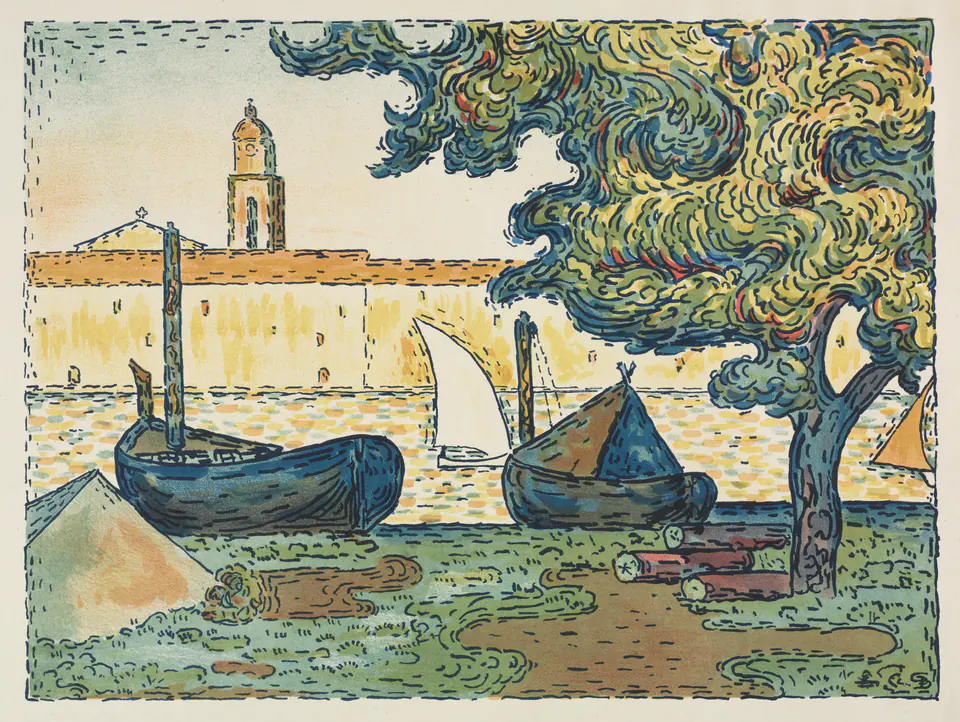
St. Tropez (The Port of St. Tropez)
Paul Signac; published by L’Estampe Originale
1894 · Cleveland Museum of Art · 1965.463
CC0 Public Domain / Open Access
Reuse check: The design belongs to L’Estampe originale, album VII (1894). It shares a published design with AIC 1960.725, not the same physical sheet.
Resized to 960 pixels wide and converted to WebP; no crop.

Sources and review method
We checked the artist chronology against museum records, treated each named jurisdiction separately, and recorded the provider policy for the image set. These sources support the legal framework and artist dates used above; the source file for any individual image still needs its own record.
- Chromatic Circle — Art Institute of Chicago. Feature identity, Eugène Verneau printer credit, exact file, and CC0 status.
- Saint-Tropez: The Port — Cleveland Museum of Art. Selected impression, 1897–98 design date, accession, CC0 file, and object record.
- Théâtre Libre programme cover — The Metropolitan Museum of Art. Publication for 31 January 1889 and use during the 1888–89 season; supports the Chromatic Circle programme design, not the date of AIC’s physical sheet.
- Evening (Calm) — The Museum of Modern Art. PAN publication in 1898, printer Auguste Clot, and an edition of 1,100.
- Der andere Impressionismus: work list (2024) — Staatliche Museen zu Berlin. Catalogue 33: PAN IV/1 and 1899 publisher purchase. Catalogue 34: The Buoy acquired from Paul Cassirer in 1902, not a proven first issue or a bridge to every state.
- Gazette officielle du Québec, 26 February 2020 — Publications du Québec. Page 783, item 312 identifies Sunday in Paris in La Revue indépendante VI, no. 15, January 1888.
- Les Andelys — Rijksmuseum. Gustave Pellet’s 1895 issue, Kornfeld–Wick 10 II; design comparison, not proof of publication of AIC’s earlier state Ib.
- Saint-Tropez — The Metropolitan Museum of Art. L’Estampe originale, album VII, André Marty, 1894; the design shared by AIC 1960.725 and Cleveland 1965.463.
- The Wreckers — The Metropolitan Museum of Art. Jean Grave’s 1896 issue, state II of IV; supports the design, not every subsequent change in AIC’s state IVb.
- Paris in the 1890s — The Museum of Modern Art. Page 14 identifies the portrait-format Port of Saint-Tropez in Vollard’s third album, 1898.
- Boats at Flushing — Bibliothèque nationale de France. Gustave Pellet publication in 1895, Kornfeld–Wick 12 III; design evidence distinguished from Cleveland’s state IV.
- L’Art pour l’Art or L’Art pour Tous? (2016) — History, Culture and Modernity; Laura Prins. Supplementary scholarly evidence distinguishes the abandoned Harmony publication proposal from the issued Wreckers contribution; it does not supply Harmony’s missing publication event.
- Open Access Images — Art Institute of Chicago. AIC permits reuse of files carrying its CC0 Public Domain Designation.
- Open Access — Cleveland Museum of Art. Cleveland releases eligible collection images and metadata under CC0.
- Directive 2006/116/EC, Article 1 — EUR-Lex. The EU term for an artistic work is the author’s life plus 70 years.
- How long copyright lasts — UK Government. UK guidance gives 70 years after the author’s death for artistic works.
- Law No. 5846 on Intellectual and Artistic Works, Article 27 — WIPO Lex. The Turkish economic-rights term is the author’s life plus 70 years.
- Circular 15A: Duration of Copyright — U.S. Copyright Office. Applying the maximum 95-year publication term to 2026 places works published before 1931 outside that term.
- 17 U.S.C. Chapter 3, including §303 — U.S. Copyright Office. Section 303 keeps the unpublished-work transition and the 1978–2002 first-publication floor separate.
- Visual Artists: Publication — U.S. Copyright Office. Distribution can publish visual art; public display alone does not establish publication.
- Copyright notice: digital images, photographs and the internet — UK Intellectual Property Office. The old work and the exact modern digital file remain separate checks.
Editorial record
About this article
- Author
- Publisher
- GeMarkt
- Published
- Reviewed
- Internal source & rights check. Conducted by GeMarkt Research Review. This is an internal editorial check—not independent peer review.
- Source standard
- Rights guide source standardSeparates the underlying work from the source file, records the review date, and links the evidence used for the conclusion.
Found a claim that needs checking? Report a factual error.