GeMarkt Blog · Practical guide
Mother’s Day Art Gifts: Cassatt, Morisot and More
Choose a Mother’s Day art gift around her interests, not a generic idea of motherhood. Compare Cassatt, Morisot and Monet, with practical framing advice.

A good Mother’s Day art gift recognises her as a person, not only as a mother. A picture of care between an adult and child may be meaningful, but so might a reader in a meadow or a breezy outdoor scene. Her taste and your relationship are better guides than the holiday label.
Cassatt, Morisot and Monet offer three quite different starting points. Use them to think about what she enjoys looking at, which memories you share and how a print would fit into her home. You do not need to find a painting that looks exactly like your family—or pretend that a historical picture represents every experience of motherhood.
Start with her interests rather than the occasion
Think about the last picture she stopped to examine. Was it a detailed domestic scene, a landscape or something bold and abstract? A remembered conversation is more useful than deciding that all mothers want flowers, soft colours or images of babies. If her favourite pictures are dramatic seascapes, there is no need to switch to a sentimental subject for this occasion.
Consider the meaning of the day in her circumstances. Family pictures can feel welcome, complicated or simply irrelevant. You do not need to explain those circumstances in a card or surprise her with an image intended to make her process them. When unsure, ask what she would enjoy receiving.
You can keep some surprise while giving her a choice. Send three images without discussing frames or price, and ask which she would most like to see every day. Her answer may also reveal whether she wants a print at all. Sharing an afternoon choosing art can be part of the gift, rather than a failure to think of one.
Cassatt for an everyday act of care
Mary Cassatt’s The Child’s Bath, 1893, belongs to the Art Institute of Chicago. The picture brings an ordinary task close to the viewer: an adult supports a child while washing a small foot in a basin. Their downward looks make the shared action the centre of attention.
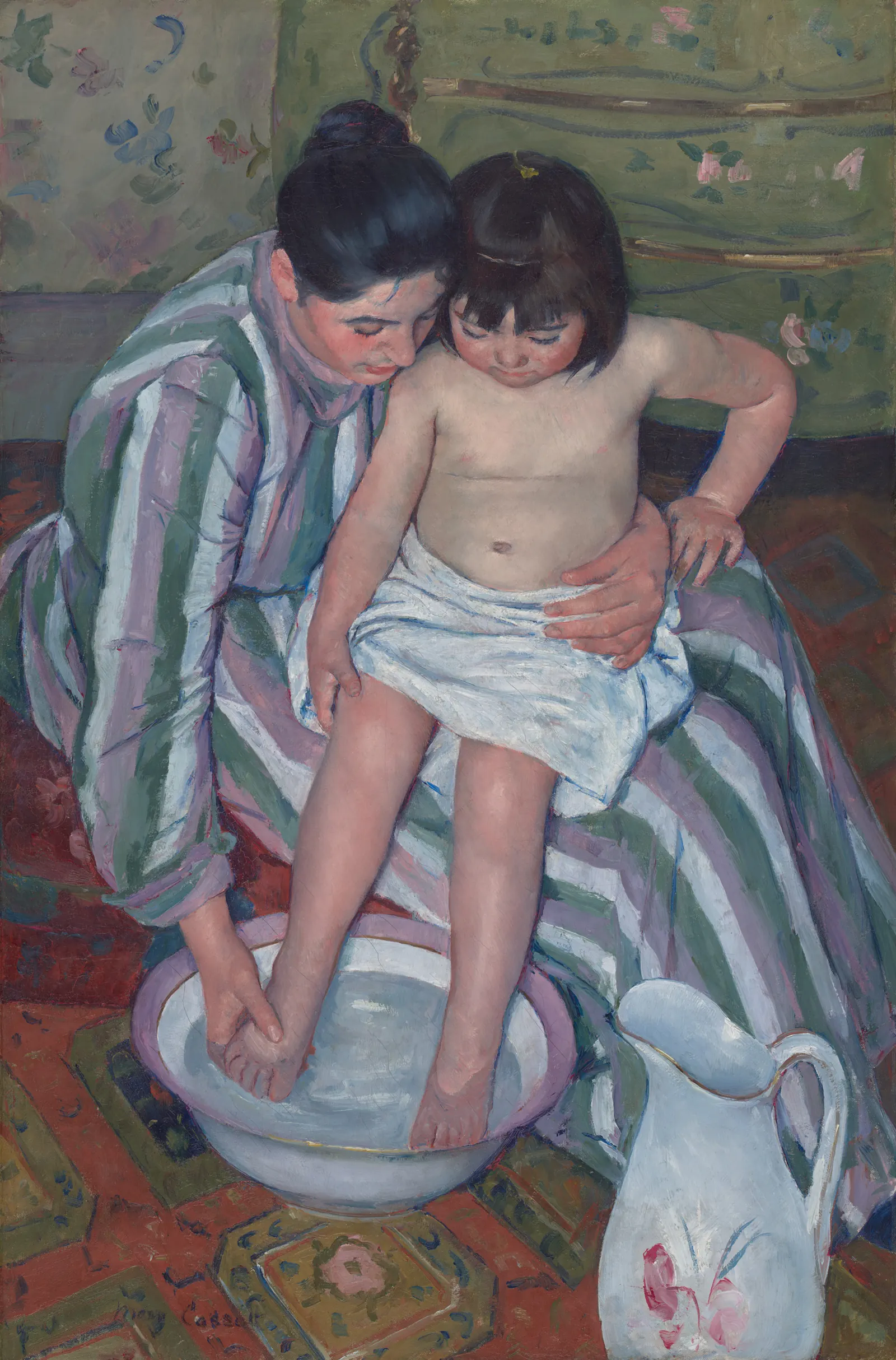
Notice how much pattern surrounds that simple action. The stripes of the dress, flowers on the furniture and shapes in the carpet do not reduce the picture to a single pastel colour. It may appeal to someone who likes both intimate scenes and lively surfaces.
As a gift, it can acknowledge the practical work of care. Keep that connection personal: perhaps you remember a small daily ritual, rather than an idealised version of childhood. Do not use the painting to suggest that the recipient’s entire identity is caregiving, or that the scene shows the correct way a family should look. If she dislikes sentimental family imagery, take that preference seriously and choose something else.
Morisot for the person who loves reading
In Reading, 1873, Berthe Morisot painted her sister Edma seated outdoors with a book. The Cleveland Museum of Art identifies the sitter and the setting. The picture gives you an alternative to an adult-and-child scene: somebody occupied with an interest of her own.
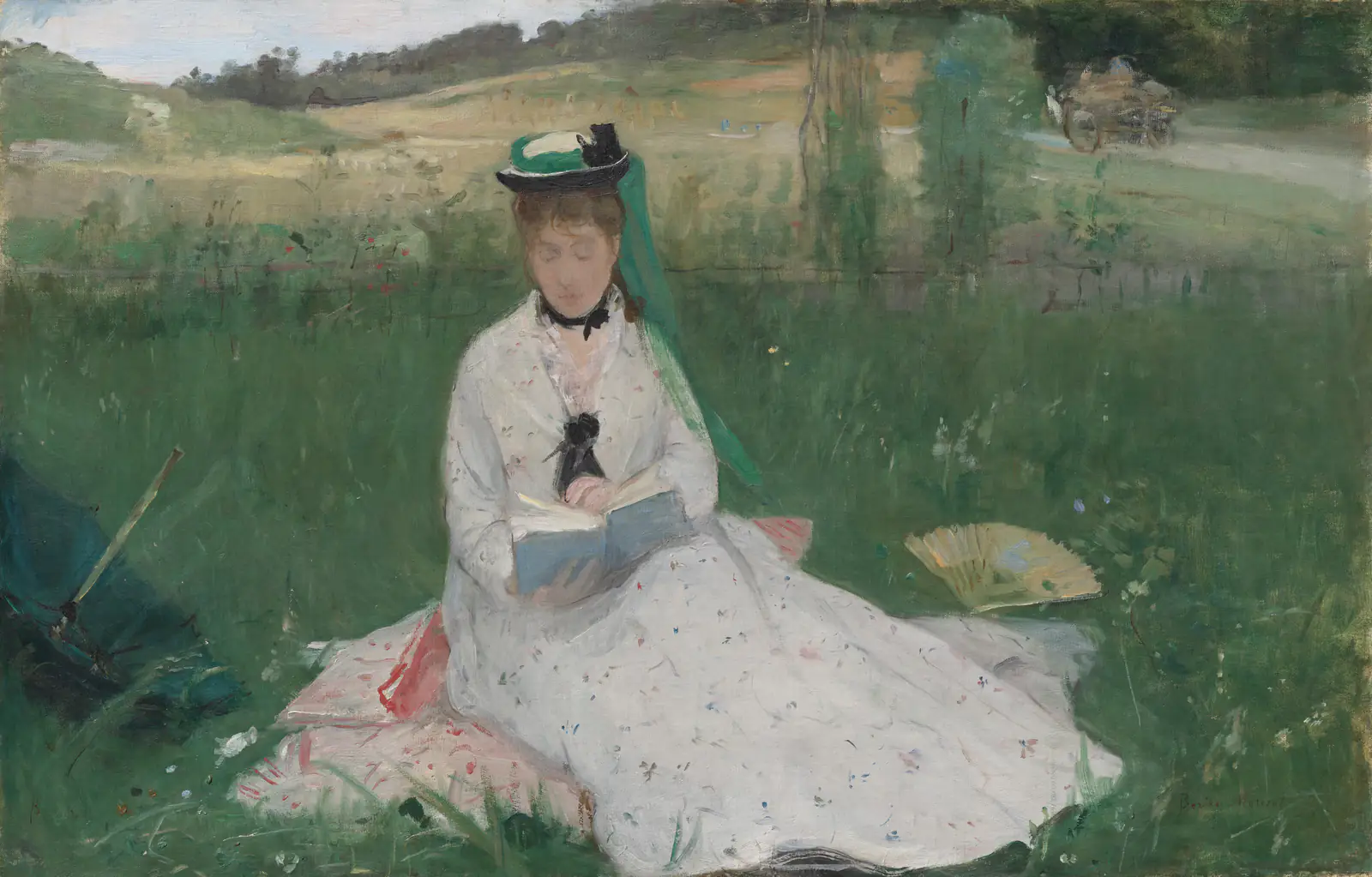
The pale dress spreads across the foreground while the darker green grass holds the figure in place. A book, fan and parasol make the scene particular. Choose it for somebody who enjoys reading or spending time outdoors, rather than because you expect the colours to create a guaranteed calming effect.
This could be a thoughtful gift for a reading corner, provided she actually has somewhere suitable for it. If the connection is a book you both love, include its title in the note. There is no need to claim that Edma was reading that same book. Your own association can be meaningful without becoming an invented fact about the painting.
Monet for a memory of being outdoors
Claude Monet’s Woman with a Parasol—Madame Monet and Her Son, 1875, shows his wife Camille and their son Jean. The National Gallery of Art’s record identifies both. Here, family is part of a scene dominated by wind, grass, sky and changing light.
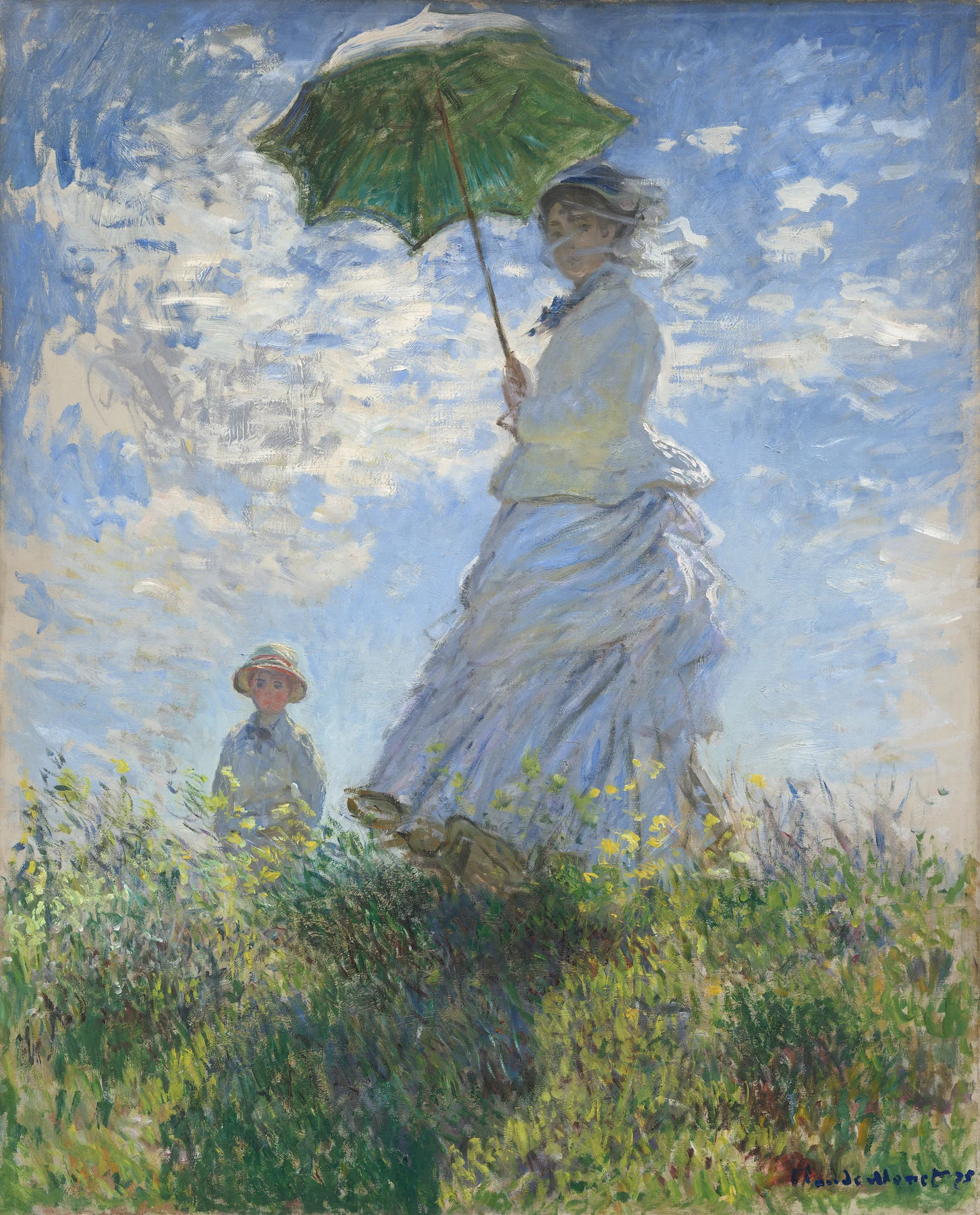
The broad sky and tall figure give this image a different rhythm from Cassatt’s enclosed domestic scene. You might choose it because of walks together, a fondness for gardens or the way your mother enjoys being outside. It need not be a literal likeness to your own family.
Look for a reproduction that keeps the figure, parasol and lower grassy slope in view if you want the complete painting. A crop around the parasol changes its balance and can remove Jean. Check the actual print preview, not only an attractive room mockup. Our Monet artist guide offers further works if this particular subject is not her preference.
Choose a picture she can actually accommodate
Find out whether there is a likely wall, an existing frame or simply a wish to choose art later. Do not buy a large framed picture and assume she will replace something she already owns. Art given as a present should not create a rearranging project unless that is something she wants.
For an existing frame, ask for the relevant dimensions instead of a photograph alone. The frame’s outside measurements, its glazing size and a mount’s visible opening answer different questions. A sheet described as 30 × 40 cm may include white margins, so the printed image can be smaller. Check the listing rather than treating the size label as a complete specification.
If the room is uncertain, an unframed print gives flexibility but also leaves a task and a cost. Offer to help with framing instead of calling that automatically convenient. Our framed or unframed guide walks through that decision without assuming one option always costs less overall.
Make the family gift easy to receive
If siblings are contributing, agree who is checking the artwork, format and delivery details. Several enthusiastic people can otherwise buy accessories that do not fit the same sheet. One clear description of the agreed gift is more useful than a group chat full of different mockups.
Keep delivery estimates separate from promises. Check the address, expected arrival, frame inclusion and any exchange restrictions before ordering. Mother’s Day is observed on different dates in different places; confirm the date your family celebrates rather than relying on an international shop banner.
If the right print cannot arrive in time, give a card describing the agreed choice and arrange the later handover honestly. Avoid a last-minute substitute that she will be expected to keep for years. If she prefers choosing herself, make the offer concrete: a shared visit, a shortlist or an agreed contribution towards the final picture and frame.
Add a personal note without prescribing a feeling
The note is where the gift becomes yours. Mention a specific memory, an interest you admire or the moment you remembered her while looking at the image. “This reminded me of our afternoons reading outside” is more individual than a claim that the painting perfectly embodies motherhood.
Do not demand a particular response. She may enjoy the work but prefer a different room, frame or size. An exchange option, where available, should be offered without guilt. The point is to give something she will enjoy living with, not to test whether she appreciates your interpretation.
These three pictures offer care, private attention and shared time outdoors. Choose the one that genuinely connects with her—or let them lead you to an entirely different artist. Recognising her taste is already a more personal gesture than selecting the most obviously maternal image.
Editorial record
About this article
- Author
- Publisher
- GeMarkt
- Published
- Reviewed
- Internal source & rights check. Conducted by GeMarkt Research Review. This is an internal editorial check—not independent peer review.
- Source standard
- Buying guide source standardSeparates measured or first-hand evidence from general guidance and keeps practical limits visible.
Found a claim that needs checking? Report a factual error.