GeMarkt Journal · Practical guide
Is John Singer Sargent Public Domain? A Work-and-File Guide
Twelve named Sargent works are public domain in the markets checked here; U.S. publication or distribution evidence and the exact museum file remain separate checks.
Rights check · reviewed
The short answer
Yes—for the 12 named paintings, poster, and exact institutional files documented here in the European Union, United Kingdom, Türkiye, and United States. The answer does not automatically clear every Sargent work, private study, mural detail, restoration, or digital reproduction.
| What is being checked | Result | Why |
|---|---|---|
| European Union & United Kingdom | Public domain | Sargent died in 1925. The ordinary life-plus-70 economic term ran through 31 December 1995 and expired on 1 January 1996. |
| Türkiye | Public domain | Türkiye applies a life-plus-70 economic-rights term. Sargent’s established sole-authored works are beyond it. |
| United States | Clear for the 12 documented works below | The selected set has pre-1931 illustrated publication, poster issue, or artist-estate public-sale evidence. A private drawing or work with only a 1978–2002 first-publication record needs a separate §303 analysis. |
| Museum image or download | Check the exact object and file | The painted or printed work, unique object or poster sheet, modern photograph or scan, and local derivative are distinct records. Preserve the accession, source endpoint, and provider statement together. |
This guide separates the underlying work, U.S. publication or authorised distribution evidence, unique object or poster sheet, and institutional file. It makes no blanket worldwide claim.
This is a documented research summary, not legal advice. Copyright and moral-rights rules can vary by country and by the history of a particular work.

What we’ll look at
When can a Sargent image be reused, and why are the painted work, its U.S. publication history, the museum object, and the digital file separate records?
The practical answer is yes for the 12 John Singer Sargent works and exact institutional files documented here—not automatically for every Sargent work or every image online. Sargent died in 1925, so his established works are beyond the ordinary economic-rights term in the European Union, United Kingdom, and Türkiye. The selected U.S. set also has work-level evidence before 1931: illustrated catalogues and publications, a poster issued in 1917, or an artist or estate public sale in 1925.
That answer contains four records:
- the underlying painting or poster design;
- the U.S. publication or distribution evidence for that work;
- the unique physical object or exact poster sheet identified by an accession;
- the provider’s digital file and GeMarkt’s local derivative.
This is a research summary, not legal advice. It names its markets, works, objects, and files instead of turning an artist’s fame or death date into worldwide clearance.
The short answer is yes for this twelve-work set
The published ledger contains nine Art Institute of Chicago records and three National Gallery of Art records. AIC labels each selected file with its CC0 Public Domain Designation. NGA states on each selected object page that the media is free and in the public domain, and its Open Access programme permits free reuse of qualifying images.
The set is bounded because Sargent’s archive contains more than society portraits. It includes private studies, travel watercolours, drawings retained by his family, murals, commissioned designs, estate material, and later reproductions. A work dated 1909 may have been published promptly, sold in the 1925 estate sale, first reproduced decades later, or left unpublished until the digital era. Those paths do not produce the same U.S. record.
The feature portrait, Mrs. George Swinton (Elizabeth Ebsworth), is unusually well documented. AIC records publications beginning with the portrait’s 1897 New Gallery season, later periodical coverage, a 1922 museum acquisition, and books published in 1925 and 1927. The exact AIC IIIF file used here is designated CC0.
Life plus 70 markets are clear
Article 1 of the EU term directive gives an artistic work the author’s life plus 70 years. UK government guidance uses the same ordinary duration for artistic works, and Article 27 of Türkiye’s Law No. 5846 applies life plus 70 to economic rights.
Sargent died on 14 April 1925. For his established sole-authored works, the ordinary life-plus-70 economic term ran through 31 December 1995 and expired on 1 January 1996 in the checked markets.
| Market checked | Ordinary rule applied | Result for Sargent’s established works |
|---|---|---|
| European Union | author’s life plus 70 years | public domain from 1 January 1996 |
| United Kingdom | 70 years after the creator’s death | public domain from 1 January 1996 |
| Türkiye | life plus 70 years for economic rights | public domain from 1 January 1996 |
Moral rights, trademarks, endorsement, privacy, cultural-property rules, museum access terms, and new creative restoration remain separate. A copyright conclusion does not permit a seller to imply that Sargent, a sitter, an estate, or a museum endorses a product.
The US answer is work specific
Copyright Office Circular 15A states that, in 2026, works published before 1 January 1931 are outside the maximum 95-year publication term. But a date painted is not automatically a date published.
The Copyright Office’s visual-artist guidance explains that distributing an original or copies can publish a visual work; public display alone does not. An exhibition date therefore helps identify the work and its chronology but does not close the publication question by itself.
The unpublished branch is equally important. Under 17 U.S.C. §303, a pre-1978 work that had not entered federal copyright through publication or registration follows the modern term with transition floors. A work still unpublished on 1 January 1978 and first published by the end of 2002 can receive a floor through 2047. That is why this guide excludes tempting drawings and watercolours whose institutional records show only a 1981 or 1998 reproduction without earlier publication or authorised distribution evidence.
A portrait title is not a rights record
Sargent often painted a sitter more than once, and institutions may use married names, family names, or a shortened title. Mrs. George Swinton is Elizabeth Ebsworth Swinton, while Mrs. Charles Gifford Dyer is Mary Anthony Dyer. A search result that says only “Sargent lady portrait” does not identify a canvas, accession, publication history, photograph, or download.
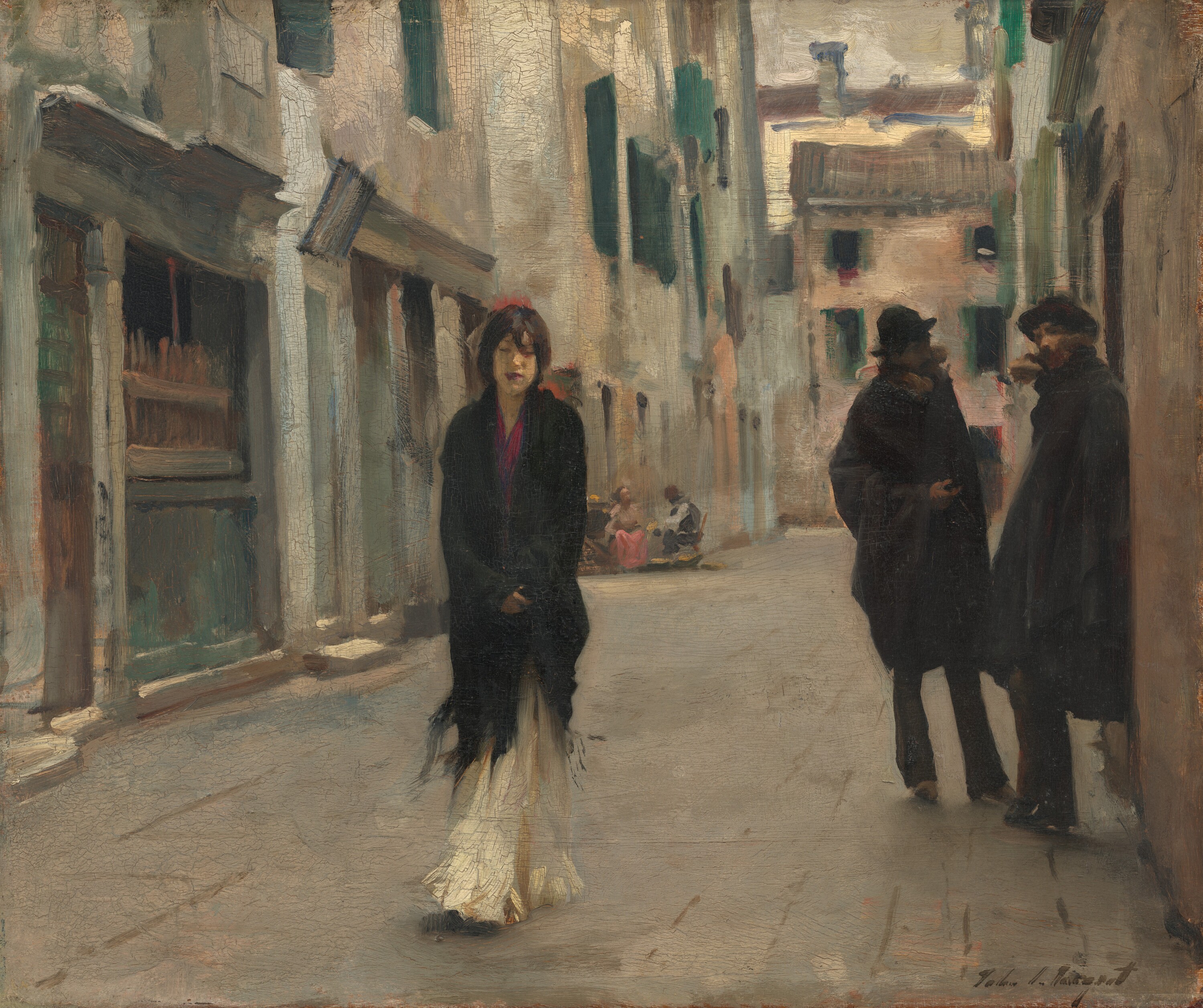
The same caution applies to places. Street in Venice, Venetian Glass Workers, and Under the Cypress Trees at Corfu are three separate objects with separate histories. A colour-adjusted poster scan or a photograph from another museum cannot inherit the rights statement attached to one of these exact records.
A usable ledger therefore keeps artist, full title, date, medium, institution, accession, object URL, exact source-file URL, and local transformation together.
Three evidence routes close the US question
The first route is an identified publication or reproduction before 1931. AIC records Mrs. George Swinton in publications beginning in 1897; The Fountain, Villa Torlonia, Frascati, Italy as illustrated in its 1910 catalogue and in 1914 publications; Mrs. Charles Gifford Dyer as an illustration in a 1925 exhibition catalogue; and Venetian Glass Workers in William Howe Downes’s illustrated 1925 book. NGA records Eleanora O’Donnell Iselin as reproduced in a 1924 catalogue, Mary Crowninshield Endicott Chamberlain in a 1925 catalogue, and Street in Venice in a 1926 catalogue.
The second route is issue as a copy. Red Cross Our Day 1917 is a lithographic fundraising poster made for public distribution in 1917, not a private drawing whose first publication must be guessed.
The third route is authorised public distribution of the original. AIC records Madame Paul Escudier in a 1923 Art News sale/publication and at the public Carnegie sale that year. Its provenance records also place Water Carriers on the Nile, Thistles, and Under the Cypress Trees at Corfu in the public Christie, Manson & Woods sale of Sargent’s works on 24 and 27 July 1925. The ledger uses those public-sale events as work-level distribution records. It does not treat an exhibition alone as publication.
Is Mrs George Swinton public domain
The underlying 1897 painting is public domain in the checked markets, and the exact AIC file used here is designated CC0. AIC’s object record ties the portrait to publications from 1897 onward, its 1922 accession 1922.4450, and the named IIIF image endpoint.
The feature master is the full portrait converted to WebP without enlargement or cropping. The SHA-256, dimensions, object URL, exact source endpoint, and four responsive derivatives are locked in the publication contract.
That result does not automatically attach to a conservation photograph, a recoloured book plate, a tightly cropped marketplace file, or a different photograph of the same canvas. It also does not clear publicity or endorsement claims about the sitter.
Exact file terms still control the download
The old work and the digital image remain separate layers. The U.S. Copyright Office’s visual-arts compendium says a purely faithful scan may lack new registrable authorship, while sufficiently creative restoration or alteration can contain new authorship. UK IPO guidance likewise tells users to check rights in digital images separately from their subjects.
AIC permits commercial and non-commercial reuse of files labelled CC0 Public Domain Designation. NGA’s selected pages each state that the displayed media is free and in the public domain, and its Open Access policy covers qualifying image downloads. This guide records only the exact AIC IIIF and NGA IIIF endpoints carrying those affirmative signals.
Each local candidate was converted to WebP, resized without enlargement, and left uncropped. If an upstream attribution, file, object record, publication history, or rights statement changes, the derivative must be reviewed again.
Twelve reviewed files form the published set
The visual strip below is generated from the same fail-closed registry used by tests. It contains exactly 12 records. Each has a unique accession, object URL, exact source-file URL, local path, dimensions, transformation note, and provider rights statement.
The bounded set is intentionally not a catalogue raisonné. It is large enough to compare commissioned portraits, travel subjects, a public poster, early reproductions, estate-sale distribution, and two museum image systems without pretending that evidence for 12 files clears Sargent’s entire output.
A commercial reuse checklist
Before using a Sargent image in a product, campaign, publication, or download:
- Identify the complete title, date, medium, institution, and accession; a sitter’s name alone is not enough.
- Re-run the copyright-term analysis for every target country.
- For the United States, save work-level publication or authorised distribution evidence; do not substitute creation or exhibition.
- Save the exact source-file URL and the provider’s current rights statement.
- Record crop, colour, restoration, compositing, and format changes.
- Check sitter-related endorsement, privacy, trademark, moral-rights, cultural-property, and platform-contract issues separately.
- Re-review the record if attribution, provenance, publication history, or the upstream file changes.
Where Sargent fits inside GeMarkt
This guide is editorial evidence, not a product announcement. GeMarkt currently has no John Singer Sargent collection, product, download, or wallpaper room, so none is linked here. If a collection is later prepared, its production files and rights ledger must be reviewed before its route is opened.
For broader context, continue with the Impressionism chapter, the cross-artist guide to public-domain status, and the practical distinction between public domain and unrestricted reuse in Public domain is not a free-for-all.
Rights-checked image ledger
A documented starting set
These files were selected from the holding institutions rather than from search-result copies. Each card keeps the artwork record, exact source file, provider statement and GeMarkt transformation visible as separate facts.
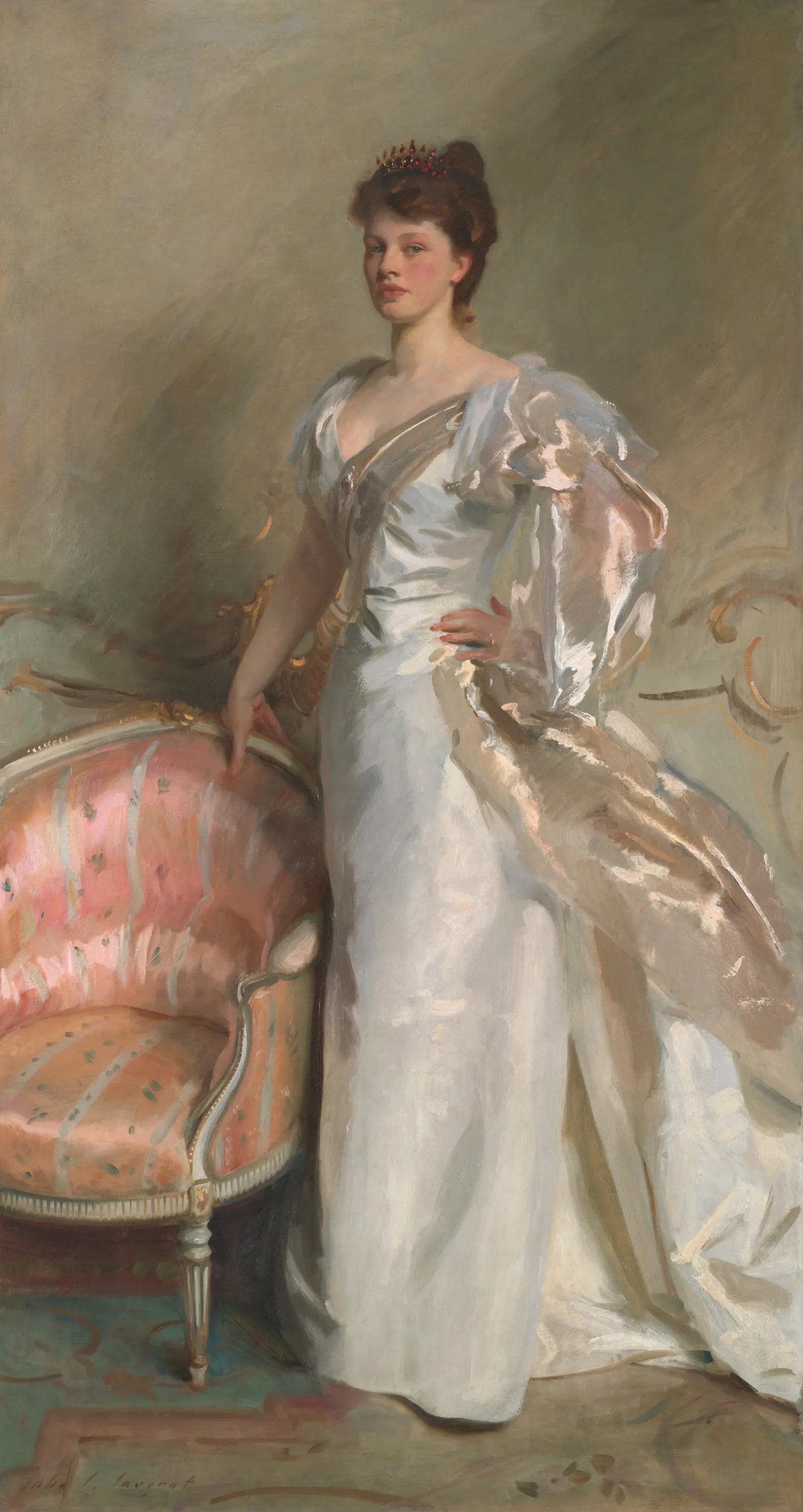
Mrs. George Swinton (Elizabeth Ebsworth)
1897 · Art Institute of Chicago · 1922.4450
CC0 Public Domain Designation
Converted to WebP without enlargement or crop.

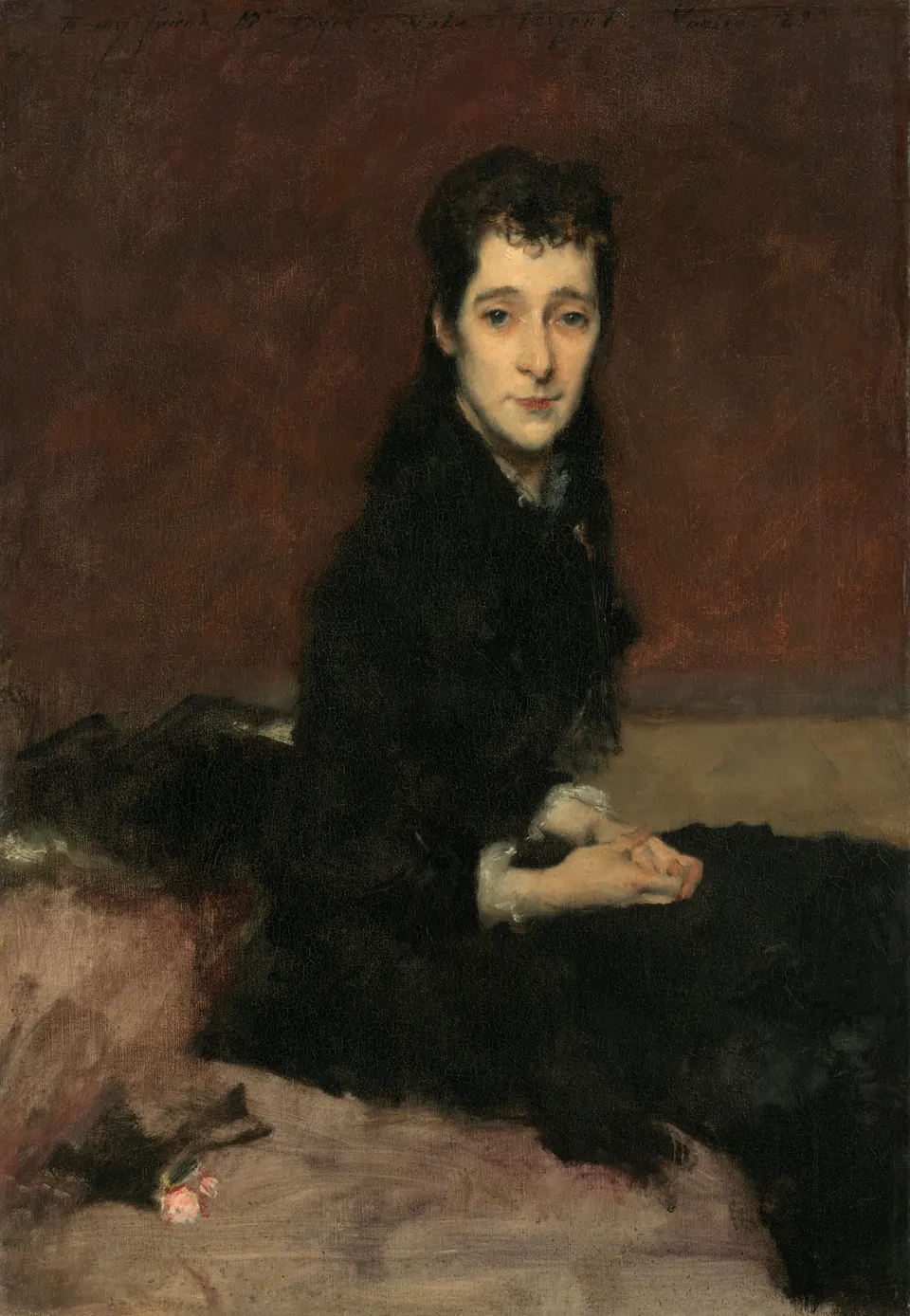
Mrs. Charles Gifford Dyer (Mary Anthony)
1880 · Art Institute of Chicago · 1915.592
CC0 Public Domain Designation
Resized to 960 pixels wide and converted to WebP; no crop.

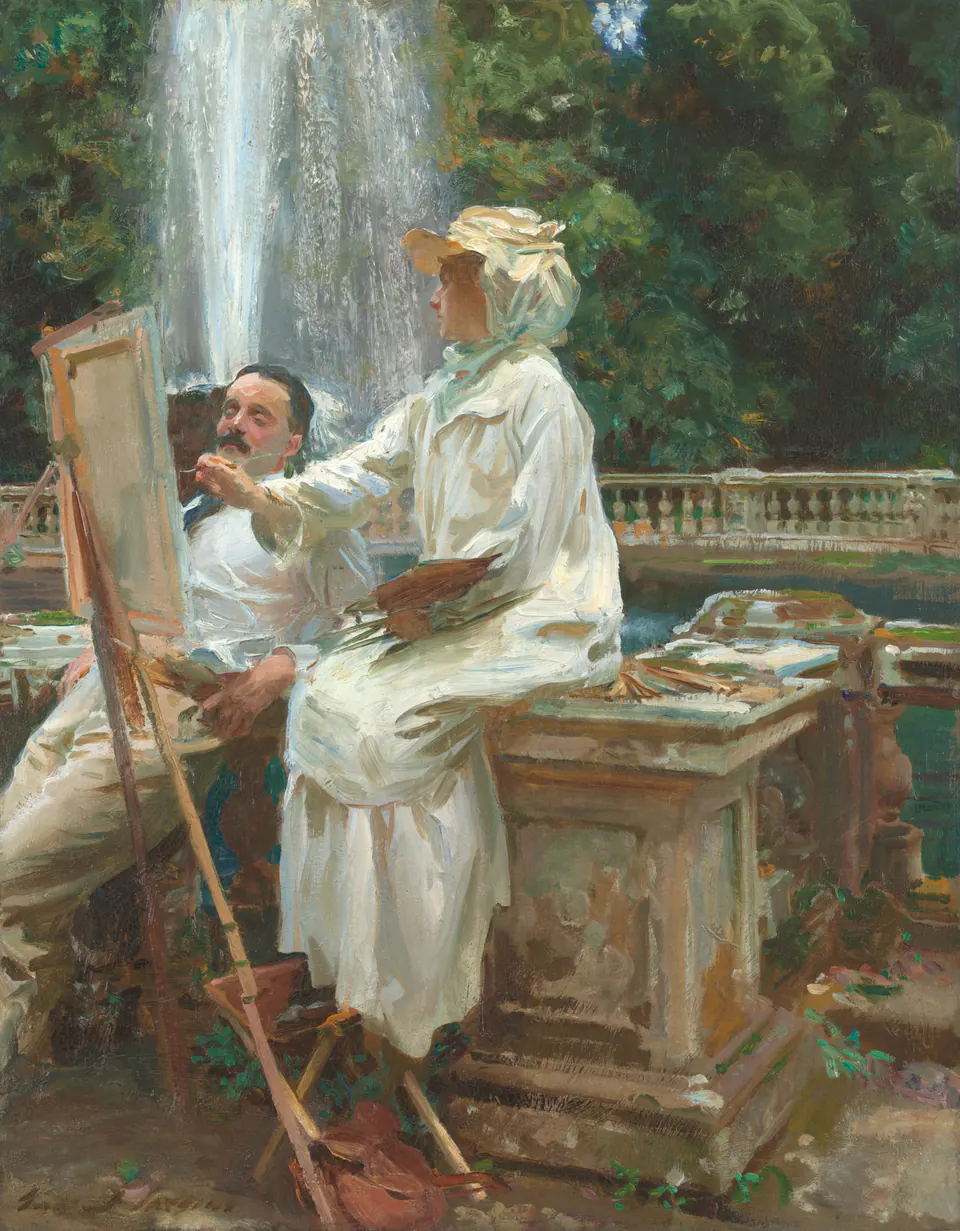
The Fountain, Villa Torlonia, Frascati, Italy
1907 · Art Institute of Chicago · 1914.57
CC0 Public Domain Designation
Resized to 960 pixels wide and converted to WebP; no crop.

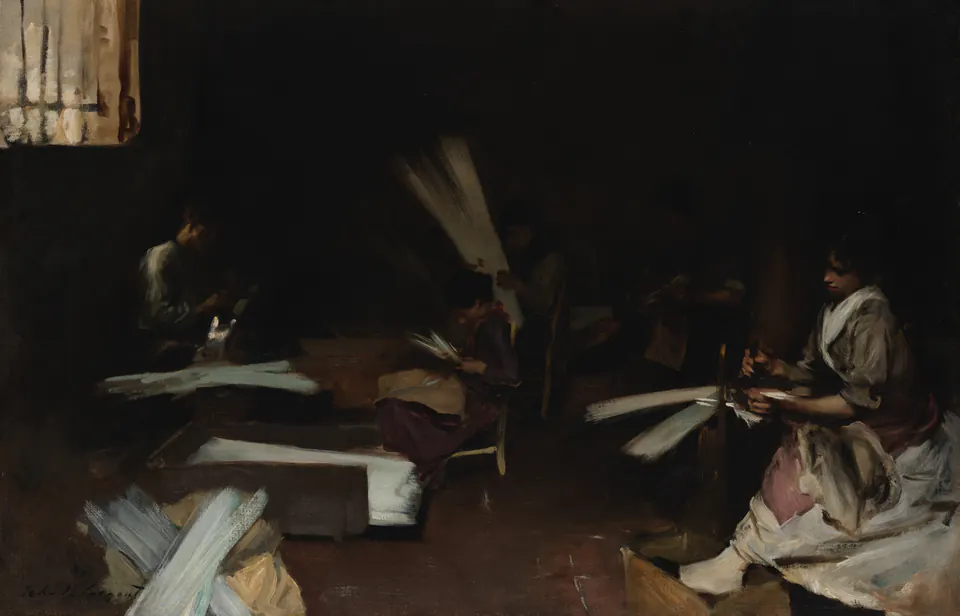
Venetian Glass Workers
1880–82 · Art Institute of Chicago · 1933.1217
CC0 Public Domain Designation
Resized to 960 pixels wide and converted to WebP; no crop.

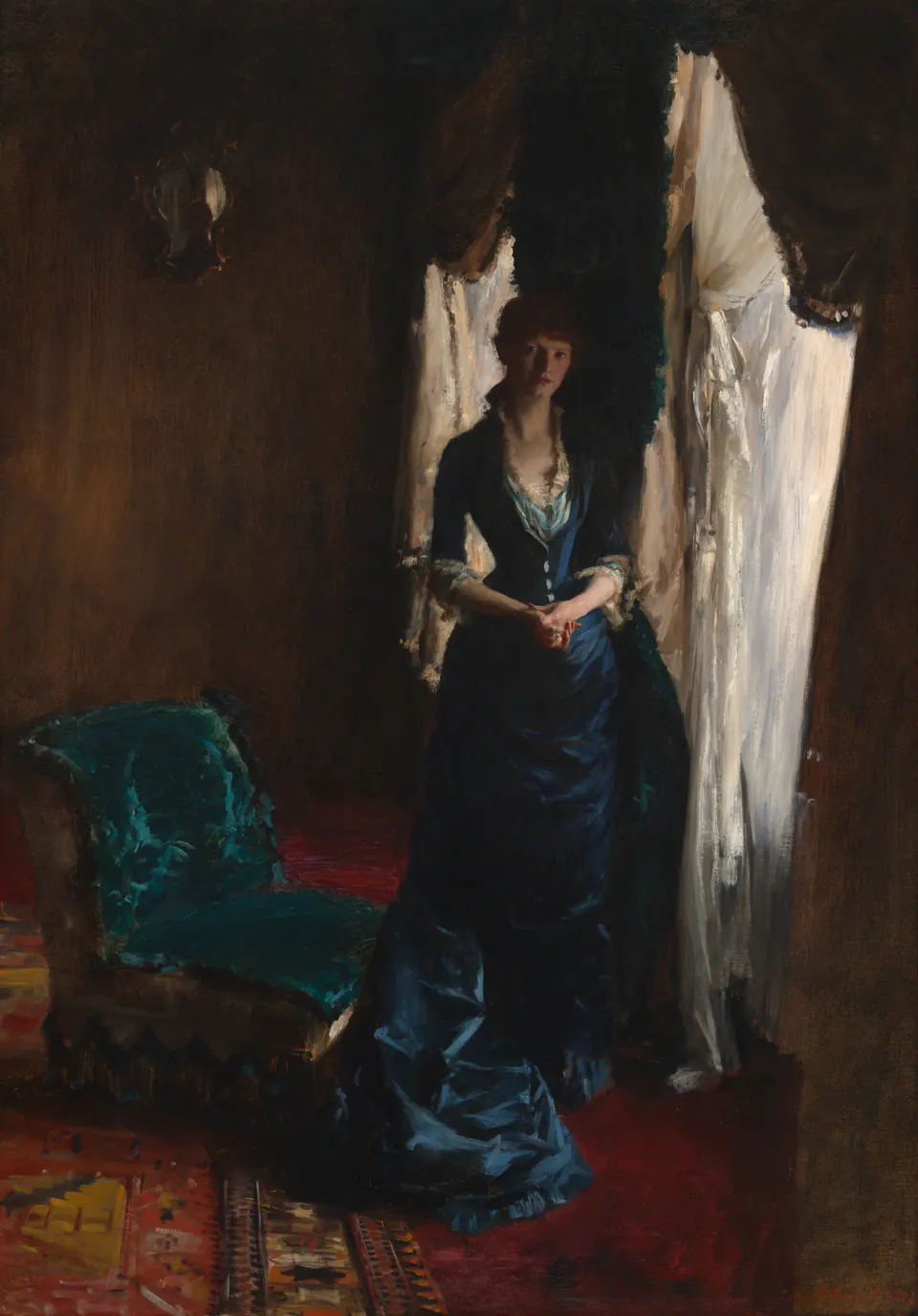
Madame Paul Escudier (Louise Lefevre)
1882 · Art Institute of Chicago · 2007.391
CC0 Public Domain Designation
Resized to 960 pixels wide and converted to WebP; no crop.

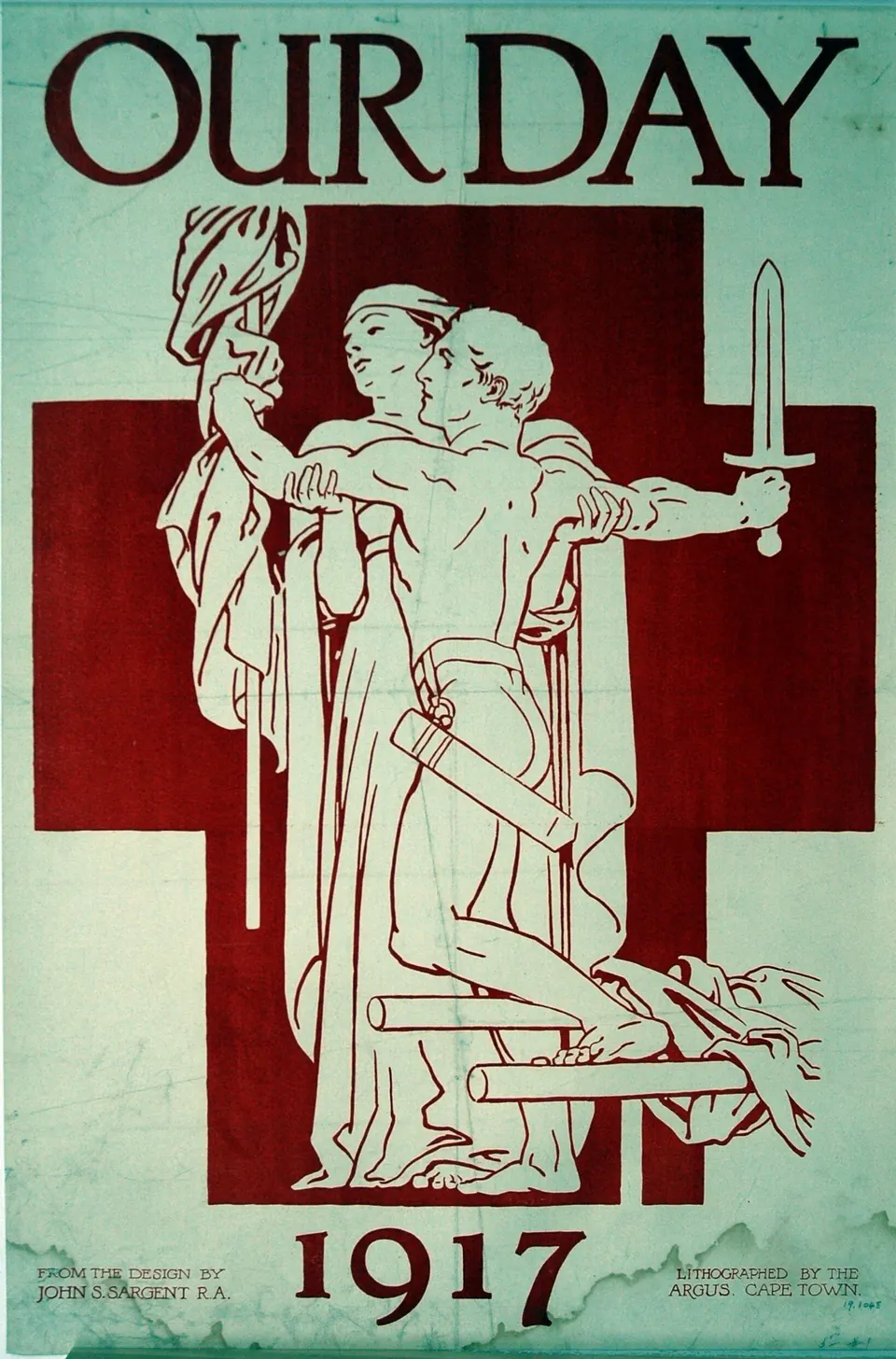
Red Cross Our Day 1917
1917 · Art Institute of Chicago · 1919.1048
CC0 Public Domain Designation
Resized to 960 pixels wide and converted to WebP; no crop.

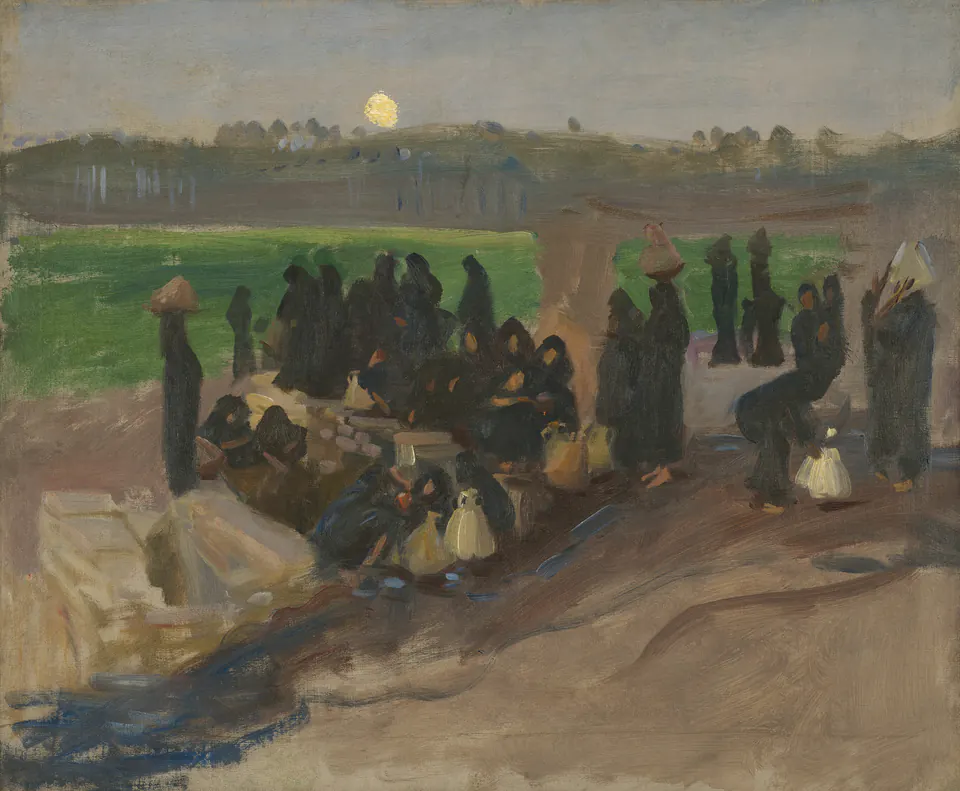
Water Carriers on the Nile
1891 · Art Institute of Chicago · 1935.445
CC0 Public Domain Designation
Resized to 960 pixels wide and converted to WebP; no crop.

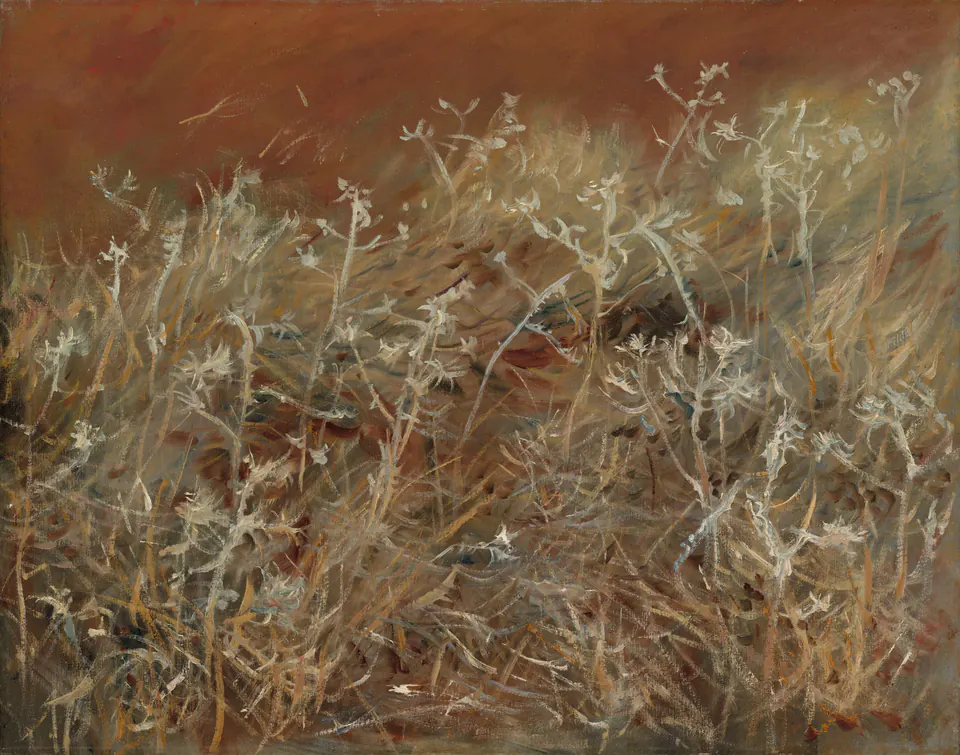
Thistles
1883–89 · Art Institute of Chicago · 1996.446
CC0 Public Domain Designation
Resized to 960 pixels wide and converted to WebP; no crop.

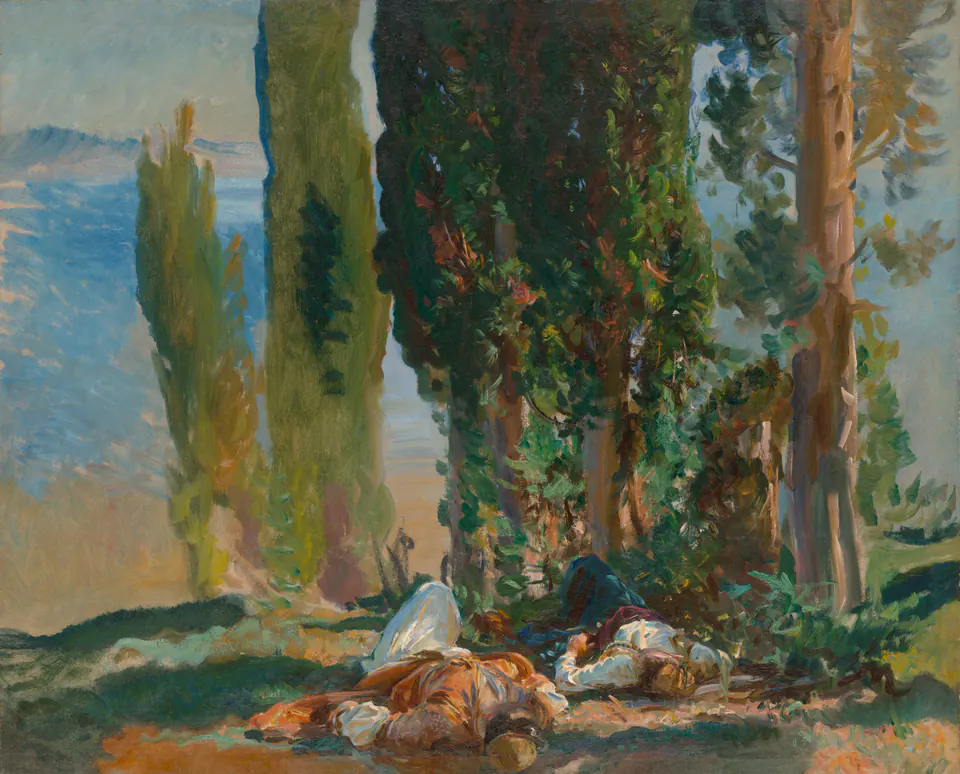
Under the Cypress Trees at Corfu
1909 · Art Institute of Chicago · 2020.318
CC0 Public Domain Designation
Resized to 960 pixels wide and converted to WebP; no crop.

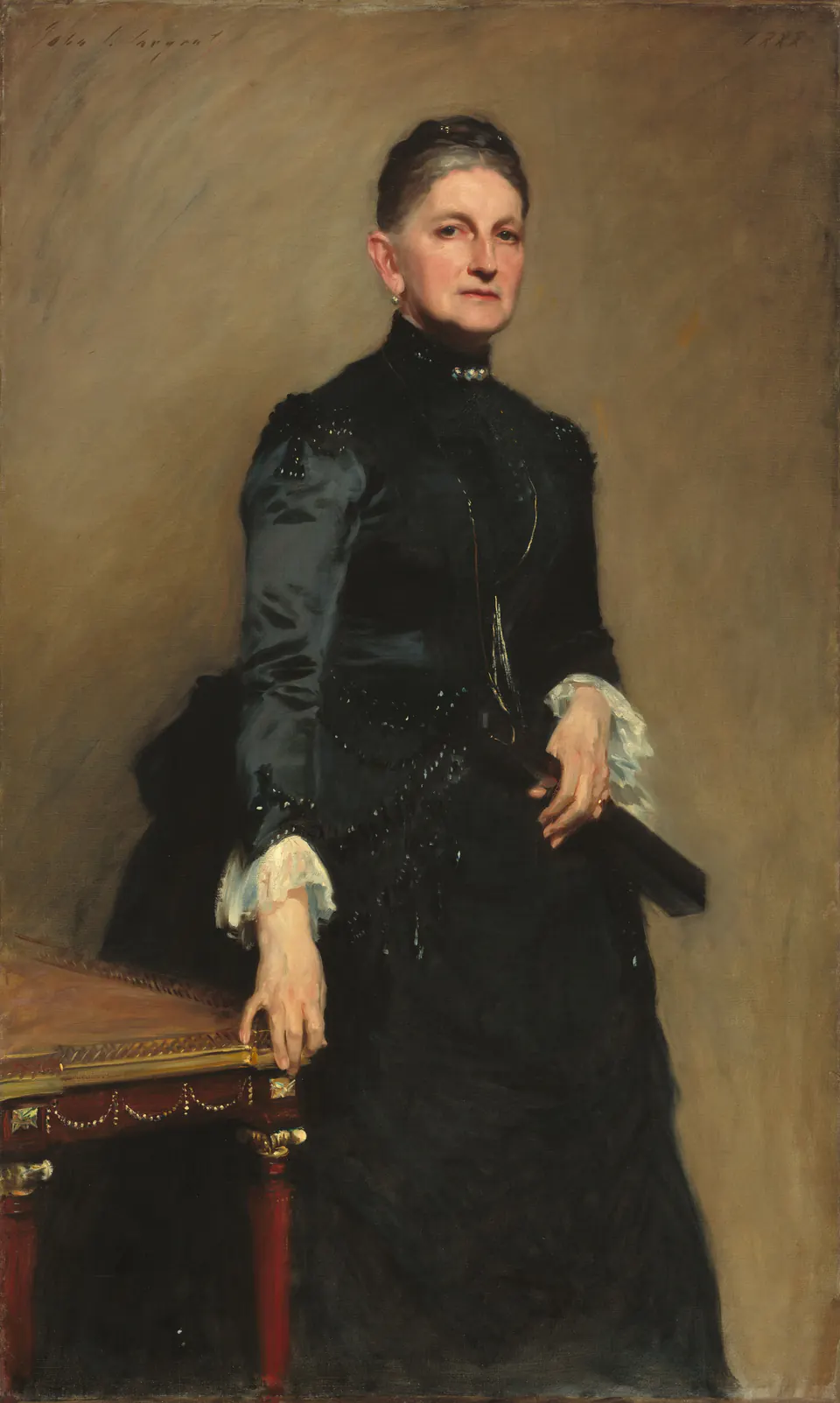
Eleanora O'Donnell Iselin (Mrs. Adrian Iselin)
1888 · National Gallery of Art · 1964.13.1
Public Domain / Open Access
Resized to 960 pixels wide and converted to WebP; no crop.

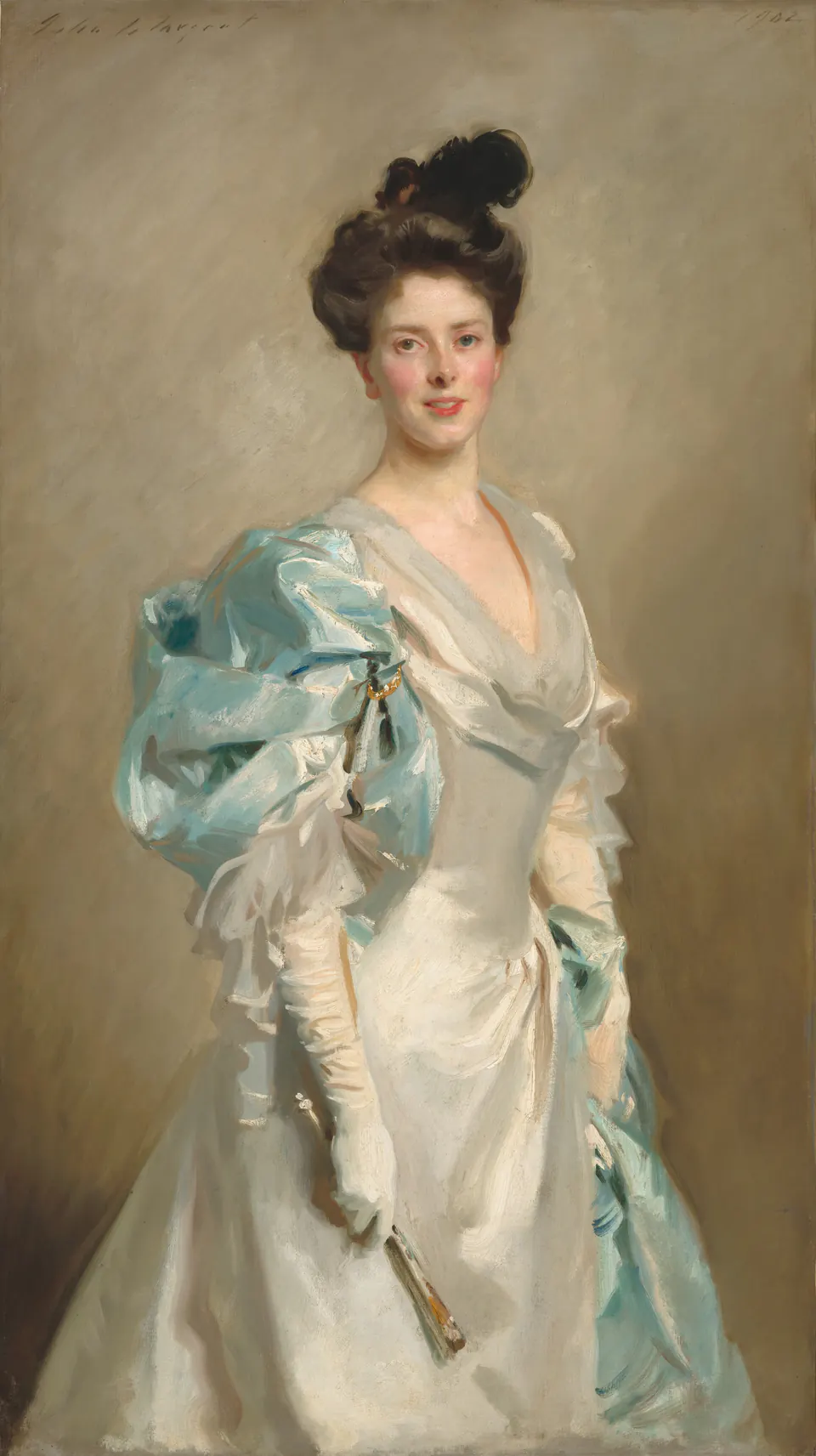
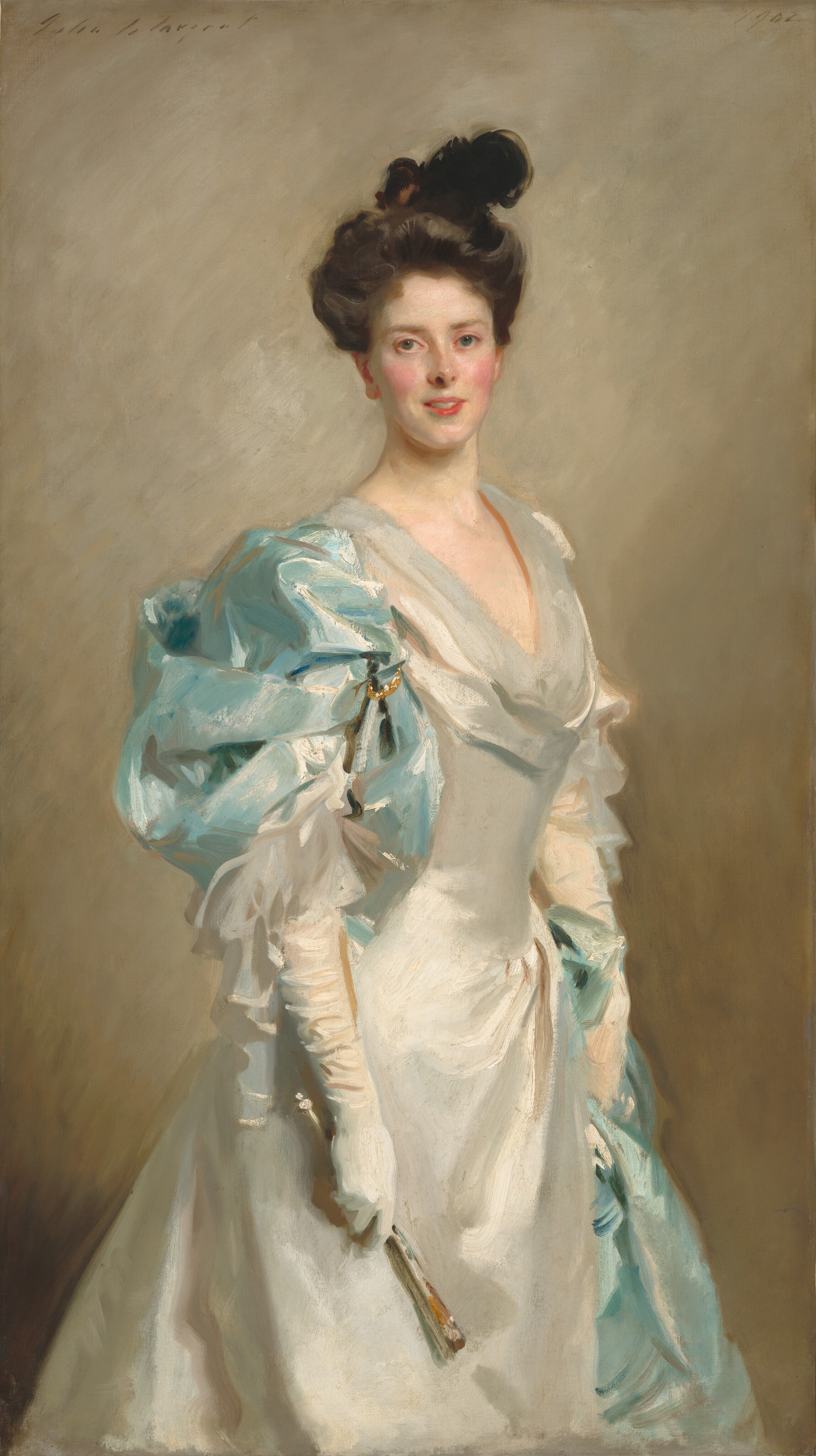
Mary Crowninshield Endicott Chamberlain (Mrs. Joseph Chamberlain)
1902 · National Gallery of Art · 1958.2.1
Public Domain / Open Access
Resized to 960 pixels wide and converted to WebP; no crop.
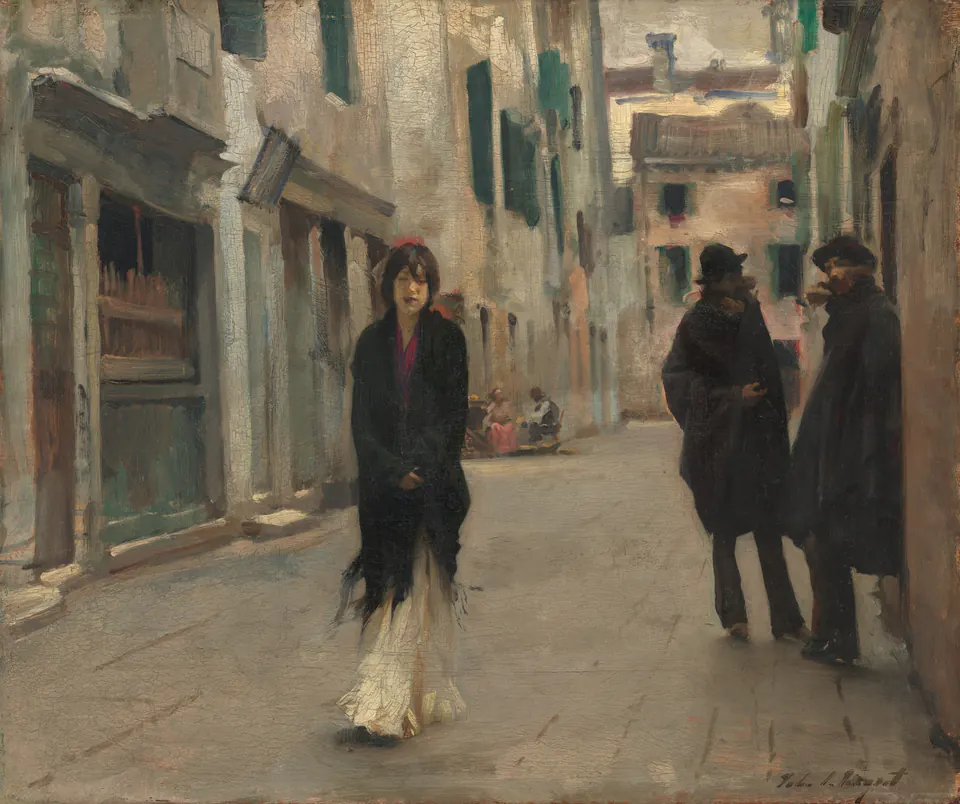
Street in Venice
1882 · National Gallery of Art · 1962.4.1
Public Domain / Open Access
Resized to 960 pixels wide and converted to WebP; no crop.
Sources and review method
We checked the artist chronology against museum records, treated each named jurisdiction separately, and recorded the provider policy for the image set. These sources support the legal framework and artist dates used above; the source file for any individual image still needs its own record.
- Mrs. George Swinton (Elizabeth Ebsworth) — Art Institute of Chicago. Feature identity, accession, extensive pre-1931 publication history, exact IIIF file, and CC0 status.
- The Fountain, Villa Torlonia, Frascati, Italy — Art Institute of Chicago. Painting identity plus illustrated 1910, 1914, and 1924 publication evidence.
- Water Carriers on the Nile — Art Institute of Chicago. Object identity and the artist-estate public Christie’s sale of 24 July 1925.
- Thistles — Art Institute of Chicago. Object identity and the artist-estate public Christie’s sale of 24 and 27 July 1925.
- Eleanora O'Donnell Iselin (Mrs. Adrian Iselin) — National Gallery of Art. Object identity, accession, 1924 catalogue reproduction, exact open-access image, and public-domain media statement.
- Mary Crowninshield Endicott Chamberlain (Mrs. Joseph Chamberlain) — National Gallery of Art. Object identity, accession, 1925 catalogue reproduction, exact open-access image, and public-domain media statement.
- Street in Venice — National Gallery of Art. Object identity, accession, 1926 catalogue reproduction, exact open-access image, and public-domain media statement.
- Open Access Images — Art Institute of Chicago. Files labelled CC0 Public Domain Designation may be reused for commercial and non-commercial purposes.
- Free Images and Open Access — National Gallery of Art. The NGA releases images of public-domain works that it believes are public domain and free of known restrictions.
- Directive 2006/116/EC, Article 1 — EUR-Lex. The EU term for an artistic work is the author’s life plus 70 years.
- How long copyright lasts — UK Government. UK guidance gives 70 years after the author’s death for artistic works.
- Law No. 5846 on Intellectual and Artistic Works, Article 27 — WIPO Lex. The Turkish economic-rights term is the author’s life plus 70 years.
- Circular 15A: Duration of Copyright — U.S. Copyright Office. The 2026 term table places works published before 1931 outside the maximum 95-year publication term.
- Certain Unpublished, Unregistered Works Enter Public Domain — U.S. Copyright Office. Older unpublished works have a separate U.S. term analysis; discovery and first-publication history can matter.
- 17 U.S.C. Chapter 3, including §303 — U.S. Copyright Office. Section 303 states the transition rules and minimum 2002 or 2047 expiry floors for works that were unpublished on 1 January 1978.
- Visual Artists: Publication — U.S. Copyright Office. Distribution can publish a visual artwork, while public display by itself does not establish publication.
- Compendium of U.S. Copyright Office Practices, Chapter 900, §909.3(A) — U.S. Copyright Office. A purely faithful scan or “slavish copy” does not add registrable authorship, while substantial restoration or alteration can require a separate analysis.
- Copyright notice: digital images, photographs and the internet — UK Intellectual Property Office. A digital image can require a separate rights and website-terms check even when its subject is old.
Editorial record
About this article
- Author
- Publisher
- GeMarkt
- Published
- Reviewed
- Internal source & rights check. Conducted by GeMarkt Research Review. This is an internal editorial check—not independent peer review.
- Source standard
- Rights guide source standardSeparates the underlying work from the source file, records the review date, and links the evidence used for the conclusion.
Found a claim that needs checking? Report a factual error.