GeMarkt Blog · Practical guide
Is John Constable Public Domain? Prints and Their Makers
Constable and Lucas are beyond ordinary life-plus-70 terms. These twelve CC0 museum files do not resolve every early proof's U.S. publication history.
Rights check · reviewed
The short answer
Constable’s designs and David Lucas’s mezzotints are beyond ordinary life-plus-70 copyright. Their selected AIC files are CC0. For U.S. reuse, distinguish the published design from an early proof: the date of every exact state has not been established here.
| What is being checked | Result | Why |
|---|---|---|
| European Union, United Kingdom & Türkiye | Public domain | Constable died in 1837 and Lucas in 1881; both are beyond the ordinary life-plus-70 terms checked here. |
| United States — published designs and proofs | Check the exact state | The Cornfield design was published in 1834, but AIC’s selected Shirley 36 I/IV proof may contain distinct unpublished expression. The Rainbow was published in 1848. An unchanged later pull does not restart a published design’s copyright. |
| Constable design, Lucas plate, impression, or file | Credit both makers | The underlying design and Lucas’s tonal translation are distinct contributions attached to one exact printed object. |
The twelve sheets include English Landscape prints and separate large plates. The Rainbow plate began in 1834 and was published in 1848; it is not an 1834 issued impression. Both makers remain credited.
This is a documented research summary, not legal advice. Copyright and moral-rights rules can vary by country and by the history of a particular work.

What we’ll look at
Can you reuse these Constable landscapes, and why should the caption also name David Lucas?
Constable’s established designs and David Lucas’s mezzotints are beyond ordinary life-plus-70 copyright in the EU, UK, and Türkiye. The U.S. answer is narrower: this guide does not establish publication of every selected early proof or state.
John Constable died in 1837 and David Lucas in 1881. Both belong in the credit line: Constable supplied the landscape designs, and Lucas translated them into mezzotint. AIC releases the twelve selected image files under CC0, but that permission does not establish when each depicted state was published.
The short answer
The twelve AIC examples include English Landscape Scenery and separate large plates, including The Rainbow. Each sheet has its own accession number, museum page, and downloadable image. AIC marks the selected image files with its CC0 Public Domain Designation.
This is a documented selection with stated publication limits, not an unqualified U.S. reuse clearance for all twelve prints. River Stour and Glebe Farm have explicit publication dates; some other records supply only dates for work on the plate or an early state.
These are reproductive prints: Lucas translated Constable’s landscape designs into a medium that could produce multiple sheets. A Constable oil painting, preparatory study, another Lucas impression, or modern photograph needs its own publication and image checks.
Copyright for Constable and Lucas
The EU term directive, UK government guidance, and Article 27 of Türkiye’s Law No. 5846 use an ordinary life-plus-70 term for artistic works. Both named makers died more than 140 years ago.
| Maker | Role in the selected objects | Ordinary term result in checked life-plus-70 markets |
|---|---|---|
| John Constable | underlying landscape designs | public domain |
| David Lucas | mezzotint plates and printed translation | public domain |
Object ownership, museum access, moral rights, trademarks, and creative modern alterations remain separate.
Publication dates and early proofs
For older U.S. material, publication history matters. Applying the Copyright Office’s maximum 95-year term in 2026 puts works published before 1931 outside that term. Several designs here have named nineteenth-century publication evidence. The National Gallery’s catalogue dates The Cornfield print’s first publication to 2 June 1834 and republication to 1 July. AIC’s selected sheet, accession 1929.367, is an early state, Shirley 36 I/IV. Those publication dates have not been matched to this particular state.
The Rainbow shows why a date on a print needs interpretation. Work began in 1834, but the Royal Academy explains that even the 1837 publication inscription preceded actual publication by eleven years. That evidence concerns the published design, not a proven issue date for the AIC sheet dated 1834.
A later impression does not restart copyright in an already published design. The open question is whether an early proof preserves materially different expression not covered by the documented publication. Section 303 can protect qualifying old unpublished work through 2047 if first published between 1978 and 2002. Neither an untraced proof nor a private Constable drawing should inherit another version’s publication date.
Why David Lucas belongs in the credit line
Reproductive printmaking is not a photocopying step. Lucas translated Constable’s colour, brushwork, weather, and light into the tonal language of mezzotint. The plate required technical and interpretive decisions. The AIC records name Lucas as printmaker and Constable as the artist after whom the sheets were made.
A caption that says only “John Constable” hides what the physical object is. “David Lucas after John Constable” is both more accurate and more useful: it tells a viewer why the printed image differs from a painting or drawing.
Is River Stour, Suffolk public domain?
Yes for the published design documented by AIC’s record for accession 1929.258, and AIC labels its selected image CC0. The museum dates the work to 1830 and explicitly records publication in 1831. That is the basis for the U.S. term result, not an inferred production date for this individual sheet.
GeMarkt resized the file to 1280 pixels and converted it to WebP without cropping. Another state, proof, later impression, photograph, or restored scan needs its own accession and file terms.
Check the museum image’s terms
The historical design and plate are not the modern digital image. The UK IPO recommends checking digital-image rights separately, and AIC’s Open Access policy supplies the file permission used here. Follow the museum link for the selected sheet and save the rights statement with your download.
If you use a scan from a book or a photograph of another impression, check its terms afresh. The name “Constable” on an image does not identify who made or supplied that particular file.
Twelve landscapes to explore
The twelve illustrated records below link to the museum’s individual sheets. Look at the translation from landscape into light and dark: a mezzotint reproduces neither the colour nor the surface of an oil painting. That difference is part of Lucas’s contribution and should remain visible in the description.
The open publication questions above remain attached to the relevant proofs and states, despite the files’ CC0 labels.
If you are looking for a colour reproduction of a Constable painting, these print records cannot answer its image-rights question. Return to the museum holding the painting and check its own record and download terms.
A practical Constable and Lucas reuse checklist
- Record the exact title, state or issue, date, institution, and accession.
- Credit “David Lucas after John Constable” where the object record does.
- Keep the date of Constable’s design separate from the date of the printed sheet.
- Save U.S. publication evidence for the depicted design and any materially different state; do not mistake a plate date for an issue date.
- Save the exact file URL and AIC rights label.
- Document crop, colour, repair, compositing, and format changes.
- Recheck term, attribution, trademark, access, contract, and endorsement questions for the planned use.
Keep exploring
The linked museum pages are the starting point for the selected images. GeMarkt does not currently offer a Constable collection or download room.
Read How to cite art and images for help crediting both a designer and a printmaker. Romanticisms places these landscapes within wider debates about land, weather, and national identity.
Rights-checked image ledger
A documented starting set
These files were selected from the holding institutions rather than from search-result copies. Each card keeps the artwork record, exact source file, provider statement and GeMarkt transformation visible as separate facts.
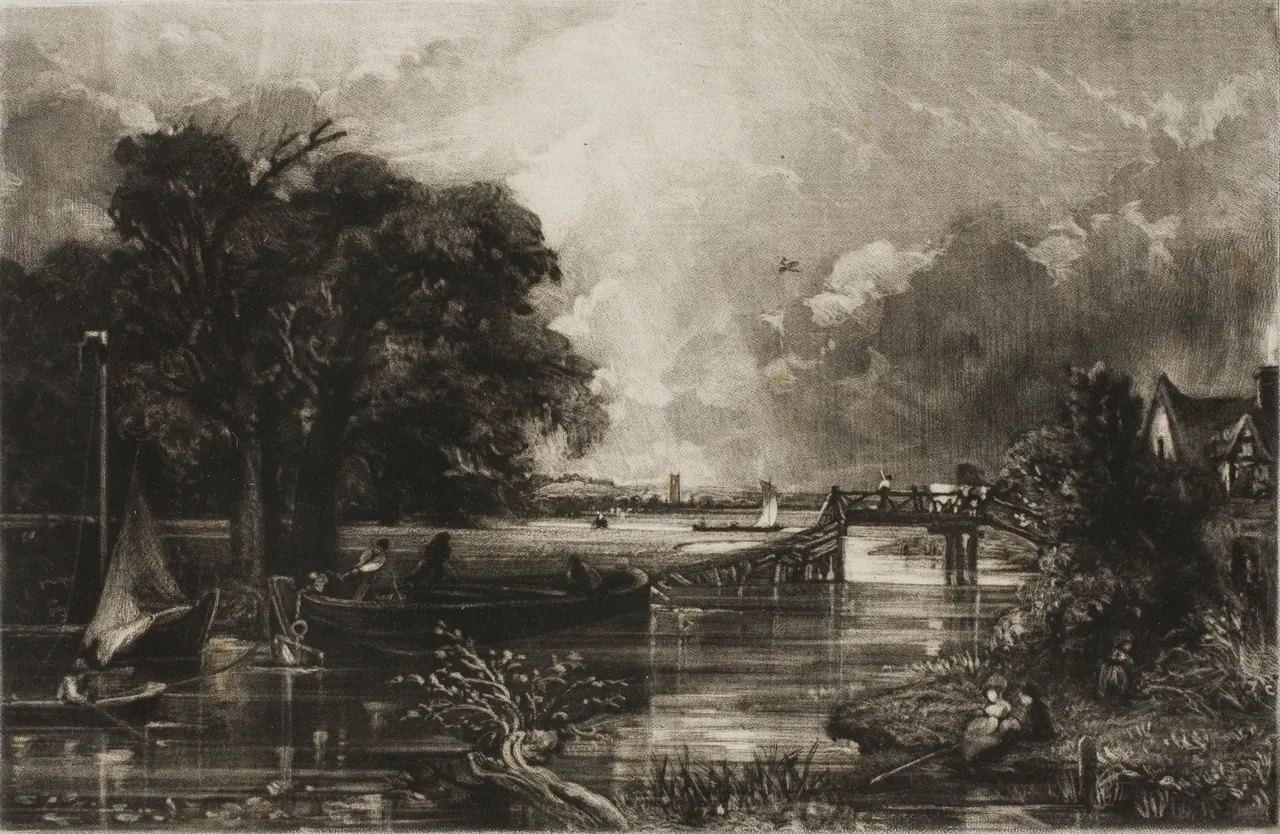
River Stour, Suffolk
David Lucas after John Constable
1830; published 1831 · Art Institute of Chicago · 1929.258
CC0 Public Domain Designation
Reuse check: AIC expressly records publication in 1831, supporting the historic design’s published-work analysis. A later unchanged impression would not restart the design’s copyright.
Resized to 1280 pixels wide and converted to WebP; no crop.

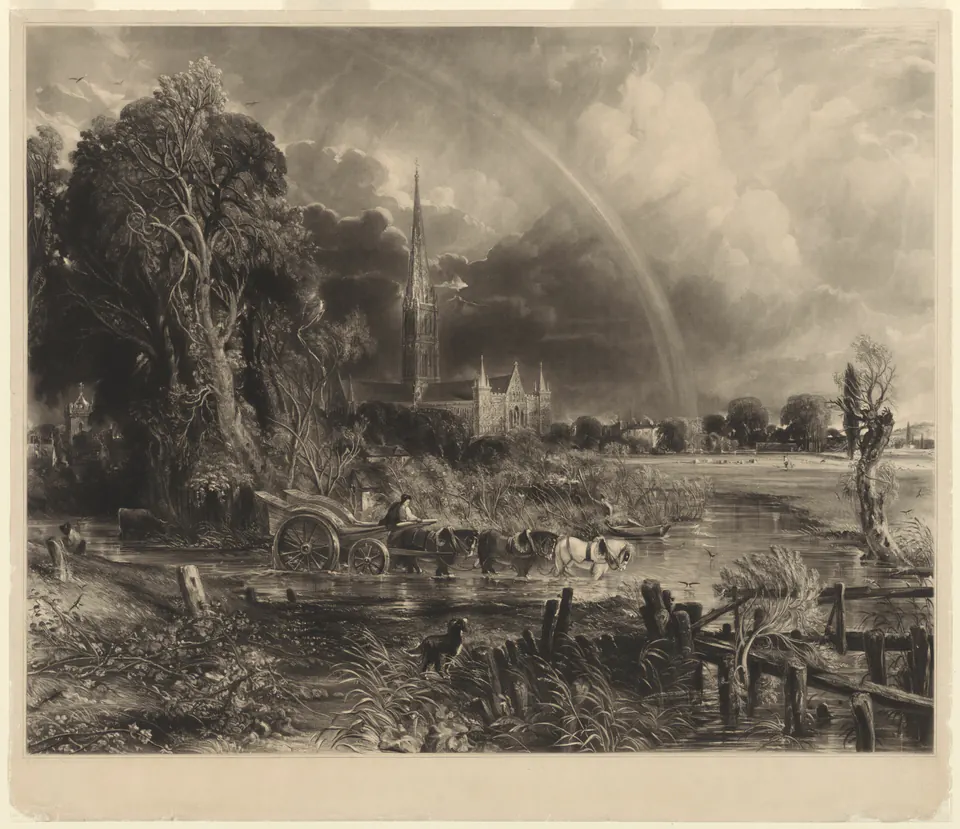
Salisbury Cathedral from the Meadows: the Rainbow
David Lucas after John Constable
plate begun 1834; published 1848; exact sheet date not established · Art Institute of Chicago · 1929.276
CC0 Public Domain Designation
Reuse check: AIC dates the object to 1834; the Royal Academy records publication in 1848. These dates do not establish the issue history of the selected state. The date of paper alone does not create new copyright.
Resized to 960 pixels wide and converted to WebP; no crop.

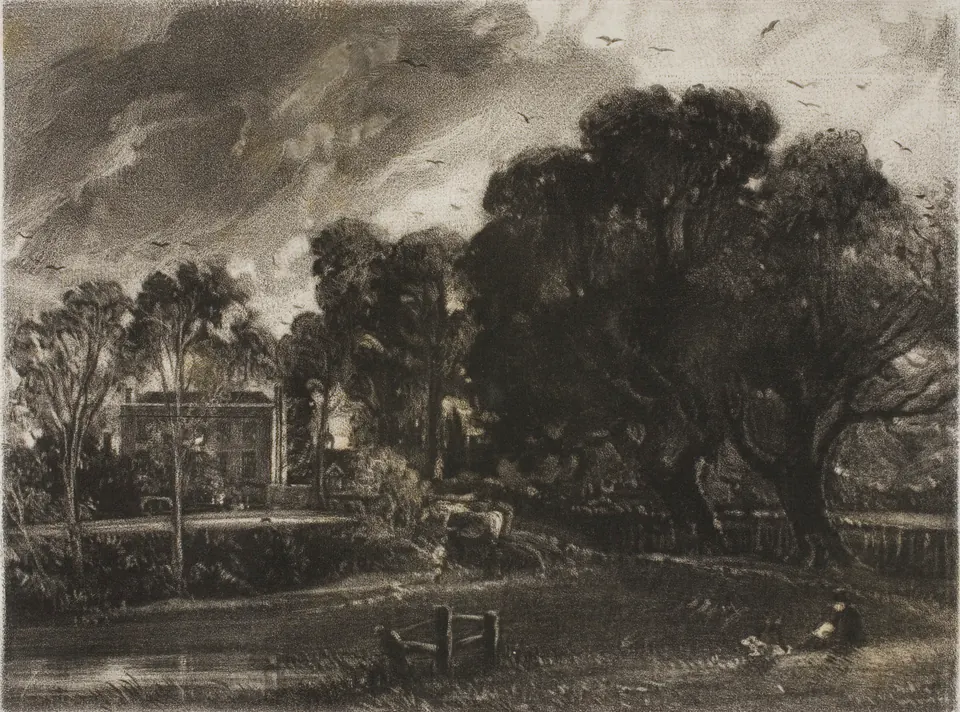
Frontispiece to Mr. Constable’s English Landscape
David Lucas after John Constable
1830 · Art Institute of Chicago · 1929.254
CC0 Public Domain Designation
Reuse check: The published landscape design and any materially different early proof must be distinguished. U.S. clearance of distinct unpublished expression has not been established; an unchanged later pull alone does not restart copyright.
Resized to 960 pixels wide and converted to WebP; no crop.

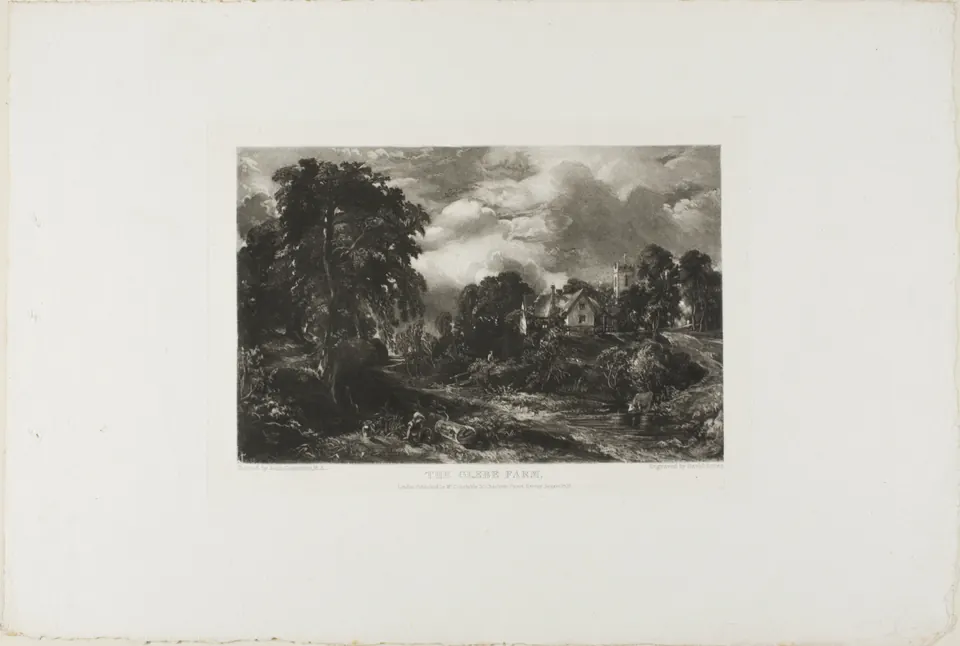
Glebe Farm
David Lucas after John Constable
published June 1832 · Art Institute of Chicago · 1929.273
CC0 Public Domain Designation
Reuse check: AIC expressly records publication in June 1832. This supports the historic design; it does not date every later pull from the plate.
Resized to 960 pixels wide and converted to WebP; no crop.

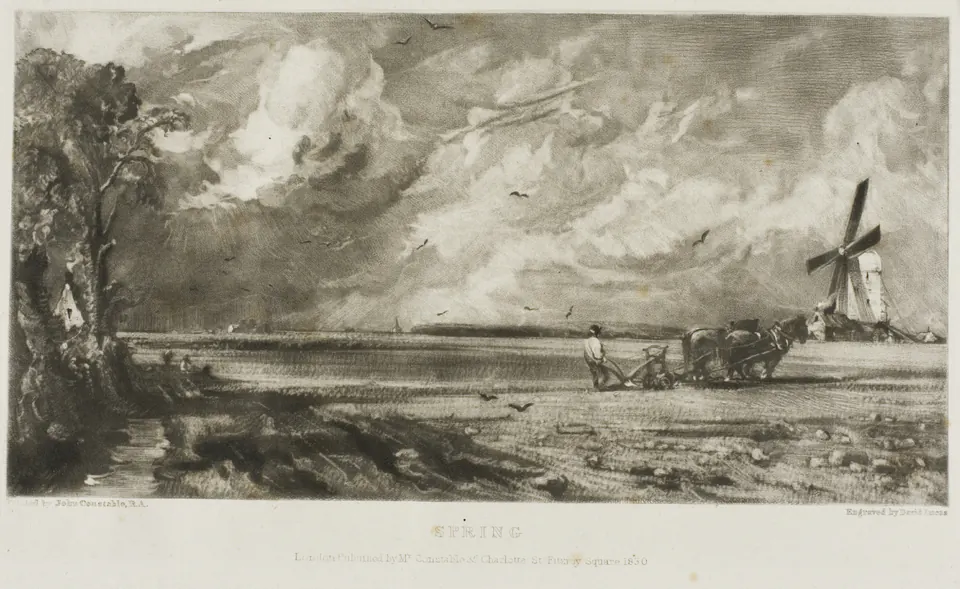
Spring
David Lucas after John Constable
1830 · Art Institute of Chicago · 1929.255
CC0 Public Domain Designation
Reuse check: The published landscape design and any materially different early proof must be distinguished. U.S. clearance of distinct unpublished expression has not been established; an unchanged later pull alone does not restart copyright.
Resized to 960 pixels wide and converted to WebP; no crop.

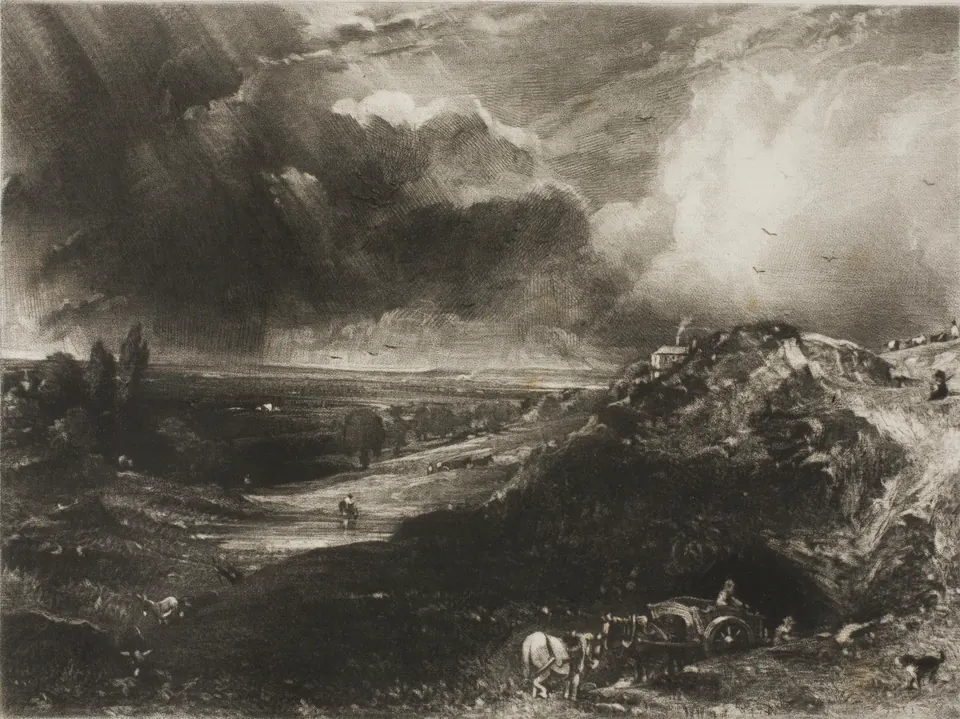
A Heath
David Lucas after John Constable
1831 · Art Institute of Chicago · 1929.262
CC0 Public Domain Designation
Reuse check: The published landscape design and any materially different early proof must be distinguished. U.S. clearance of distinct unpublished expression has not been established; an unchanged later pull alone does not restart copyright.
Resized to 960 pixels wide and converted to WebP; no crop.

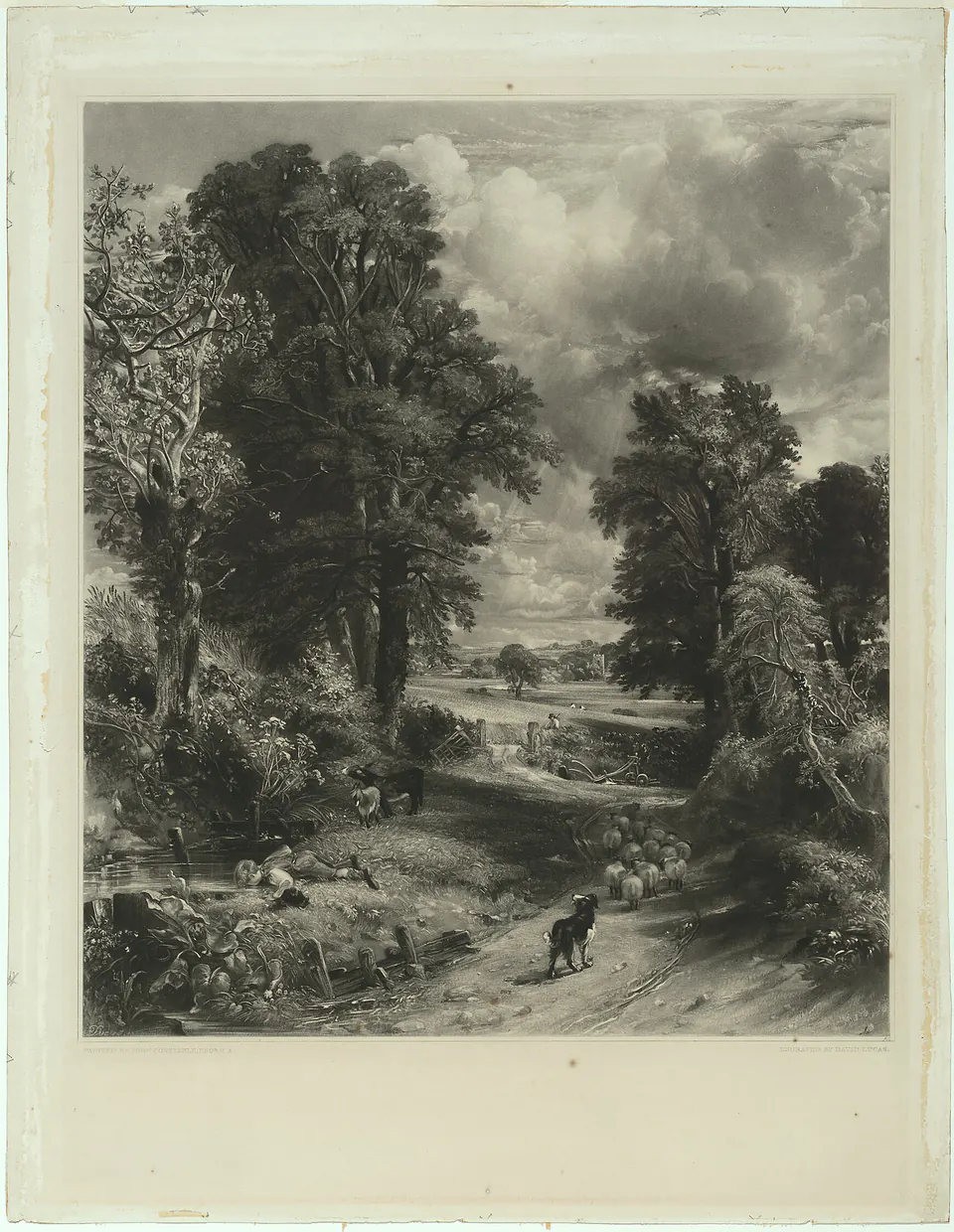
The Cornfield
David Lucas after John Constable
1832–34 · Art Institute of Chicago · 1929.367
CC0 Public Domain Designation
Reuse check: AIC identifies Shirley 36 I/IV. The National Gallery documents design publication in June and July 1834, not this early state; any distinct unpublished expression remains an open U.S. check.
Resized to 960 pixels wide and converted to WebP; no crop.

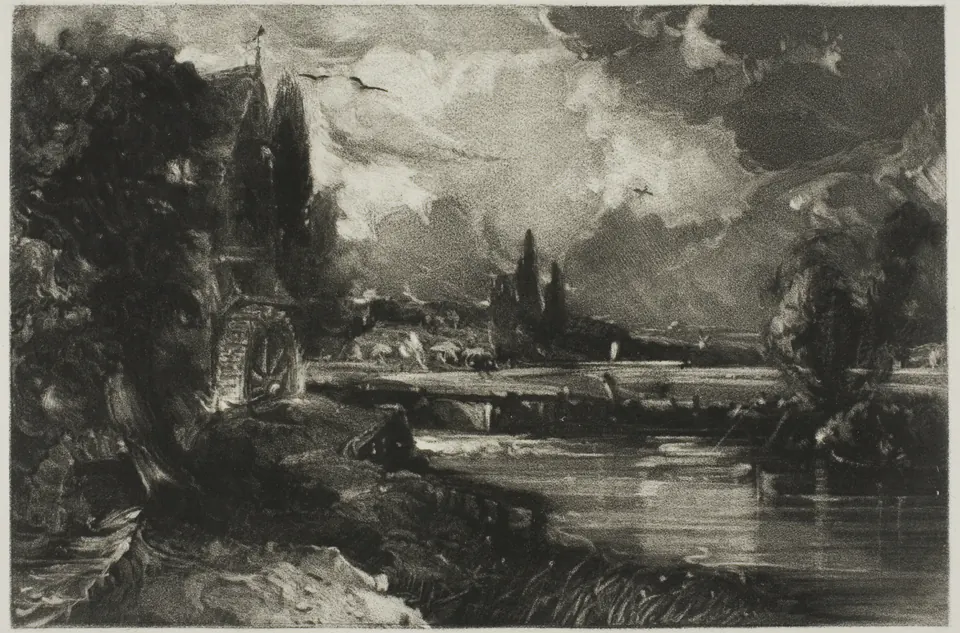
A Mill, from English Landscape
David Lucas after John Constable
1830 · Art Institute of Chicago · 1938.160
CC0 Public Domain Designation
Reuse check: The published landscape design and any materially different early proof must be distinguished. U.S. clearance of distinct unpublished expression has not been established; an unchanged later pull alone does not restart copyright.
Resized to 960 pixels wide and converted to WebP; no crop.

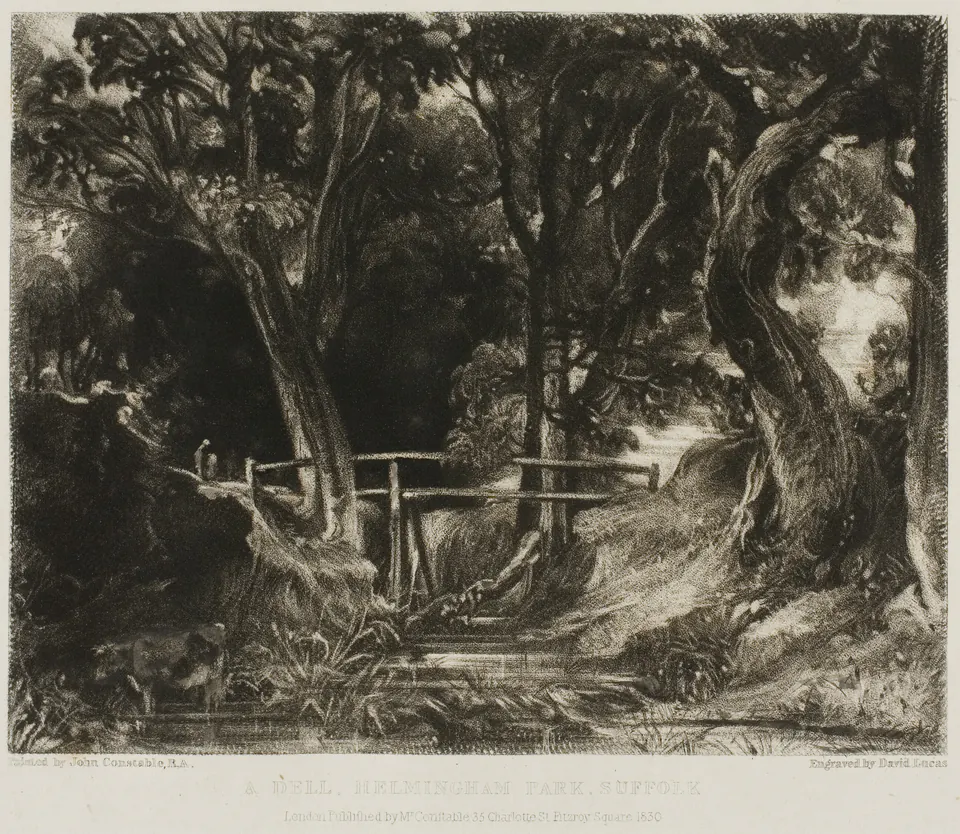
A Dell, Helmingham Park, Suffolk
David Lucas after John Constable
1830 · Art Institute of Chicago · 1929.261
CC0 Public Domain Designation
Reuse check: The published landscape design and any materially different early proof must be distinguished. U.S. clearance of distinct unpublished expression has not been established; an unchanged later pull alone does not restart copyright.
Resized to 960 pixels wide and converted to WebP; no crop.

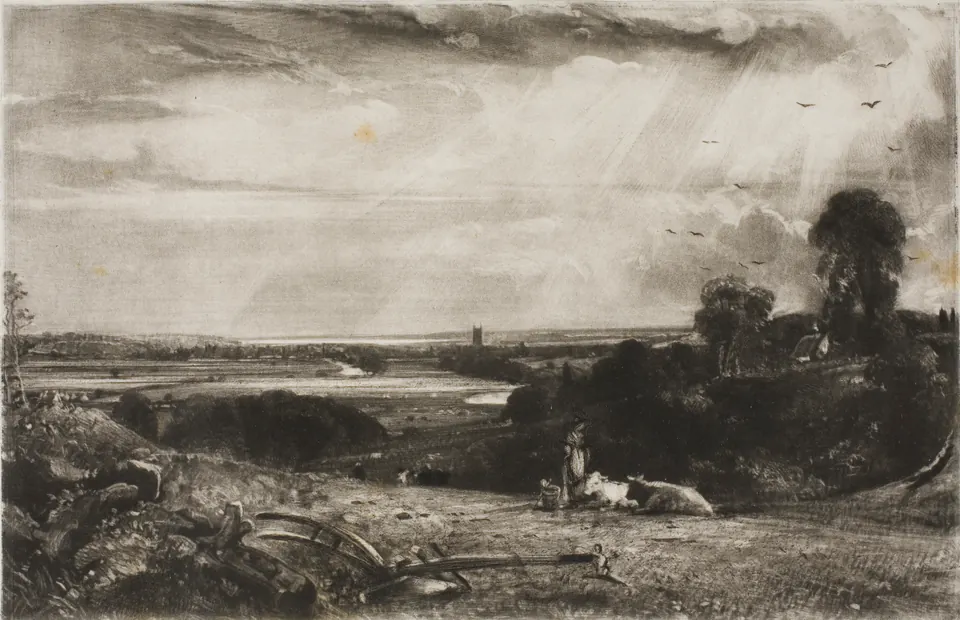
Summer Morning
David Lucas after John Constable
1831 · Art Institute of Chicago · 1929.259
CC0 Public Domain Designation
Reuse check: The published landscape design and any materially different early proof must be distinguished. U.S. clearance of distinct unpublished expression has not been established; an unchanged later pull alone does not restart copyright.
Resized to 960 pixels wide and converted to WebP; no crop.

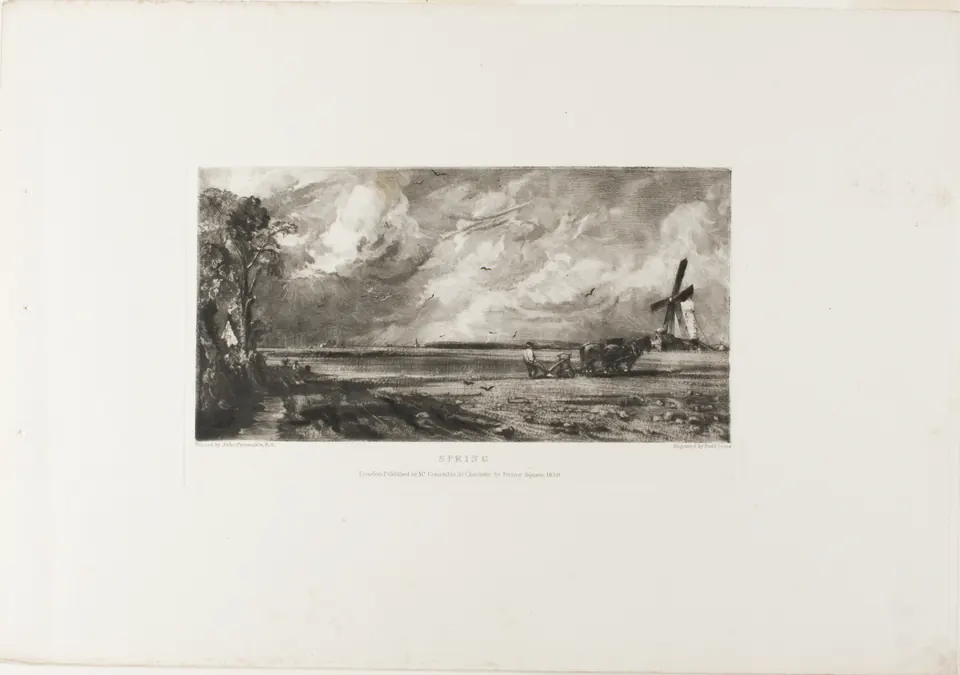
Spring
David Lucas after John Constable
1830 · Art Institute of Chicago · 1993.187.2
CC0 Public Domain Designation
Reuse check: The published landscape design and any materially different early proof must be distinguished. U.S. clearance of distinct unpublished expression has not been established; an unchanged later pull alone does not restart copyright.
Resized to 960 pixels wide and converted to WebP; no crop.

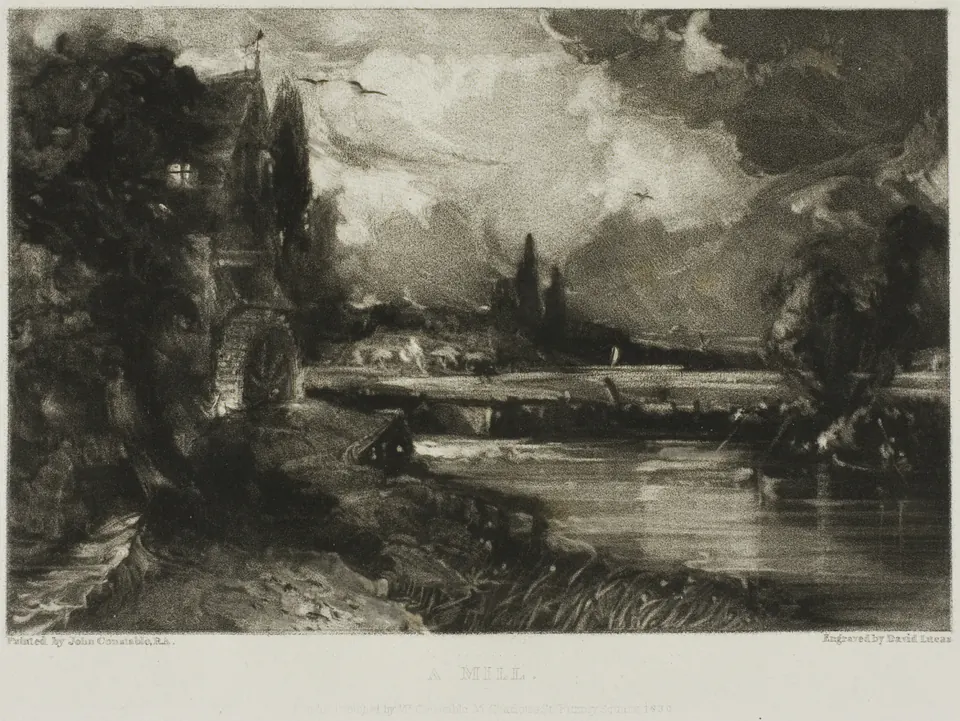
A Mill
David Lucas after John Constable
1830 · Art Institute of Chicago · 1929.270
CC0 Public Domain Designation
Reuse check: The published landscape design and any materially different early proof must be distinguished. U.S. clearance of distinct unpublished expression has not been established; an unchanged later pull alone does not restart copyright.
Resized to 960 pixels wide and converted to WebP; no crop.

Sources and review method
We checked the artist chronology against museum records, treated each named jurisdiction separately, and recorded the provider policy for the image set. These sources support the legal framework and artist dates used above; the source file for any individual image still needs its own record.
- River Stour, Suffolk — Art Institute of Chicago. Feature identity, David Lucas and John Constable credits, issue date, accession, and file.
- Glebe Farm — Art Institute of Chicago. Exact June 1832 publication statement and IIIF file.
- Salisbury Cathedral: The Rainbow — Royal Academy of Arts. Institution-authored history distinguishes the 1837 inscription from publication eleven years later; its photograph is not used.
- The Cornfield: catalogue entry — National Gallery. Lucas’s print publication on 2 June 1834 and republication on 1 July 1834; not proof that each early state was distributed then.
- Open Access Images — Art Institute of Chicago. AIC permits reuse of files carrying its CC0 Public Domain Designation.
- Directive 2006/116/EC, Article 1 — EUR-Lex. The EU term for an artistic work is the author’s life plus 70 years.
- How long copyright lasts — UK Government. UK guidance gives 70 years after the author’s death for artistic works.
- Law No. 5846 on Intellectual and Artistic Works, Article 27 — WIPO Lex. The Turkish economic-rights term is the author’s life plus 70 years.
- Circular 15A: Duration of Copyright — U.S. Copyright Office. Applying the maximum 95-year publication term to 2026 places works published before 1931 outside that term.
- 17 U.S.C. Chapter 3, including §303 — U.S. Copyright Office. Section 303 keeps the unpublished-work transition and the 1978–2002 first-publication floor separate.
- Visual Artists: Publication — U.S. Copyright Office. Distribution can publish visual art; public display alone does not establish publication.
- Copyright notice: digital images, photographs and the internet — UK Intellectual Property Office. The old work and the exact modern digital file remain separate checks.
Editorial record
About this article
- Author
- Publisher
- GeMarkt
- Published
- Reviewed
- Internal source & rights check. Conducted by GeMarkt Research Review. This is an internal editorial check—not independent peer review.
- Source standard
- Rights guide source standardSeparates the underlying work from the source file, records the review date, and links the evidence used for the conclusion.
Found a claim that needs checking? Report a factual error.