GeMarkt Blog · Reference
Japanese Woodblock Prints: Rights for Hokusai, Hiroshige and Kuniyoshi
Check historical Japanese print designs, later editions and exact museum downloads separately, with Hokusai, Hiroshige and Kuniyoshi examples.

The short answer
The established nineteenth-century designs of Hokusai, Hiroshige and Kuniyoshi are public-domain material in Japan. That does not mean every file, modern edition or product carrying their names is yours to copy. Start with a documented historical impression and an image whose reuse terms you can actually read.
The three museum examples below provide a practical route: the Metropolitan Museum of Art identifies each object, marks its image Public Domain and provides it through Open Access. That is much more useful than a search result labelled “Japanese vintage art”. It tells you which physical print is represented and where the image came from.
This guide gives general research information as checked on 12 October 2026, not legal advice or worldwide clearance. Its focus is established historical prints, not a newly discovered unpublished drawing, a contemporary artist’s reinterpretation or the whole twentieth-century Japanese print market.
Start with the design, impression and file
For a woodblock print, “the artwork” can refer to several different things. The design is the composition associated with the artist. An impression is a physical sheet produced from the blocks. The image file is the digital reproduction you plan to use. Give each a separate place in your notes.
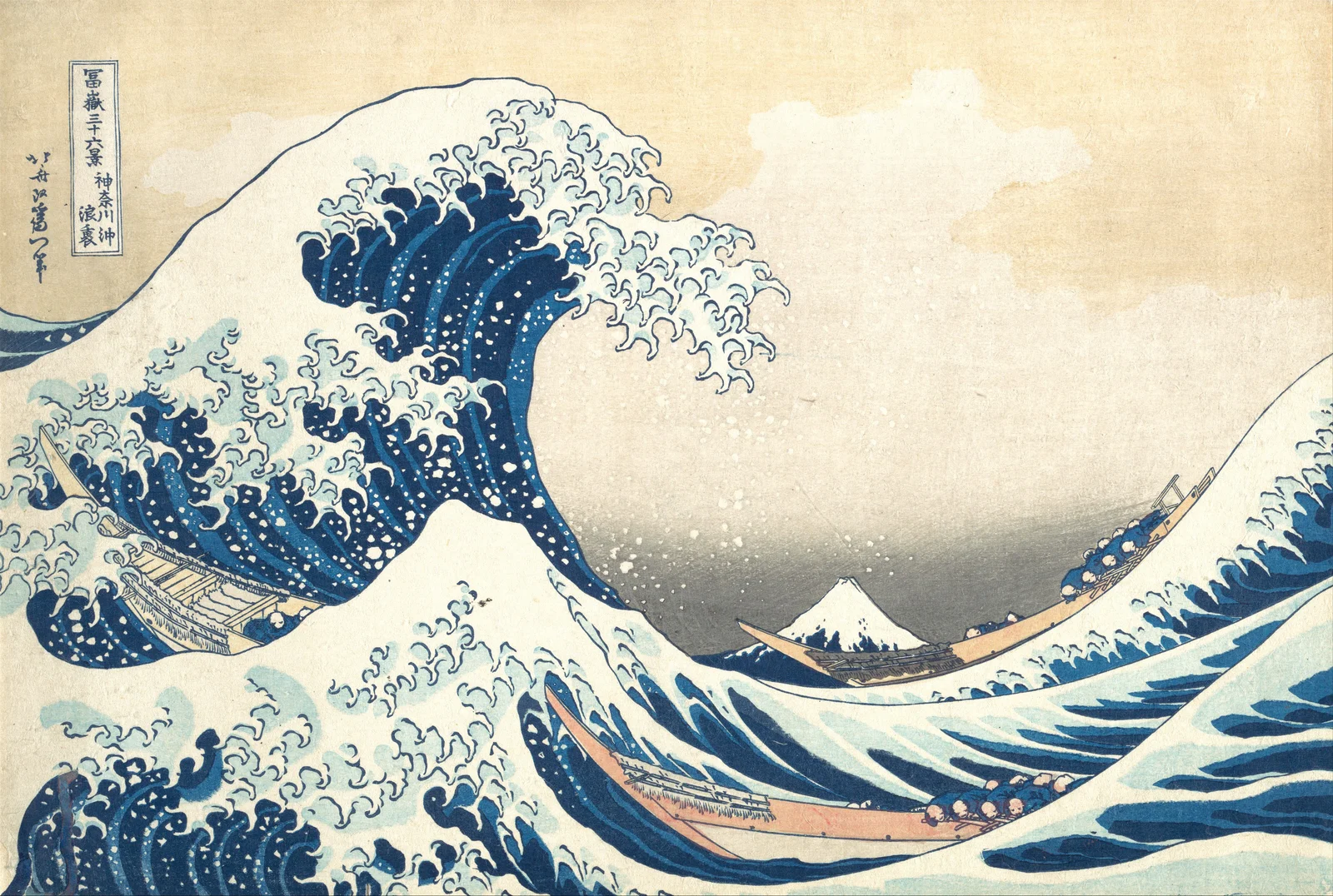
That distinction becomes visible with The Great Wave. You can recognise the wave and boats across different museum impressions, yet their colours, paper condition and margins may differ. A download from one museum is not interchangeable with a photograph on a dealer’s website just because both show the same composition. Our Great Wave rights guide follows one particular impression through that check.
A useful identification line contains the museum number as well as the familiar title. Add the series, date and sheet count where available. For a triptych or diptych, check whether you have the entire work, one panel or a modern assembly. Do not give a single cropped sheet the caption of a complete multi-sheet composition.
What the Japanese term tells you
Japan’s Agency for Cultural Affairs explains that the ordinary term changed from life plus 50 to life plus 70 on 30 December 2018, and that the extension did not revive protection already expired. Its official questions and answers also explains year-end counting and older-law qualifications. Hokusai died in 1849, Hiroshige in 1858 and Kuniyoshi in 1861, as the museum records below confirm. Their established Edo-period designs are not newly protected because the modern number became seventy.
Do not calculate an exact historical expiry date by simply applying today’s term backwards. Earlier legislation matters to the route by which an old work became public domain. For these long-established designs, the useful present-day conclusion is that the original economic copyright is no longer the barrier in Japan; the precise file and intended country still deserve attention.
Moral interests are a separate question. Japan’s Copyright Research and Information Center explains Article 60: although an author’s moral rights end at death, acts that would infringe them are still prohibited afterwards, subject to the law’s provisions. Do not turn economic-right expiry into a promise that any distortion, attribution or presentation is acceptable.
Three open museum examples
Hokusai: a particular Great Wave impression. The Met dates JP1847 to about 1830–32 and describes it as a woodblock print in ink and colour on paper. It identifies the H. O. Havemeyer Collection and the 1929 bequest. Those details distinguish this sheet from other impressions with the same title; the bequest date is not the design’s publication date.
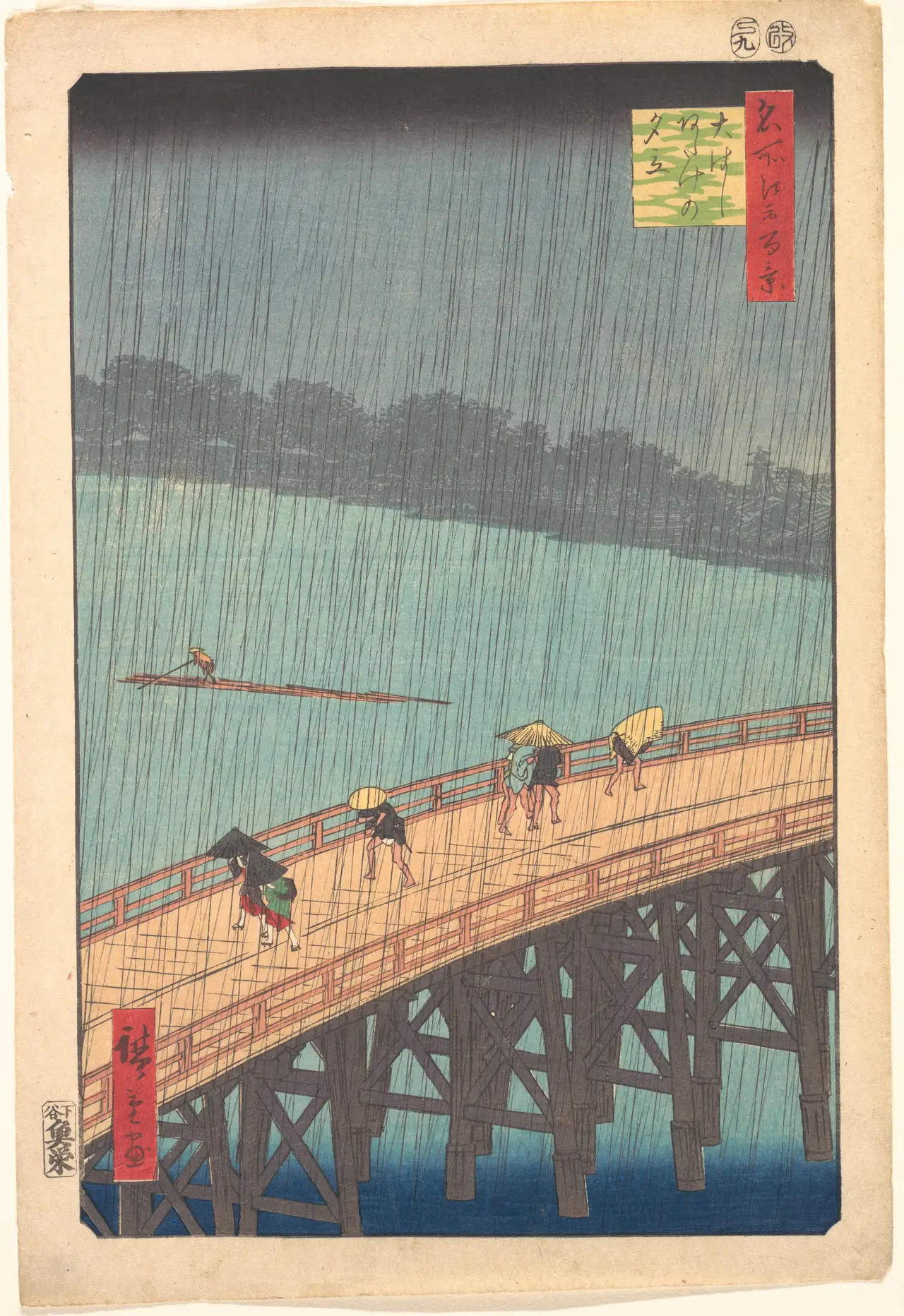
Hiroshige: preserve the identified view. JP2522 is Sudden Shower over Shin-Ōhashi Bridge and Atake, dated 1857, from One Hundred Famous Views of Edo. Its diagonal bridge, distant bank and bands of rain make an easily recognised composition. Preserve the link to this exact record even if another source translates the place name differently. A translated title is not enough to distinguish impressions.
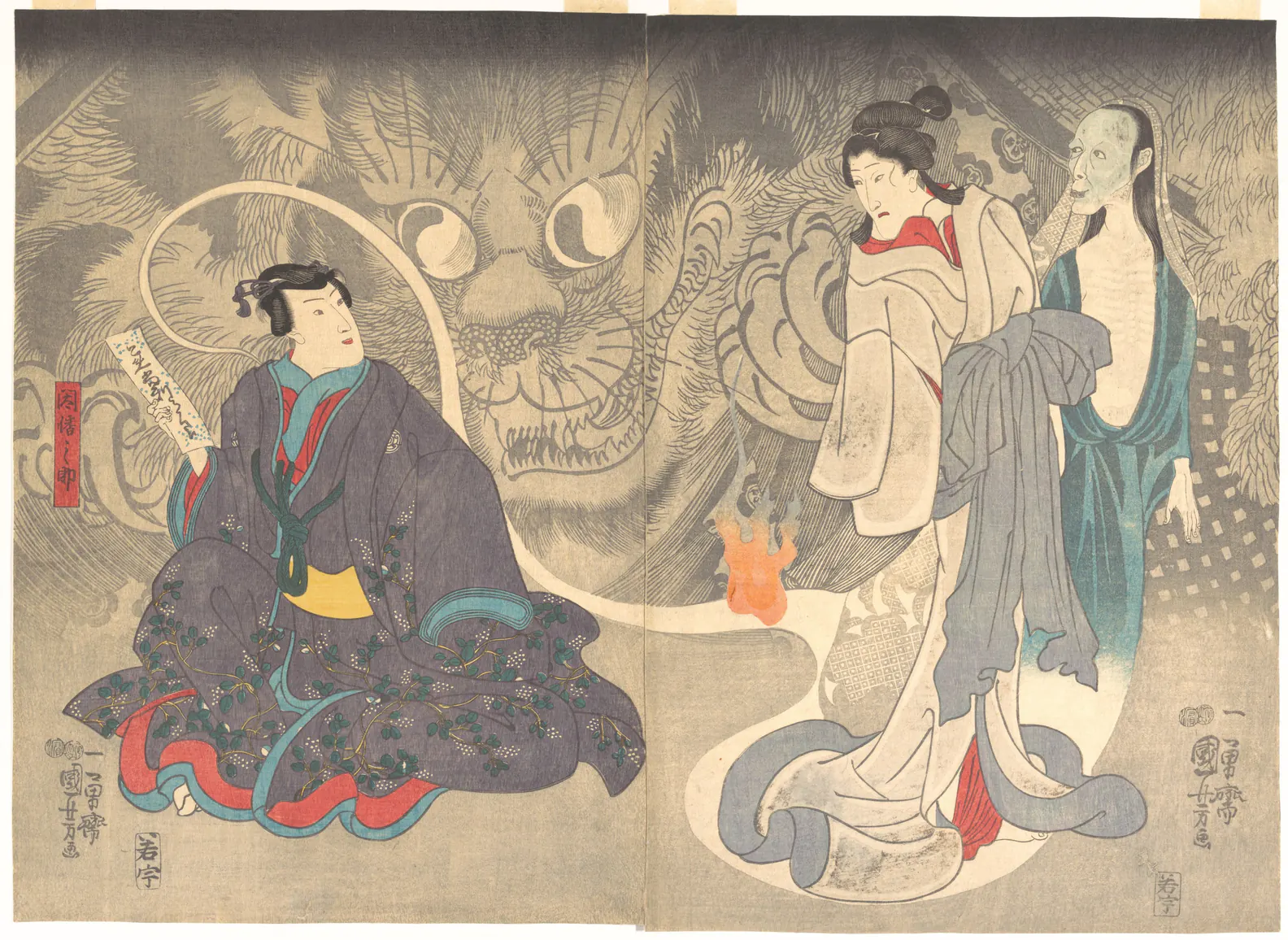
Kuniyoshi: keep both sheets together. The Met identifies JP1563, Scene from a Ghost Story: The Okazaki Cat Demon, as a diptych of about 1850. The enormous cat and the smaller figures form one two-sheet composition in the image shown here. If you use only one side, call it a detail and retain the full object’s identity in the credit.
The Met’s Open Access policy makes its public-domain artwork images available under CC0, including commercial reuse without a permission fee. This policy applies to the designated open images, not automatically to everything appearing anywhere on the museum website. Keep the object page and the downloaded file together so that you can explain which offer you relied on.
Check the country where you will use it
A Japanese conclusion is not a substitute for a U.S. or European one. For U.S. research, distinguish a historically published print design from previously unpublished material. The Copyright Office’s duration provisions contain different routes for older published and unpublished works, including a possible end-of-2047 floor for a qualifying older work first published by the end of 2002.
That does not mean these familiar nineteenth-century prints suddenly receive new protection. It means “made in 1850” is not a complete publication record for every object attributed to the artist. A museum accession, exhibition or website upload should not be silently relabelled as the first authorised publication. For these examples, the Met’s specific public-domain assessment and CC0 release are part of the practical evidence; this article does not claim to reconstruct every first-publication chain independently.
If your use needs a separate U.S. conclusion, retain the evidence for the particular design or edition and follow our U.S. publication guide. A recent discovery should trigger more research, not inherit a decision made for The Great Wave.
Do not confuse an old design with every new edition
A shop may offer a faithful reproduction, a newly carved interpretation, a recoloured image or a poster combining the print with fresh typography. Ask which of those things you are looking at before copying its product photograph. The artist’s old design does not identify the source of every modern addition.
A recent date alone does not prove that fresh copyright exists either. The U.S. Copyright Office’s guidance on derivative works distinguishes protectable new authorship from the pre-existing material. The point is to identify and assess the contribution, not to assume that “restored” always creates rights or that “public domain” removes them from every layer.
Keep contemporary printmakers out of an Edo-period shortcut. “Japanese”, “woodblock” and “in the style of Hiroshige” describe origin, method or resemblance, not a death date or a licence. Our Kuniyoshi artist guide is about identified historical works, not permission to copy anyone working in a related visual language today.
Keep the print identifiable
Before publishing, save the image URL, object URL, museum number, exact rights statement and check date. Note any crop, changed colour or added lettering in your own version. That record makes a later correction possible and prevents a visually similar but differently licensed file from being swapped in unnoticed.
Credit the artist and institution even where the open licence does not demand it. A clear credit helps readers find the full print and understand whether they are seeing a complete composition or a detail. It should not imply museum endorsement of a new product.
The workable approach is simple: choose the historical print, verify the specific open image, and describe your use honestly. You can then enjoy the art without asking a famous artist’s name to stand in for the evidence.
Editorial record
About this article
- Author
- Publisher
- GeMarkt
- Published
- Reviewed
- Internal source & rights check. Conducted by GeMarkt Research Review. This is an internal editorial check—not independent peer review.
- Source standard
- Rights guide source standardSeparates the underlying work from the source file, records the review date, and links the evidence used for the conclusion.
Found a claim that needs checking? Report a factual error.