GeMarkt Blog · Practical guide
Graduation and New Job Gifts: Art for a First Home
Choose art for a graduate or someone starting a new job without guessing their future home. Compare three artworks, practical sizes and easy gift options.

Give a graduate or someone starting a new job a picture they can choose a place for, not a room they must arrange around your present. Their address, furniture and wall permissions may still be changing. A manageable format and a subject they genuinely like matter more than an impressive parcel.
Art can mark a transition without turning into a motivational poster. A city scene, a Japanese woodblock print or a garden painting can connect with their interests while remaining useful after the first job or first rented room. Start by checking what you actually know about their next home, then decide how much to choose on their behalf.
Find out what is changing and what is not
A graduation does not necessarily mean moving out, and a new job does not necessarily mean getting a private office. Ask whether the recipient is staying put, moving into a shared home or still looking for somewhere to live. Those circumstances affect the gift more than the name of the qualification or employer.
In a shared flat, a picture for a bedroom is a different decision from one intended for the communal living room. For workplace display, the recipient may need permission or may simply have no assigned wall. Avoid sending a large item to an office without asking. A personal gift does not have to be displayed where colleagues will see it.
You can also ask about taste without making the surprise disappear. Find out which image from a small shortlist they prefer; keep the final presentation for the celebration. Their choice is more reliable than trying to translate a profession into a subject—lawyers do not automatically want classical architecture, and scientists need not want diagrams on every wall.
Caillebotte for someone starting city life
Gustave Caillebotte’s Paris Street; Rainy Day, 1877, belongs to the Art Institute of Chicago. The broad street, umbrellas and near figures offer a particular urban scene rather than a generic skyline. It could interest someone who likes architecture, street photography or looking at how people share a city.
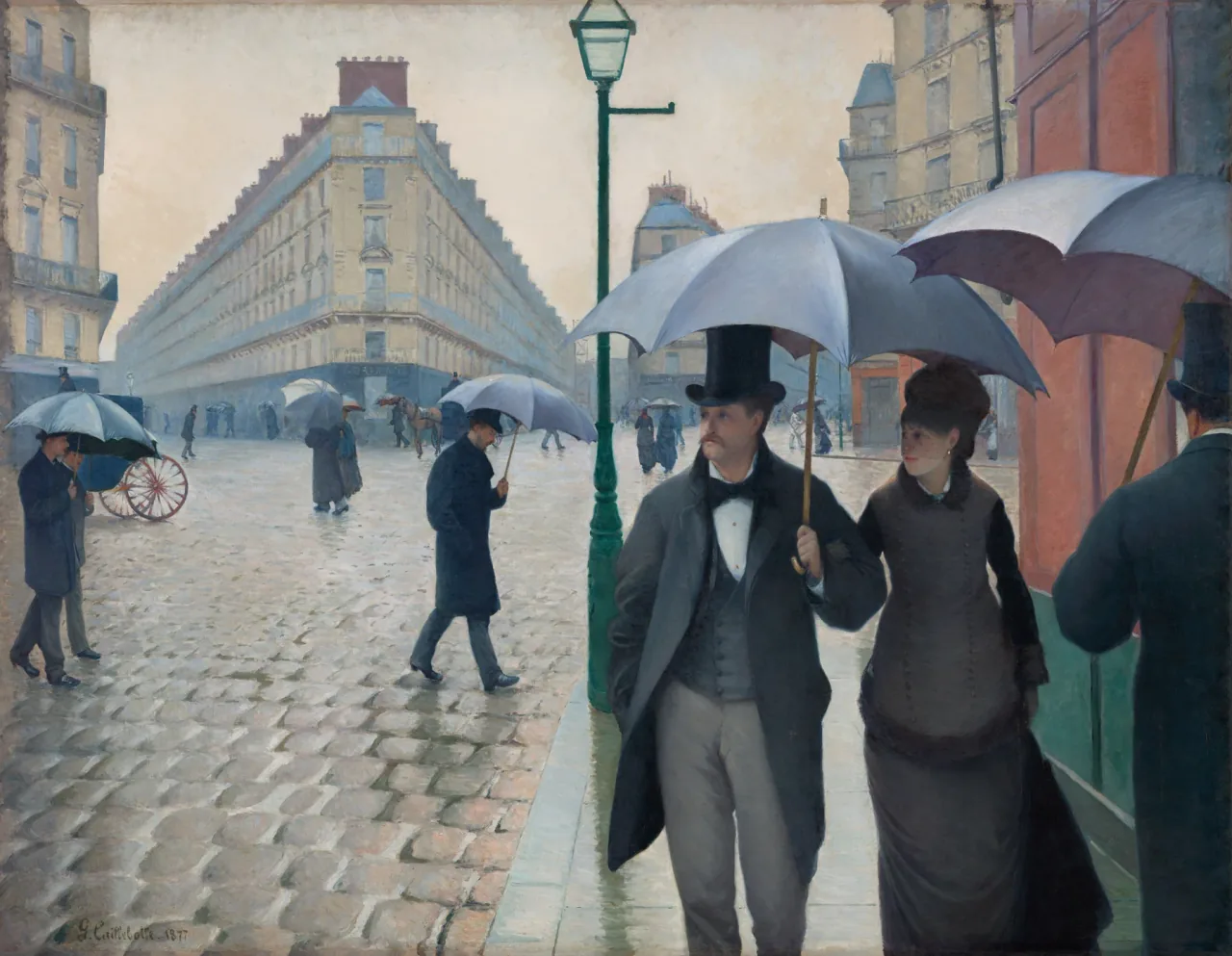
Look at the lamp post dividing the picture and the way the rightmost pedestrian is cut by its edge. The composition is more interesting than a symmetrical view of a landmark. A recipient who enjoys noticing everyday routes may find something in those small encounters even if they have never lived in Paris.
Do not present the painting as a promise that city life will be glamorous or that a first job should lead to a particular lifestyle. Your card could simply say that it reminded you of their curiosity about streets and buildings. That leaves the picture open to their own associations instead of assigning them a future.
Hiroshige for a tall format with a real story
Utagawa Hiroshige’s Sudden Shower over Shin-Ōhashi Bridge and Atake, 1857, makes weather the immediate event. Fine rain lines cross the scene while people hurry along the bridge. The Met impression shown here is JP2522, one particular surviving print, not a generic digital reconstruction.
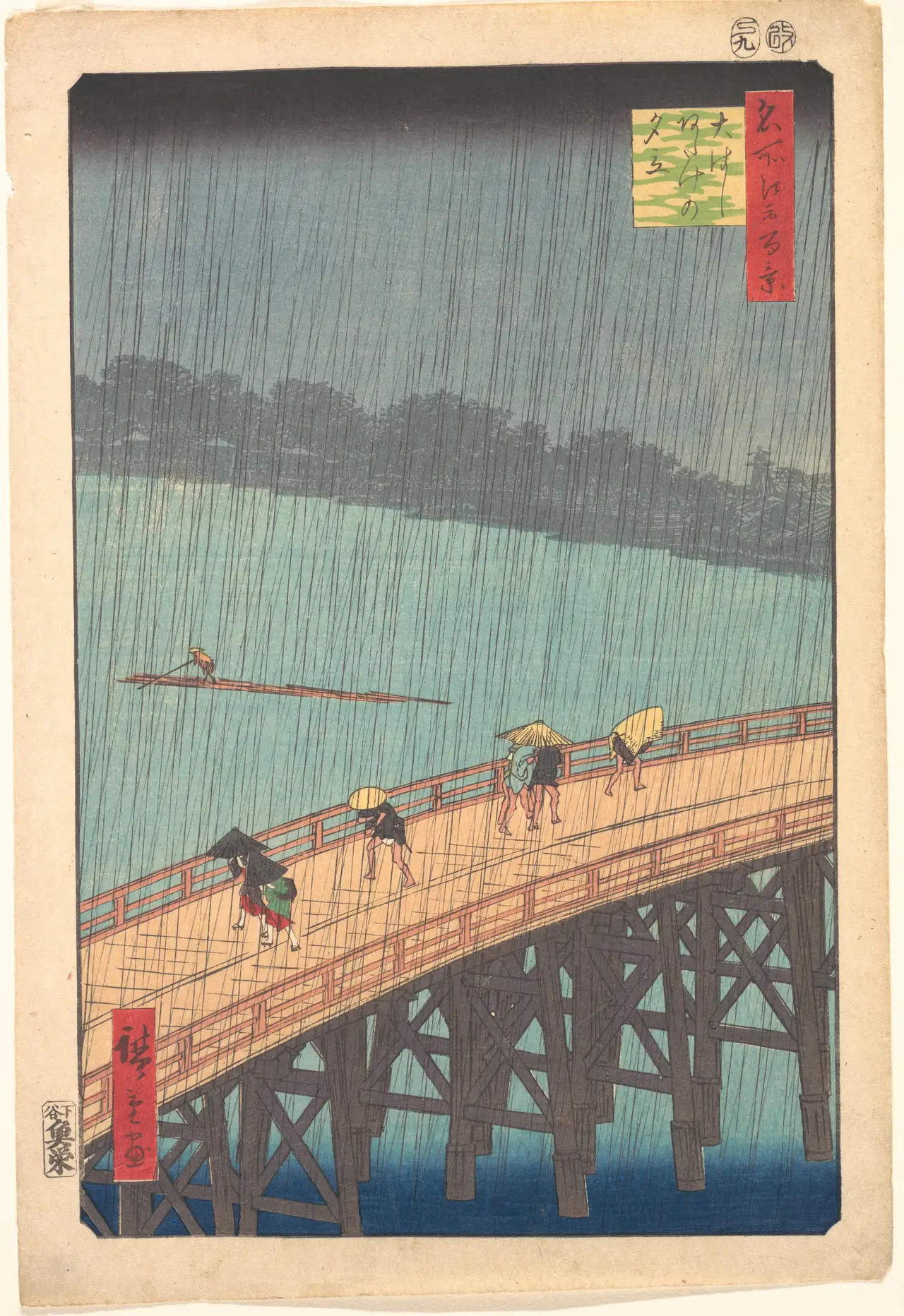
Its tall shape gives you an alternative to a wide city painting. It might work in a narrower part of a room, but check the finished frame rather than assuming every vertical image fits a small wall. The print includes its title and surrounding paper; cropping those away changes what the recipient receives.
A bridge can become a personal association with a transition, but there is no need to claim that this is the work’s historical meaning. Perhaps the recipient likes Japanese prints or walks whatever the weather. Either is a sounder reason than attaching an invented quotation about crossing into success. Our Hiroshige guide offers more context for someone who wants to explore the artist.
Monet for a home that is not all about work
Claude Monet’s The Japanese Footbridge, 1899, offers a different direction: garden structure, dense growth and reflected marks. It is the National Gallery of Art’s painting, accession 1992.9.1, rather than a general title for every Monet bridge picture.
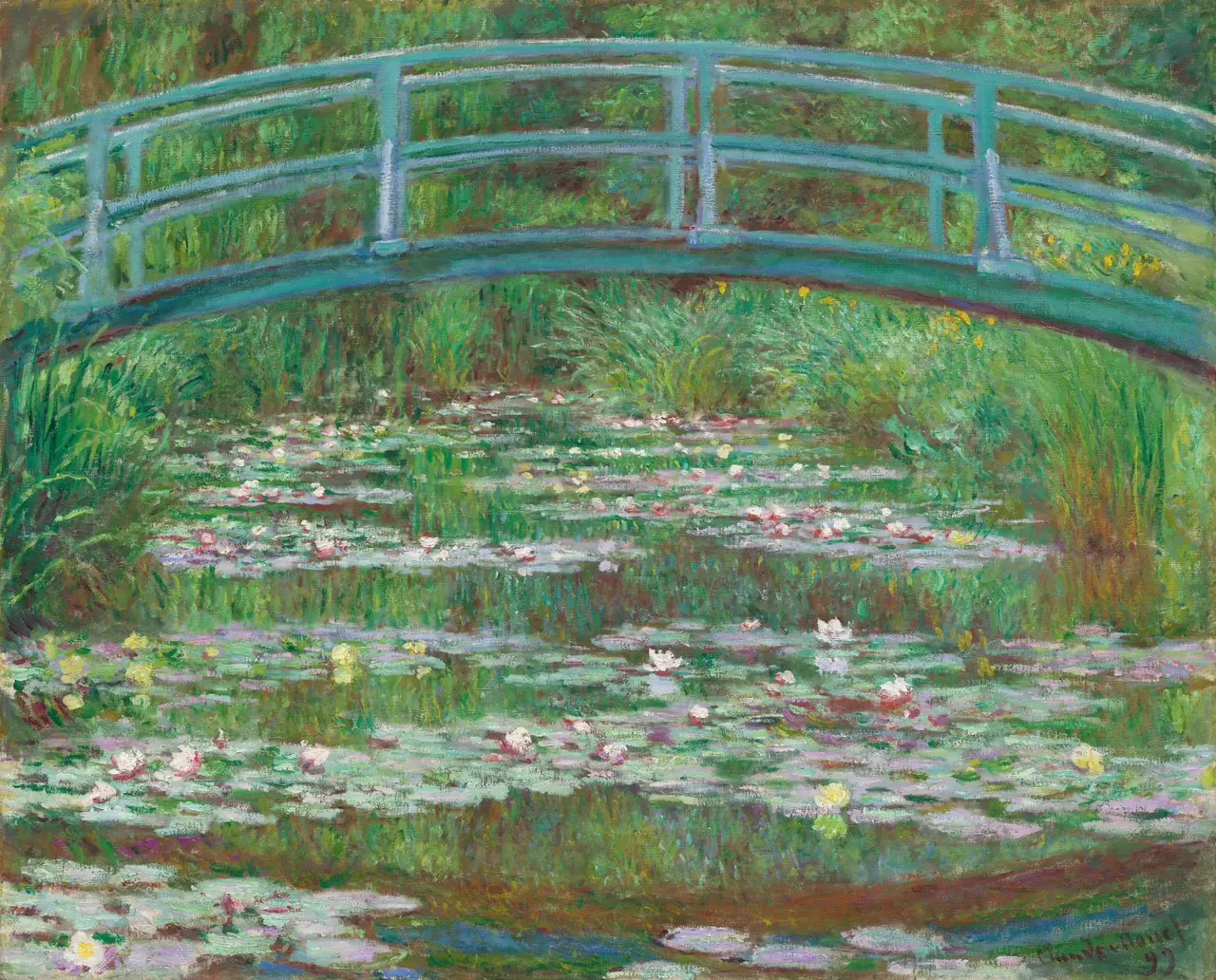
This could suit somebody who gardens, visits parks or simply prefers a picture without human figures. The curved bridge stays legible at a distance, while the pond offers plenty to examine close up. Choose it because those qualities appeal to them, not because green paintings are guaranteed to reduce stress or improve concentration.
A new home is allowed to reflect interests beyond a new role. Someone beginning an intense course or a demanding job may still want their favourite flowers, landscapes or strange historical scenes. You can celebrate their achievement without making the gift another reminder of what they are expected to accomplish next.
Choose a size that can move with them
Get the width of a likely clear wall and the proposed frame’s outside measurements. As a simple example, a 45 cm-wide frame centred within 70 cm of usable wall leaves 12.5 cm on each side. That is a fit calculation, not a universal design rule. Doors, lamps and neighbouring objects still need consideration.
Use a paper template if you can visit the room. Check the view from the bed or chair as well as from the doorway. A large image that looks impressive on an empty wall may be awkward after the recipient brings in a bookcase or desk. Our guide to art for small spaces treats those everyday constraints in more detail.
Portability also includes the frame and packaging, not just the sheet. If they are moving abroad soon, ask whether they want the physical gift now or after settling in. Do not choose a heavy glazed format by default, and do not promise that adhesive hanging products are suitable for an unknown wall or frame. Permissions and the actual fixing instructions still apply.
Agree how finished the gift should be
A framed print can be convenient when its size and style are already agreed. An unframed sheet leaves more choice but also requires framing, storage and a budget. A digital file leaves printing as well. None is automatically the easiest option for someone who is already arranging a move.
If several people are contributing, set a complete budget rather than spending everything on the image and leaving the recipient with expensive finishing work. Check exactly what the listing includes. A styled photograph with a mount, frame and room accessories does not mean those things are supplied.
Confirm the delivery address close to ordering, especially around graduation and moving dates. If the future address is uncertain, a clear invitation to choose the finished gift together may be more useful than sending a parcel to a temporary room. Keep the surprise in the thought and presentation, not in an avoidable logistics problem.
Celebrate the person rather than a prescribed future
Write a note that recognises what they have done and what you know about them. Mention their interest in cities, prints or gardens, rather than promising that the picture will bring success. The achievement belongs to the person; the artwork need not become a symbol of an entire career.
Give them permission to choose the location and change their mind about the format. Their first home will develop as they live in it. A picture can move between rooms, or wait until they find the right spot, without becoming a failed gift.
The best result is a work they continue to enjoy after the ceremony, new-job excitement or first set of keys. Choose for that longer relationship with the picture, while making the immediate gift straightforward to receive.
Editorial record
About this article
- Author
- Publisher
- GeMarkt
- Published
- Reviewed
- Internal source & rights check. Conducted by GeMarkt Research Review. This is an internal editorial check—not independent peer review.
- Source standard
- Buying guide source standardSeparates measured or first-hand evidence from general guidance and keeps practical limits visible.
Found a claim that needs checking? Report a factual error.